홈MCP워크벤치Skills
홈워크벤치알림마이페이지
llms.txt · MCP 가이드개인정보처리방침 · 이용약관 · 지원v1.8.0
  1. 홈
  2. /화합물

피클로람

Picloram

HCID 15965
새 노트새 반응견적 요청하기
인쇄 미리보기

데이터를 보충하는 중입니다. 잠시 후 페이지를 새로 고치면 최신 내용을 볼 수 있습니다
기본 정보개요이름 및 식별자물성안전 및 규제화학 및 산업관련 반응화합물 노트
부분 구조 검색유사 구조 찾기

기본 정보

CAS
1918-02-1
표준 SMILES
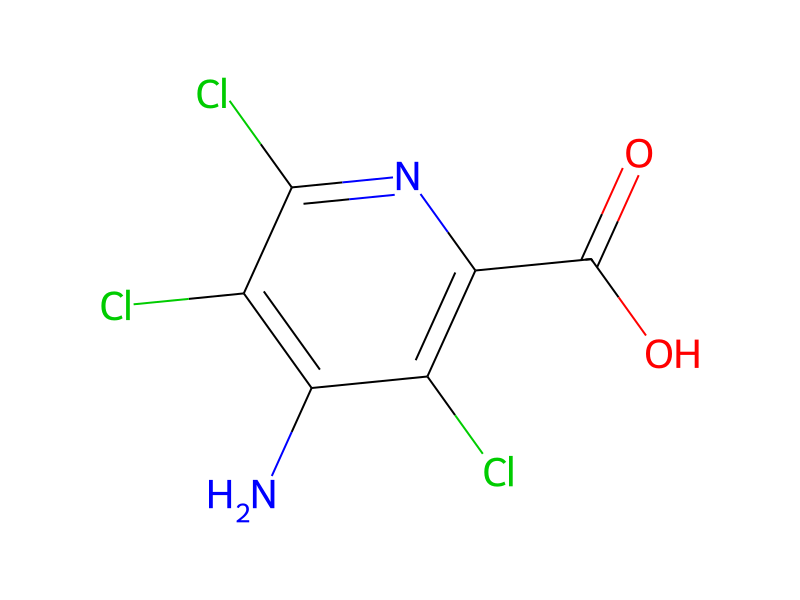
Nc1c(Cl)c(Cl)nc(C(=O)O)c1Cl
InChIKey
NQQVFXUMIDALNH-UHFFFAOYSA-N
분자식
C6H3Cl3N2O2
평균 분자량
241.5 g/mol
단동위원소 질량
239.92601038

개요

Picloram appears as fine beige crystals or white powder. Odor of chlorine. (NTP, 1992)

이름 및 식별자

우선 이름
Picloram
IUPAC
4-amino-3,5,6-trichloropyridine-2-carboxylic acid
현지명
피클로람
영어명
Picloram
분자식
C6H3Cl3N2O2
분자량
241.46

이름 및 동의어

PICLORAM1918-02-14-Amino-3,5,6-trichloropyridine-2-carboxylic acid4-Amino-3,5,6-trichloropicolinic acidTordonBorolinAmdonK-Pin2-Pyridinecarboxylic acid, 4-amino-3,5,6-trichloro-GrazonTordon 22KATCP
이름 더 보기
파이클로람피클로람PHYTIC ACIDPHYTOSTEROLPicloram Plant Growth Regulator4-Amino-3,5,6-trichloro-2-picolinic acid
PiclorameTordon 10KAmdon grazonNCI-C002374-Amino-3,5,6-trichloro-2-pyridinecarboxylic acid4-Aminotrichloropicolinic acidDTXSID10211603,5,6-Trichloro-4-aminopicolinic acid

데이터베이스 식별자

CAS
1918-02-1
PubChem CID
15965
DTXSID
DTXSID1021160
ChEMBL
CHEMBL461349
ChEBI
CHEBI:34922
UNII
O7437X49DW
EC Number
217-636-1
Nikkaji
J3.383I

물성

구조 계산 물성보충 중

XLogP
2.2
극성 표면적
76.2 Ų
수소 결합 공여자 수
2
수소 결합 수용자 수
4
회전 가능 결합 수
1
무거운 원자 수
13
형식 전하
0
복잡도
216

실험 및 물리화학적 성질

pHpH of saturated solution 3.0 (24.5 °C)
Pesticides · 6건

Pesticide -> EPA IRIS

Herbicides

Active substance -> EU Pesticides database: Approved

Pesticides -> Herbicides, Other

Herbicides

Pesticide (Picloram) -> USDA PDB

LogP · 2건

log Kow = 0.30

1.9

OdorChlorine-like odor
Color/Form · 3건

White powder

Crystalline solid

Colorless to white crystals

Solubility · 5건

less than 0.1 mg/mL at 68 °F (NTP, 1992)

In water, 430 mg/L at 25 °C

Organic solvents g/100 mL at 25 °C: acetone 1.98; acetonitrile 0.16; benzene 0.02; carbon disulfide less than 0.005; diethyl ether 0.12; ethanol 1.05; isopropanol 0.55; kerosene 0.001; methylene chloride 0.06

Solubility in water, mg/l at 25 °C: 430 (very poor)

0.04%

CorrosivitySlightly corrosive to mild steel after prolonged exposure at high temperatures. Non-corrosive to other metals.
Flash PointTordon 22k: 46 °C toc; tordon 101 mixture--combustible with an toc flash point of 35 °C; Tordon 155 mixture--104 °C coc /Tordon/

안전 및 규제

안전 정보는 참고용이며, 공급업체의 물질안전보건자료(SDS), 관련 법규 및 전문가 평가를 대체하지 않습니다.

GHS 분류

GHS Classification · 6건

This chemical does not meet GHS hazard criteria for 2.3% (3 of 132) of reports.

Warning

H319 (31.8%): Causes serious eye irritation [Warning Serious eye damage/eye irritation]

P264+P265, P273, P280, P305+P351+P338, P337+P317, P391, and P501 (click each P-code to see the statement)

Aggregated GHS information provided per 132 reports by companies from 7 notifications to the ECHA C&L Inventory. Each notification may be associated with multiple companies.

Warning

유해성 정보

Regulatory Information · 4건

Hazard Traits - Hepatotoxicity and Digestive System Toxicity

Commission Regulation (EC) No 1490/2002

2010/39/EU, Reg. (EU) 2018/1796, Reg. (EU) 2019/1589, Reg. (EU) 2020/1511, Reg. (EU) 2021/1449, Reg. (EU) 2022/1480, Reg. (EU) 2023/2592, Reg. (EU) No 540/2011

Picloram: Does not have an individual approval but may be used under an appropriate group standard

Other Safety InformationIMAP assessments - 2-Pyridinecarboxylic acid, 4-amino-3,5,6-trichloro-: Environment tier I assessment
Fire Hazards · 2건

Flash point data for this chemical are not available; however, it is probably combustible. (NTP, 1992)

Combustible. Gives off irritating or toxic fumes (or gases) in a fire.

Fire PotentialTordon 10k pellets are nonflammable.
Health HazardsExcerpt from NIOSH Pocket Guide for Picloram:
Hazards Summary · 1건

Classified as slightly toxic, all formulations except Tordon RTU and Pathway may be used only by a certified applicator. There are no reports of human toxicity other than skin and respiratory irritation. [EXTOXNET] The following herbicides have an oral LD50 of >1 gm/kg and have little or no acute toxicity in humans: Alachlor, Amitrole, Ammonium sulfamate, Atrazine, Dalapon, Dicamba, Glyphosphate, Monuron, Oryzalin, Picloram, Propanil, Simazine, etc. [LaDou, p. 613]

화학 및 산업

약리 정보

Biological Half-Life · 1건

Following a 10 mg/kg (14)C-picloram intravenous dose /to rats/, the isotope was cleared biphasically and excreted in the urine. The half-time for rapid and slow clearance from plasma was 6.3 and 128 min, respectively. Oral admin of the same dose resulted in comparable half-times of 29 min and 3.8 hr, respectively. At higher (1400 mg/kg) oral doses, the plasma levels remained constant for 3 hr, then slowly declined.

Metabolism/Metabolites · 2건

The major metabolite was 2-ethyl-1,6-hexanoic acid /after administration of 14C-picloram isooctyl ester/. This study supports the fact that picloram ethylhexyl ester is hydrolyzed rapidly to picloram (free acid) and 2-ethyl hexanol...

No measurable residues were found in milk samples from dairy cows fed 10-100 ppm picloram in the feed. Milk samples from cows fed 150-1,000 ppm picloram in the feed contained low levels (0.05-0.29 ppm) of residue which declined rapidly and were undetectable 58 hours after withdrawal from the feed.

MeSH Pharmacological ClassificationPesticides used to destroy unwanted vegetation, especially various types of weeds, grasses (POACEAE), and woody plants. Some plants develop HERBICIDE RESISTANCE.
Absorption, Distribution and Excretion · 5건

Disposition studies in young cattle confirm that tissue retention is minimal with dietary intakes of 2.6-23 mg/kg per day. At the highest dietary intake level studied (1600 ppm [mg/kg]), tissue concentrations were recorded as (ppm (mg/kg)): kidney, 15-18; blood, 1.4-2; liver, 1.1-1.6; and muscle and fat, 0.3-0.5. Clearance was rapid after cessation of intake.

The fate of picloram (4-amino-3,5,6-trichloropicolinic acid), an active ingredient in TORDON brand herbicides, was defined in 6 healthy male volunteers following single /oral/ doses of 5.0 and 0.5 mg/kg, and a dermal dose of 2.0 mg/kg. Picloram was administered orally as the sodium salt in grape juice. The dermal dose was applied to the volunteers' backs as the free acid dissolved in ethanol. The data indicate picloram was rapidly absorbed from the gastrointestinal tract (t1/2 = 20 min) and rapidly excreted unchanged in the urine. Over 90% of the /oral/ dose was recovered as unchanged picloram in the urine excreted through 72 hr; most of the dose (>75%) was excreted within 6 hr and the remainder was excreted with an average half-life of 27 hr. By comparison picloram was slowly absorbed through the skin (t1/2 = 12 hr) and, based on the quantity of picloram excreted in the urine, only a small fraction (0.2%) of the picloram applied to the skin was absorbed. These data indicate that picloram because of its rapid excretion has a low potential to accumulate in man during repeated or prolonged exposure. In addition, picloram was poorly absorbed through human skin and it is unlikely that acutely toxic quatities will be absorbed by this route.

관련 반응

14건
반응 기록 만들기
HRID 3625 반응식
HRID 3625반응물로uspto-grants-1998_03
HRID 275636 반응식
HRID 275636반응물로uspto-grants-2002_03
HRID 378773 반응식
HRID 378773반응물로uspto-grants-2001_10
HRID 378802 반응식
HRID 378802반응물로uspto-grants-2001_10
HRID 488342 반응식
HRID 488342반응물로uspto-grants-1994_03
HRID 533585 반응식
HRID 533585반응물로uspto-grants-2014_10
HRID 828898 반응식
HRID 828898반응물로Test data from https://doi.org/10.1039/C8SC04228D
HRID 1156580 반응식
HRID 1156580반응물로uspto-grants-1982_06
1 / 2 페이지

화합물 노트

불러오는 중…

이 페이지에서기본 정보개요이름 및 식별자물성안전 및 규제화학 및 산업관련 반응화합물 노트
더보기
새 노트새 반응견적 요청하기
Boiling Point · 3건

Decomposes (NIOSH, 2024)

decomposes

Decomposes

Decomposition · 2건

When heated to decomposition it emits very toxic fumes of /hydrogen chloride and nitrogen oxides/.

In aqueous solution, decomposed by UV irradiation

Melting Point · 6건

392 °F (decomposes) (NTP, 1992)

218.5 °C

MP: 218-219 °C, with decomposition starting at 190 °C. Readily sublimes at 190 °C under 12 mm Hg.

No melting point; decomposes at 190 °C

392 °F (decomposes)

424 °F (Decomposes)

Vapor Pressure · 5건

6.16e-07 mmHg at 95 °F (NTP, 1992)

6.0X10⁻¹⁶ mm Hg at 25 °C

negligible

0.0000006 mmHg at 95 °F

(95 °F): 0.0000006 mmHg

물리화학적 성질

녹는점
200 °C · 200 °C (dec.)(lit.)
끓는 점
421 ℃ · 421℃
밀도
1.9163 · 1.9163 (rough estimate)
굴절률
1.677 · 1.6770 (estimate)
인화점
110 ° · >110°(230°F)
저장 조건
0 · 0-6°C
용해도
아세톤에 용해됨
물리적 상태
과립
산도 계수 (pKa)
4.1 · 4.1(at 25℃)
색상
흰색, 황갈색
수용성
420 mg/L · 420mg/L
Merck
14 · 14,7397
BRN
479075 · 479075
Henry's Law Constant
3 · 3.0×104 mol/(m3Pa) at 25℃, Mackay et al. (2006)
주요 응용
농업환경
InChI
1S/C6H3Cl3N2O2/c7-1-3(10)2(8)5(9)11-4(1)6(12)13/h(H2,10,11)(H,12,13)
InChIKey
NQQVFXUMIDALNH-UHFFFAOYSA-N
SMILES
Nc1c(Cl)c(Cl)nc(C(O)=O)c1Cl
LogP
0.3 · 0.300
NIST
2 · 2-Pyridinecarboxylic acid, 4-amino-3,5,6-trichloro-(1918-02-1)
EPA
Picloram (1918-02-1)

화학적 성질

Picloram is a colorless powder. Chlorine odor.

Reactive GroupAcids, Carboxylic
Special Reports · 2건

DHEW/NCI; Bioassay of Picloram for Possible Carcinogenicity (1978) Technical Report Series No. 23; DHEW Pub No. (NIH) 78-823[Available from, as of April 4, 2003: http://ntp.niehs.nih.gov/ntp/htdocs/LT_rpts/tr023.pdf]

USEPA/Office of Prevention, Pesticides and Toxic Substances; Reregistration Eligibility Decision Document - Picloram. EPA 738-R95-019 August 1995. The RED summarizes the risk assessment conclusions and outlines any risk reduction measures necessary for the pesticide to continue to be registered in the U.S.[Available from, as of October 11, 2012: http://iaspub.epa.gov/apex/pesticides/f?p=CHEMICALSEARCH:1]

FIFRA Requirements · 4건

Tolerances are established for residues of the herbicide picloram, 4-amino-3,5,6-trichloropicolinic acid, including its metabolites and degradates, in or on the commodities in the following table from its application in the acid form or in the form of its salts. Compliance with the tolerance levels specified in this paragraph is to be determined by measuring only picloram, 4-amino-3,5,6-trichloropicolinic acid, in or on the commodity.[Table#2892]

The following uses of pesticide products containing the active ingredients specified below have been classified for restricted use and are limited to use by or under the direct supervision of a certified applicator.[Table#2893]

Based on the reviews of the generic data for the active ingredients picloram acid and its derivatives, the Agency has sufficient information on the health effects of picloram and on its potential for causing adverse effects in fish and wildlife and the environment. The Agency concludes that products containing picloram for all uses are eligible for reregistration provided the risk mitigation measures specified in this document are implemented. The Agency has determined that picloram, labeled and used as specified in this Reregistration Eligibility Decision, will not pose unreasonable risks or adverse effects to humans or the environment.

As the federal pesticide law FIFRA directs, EPA is conducting a comprehensive review of older pesticides to consider their health and environmental effects and make decisions about their continued use. Under this pesticide reregistration program, EPA examines newer health and safety data for pesticide active ingredients initially registered before November 1, 1984, and determines whether the use of the pesticide does not pose unreasonable risk in accordance to newer saftey standards, such as those described in the Food Quality Protection Act of 1996. Picloram is found on List A, which contains most pesticides that are used on foods and, hence, have a high potential for human exposure. List A consists of the 194 chemical cases (or 350 individual active ingredients) for which EPA issued registration standards prior to FIFRA '88. Case No: 0096; Pesticide type: herbicide; Registration Standard Date: 09/30/1988 PB89-159834; Case Status: RED Approved 03/1995, OPP has made a decision that some/all uses of the pesticide are eligible for reregistration, as reflected in a Reregistration Eligibility Decision (RED) document.; Active ingredient (AI): picloram; AI Status: OPP has completed a Reregistration Eligibility Decision (RED) for the case/AI.

OSHA Standards · 2건

Permissible Exposure Limit: Table Z-1 8-hr Time Weighted Avg: 15 mg/cu m, total dust.

Permissible Exposure Limit: Table Z-1 8-hr Time Weighted Avg: 5 mg/cu m, respirable fraction.

Reactivity ProfilePICLORAM may be sensitive to prolonged exposure to light. Aqueous solutions may be decomposed by light. This chemical is incompatible with strong oxidizing agents, strong acids, acid chlorides and acid anhydrides. (NTP, 1992)
Chemical DangersDecomposes on heating. This produces nitrogen oxides (see ICSC 0067, ICSC 0930) and hydrogen chloride (see ICSC 0163). Reacts with strong acids, strong bases and strong oxidants. This generates fire and explosion hazard.

안전 및 보호

Fire Fighting · 2건

Fires involving this material can be controlled with a dry chemical, carbon dioxide or Halon extinguisher. (NTP, 1992)

Use water spray, foam, powder, carbon dioxide.

First Aid Measures · 4건

Fresh air, rest.

Remove contaminated clothes. Rinse and then wash skin with water and soap.

Rinse with plenty of water (remove contact lenses if easily possible).

Rinse mouth.

First Aid · 2건

EYES: First check the victim for contact lenses and remove if present. Flush victim's eyes with water or normal saline solution for 20 to 30 minutes while simultaneously calling a hospital or poison control center. Do not put any ointments, oils, or medication in the victim's eyes without specific instructions from a physician. IMMEDIATELY transport the victim after flushing eyes to a hospital even if no symptoms (such as redness or irritation) develop.

(General first aid procedures)

Safe StorageDry. Keep in a well-ventilated room. Separated from : see Chemical Dangers. Provision to contain effluent from fire extinguishing. Store in an area without drain or sewer access.
Firefighting HazardsCombustible. Liquid formulations containing organic solvents may be flammable.
Fire Fighting Procedures · 2건

Fire Extinguishing Media: Pathway; water fog, alcohol foam, CO2, dry chemical.

Use water spray, foam, powder.

Storage Conditions · 2건

Keep containers closed. Do not cut or weld container.

Seperated from food and feedstuffs.

Nonfire Spill Response · 1건

SMALL SPILLS AND LEAKAGE: If you spill this chemical, you should dampen the solid spill material with water, then transfer the dampened material to a suitable container. Use absorbent paper dampened with water to pick up any remaining material. Seal your contaminated clothing and the absorbent paper in a vapor-tight plastic bag for eventual disposal. Wash all contaminated surfaces with a soap and water solution. Do not reenter the contaminated area until the Safety Officer (or other responsible person) has verified that the area has been properly cleaned.

Disposal Methods · 4건

SRP: The most favorable course of action is to use an alternative chemical product with less inherent propensity for occupational exposure or environmental contamination. Recycle any unused portion of the material for its approved use or return it to the manufacturer or supplier. Ultimate disposal of the chemical must consider: the material's impact on air quality; potential migration in soil or water; effects on animal, aquatic, and plant life; and conformance with environmental and public health regulations.

This chlorinated brush killer is usually formulated with 2,4-D /(2,4-dichlorophenoxy)acetic acid/ and the disposal problems are similar. Incineration at 1000 °C for 2 sec is required for thermal decomposition. Alternatively, the free acid can be precipitated from its soln by addition of a mineral acid. The concentrated acid can then be incinerated and the dilute residual soln disposed in an area where several years persistence in the soil can be tolerated. Recommendable methods: Incineration /and/ adsorption. (Peer-review conclusions of an IRPTC expert consultation (May 1985))

Do NOT wash away into sewer. Sweep spilled substance into covered containers. If appropriate, moisten first to prevent dusting. Carefully collect remainder. Then store and dispose of according to local regulations. Personal protection: particulate filter respirator adapted to the airborne concentration of the substance. Do NOT let this chemical enter the environment.

SRP: Wastewater from contaminant suppression, cleaning of protective clothing/equipment, or contaminated sites should be contained and evaluated for subject chemical or decomposition product concentrations. Concentrations shall be lower than applicable environmental discharge or disposal criteria. Alternatively, pretreatment and/or discharge to a permitted wastewater treatment facility is acceptable only after review by the governing authority and assurance that "pass through" violations will not occur. Due consideration shall be given to remediation worker exposure (inhalation, dermal and ingestion) as well as fate during treatment, transfer and disposal. If it is not practicable to manage the chemical in this fashion, it must be evaluated in accordance with EPA 40 CFR Part 261, specifically Subpart B, in order to determine the appropriate local, state and federal requirements for disposal.

Spillage Disposal · 1건

Personal protection: particulate filter respirator adapted to the airborne concentration of the substance. Do NOT let this chemical enter the environment. Sweep spilled substance into covered containers. If appropriate, moisten first to prevent dusting. Carefully collect remainder. Then store and dispose of according to local regulations.

Preventive Measures · 5건

SRP: The scientific literature for the use of contact lenses in industry is conflicting. The benefit or detrimental effects of wearing contact lenses depend not only upon the substance, but also on factors including the form of the substance, characteristics and duration of the exposure, the uses of other eye protection equipment, and the hygiene of the lenses. However, there may be individual substances whose irritating or corrosive properties are such that the wearing of contact lenses would be harmful to the eye. In those specific cases, contact lenses should not be worn. In any event, the usual eye protection equipment should be worn even when contact lenses are in place.

The worker should immediately wash the skin when it becomes contaminated.

Do not take working clothes home.

Workers whose clothing may have become contaminated should change into uncontaminated clothing before leaving the work premises.

SRP: Contaminated protective clothing should be segregated in such a manner so that there is no direct personal contact by personnel who handle, dispose, or clean the clothing. The completeness of the cleaning procedures should be considered before the decontaminated protective clothing is returned for reuse by the workers. Contaminated clothing should not be taken home at the end of shift, but should remain at employee's place of work for cleaning.

Eye PreventionWear safety goggles.

독성 정보

Body Burden · 1건

Mean residues of picloram in urine collected between July 23 and August 3, 1979 from workers performing spray operations were 0.52 mg/kg at Kapuskasing, Ontario; 0.26 mg/kg at North Bay, Ontario; and 0.03 mg/kg in Control, Ontario. Mean residues in urine during a spray operation at five locations during the week of airborne monitoring in Ontario, Canada, 1980 were 0.14 mg/kg for the roadside gun method, 0.05 mg/kg for the rights-of-way gun method, and 0.20 mg/kg for the rights-of-way mist blower method. Breathing zone air samples taken during the week of monitoring contained picloram with mean concentrations of 1.3 ug/cu m for the roadside gun method, 2.3 ug/cu m for the rights-of-way gun method, and 14.9 ug/cu-m for the rights-of-way mist blower method. The dermal exposure route dominated compared to inhalation even for the mist blower method(1).

Interactions · 2건

Single oral doses of 720 mg/kg in sheep ... did not result in overt signs of toxicity. ... A toxic synergism between picloram & (2,4-dichlorophenoxy)acetic acid (2,4-D) appears to exist in sheep. A 36 mg/kg dose of picloram plus 2,4-D at 134 mg/kg resulted in death of livestock.

Microsomes from male rats treated with picloram (100 mg/kg/day) for 7 days showed a 48% decrease in 16 alpha-hydroxylase activity when incubated with (4-14C) androstenedione. These data are consistent with the assertion that picloram decreases the titer of hepatic male specific cytochrome P-450h. ... First, SDS polyacrylamide gel electrophoresis revealed an intensified hepatic microsomal polypeptide (MW 54,000) following picloram pretreatment. This polypeptide co-migrated with protein bands which were correspondingly intensified after pretreatment with known inducers of cytochrome P-450d (3-methylcholanthrene and isosafrole). Second, no increase in the binding of metyrapone to picloram treated microsomes was noted compared with controls, suggesting no increase in phenobarbital-inducible forms of cytochrome P-450. Third, hepatic microsomes from picloram treated rats activated 2-amino-3-methylimidazo (4,5-f)quinoline (a cytochrome P-450d mediated catalysis) causing a 5-fold increase in the number of induced Salmonella typhimurium TA98 revertant colonies formed compared with control microsomes. Fourth, the binding of n-octylamine to hepatic microsomes from picloram-treated rats showed, like microsomes from 3-methylcholanthrene-treated rats, an increase in the proportion of high-spin cytochrome P-450 present. Cytochrome P-450d is known to be a high spin hemoprotein.

Target Organs · 2건

Hepatic

Eyes, skin, respiratory system, liver, kidneys

Ecotoxicity Values · 5건

LD50; Species: Anas platyrhynchos (Mallard) 3 month old male; oral >2000 mg/kg /Purity 90.5%/

LC50; Species: Anas platyrhynchos (Mallard duck) age 10 days; oral >5000 ppm in 5-day diet (no mortality to 5000 ppm) /Purity 90.5%/

LC50; Species: Colinus virginianus (Bobwhite Quail) age 10 days; oral >5000 ppm in 5-day diet (no mortality to 5000 ppm) /Purity 90.5%/

LC50; Species: Coturnix japonica (Japanese quail) age 7 days; oral >5000 ppm in 5-day diet (no mortality to 5000 ppm) /Purity 90.5%/

For more Ecotoxicity Values (Complete) data for PICLORAM (70 total), please visit the HSDB record page.

Environmental Fate · 5건

TERRESTRIAL FATE: Based on a classification scheme(1), Koc values of 0.026-100(2-4), indicate that picloram is expected to have very high to high mobility in soil(SRC). The pKa of picloram is 2.3(5), indicating that this compound will exist almost entirely in anion form in the environment and anions generally do not adsorb more strongly to soils containing organic carbon and clay than their neutral counterparts(6). Leaching potential is greatest in sandy soils low in organic matter(7,8). Volatilization of picloram from moist soil surfaces is not expected to be an important fate process(SRC) given its pKa(5). Picloram is not expected to volatilize from dry soil surfaces(SRC) based upon a vapor pressure of 6X10-16 mm Hg at 25 °C(5). Aerobic degradation half-lives for picloram at various application rates in soil ranged from 18 days at 0.0025 ppm to 300 days at 2.5 ppm(9). Based on these half-lives, picloram is expected to biodegrade in soil(SRC).

TERRESTRIAL FATE: Picloram was aerially applied to a longleaf pine (Pinus palustris L) site in the upper coastal plain of Alabama to control kudzu. Pellets were spread at the rate of 56 kg/ha on loamy sand Typic Kanhapludult soils. A concentration of 68 mg/cu m of picloram was detected downstream 4 days after application. A maximum downstream concentration of 77 mg/cu m occurred 18 days after application, immediately after the second storm event. Downstream levels dropped to <10 mg/cu m after 90 days and to <2 mg/cu m after 200 days. Levels climbed again into the 20 to 30 mg/cu m range following localized retreatment along the stream more than a year after the initial treatment. Picloram residues in a perennial stream that had been inadvertently treated were higher than those observed downstream (up to 241 mg/cu m) and dropped faster (to <2 mg/cu m after day 150). Picloram levels in the upper 15 cm of mineral soil peaked at 0.96 to 2.25 mg/kg 225 days after application and declined to 0.13 to 0.29 mg/kg one year later. Picloram was detected in soil solution at a depth of 0.4 m between 26 and 273 days after application. Only 4 of 15 lysimeters consistently contained detectable residues. Maximum picloram levels in soil solution were 130, 450, and 191 mg/cu m for ridge, midslope, and toe-slope positions, respectively(1).

TERRESTRIAL FATE: Picloram was applied to control spotted knapweed in the northern Rockies. A valley bottom terrace was treated with picloram at 0.28 kg/ha in the spring of 1985, and sampled over the following 445 days. In the spring of 1986, picloram was applied at 1.12 kg/ha to both sides of a minimal construction logging road extending 4 km along a stream draining a granitic upper mountain watershed. At the valley bottom site, 36, 13, and 10.5% of the picloram applied persisted after 90, 365, and 445 days, respectively. At the mountain watershed site, 78% persisted after 90 days. Picloram was not detected in the surface or groundwater during the 90 days after application. Losses at both sites during the first seven days were attributed to photodegradation(1).

Food Survey ValuesPicloram was one of 135 different pesticides found as residues in the domestic and import commodities of 116 countries. Samples were taken from fiscal years 1983 to 1986(1).
Adverse EffectsACGIH Carcinogen - Not Classifiable.
Exposure Routes · 2건

The substance can be absorbed into the body by ingestion.

inhalation, ingestion, skin and/or eye contact

Ecotoxicity Excerpts · 5건

/BIRDS and MAMMALS/ Japanese quail fed 1,000 mg picloram per kg body weight for two weeks experienced a decrease in egg fertility and hatchability.

/AQUATIC SPECIES/ Exposure of Coho salmon smolts to herbicide Tardon 101 (picloram and 2,4-D) at 0.6-1.8 mg/L for 96 hr prevented successful migration upon release.

/AQUATIC SPECIES/ /Investigators/ conducted acute and chronic toxicity studies of the effects of picloram acid on the threatened bull trout (Salvelinus confluentus) and the standard coldwater surrogate rainbow trout (Oncorhynchus mykiss). Juvenile fish were chronically exposed for 30 days in a proportional flow-through diluter to measured concentrations of 0, 0.30, 0.60, 1.18, 2.37, and 4.75 mg/L picloram. No mortality of either species was observed at the highest concentration. Bull trout were twofold more sensitive to picloram (30-day maximum acceptable toxic concentration of 0.80 mg/L) compared to rainbow trout (30-day maximum acceptable toxic concentration of 1.67 mg/L) based on the endpoint of growth. Picloram was acutely toxic to rainbow trout at 36 mg/L (96-hr ALC50). The acute:chronic ratio for rainbow trout exposed to picloram was 22. The chronic toxicity of picloram was compared to modeled and measured environmental exposure concentrations (EECs) using a four-tiered system. The Tier 1, worst-case exposure estimate, based on a direct application of the current maximum use rate (1.1 kg/ha picloram) to a standardized aquatic ecosystem (water body of 1-ha area and 1-m depth), resulted in an EEC of 0.73 mg/L picloram and chronic risk quotients of 0.91 and 0.44 for bull trout and rainbow trout, respectively. Higher-tiered exposure estimates reduced chronic risk quotients 10-fold. Results of this study indicate that picloram, if properly applied according to the manufacturer's label, poses little risk to the threatened bull trout or rainbow trout in northwestern rangeland environments on either an acute or a chronic basis.

/AQUATIC SPECIES/ Water concentration of picloram simulated field exposures of cutthroat trout (Salmo clarki) to picloram following rainfall. Picloram increased fry mortality in concentration greater than 1300 ug/L and decreased fry growth in concentration greater than 610 ug/L. No adverse effect from less than 290 ug/L.

For more Ecotoxicity Excerpts (Complete) data for PICLORAM (7 total), please visit the HSDB record page.

Plant Concentrations · 1건

Riesel, TX, 1970-72, grass in fields treated with 1:1 mixture of picloram and 2,4,5-T at 1.12 kg/ha (2.24 kg/ha): avg concn 0-52,856 ppb (0-70,265)(1,2). Picloram accumulated rapidly in broom snakeweed between 15 min and 1 hour of application; no further absorption occurred through 72 hours with maximum uptake of approximately 15 percent of the applied picloram. Picloram absorption was greatest at pH 4 and least at pH 6(3).

Signs and Symptoms · 5건

No acute symptoms expected.

No acute symptoms expected.

No acute symptoms expected.

No acute symptoms expected.

irritation eyes, skin, respiratory system; nausea; In Animals: liver, kidney changes

Acute Toxicity LinkChemical: PICLORAM

규제 정보

FIFRA Requirements · 4건

Tolerances are established for residues of the herbicide picloram, 4-amino-3,5,6-trichloropicolinic acid, including its metabolites and degradates, in or on the commodities in the following table from its application in the acid form or in the form of its salts. Compliance with the tolerance levels specified in this paragraph is to be determined by measuring only picloram, 4-amino-3,5,6-trichloropicolinic acid, in or on the commodity.[Table#2892]

The following uses of pesticide products containing the active ingredients specified below have been classified for restricted use and are limited to use by or under the direct supervision of a certified applicator.[Table#2893]

Based on the reviews of the generic data for the active ingredients picloram acid and its derivatives, the Agency has sufficient information on the health effects of picloram and on its potential for causing adverse effects in fish and wildlife and the environment. The Agency concludes that products containing picloram for all uses are eligible for reregistration provided the risk mitigation measures specified in this document are implemented. The Agency has determined that picloram, labeled and used as specified in this Reregistration Eligibility Decision, will not pose unreasonable risks or adverse effects to humans or the environment.

As the federal pesticide law FIFRA directs, EPA is conducting a comprehensive review of older pesticides to consider their health and environmental effects and make decisions about their continued use. Under this pesticide reregistration program, EPA examines newer health and safety data for pesticide active ingredients initially registered before November 1, 1984, and determines whether the use of the pesticide does not pose unreasonable risk in accordance to newer saftey standards, such as those described in the Food Quality Protection Act of 1996. Picloram is found on List A, which contains most pesticides that are used on foods and, hence, have a high potential for human exposure. List A consists of the 194 chemical cases (or 350 individual active ingredients) for which EPA issued registration standards prior to FIFRA '88. Case No: 0096; Pesticide type: herbicide; Registration Standard Date: 09/30/1988 PB89-159834; Case Status: RED Approved 03/1995, OPP has made a decision that some/all uses of the pesticide are eligible for reregistration, as reflected in a Reregistration Eligibility Decision (RED) document.; Active ingredient (AI): picloram; AI Status: OPP has completed a Reregistration Eligibility Decision (RED) for the case/AI.

State Drinking Water Guidelines · 2건

(AZ) ARIZONA 49 ug/l

(MN) MINNESOTA 500 ug/l

Federal Drinking Water StandardsEPA 500 ug/l
Federal Drinking Water GuidelinesEPA 500 ug/l

안전 데이터

wgk
2
tsca
TSCA listed
rtecs
TJ7525000
ridadr
3077
독성
LD50 in rats, mice, rabbits, guinea pig, chickens, sheep, cattle (mg/kg): 8200, 2000-4000, 2000, 3000, 6000, >1000, >750 orally (Mullison)
HS 번호
2933399990
risk_code
36
hazard_code
Xi
safety_code
26
포장분류
III
위험 등급
9
기존화학 물질
KE-05-0123
Hazard Classifications
Aquatic Chronic 3
스토리지 클래스
11 - Combustible Solids
유해 물질 데이터
1918-02-1(Hazardous Substances Data)

Picloram is rapidly absorbed from the GI tract & is excreted virtually unchanged in the urine & feces of male Fischer 344 rats within 48 hr. Following a 10 mg/kg (14)C-picloram intravenous dose, the isotope was cleared biphasically & excreted in the urine. ... Balance studies in rats indicated that 98.4% of the dose was recovered. Urinary excretion resulted in an 80% to 84% recovery, fecal excretion resulted in approx 15% recovery, less than 0.5% was recovered in the bile, and virtually no radioactivity was recovered as trapped (14)CO2 or as other volatile compounds.

Studies with (14)C-picloram showed that 90% of the compound fed in the diet to dogs was excreted within 48 hr in the urine, with small amounts appearing in the feces.

For more Absorption, Distribution and Excretion (Complete) data for PICLORAM (6 total), please visit the HSDB record page.

용도 및 제조

Uses · 6건

Used to control woody plants and broad-leaved weeds in range management programs; [EXTOXNET]

Farming (Pesticides) [Category: Industry]

For picloram (USEPA/OPP Pesticide Code: 005101) ACTIVE products with label matches. /SRP: Registered for use in the U.S. but approved pesticide uses may change periodically and so federal, state and local authorities must be consulted for currently approved uses./

Herbicide

For deep-rooted broadleaf weeds and woody plants. Most grasses are resistant. Non-crop use in brush control along utility rights-of-way on forest sites, for weed and brush control in pastures and rangeland, and broadleaf weed control in small grains.

An herbicide used as a defoliant in forest warfare.

U.S. Production · 2건

2-Pyridinecarboxylic acid, 4-amino-3,5,6-trichloro- is listed as a High Production Volume (HPV) chemical (65FR81686). Chemicals listed as HPV were produced in or imported into the U.S. in >1 million pounds in 1990 and/or 1994. The HPV list is based on the 1990 Inventory Update Rule. (IUR) (40 CFR part 710 subpart B; 51FR21438).

Production volumes for non-confidential chemicals reported under the Inventory Update Rule.[Table#2896]

Methods of Manufacturing · 2건

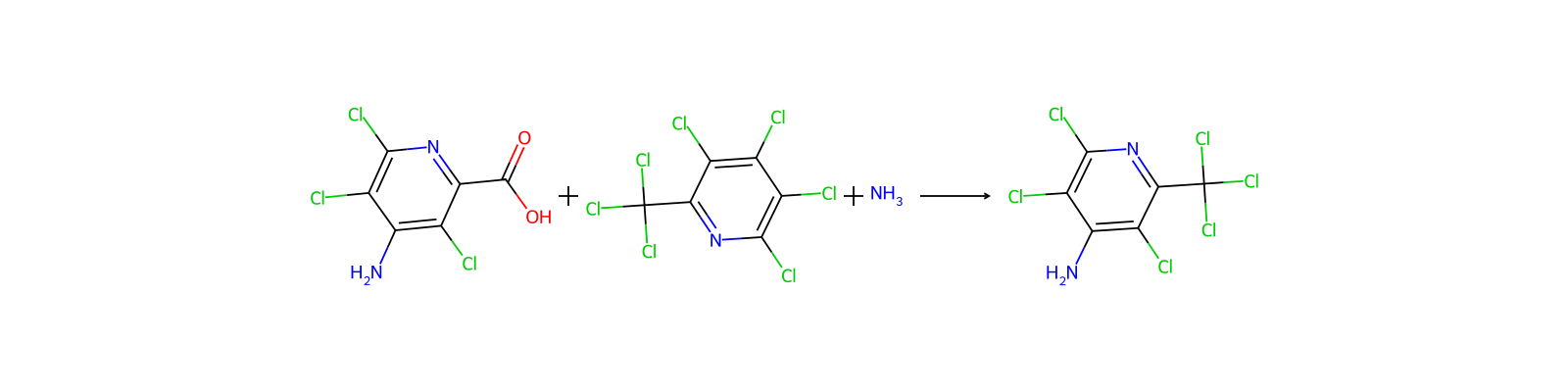
Produced by chlorination of 2-methylpyridine, hydrolysis and reaction with ammonia ...

Picloram is produced from alpha-picoline by chlorination, followed by hydrolysis of the alpha-trichloropicoline derivative, and amidation.

Formulations/Preparations · 5건

Premix Partners: 2,4-D; Dicamba; Fluroxypyr; Metsulfuron-methyl; Oxyfluorfen; Triclopyr.

Suspension concentrate

These include: pellets (20 or 100 g ai/kg); aqueous concentrates (240 g acid equivalent) Picloram-potassium/L). Mixtures include aqueous concentrates of salts: picloram + aminotriazole + atrazine + simazine; picloram + aminotriazole + bromacil + dalapon + diuron; picloram + bromacil + diuron; picloram + 2,4-D; picloram + 2,4-D + dichlorprop; picloram + 2,4-D + tebuthiuron; picloram + 2,4-D + MCPA + mecoprop; also emulsifiable concentrated picloram as amine salt + triclopyr-(2-butoxyethyl); granules picloram + bromacil.

TORDON 10K pellets- 10% picloram as potassium salt; TORDON 22K- 2 lb picloram/gal as potassium salt; TORDON 101 Mixture- 0.5 lb picloram plus 2 lb 2,4-D/gal as amine salts; TORDON 155 Mixture- 1 lb picloram + 4 lb 2,4,5-T/gal as esters.

For more Formulations/Preparations (Complete) data for PICLORAM (14 total), please visit the HSDB record page.

Use Classification · 2건

Herbicides

HERBICIDES

General Manufacturing Information · 3건

2-Pyridinecarboxylic acid, 4-amino-3,5,6-trichloro-: ACTIVE

The WHO Recommended Classification of Pesticides by Hazard identifies picloram as unlikely to present an acute hazard in normal use; Main Use: herbicide.

Application methods: granular formulations can be applied by hand or with most commercial granular applicators. Liquid sprays can be applied aerially, or by ground equipment, knapsack equipment, and tree injectors. All applications should be applied in a manner to avoid drift. Liquid formulations can be applied under conditions favorable for plant growth anytime up to 3 wk before frost. Granular applications are most effective when rainfall occurs soon after application. ... Usual carrier: the liquid salt formulations are applied in water sprays. Tordon 155 is applied in fuel oil.

응용 분야 · 3건

개요Picloram is a colourless crystal. It is very soluble in acetone, ethanol, benzene, and dichloromethane. It is a systemic herbicide used for general woody plant control, sold under the trade names Tordon and Grazon. It also controls a wide range of broad-leaved weeds, but most grasses are resistant. It is used in formulations with other herbicides such as bromoxynil, diuron, 2,4-D, MCPA, triclorpyr, and atrazine. It is also compatible with fertilisers. Picloram, in the pyridine family of compounds, is a systemic herbicide used for control of woody plants and a wide range of broad-leaved weeds. Most grasses are resistant to picloram, so it is used in range management programs. Picloram is formulated either as an acid (technical product), a potassium or triisopropanolamine salt, or an isooctyl ester, and is available as either soluble concentrates, pellets, or granular formulations. The materials in this document refer to the technical acid form unless otherwise indicated. Picloram is stable under acidic, neutral and basic conditions. Picloram is formulated either as an acid (technical product), a potassium or triisopropanolamine salt, or an isooctyl ester, and is available as either soluble concentrates, pellets, or granular formulations and related manufacturing impurities.

용도Picloram is a dicot-selective, persistent herbicide and in salt form is used to control a variety of annual weeds on crops, perennial broadleaved herbs, and woody species in combination with 2,4-D or 2,4,5-T. It can persist in an active form in the soil from several months to years, and can also be released from the roots of treated plants into the soil, where other nontarget species may take it up and die. Picloram is of great use in the management of unwanted vegetation in rangeland, grass pastures, and forestry as well as non-cropland and rightsof- way sites, such as around industrial and military installations, roads, railways, airports, under power lines, and along pipelines. Additional uses in some countries include in rice, sugarcane, cereals, and oilseed rape.

일반 설명Fine beige crystals or white powder. Odor of chlorine.

상·하류 제품 정보

하류 제품

Aminopyralid2-Pyridinemethanol,4-amino-(6CI,9CI)

TERRESTRIAL FATE: The persistence of picloram in soils is >5 years(1). Half-lives of picloram in a mixture of 5 g soil and 1 to 4 mL water ranged from 5.3 to 6 days(2). Half-lives in a mixture of 1 mL water with 0.25 to 10 g soil ranged from 4.0 to 42 days(2). Authors report that unspecified nonbiological degradation may be important in these experiments(2). The pesticide properties database reports a mean field dissipation half-life of 108 days (31 days to 206 days) for picloram(3). The half-life of picloram in Regina heavy clay at 25 °C and at moisture holding capacity was approximately 68 days(4).

For more Environmental Fate (Complete) data for PICLORAM (7 total), please visit the HSDB record page.