
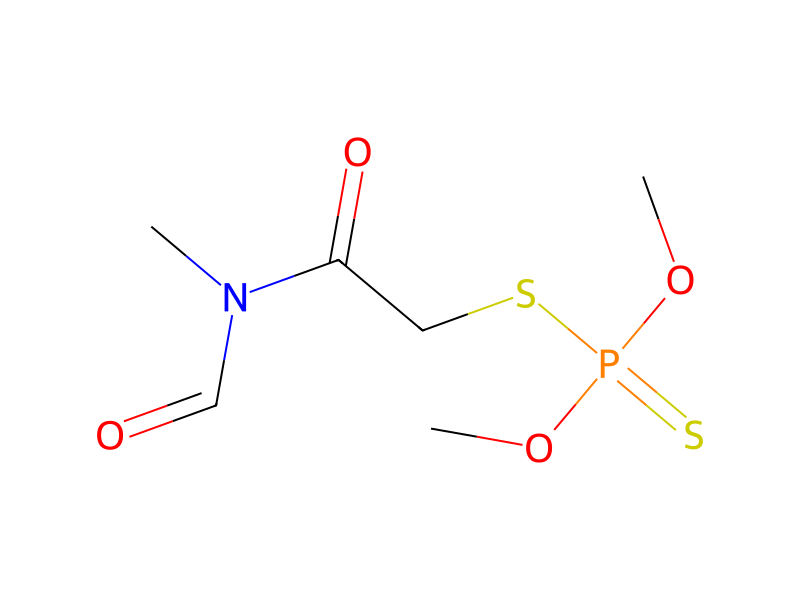
기본 정보
- 표준 SMILES
COP(=S)(OC)SCC(=O)N(C)C=O- InChIKey
AIKKULXCBHRFOS-UHFFFAOYSA-N- 분자식
- C6H12NO4PS2
- 평균 분자량
- 257.3 g/mol
- 단동위원소 질량
- 256.99453649
개요
Formothion appears as viscous yellow oil or a crystalline mass. Used as an insecticide and acaricide on crops and ornamentals. Not presently produced commercially in the U.S. (EPA, 1998)
이름 및 식별자
- 우선 이름
- Formothion
- IUPAC
- 2-dimethoxyphosphinothioylsulfanyl-N-formyl-N-methylacetamide
- 현지명
- 포르모티온
- 영어명
- FORMOTHION
- 분자식
- C6H12NO4PS2
- 분자량
- 257.27
이름 및 동의어
FORMOTHION2540-82-1AnthioToproseAflixAntioAnthio 25Spencer S-6900Sandoz S-6900Formothion 25 ECAflizOMS-968
이름 더 보기
포모티온포르모티온2-다이메톡시포스피노싸이오일싸이오-N-폼일-N-메틸아세트아마이드N-폼일-2-머캅토-N-메틸아세트아마이드, O,O-다이메틸 포스포로다이싸이오에이트와의 S-에스터N-폼일-N-메틸카밤오일메틸 O,O-다이메틸 포스포로다이싸이오에이트O,O-다이메틸 S-(N-메틸-N-폼일카밤오일메틸) 포스포로다이싸이오에이트S-(N-폼일-N-메틸카밤오일메틸) O,O-다이메틸 포스포로다이싸이오에이트S-(포르밀(메틸)카르밤오일메틸) O,O-디메틸포스포로디티오에이트포스포로디티오익산, S-(2-(포르밀메틸아미노)-2-옥소에틸) O,O-디메틸에스테르p1JC7J-38RPP1NUCKSs6900NUCKS1
Afliz [Sandoz]SAN 244 ISAN 6913 ISAN 7107 IVEL 4284ENT 27,257CP 53926S 6900
데이터베이스 식별자
- CAS
2540-82-1- PubChem CID
- 17345
- DTXSID
DTXSID4041991- ChEMBL
CHEMBL449733- ChEBI
CHEBI:82126- UNII
- 7O9EWV477R
- EC Number
- 219-818-6
- Nikkaji
- J3.031G
물성
구조 계산 물성
- XLogP
- 1.5
- 극성 표면적
- 113 Ų
- 수소 결합 공여자 수
- 0
- 수소 결합 수용자 수
- 6
- 회전 가능 결합 수
- 5
- 무거운 원자 수
- 14
- 형식 전하
- 0
- 복잡도
- 252
실험 및 물리화학적 성질
Pesticides
Acaricides, Insecticides
Active substance -> EU Pesticides database: Not approved
Pesticides -> Organophosphate Insecticides
LogP
log Kow = 1.48
1.48
OdorOdorless
Density
1.361 at 68 °F (EPA, 1998) - Denser than water; will sink
1.361 at 20 °C
1.361 @ 20°C
Color/Form
Yellowish liquid
Viscous pale yellow liquid or crystalline mass
Solubility
Completely miscible with common organic solvents, e.g. alcohols, ethers, ketones, chloroform, benzene, toluene, xylene; slightly soluble in hexane; very slightly soluble in ligroin and paraffin oil.
MISCIBLE WITH ... DIETHYL ETHER
In water, 2.6X10+3 mg/L at 24 °C
CorrosivityNon-corrosive in general, tinplate is an exception
Boiling PointDecomposes on distillation
Decomposition
When heated to decomposition it emits very toxic fumes of /nitrogen, phosphorous, and sulfur oxides/.
Decomposes on distillation.
... A number of phosphate and thiophosphate esters are of limited thermal stability and undergo highly exothermic self-accelerating decomp reactions which may be further catalyzed by impurities ... /Phosphorus esters/
Melting Point
77 °F (EPA, 1998)
25-26 °C
25.5 °C
Vapor Pressure
8.5e-06 mmHg at 68 °F (EPA, 1998)
0.00000085 [mmHg]
8.48X10⁻⁷ mm Hg at 30 °C
0.0000085 [mm Hg] @30 °C
Refractive IndexINDEX OF REFRACTION: 1.5541 AT 20 °C/D
물리화학적 성질
- 녹는점
- 25.5 ℃ · 25.5℃
- 끓는 점
- 317.8 · 317.8±52.0 °C(Predicted)
- 밀도
- 1.361 g/cm3 · 1.361 g/cm3 (20 ºC)
- 증기압
- 1.13 x · 1.13 x 10-4 Pa (20 °C)
- 굴절률
- 1.5541 · 1.5541 (589.3 nm 20℃)
- 인화점
- 25 °C · 25 °C
- 저장 조건
- 2 · 2-8°C
- 산도 계수 (pKa)
- -1.79 · -1.79±0.70(Predicted)
- 수용성
- 2600 mgl-1 · 2600mgl-1(24°C)
- 물리적 상태
- 고체
- 생물학적 소스
- rabbit
- BRN
- 5942199 · 5942199
- Henry's Law Constant
- 9 · 9.0×104 mol/(m3Pa) at 25℃, HSDB (2015)
- 주요 응용
- 농업
- InChI
- 1S/C6H12NO4PS2/c1-7(5-8)6(9)4-14-12(13,10-2)11-3/h5H,4H2,1-3H3
- InChIKey
- AIKKULXCBHRFOS-UHFFFAOYSA-N
- SMILES
- [H]C(=O)N(C)C(=O)CSP(=S)(OC)OC
- EPA
- Formothion (2540-82-1)
화학적 성질
Formothion is an odorless, yellowish viscous oil or crystalline mass.
안전 및 규제
GHS 분류
GHS Classification
Warning
H302: Harmful if swallowed [Warning Acute toxicity, oral]
P264, P270, P280, P301+P317, P302+P352, P317, P321, P330, P362+P364, and P501 (click each P-code to see the statement)
Warning
H302 (97.6%): Harmful if swallowed [Warning Acute toxicity, oral]
P264, P270, P280, P301+P317, P302+P352, P317, P321, P330, P362+P364, and P501 (click each P-code to see the statement)
유해성 정보
Regulatory Information
2002/2076
The New Jersey Worker and Community Right to Know Act requires public and private employers to provide information about hazardous substances at their workplaces. (N.J.S.A. 34:5A-1 et. seq.)
Other Safety InformationIMAP assessments - Phosphorodithioic acid, S-[2-(formylmethylamino)-2-oxoethyl] O,O-dimethyl ester: Environment tier I assessment
DOT LabelPoison
Fire Hazards
When heated to decomposition, it emits very toxic fumes of nitrogen oxides, phosphorus oxides and sulfur oxides. This compound is an organophosphorus insecticide. Some of these materials may burn but none of them ignite readily. Container may explode in heat of fire. Fire and runoff from fire control water may produce irritating or poisonous gases. Avoid alkaline pesticides; hydrolyzed by water especially under alkaline conditions. (EPA, 1998)
Health Hazards
Formothion is one of the least toxic systemic organophosphates. Formothion is a compound of low to moderate toxicity. It causes the depression of cholinesterase, leading to accumulation of acetylcholine in the nervous system, which is believed to be responsible for the symptoms. (EPA, 1998)
Hazards Summary
Not irritating to rabbit eyes; Effects in high dose animal studies include inhibition of cholinesterase activity, minor histological changes to liver and adrenal glands, functional changes of the liver, and hematological changes; No evidence of skin sensitization, increased tumor incidence, other neurotoxicity, nor developmental or teratogenic toxicity [HSDB] No significant adverse gross or histological changes or increase in tumor frequency observed in two year feeding studies with rats and dogs; [INCHEM JMPR] The average of two baseline respective cholinesterase activity determinations three days apart, with no exposures to enzyme inhibiting pesticides for at least 30 days, is recommended for each worker prior to exposure to cholinesterase inhibitors because of large inter-individual differences in published baseline values. To be established at least once a year. Removal from workplace exposures is recommended until the cholinesterase activity returns to within 20% of baseline. [TLVs and BEIs]
Reactive GroupAldehydes
Special Reports
FAO/WHO; WHO Pesticide Residues Series 3- Formothion (1973). Available from: http://www.inchem.org/documents/jmpr/jmpmono/v073pr15.htm as of March 1, 2007. Formothion was evaluated by the 1969 Joint Meeting (FAO/WHO, 1970). Toxicology studies were insufficient for establishing an acceptable daily intake. Two-year studies in rats and dogs have been completed and this information has been summarized in the present monograph.
Reactivity Profile
Organophosphates, such as FORMOTHION, are susceptible to formation of highly toxic and flammable phosphine gas in the presence of strong reducing agents such as hydrides. Partial oxidation by oxidizing agents may result in the release of toxic phosphorus oxides.
Air and Water Reactionshydrolyzed by water especially under alkaline conditions. [EPA, 1998].
CERCLA Reportable Quantities
Releases of CERCLA hazardous substances are subject to the release reporting requirement of CERCLA section 103, codified at 40 CFR part 302, in addition to the requirements of 40 CFR part 355. Formothion is an extremely hazardous substance (EHS) subject to reporting requirements when stored in amounts in excess of its threshold planning quantity (TPQ) of 100 lbs.
Hazard Classes and Categories
Acute Tox. 4 (97.6%)
Acute toxicity - category 4
Acute Tox. 4 *
안전 및 보호
Fire Fighting
This compound is an organophosphorus insecticide. Keep unnecessary people away; isolate hazard area and deny entry. Stay upwind; keep out of low areas. Ventilate closed spaces before entering them. Wear positive pressure breathing apparatus and special protective clothing. Remove and isolate contaminated clothing at the site.
First AidWarning: Effects may be delayed up to 12 hours. Caution is advised.
Exposure Control and Personal Protection
Biological Exposure Indices (BEI) [ACGIH] - Acetylcholinesterase activity in red blood cells = 70% of individual's baseline; Butylcholinesterase activity in serum or plasma = 60% of individual's baseline; Sample at end of shift; [TLVs and BEIs]
Fire Fighting Procedures
If material on fire or involved in fire: Do not extinguish fire unless flow can be stopped or safely confined. Use water in flooding quantities as fog. Solid streams of water may be ineffective. Cool all affected containers with flooding quantities of water. Apply water from as far a distance as possible. Use "alcohol" foam, carbon dioxide or dry chemical. /Organophosphorus pesticides, liquid, NOS/
Fire Extinguishing: Small fires: dry chemical, carbon dioxide, water spray, or foam. Large fires: water spray, fog, or foam. Move container from fire area if you can do so without risk. Fight fire from maximum distance. Dike fire control water for later disposal; do not scatter material. When heated to decomposition, it emits very toxic fumes off nitrogen oxides, phosphorus oxides and sulfur oxides. This compound is an organophosphorus insecticide. Some of these materials may burn but none of them ignite readily. Fire and runoff from fire control water may produce irritating or poisonous gases. Vapors are heavier than air and will collect in low areas. Containers may explode in fire. Storage containers and parts of containers may rocket great distances, in many directions. If material or contaminated runoff enters waterways, notify downstream users of potentially contaminated waters. Notify local health and fire officials and pollution control agencies. From a secure, explosion-proof location, use water spray to cool exposed containers. If cooling streams are ineffective (venting sound increases in volume and pitch, tank discolors, or shows any signs of deforming), withdraw immediately to a secure position. If employees are expected to fight fires, they must be trained and equipped in OSHA 1910.156.
Storage Conditions
Anthio must be kept in its original labelled container, which should be kept well sealed, and stored in cool, dry and ventilated premises under lock and key. Must be stored at ambient temp not exceeding -15 °C and +30 °C.
Rooms used for storage only should be soundly constructed & fitted with secure locks. Floors should be kept clear & pesticides clearly identified. If repacking is carried out in storage rooms, adequate light should be available; floors should be impervious & sound ... . /Pesticides/
Pesticides containers must be provided with labels indicating the degree of toxicity of the product they contain. The labels must not only give a short description of how to use the prepn, but also state basic precautions to be taken when applying it. /Organophosphorus pesticides/
Pesticides of any degree of toxicity should be transported in containers which are clearly labelled, leak-proof, and not easily damaged. They should never be transported /or stored/ beside, or above any type of food, and all spillages should be immediately reported. /Pesticides/
Cleanup Methods
Evacuate and restrict persons not wearing protective equipment from area of spill or leak until cleanup is complete. Remove all ignition sources. Stay upwind; keep out of low areas. Ventilate closed spaces before entering them. Do not touch spilled material; keep leak if you can do so without risk. Use water spray to reduce vapor. Small spills: absorb with sand or other noncombustible absorbent material and place into containers for later disposal. Small dry spills: with clean shovel, place material into clean, dry containers and cover; move containers from spill area. Large spills: dike far ahead of spill for later disposal. It may be necessary to contain and dispose of this chemical as a hazardous waste. If material or contaminated runoff enters waterways, notify downstream users of potentially contaminated waters. Contact your Department of Environmental Protection or your regional office of the federal EPA for specific recommendations. If employees are required to clean-up spills, they must be properly trained and equipped. OSHA 1910.120(q) may be applicable.
Environmental considerations- land spill: Dig a pit, pond, lagoon, holding area to contain liquid or solid material. /SRP: If time permits, pits, ponds, lagoons, soak holes, or holding areas should be sealed with an impermeable flexible membrane liner./ Dike surface flow using soil, sand bags, foamed polyurethane, or foamed concrete. Absorb bulk liquid with fly ash, cement powder, or commercial sorbents. /Organophosphorus pesticides, liquid, NOS/
Environmental considerations- water spill: Use natural barriers or oil spill control booms to limit spill travel. Remove trapped material with suction hoses. /Organophosphorus pesticides, liquid, NOS/
Environmental considerations- air spill: Apply water spray or mist to knock down vapors. /Organophosphorus pesticides, liquid, NOS/
Nonfire Spill ResponseThis compound is an organophosphorus insecticide. Stay upwind; keep out of low areas. Ventilate closed spaces before entering them. Do not touch spilled material; stop leak if you can do so without risk. Use water spray to reduce vapors.
Disposal Methods
SRP: The most favorable course of action is to use an alternative chemical product with less inherent propensity for occupational exposure or environmental contamination. Recycle any unused portion of the material for its approved use or return it to the manufacturer or supplier. Ultimate disposal of the chemical must consider: the material's impact on air quality; potential migration in soil or water; effects on animal, aquatic, and plant life; and conformance with environmental and public health regulations.
Preventive Measures
Preparation of spray and loading of machines must be done in open air. Anyone who, on medical advice is not allowed to work with organophosphorus compounds, should keep away from any place where Anthio is being used.
Operators should not work more than half day daily and job rotation should be introduced.
In some situations where personnel may become accidently contaminated ... it is necessary to provide shower bath in addition to the usual washing facilities. Special arrangements for cleaning clothing & overalls may be necessary ... /Pesticides/
Special aircraft should preferably be used for spraying or dusting toxic organophosphorus pesticides. ... aerial spraying or dusting gives rise to clouds which spread over larger surfaces than clouds produced by ground application. Aerial spraying should therefore be carried out on windless days only. Residential areas, water supply sources, etc must be avoided. ... When aircraft approaches, signalmen /guiding the aircraft/ should leave the windward side. ... The local population should be informed about the site & time of aerial pesticide treatment. Access of unauthorized persons & especially children to the area to be treated must be ... forbidden. Warning signs should be placed at the limits of the area. Ground spraying must be carried out with compressed-air spraying equipment towed by tractors with closed cabs. /Organophosphorus pesticides/
For more Preventive Measures (Complete) data for FORMOTHION (15 total), please visit the HSDB record page.
Isolation and EvacuationExcerpt from ERG Guide 152 [Substances - Toxic (Combustible)]:
Protective Action Criteria (PAC)
0.025 [mg/m3]
0.27 [mg/m3]
200 [mg/m3]
Personal Protective Equipment (PPE)
For emergency situations, wear a positive pressure, pressure-demand, full facepiece self-contained breathing apparatus (SCBA) or pressure- demand supplied air respirator with escape SCBA and a fully-encapsulating, chemical resistant suit. (EPA, 1998)
WHERE LOCAL LAW PRESCRIBES IT, HANDLERS MUST WEAR WORKING CLOTHES &/OR BOOTS, WATERPROOF GLOVES, GOGGLES, RESPIRATORY MASK. OPERATORS SHOULD NOT WORK MORE THAN HALF DAY DAILY & JOB ROTATION SHOULD BE INTRODUCED.
Respiratory protection (supplied-air respirator with full facepiece or self-contained breathing apparatus) should be available where these compounds are manufactured or used and should be worn in case of emergency and overexposure. /Phosphorus compounds/
WORKERS HANDLING AND APPLYING ORGANOPHOSPHATE PESTICIDES (OPP) MUST ... BE GIVEN PERSONAL PROTECTIVE EQUIPMENT COMPRISING OVERALLS MADE OF A TIGHT FABRIC OR POLYVINYL CHLORIDE, GLOVES, AND RUBBER BOOTS. THEY MUST WEAR A RESPIRATOR WITH AN ACTIVATED-CARBON GAS FILTER CARTRIDGE AFFORDING PROTECTION FOR A DETERMINED NUMBER OF WORKING HOURS. THE EYES SHOULD BE PROTECTED BY GOGGLES. THE SIGNALMEN FOR AERIAL DUSTING OPERATIONS SHOULD BE EQUIPPED WITH A HAT AND CAPE MADE OF POLYVINYL CHLORIDE OR A FABRIC IMPREGNATED WITH A WATER REPELLENT. /PESTICIDES, ORGANOPHOSPHORUS/
Personnel protection ... Wear appropriate chemical protective gloves, boots and goggles. ... Wear positive pressure self-contained breathing apparatus when fighting fires involving this material. /Organophosphorus pesticides, liquid, flammable, toxic/
Personnel protection: ... Wear positive pressure self-contained breathing apparatus. ... Wear appropriate chemical protective clothing. /Organophosphorus pesticides, liquid NOS/
독성 정보
Interactions
Formothion was studied, along with 6 other organophosphates, for its interaction with other OP's in rats. There was a slight increase of toxicity when it was combined with dimethoate.
Some phenothiazines may antagonize & some may potentiate the toxic anticholinesterase effects of ... /organophosphorus insecticides/. /Organophosphate cholinesterase inhibitors/
In long term therapy, adrenocorticoids antagonize the antiglaucoma effects of anticholinesterases (incr ocular pressure). ... Anticholinergics antagonize the miotic (antiglaucoma) & other muscarinic effects of anticholinesterases on the autonomic & central nervous systems. Tricyclic antidepressants (anticholinergic effects) antagonize the antiglaucoma (miotic) effects of anticholinesterases in glaucoma. ... Antihistamines with anticholinergic effects antagonize the miotic (antiglaucoma) & CNS effects of anticholinesterases. Anticholinesterases potentiate tranquilizing & behavioral changes induced by antihistamines. The actions of anticholinesterase agents on autonomic effector cells, & to some extent those on CNS, are antagonized by atropine, an antidote of choice. Barbiturates are potentiated by anticholinesterases. ... Dexpanthenol potentiates the effects of anticholinesterases. Fluorophosphate insecticides potentiate the effects of other anticholinesterases. /Anticholinesterases/
Barbiturates are potentiated by anticholinesterases. Although barbiturates may be used cautiously in treating convulsions, extreme care is essential in handling poisonings due to anticholinesterases, particularly organophosphorus pesticides. Echothiophate, a cholinesterase inhibitor used as miotic, potentiates other such inhibitors ... Used for other purposes (additive effects) or possibly synergistic. Those exposed to organophosphate insecticides must take strict precautions. ... Organophosphorus insecticides: additive anticholinesterase effects. Hazardous. Patients on anticholinesterases (even topical, such as eye drops) should avoid areas where organophosphorus insecticides ... recently ... used. /Anticholinesterase/
For more Interactions (Complete) data for FORMOTHION (6 total), please visit the HSDB record page.
Ecotoxicity Values
LD50 Pigeon oral 630 mg/kg
LC50 /Cyprinus carpio/ (Carp) = >50 mg/L/96 hr /Conditions of bioassay not specified in source examined/
LC50 /Oncorhynchus mykiss/ (Rainbow trout) 38.3 ppm/96 hr /Conditions of bioassay not specified in source examined/
LD50 /Apis mellifera/ (Bee) oral 1.537 ug/g bw
For more Ecotoxicity Values (Complete) data for FORMOTHION (15 total), please visit the HSDB record page.
Environmental Fate
FORMOTHION & DIMETHOATE SHOULD BE CONSIDERED TOGETHER SINCE THEIR SIGNIFICANT RESIDUES APPEAR TO BE IDENTICAL @ HARVEST; THAT IS, EFFECT OF APPLYING DIMETHOATE & FORMOTHION WILL BE ADDITIVE.
TERRESTRIAL FATE: IN LOAMY SOIL HALF-LIFE IS 14 DAYS.
TERRESTRIAL FATE: Based on a classification scheme(1), an estimated Koc value of 150(SRC), determined from a log Kow of 1.48(2) and a regression-derived equation(3), indicates that formothion is expected to have high mobility in soil(SRC). Volatilization of formothion from moist soil surfaces is not expected to be an important fate process(SRC) given an estimated Henry's Law constant of 1.1X10⁻¹⁰ atm-cu m/mole(SRC), derived from its vapor pressure, 8.48X10⁻⁷ mm Hg(4), and water solubility, 2,600 mg/L(5). Formothion is not expected to volatilize from dry soil surfaces(SRC) based upon its vapor pressure(4). The half-life of formothion in loamy soil is < 1 day, forming dimethoate, and (dimethoxyphosphinthioylthio)acetic acid, which ultimately dissipates(4). A half-life of 14 days in loamy soil(6) suggests biodegradation may be an important environmental fate process in soil(SRC).
AQUATIC FATE: Based on a classification scheme(1), an estimated Koc value of 150(SRC), determined from a log Kow of 1.48(2) and a regression-derived equation(3), indicates that formothion is not expected to adsorb to suspended solids and sediment(SRC). Volatilization from water surfaces is not expected(3) based upon an estimated Henry's Law constant of 1.1X10⁻¹⁰ atm-cu m/mole(SRC), derived from its vapor pressure, 8.48X10⁻⁷ mm Hg(4), and water solubility, 2600 mg/L(5). The hydrolysis half-life of formothion is < 1 day in the pH range of 3 to 9 and 23 °C(4). According to a classification scheme(6), an estimated BCF of 3(SRC), from its log Kow(2) and a regression-derived equation(7), suggests the potential for bioconcentration in aquatic organisms is low(SRC). The rate of decomposition of formothion when exposed to sunlight was 0.014 min-1, corresponding to a half-life of 48 min(8). A half-life of 14 days in soil(9) suggests biodegradation may be an important environmental fate process in water(SRC).
ATMOSPHERIC FATE: According to a model of gas/particle partitioning of semivolatile organic compounds in the atmosphere(1), formothion, which has a vapor pressure of 8.48X10⁻⁷ mm Hg at 20 °C(2), will exist in both the vapor and particulate phases in the ambient atmosphere. Vapor-phase formothion is degraded in the atmosphere by reaction with photochemically-produced hydroxyl radicals(SRC); the half-life for this reaction in air is estimated to be 4.4 hours(SRC), calculated from its rate constant of 8.8X10⁻¹¹ cu cm/molecule-sec at 25 °C(SRC) that was derived using a structure estimation method(3). Particulate-phase formothion may be removed from the air by wet or dry deposition(SRC).
Food Survey Values
Olive trees in Italy were treated with formothion at the recommended application rate (60 g a.i./hectare) and then twice the application rate on November 16 1988(1). Industrial extraction of olive oil was undertaken 53 days postapplication(1). Residues in oil from laboratory pressing ranged from 0.24 mg/kg on day 8 preharvest to <0.01 mg/kg on day 47 preharvest. After 53 days, industrial pressing yielded <0.01 mg/kg formothion residue in oil(1). Formothion was not detected in grapefruit, lemon, orange, apple, pear, apricot, cherries, peach, nectarine, plum, grape, strawberry, blackberry, boysenberry, elderberry, raspberry, rowenberry, bilberry, red current, black current, gooseberry, banana, fig, pomegranate, beetroot, carrot, celeriac, horseradish, parsnip, parsley root, radish, garlic, onion, spring onion, tomato, pepper, eggplant, cucumber, melon, watermelon, squash, sweet corn, broccoli, cauliflower, brussel sprout, white cabbage, red cabbage, spring cabbage, oxheart cabbage, chinese cabbage, kale, lettuce, spinach, chive, dill, marjoram, oregano, parsley, rosemary, thyme, bean, pea, celery, leek, rhubarb, mushroom, sunflower seed, or potato in the 1995-1996 Danish national pesticide monitoring program; however, it was found in mandarin/clementine in 1996(2).
Adverse EffectsOther Poison - Organophosphate
Milk ConcentrationsMany of the organophosphorus insecticides are excreted in the milk ... /Organophosphorus insecticides/
Ecotoxicity Excerpts
/AQUATIC SPECIES/ Exposure of the freshwater catfish, Heteropneustes fossilis to 0.5 to 96 hr LC50 values of formothion (6.50 mg/L) ... for 6 and 12 days induced marked alterations in ionic levels of the fish. Hypocalcemia accompanied with hyperphosphatemia were recorded throughout the exposure period in ... the treated fish. Magnesium ion concentration in the serum increased significantly ... /Formothion/ treatment for 12 days leads to lateral curvature (scoliosis) of the fish body.
/AQUATIC SPECIES/ Female freshwater Indian catfish were collected and exposed to a 0.114-ppm aldrin-formothion mixture. Sampling for various biochemical parameters was done at 3, 6, 12, 48, and 96 hr postexposure. Blood glucose levels were significantly low at 3, 12, 48, and 96 hr after the treatment. However, at 6 hr no significant change was observed. Blood lactate levels in treated fish increased significantly at 3, 6, 12, and 96 hr from the mean control value of 13.96 mg/100 mL. After 48 hr of exposure blood lactate value was unaffected. The marked glycogenolysis in muscle at 6 and 48 hr and in liver at 3, 6, 12, and 48 hr was probably due to a stress-induced increase in circulating catecholamines. The abrupt decline in both muscle and liver glycogen at different time intervals resulted in hyperlacticemia. Hypoglycemia, which may have resulted from increased insulin secretion, was noted at 3, 12, 48 and 96 hr. /aldrin-formothion mixture/
/AQUATIC SPECIES/ The relative toxicity (based on 24 hr median lethal concentration values) of pesticides to the Indian catfish followed this order: formothion lower than methyl parathion lower than propoxur lower than aldrin lower than aldrin + formothion mixture. The presumably harmless concentration for formothion was 3.92 mg/L and for aldrin + formothion mixture was 0.042 mg/L.
/BIRDS and MAMMALS/ The influence of the organophosphate insecticides Metasystox (metalodemeton), Anthio (formothion) and Tonix (demefion) on survival rate and reproduction in pheasants was studied. Incubated eggs were sprayed with solutions of these chemicals. The only adverse effect was found in the group sprayed with Metasystox: a 21.3% decrease in hatching rate. A toxic effect on pheasant chicks from all age-groups was particularly high with Metasystox. Mortality rate in the groups poisoned with Anthio and Tonix was only found in the first 4 wk of life. Regular feeding of birds with the feed poisoned with Metasystox, Anthio and Tonix before the reproduction period decreased laying capacity as well as the percentage of fertilization and hatching. Productivity of one hen in the group poisoned with Metasystox averaged 1.3 chick, with Anthio 17.5, Tonix 15.5 and in the control 23.3. Cholinesterase activity was determined in the whole blood, serum and brain tissues in both experimental and control groups.
/BIRDS and MAMMALS/ Three groups of pheasants, each containing two male and two females, received wheat grain treated with 0, 0.15 or 0.75% of formothion for 3 weeks. The decrease in food intake in the group on the high level was thought to be largely responsible for a considerable loss of weight. The weights in the other groups remained constant, or increased slightly. No toxic symptoms were noted and hematology showed no pathological changes in any of the animals. The activity of serum cholinesterase in the birds on the high strength compared with that of the controls, was reduced by about 45%. The transaminase values were normal, indicating that there was no liver damage.
Plant Concentrations
In plants, formothion is metabolized to dimethoate, (dimethoxyphosphinthioylthio)acetic acid, bis(dimethylthiophosphoryl) disulfide, omethoate, and O,O-dimethyl hydrogen phosphorodithioate(1).
After spraying an apple orchard with 1.5 kg/ha, the levels of formothion was <0.55 mg/kg fruit, leaves, branches, and soil. Ten days after the spray the levels of formothion was 0 mg/kg(1).
Effluent Concentrations
The accidental input of pesticides into the Rhine River on Nov 1, 1986 due to a storehouse fire at Sandoz Ltd. near Basel, Switzerland was studied. The ratio of the water concentration of pesticides (ug/L) to the amount stored (metric tons) was calculated. The Rhine River water concentration at Village-Neuf was 5 to 20 ug/L formothion(1).
Medical Surveillance
Workers handling & applying pesticides must undergo an annual medical examination at the beginning of each agricultural season. Contraindications /meaning further clinical evaluations/ for work with /organophosphorus pesticides/ are organic diseases of the central nervous system, mental disorders & epilepsy, pronounced endocrine & vegetative disorders, pulmonary tuberculosis, bronchial asthma, chronic respiratory diseases, cardiovascular diseases & circulatory disorders, gastrointestinal diseases (peptic ulcer), gastroenterocolitis, diseases of liver & kidneys, eye diseases (chronic conjunctivitis & keratitis). The blood cholinesterase activity must be determined before work starts. In the event of prolonged work periods, this activity should be determined at intervals of 3-4 days. Persons exhibiting a fall in cholinesterase activity of 25% or more must be transferred to other work where they are not exposed to organophosphorus pesticides until this activity is completely restored. Persons with initial signs of indisposition should /be protected from exposure from/ pesticides. /Organophosphorus pesticides/
Before employment and at regular times after that, the following are recommended: Plasma and red blood cell cholinesterase levels (tests for the enzyme poisoned by this chemical). If exposure stops, plasma levels return to normal in 1-2 weeks while red blood cell levels may be reduced for 1-3 months. When cholinesterase enzyme levels are reduced by 25% or more below preemployment levels, risk of poisoning is increased, even if results are in lower ranges of "normal." Reassignment to work not involving organophosphate or carbamate pesticides is recommended until enzyme levels recover. If symptoms develop or overexposure occurs, repeat the above tests as soon as possible and get an exam of the nervous system. Also consider complete blood count. Consider chest x-ray following acute overexposure. Do not drink any alcoholic beverages before or during use. Alcohol promotes absorption of organic phosphates.
A final diagnosis of mild to moderate acute organophosphate pesticide poisoning is rarely justified unless all of the following five conditions are present: 1. A definite history of exposure to an organophosphate pesticide. 2. A latent interval of not more than a few hours between that last exposure and the onset of illness. 3. A clinical picture in which most or all of the following signs or symptoms are present: headache, blurred vision, weakness, tightness in chest, and constricted pupils. 4. Reduction of plasma and RBC cholinesterase activity to a level substantially below 50% of baseline values. Because of the wide normal range of RBC cholinesterase in the population, symptoms may be present with reported "normal" levels. 5. An acute illness that is not substantially longer than 48 hours. The classic presentation for acute organophosphate toxicity includes history, evidence of exposure to organophosphate (garlic odor), signs/symptoms of cholinergic excess, improvement with atropine or pralidoxime, and inhibition of cholinesterase in blood. /Organophosphate pesticide poisoning/
Soil Adsorption/Mobility
The Koc of formothion is estimated as 150(SRC), using a log Kow of 1.48(1) and a regression-derived equation(2). According to a classification scheme(3), this estimated Koc value suggests that formothion is expected to have high mobility in soil(SRC).
Human Toxicity Excerpts
/HUMAN EXPOSURE STUDIES/ The effect of organophosphorus pesticides on nitroblue tetrazolium dye reduction and E-rosette formation tests in human blood was investigated. Peripheral blood samples were obtained from 31 manufacturing workers exposed to dichlorphos, chlorfenvinphos, formothion, fenitrothion and malathion, and from 30 workers having no organophosphorus exposure. The samples were analyzed for erythrocyte acetylcholinesterase activity, white blood cells, neutrophils and lymphocytes. Spontaneous stimulated nitroblue tetrazolium dye and spontaneous E-rosette formation tests were performed. Acetylcholinesterase activity was significantly reduced in exposed workers. Stimulated and spontaneous nitroblue tetrazolium dye reduction, spontaneous E-rosette formation and absolute lymphocyte counts were significantly depressed in the exposed subjects. White blood cell and neutrophil counts were not significantly affected by organophosphorus exposure. The nitroblue tetrazolium dye reduction decreases were positively linearly correlated with the decreases in acetylcholinesterase activity. The phagocytic index calculated from the nitroblue tetrazolium dye test was negatively correlated with the degree of acetylcholinesterase activity inhibition. It was suggested that organophosphorus compounds may cause structural damage to lymphocyte membranes and decrease the number of enigmatic E-receptors for sheep red blood cells.
/SIGNS AND SYMPTOMS/ Warning: Effects may be delayed up to 12 hours. Caution is advised. Note: Formothion is a cholinesterase inhibitor. Acute exposure to formothion may produce the following signs and symptoms: sweating, pinpoint pupils, blurred vision, headache, dizziness, profound weakness, muscle spasms, seizures, and coma. Mental confusion and psychosis may occur. Excessive salivation, nausea, vomiting, anorexia, diarrhea, and abdominal pain may also occur. The heart rate may decrease following oral exposure or increase following dermal exposure. Chest pain may be noted. Hypotension (low blood pressure) may be observed, although hypertension (high blood pressure) is not uncommon. Respiratory symptoms include dyspnea (shortness of breath), pulmonary edema, respiratory depression, and respiratory paralysis.
/SIGNS AND SYMPTOMS/ Early symptoms of formothion poisoning are inspecific: headache, dizziness, weakness, perspiring, nausea, possibly vomiting and sensation of tightness in chest.
/SIGNS AND SYMPTOMS/ Symptomatology: 1. Nausea...vomiting, abdominal cramps, diarrhea, excessive salivation... 2. Headache, giddiness, vertigo and weakness. 3. Rhinorrhea and sensation of tightness in chest are common in inhalation exposure. 4. Blurring or dimness of vision, miosis... Tearing, ciliary muscle spasm, loss of accommodation and ocular pain... Mydriasis...sometimes seen...probably due to sympatho-adrenal discharge. 5. Loss of muscle coordination, slurring of speech, fasciculations and twitching of muscles (particularly of tongue and eyelids), and generalized profound weakness. 6. Mental confusion, disorientation and drowsiness. 7. Difficulty in breathing, excessive secretion of saliva and of respiratory tract mucus, oronasal frothing, cyanosis, pulmonary rales and rhonchi and hypertension, (presumably due to asphyxia). 8. Random jerky movements, incontinence, convulsions, and coma. 9. Death primarily due to respiratory arrest arising from failure of respiratory center, paralysis of respiratory muscles, intense bronchoconstriction or all three. /Parathion/
For more Human Toxicity Excerpts (Complete) data for FORMOTHION (18 total), please visit the HSDB record page.
규제 정보
CERCLA Reportable Quantities
Releases of CERCLA hazardous substances are subject to the release reporting requirement of CERCLA section 103, codified at 40 CFR part 302, in addition to the requirements of 40 CFR part 355. Formothion is an extremely hazardous substance (EHS) subject to reporting requirements when stored in amounts in excess of its threshold planning quantity (TPQ) of 100 lbs.
안전 데이터
- wgk
- 3
- ridadr
- 3018
- 독성
- LD50 in rats, rabbits (mg/kg): 350, 410 orally (Liesche)
- risk_code
- 21/22-36/38-20/21/22-10
- hazard_code
- Xn
- safety_code
- 36/37-36-26
- 포장분류
- III
- 위험 등급
- 6.1(b)
- 기존화학 물질
- KE-17249
- Hazard Classifications
- Acute Tox. 3 DermalAcute Tox. 3 InhalationAcute Tox. 4 OralAquatic Chronic 3Asp. Tox. 1Eye Irrit. 2Flam. Liq. 3Skin Irrit. 2STOT RE 2 InhalationSTOT SE 3
- 스토리지 클래스
- 3 - Flammable liquids
- 유해 물질 데이터
- 2540-82-1(Hazardous Substances Data)
- 함량 및 규제정보
- 물질구분: 유독물질; 혼합물(제품)함량정보: 포르모티온 및 이를 25% 이상 함유한 혼합물
- 유해화학물질 필터링
- 97-1-346
화학 및 산업
약리 정보
Mechanism of Action
The signs of poisoning due to organophosphorus cmpd are those due to accumulation of acetylcholine & hence overstimulation of parasympathetic nervous system. It is usual to divide them under 3 headings: muscarinic, nicotinic & central. Muscarinic signs ... consist of hypersalivation, lacrimation, sweating & nasal discharge. Miosis, dyspnea, vomiting, diarrhea & frequency of urination ... Nicotinic effects consist of fasciculation of muscles, weakness & paralysis. Central nervous system effects include nervousness, apprehension, ataxia, convulsions & coma. Death is due to resp failure, or sometimes cardiac arrest. There is little difference between signs produced by different organophosphorus compounds, but route of absorption may influence one system more than another. /Organophosphorus cmpd/
Organophosphorus derivatives act by combining with and inactivating the enzyme acetylcholinesterase. ... The inactivation of cholinesterase by cholinesterase inhibitor pesticides allows the accumulation of large amounts of acetylcholine, with resultant widespread effects that may be ... separated into 4 categories: (1) Potentiation of postganglionic parasympathetic activity. ... (2) Persistent depolarization of skeletal muscle ... (3) Initial stimulation following depression of cells of central nervous system ... (4) Variable ganglionic stimulation or blockade ... /Cholinesterase inhibitor pesticides/
The main feature of the toxic mechanism of organophosphorus pesticides is inhibition of the esterase enzyme activity, in particular of cholinesterase, which plays an important physiological part. Organophosphorus pesticides can also indirectly interact with the biochemical receptors of acetylcholine. /Organophosphorus pesticides/
Organophosphates poison insects and humans primarily by phosphorylation of the acetylcholinesterase enzyme at nerve endings. /Organophosphate Cholinesterase-inhibiting pesticides/
For more Mechanism of Action (Complete) data for FORMOTHION (7 total), please visit the HSDB record page.
Biological Half-LifeFollowing oral administration of (14)C-labelled formothion to rats within 24 hr 97% of radioactivity is excreted in urine. With half life of 4 hr it is rapidly broken down, and excreted in form of nontoxic metabolic products.
Metabolism/Metabolites
Metabolites include dimethoate, bis(dimethylthiophosphoryl)disulfide and dimethyldithiophosphorylacetic acid...
Hydrolytic attack causes rapid degradation of formothion on bean plants to dimethoate and o,o-dimethyl dithiophosphorylacetic acid. Further breakdown products are methoxon, o,o-dimethyldithiophosphoric acid, and bis(o,o-dimethylthiophosphoryl) disulfide.
Incubation of (14)C-labeled formothion with three subcellular rat liver fractions at 37 °C and pH 7.4 resulted in alteration of all of the formothion within 30 min. The denatured non-enzymatic control gave identical results, indicating that the mechanism for the formation of dimethoate and dimethoate monoacid was not dependent on enzymatic oxidation or reduction reactions. The only metabolites identified were dimethoate and dimethoate monoacid. No dimethoxon was found. Incubation of (14)C-formothion at various pH's at 37 °C resulted in formation of dimethoate and dimethoate monoacid. At an acid pH the rate of formation was much slower than at an alkali pH.
Formothion metabolism in plants has been shown to result in formation of dimethoate and formothion acid (o,o-dimethyl phosphoryl acetic acid). The same transformation of formothion to dimethoate has been observed in animals.
For more Metabolism/Metabolites (Complete) data for FORMOTHION (8 total), please visit the HSDB record page.
MeSH Pharmacological ClassificationPesticides designed to control insects that are harmful to man. The insects may be directly harmful, as those acting as disease vectors, or indirectly harmful, as destroyers of crops, food products, or textile fabrics.
Absorption, Distribution and Excretion
Single oral doses of 10 mg/kg body-weight of formothion, labelled with carbon-14 in the carbamoyl group, were administered by stomach tube to male rats. Autoradiographs indicated that the compound was readily absorbed from the stomach. Within 30 minutes after giving the dose, a high level of radioactivity was found in the liver and kidney, although the major activity was still in the stomach. Six hours after administration the activity in the stomach area was low; the main activity then being in the kidneys, with less activity in the liver, intestines, pancreas and thymus. After 24 hours from the time of administration of the dose, distinct radioactivity was found only in the thymus. The urine was the major source of excretion; it contained 98-99% of the radioactivity compared to the feces which had only 1-2%. A total of 51% of the administered radioactivity had been excreted in the urine after 4 hr and 96% after 24 hr. The presence of considerable radioactivity in the bile indicated that there was also excretion of the compound and its metabolites in the bile. However, because so little radioactivity was encountered in the feces nearly all of these compounds must be re-absorbed in the intestine.
Most organophosphate compounds are ... absorbed from skin, conjunctiva, gastrointestinal tract, & lung. /Organophosphate compounds/
The rate of dermal absorption /of organophosphorus pesticides/ may be ... influenced by the solvent used. /Organophosphorus pesticides/
Many of the organophosphorus insecticides are excreted in the milk ... /Organophosphorus insecticides/
For more Absorption, Distribution and Excretion (Complete) data for FORMOTHION (10 total), please visit the HSDB record page.
용도 및 제조
Uses
Used as acaricide and systemic insecticide; [Merck Index] Not currently commercially produced in the US; Likely discontinued for pesticide use worldwide; [HSDB]
Farming (Pesticides) [Category: Industry]
It is a contact and systemic insecticide and acaricide, effective at 250-500 g ai/ha or at 1.0-1.5 g ai/L, against a wide range of sucking and mining insects such as chewing insects (Cydia pominella and Epilachna beetles) and spider mites. /SRP: Former use in USA/
May be used against spider mites (non-op /non-organophosphate/ resistant strains only), aphids (non-op resistant strains only), psyllids, mealy bugs, armored scales, whiteflies, jassids, thrips, leaf miners, ermine moths, sawflies, fruit flies, olive fly, asparagus fly, mangold fly. /SRP: Former use in USA/
Acaricide, systemic insecticide. /SRP: Former use in USA/
U.S. Production
(1972) NOT PRODUCED COMMERCIALLY IN THE US
(1975) NOT PRODUCED COMMERCIALLY IN THE US
Methods of Manufacturing
Made by the reaction of 2-chloro-N-formyl-N-methylacetamide with ammonium O,O-dimethyl phosphorodithioate.
Chloroacetyl chloride + N-methylformamide + O,O-dimethyl dithiophosphoric acid (amide formation/ dehydrochlorination).
Formothion is produced by reaction of the sodium salt of O,O-dimethyldithiophosphoric acid with N-methyl N-formyl carbamoylmethyl chloride.
Preparation: Lutz, Schuler, GB 900557 (1962 to Sandoz)
Formulations/Preparations
ANTHIO- 25% WT/VOL EMULSIFIABLE CONCENTRATE.
ULV /ultra low volume/; mixed formulations: (formothion +) fenitrothion
Mixtures include: Anthiomix, Sandothion, EC (210 g formothion + 210 g fenitrothion/l)
COMBINATIONS: ANTHIOMIX & SANDOTHION; BASIC PRODUCER
Formothion is available as a 25% and 40% emulsifiable concentrate (ingredients other than formothion undefined).
General Manufacturing Information
The WHO Recommended Classification of Pesticides by Hazard identifies Formothion (technical grade) as an active ingredient believed to be obsolete or discontinued for use as a pesticide.
FULL ACTION IS EVIDENT ONE DAY AFTER APPLICATION FOLLOWED BY LONG LASTING EFFECTIVENESS.
ANTHIO 33 INSECTICIDE CANNOT BE DISTILLED WITHOUT DECOMP & IS PRACTICALLY INSOL IN ALIPHATIC HYDROCARBONS.
IT IS INCOMPATIBLE WITH ALKALINE PESTICIDES.
For more General Manufacturing Information (Complete) data for FORMOTHION (10 total), please visit the HSDB record page.
응용 분야
개요Formothion is a pale yellow liquid or crystalline mass, decomposes on distillation, mp 25–26 C, vp 0.113 mPa (20 C). It is poorly soluble in water (2.6 g/L at 24 C) and miscible with most organic solvents, except aliphatic hydrocarbons. Log Kow = 1.47. Formothion is hydrolyzed in aqueous media to dimethoate (activation) and dimethoate carboxylic acid (degradation): DT50 (23 C) at pH 3–9 is less than 1 d.
용도Formothion is used to control sucking pests and internally feeding larvae in a variety of crops.
일반 설명Viscous yellow oil or a crystalline mass. Used as an insecticide and acaricide on crops and ornamentals. Not presently produced commercially in the U.S.
공급사42 곳
Career Henan Chemica Co+86-0371-86658258 +86-13203830695 · [email protected]
湖北威德利化学试剂有限公司181-6332-1995 18062128043 · [email protected]
Hangzhou Go Top Peptide Biotech0571-88211921 · [email protected]
郑州德元凯化工有限公司17837139533 · [email protected]
安耐吉化学&3A(安徽泽升科技有限公司)021-58432009 400-005-6266 · [email protected]
梯希爱(上海)化工贸易有限公司021-61109150 · [email protected]
四川库利南科技有限公司400-1166-196 18981987031 · [email protected]
艾科试剂4008-755-333 18080918076 · [email protected]
康明永瑞生物科技(苏州)有限公司17751201929 · [email protected]
上海湄水化工科技有限公司021-60549325 18616193163
上海将来实业股份有限公司400-0066400 13621662912 · [email protected]
天津阿尔塔科技有限公司022-65378550-8551 · [email protected]
陕西缔都医药化工有限公司029-81024372 17792795018 · [email protected]
天津阿尔塔科技有限公司022-6537-8550 15522853686 · [email protected]
上海陶术生物科技股份有限公司+1-781-999-5354; +1-00000000000 · [email protected]
杭州贝普泰生物医药有限公司0571-85350119 15888826472 · [email protected]
杭州固拓生物科技有限公司0571-88211921 13336126704 · [email protected]
湖北万业众诚化学试剂有限责任公司18671296875 · [email protected]
上海西陇生化科技有限公司021-52907766-8042
山东西亚化学有限公司4009903999 13395398332 · [email protected]
南京肽业生物科技有限公司025-58361106-805 15951641583 · [email protected]
山东小野化学股份有限公司0539-6362799 20)
上海泰坦科技股份有限公司18616708014 · [email protected]
深圳市丽晶生化科技有限公司0755-85201366 18938635012 · [email protected]
厦门盈融达化工有限公司+86-0592-6210733 · [email protected]
深圳聚合生化科技有限公司+86-400-002-6226 · [email protected]
深圳利斯康医药科技有限公司+86-755-89396905 +86-15013857715 · [email protected]
浙江杰坤生物科技有限公司0571-88211921 15397062932 · [email protected]
上海博湖生物科技有限公司021-57763112 13585886131 · [email protected]
XIAMEN AMITY INDUSTRY AND TRADE CO., LTD.+8618950047208 · [email protected]
SUZHOU SENFEIDA CHEMICAL CO.,LTD+86-0512-83500002 +86-15195660023 · [email protected]
南京世洲生物科技有限公司13675144456 · [email protected]
吉尔生化(上海)有限公司21-61263452 13641803416 · [email protected]
上海安谱实验科技股份有限公司18502138905 · [email protected]
上海杰股生物科技有限公司021-51698675 · [email protected]
杭州拜格医药科技有限公司0571-85350119 15888826472 · [email protected]
北京百灵威科技有限公司18210857532 18210857532 · [email protected]
TargetMol中国(陶术生物)15002134094 · [email protected]
亚索试剂400-873-6778 18660992876 · [email protected]
广州奥司汀生物技术有限公司15918640830 13268843209 · [email protected]
绍兴市均宇生物科技有限公司0571-0571-88211921 19105816207 · [email protected]
Dideu Industries Group Limited+8617392712697 · [email protected]
관련 반응
1건
연결된 노트
불러오는 중…