
메틸 (트리 페닐 포스 포라 닐리 덴) 아세테이트 (CMMTPP)
Acetic acid, 2-(triphenylphosphoranylidene)-, methyl ester
데이터를 보충하는 중입니다. 잠시 후 페이지를 새로 고치면 최신 내용을 볼 수 있습니다

기본 정보
- CAS
2605-67-6- 표준 SMILES
COC(=O)C=P(c1ccccc1)(c1ccccc1)c1ccccc1- InChIKey
NTNUDYROPUKXNA-UHFFFAOYSA-N- 분자식
- C21H19O2P
- 평균 분자량
- 334.3 g/mol
- 단동위원소 질량
- 334.11226684
이름 및 식별자
- 우선 이름
- Acetic acid, 2-(triphenylphosphoranylidene)-, methyl ester
- IUPAC
- methyl 2-(triphenyl-λ5-phosphanylidene)acetate
- 현지명
- 메틸 (트리 페닐 포스 포라 닐리 덴) 아세테이트 (CMMTPP)
- 영어명
- Methyl (triphenylphosphoranylidene)acetate
- 분자식
- C21H19O2P
- 분자량
- 334.35
이름 및 동의어
2605-67-6Methyl (triphenylphosphoranylidene)acetate(Carbomethoxymethylene)triphenylphosphoraneAcetic acid, (triphenylphosphoranylidene)-, methyl ester(Triphenylphosphoranylidene)acetic acid methyl esterTriphenyl(carbomethoxymethylene)phosphoraneMethyl triphenylphosphoranylideneacetateAcetic acid, 2-(triphenylphosphoranylidene)-, methyl ester((Methoxycarbonyl)methylene)triphenylphosphoraneEINECS 220-018-4[(Methoxycarbonyl)methylene]triphenylphosphoraneNSC 117573
이름 더 보기
메틸(트리페닐포스포라닐리덴)아세테이트(CMMTPP)메틸(트리페닐포스포라닐이덴)아세트산메틸(트리페닐포스포라닐이덴)아세트산(METHOXYCARBONYLMETHYLENE)TRIPHENYLPHOSPHORANEmethyl 2-(triphenyl-λ-phosphanylidene)acetateCMETPPAURORA KA-874idene)acetatemethyl 2-(triphenyl-Aceticacid,(triphenylphosphoranylideneMethyl (triphenylphosphoranylidene)acet
NSC 407395DTXSID6062549RefChem:552122DTXCID5037440220-018-4InChI=1/C21H19O2P/c1-23-21(22)17-24(18-11-5-2-6-12-18,19-13-7-3-8-14-19)20-15-9-4-10-16-20/h2-17H,1HMethyl 2-(triphenylphosphoranylidene)acetateCARBOMETHOXYMETHYLENE TRIPHENYLPHOSPHORANE
데이터베이스 식별자
- CAS
2605-67-6- PubChem CID
- 17453
- DTXSID
DTXSID6062549- ChEMBL
CHEMBL1715161- UNII
- D9MZ753Q8K
- EC Number
- 220-018-4
- Nikkaji
- J24.865G
물성
구조 계산 물성보충 중
- XLogP
- 4
- 극성 표면적
- 26.3 Ų
- 수소 결합 공여자 수
- 0
- 수소 결합 수용자 수
- 2
- 회전 가능 결합 수
- 5
- 무거운 원자 수
- 24
- 형식 전하
- 0
- 복잡도
- 400
실험 및 물리화학적 성질
SpringerMaterials PropertiesCrystal structure
물리화학적 성질
- 녹는점
- 168 · 168-172 °C (lit.)
- 끓는 점
- 165 · 165~170℃
- 밀도
- 1.17 · 1.17±0.1 g/cm3(Predicted)
- 저장 조건
- Keep in dark place,Sealed in dry,Room Temperature
- 용해도
- 아세토니트릴(약간 용해됨), 클로로포름(약간 용해됨)
- 물리적 상태
- 가루
- 색상
- 흰색에서 황백색까지
- 수용성
- 불용성
- BRN
- 618430 · 618430
- InChI
- InChI=1S/C21H19O2P/c1-23-21(22)17-24(18-11-5-2-6-12-18,19-13-7-3-8-14-19)20-15-9-4-10-16-20/h2-17H,1H3
- InChIKey
- NTNUDYROPUKXNA-UHFFFAOYSA-N
- SMILES
- C(OC)(=O)C=P(C1=CC=CC=C1)(C1=CC=CC=C1)C1=CC=CC=C1
- EPA
- Acetic acid, (triphenylphosphoranylidene)-, methyl ester (2605-67-6)
화학적 성질
안전 및 규제
안전 정보는 참고용이며, 공급업체의 물질안전보건자료(SDS), 관련 법규 및 전문가 평가를 대체하지 않습니다.
GHS 분류
GHS Classification
This chemical does not meet GHS hazard criteria for 50% (2 of 4) of reports.
Danger
H301 (50%): Toxic if swallowed [Danger Acute toxicity, oral]
P261, P264, P264+P265, P270, P271, P280, P301+P316, P302+P352, P304+P340, P305+P351+P338, P319, P321, P330, P332+P317, P337+P317, P362+P364, P403+P233, P405, and P501 (click each P-code to see the statement)
Aggregated GHS information provided per 4 reports by companies from 2 notifications to the ECHA C&L Inventory. Each notification may be associated with multiple companies.
유해성 정보
Regulatory Information
Chemical: Acetic acid, (triphenylphosphoranylidene)-, methyl ester
REACH registered substance: Methyl (triphenylphosphoranylidene)acetate (EC: 220-018-4)
Hazard Classes and CategoriesAcute Tox. 3 (50%)
안전 데이터
- wgk
- 3
- tsca
- TSCA listed
- HS 번호
- 29319090
- risk_code
- 36/37/38-25
- hazard_code
- T,Xi
- safety_code
- 22-24/25-36-26
- 기존화학 물질
- KE-34744
- 위험 참고 사항
- Irritant
- 스토리지 클래스
- 11 - Combustible Solids
화학 및 산업
용도 및 제조
General Manufacturing InformationAcetic acid, 2-(triphenylphosphoranylidene)-, methyl ester: ACTIVE
응용 분야
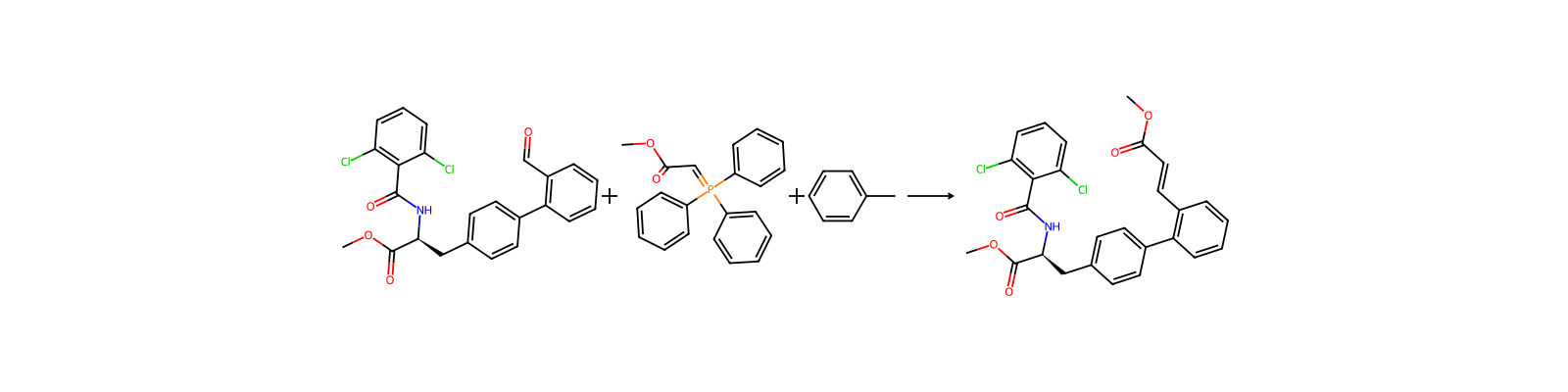
용도(Methoxycarbonylmethylene)triphenylphosphorane is used in olefination reactions. Wittig reagent for the two-carbon homologation of aldehydes to α,β-unsaturated esters. it undergoes the Wittig reaction with aldehydes to give substituted methyl acrylates. used in an efficient synthesis of pyrazoles via reaction with methyl diazoacetate in the presence of triethylamine. It is used in the preparation of (triphenylphosphoranylidene)-ketene. The Wittig reaction we performed in class involved the reaction of 2-nitrobenzaldehyde (1) with methyl (triphenylphosphoranylidene) acetate (2) to produce methyl (2E)-3-(2-nitrophenyl) acrylate (3) with a triphenylphosphine oxide (4) side product, and took place in a silica gel matrix to ensure even product dispersion for chromatography.
상·하류 제품 정보
하류 제품
관련 반응
461건


화합물 노트
불러오는 중…