
기본 정보
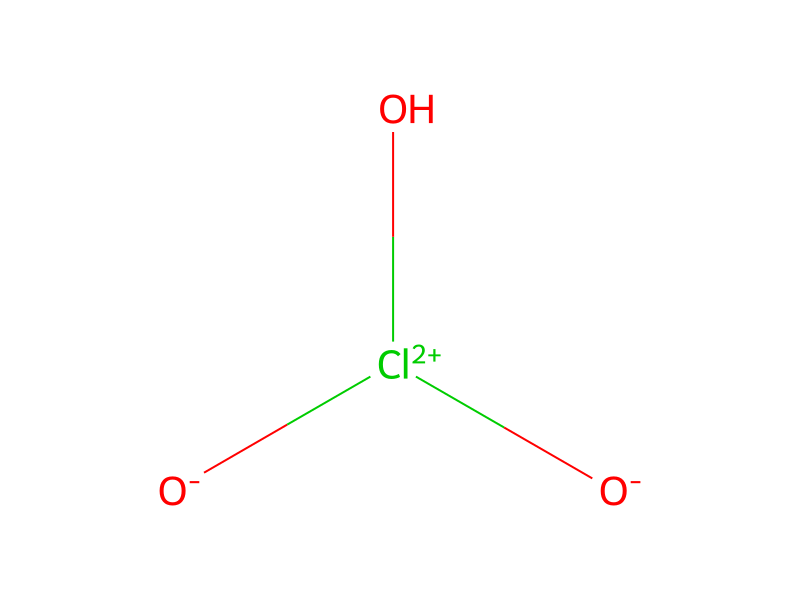
- 표준 SMILES
[O-][Cl+2]([O-])O- InChIKey
LSUVGSGHYCLVPU-UHFFFAOYSA-N- 분자식
- ClHO3
- 평균 분자량
- 84.46 g/mol
- 단동위원소 질량
- 83.96142157
개요
Chloric acid is a colorless liquid. It will accelerate the burning of combustible materials and can ignite most on contact. It is corrosive to metals and tissue. It is used as a reagent in chemical analysis and to make other chemicals.
이름 및 식별자
- 우선 이름
- Chloric acid
- IUPAC
- chloric acid
- 현지명
- 염소산용액
- 영어명
- CHLORIC ACID
- 분자식
- ClHO3
- 분자량
- 84.46
이름 및 동의어
CHLORIC ACID7790-93-4Z0V9L75H3KDTXSID1047449CHEBI:17322RefChem:5667DTXCID9027449CLO2--Portable sterilization card232-233-0ChlorsaeureChloric(V) acidUNII-Z0V9L75H3K
이름 더 보기
클로르산염소산염소산용액Chloride AcidC01485NA-9191chloricNA 2626Hypure CchloricacidChloric acid solutionCHLORIC ACID, 35 WT. % SOLUTIONCHLORIC ACID ISO 9001:2015 REACH
hydrogenchloric acidEINECS 232-233-0UN2626hydrogen chloric acidHClO3hydroxidodioxidochlorineCHLORIC ACID [MI]SCHEMBL18802
데이터베이스 식별자
- CAS
7790-93-4- PubChem CID
- 19654
- DTXSID
DTXSID1047449- ChEMBL
CHEMBL1161633- ChEBI
CHEBI:17322- UNII
- Z0V9L75H3K
- EC Number
- 232-233-0
- Nikkaji
- J74.689D
물성
구조 계산 물성
- XLogP
- 2.1
- 극성 표면적
- 54.4 Ų
- 수소 결합 공여자 수
- 1
- 수소 결합 수용자 수
- 3
- 회전 가능 결합 수
- 0
- 무거운 원자 수
- 4
- 형식 전하
- 0
- 복잡도
- 46.2
실험 및 물리화학적 성질
Chemical Classes
Toxic Gases & Vapors -> Acids, Inorganic
Reactive agents - 4th degree
Physical Description
Chloric acid is a colorless liquid. It will accelerate the burning of combustible materials and can ignite most on contact. It is corrosive to metals and tissue. It is used as a reagent in chemical analysis and to make other chemicals.
Found only in aqueous solution; [Merck Index] Clear colorless liquid; [MSDSonline]
물리화학적 성질
- 녹는점
- -20 ℃ · <-20℃ [CRC10]
- 끓는 점
- 100 °C · >100 °C
- 밀도
- 1.2 g/mL · 1.2 g/mL at 25 °C
- 용해도
- 2 O · very soluble in H2O
- 색상
- exists only in aqueous solution
- 수용성
- 2 O · 매우 잘 녹는 H2O [CRC10]
- Merck
- 13 · 13,2109
- EPA
- Chloric acid (7790-93-4)
화학적 성질
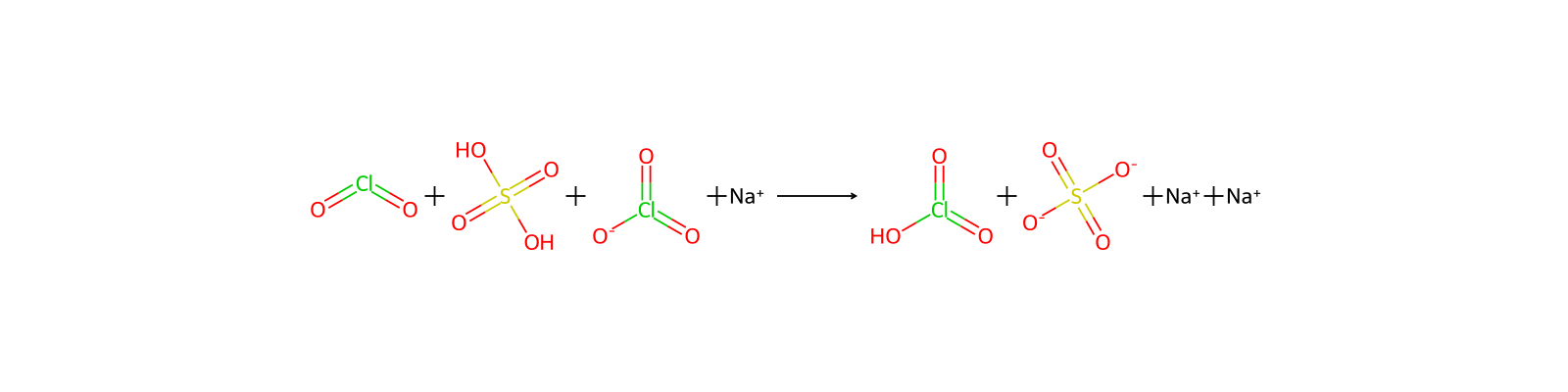
can occur only in an aqueous solution; oxidizing agent; preparation: reaction between H2SO4 and barium chlorate; used as a catalyst in the polymerization of acrylonitrile, as an oxidizing agent [MER06] [HAW93]
안전 및 규제
GHS 분류
GHS Classification
Danger
H271 (100%): May cause fire or explosion; strong Oxidizer [Danger Oxidizing liquids; Oxidizing solids]
P210, P220, P260, P264, P280, P283, P301+P330+P331, P302+P361+P354, P304+P340, P305+P354+P338, P306+P360, P316, P321, P363, P370+P378, P371+P380+P375, P405, P420, and P501 (click each P-code to see the statement)
Aggregated GHS information provided per 39 reports by companies from 1 notifications to the ECHA C&L Inventory. Each notification may be associated with multiple companies.
Danger
H271: May cause fire or explosion; strong Oxidizer [Danger Oxidizing liquids; Oxidizing solids]
유해성 정보
Regulatory Information
Chloric acid: Does not have an individual approval but may be used under an appropriate group standard
The New Jersey Worker and Community Right to Know Act requires public and private employers to provide information about hazardous substances at their workplaces. (N.J.S.A. 34:5A-1 et. seq.)
DOT LabelOxidizer
Fire Hazards
Excerpt from ERG Guide 140 [Oxidizers]:
CAUTION: Ammonium nitrate products may explode if involved in fire or contaminated with hydrocarbons (fuels), organic matter, other contaminants or when hot molten and contained. Treat as an explosive (GUIDE 112).
Health Hazards
Excerpt from ERG Guide 140 [Oxidizers]:
· Inhalation, ingestion or contact (skin, eyes) with vapors or substance may cause severe injury, burns or death.
Hazards Summary
A strong skin and mucous membrane irritant; [Merck Index] Corrosive to tissue; [CAMEO] An eye irritant; [eChemPortal: ERMA] A corrosive substance that can cause injury to the skin, eyes, and respiratory tract; Inhalation may cause chemical pneumonitis and pulmonary edema; [MSDSonline]
DOT ID and Guide2626 140
Reactive GroupAcids, Strong Oxidizing
Reactivity AlertsStrong Oxidizing Agent
Reactivity Profile
Self-reactive. Concentrations of CHLORIC ACID above 40% decompose [Mellor 2 Supp. 1:576 1956]. Antimony sulfide and concentrated solutions of chloric acid react with incandescence [Mellor Supp. II Part I:584 1956]. Arsenic sulfide and concentrated solutions of chloric acid react with incandescence. Reacts with vigor even explodes with other metal sulfides, i.e. copper sulfide [Mellor Supp. II Part I:584 1956]. In contact with oxidizable materials, including ammonia, reactions can be extremely violent. Filter paper ignites after soaking in chloric acid, [Mellor, 1946, Vol. 2, 310]. Explosions have been recorded by mixtures of chloric acid solution with metals such as: antimony, bismuth, and iron. This is due to the formation of explosive compounds including hydrogen.
Air and Water ReactionsWater soluble.
Hazard Classes and Categories
Ox. Liq. 1 (100%)
Oxidizing liquids - Category 1-2
Reactive agents - 4th degree
안전 및 보호
Fire FightingExcerpt from ERG Guide 140 [Oxidizers]:
Accidental Release Measures
· CALL 911. Then call emergency response telephone number on shipping paper. If shipping paper not available or no answer, refer to appropriate telephone number listed on the inside back cover.
· Keep combustibles (wood, paper, oil, etc.) away from spilled material.
First Aid
Excerpt from ERG Guide 140 [Oxidizers]:
General First Aid:
Exposure Control and Personal Protection· Wear positive pressure self-contained breathing apparatus (SCBA).
Nonfire Spill ResponseExcerpt from ERG Guide 140 [Oxidizers]:
Isolation and Evacuation
Excerpt from ERG Guide 140 [Oxidizers]:
Immediate precautionary measure
Personal Protective Equipment (PPE)Excerpt from ERG Guide 140 [Oxidizers]:
Emergency Response Planning GuidelinesSmall Fire
독성 정보
Adverse EffectsDermatotoxin - Skin burns.
안전 데이터
- tsca
- TSCA listed
- ridadr
- UN 2626
- risk_code
- 8-34
- hazard_code
- O,C
- safety_code
- 17-26-36/37/39-45
- 포장분류
- II
- 위험 등급
- 5.1
- 기존화학 물질
- KE-05474
화학 및 산업
용도 및 제조
UsesUsed as an oxidizing agent and as a catalyst in acrylonitrile polymerization; [Merck Index] Used in chemical analysis and to make other chemicals; [CAMEO]
General Manufacturing InformationChloric acid: ACTIVE
응용 분야
개요Chloric acid, HClO3, is an oxoacid of chloride, and the formal precursor of chlorate salts. It is a strong acid (pKa=-1) and a strong oxidizing agent. It is stable in cold aqueous solution up to a concentration of approximately 30%, and solution of up to 40% can be prepared by careful evaporation under reduced pressure. Above these concentrations, and on warming, chloric acid solutions decompose to give a variety of products, for example: 8HClO3→4HClO4+2H2O+2Cl2+3O2 Note that it disproportionates into perchloric acid in which the chlorine atom has a+7 oxidation state and also the zero oxidation state of chlorine gas (an oxidation–reduction reaction). Thus, under the proper conditions, it can also be used to make perchloric acid. 3HClO3→HClO4+H2O+2ClO2
용도Oxidizing agent; with H2SO3 as catalyst in acrylonitrile polymerization.
일반 설명CHLORIC ACID is a colorless liquid. CHLORIC ACID will accelerate the burning of combustible materials and can ignite most on contact. CHLORIC ACID is corrosive to metals and tissue. CHLORIC ACID is used as a reagent in chemical analysis and to make other chemicals.
상·하류 제품 정보
하류 제품
공급사6 곳
广东翁江化学试剂有限公司0751-2815987 13927875076 · [email protected]
陕西缔都医药化工有限公司+86-29-81139210 +86-17392587031 · [email protected]
爆牛贸易重庆有限公司+86-023-6139-8061 +86-86-13650506873 · [email protected]
陕西缔都医药化工有限公司029-029-029-81148696 18161915376 · [email protected]
广东元丰化学试剂有限公司0751-2829979 13318584237 · [email protected]
SUZHOU SENFEIDA CHEMICAL CO.,LTD+86-0512-83500002 +86-15195660023 · [email protected]
관련 반응
15건



연결된 노트
불러오는 중…