

기본 정보
- CAS
3986-89-8- 표준 SMILES
C[C@H](C=O)[C@H]1CC[C@H]2[C@@H]3CCC4=CC(=O)CC[C@]4(C)[C@H]3CC[C@]12C- InChIKey
XVPJEGGIGJLDQK-HOFZUOGSSA-N- 분자식
- C22H32O2
- 평균 분자량
- 328.5 g/mol
- 단동위원소 질량
- 328.24023026
이름 및 식별자
- 우선 이름
- (2S)-2-((8S,9S,10R,13S,14S,17R)-10,13-dimethyl-3-oxo-1,2,6,7,8,9,11,12,14,15,16,17-dodecahydrocyclopenta(a)phenanthren-17-yl)propanal
- IUPAC
- (2S)-2-[(8S,9S,10R,13S,14S,17R)-10,13-dimethyl-3-oxo-1,2,6,7,8,9,11,12,14,15,16,17-dodecahydrocyclopenta[a]phenanthren-17-yl]propanal
- 현지명
- 비스노르콜렌알데하이드
- 영어명
- BISNORCHOLENALDEHYDE
- 분자식
- C22H32O2
- 분자량
- 328.49
이름 및 동의어
(2S)-2-[(8S,9S,10R,13S,14S,17R)-10,13-dimethyl-3-oxo-1,2,6,7,8,9,11,12,14,15,16,17-dodecahydrocyclopenta[a]phenanthren-17-yl]propanal(2S)-2-((8S,9S,10R,13S,14S,17R)-10,13-dimethyl-3-oxo-1,2,6,7,8,9,11,12,14,15,16,17-dodecahydrocyclopenta(a)phenanthren-17-yl)propanalRefChem:398070861-038-9bisnorcholenaldehyde3986-89-8PROGESTERONE IMPURITY 24(S)-2-((8S,9S,10R,13S,14S,17R)-10,13-dimethyl-3-oxo-2,3,6,7,8,9,10,11,12,13,14,15,16,17-tetradecahydro-1H-cyclopenta[a]phenanthren-17-yl)propanal(20S)-3-oxopregn-4-ene-20-carboxaldehydeMFCD18429079Progesterone EP Impurity I (S-Isomer)(S)-2-[(8S,9S,10R,13S,14S,17R)-10,13-Dimethyl-3-oxo-2,3,6,7,8,9,10,11,12,13,14,15,16,17-tetradecahydro-1H-cyclopenta[a]phenanthren-17-yl]propanal
이름 더 보기
비스노르콜렌알데하이드BNKY018-PG01BisnorcholeldehydeKETOBISNORALDEHYDEProgesterone Impurity 7Progesterone EP Impurity IDidroprogesterone impurity 2
물성
구조 계산 물성
- XLogP
- 4.6
- 극성 표면적
- 34.1 Ų
- 수소 결합 공여자 수
- 0
- 수소 결합 수용자 수
- 2
- 회전 가능 결합 수
- 2
- 무거운 원자 수
- 24
- 형식 전하
- 0
- 복잡도
- 591
물리화학적 성질
- 녹는점
- 159 · 159-160 °C
- 끓는 점
- 459.4 · 459.4±14.0 °C(Predicted)
- 밀도
- 1.07 · 1.07±0.1 g/cm3(Predicted)
- 용해도
- 클로로포름(약간 용해됨), 디클로로메탄(약간 용해됨), 메탄올(약간 용해됨)
- 물리적 상태
- 고체
- 색상
- 흰색에서 황백색까지
- InChI
- InChI=1S/C22H32O2/c1-14(13-23)18-6-7-19-17-5-4-15-12-16(24)8-10-21(15,2)20(17)9-11-22(18,19)3/h12-14,17-20H,4-11H2,1-3H3/t14-,17+,18-,19+,20+,21+,22-/m1/s1
- InChIKey
- XVPJEGGIGJLDQK-HOFZUOGSSA-N
- SMILES
- C1(=O)C=C2[C@](C)(CC1)[C@]1([H])[C@]([H])([C@@]3([H])[C@@](CC1)(C)[C@@H]([C@@H](C=O)C)CC3)CC2
안전 및 규제
안전 정보는 참고용이며, 공급업체의 물질안전보건자료(SDS), 관련 법규 및 전문가 평가를 대체하지 않습니다.
GHS 분류
GHS Classification
Danger
H351 (100%): Suspected of causing cancer [Warning Carcinogenicity];H360 (100%): May damage fertility or the unborn child [Danger Reproductive toxicity];H362 (100%): May cause harm to breast-fed children [Reproductive toxicity, effects on or via lactation]
P203, P260, P263, P264, P270, P280, P318, P405, and P501 (click each P-code to see the statement)
Aggregated GHS information provided per 2 reports by companies from 1 notifications to the ECHA C&L Inventory. Each notification may be associated with multiple companies.;Information may vary between notifications depending on impurities, additives, and other factors. The percentage value in parenthesis indicates the notified classification ratio from companies that provide hazard codes. Only hazard codes with percentage values above 10% are shown. For more detailed information, please visit ECHA C&L website.
유해성 정보
Regulatory InformationStatus: Active Update: 02-12-2020 https://echa.europa.eu/registration-dossier/-/registered-dossier/32089
Hazard Classes and CategoriesCarc. 2 (100%);Repr. 1A (100%);Lact. (100%)
규제 정보
Regulatory InformationStatus: Active Update: 02-12-2020 https://echa.europa.eu/registration-dossier/-/registered-dossier/32089
안전 데이터
- 신호 어
- Danger
- 유해·위험 문구
- 암호 유해·위험 문구 위험 등급 범주 신호 어 그림 문자 P- 코드 H351
화학 및 산업
응용 분야
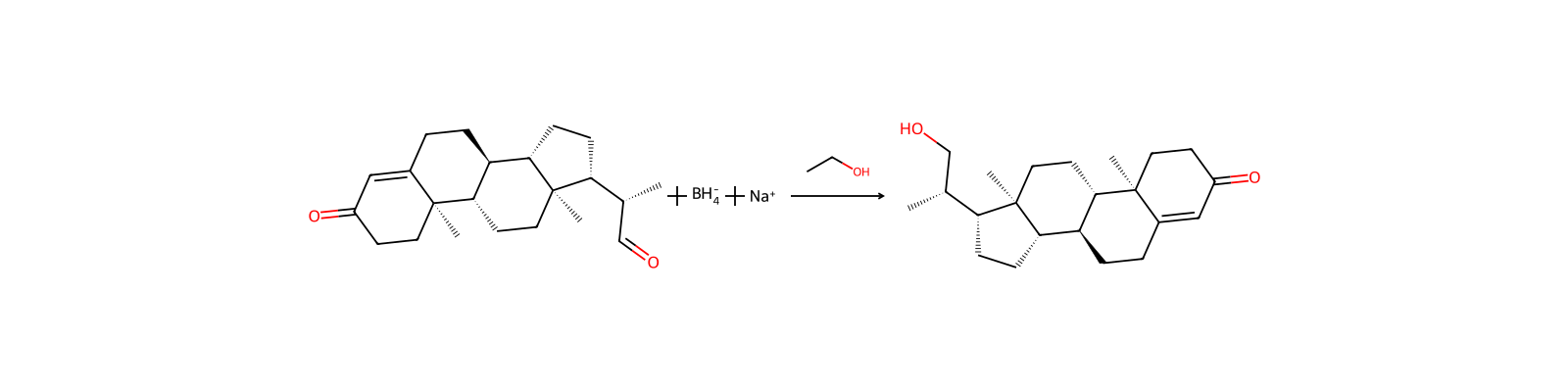
개요Androstenedione is the main product after phytosterol fermentation by Mycobacteria. Bisnorcholenaldehyde (BA; 3-Oxopregn-4-ene-20-carboxaldehyde) is one of the by-products produced during fermentation. Bisnorcholenaldehyde is an essential intermediate in the production of progesterone, which is used to treat threatened abortion or habitual abortion disease caused by luteal insufficiency. It is a precursor of androgen, estrogen, glucocorticoid and intermediates of steroid hormone synthesis[1]. In addition, BA is used in magnetic-based graphene composites with steroidal diamine dimer as a potential drug in hyperthermia cancer therapy.
용도Bisnorcholenaldehyde is hydrocarbon derivatives and can be used as reference materials for medical impurities.
상·하류 제품 정보
하류 제품
공급사33 곳
广州佳途科技股份有限公司81960175-877 18933936954 · [email protected]
湖北瑞玛标物科技有限公司15787879035 15787875101 · [email protected]
上海科骊科生物技术有限公司021-34975789 18721102763
Sinco Pharmachem (ShenZhen) R&D Co., Ltd.+86-18603013401 · [email protected]
济南启源生物科技有限公司18766124282; 18766124282 · [email protected]
孟成科技(上海)有限公司400-820-6829 · [email protected]
관련 반응
3건

화합물 노트
불러오는 중…