홈MCP워크벤치Skills
홈워크벤치알림마이페이지
llms.txt · MCP 가이드개인정보처리방침 · 이용약관 · 지원v1.8.0
  1. 홈
  2. /화합물

염화 디데실다이메틸암모늄

Didecyldimethylammonium Chloride
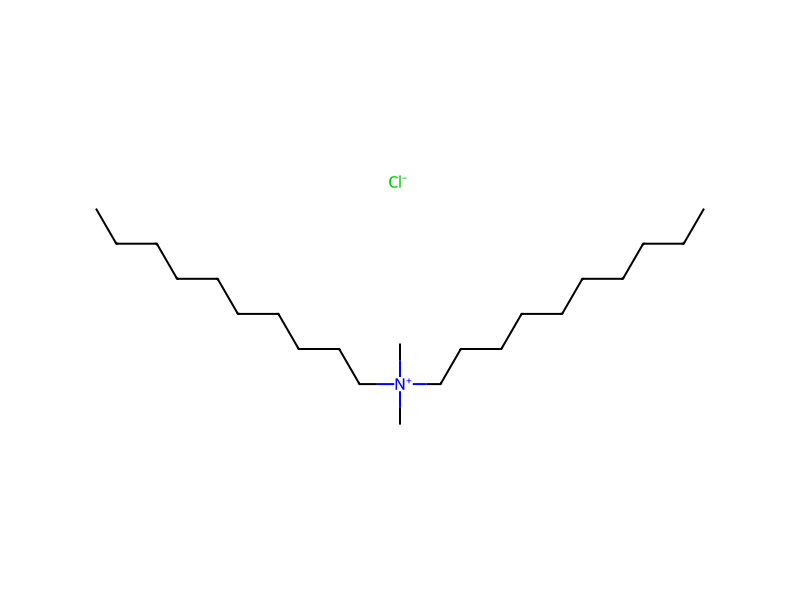
HCID 23558
새 노트새 반응견적 요청하기
인쇄 미리보기
기본 정보개요이름 및 식별자물성안전 및 규제화학 및 산업관련 반응화합물 노트
부분 구조 검색유사 구조 찾기

기본 정보

CAS
7173-51-5
표준 SMILES
CCCCCCCCCC[N+](C)(C)CCCCCCCCCC.[Cl-]
InChIKey
RUPBZQFQVRMKDG-UHFFFAOYSA-M
분자식
C22H48N.Cl
평균 분자량
362.1 g/mol
단동위원소 질량
361.3475282

개요

Didecyldimethylammonium chloride is an organic molecular entity.

이름 및 식별자

우선 이름
Didecyldimethylammonium Chloride
IUPAC
didecyl(dimethyl)azanium chloride
현지명
염화 디데실다이메틸암모늄
영어명
Didecyl dimethyl ammonium chloride
분자식
C22H48ClN
분자량
362.08

이름 및 동의어

7173-51-5Didecyl dimethyl ammonium chlorideDidecyldimethylammonium chlorideDDACAstopQuaternium 12Arquad 10Britewood QQuaternium-12Bardac 2250Odex QQuartamin D 10E
이름 더 보기
염화디데실다이메틸암모늄염화디데실디메틸암모늄염화디데실디메틸암모늄다이데실다이모늄클로라이드염화 디데실디메틸암모늄DIDECYLDIMONIUM CHLORIDEDIDECYL-DIMETHYLAMMONIUM CHLORIDEDidecildimethylammonium chloridedidecyl dimethyl Ammonium Chloride 50% solution in Toluenebtc1010bardac22btco1010BARDAC2280
Quartamin D 10PTimbercote 2000Nissan Cation 2DBSlaoff 91ActicideAliquat 203Querton 210CLDodigen 1881

데이터베이스 식별자

CAS
7173-51-5
PubChem CID
23558
DTXSID
DTXSID9032537
ChEMBL
CHEMBL224987
ChEBI
CHEBI:79935
UNII
JXN40O9Y9B
EC Number
230-525-2

물성

구조 계산 물성

극성 표면적
0 Ų
수소 결합 공여자 수
0
수소 결합 수용자 수
1
회전 가능 결합 수
18
무거운 원자 수
24
형식 전하
0
복잡도
200

실험 및 물리화학적 성질

Chemical ClassesNitrogen Compounds -> Quaternary Amines
Cosmetics · 2건

Cosmetics ingredient -> Emulsifier

Emulsifying; Hair conditioning; Antistatic; Surfactant

pHpH = 6.8 to 6.9 at 25 °C in a 29.5% water solution
Pesticides · 2건

Fungicides

Active substance -> EU Pesticides database: Not approved

SurfactantsSurfactant
LogPlog Kow = 2.59 at 20 °C, pH 7
Odor · 2건

Mushroom-like odor

Ethanolic odor

Density · 2건

0.87 at 20 °C /OECD Guideline 109/

Colorless liquid. Density: 0.870 g/mL; pH 7.81 /Bardac 2280/

Color/Form · 3건

Colorless crystals

Clear yellow liquid /commercial aqueous solution/

Solid powder of slight yellowish color at 20 °C

Solubility · 4건

In water, 0.65 g/L at 20 °C /OECD Guideline 115/

In water, 0.39 g/L at 25 °C /critical micelle concentration/

안전 및 규제

안전 정보는 참고용이며, 공급업체의 물질안전보건자료(SDS), 관련 법규 및 전문가 평가를 대체하지 않습니다.

GHS 분류

GHS Classification · 6건

Danger

H302: Harmful if swallowed [Warning Acute toxicity, oral]

P260, P264, P270, P280, P301+P317, P301+P330+P331, P302+P361+P354, P304+P340, P305+P354+P338, P316, P321, P330, P363, P405, and P501 (click each P-code to see the statement)

Danger

H301 (15.2%): Toxic if swallowed [Danger Acute toxicity, oral]

P260, P264, P264+P265, P270, P273, P280, P301+P316, P301+P317, P301+P330+P331, P302+P361+P354, P304+P340, P305+P354+P338, P316, P317, P321, P330, P363, P391, P405, and P501 (click each P-code to see the statement)

유해성 정보

Regulatory Information · 6건

Chemical: 1-Decanaminium, N-decyl-N,N-dimethyl-, chloride

Hazard Traits - Hazard Trait Undefined

1-Decanaminium, N-decyl-N,N-dimethyl-, chloride (1:1) is listed on the EPA's Chemical Data Reporting (CDR) system. Manufacturers and importers of 1-Decanaminium, N-decyl-N,N-dimethyl-, chloride (1:1) are required to report information about their production and use of this chemical to the EPA under the Toxic Substances Control Act (TSCA). (40 eCFR Part 711)

DDAC is listed in the dataset of EPA Human Health Benchmarks for Pesticides under the Safe Drinking Water Act (40 eCFR 141)

2009/70/EC, Reg. (EU) No 175/2013, Reg. (EU) No 540/2011

REACH registered substance: Didecyldimethylammonium chloride (EC: 230-525-2)

Other Safety InformationIMAP assessments - Mono- and di-alkyl quaternary ammonium surfactants: Environment tier II assessment
Hazards Summary · 1건

A skin irritant that can cause eye injury; Harmful by ingestion; [Merck Index] Causes burns; Not marketed as a pure substance; Available in alcoholic/aqueous solutions; [EFSA: DAR - Vol. 1] Increased liver weights (with corresponding histopathology) and increased ALT activity in repeated-dose oral studies of animals; [EPA ChAMP: Hazard Characterizations] Causes contact urticaria; [Kanerva, p. 219]

화학 및 산업

약리 정보

ATC Code · 2건

D - Dermatologicals

QD - Dermatologicals

Metabolism/Metabolites · 1건

DDAC (40% aqueous in both radiolabled (14C) and nonradiolabled form), used in a definitive pharmacokinetic study to determine absorption, distribution and excretion and was administered orally (single dose), by gavage, to Charles River CD (Crl CD(SD)Br--5/sex/group) ... . In the addendum the metabolic profile was determined in a 2 step experiment. First, another group of rats (10 male Charles River CD (Crl CD(SD)Br) were treated with (14C)-DDAC at 50 mg/kg in order to obtain enough (14C) residues to use as standards. The (14C) metabolites were characterized by TLC, HPLC and MS. The second part of the experiment involved using the "standard" metabolic profiles to analyze the metabolites from feces samples obtained in the initial study. It was shown that metabolism tends to be sex specific. Females metabolize the parent compound more so than males. Metabolism, which may be microbial in nature, involved the oxidation of the 2 decyl side chains to form hydroxy and hydroxyketo derivatives. Modification of methyl substituents was not evident.

Absorption, Distribution and Excretion · 1건

DDAC (40% aqueous in both radiolabled (14C) and nonradiolabled form), used in a definitive pharmacokinetic study to determine absorption, distribution and excretion and was administered orally (single dose), by gavage, to Charles River CD Rats (Crl CD(SD)Br--5/sex/group) in 3 dose regimens: 1) A single low dose (5 mg/kg), 2) a repeated low dose in diet containing 34 ppm "cold" in the feed daily for 14 days, followed by a 5 mg/kg dose of (14C)]-DDCA (9.01 mCi/mmole, and 99% radiochemical purity) or 3) a single high dose of 50 mg/kg. Excretion of radioactivity was shown to occur primarily in the feces (89-99%), some in urine (<2.5%), and an insignificant amount was expired. Highly ionic DDAC is not readily absorbed from the GI tract...

용도 및 제조

Uses · 6건

Used as a general purpose disinfectant and sanitizer, to prevent mildew in commercial laundries, for treating cooling tower and oil field flood waters, and as a wood preservative; [Merck Index] Used as an antiseptic; [REPROTOX] Used as a broad-spectrum fungicide, bactericide, and algaecide for horticultural areas and equipment (not used on plants); [EFSA: DAR - Vol. 1] Used as an antimicrobial for hard surfaces, laundry, carpets, agricultural equipment, food handling facilities, medical equipment, water storage and purification equipment, swimming pools, industrial water systems (recirculating cooling water, drilling muds, oil well injection, and wastewater), and as a wood preservative; [Reference #1]

관련 반응

66건
반응 기록 만들기
HRID 42981 반응식
HRID 42981반응물로uspto-grants-2013_09
HRID 421519 반응식
HRID 421519반응물로uspto-grants-2012_01
HRID 442832 반응식
HRID 442832반응물로uspto-grants-1999_04
HRID 442833 반응식
HRID 442833반응물로uspto-grants-1999_04
HRID 442834 반응식
HRID 442834반응물로uspto-grants-1999_04
HRID 442835 반응식
HRID 442835반응물로uspto-grants-1999_04
HRID 442836 반응식
HRID 442836반응물로uspto-grants-1999_04
HRID 442837 반응식
HRID 442837반응물로uspto-grants-1999_04
1 / 9 페이지

화합물 노트

불러오는 중…

이 페이지에서기본 정보개요이름 및 식별자물성안전 및 규제화학 및 산업관련 반응화합물 노트
더보기
새 노트새 반응견적 요청하기

Soluble in acetone; extremely soluble in benzene; insoluble in hexane

In isopropanol: 827, 797 and 836 g/L at 10, 20 and 30 °C, respectively; in-octanol: 248 g/L at 20 °C; in hexane: 0.000424 g/L at 10 °C

CorrosivityAnion is corrosive ... treated wood has the disadvantage of being incompatible with many paints and coatings
Boiling Point>180 °C; decomposes before boiling at 1 atm /OECD Guideline 103/

물리화학적 성질

녹는점
88 °C · 88 °C
끓는 점
88 °C/1013hPa · 88°C/1013hPa
밀도
0.87 · 0.87[at 20℃]
증기압
0.006 Pa · 0.006Pa at 25℃
저장 조건
30 °C · Store below +30°C.
용해도
248 g/L · 248g/L in organic solvents at 20 ℃
물리적 상태
젤
색상
라이트 베이지부터 브라운까지
수소이온지수(pH)
6.5 · 6.5-8.0 (20°C, 10g/L in H2O)
수용성
650 mg/L · 650mg/L at 25℃
안정성
흡습성
주요 응용
임상 시험
화장품 원료 기능
대전방지제계면활성제 - 세정헤어 컨디셔닝계면활성제 - 유화제
InChI
InChI=1S/C22H48N.ClH/c1-5-7-9-11-13-15-17-19-21-23(3,4)22-20-18-16-14-12-10-8-6-2;/h5-22H2,1-4H3;1H/q+1;/p-1
InChIKey
RUPBZQFQVRMKDG-UHFFFAOYSA-M
SMILES
C(CCCCCCCCC)[N+](C)(C)CCCCCCCCCC.[Cl-]
LogP
2.8 at · 2.8 at 20℃
EPA
Didecyl dimethyl ammonium chloride (7173-51-5)

화학적 성질

Liquid

Special Reports · 1건

USEPA/Office of Prevention, Pesticides and Toxic Substances; Reregistration Eligibility Decision Document - Aliphatic Alkyl Quaternaries (DDAC) EPA 739-R-06-008 (August 2006). The RED summarizes the risk assessment conclusions and outlines any risk reduction measures necessary for the pesticide to continue to be registered in the U.S.[Available from, as of November 4, 2014: http://www.epa.gov/pesticides/reregistration/status.htm]

FIFRA Requirements · 3건

Residues of the following chemical substances are exempted from the requirement of a tolerance when used in accordance with good manufacturing practice as ingredients in an antimicrobial pesticide formulation, provided that the substance is applied on a semi-permanent or permanent food-contact surface (other than being applied on food packaging) with adequate draining before contact with food. ... (c) The following chemical substances when used as ingredients in an antimicrobial pesticide formulation may be applied to: Food-processing equipment and utensils. 1-Decanaminium, N-decyl-N,N-dimethyl-, chloride is included on this list. Limit: When ready for use, the end-use concentration is not to exceed 200 ppm of active quaternary compound.

The Agency has completed its assessment of the dietary, residential, occupational, drinking water, and ecological risks associated with the use of pesticide products containing the active ingredient DDAC. Based on a review of these data and on public comments on the Agency's assessments for the active ingredient DDAC, the Agency has sufficient information on the human health and ecological effects of DDAC to make decisions as part of the tolerance reassessment process under FFDCA and reregistration process under FIFRA, as amended by FQPA. The Agency has determined that DDAC-containing products are eligible for reregistration provided that: (i) current data gaps and confirmatory data needs are addressed; the risk mitigation measures outlined in this document are adopted; and (iii) label amendments are made to reflect these measures. ... Based on its evaluation of DDAC, the Agency has determined that DDAC products, unless labeled and used as specified in this document, would present risks inconsistent with FIFRA. Accordingly, should a registrant fail to implement the risk mitigation measure identifie in this document, the Agency may take regulatory action to address the risk concerns from the use of DDAC. If all changes outlined in this document are incorporated into the product labels, then all current risks for DDAC will be substantially mitigated for the purposes of this determination. Once an Endangered Species assessment is completed, further changes to these registrations may be necessary as explained in Section III of this document.

As the federal pesticide law FIFRA directs, EPA is conducting a comprehensive review of older pesticides to consider their health and environmental effects and make decisions about their continued use. Under this pesticide reregistration program, EPA examines newer health and safety data for pesticide active ingredients initially registered before November 1, 1984, and determines whether the use of the pesticide does not pose unreasonable risk in accordance to newer saftey standards, such as those described in the Food Quality Protection Act of 1996. Pesticides for which EPA had not issued Registration Standards prior to the effective date of FIFRA '88 were divided into three lists based upon their potential for human exposure and other factors, with List B containing pesticides of greater concern than those on List C, and with List C containing pesticides of greater concern than those on List D. Didecyl dimethyl ammonium chloride is found on List C. Case No: 3003; Pesticide type: fungicide, herbicide, antimicrobial; Case Status: OPP is reviewing data from the pesticide's producers regarding its human health and/or environmental effects, or OPP is determining the pesticide's eligibility for reregistration and developing the RED document.; Active ingredient (AI): didecyl dimethyl ammonium chloride; Data Call-in (DCI) Date(s): 10/13/95; AI Status: The producers of the pesticide have made commitments to conduct the studies and pay the fees required for reregistration, and are meeting those commitments in a timely manner.

Hazard Classes and Categories · 5건

Acute Tox. 3 (15.2%)

Acute toxicity - category 4

Acute toxicity (Oral) - Category 3

Acute toxicity (Oral) - Category 3

Acute Tox. 4 *

Skin, Eye, and Respiratory Irritations... The primary dermal effects that have been reported are rash, burning sensation, numbness, and itching. ... /Quaternary ammonium compounds/

안전 및 보호

Storage Conditions · 4건

Do not contaminate water, food or feed by storage or disposal. /Bardac Wood Preservative 80/

Do not use or store near heat or open flame /Bardac Wood Preservative 80/

Treated lumber must be stored under cover, or indoors, or at least 100 feet from any pond, lake, stream, wetland, or river ... Treated lumber stored outdoors within 100 feet ... must be covered with plastic or surrounded by a berm. If a berm is used around the site, it must consist of impermeable material (clay, asphalt, concrete) and be of sufficient height to prevent runoff during heavy rainfall events.

Safe Storage of Pesticides. Always store pesticides in their original containers, complete with labels that list ingredients, directions for use, and first aid steps in case of accidental poisoning. Never store pesticides in cabinets with or near food, animal feed, or medical supplies. Do not store pesticides in places where flooding is possible or in places where they might spill or leak into wells, drains, ground water, or surface water. /Residential uses/

Cleanup Methods · 2건

If a spill occurs, clean it up promptly. Don't wash it away. Instead, sprinkle the spill with sawdust, vermiculite, or kitty litter. Sweep it into a plastic garbage bag, and dispose of it as directed on the pesticide product label./Residential uses/

After Applying a Pesticide, Indoors or Outdoors. To remove pesticide residues, use a bucket to rinse tools or equipment three times, including any containers or utensils that you used when mixing the pesticide. Then pour the rinsewater into the pesticide sprayer and reuse the solution by applying it according to the pesticide product label directions. After applying any pesticide wash your hands and any other parts of your body that may have come in contact with the pesticide..To prevent tracking pesticides inside, remove or rinse your boots or shoes before entering your home. Wash any clothes that have been exposed to a lot of pesticide separately from your regular wash. /Residential uses/

Disposal Methods · 5건

SRP: The most favorable course of action is to use an alternative chemical product with less inherent propensity for occupational harm/injury/toxicity or environmental contamination. Recycle any unused portion of the material for its approved use or return it to the manufacturer or supplier. Ultimate disposal of the chemical must consider: the material's impact on air quality; potential migration in soil or water; effects on animal and plant life; and conformance with environmental and public health regulations.

Pesticide Disposal: Pesticide wastes are acutely hazardous. Improper disposal of excess pesticide, spray mixture, or rinsate is a violation of Federal Law. If these pesticides cannot be disposed of by use according to label instructions, contact your State Pesticide or Environmental COntrol Agency, or the Hazardous Waste representative at the nearest EPA Regional Office for guidance. /Bardac Wood Preservative 80/

Container DIsposal: Plastic Container: Triple rinse (or equivalent). Then offer for recycling or reconditioning, or puncture and dispose of in a sanitary landfill, or, if allowed by state and local authorities by burning. If burned, stay out of smoke. Metal Container: Triple rinse (or equivalent). Then offer for recycling or reconditioning, ... or by other procedures approved by state and local authorities.

Do not discharge effluent containing this product into lakes, streams, ponds, estuaries, oceans, or other waters unless in accordance with the requirements of a National Pollution Discharge Elimination System (NPDES) permit and the permitting authority has been notified in writing prior to the discharge. Do not discharge effluent containing this product to sewer systems without previously notifying the local sewage treatment plant authority. For guidance contact your State Water Board or Regional Office of the EPA.

For more Disposal Methods (Complete) data for DIDECYL DIMETHYL AMMONIUM CHLORIDE (8 total), please visit the HSDB record page.

Preventive Measures · 5건

Precautionary Statements for all Manufacturing Use Products (based on concentration of active ingredients): Do not get in eyes, on skin, or on clothing. Do not breathe vapor or spray mist. Wear a dust/ filtering respirator (MSHA/ NIOSH approval number TC-21C) ora a NIOSH approved respirator with any N, R, P, or HE filter. WEar goggles or faceshield, rubber gloves, and protective clothing when handling. Wash thoroughly with soap and water after handling. Remove contaminated clothing and wash before reuse.

SRP: Contaminated protective clothing should be segregated in a manner such that there is no direct personal contact by personnel who handle, dispose, or clean the clothing. The completeness of the cleaning procedures should be considered before the decontaminated protective clothing is returned for reuse by the workers. Contaminated clothing should not be taken home at the end of shift, but should remain at employee's place of work for cleaning.

Individuals who enter pressue treatment cylinders and other related equipment that are contaminated with the wood treatment solution ... must wear protective clothing including overalls, jacket, gloves and boots impervious to the wood treatment formulation. Federal, state and local confined space entry procedures must be followed. /Bardac Wood Preservative 80/

Applicators must not eat or drink, or use tobacco products during those parts of the application process that may expose them to the wood treatment formulation. /Bardac Wood Preservative 80/

For more Preventive Measures (Complete) data for DIDECYL DIMETHYL AMMONIUM CHLORIDE (13 total), please visit the HSDB record page.

Allowable Tolerances · 1건

Residues of the following chemical substances are exempted from the requirement of a tolerance when used in accordance with good manufacturing practice as ingredients in an antimicrobial pesticide formulation, provided that the substance is applied on a semi-permanent or permanent food-contact surface (other than being applied on food packaging) with adequate draining before contact with food. ... (c) The following chemical substances when used as ingredients in an antimicrobial pesticide formulation may be applied to: Food-processing equipment and utensils. 1-Decanaminium, N-decyl-N,N-dimethyl-, chloride is included on this list. Limit: When ready for use, the end-use concentration is not to exceed 200 ppm of active quaternary compound.

Protective Action Criteria (PAC) · 3건

0.25 [mg/m3]

2.8 [mg/m3]

17 [mg/m3]

Personal Protective Equipment (PPE) · 1건

For End Use Products Intended for Commercial, Institutional, Industrial, Agricultural, and Residential Uses: PPE requirements are dependent on the Acute Toxicity Daft submitted to EPA to support the end use product registration /and the specific product label should be consulted/

독성 정보

Interactions · 1건

The bactericidal activity of a quaternary ammonium salt, didecyldimethylammonium chloride (DDAC), was depressed by the presence of soap, sodium laurate (NaLA): the minimum lethal concentration (MLC) of DDAC against Staphylococcus aureus was 63 and 250 ug/mL in the absence and presence of 0.01% NaLA, respectively. The neutralizing effect was studied in relation with the mode of action of DDAC. The apparent uptake of DDAC by the cell was not repressed by NaLA's presence when compared to that in its absence. The solution of NaLA showed alkaline pH, but the biocidal activity of DDAC was higher at pH 11 than at pH 7. Although the presence of NaLA had no significant effect on DDAC's action on increasing the turbidity of the cell suspension, the mixture of these reagents alone without cells exhibited some turbidity. From these findings it is deduced that NaLA can form a less active complex with DDAC by both ionic and hydrophobic interactions...

Ecotoxicity Values · 5건

LC50; Species: Anas platyrhynchos (Mallard duck) age 10 days; diet >5620 ppm for 8 days

LC50; Species: Anas platyrhynchos (Mallard duck) diet >3500 ppm for 8 days

LC50; Species: Anas platyrhynchos (Mallard duck) age 14 days; diet >5620 ppm for 14 days

LC50; Species: Colinus virginianus (Northern bobwhite) age 10 days; diet >5620 ppm for 8 days

For more Ecotoxicity Values (Complete) data for DIDECYL DIMETHYL AMMONIUM CHLORIDE (70 total), please visit the HSDB record page.

Environmental Fate · 3건

TERRESTRIAL FATE: Based on a classification scheme(1), measured Koc values ranging from 677 to 9.1X10+5 in a variety soils (most >1.0X10+4)(2,3), indicate that didecyl dimethyl ammonium chloride is expected to have low to no immobility in soil(SRC). Didecyl dimethyl ammounium chloride is a cationic surfactant(2) that will exist in cation form in the environment(SRC), and cations generally adsorb more strongly to soils containing organic carbon and clay than their neutral counterparts(4). Volatilization of didecyl dimethyl ammonium chloride from moist soil surfaces is not expected to be an important fate process because cations do not volatilze(SRC). Didecyl dimethyl ammonium chloride is not expected to volatilize from dry soil surfaces(SRC) based upon a vapor pressure of <4.3X10⁻⁵ mm Hg at 25 °C(3). Biodegradation rates of 67% or higher in 28 days using standardized biodegradation tests(3) suggest that biodegradation is expected to be an important fate process in soil(SRC).

AQUATIC FATE: Based on a classification scheme(1), measured Koc values ranging from 677 to 9.1X10+5 in a variety soils (most >1.0X10+4)(2,3), indicate that didecyl dimethyl ammonium chloride is expected to adsorb to suspended solids and sediment(SRC). Didecyl dimethyl ammonium chloride exists in the cation form at pH values of 5 to 9(2) and, therefore, volatilization from water surfaces is not expected to be an important fate process(SRC). According to a classification scheme(4), a BCF of 81, measured in bluegill sunfish (Lepomis macrochirus)(2), suggests the potential for bioconcentration in aquatic organisms is moderate(SRC). Results of a river die-away test having 97% degradation over 30 days(4) indicate that biodegradation may be an important environmental fate process in water(SRC). In addition, results of various biodegradation screening tests have found didecyl dimethyl ammonium chloride to be readily biodegradable (OECD Guidelines 301D, 301B) or inherently biodegradable (Zahns-Wellens test) with degradation rates of 67% or higher(3). Results of aqueous hydrolysis tests found didecyl dimethyl ammonium chloride to be hydrolytically stable with half-lives of >= 1 year at pH 4, pH 7 and pH 9 at 20 °C(3). Didecyl dimethyl ammonium chloride is reported to be photolytically stable(2), and therefore is not expected to be susceptible to direct photolysis by sunlight(SRC).

ATMOSPHERIC FATE: According to a model of gas/particle partitioning of semivolatile organic compounds in the atmosphere(1), didecyl dimethyl ammonium chloride, which has a vapor pressure of <4.3X10⁻⁵ mm Hg at 25 °C(2), will exist in both the vapor and particulate phases in the ambient atmosphere. Vapor-phase didecyl dimethyl ammonium chloride is degraded in the atmosphere by reaction with photochemically-produced hydroxyl radicals(SRC); the half-life for this reaction in air is estimated to be 8 hours(SRC), calculated from its rate constant of 4.6X10⁻¹¹ cu cm/molecule-sec at 25 °C(SRC) that was derived using a structure estimation method(3). Particulate-phase didecyl dimethyl ammonium chloride may be removed from the air by wet or dry deposition(SRC). Didecyl dimethyl ammonium chloride is photolytically stable(4), and therefore is not expected to be susceptible to direct photolysis by sunlight(SRC).

Adverse EffectsOccupational hepatotoxin - Secondary hepatotoxins: the potential for toxic effect in the occupational setting is based on cases of poisoning by human ingestion or animal experimentation.
Toxicity Summary · 1건

IDENTIFICATION AND USE: Didecyl dimethylammonium chloride is a clear yellow liquid with an ethanolic odor. It is used as an algaecide, bacteriocide, fungicide, fungistat, microbiocide, microbiostat disinfectant, viricide, tuberculocide, molluscide, sanitizer, wood preservative, deodorant, and insecticide. It has been tested for treatment of impetiginized eczema patients in combination with prednicarbate. HUMAN EXPOSURE AND TOXICITY: Nausea, headache, and sore throat are the primary systemic effects that have been reported. The primary dermal effects that have been reported are rash, burning sensation, numbness, and itching. A case report of dermatitis from detergent/disinfectant was described. A 24 year old woman, who had worked in a hospital for 2 years, presented with a 2 month history of dermatitis of the dorsum of the hands and wrists. Patch testing showed she was positive for didecyldimethylammonium chloride and bis-(aminopropyl)-laurylamine which was present in detergents/disinfectants. According to the EPA classification didecyl dimethylammonium chloride is not likely to be carcinogenic to humans. ANIMAL STUDIES: In animals it is a severe eye irritant, severe dermal irritant, but not a sensitizer. It was of moderate acute oral toxicity in rodents, with possible effects on the liver and central nervous system being seen. In rats no adverse oncogenic effects were observed, however, there were treatment-related changes in both sexes in the mesenteric lymph node (blood filled sinuses, hemosiderosis and hystiocytosis) and bile duct hyperplasia at 1500 ppm. There were no developmental effects in rats. In developmental study in rabbits an increased number of dead fetuses/litter and decreased fetal body weight at 10.0 mg/kg was observed. In the Ames test, with or without the microsomal activation (S-9 fraction), didecyl dimethylammonium chloride was not mutagenic to Salmonella typhimurium tester strains. It was not mutagenic in vivo in rats, in Chinese hamster ovary cells, and did not produce unscheduled DNA synthesis. ECOTOXICITY STUDIES: Swimming performance decreased significantly in juvenile rainbow trout. Significant decreases in larval growth and survival were noted at all tested concentrations and in all sturgeon age groups. The larval stage was usually more sensitive than the fry stage. Acute toxicity tests with fertilized eggs were unsuccessful. Developmental stage altered the sensitivity of coho salmon to Bardac 2280, with alevins being approximately twice as sensitive as smolts.

Ecotoxicity Excerpts · 5건

/AQUATIC SPECIES/ The acute lethal and sublethal toxicity of didecyldimethylammonium chloride (DDAC) to juvenile rainbow trout (Oncorhynchus mykiss) was investigated. The nominal 96-hr LC50 value in a flow-through exposure system was 0.409 mg/L. Investigation of the effects of acute sublethal exposures on blood chemistry, swimming performance, disease resistance, and gill morphology revealed no adverse effects after a 24-hr exposure to 0.1 mg DDAC/L. Primary and secondary biochemical indicators of stress, i.e., plasma cortisol, glucose, and lactate levels, were only significantly elevated after a 24-hr exposure to DDAC at 0.4 mg/L. However, swimming performance decreased significantly after 12- and 24-hr exposures to both 0.2 and 0.4 mg/L. Scanning electron microscopic analysis revealed no gross disruptions to gill epithelial surfaces as a result of toxicant exposure. A disease challenge test revealed that exposure to sublethal concentrations of DDAC for 24 hr had no significant effect.

/AQUATIC SPECIES/ This study was conducted to describe the acute lethality and latent toxicity of didecyldimethylammonium chloride (DDAC) on early life stages of white sturgeon (Acipenser transmontanus). Fish responses to 0, 10, 50, 100, 250, 500 ug/L concentrations of DDAC were determined using a 96-hr standard static renewal method for acute toxicity testing, with three replicates per concentration. Twenty fish per replicate were tested for 3, 11, and 42-day-old larvae, and 7 fish per replicate were tested for 78-day-old juveniles. Following exposure, survival and growth were evaluated in exposed fish raised in clean water for 2 weeks. The 96-hr median lethal concentration (LC50) values for DDAC were 10.0 to 50.0, 58.5, and 99.7 ug/L for 3, 11, and 42-day-old larvae and 100 to 250 ug/L for 78-day-old juveniles. Significant decreases in larval growth and survival were noted at all tested concentrations and in all sturgeon age groups. Results of this study reveal age- and concentration-dependent responses to DDAC. Among the age groups tested, the 3-day-old larvae were the most sensitive group. Results also revealed that 96-hr lethality testing alone is not adequate for determining the toxicity of DDAC to white sturgeon.

/AQUATIC SPECIES/ The primary goal of this study was to investigate the possibility of using early life stages of white sturgeon (Acipenser transmontanus) (eggs, larvae and fly) as a species relevant to the Fraser River, B.C., for the acute and sublethal toxicological testing of forest industry effluents. Here reported the first successful acute toxicity tests for 8-day-old larvae and 42-day-old fry exposed to several chemicals known to be released into the Fraser River (i.e., 6 monochlorovanillin (6 MVAN), 4,5 dichloroguaiacol (4,5 DCG), 4,5 dichlorocatechol (4,5 DCAT), pentachlorophenol (PCP), and didecyldimethylammonium chloride (DDAC)). In most cases, white sturgeon fry were at the lower end of the range for acute toxicity values for chlorinated phenolic compounds, when compared with other juvenile fish species, and they were extremely sensitive to DDAC. The larval stage was usually more sensitive than the fry stage. Acute toxicity tests with fertilized eggs were unsuccessful.

Ongoing Test Status · 1건

EPA has released the first beta version (version 0.5) of the Interactive Chemical Safety for Sustainability (iCSS) Dashboard. The beta version of the iCSS Dashboard provides an interactive tool to explore rapid, automated (or in vitro high-throughput) chemical screening data generated by the Toxicity Forecaster (ToxCast) project and the federal Toxicity Testing in the 21st century (Tox21) collaboration. /The title compound was tested by ToxCast and/or Tox21 assays; Click on the "Chemical Explorer" button on the tool bar to see the data./[USEPA; ICSS Dashboard Application; Available from, as of November 4, 2014: http://actor.epa.gov/dashboard/]

Effluent Concentrations · 1건

Levels of didecyl dimethyl ammonium chloride from treated packages of lumber following rainfall events were reported as 73.2 and 65.8 mg/L after 2 events, averaging 15.9 mg/L over 15 events(1). The discharge measured into the Fraser River (British Columbia, Canada)was 1.06 mg/L(1).

Soil Adsorption/Mobility · 1건

The log Koc for didecyl dimethyl ammonium chloride has been reported as 5.64 (sand), 5.96 (sandy loam), 6.20 (silty clay loam), 6.17 (silt loam)(1), corresponding to Koc values of 4.4X10+5, 9.1X10+5, 1.6X10+6, and 1.5X10+6 respectively(SRC). In batch equilibrium studies using five different soil types and OECD Guideline 106 (Adsorption - Desorption Using a Batch Equilibrium Method), didecyl dimethyl ammonium chloride had Koc values of 667, 1140, 10456, 14072 and 24433(2). According to a classification scheme(2), these Koc values suggest that didecyl dimethyl ammonium chloride is expected to have low to no mobility in soil with most Koc values suggesting the compound is immobile in soil. Didecyl dimethyl ammounium chloride is a cationic surfactant(1) that may exist in cation form in the environment(SRC), and cations generally adsorb more strongly to soils containing organic carbon and clay than their neutral counterparts(4). Didecyl dimethyl ammounium chloride binds rapidly to suspended solids and sediments(1). Reported Kd values at 25 °C are 3.03 (sand), 3.91 (sandy loam), 4.52 (silty clay loam), and 4.49 (silt loam)(1).

Human Toxicity Excerpts · 5건

/SIGNS AND SYMPTOMS/ There are 1,105 incidences that have been reported in the California Pesticide Surveillance Program Database (1982-2003) as definitely, probably, or possibly related to quats. ...Nausea, headache, and sore throat are the primary systemic effects that have been reported. The primary dermal effects that have been reported are rash, burning sensation, numbness, and itching. ...Although there are some people who were unable to work after exposure for a certain period of time, no one was hospitalized. /Quaternary ammonium compounds/

/SIGNS AND SYMPTOMS/ There have been nearly 2700 incidents reported to the OPP Incident Data System (IDS) and the California Department of Pesticide Regulation (1982-2004) associated with exposure to end-use products containing quaternary ammonium compounds (Quats). Most of the incidents are related to dermal, ocular and inhalation irritation. Allergic type reaction /has/ also been reported in some incidents. ...Inhalation incident symptoms: respiratory irritation/burning, irritation to mouth/throat/nose, coughing/choking, chest pain, disorientation, dizziness, shortness of breath. Dermal incident symptoms: irritation/burning, rash, itching, and blistering. Allergic symptoms: hives and allergic contact dermatitis. Oral incident symptoms: irritation to mouth/throat/nose, vomiting/nausea/abdominal pain, dizziness, and headache. Ocular incident symptoms: irritation/burning, eye pain, conjunctivitis, swelling eye and swelling of eyelid. /Quaternary ammonium compounds/

/CASE REPORTS/ A case report of dermatitis from detergent/disinfectant was described. A 24 year old woman, who had worked in a hospital for 2 years, presented with a 2 month history of dermatitis of the dorsum of the hands and wrists. The cause of her dermatitis was linked to the use of a particular detergent/disinfectant at work. Seven months later after she had changed jobs to a work location where she had no obvious contact with detergents or disinfectants she presented again with dermatitis. This time she had involvement of the eyelids, face, and arms. Her office had been cleaned with a different detergent the day before. Each time the room was cleaned she had to wait until the floor dried or she would get a new episode of dermatitis. Symptoms were so severe that the patient required systemic treatment with corticosteroids. Patch testing showed she was positive for didecyldimethylammonium chloride (DC, Bardac 22) and bis-(aminopropyl)-laurylamine which was present in both detergents/disinfectants. DC is also used on wood to protect it from termites and as a fungicide and as an algicide in swimming pools. The /study concludes/ that dermatitis caused by exposure to quaternary ammonium compounds may occur in other susceptible individuals.

/OTHER TOXICITY INFORMATION/ Cancer Classification: Not Likely to be Carcinogenic to Humans

/OTHER TOXICITY INFORMATION/ The relative toxicity of Aliquat 203 (didecyl-dimethyl-ammonium-chloride) was experimentally investigated in mice, rats, guinea-pigs, rabbits, and humans. These studies produced no evidence of an unusual degree or kind of toxicity. No data were found which indicated potential toxicologic hazard from wearing of uniforms impregnated with 0.5 percent Aliquat 203. An infrared spectrum of the technical-grade compound was evaluated also.

Artificial Pollution Sources · 1건

Didecyl dimethyl ammonium chloride's production and use as a disinfectant and microbiocide in various applications(1,2) may result in its release to the environment through various waste streams; its use as a general purpose disinfectant and pesticide, in water treatment of cooling towers and as a wood preservative(1,2) will result in its direct release to the environment(SRC).

Environmental Biodegradation · 3건

AEROBIC: Didecyl dimethyl ammonium chloride biodegradation test results(1).[Table#7301]

AEROBIC: Didecyl dimethyl ammonium chloride, present at 5.51 mg/L, reached 72% degradation in 28 days using an activated sludge inoculum acclimated for 25 days in the Closed Bottle test(1). The compound was 96% biodegraded when 5 ppm was incubated for 42 days in synthetic sewage in the OECD Confirmatory test(2). Submitting didecyl dimethyl ammonium chloride at a concentration of 20 ppm to biodegradation using activated sludge in the OCED Coupled Units test resulted in 0-38% biodegradation as DOC in three days(3). OECD Confirmatory testing showed a 94.8% removal, with 23-29% being lost in the sterile control through 21 days of operation(4). Using a continuous flow activated sludge (OECD Confirmatory Test) with acclimated sludge, 95% removal was observed at a test chemical concentration of 5 ppm; a 15 ppm test chemical concentration resulted in 0.3% DOC removal(5). Results of a river die-away test were 97% degradation over 30 days using water from the Guadalquivar River, Seville, Spain and a test chemical concentration of 5 ppm(2).

AEROBIC: Quarternary ammonium compounds have been shown to biodegrade, exhibiting lag times of less than one to several days at a concentration of 5 mg/L(1). The half-life of analogous 12 carbon alkyl chain didodecyl dimethyl ammonium chloride has been reported at 21 days(1).

규제 정보

FIFRA Requirements · 3건

Residues of the following chemical substances are exempted from the requirement of a tolerance when used in accordance with good manufacturing practice as ingredients in an antimicrobial pesticide formulation, provided that the substance is applied on a semi-permanent or permanent food-contact surface (other than being applied on food packaging) with adequate draining before contact with food. ... (c) The following chemical substances when used as ingredients in an antimicrobial pesticide formulation may be applied to: Food-processing equipment and utensils. 1-Decanaminium, N-decyl-N,N-dimethyl-, chloride is included on this list. Limit: When ready for use, the end-use concentration is not to exceed 200 ppm of active quaternary compound.

The Agency has completed its assessment of the dietary, residential, occupational, drinking water, and ecological risks associated with the use of pesticide products containing the active ingredient DDAC. Based on a review of these data and on public comments on the Agency's assessments for the active ingredient DDAC, the Agency has sufficient information on the human health and ecological effects of DDAC to make decisions as part of the tolerance reassessment process under FFDCA and reregistration process under FIFRA, as amended by FQPA. The Agency has determined that DDAC-containing products are eligible for reregistration provided that: (i) current data gaps and confirmatory data needs are addressed; the risk mitigation measures outlined in this document are adopted; and (iii) label amendments are made to reflect these measures. ... Based on its evaluation of DDAC, the Agency has determined that DDAC products, unless labeled and used as specified in this document, would present risks inconsistent with FIFRA. Accordingly, should a registrant fail to implement the risk mitigation measure identifie in this document, the Agency may take regulatory action to address the risk concerns from the use of DDAC. If all changes outlined in this document are incorporated into the product labels, then all current risks for DDAC will be substantially mitigated for the purposes of this determination. Once an Endangered Species assessment is completed, further changes to these registrations may be necessary as explained in Section III of this document.

As the federal pesticide law FIFRA directs, EPA is conducting a comprehensive review of older pesticides to consider their health and environmental effects and make decisions about their continued use. Under this pesticide reregistration program, EPA examines newer health and safety data for pesticide active ingredients initially registered before November 1, 1984, and determines whether the use of the pesticide does not pose unreasonable risk in accordance to newer saftey standards, such as those described in the Food Quality Protection Act of 1996. Pesticides for which EPA had not issued Registration Standards prior to the effective date of FIFRA '88 were divided into three lists based upon their potential for human exposure and other factors, with List B containing pesticides of greater concern than those on List C, and with List C containing pesticides of greater concern than those on List D. Didecyl dimethyl ammonium chloride is found on List C. Case No: 3003; Pesticide type: fungicide, herbicide, antimicrobial; Case Status: OPP is reviewing data from the pesticide's producers regarding its human health and/or environmental effects, or OPP is determining the pesticide's eligibility for reregistration and developing the RED document.; Active ingredient (AI): didecyl dimethyl ammonium chloride; Data Call-in (DCI) Date(s): 10/13/95; AI Status: The producers of the pesticide have made commitments to conduct the studies and pay the fees required for reregistration, and are meeting those commitments in a timely manner.

안전 데이터

wgk
WGK 2
tsca
TSCA listed
ridadr
2811
독성
LD50 oral in rat: 84mg/kg
risk_code
22-34
hazard_code
C
safety_code
26-36/37/39-45
포장분류
III
위험 등급
6.1(b)
기존화학 물질
KE-10281
Hazard Classifications
Acute Tox. 4 OralAquatic Chronic 1Eye Dam. 1Skin Corr. 1B
스토리지 클래스
8A - Combustible corrosive hazardous materials
유해 물질 데이터
7173-51-5(Hazardous Substances Data)
함량 및 규제정보
물질구분: 유독물질; 혼합물(제품)함량정보: 염화 디데실디메틸암모늄 및 이를 25% 이상 함유한 혼합물
유해화학물질 필터링
2012-1-646

Petroleum Production and Refining [Category: Industry]

For didecyl dimethyl ammonium chloride (USEPA/OPP Pesticide Code: 069149) ACTIVE products with label matches. /SRP: Registered for use in the U.S. but approved pesticide uses may change periodically and so federal, state and local authorities must be consulted for currently approved uses./

Algaecide, bacteriocide, fungicide, fungistat, microbiocide, microbiostat disinfectant, viricide, tuberculocide, molluscide, sanitizer, wood preservative, deodorant, and insecticide.

General purpose disinfectant, sanitizer; mildew preventative in commercial laundries; water treatment in cooling towers and oil field flood waters; wood preservative.

Didecyl dimethyl ammonium chloride is an active ingredient in a large number of disinfectant products registered with EPA and labeled with a claim to inactivate "avian influenza A" viruses on hard, non-porous surfaces.

U.S. Production · 4건

2023: 1,000,000 - <2,500,000 lb

Production volumes for non-confidential chemicals reported under the Inventory Update Rule. [Table#7304]

This chemical is listed as an Extended High Production Volume (EHPV). Chemicals listed as EHPV were produced in or imported into the U.S. in >1 million pounds according to the 2002 Toxic Substances Control Act (TSCA) Inventory Update. The EHPV program is a voluntary initiative that allows companies to demonstrate that adequate screening data exist for organic HPV chemicals.

Non-confidential 2012 Chemical Data Reporting (CDR) information on the production and use of chemicals manufactured or imported into the United States. Chemical: 1-Decanaminium, N-decyl-N,N-dimethyl-, chloride. National Production Volume: 2,228,752 lb/yr.

Consumption PatternsOne of the most widely used pesticides in British Columbia, Canada; 454,400 kg used by lumber mills in 1996
Consumer UsesSurfactant (surface active agent)
Industry UsesCleaning agent
Formulations/Preparations · 5건

The National Pesticide Information Retrieval System (NPIRS) identifies 74 companies with active labels for products containing the chemical didecyl dimethyl ammonium chloride. To view the complete list of companies, product names and percent didecyl dimethyl ammonium chloride in formulated products click the following url and enter the CAS Registry number in the Active Ingredient field.

TC 192 (BASF Corporation): Active ingredient: alkyl dimethyl benzyl ammonium chloride 8.0%; 1-decanaminium, N-decyl-N,N-dimethyl-, chloride 12.0%.

TC 192 (IBC Manufacturing Company): Active ingredient: 1-decanaminium, N-decyl-N,N-dimethyl-, chloride 18.0%; carbamic acid, butyl-, 3-iodo-2-propynyl ester 4.0%.

Baquacide 795 Swimming Pool Algicide (Arch Chemicals, Inc.): Active ingredient: 1-decanaminium, N-decyl-N,N-dimethyl-, chloride 50.0%.

For more Formulations/Preparations (Complete) data for DIDECYL DIMETHYL AMMONIUM CHLORIDE (27 total), please visit the HSDB record page.

Household Products · 2건

Cosmetics product ingredient: Didecyldimethyl ammonium chloride

Information on 205 consumer products that contain Didecyl dimethyl ammonium chloride in the following categories is provided:

Use ClassificationCosmetics -> Emulsifying; Hair conditioning; Antistatic; Surfactant
General Manufacturing Information · 5건

Oil and Gas Drilling, Extraction, and Support activities

1-Decanaminium, N-decyl-N,N-dimethyl-, chloride (1:1): ACTIVE

Used in waterborne copper-based wood preservative products ... introduced in New Zealand in 1978 ... to counteract basidiomycetes and soft rot fungi ... not suitable for wood in contact with the ground

... used in Canada in antisapstain formulations for treatment of freshly sawn lumber, in disinfectant formulations, and as a molluscicide.

... use as a molluscicide at pipe ends ... adding /didecyl dimethyl ammonium chloride/ to the intake and bentonite clay as an absorbant in the outfall.

응용 분야 · 1건

개요Didecyldimethylammonium chloride is a quaternary ammonium compound used as detergent/disinfectant in hospitals, as algicide in swimming pools, and as a fungicide and against termites in wood. This compound caused contact dermatitis in a hospital employee, also sensitive to glyoxal and bis-(aminopropyl)- laurylamine.

상·하류 제품 정보

상류 원료

디데킬디메틸암모니움 브로마이드N,N-디메틸데실아민1-크로르데칸N-메틸디데실아민염화메틸

하류 제품

Benzene, 2-methoxy-4,5-dimethyl-1,3-dinitro-

/AQUATIC SPECIES/ The effects of a seawater challenge on coho salmon, Oncorhynchus kisutch, previously exposed to didecyldimethylammonium chloride (DDAC) were examined. In one experiment, salmon were exposed to three sublethal concentrations of DDAC over three durations followed by a 24-hr seawater challenge in a computer-controlled, intermittent-flow respirometer to measure effects on several biochemical variables. After a 144-hr dose, plasma cortisol, glucose, and gill Na++-ATPase activity were significantly increased at a nominal DDAC concentration of 0.2 mg/L. In the second experiment, animals were exposed to five different concentrations for 24 hr followed by a 24-hr seawater challenge. Plasma cortisol was significantly increased at the highest exposure concentration (0.75 mg/L). Plasma Na+ was significantly elevated at exposure concentrations of 0.3, 0.5, 0.65, and 0.75 mg/L. Gill Na+/K+-ATPase activity was significantly reduced at exposure concentrations of 0.65 mg/L and 0.75 mg/L.

/AQUATIC SPECIES/ The acute toxicity of the antisapstain wood preservative Bardac 2280 (principal active ingredient 80% didecyldimethylammonium chloride, DDAC) was tested with four fish and four aquatic invertebrate species. White sturgeon fry (Acipenser transmontanus) were the most sensitive fish species tested with a 24-hr 50% lethal concentration (LC50) value between 1 and 10 ppb Bardac 2280. The 96-hr LC50 values for the three other fish species ranged from 0.39 ppm for fathead minnows (Pimephales promelas) to 2.0 ppm for juvenile starry flounder (Platichthys stellatus). Developmental stage altered the sensitivity of Coho salmon to Bardac 2280, with alevins being approximately twice as sensitive as smolts. Altering salinity up to 30%o seawater had no significant effect on the toxicity of Bardac 2280 to Coho smolts. The 48-hr LC50 values for Daphnia magna, Mysidopsis bahia, Hyalella azteca, and Neomysis mercedis were 0.037 ppm, 0.039 ppm, 0.106 ppm, and 0.947 ppm, respectively.