홈MCP워크벤치Skills
홈워크벤치알림마이페이지
llms.txt · MCP 가이드개인정보처리방침 · 이용약관 · 지원v1.8.0
  1. 홈
  2. /화합물

게르마늄 테트라하이드라이드

Germanium tetrahydride

HCID 23984
새 노트새 반응견적 요청하기
인쇄 미리보기

데이터를 보충하는 중입니다. 잠시 후 페이지를 새로 고치면 최신 내용을 볼 수 있습니다

기본 정보개요이름 및 식별자물성안전 및 규제화학 및 산업관련 반응화합물 노트
부분 구조 검색유사 구조 찾기

기본 정보

CAS
24968-55-6
표준 SMILES
[GeH4]
InChIKey
QUZPNFFHZPRKJD-UHFFFAOYSA-N
분자식
GeH4
평균 분자량
76.66 g/mol
단동위원소 질량
77.95247793

개요

Germane is a colorless gas with a pungent odor. It is flammable. The gas is heavier than air and a flame can flash back to the source of leak very easily. It is toxic by inhalation. Prolonged exposure of the containers to fire or intense heat may result in their violent rupturing and rocketing. It is used in making electronics.

이름 및 식별자

우선 이름
Germanium tetrahydride
IUPAC
germane
현지명
게르마늄 테트라하이드라이드
영어명
Germane
분자식
GeH4
분자량
76.64

이름 및 동의어

GermaneGermanium hydrideMonogermaneGermanium tetrahydridetetrahydridogermaniumEINECS 231-961-6UN2192CHEBI:30443HSDB 7911perdeuterogermane619P6J82AEGermanomethane
이름 더 보기
게르마늄테트라하이드라이드게르마늄테트라하이드라이드저메인GeH4GeH4 99,999%GERMANE 99.99+%germaniumhydrideDeuterated Germane
germanium hydridesmonogermane (Note: Used chiefly for the production of high purity germanium for use in semiconductors.)monogermane [Note: Used chiefly for the production of high purity germanium for use in semiconductors.]Germane (DOT)RefChem:639906Germanium tetrahydride (ACGIH)DTXCID1031094CHEBI:33587

데이터베이스 식별자

CAS
24968-55-6、7782-65-2
PubChem CID
23984
DTXSID
DTXSID7052521
ChEBI
CHEBI:30443
UNII
619P6J82AE
EC Number
231-961-6

물성

구조 계산 물성보충 중

극성 표면적
0 Ų
수소 결합 공여자 수
0
수소 결합 수용자 수
0
회전 가능 결합 수
0
무거운 원자 수
1
형식 전하
0
복잡도
0

실험 및 물리화학적 성질

Chemical Classes · 2건

Toxic Gases & Vapors -> Hydrides

Flammable agents - 4th degree

OdorPungent
Density · 4건

3.133 g/L

Relative density (water = 1): 1.53

1.523 @ -142°C

2.65(relative gas density)

Color/Form · 2건

Colorless gas

Shipped as a compressed gas

Solubility · 6건

Insoluble (NIOSH, 2024)

Soluble in hot hydrochloric acid

Decomposes in nitric acid

Insoluble in water

Solubility in water: none

Insoluble

Flash Point · 2건

Flammable gas

NA (Gas)

Boiling Point · 6건

-127 °F at 760 mmHg (NIOSH, 2024)

-88.1 °C

-88.5 °C

-127 °F

-90 °C @760 [mm Hg]

-127 °F

Melting Point · 6건

-267 °F (NIOSH, 2024)

-165 °C

-165 °C

-267 °F

-165 °C

-267 °F

Vapor Density

안전 및 규제

안전 정보는 참고용이며, 공급업체의 물질안전보건자료(SDS), 관련 법규 및 전문가 평가를 대체하지 않습니다.

GHS 분류

GHS Classification · 6건

Danger

H220 (100%): Extremely flammable gas [Danger Flammable gases]

P203, P210, P222, P260, P264, P270, P271, P280, P284, P301+P317, P304+P340, P316, P320, P330, P377, P381, P403, P403+P233, P405, P410+P403, and P501 (click each P-code to see the statement)

Aggregated GHS information provided per 185 reports by companies from 3 notifications to the ECHA C&L Inventory. Each notification may be associated with multiple companies.

Danger

H220: Extremely flammable gas [Danger Flammable gases]

유해성 정보

Hazards IdentificationToxic/poison by inhalation (TIH/PIH)
Regulatory InformationThe New Jersey Worker and Community Right to Know Act requires public and private employers to provide information about hazardous substances at their workplaces. (N.J.S.A. 34:5A-1 et. seq.)
DOT LabelPoison Gas Flammable Gas
Fire Hazards · 3건

Excerpt from ERG Guide 119 [Gases - Toxic - Flammable]:

· Flammable; may be ignited by heat, sparks or flames.

Extremely flammable. Gas/air mixtures are explosive.

Health Hazards · 2건

Excerpt from ERG Guide 119 [Gases - Toxic - Flammable]:

· TOXIC; may be fatal if inhaled or absorbed through skin. Some may cause severe skin burns and eye damage.

Hazards SummaryGermanium tetrahydride appears to have the potential to cause hemolysis similar to that caused by arsine and stibine; [ACGIH] A skin, eye, and respiratory tract irritant; May cause damage to red blood cells; [ICSC] See Germanium.
DOT ID and Guide · 2건

화학 및 산업

용도 및 제조

Uses · 4건

Used in the production of semiconductors; [ACGIH]

Semiconductor Manufacturing [Category: Industry]

Used chiefly for the production of high purity germanium for use in semiconductors

Germanium tetrahydride finds some use as a doping agent for solid-state electronic components.

U.S. ProductionProduction volumes for non-confidential chemicals reported under the Inventory Update Rule. [Table#7747]
Methods of Manufacturing · 3건

Germanides can be produced by melting other metals with germanium and freezing the melt, e.g., Mg2Ge [1310-52-7]. Germanes ( germanium hydrides) are evolved when germanides react with acids: monogermane ... can be separated by fractional distillation.

Prepared by the action of lithium aluminium hydride on germanium halide in ether solution.

Germane, GeH4, can also be produced by the reduction of GeCl4 using lithium aluminum hydride or by the reduction of GeO2 by sodium borohydride in water solution.

General Manufacturing InformationGermane: ACTIVE
응용 분야 · 2건

용도It is used to produce high-purity germaniummetal and as a doping substance for electroniccomponents.

일반 설명GERMANE is a colorless gas with a pungent odor.The gas is heavier than air and a flame can flash back to the source of leak very easily. GERMANE is toxic by inhalation. Prolonged exposure of the containers to fire or intense heat may result in their violent rupturing and rocketing. GERMANE is used in making electronics.

추가 설명

정의A germanium hydride of the general formula GenH2n+2.

관련 반응

33건

반응 기록 만들기
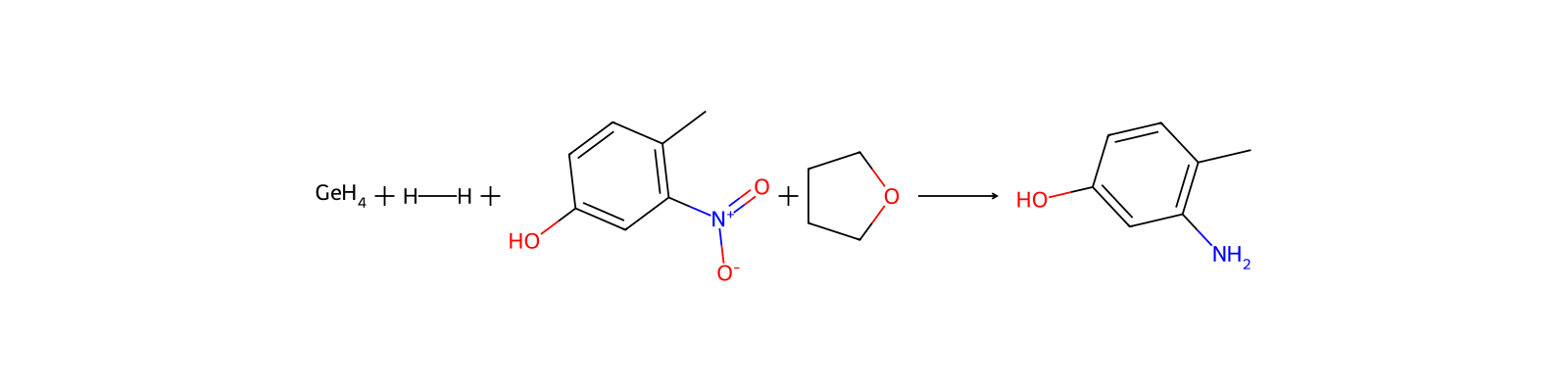
HRID 89345 반응식
HRID 89345반응물로Training data from https://doi.org/10.1039/C8SC04228D (2/10)
HRID 91907 반응식
HRID 91907반응물로Training data from https://doi.org/10.1039/C8SC04228D (2/10)
HRID 103117 반응식
HRID 103117반응물로Training data from https://doi.org/10.1039/C8SC04228D (2/10)
HRID 105925 반응식
HRID 105925반응물로Training data from https://doi.org/10.1039/C8SC04228D (2/10)
HRID 119664 반응식
HRID 119664반응물로Training data from https://doi.org/10.1039/C8SC04228D (2/10)
HRID 141830 반응식
HRID 141830반응물로Training data from https://doi.org/10.1039/C8SC04228D (9/10)
HRID 147683 반응식
HRID 147683반응물로Training data from https://doi.org/10.1039/C8SC04228D (9/10)
HRID 151687 반응식
HRID 151687반응물로Training data from https://doi.org/10.1039/C8SC04228D (9/10)
1 / 5 페이지

화합물 노트

불러오는 중…

이 페이지에서기본 정보개요이름 및 식별자물성안전 및 규제화학 및 산업관련 반응화합물 노트
더보기
새 노트새 반응견적 요청하기
· 3건

2.65 (NIOSH, 2024) - Heavier than air; will sink (Relative to Air)

Relative vapor density (air = 1): 2.65

2.65

Vapor Pressure · 4건

greater than 1 atm (NIOSH, 2024)

> 1 atmosphere

>1 atm

>1 atm

Ionization Potential · 2건

11.34 eV

11.34 eV

Physical Description · 5건

Germane is a colorless gas with a pungent odor. It is flammable. The gas is heavier than air and a flame can flash back to the source of leak very easily. It is toxic by inhalation. Prolonged exposure of the containers to fire or intense heat may result in their violent rupturing and rocketing. It is used in making electronics.

Colorless gas with a pungent odor. [Note: Shipped as a compressed gas.]; [NIOSH]

COLOURLESS COMPRESSED GAS WITH PUNGENT ODOUR.

Colorless gas with a pungent odor.

Colorless gas with a pungent odor. [Note: Shipped as a compressed gas.]

물리화학적 성질

녹는점
-165 °C · -165°C
끓는 점
-88 °C · -88°C
밀도
1 · 1,53 g/cm3
증기 밀도
1.53 · 1.53 (142 °C, vs air)
용해도
2 O · insoluble in H2O
물리적 상태
무색 가스
Specific Gravity
1.53 · 1.53
색상
colorless gas; flammable
수용성
93 · 물에 불용성; 용해성 액체 암모니아, 약간 용해성 뜨거운 HCl [HAW93]
비열
0.59 J/ · Cp(gas): 0.59 J/(g·K), at 25℃
Merck
13 · 13,4418
EPA
Germane (7782-65-2)

화학적 성질

Germane is a colorless, flammable gas. Pungent odor.

2192 119

2192 119

Reactive GroupMetal Hydrides, Metal Alkyls, Metal Aryls, and Silanes
UN ClassificationUN Hazard Class: 2.3; UN Subsidiary Risks: 2.1
Reactivity AlertsStrong Reducing Agent
Reactivity Profile · 1건

Hydrides, such as GERMANE, are reducing agents and react rapidly and dangerously with oxygen and with other oxidizing agents, even weak ones. Thus, they are likely to ignite on contact with alcohols. Hydrides are incompatible with acids, alcohols, amines, and aldehydes.

Chemical DangersThe substance may ignite spontaneously on contact with air. Heating may cause violent combustion or explosion. Reacts with halogens and oxidants. This generates fire and explosion hazard.

안전 및 보호

Fire Fighting · 2건

Excerpt from ERG Guide 119 [Gases - Toxic - Flammable]:

Shut off supply; if not possible and no risk to surroundings, let the fire burn itself out. In other cases extinguish with carbon dioxide, dry powder. In case of fire: keep cylinder cool by spraying with water. Combat fire from a sheltered position.

First Aid MeasuresFresh air, rest. Refer immediately for medical attention.
Accidental Release Measures · 2건

· CALL 911. Then call emergency response telephone number on shipping paper. If shipping paper not available or no answer, refer to appropriate telephone number listed on the inside back cover.

· ELIMINATE all ignition sources (no smoking, flares, sparks or flames) from immediate area.

First Aid · 3건

Excerpt from NIOSH Pocket Guide for Germanium tetrahydride:

General First Aid:

(General first aid procedures)

Safe StorageFireproof.
Exposure Control and Personal Protection · 2건

· Wear positive pressure self-contained breathing apparatus (SCBA).

TIH (Toxic Inhalation Hazard) - Term used to describe gases and volatile liquids that are toxic when inhaled. Some are TIH materials themselves, e.g., chlorine, and some release TIH gases when spilled in water, e.g., chlorosilanes. [ERG 2016].

Fire Fighting Procedures · 1건

Suitable extinguishing media: Use water spray, alcohol-resistant foam, dry chemical or carbon dioxide. Special protective equipment for fire-fighters: Wear self contained breathing apparatus for fire fighting if necessary. Use water spray to cool unopened containers.

Storage ConditionsKeep container tightly closed in a dry and well-ventilated place. Contents under pressure.
Cleanup Methods · 1건

Personal precautions: Wear respiratory protection. Avoid breathing vapors, mist or gas. Ensure adequate ventilation. Remove all sources of ignition. Evacuate personnel to safe areas. Beware of vapors accumulating to form explosive concentrations. Vapors can accumulate in low areas. Environmental precautions: Prevent further leakage or spillage if safe to do so. Do not let product enter drains. Methods for cleaning up: Wipe up with absorbent material (e.g. cloth, fleece).

Nonfire Spill ResponseExcerpt from ERG Guide 119 [Gases - Toxic - Flammable]:
Disposal Methods · 1건

SRP: The most favorable course of action is to use an alternative chemical product with less inherent propensity for occupational harm/injury/toxicity or environmental contamination. Recycle any unused portion of the material for its approved use or return it to the manufacturer or supplier. Ultimate disposal of the chemical must consider: the material's impact on air quality; potential migration in soil or water; effects on animal and plant life; and conformance with environmental and public health regulations.

Spillage DisposalEvacuate danger area! Remove all ignition sources. Consult an expert! Personal protection: self-contained breathing apparatus. Ventilation.

독성 정보

Target Organscentral nervous system, kidneys, blood
Adverse EffectsNeurotoxin - Sensorimotor
Exposure Routes · 2건

The substance can be absorbed into the body by inhalation.

inhalation

Signs and Symptoms · 2건

Headache. Weakness. Dizziness. Abdominal pain. Confusion. Dark urine. Symptoms may be delayed.

malaise (vague feeling of discomfort), headache, dizziness, fainting; dyspnea (breathing difficulty); nausea, vomiting; kidney injury; hemolytic effects

Non-Human Toxicity Excerpts · 5건

/LABORATORY ANIMALS: Acute Exposure/ Exposures to 6800 mg/cu m (approx. 2130 ppm) for 1 hour, 610 mg/cu m (approx. 190 ppm) for 30 minutes, 580 mg/cu m (approx. 180 ppm) for 1 hour, or 480 mg/cu m (approx. 150 ppm) for 1 hour were lethal to mice (time of death: within 1, 8, 13 hours and 1 day, resp). Dyspnea was observed in these animals. Guinea pigs survived a 1-hour exposure to 480 mg/cu m (approx. 150 ppm), but not to 580 mg/cu m (approx. 180 ppm) (time of death: within 4 days). In both experiments, hemoglobinuria was seen, while from the first experiment, dyspnea and pneumonia were reported. Some dyspnea was observed in a rabbit surviving a 1-hour exposure to 310 mg/cu m (100 ppm) (all experiments were performed with one animal only)

/LABORATORY ANIMALS: Acute Exposure/ The 2 hour-LC50 in mice was 1380 mg/cu m. In this study (reported in Russian), clinical signs were dyspnea, convulsion, and coma. Autopsy revealed congested internal organs, hemorrhages, nerve cell vacuolization, and degenerative changes in the cells of parenchymal organs. In guinea pigs exposed for 4 hours to 260-1400 mg/cu m (approximately 80-480 ppm), similar (histo)pathological changes were seen.

/LABORATORY ANIMALS: Acute Exposure/ A 4-hr inhalation of 195 ppm germanium tetrahydride was lethal to mice; exposures at 445 to 825 ppm produced degenerative changes in liver and kidneys of rodents; and neurotoxicity was reported in mice prior to death following acute inhalation at 635 ppm.

/LABORATORY ANIMALS: Subchronic or Prechronic Exposure/ ... No visible signs of toxicity were observed in rats exposed to 13-170 mg/cu m (approx. 4-53 ppm), 4 hours/day, for 30 days. Autopsy revealed traces of occasional hemorrhages with gliotic nodules in the brain

/OTHER TOXICITY INFORMATION/ General toxicity of germanium is low, except for the tetrahydride germane, and few observations on toxicity of germanium in /humans/ exist. ... Germanium compounds have no mutagenic activity and may, under certain conditions, inhibit the mutagenic activity of other substances. High doses of germanium may result in an increased embryonic resorption, but possible malformations have been reported only after administration of dimethyl germanium oxide to pregnant animals.

Antidote and Emergency Treatment · 3건

Immediate first aid: Ensure that adequate decontamination has been carried out. If patient is not breathing, start artificial respiration, preferably with a demand-valve resuscitator, bag-valve-mask device, or pocket mask, as trained. Perform CPR as necessary. Immediately flush contaminated eyes with gently flowing water. Do not induce vomiting. If vomiting occurs, lean patient forward or place on left side (head-down position, if possible) to maintain an open airway and prevent aspiration. Keep patient quiet and maintain normal body temperature. Obtain medical attention. /Arsine and related compounds/

Basic treatment: Establish a patent airway (oropharyngeal or nasopharyngeal airway, if needed). Suction if necessary. Watch for signs of respiratory insufficiency and assist ventilations if necessary. Administer oxygen by nonrebreather mask at 10 to 15 L/min. Monitor for shock and treat if necessary ... . Monitor for pulmonary edema and treat if necessary ... . For eye contamination, flush eyes immediately with water. Irrigate each eye continuously with 0.9% saline (NS) during transport ... . /Arsine and related compounds/

Advanced treatment: Consider orotracheal or nasotracheal intubation for airway control in the patient who is unconscious, has severe pulmonary edema, or is in severe respiratory distress. Positive-pressure ventilation techniques with a bag valve mask device may be beneficial. Consider drug therapy for pulmonary edema ... . Administer furosemide (Lasix) ... .Monitor cardiac rhythm and treat arrhythmias if necessary ... . Start IV administration of 0.9% saline (NS) or lactated Ringer's (LR). Titrate flow to maintain urine output. Treat hypotension with cautious fluid administration. Vasopressors should be used only if fluid administration can not maintain an adequate blood pressure. Watch for signs of fluid overload ... . Administer sodium bicarbonate IV push, BY DIRECT PHYSICIAN ORDER. This will alkalinize the urine and prevent hemoglobin precipitation and acute renal failure ... . Use proparacaine hydrochloride to assist eye irrigation ... . Cover skin burns with dry sterile dressings after decontamination ... . /Arsine and related compounds/

Toxicity DataLC50 (mouse) = 1,380 mg/m3
Non-Human Toxicity ValuesLD50 Mouse oral 1250 mg/kg

규제 정보

DHS Chemicals of Interest (COI) · 4건

Germane

20.73

45

Weapons of Mass Effect chemical material that, if stolen or diverted, can be converted into weapons using simple chemistry, equipment, or techniques.

안전 데이터

OEB
C
OEL
TWA: 0.2 ppm (0.6 mg/m3)
wgk
3
tsca
TSCA listed
rtecs
LY4900000
ridadr
UN 3523 2.3 (GERMANE, ADSORBED)
risk_code
17-21/22-23-26-22-12
hazard_code
F,T,T+,F+
safety_code
16-24-26-36/37/39-45
위험 등급
2.3
기존화학 물질
KE-05-0669
유해 물질 데이터
7782-65-2(Hazardous Substances Data)
사고대비 물질 필터링
71