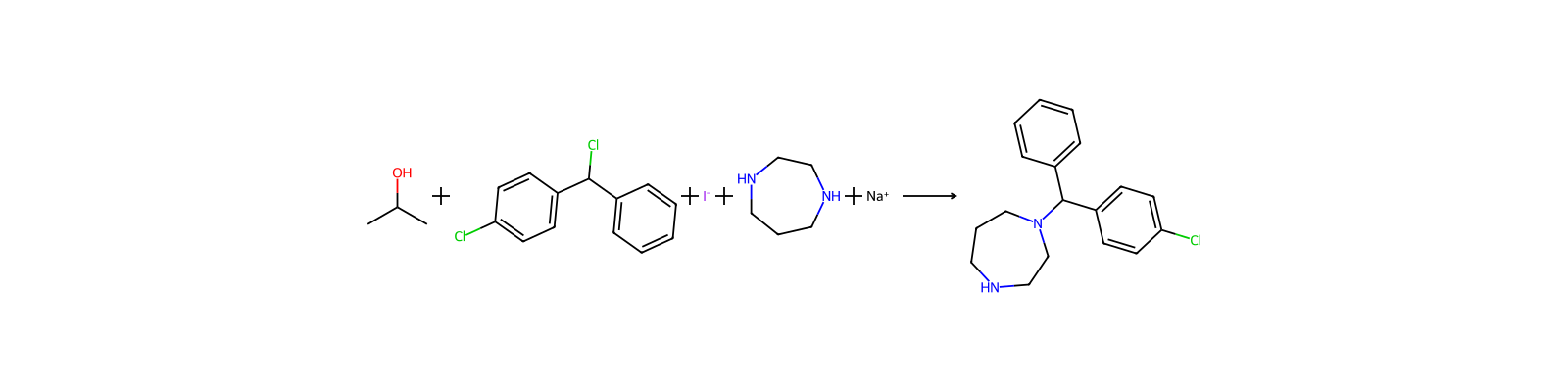
HRID 86641반응물로
데이터를 보충하는 중입니다. 잠시 후 페이지를 새로 고치면 최신 내용을 볼 수 있습니다

134-83-8Clc1ccc(C(Cl)c2ccccc2)cc1ALKWTKGPKKAZMN-UHFFFAOYSA-Ncauses contact dermititis; structure in first source
134-83-8DTXSID80874382clear light yellow liquid
안전 정보는 참고용이며, 공급업체의 물질안전보건자료(SDS), 관련 법규 및 전문가 평가를 대체하지 않습니다.
Danger
H314 (98%): Causes severe skin burns and eye damage [Danger Skin corrosion/irritation]
P260, P261, P264, P264+P265, P271, P272, P273, P280, P301+P330+P331, P302+P352, P302+P361+P354, P304+P340, P305+P354+P338, P316, P317, P319, P321, P333+P317, P362+P364, P363, P391, P403+P233, P405, and P501 (click each P-code to see the statement)
Aggregated GHS information provided per 50 reports by companies from 9 notifications to the ECHA C&L Inventory. Each notification may be associated with multiple companies.
Status: Active Update: 11-12-2017 https://echa.europa.eu/registration-dossier/-/registered-dossier/21497
4-Chlorobenzhydryl chloride: Does not have an individual approval but may be used under an appropriate group standard
Preparation of 4-Chlorobenzhydryl Chloride (4-CBC): The 4-chlorobenzhydrol (4-CB) in 15 mL of toluene, obtained from the previous step, was mixed with 10 mL of conc. HCl at 60oC maintained at the same temperature for 2.5 h. The reaction mixture was cooled to 20oC to separate into organic and aqueous layers. The toluene layer was washed with 10 % aq. sodium carbonate to pH 7, dried over anhydrous sodium sulphate and taken to next step without isolation.