홈MCP워크벤치Skills
홈워크벤치알림마이페이지
llms.txt · MCP 가이드개인정보처리방침 · 이용약관 · 지원v1.8.0
  1. 홈
  2. /화합물

염화티탄(Ⅳ)

Titanium Tetrachloride

HCID 24193
새 노트새 반응견적 요청하기
인쇄 미리보기

데이터를 보충하는 중입니다. 잠시 후 페이지를 새로 고치면 최신 내용을 볼 수 있습니다

기본 정보개요이름 및 식별자물성안전 및 규제화학 및 산업관련 반응화합물 노트
부분 구조 검색유사 구조 찾기

기본 정보

CAS
7550-45-0
표준 SMILES
[Cl][Ti]([Cl])([Cl])[Cl]
InChIKey
XJDNKRIXUMDJCW-UHFFFAOYSA-J
분자식
Cl4Ti
평균 분자량
189.7 g/mol
단동위원소 질량
187.823351

개요

Titanium tetrachloride is a colorless to pale yellow liquid that has fumes with a strong odor. If it comes in contact with water, it rapidly forms hydrochloric acid, as well as titanium compounds. Titanium tetrachloride is not found naturally in the environment and is made from minerals that contain titanium. It is used to make titanium metal and other titanium-containing compounds, such as titanium dioxide, which is used as a white pigment in paints and other products and to produce other chemicals.

이름 및 식별자

우선 이름
Titanium Tetrachloride
IUPAC
tetrachlorotitanium
현지명
염화티탄(Ⅳ)
영어명
Titanium tetrachloride
분자식
Cl4Ti
분자량
189.68

이름 및 동의어

TITANIUM TETRACHLORIDETetrachlorotitaniumTiCl4Titanic chlorideTitantetrachloridTitaantetrachlorideTitanium chloride (TiCl4)Tetrachlorure de titaneTitanium chloride (TiCl4) (T-4)-Titane (tetrachlorure de)Titanium chloride (TiCl4), (T-4)-Titanio (tetracloruro di)
이름 더 보기
사염화티타늄사염화티탄염화티탄(Ⅳ)염화티타늄(IV)티타늄테트라염화물티타늄클로라이드티타늄염화물티타사염화티타늄티타늄 테트라클로라이드사염화 티타늄티타노티탄테트라클로라이드티타늄(IV)염화물TITANIUM(IV) CHLORIDETITANIUM CHLORIDETITANIUM(IV) TETRACHLORIDETitanium(IV) chloride, 99.90%TitaneTitanioTitanium(IV) chL
8O3PJE5T7QDTXSID8042476RefChem:6311DTXCID6022476231-441-97550-45-0Titanium(IV)tetrachlorideTitantetrachlorid [German]

물성

구조 계산 물성보충 중

극성 표면적
0 Ų
수소 결합 공여자 수
0
수소 결합 수용자 수
0
회전 가능 결합 수
0
무거운 원자 수
5
형식 전하
0
복잡도
19.1

실험 및 물리화학적 성질

Chemical Classes · 3건

Hazardous Air Pollutants (HAPs)

Toxic Gases & Vapors -> Other Toxic Gases & Vapors

Corrosives

CosmeticsCosmetics ingredient -> Colorant
OdorPenetrating acid odor
Density · 4건

1.726 (EPA, 1998) - Denser than water; will sink

1.726

Relative density (water = 1): 1.7

1.73 @25 °C

Viscosity0.079 cP
Color/Form · 2건

Colorless liquid

Yellow liquid

Solubility · 4건

Sol in cold water, alcohol

Sol in dilute hydrochloric acid

Sol in most organic solvents; decomposed by water

Solubility in water: reaction

CorrosivityCorrosive
Boiling Point · 4건

277.5 °F at 760 mmHg (EPA, 1998)

136.4 °C

136.4 °C

136.45 °C @760 [mm Hg]

Decomposition · 2건

안전 및 규제

안전 정보는 참고용이며, 공급업체의 물질안전보건자료(SDS), 관련 법규 및 전문가 평가를 대체하지 않습니다.

GHS 분류

GHS Classification · 6건

Danger

H314: Causes severe skin burns and eye damage [Danger Skin corrosion/irritation]

P260, P264, P280, P301+P330+P331, P302+P361+P354, P304+P340, P305+P354+P338, P316, P321, P363, P405, and P501 (click each P-code to see the statement)

Danger

H314 (100%): Causes severe skin burns and eye damage [Danger Skin corrosion/irritation]

P260, P261, P264, P264+P265, P270, P271, P272, P280, P284, P301+P330+P331, P302+P352, P302+P361+P354, P304+P340, P305+P354+P338, P308+P316, P316, P317, P319, P320, P321, P333+P317, P362+P364, P363, P403+P233, P405, and P501 (click each P-code to see the statement)

유해성 정보

Hazards IdentificationWater-reactive material (WR)
Regulatory Information · 6건

Chemical: Titanium chloride (TiCl4)

Hazard Traits - Dermatotoxicity; Respiratory Toxicity

Titanium chloride (TiCl4) (T-4)- is listed on the EPA's Chemical Data Reporting (CDR) system. Manufacturers and importers of Titanium chloride (TiCl4) (T-4)- are required to report information about their production and use of this chemical to the EPA under the Toxic Substances Control Act (TSCA). (40 eCFR Part 711)

REACH registered substance: Titanium tetrachloride (EC: 231-441-9)

Titanium (IV) chloride: Does not have an individual approval but may be used under an appropriate group standard

The New Jersey Worker and Community Right to Know Act requires public and private employers to provide information about hazardous substances at their workplaces. (N.J.S.A. 34:5A-1 et. seq.)

DOT LabelPoison Inhalation Hazard Corrosive
Fire Hazards · 3건

Material will react with water to produce hydrochloric acid. It may ignite other combustible materials (e.g., wood, oil, etc.). Flammable, poisonous gases may accumulate in tanks and hopper cars. Runoff to sewer may create fire or explosion hazard. Reacts strongly with water to release hydrochloric acid and heat. Avoid water, moist air. Stable in concentrated aqueous solutions. Avoid contact with moisture; the chemical absorbs moisture from air and evolves dense white fumes. (EPA, 1998)

화학 및 산업

약리 정보

BionecessityThere is no evidence that titanium is an essential element for either man or animals. /Titanium/
Mechanism of Action · 2건

It has been postulated that harmful effects of titanium tetrachloride are due to its extremely vigorous reaction with water in any form (perspiration on the skin, tears, moisture in the air) resulting in liberation of large quantities of heat. The mechanism of injury is thought to involve a thermal burn, which then exposes the deeper tissue layers to other titanium tetrachloride hydrolysis products such as hydrochloric acid, resulting in even more severe & deeper burns. In other words, the extremely serious effects observed following exposure to titanium tetrachloride are the result of combined thermal & acid burns.

One possible explanation for the more severe effects seen from exposure to titanium tetrachloride compared with hydrochloric acid is that hydrochloric acid, because of its high solubility, is dissolved in the moisture of the nasopharynx & trachea & thus penetrates the lungs to only a very limited extent. However, hydrolysis products, titanium oxide hydrate, is a particulate that can absorb some of the hydrochloric acid vapors that are also generated during hydrolysis & carry them into the deeper parts of the lungs. Also, in the lungs, the partially hydrolyzed titanium tetrachloride can be further hydrolyzed with release of hydrochloric acid, resulting ultimately in hydrochloric acid being carried deeper into the lung & to the alveoli.

Absorption, Distribution and Excretion · 2건

... Particles (presumably of titanium dioxide) were detected in the liver & spleen from rats exposed to 10 mg/cu m titanium tetrachloride aerosol 6 hr/day, 5 days/wk for 2 yr suggesting that absorption of titanium occurred. It is well known, however, that particles are swallowed after being expelled from the respiratory tract by mucocilliary clearance.

... In a case report of chronic inhalation exposure to titanium dioxide, which is one of the titanium tetrachloride hydrolysis products, particles similar to titanium dioxide were found in lysosomes of phagocytes within the alveolar lumen. Spectrometric & spectrographic analysis showed accumulation of titanium dioxide in the lungs. Analysis of tissues from one worker who drowned 4 months after stopping work showed that titanium was also present in the lymph nodes adjacent to the lung. No titanium was found in the tissue specimens for brain, thyroid gland, myocardium, spleen, liver, kidneys, & nerve ganglia of the sympathetic trunk. These results suggest that titanium selectively accumulates in the lung & adjacent lymph nodes ... .

관련 반응

2,203건
반응 기록 만들기
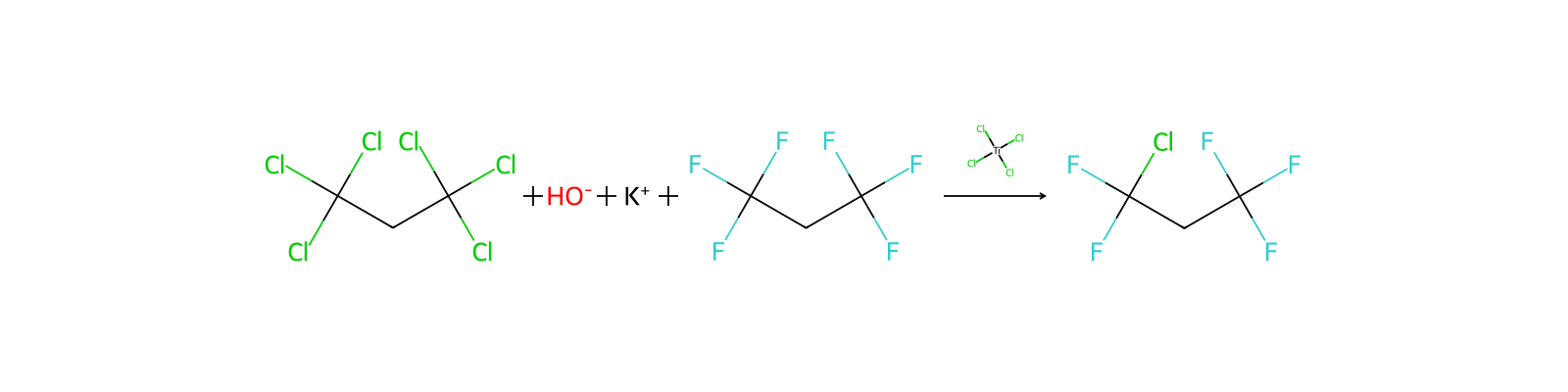
HRID 1357 반응식
HRID 1357촉매로uspto-grants-1998_03
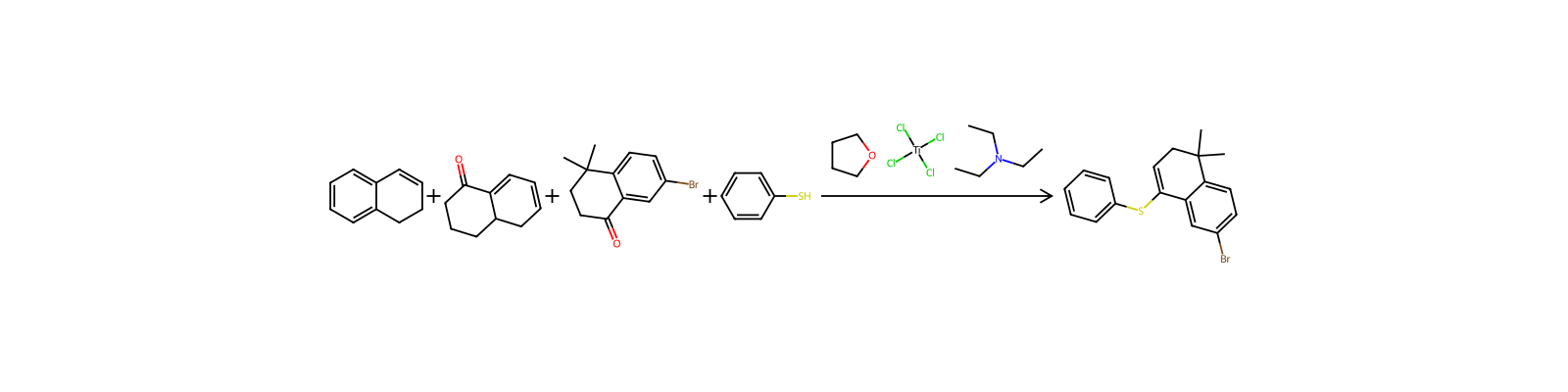
HRID 1374 반응식
HRID 1374촉매로uspto-grants-1998_03
HRID 1375 반응식
HRID 1375촉매로uspto-grants-1998_03
HRID 1396 반응식
HRID 1396촉매로uspto-grants-1998_03
HRID 1624 반응식
HRID 1624촉매로uspto-grants-1998_03
HRID 2537 반응식
HRID 2537촉매로uspto-grants-1998_03
HRID 2586 반응식
HRID 2586촉매로uspto-grants-1998_03
HRID 4009 반응식
HRID 4009촉매로uspto-grants-1988_02
1 / 276 페이지

화합물 노트

불러오는 중…

이 페이지에서기본 정보개요이름 및 식별자물성안전 및 규제화학 및 산업관련 반응화합물 노트
더보기
새 노트새 반응견적 요청하기

데이터베이스 식별자

CAS
7550-45-0
PubChem CID
24193
DTXSID
DTXSID8042476
ChEBI
CHEBI:231499
EC Number
231-441-9

... When exposed to moisture, it hydrolyzes to hydrogen chloride.

When heated to decomposition it emits toxic fumes of /hydrogen chloride/.

Melting Point · 4건

-11.4 °F (EPA, 1998)

-24.1 °C

-24.1 °C

-24.12 °C

Vapor DensityRelative vapor density (air = 1): 6.5

물리화학적 성질

녹는점
25 °C · −25 °C(lit.)
끓는 점
135 · 135-136 °C(lit.)
밀도
1.73 g/mL · 1.73 g/mL at 20 °C(lit.)
증기압
50 mm · 50 mm Hg ( 55 °C)
굴절률
1.61 · 1.61
인화점
46 °F · 46 °F
저장 조건
Flammables area
용해도
2 O: · H2O: 용해성
물리적 상태
액체
Specific Gravity
1.726 · 1.726
색상
연한 노란색에서 진한 갈색까지
수용성
물과 반응
비열
0.77 J/ · Cp(liquid): 0.77 J/(g·K); Cp(gas): 0.5 J/(g·K), at 25℃
Merck
14 · 14,9478
Dielectric constant
40 · 40.0(Ambient)
안정성
안정적인. 물과 반응합니다. 습기, 암모니아, 아민, 알코올, 칼륨 및 기타 화학적 활성 금속과 호환되지 않습니다.
InChI
1S/4ClH.Ti/h4*1H;/q;;;;+4/p-4
InChIKey
XJDNKRIXUMDJCW-UHFFFAOYSA-J
SMILES
[Ti+4].[Cl-].[Cl-].[Cl-].[Cl-]
NIST
Titanium tetrachloride(7550-45-0)
EPA
Titanium tetrachloride (7550-45-0)

화학적 성질

Description: Titanium tetrachloride is a noncombustible, colorless to light yellow liquid that fumes in air. Penetrating acrid odor.

· EXCEPT FOR ACETIC ANHYDRIDE (UN1715), THAT IS FLAMMABLE, some of these materials may burn, but none ignite readily.

Not combustible. Gives off irritating or toxic fumes (or gases) in a fire.

Health Hazards · 2건

This compound is a highly corrosive, acute irritant to the skin, eyes, mucous membranes and the respiratory tract. It is capable of causing death or permanent injury due to exposures encountered in normal use. Even short contact may lead to eye inflammation which may result in corneal opacities. (EPA, 1998)

· CORROSIVE and/or TOXIC; inhalation, ingestion or contact (skin, eyes) with vapors, dusts or substance may cause severe injury, burns or death.

Hazards Summary · 3건

Titanium tetrachloride is a colorless to pale yellow liquid that has fumes with a strong odor. If it comes in contact with water, it rapidly forms hydrochloric acid, as well as titanium compounds. Titanium tetrachloride is not found naturally in the environment and is made from minerals that contain titanium. It is used to make titanium metal and other titanium-containing compounds, such as titanium dioxide, which is used as a white pigment in paints and other products and to produce other chemicals.

Environmental exposure to titanium tetrachloride is unlikely because it breaks down rapidly in water. Titanium tetrachloride is highly irritating to the skin, eyes, and mucous membranes in humans. Acute (short-term) exposure may result in surface skin burns and marked congestion and constriction of various sections of the upper respiratory tract in humans. Acute exposure may also damage the eyes. Diseases of the lung (pleural diseases) have been associated with chronic (long-term) occupational exposure of titanium tetrachloride in titanium metal production workers. Chronic inhalation exposure may result in upper respiratory tract irritation, chronic bronchitis, cough, bronchoconstriction, wheezing, chemical pneumonitis, or pulmonary edema in humans. EPA has not classified titanium tetrachloride with respect to carcinogenicity.

TLV Basis is upper respiratory tract damage. [ACGIH] Can cause pneumonitis; [Table 16.3, Sullivan, p. 213] Liquid causes second degree burns after contact for a few minutes. [CHRIS] Corrosive to skin; [Quick CPC] When TiCl4 comes in contact with water, HCl is rapidly generated. [ATSDR ToxFAQs] See [Park T, et al. Diffuse Endobronchial Polyposis Following A Titanium Tetrachloride Inhalation Injury. Am Rev Respir Dis. 1984 Aug;130(2):315-7] A corrosive substance that can cause injury to the skin, eyes, and respiratory tract; Inhalation may cause pulmonary edema; [ICSC]

DOT ID and Guide1838 137
Reactive GroupAcids, Strong Non-oxidizing
EC ClassificationSymbol: C; R: 14-34; S: (1/2)-7/8-26-36/37/39-45
UN ClassificationUN Hazard Class: 8; UN Pack Group: II
Special Reports · 1건

The ATSDR toxicological profile succinctly characterizes the toxicolgic & adverse health effects information for the hazardous substance described therein.[DHHS/ATSDR; Toxicological Profile for Titanium tetrachloride PB98-101082 (September 1997)]

Reactivity AlertsKnown Catalytic Activity

안전 및 보호

Fire Fighting · 2건

Not flammable. For small fires, use dry chemical or carbon dioxide. For large fires, flood fire area with water from a distance. Do not get solid streams of water on spilled material. Move container from fire area if this can be done without risk. Cool containers exposed to flames with water until well after fire is out. (EPA, 1998)

In case of fire in the surroundings, use appropriate extinguishing media. In case of fire: keep drums, etc., cool by spraying with water. NO direct contact with water.

First Aid Measures · 4건

Fresh air, rest. Half-upright position. Artificial respiration may be needed. Refer for medical attention.

Remove contaminated clothes. Rinse skin with plenty of water or shower. Refer for medical attention .

First rinse with plenty of water for several minutes (remove contact lenses if easily possible), then refer for medical attention.

Rinse mouth. Do NOT induce vomiting. Refer for medical attention .

Accidental Release Measures · 2건

· CALL 911. Then call emergency response telephone number on shipping paper. If shipping paper not available or no answer, refer to appropriate telephone number listed on the inside back cover.

· Do not touch damaged containers or spilled material unless wearing appropriate protective clothing.

First Aid · 2건

Warning: Titanium tetrachloride is extremely corrosive. Caution is advised.

General First Aid:

Safe StorageSeparated from food and feedstuffs. Dry. Well closed.
Exposure Control and Personal Protection · 2건

· Wear positive pressure self-contained breathing apparatus (SCBA).

TIH (Toxic Inhalation Hazard) - Term used to describe gases and volatile liquids that are toxic when inhaled. Some are TIH materials themselves, e.g., chlorine, and some release TIH gases when spilled in water, e.g., chlorosilanes. [ERG 2016].

Fire Fighting Procedures · 2건

Will react with water. Use water spray if necessary to keep containers cool.

If material involved in fire: Use dry chemical, dry sand, or carbon dioxide. Do not use water on material itself. If large quantities of combustibles are involved, use water in flooding quantities as spray and fog. Use water spray to knock-down vapors. Cool all affected containers with flooding quantities of water. Apply water from as far a distance as possible.

Storage Conditions · 2건

KEEP TIGHTLY CLOSED.

PROTECT AGAINST PHYSICAL DAMAGE. OUTSIDE OR DETACHED STORAGE IS PREFERABLE.

Nonfire Spill ResponseExcerpt from ERG Guide 137 [Substances - Water-Reactive - Corrosive]:
Disposal Methods · 2건

SRP: At the time of review, criteria for land treatment or burial (sanitary landfill) disposal practices are subject to significant revision. Prior to implementing land disposal of waste residue (including waste sludge), consult with environmental regulatory agencies for guidance on acceptable disposal practices.

/SRP: For lab quantity material only & perform in laboratory hood./ Transfer into an evaporating dish containing sodium bicarbonate. Spray with ammonia (6M-NH4OH) while stirring and then spread with crushed ice. Continue spraying with ammonia until the smoke of ammonium chloride partly subsides and add iced water while stirring. Neutralize and slowly transfer the mixture into a drain with running water.

Spillage Disposal · 1건

Evacuate danger area! Consult an expert! Personal protection: complete protective clothing including self-contained breathing apparatus. Do NOT let this chemical enter the environment. Ventilation. Do NOT use water. Collect leaking and spilled liquid in sealable acid resistant containers as far as possible. Absorb remaining liquid in dry sand or inert absorbent. Then store and dispose of according to local regulations.

Preventive Measures · 5건

SRP: Contaminated protective clothing should be segregated in such a manner so that there is no direct personal contact by personnel who handle, dispose, or clean the clothing. Quality assurance to ascertain the completeness of the cleaning procedures should be implemented before the decontaminated protective clothing is returned for reuse by the workers. Contaminated clothing should not be taken home at end of shift, but should remain at employee's place of work for cleaning.

SRP: The scientific literature for the use of contact lenses in industry is conflicting. The benefit or detrimental effects of wearing contact lenses depend not only upon the substance, but also on factors including the form of the substance, characteristics and duration of the exposure, the uses of other eye protection equipment, and the hygiene of the lenses. However, there may be individual substances whose irritating or corrosive properties are such that the wearing of contact lenses would be harmful to the eye. In those specific cases, contact lenses should not be worn. In any event, the usual eye protection equipment should be worn even when contact lenses are in place.

If material not involved in fire: Keep material out of water sources and sewers. Build dikes to contain flow as necessary. Use water spray to knock down vapors. Do not use water on material itself. Neutralize spilled material with crushed limestone, soda ash, or lime.

Personnel protection: Avoid breathing vapors. Keep upwind. ... Do not handle broken packages unless wearing appropriate personal protective equipment. Wash away any material which may have contacted the body with copious amounts of water or soap and water. If contact with the material anticipated, wear appropriate chemical protective clothing.

Evacuation: If material leaking (not on fire) consider evacuation from downwind area based on amount of material spilled, location and weather conditions.

독성 정보

Toxicological InformationATSDR Toxicological Profile for Titanium Tetrachloride - Succinctly characterizes the toxicologic and adverse health effects information.
Target OrgansDermal (Skin), Ocular (Eyes), Respiratory (From the Nose to the Lungs)
Environmental FateTitanium tetrachloride hydrolyzes rapidly upon contact with moist air to form a vapor of hydrochloric acid, titanium dioxide, and titanium oxychloride.
Adverse EffectsDermatotoxin - Skin burns.
Exposure RoutesThe substance can be absorbed into the body by inhalation of its vapour and by ingestion.
Signs and Symptoms · 4건

Sore throat. Cough. Burning sensation. Shortness of breath. Laboured breathing. Symptoms may be delayed.

Pain. Redness. Serious skin burns.

Pain. Redness. Severe deep burns.

Burning sensation. Abdominal pain. Shock or collapse.

ICSC Environmental DataIt is strongly advised not to let the chemical enter into the environment.
Medical Surveillance/WORKERS/ ... SHOULD RECEIVE PERIODICAL MEDICAL EXAM AT LEAST ANNUALLY & WORKERSMANIFESTING SIGNS OF PERSISTENT INJURY TO UPPER RESPIRATORY TRACT SHOULD BE TRANSFERRED TO OTHER WORK.
TSCA Test Submissions · 1건

Chronic toxicity and oncogenicity were evaluated in groups of male and female Crl:CD(SD)BR rats (100/sex/group) receiving whole body exposure to titanium tetrachloride at nominal concentrations of 0, 0.01, 1.0, or 10mg/m3 in a dynamic air flow chamber, 6 hours/day, 5 days/week for two years beginning at age 35 days. No statistically significant differences between treatments groups and controls were evident for: mean body weights, mean body weight gain and mortality. At 18-months, high dose female and male rats exhibited a significant increase in neutrophils and a decrease in lymphocytes when compared to controls. High dose males also showed a statistically significant decrease in erythrocytes and increases in mean cell volume, mean cell hemoglobin and serum bilirubin. Clinical observations revealed a greater incidence of irregular respirations and abnormal lung noises early in the study for male treatment groups relative to the control groups, with an evident dose response-relationship. Absolute and relative lung weights of high dose groups at 1-year and 2-year sacrifices were significantly greater than for controls. Absolute kidney weights of high dose males were significantly decreased relative to controls at the 3-month and 2-year sacrifice. Gross pathology and histological examination of treated rats revealed a dose-related accumulation of the test article within the respiratory tract. Histology revealed an exposure-related increase in the incidence of rhinitis in all treatment groups, with Type-II pneumocytes and hyperplasia observed in mid- and high-dose groups. Other histopathological effects of treatment observed in high dose animals were foamy macrophage infiltration, cholesterol granulomas with collagen fiber deposition, alveolar proteinosis and alveolar bronchiolarization. Cystic keratinizing squamous cell carcinomas were observed primarily in high dose groups.

Human Toxicity Excerpts · 5건

... OBSERVED DAMAGE TO CORNEAS IN FIVE HUMAN BEINGS WHO HAD BEEN SEVERELY EXPOSED TO THESE FUMES, WITH PARTICULARLY SEVERE EFFECTS ON CORNEA IN PATIENTS WHO DIED FROM EXPOSURE.

... ABOUT 50 L OF TITANIUM CHLORIDE @ TEMP OF 100 °C, WAS OPENED ... & OPERATOR WAS SPLASHED WITH LIQUID. FUMES OF TITANIC ACID & TITANIC OXYCHLORIDE ... WERE INHALED. SURFACE SKIN BURNS, ... MARKED CONGESTION OF MUCOUS MEMBRANE OF PHARYNX, VOCAL CORDS & TRACHEA, ... STENOSIS OF LARYNX, TRACHEA & UPPER BRONCHI ... .

A CORROSIVE IRRITANT TO SKIN, EYES, & MUCOUS MEMBRANES.

A cross-sectional survey of respiratory disease among 209 titanium metal production workers /was conducted/. Work in areas where there was exposure to titanium tetrachloride & titanium dioxide particulates was associated with reductions in ventilatory capacity. Pleural disease (plaques & diffuse thickening) was present in the chest radiographs of 17% of the subjects & was associated with the duration of work in titanium manufacturing. It was also associated with past asbestos exposure. After control for asbestos exposure, it remained associated with titanium manufacturing. The findings are consistent with the hypothesis that titanium tetrachloride & titanium dioxide particulates may be associated with a reduction in ventilatory capacity & that the overall process of titanium manufacturing may be associated with unexpected pleural disease.

For more Human Toxicity Excerpts (Complete) data for TITANIUM TETRACHLORIDE (9 total), please visit the HSDB record page.

Non-Human Toxicity Excerpts · 5건

... INJECTIONS OF HYDROLIZED TITANIUM TETRACHLORIDE INTO PERITONEAL CAVITIES OF GUINEA PIGS TO DETERMINE WHETHER LESIONS WERE PROGRESSIVE, AS IN SILICOSIS, REVEALED ONLY TISSUE REACTION CHARACTERISTICALLY PRODUCED BY INERT DUSTS.

... RATS EXPOSED TO HEAVY CONCN OF FUMES OF TITANIUM TETRACHLORIDE DEVELOPED WHITE CORNEAS ... .

RATS & HAMSTERS WERE EXPOSED FOR 1 HR TO REACTANT PRODUCTS OF AEROSOLIZED TITANIUM TETRACHLORIDE & AMMONIUM HYDROXIDE. GROUPS OF EACH SPECIE & SEX WERE THEN IMMEDIATELY ANESTHETIZED (POINT 1) OR MAINTAINED FOR 30 DAYS (POINT 2). THERE WERE NO SIGNIFICANT DIFFERENCES BIOLOGICALLY IN ANY OF COMPLETE BLOOD COUNTS OR CLINICAL CHEMISTRY (SMAC-20) PROFILE VALUES FOR EXPOSED VERSUS CONTROL GROUPS AT POINT 1 OR POINT 2. ONE OF 30 EXPOSED MALE HAMSTERS (3%) AT POINT 2 DEVELOPED MULTIPLE MICROGRANULOMAS OF LUNG.

The effect of liquid titanium tetrachloride on the skin is even more damaging. Two applications made daily on each of three successive days to a clipped area of the skin of albino guinea pigs resulted in the destruction of the outer layers of the skin comparable to a second-degree thermal burn.

For more Non-Human Toxicity Excerpts (Complete) data for TITANIUM TETRACHLORIDE (11 total), please visit the HSDB record page.

Probable Routes of Human Exposure... EXPOSURE TO TITANIUM IS MAINLY ASSOC WITH METAL, DIOXIDE, CARBIDE, OR TETRACHLORIDE. EXPOSURE ... USUALLY IN FORM OF DUST BUT EXPOSURES TO FUMES & VAPORS OCCUR DURING HANDLING OF TITANIUM TETRACHLORIDE.

규제 정보

Atmospheric Standards · 1건

Listed as a hazardous air pollutant (HAP) generally known or suspected to cause serious health problems. The Clean Air Act, as amended in 1990, directs EPA to set standards requiring major sources to sharply reduce routine emissions of toxic pollutants. EPA is required to establish and phase in specific performance based standards for all air emission sources that emit one or more of the listed pollutants. Titanium tetrachloride is included on this list.

CERCLA Reportable Quantities · 2건

Persons in charge of vessels or facilities are required to notify the National Response Center (NRC) immediately, when there is a release of this designated hazardous substance, in an amount equal to or greater than its reportable quantity of 1000 lb or 454 kg. The toll free number of the NRC is (800) 424-8802; In the Washington D.C. metropolitan area (202) 426-2675. The rule for determining when notification is required is stated in 40 CFR 302.4 (section IV. D.3.b).

Releases of CERCLA hazardous substances are subject to the release reporting requirement of CERCLA section 103, codified at 40 CFR part 302, in addition to the requirements of 40 CFR part 355. Titanium tetrachloride is an extremely hazardous substance (EHS) subject to reporting requirements when stored in amounts in excess of its threshold planning quantity (TPQ) of 100 lbs.

DHS Chemicals of Interest (COI) · 6건

Titanium tetrachloride

1.00

2,500

13.33

45

A Commercial Grade

안전 데이터

wgk
2
tsca
TSCA listed
rtecs
XR1925000
ridadr
UN 1838
독성
Not found naturally in the environment. Manufactured from titanium-containing minerals and is used to make metallic titanium, titanium dioxide, and other titanium compounds. An irritant to skin, eyes, mucus membranes, and lungs due to its interaction with water to form hydrochloric acid, excessive exposure can result in chemical bronchitus, pneumonia, and death. Severe burns may result from contact with liquid titanium tetrachloride. Although long term, high dose studies caused lung tumors in rodents, IARC and other agencies have not classified titanium tetrachloride for its potential as a human carcinogen.
HS 번호
28273990
risk_code
36/37/38-67-65-63-48/20-34-14-11-23-40-37-48/23-39/23-20/21/22-36/38
hazard_code
C,F,Xi,T
safety_code
26-7/8-62-46-45-36/37/39-24/25-23-16-60
포장분류
I
위험 등급
6.1
기존화학 물질
KE-33923
F 고인화성물질
21
Hazard Classifications
Acute Tox. 1 InhalationEye Dam. 1Skin Corr. 1BSTOT SE 3
스토리지 클래스
6.1B - Non-combustible, acute toxic Cat. 1 and 2very toxic hazardous materials
유해 물질 데이터
7550-45-0(Hazardous Substances Data)
사고대비 물질 필터링
84

용도 및 제조

Uses · 6건

Titanium tetrachloride is used as an intermediate in the production of titanium metal, titanium dioxide, and titanium pigments, in the manufacture of iridescent glass and artificial pearls, as a polymerization catalyst, and to produce smoke screens. Titanium tetrachloride was formerly used with potassium bitartrate as mordant in the textile industry and with dyewoods in dyeing leather.

Used to manufacture titanium-containing compounds; used as white pigments in paints; [ATSDR ToxFAQs] Used in chemical vapor deposition to apply coatings to metals and other materials with high melting points--the process involves bubbling hydrogen and nitrogen though a bath of titanium tetrachloride or vanadium tetrachloride. [Scand J Work Environ Health 1991;17:369-79] Used in dyeing textiles and leather (mordant), making glass, and in smoke screens; [AIHA]

Painting (Pigments, Binders, and Biocides) [Category: Paint]

Pure titanium and titanium salts; irridescent effects in glass; smoke screens; titanium pigments; polymerization catalyst.

Formerly used with potassium bitartrate as mordant in textile industry, & with dyewoods in dyeing leather; also as smoke-producing screen with ammonia; manufacture iridescent glass & artificial pearls.

As an intermediate in the production of titanium metal & titanium pigments, & also as a component & catalyst in the chemical industry.

U.S. Production · 3건

2023: 4,000,000,000 - <5,500,000,000 lb

(1972) AT LEAST 5.67X10+9 G (CAPTIVE-EST)

(1975) AT LEAST 9.5X10+9 G (CAPTIVE-EST)

Consumer UsesOxidizing agent
Industry UsesOpacifer
Methods of Manufacturing · 2건

By heating titanium dioxide or ores and carbon to redness in a current of chlorine.

Rutile/titanium slag/anatase + chlorine + sponge coke, calcined (chloride process)

Formulations/PreparationsGrades: technical; chemically pure: a grade designation signifying a minimum of impurities, but not 100% purity.
Household ProductsCosmetics product ingredient: Titanium tetrachloride
Use ClassificationChemical Classes -> Inorganic substances
General Manufacturing Information · 2건

Machinery Manufacturing

Titanium chloride (TiCl4) (T-4)-: ACTIVE

응용 분야 · 2건

용도Titanium tetrachloride is used as an intermediate in the manufacture of titanium metal, titanium dioxide, titanous chloride pigments, iridescent glass, and artificial pearls and as a starting material for a variety of organic and inorganic titanium compounds. It is also used as a dye, a polymerization catalyst, and as a catalyst in many organic syntheses because of it acidity and oxophilicity in many applications in the chemical industry. Titanium tetrachloride was formerly used as a smokeproducing screen with ammonia for the military; however, due to its extremely irritating and corrosive qualities in both liquid and smoke formulation, military applications are rarely used. The conversion of tetrachloride to titanium metal takes place by the reduction of chloride with magnesium which yields titanium metal and magnesium chloride and is referred to as the Kroll process after its inventor: 2 Mg + TiCl4→2 MgCl2 + Ti

일반 설명A colorless fuming liquid with a pungent odor. Corrosive to metals and tissue. Very toxic by inhalation.

제조 방법

생산 방법TiCl4 is used in TiO2 production, the manufacture of artificial pearls and iridescent glass, and, by the military, to create smoke screens.

상·하류 제품 정보

상류 원료

(S)-tert-Butyl 6-amino-2-((tert-butoxycarbonyl)amino)hexanoate hydrochlorideDelayed petroleum coke질소High titanium slagPetroleum coke

하류 제품

2-메틸-4-트리플루오로메틸-니코틴산6-Bromoisoquinoline1-(1-이소시아네이토-1-메틸에틸)-3-(1-메틸에텐일)벤젠티타늄(IV) 이소프로폭시드1-AMINOCYCLOPROPANECARBONITRILETetrakis(decyl)ammonium bromide트리(크로로에틸)인산염이소퀴놀린,6-(브로모메틸)-(9CI)티타늄 트리염화물6-Methylisoquinoline테트라-n-부톡시티탄tert-Butyl 4-hydrazinylpiperidine-1-carboxylate2-AMINOPENT-4-YNENITRILE납(II) 카보네이트 베이식3,4-DICHLORO-N-METHYLANILINE클로자핀시클라멘 알데히드클로로플루오로메탄디페닐메타니민8-METHYL-ISOQUINOLINE