
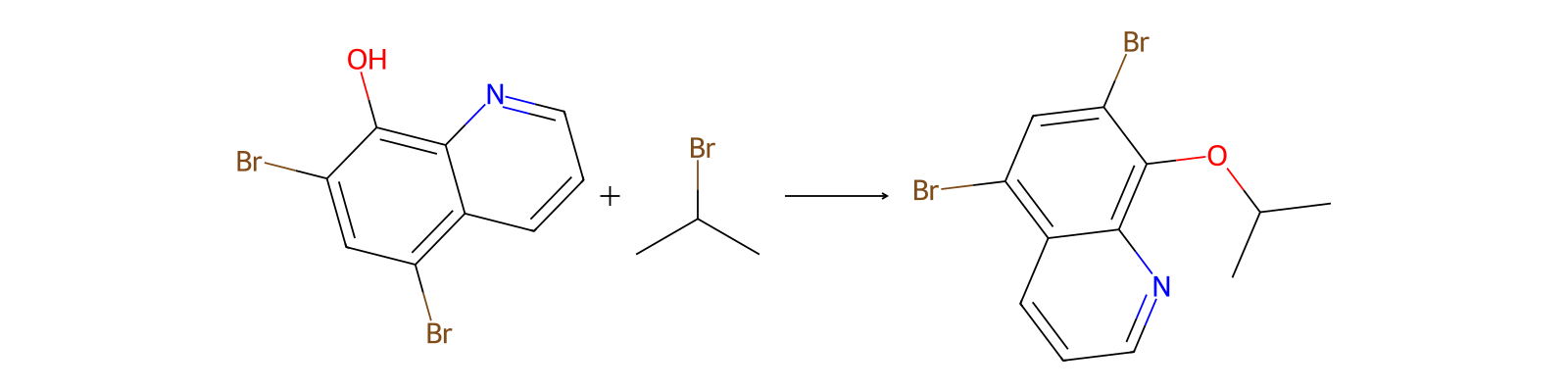
HRID 281040반응물로

521-74-4Oc1c(Br)cc(Br)c2cccnc12ZDASUJMDVPTNTF-UHFFFAOYSA-N5,7-dibromo-8-quinolinol is an organohalogen compound and a member of quinolines.
521-74-4DTXSID9045849CHEMBL223448CHEBI:109543137.7 Ų [M+H]+ [CCS Type: TW; Method: calibrated with polyalanine and drug standards]
136.76 Ų [M+H]+ [CCS Type: TW; Method: calibrated with polyalanine and drug standards]
안전 정보는 참고용이며, 공급업체의 물질안전보건자료(SDS), 관련 법규 및 전문가 평가를 대체하지 않습니다.
Warning
H315 (100%): Causes skin irritation [Warning Skin corrosion/irritation]
P261, P264, P264+P265, P271, P280, P302+P352, P304+P340, P305+P351+P338, P319, P321, P332+P317, P337+P317, P362+P364, P403+P233, P405, and P501 (click each P-code to see the statement)
Aggregated GHS information provided per 45 reports by companies from 5 notifications to the ECHA C&L Inventory. Each notification may be associated with multiple companies.
EYES: irrigate opened eyes for several minutes under running water. INGESTION: do not induce vomiting. Rinse mouth with water (never give anything by mouth to an unconscious person). Seek immediate medical advice. SKIN: should be treated immediately by rinsing the affected parts in cold running water for at least 15 minutes, followed by thorough washing with soap and water. If necessary, the person should shower and change contaminated clothing and shoes, and then must seek medical attention. INHALATION: supply fresh air. If required provide artificial respiration.
Bromine vapour causes irritation and direct damage to the mucous membranes. Elemental bromine also burns the skin. The bromide ion is a central nervous system depressant and chronic exposure produces neuronal effects. This is called bromism and can result in central reactions reaching from somnolence to coma, cachexia, exicosis, loss of reflexes or pathologic reflexes, clonic seizures, tremor, ataxia, loss of neural sensitivity, paresis, papillar edema of the eyes, abnormal speech, cerebral edema, delirium, aggressiveness, and psychoses. (L625, L626, L627)
P - Antiparasitic products, insecticides and repellents
G - Genito urinary system and sex hormones
A - Alimentary tract and metabolism
QA - Alimentary tract and metabolism
QG - Genito urinary system and sex hormones
Bromine is mainly absorbed via inhalation, but may also enter the body through dermal contact. Bromine salts can be ingested. Due to its reactivity, bromine quickly forms bromide and may be deposited in the tissues, displacing other halogens. (L626)
용도antiinfectant, disinfectant


almost white powder
Bromine is a powerful oxidizing agent and is able to release oxygen free radicals from the water in mucous membranes. These free radicals are also potent oxidizers and produce tissue damage. In additon, the formation of hydrobromic and bromic acids will result in secondary irritation. The bromide ion is also known to affect the central nervous system, causing bromism. This is believed to be a result of bromide ions substituting for chloride ions in the in actions of neurotransmitters and transport systems, thus affecting numerous synaptic processes. (L626, L627, A543)
Bromine vapour causes irritation and direct damage to the mucous membranes. Symptoms include lacrimation, rhinorrhoea, eye irritation with mucous secretions from the oropharyngeal and upper airways, coughing, dyspnoea, choking, wheezing, epistaxis, and headache. The bromide ion is a central nervous system depressant producing ataxia, slurred speech, tremor, nausea, vomiting, lethargy, dizziness, visual disturbances, unsteadiness, headaches, impaired memory and concentration, disorientation and hallucinations. This is called bromism. (L626, L627)