홈MCP워크벤치Skills
홈워크벤치알림마이페이지
llms.txt · MCP 가이드개인정보처리방침 · 이용약관 · 지원v1.8.0
  1. 홈
  2. /화합물

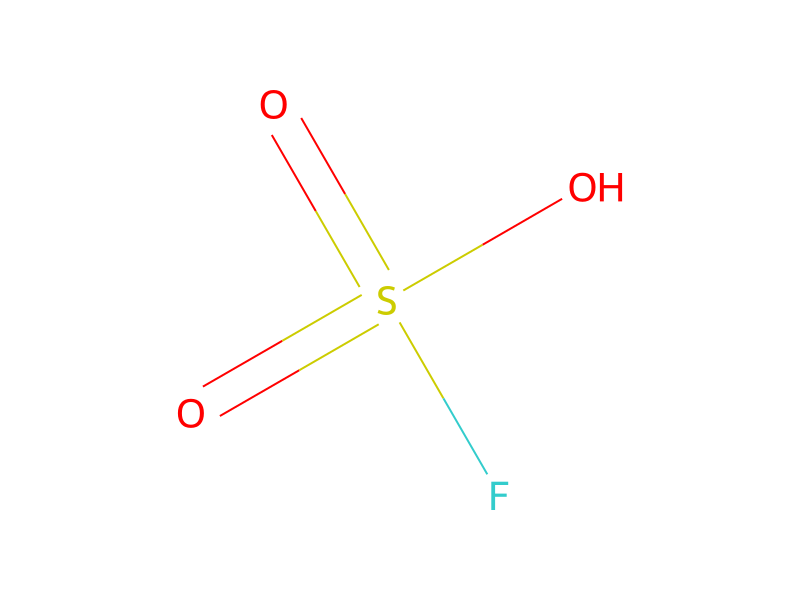
플루오로설폰산

Fluorosulfuric acid

HCID 24603
새 노트새 반응견적 요청하기
인쇄 미리보기

데이터를 보충하는 중입니다. 잠시 후 페이지를 새로 고치면 최신 내용을 볼 수 있습니다
기본 정보개요이름 및 식별자물성안전 및 규제화학 및 산업관련 반응화합물 노트
부분 구조 검색유사 구조 찾기

기본 정보

CAS
7789-21-1
표준 SMILES
O=S(=O)(O)F
InChIKey
UQSQSQZYBQSBJZ-UHFFFAOYSA-N
분자식
FHO3S
평균 분자량
100.07 g/mol
단동위원소 질량
99.96304311

개요

Fluorosulfonic acid appears as a fuming liquid. Boiling point 163 °C. Density 1.73 g / cm3. Corrosive to metals and to tissue. Both very short contact and the fumes can cause severe painful burns. Used as a catalyst in organic synthesis, in electroplating and as a fluorinating agent.

이름 및 식별자

우선 이름
Fluorosulfuric acid
IUPAC
sulfurofluoridic acid
현지명
플루오로설폰산
영어명
Fluorosulfonic acid
분자식
FHO3S
분자량
100.07

이름 및 동의어

Fluorosulfonic acidFluorosulfuric acid7789-21-1Fluosulfuric acidMonofluorosulfuric acidFLUOSULFONIC ACIDFluorosulfuric acid (HSO3F)Fluorosulphonic acidDTXSID3033511PPX0648643DTXCID1013511RefChem:140969
이름 더 보기
플루오로설폰산HSO3FfluorosulfonicFluorsulfonsureNcgc00091007-01fluosulfuricacidFluorosulforic Acid
232-149-4sulfurofluoridic acidFluorosulphuric acidHSDB 467EINECS 232-149-4UN1777UNII-PPX0648643MFCD00066174

데이터베이스 식별자

CAS
7789-21-1
PubChem CID
24603
DTXSID
DTXSID3033511
ChEMBL
CHEMBL1207889
ChEBI
CHEBI:193136
UNII
PPX0648643
EC Number
232-149-4
Nikkaji
J95.177C

물성

구조 계산 물성보충 중

XLogP
-0.3
극성 표면적
62.8 Ų
수소 결합 공여자 수
1
수소 결합 수용자 수
4
회전 가능 결합 수
0
무거운 원자 수
5
형식 전하
0
복잡도
92.6

실험 및 물리화학적 성질

Chemical Classes · 2건

Other Classes -> Organic Acids

Corrosives

pHCONSIDERABLY MORE ACIDIC THAN CONCN H2SO4
Density · 4건

1.73 at 77 °F (USCG, 1999) - Denser than water; will sink

1.726 AT 25 °C/4 °C

Relative density (water = 1): 1.7

1.726 @25 °C

Color/FormCOLORLESS LIQUID; REDDISH-BROWN COLOR WITH ACETONE
Solubility · 2건

SOL IN NITROBENZENE

Solubility in water: reaction

CorrosivityHIGHLY CORROSIVE
Boiling Point · 5건

324.9 °F at 760 mmHg (USCG, 1999)

163 °C @ 760 MM HG

FORMS STABLE SALTS WHICH ARE LITTLE HYDROLYZED BY WATER & WHICH MAY BE RECRYSTALLIZED FROM WATER; BP: 110 °C AT 120 MM HG; 77.0 °C @ 18 MM HG

163 °C

163 °C @760 [mm Hg]

DecompositionSEE FLUOSULFONATES. ...WHEN HEATED TO DECOMPOSITION, THEY EMIT HIGHLY TOXIC FUMES OF FLUORIDES AND OXIDES OF SULFUR. ... /FLUOSULFONATES/
Melting Point

안전 및 규제

안전 정보는 참고용이며, 공급업체의 물질안전보건자료(SDS), 관련 법규 및 전문가 평가를 대체하지 않습니다.

GHS 분류

GHS Classification · 6건

Danger

H314: Causes severe skin burns and eye damage [Danger Skin corrosion/irritation]

P260, P261, P264, P271, P280, P301+P330+P331, P302+P361+P354, P304+P340, P305+P354+P338, P316, P317, P321, P363, P405, and P501 (click each P-code to see the statement)

Danger

H314 (100%): Causes severe skin burns and eye damage [Danger Skin corrosion/irritation]

P260, P261, P264, P264+P265, P271, P280, P301+P330+P331, P302+P361+P354, P304+P340, P305+P354+P338, P316, P317, P321, P363, P405, and P501 (click each P-code to see the statement)

유해성 정보

Hazards IdentificationWater-reactive material (WR)
Regulatory Information · 4건

Chemical: Fluorosulfuric acid

Fluorosulfuric acid is listed on the EPA's Chemical Data Reporting (CDR) system. Manufacturers and importers of Fluorosulfuric acid are required to report information about their production and use of this chemical to the EPA under the Toxic Substances Control Act (TSCA). (40 eCFR Part 711)

Status: Active Update: 01-12-2021 https://echa.europa.eu/registration-dossier/-/registered-dossier/1784

The New Jersey Worker and Community Right to Know Act requires public and private employers to provide information about hazardous substances at their workplaces. (N.J.S.A. 34:5A-1 et. seq.)

DOT LabelCorrosive
Fire Hazards · 3건

Special Hazards of Combustion Products: Toxic and irritating fumes of hydrogen fluoride and sulfuric acid may form in fires.

· EXCEPT FOR ACETIC ANHYDRIDE (UN1715), THAT IS FLAMMABLE, some of these materials may burn, but none ignite readily.

Not combustible but enhances combustion of other substances. Gives off irritating or toxic fumes (or gases) in a fire.

Health Hazards · 2건

화학 및 산업

용도 및 제조

Uses · 4건

Used in the chemical industry as a fluorinating agent and catalyst; Used in electropolishing; [HSDB]

Toxic Gas from Spilling Chemical in Water [Category: Other]

FLUORINATING AGENT; CATALYST IN ALKYLATION, ACYLATION, POLYMERIZATION & CONDENSATION REACTIONS; IN HYDROFLUORINATION OF OLEFINS; IN PRODN OF SUBSTITUTED PYRIDINES; IN PRODN OF PETROLEUM PRODUCTS; PREPN OF MAGIC ACID

IN ELECTROPOLISHING

U.S. Production2020: 1,000,000 - <5,000,000 lb
Methods of Manufacturing · 2건

THORPE, KIRMAN, J CHEM SOC 61: 921 (1892); MEYER, SCHRAMM, Z ANORG ALLGEM CHEM 206: 25 (1932); KWASNIK IN HANDBOOK OF PREPARATIVE INORG CHEM, VOL 1, G BRAUER, ED (ACADEMIC PRESS, NEW YORK, 2ND ED, 1963) PP 177.

REACTION OF ANHYDROUS HYDROGEN FLUORIDE WITH SULFURIC ACID ANHYDRIDE.

General Manufacturing InformationFluorosulfuric acid: ACTIVE
응용 분야 · 3건

개요Fluorosulphuric acid (FSO3H) is a free-flowing colourless fuming liquid. It is soluble in polar organic solvents such as acetic acid, ethyl acetate, and nitrobenzene but poorly soluble in nonpolar solvents such as alkanes. FSO3H is corrosive to metals and body tissues, corrodes glass, and is incompatible with many metals and bases. With its strong acidity, FSO3H dissolves almost all organic compounds that are even weak proton acceptors. FSO3H hydrolyses slowly to HF and sulphuric acid (H2SO4). The related triflic acid (CF3SO3H) retains the high acidity of FSO3H but is more hydrolytically stable. FSO3H is one of the strongest known simple Bronsted acids. FSO3H is useful for regenerating mixtures of HF and H2SO4 for etching lead glass. FSO3H isomerises alkanes and the alkylation of hydrocarbons with alkenes, although it is unclear if such applications are of commercial importance. FSO3H is used as a catalyst in organic synthesis and in electroplating and as a fluorinating agent and as a laboratory fluorinating agent. FSO3H has been reported as a highly toxic and corrosive chemical substance. FSO3H is non-combustible but enhances combustion of other substances. It gives off irritating or toxic fumes (or gases) in a fire. FSO3H hydrolyses to release HF. Addition of water to FSO3H causes very violent reactions similar to the addition of water to H2SO4. Addition of FSO3H to water is a much more violent process than addition of H2SO4. The combination of FSO3H and others is categorised as ‘magic acids and super acids’. Very short contact and the fumes of FSO3H cause severe painful burns.

관련 반응

41건
반응 기록 만들기
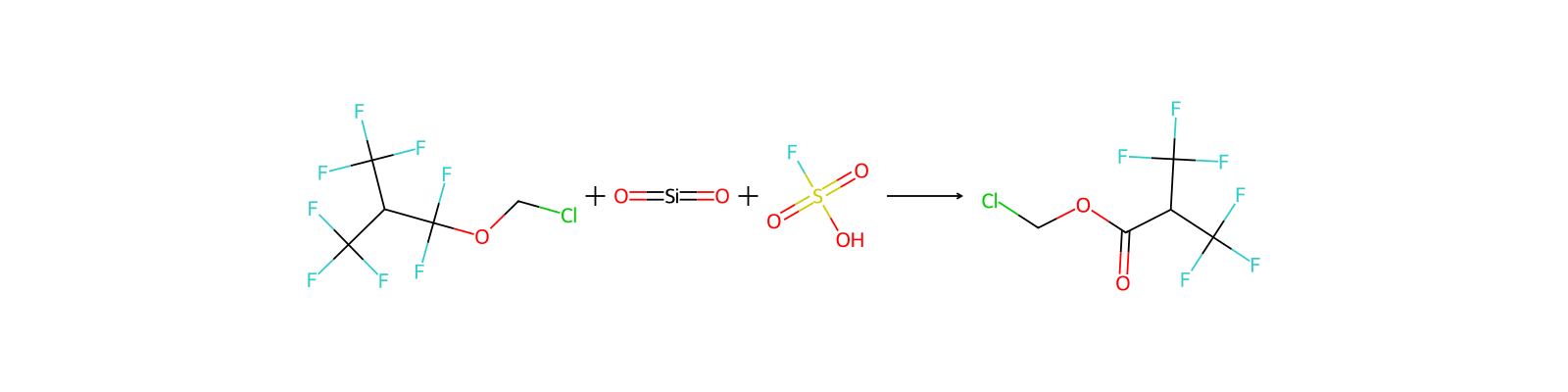
HRID 35387 반응식
HRID 35387반응물로uspto-grants-1988_08
HRID 49656 반응식
HRID 49656반응물로uspto-grants-2004_03
HRID 98386 반응식
HRID 98386반응물로Training data from https://doi.org/10.1039/C8SC04228D (2/10)
HRID 161778 반응식
HRID 161778반응물로Training data from https://doi.org/10.1039/C8SC04228D (9/10)
HRID 323006 반응식
HRID 323006반응물로uspto-grants-2001_04
HRID 382888 반응식
HRID 382888반응물로uspto-grants-2001_10
HRID 649364 반응식
HRID 649364반응물로uspto-grants-1988_04
HRID 679554 반응식
HRID 679554반응물로Training data from https://doi.org/10.1039/C8SC04228D (3/10)
1 / 6 페이지

화합물 노트

불러오는 중…

이 페이지에서기본 정보개요이름 및 식별자물성안전 및 규제화학 및 산업관련 반응화합물 노트
더보기
새 노트새 반응견적 요청하기
· 4건

-125.1 °F (USCG, 1999)

-89 °C

-89 °C

-89 °C

Vapor DensityRelative vapor density (air = 1): 3.4
Vapor Pressure · 2건

2.5 [mmHg]

Vapor pressure, kPa at 25 °C: 0.33

Physical Description · 3건

Fluorosulfonic acid appears as a fuming liquid. Boiling point 163 °C. Density 1.73 g / cm3. Corrosive to metals and to tissue. Both very short contact and the fumes can cause severe painful burns. Used as a catalyst in organic synthesis, in electroplating and as a fluorinating agent.

Colorless liquid that fumes in moist air; [Merck Index] Colorless to light yellow liquid with a choking odor; [CHRIS]

COLOURLESS LIQUID WITH CHARACTERISTIC ODOUR.

물리화학적 성질

녹는점
87.3 °C · −87.3 °C(lit.)
끓는 점
165.5 °C · 165.5 °C(lit.)
밀도
1.726 g/mL · 1.726 g/mL at 25 °C(lit.)
증기 밀도
3.5 · 3.5 (vs air)
증기압
2.5 mm · 2.5 mm Hg ( 25 °C)
저장 조건
2 · 2-8°C
용해도
2 O · reacts with H2O
물리적 상태
무색의 액체
산도 계수 (pKa)
-6.29 · -6.29±0.15(Predicted)
색상
무색의
냄새
Pungent odor
수용성
2 O에서 · H2O에서 격렬하게 가수분해됩니다. 아세톤에서 붉은빛을 띤 갈색을 띤다 [MER06]
Merck
13 · 13,4206
안정성
안정적인. 유리를 부식시킬 수 있습니다. 많은 금속, 베이스와 호환되지 않습니다.
InChI
1S/FHO3S/c1-5(2,3)4/h(H,2,3,4)
InChIKey
UQSQSQZYBQSBJZ-UHFFFAOYSA-N
SMILES
OS(F)(=O)=O
EPA
Fluorosulfuric acid (7789-21-1)

화학적 성질

colourless liquid

Inhalation of fumes causes severe irritation of nose and throat. Contact of liquid with eyes or skin causes very severe burns of mouth and stomach. (USCG, 1999)

· CORROSIVE and/or TOXIC; inhalation, ingestion or contact (skin, eyes) with vapors, dusts or substance may cause severe injury, burns or death.

Hazards Summary · 1건

Highly corrosive to skin; [Quick CPC] Reacts with water producing hydrofluoric acid and sulfuric acid; [HSDB] Corrosive to skin, eyes, and respiratory tract; Inhalation may cause pulmonary edema; [ICSC] See the Process, Toxic Gas from Spilling Chemical in Water.

DOT ID and Guide1777 137
Reactive GroupAcids, Strong Non-oxidizing
EC ClassificationSymbol: C; R: 20-35; S: (1/2)-26-45
UN ClassificationUN Hazard Class: 8; UN Pack Group: I
Reactivity AlertsKnown Catalytic Activity
Reactivity Profile · 1건

FLUOROSULFONIC ACID is very strongly acidic [Merck]. Reacts exothermically with chemical bases (examples: amines, amides, and inorganic hydroxides). These reactions can generate dangerously large amounts of heat in small spaces. Reacts violently with water to generate hydrofluoric acid and sulfuric acid. Reacts with active metals, including such structural metals as aluminum and iron, to release hydrogen, a flammable gas. Can initiate the polymerization of certain alkenes. Reacts with cyanide compounds to release gaseous hydrogen cyanide. Generates flammable and/or toxic gases in contact with dithiocarbamates, isocyanates, mercaptans, nitrides, nitriles, sulfides, and strong reducing agents. Additional gas-generating reactions occur with sulfites, nitrites, thiosulfates (to give H2S and SO3), dithionites (SO2), and carbonates. May catalyze (increase the rate of) chemical reactions.

안전 및 보호

Fire Fighting · 2건

Excerpt from ERG Guide 137 [Substances - Water-Reactive - Corrosive]:

NO water. In case of fire in the surroundings, use appropriate extinguishing media. In case of fire: keep drums, etc., cool by spraying with water. NO direct contact with water.

First Aid Measures · 4건

Fresh air, rest. Half-upright position. Artificial respiration may be needed. Refer for medical attention.

Remove contaminated clothes. Rinse skin with plenty of water or shower. Refer for medical attention .

First rinse with plenty of water for several minutes (remove contact lenses if easily possible), then refer for medical attention.

Rinse mouth. Do NOT induce vomiting. Refer for medical attention .

Accidental Release Measures · 2건

· CALL 911. Then call emergency response telephone number on shipping paper. If shipping paper not available or no answer, refer to appropriate telephone number listed on the inside back cover.

· Do not touch damaged containers or spilled material unless wearing appropriate protective clothing.

First Aid · 2건

Get medical attention quickly following all exposures to this compound.

General First Aid:

Safe StorageDry. Well closed. Separated from food and feedstuffs. See Chemical Dangers.
Exposure Control and Personal Protection · 2건

· Wear positive pressure self-contained breathing apparatus (SCBA).

TIH (Toxic Inhalation Hazard) - Term used to describe gases and volatile liquids that are toxic when inhaled. Some are TIH materials themselves, e.g., chlorine, and some release TIH gases when spilled in water, e.g., chlorosilanes. [ERG 2016].

Nonfire Spill ResponseExcerpt from ERG Guide 137 [Substances - Water-Reactive - Corrosive]:
Spillage Disposal · 1건

Evacuate danger area! Consult an expert! Personal protection: complete protective clothing including self-contained breathing apparatus. Do NOT absorb in saw-dust or other combustible absorbents. NEVER direct water jet on liquid. Collect leaking and spilled liquid in sealable plastic containers as far as possible. Absorb remaining liquid in sand or inert absorbent. Then store and dispose of according to local regulations.

Isolation and Evacuation · 4건

Excerpt from ERG Guide 137 [Substances - Water-Reactive - Corrosive]:

Immediate precautionary measure

When spilled in water

When spilled in water

Eye PreventionWear face shield or eye protection in combination with breathing protection.
Fire PreventionNO contact with flammables.
Inhalation RiskNo indication can be given about the rate at which a harmful concentration of this substance in the air is reached on evaporation at 20 °C.

독성 정보

Adverse EffectsDermatotoxin - Skin burns.
Exposure RoutesThe substance can be absorbed into the body by inhalation and by ingestion.
Signs and Symptoms · 4건

Sore throat. Cough. Burning sensation. Shortness of breath. Laboured breathing. Symptoms may be delayed.

Redness. Serious skin burns. Pain.

Redness. Pain. Severe deep burns.

Sore throat. Burning sensation. Nausea. Vomiting. Abdominal cramps. Shock or collapse.

ICSC Environmental DataThis substance may be hazardous to the environment. Special attention should be given to aquatic organisms.

규제 정보

DHS Chemicals of Interest (COI) · 4건

Fluorosulfonic acid

A Commercial Grade

A Placarded Amount

Chemical or material that can be mixed with readily available materials.

안전 데이터

wgk
1
tsca
TSCA listed
rtecs
LP0715000
ridadr
UN 1777
risk_code
20-35
hazard_code
C,T
safety_code
26-45
포장분류
I
위험 등급
8
기존화학 물질
KE-17058
위험 참고 사항
Corrosive/Toxic
Hazard Classifications
Acute Tox. 4 InhalationSkin Corr. 1A
스토리지 클래스
8A - Combustible corrosive hazardous materials
유해 물질 데이터
7789-21-1(Hazardous Substances Data)

용도Catalyst in organic synthesis, electropolishing, fluorinating agent.

일반 설명A fuming liquid. Boiling point 163°C. Density 1.73 g / cm3. Corrosive to metals and to tissue. Both very short contact and the fumes can cause severe painful burns. Used as a catalyst in organic synthesis, in electroplating and as a fluorinating agent.

상·하류 제품 정보

하류 제품

ion exchange hollow yarn플루오르화비닐리덴fluorosulfonic acidImidodisulfurylfluoride메틸 플루오로설페이트