
브로민화 주석(IV)(브롬화 주석(IV))
Stannane, tetrabromo-
데이터를 보충하는 중입니다. 잠시 후 페이지를 새로 고치면 최신 내용을 볼 수 있습니다
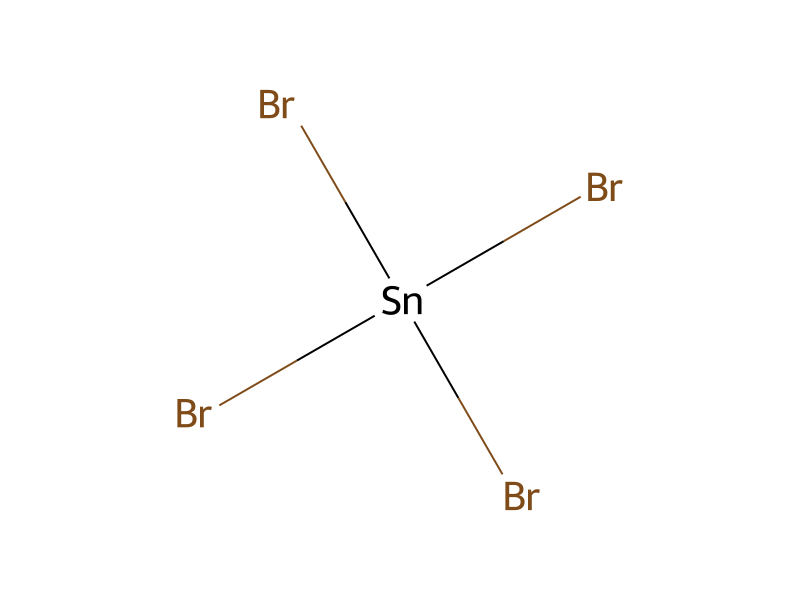
기본 정보
- CAS
7789-67-5- 표준 SMILES
[Br][Sn]([Br])([Br])[Br]- InChIKey
LTSUHJWLSNQKIP-UHFFFAOYSA-J- 분자식
- Br4Sn
- 평균 분자량
- 438.33 g/mol
- 단동위원소 질량
- 435.5755431
개요
Tin(IV) bromide is a bromide of tin. Tin is a chemical element with the symbol Sn and atomic number 50. It is a natural component of the earth's crust and is obtained chiefly from the mineral cassiterite, where it occurs as tin dioxide. Bromine is a halogen element with the symbol Br and atomic number 35. Diatomic bromine does not occur naturally, but bromine salts can be found in crustal rock. (L625, L307, L309)
이름 및 식별자
- 우선 이름
- Stannane, tetrabromo-
- IUPAC
- tetrabromostannane
- 현지명
- 브로민화 주석(IV)(브롬화 주석(IV))
- 영어명
- TIN(IV) BROMIDE
- 분자식
- Br4Sn
- 분자량
- 438.32
이름 및 동의어
Tin(IV) bromideTetrabromostannaneTin tetrabromideStannane, tetrabromo-7789-67-5Stannic bromideTin perbromideSnBr4TIN(IV) BROMIDE (1:4)EINECS 232-184-5Tin (IV) bromideUNII-23C21BW281
이름 더 보기
브로민화주석(IV)(브롬화주석(IV))브로민화주석(IV)(브롬화주석(IV))(TIN(IV)BROMIDE)제2 주석의 브로마이드스탄브로마이드주석(IV)브롬화물주석테트라브롬화물테트라브롬주석TIN BROMIDEtinperbromidetetrabromo-stannan
23C21BW281TetrabromotinTin bromide (SnBr4)Stannic tetrabromidetin-(IV)-bromideTin(IV) bromide, 99%SCHEMBL52454STANNIC BROMIDE [MI]
데이터베이스 식별자
- CAS
7789-67-5- PubChem CID
- 24616
- DTXSID
DTXSID1064873- UNII
- 23C21BW281
- EC Number
- 232-184-5
물성
구조 계산 물성보충 중
- 극성 표면적
- 0 Ų
- 수소 결합 공여자 수
- 0
- 수소 결합 수용자 수
- 0
- 회전 가능 결합 수
- 0
- 무거운 원자 수
- 5
- 형식 전하
- 0
- 복잡도
- 19.1
실험 및 물리화학적 성질
Chemical ClassesMetals -> Metals, Inorganic Compounds
Physical DescriptionWhite solid; Fumes in air; mp = 31 deg C; [Merck Index] Colorless crystals; [Aldrich MSDS]
물리화학적 성질
- 녹는점
- 31 °C · 31 °C(lit.)
- 끓는 점
- 202 °C · 202 °C(lit.)
- 밀도
- 3.34 g/mL · 3.34 g/mL at 25 °C(lit.)
- 인화점
- 202 °C/734mm · 202°C/734mm
- 용해도
- 2 O; · very soluble in H2O; soluble in ethanol
- 물리적 상태
- 덩어리
- Specific Gravity
- 3.34 · 3.34
- 색상
- 무색~백색
- 수용성
- 물에 매우 잘 녹습니다. 에틸알코올에 용해됩니다.
- 비열
- 0.24 J/ · Cp(gas): 0.24 J/(g·K), at 25℃
- Merck
- 14 · 14,8773
- InChI
- 1S/4BrH.Sn/h4*1H;/q;;;;+4/p-4
- InChIKey
- LTSUHJWLSNQKIP-UHFFFAOYSA-J
- SMILES
- Br[Sn](Br)(Br)Br
안전 및 규제
안전 정보는 참고용이며, 공급업체의 물질안전보건자료(SDS), 관련 법규 및 전문가 평가를 대체하지 않습니다.
GHS 분류
GHS Classification
Danger
H314 (100%): Causes severe skin burns and eye damage [Danger Skin corrosion/irritation]
P260, P261, P264, P271, P280, P301+P330+P331, P302+P361+P354, P304+P340, P305+P354+P338, P316, P319, P321, P363, P403+P233, P405, and P501 (click each P-code to see the statement)
Aggregated GHS information provided per 43 reports by companies from 3 notifications to the ECHA C&L Inventory. Each notification may be associated with multiple companies.
유해성 정보
Regulatory Information
Chemical: Stannane, tetrabromo-
Stannane, tetrabromo-: Does not have an individual approval but may be used under an appropriate group standard
Hazards SummaryA skin and eye irritant; [Hawley] See Bromine.
Hazard Classes and CategoriesSkin Corr. 1B (100%)
안전 및 보호
Threshold Limit Values (TLV)2.0 [mg/m3], as Sn
Permissible Exposure Limit (PEL)2.0 [mg/m3], as Sn
독성 정보
Treatment
EYES: irrigate opened eyes for several minutes under running water. INGESTION: do not induce vomiting. Rinse mouth with water (never give anything by mouth to an unconscious person). Seek immediate medical advice. SKIN: should be treated immediately by rinsing the affected parts in cold running water for at least 15 minutes, followed by thorough washing with soap and water. If necessary, the person should shower and change contaminated clothing and shoes, and then must seek medical attention. INHALATION: supply fresh air. If required provide artificial respiration.
화학 및 산업
약리 정보
Metabolism/Metabolites
Though tin metal is very poorly absorbed, tin compounds may be absorbed via oral, inhalation, or dermal routes, with organotin compounds being much more readily absorbed than inorganic tin compounds. Tin may enter the bloodstream and bind to hemoglobin, where it is distributed and accumulates mainly in the kidney, liver, lung, and bone. Tin and its metabolites are excreted mainly in the urine and feces. Bromine is mainly absorbed via inhalation, but may also enter the body through dermal contact. Bromine salts can be ingested. Due to its reactivity, bromine quickly forms bromide and may be deposited in the tissues, displacing other halogens. (L626, L308)
용도 및 제조
Uses
Used in metallurgy (separation of minerals); [Merck Index]
Metal Extraction and Refining [Category: Industry]
General Manufacturing InformationStannane, tetrabromo-: ACTIVE
응용 분야
용도In metallurgical separation of minerals.
상·하류 제품 정보
하류 제품
관련 반응
5건


화합물 노트
불러오는 중…