
N'-(에틸카본이미도일)-N,N-디메틸1,3-프로판디아민 모노염산염
1,3-Propanediamine, N'-(ethylcarbonimidoyl)-N,N-dimethyl-, monohydrochloride
데이터를 보충하는 중입니다. 잠시 후 페이지를 새로 고치면 최신 내용을 볼 수 있습니다

기본 정보
- CAS
25952-53-8- 표준 SMILES
CCN=C=NCCCN(C)C.Cl- InChIKey
FPQQSJJWHUJYPU-UHFFFAOYSA-N- 분자식
- C8H18ClN3
- 평균 분자량
- 191.7 g/mol
- 단동위원소 질량
- 191.1189253
이름 및 식별자
- 우선 이름
- 1,3-Propanediamine, N'-(ethylcarbonimidoyl)-N,N-dimethyl-, monohydrochloride
- IUPAC
- 3-(ethyliminomethylideneamino)-N,N-dimethylpropan-1-amine;hydrochloride
- 현지명
- N'-(에틸카본이미도일)-N,N-디메틸1,3-프로판디아민 모노염산염
- 영어명
- 1-(3-Dimethylaminopropyl)-3-ethylcarbodiimide hydrochloride
- 분자식
- C8H18ClN3
- 분자량
- 191.7
이름 및 동의어
25952-53-8EDC hydrochloride1-Ethyl-3-(3-dimethylaminopropyl)carbodiimide hydrochloride19W5TL0WJ41,3-Propanediamine, N'-(ethylcarbonimidoyl)-N,N-dimethyl-, monohydrochloride1-Ethyl-3-(3'-dimethylaminopropyl)carbodiimide hydrochlorideNSC-97064N'-(Ethylcarbonimidoyl)-N,N-dimethylpropane-1,3-diamine monohydrochlorideEDC HYDROCHLORIDE [MI]1-ethyl-3-(3'-dimethylaminopropyl)carbodiimide monohydrochlorideDTXSID508800761,3-Propanediamine, N3-(ethylcarbonimidoyl)-N1,N1-dimethyl-, hydrochloride (1:1)
이름 더 보기
N'-(에틸카본이미도일)-N,N-디메틸1,3-프로판디아민모노염산염N3-(에틸카본이미도일)-N1,N1-다이메틸-1,3-프로판다이아민,염산염(1:1)N3-(에틸카본이미도일)-N1,N1-디메틸-1,3-프로판디아민의 염산염 (1:1)EDCIEDC.HClEDACWSCEDARAVONE1-ETHYL-3-(3-DIMETHYLAMINOPROPYL) CARBODIIMIDEWSCIWSCDEDC.HCI1-(3-dimethylaminopropyl)-3-ethylcarbodiimide HCI (EDCI·HCl)
3-[3-(Dimethylamino)propyl]-1-ethylcarbodiimide hydrochloride3-(3-(DIMETHYLAMINO)PROPYL)-1-ETHYLCARBODIIMIDE HYDROCHLORIDE1-ethyl-3-(3-dimethylaminopropyl]carbodiimide hydrochloride1-ethyl-3-[3-dimethylaminopropyl]carbodiimide hydrochlorideRefChem:415422DTXCID7010216721(3Dimethylaminopropyl)3ethylcarbodiimide hydrochloride1Ethyl3(3dimethylaminopropyl)carbodiimide hydrochloride
데이터베이스 식별자
- CAS
25952-53-8、7084-11-9- PubChem CID
- 2723939
- DTXSID
DTXSID50880076- ChEMBL
CHEMBL1968770- UNII
- 19W5TL0WJ4
- EC Number
- 247-361-2
물성
구조 계산 물성보충 중
- 극성 표면적
- 28 Ų
- 수소 결합 공여자 수
- 1
- 수소 결합 수용자 수
- 3
- 회전 가능 결합 수
- 5
- 무거운 원자 수
- 12
- 형식 전하
- 0
- 복잡도
- 134
실험 및 물리화학적 성질
Physical DescriptionWhite powder; [Aldrich MSDS]
물리화학적 성질
- 녹는점
- 110 · 110-115 °C(lit.)
- 밀도
- 0.877 g/mL · 0.877 g/mL at 20 °C(lit.)
- 증기압
- 0.002 Pa · 0.002Pa at 20℃
- 굴절률
- 20 · n20/D 1.461
- 저장 조건
- -20 °C · -20°C
- 용해도
- 2 O: · H2O: 용해성 1gm/10ml, 투명하거나 매우 약간 흐릿함, 무색 내지 매우 희미한 노란색
- 물리적 상태
- 결정성 분말
- 색상
- 흰색에서 황백색까지
- 수용성
- 녹는
- BRN
- 5764110 · 5764110
- 안정성
- 안정적이지만 습기에 민감합니다. 강산, 강산화제, 습기와 호환되지 않습니다.
- 주요 응용
- 미생물학
- InChI
- 1S/C8H17N3.ClH/c1-4-9-8-10-6-5-7-11(2)3;/h4-7H2,1-3H3;1H
- InChIKey
- FPQQSJJWHUJYPU-UHFFFAOYSA-N
- SMILES
- Cl.CCN=C=NCCCN(C)C
- LogP
- -2.98 at · -2.98 at 25℃
- EPA
안전 및 규제
안전 정보는 참고용이며, 공급업체의 물질안전보건자료(SDS), 관련 법규 및 전문가 평가를 대체하지 않습니다.
GHS 분류
GHS Classification
Danger
H302 (73.7%): Harmful if swallowed [Warning Acute toxicity, oral];H311 (56.5%): Toxic in contact with skin [Danger Acute toxicity, dermal];H315 (100%): Causes skin irritation [Warning Skin corrosion/irritation];H317 (60.6%): May cause an allergic skin reaction [Warning Sensitization, Skin];H318 (10.2%): Causes serious eye damage [Danger Serious eye damage/eye irritation];H319 (75.2%): Causes serious eye irritation [Warning Serious eye damage/eye irritation];H335 (43.2%): May cause respiratory irritation [Warning Specific target organ toxicity, single exposure; Respiratory tract irritation];H373 (55.9%): May causes damage to organs through prolonged or repeated exposure [Warning Specific target organ toxicity, repeated exposure];H400 (56.2%): Very toxic to aquatic life [Warning Hazardous to the aquatic environment, acute hazard];H410 (56.5%): Very toxic to aquatic life with long lasting effects [Warning Hazardous to the aquatic environment, long-term hazard]
P260, P261, P262, P264, P264+P265, P270, P271, P272, P273, P280, P301+P317, P302+P352, P304+P340, P305+P351+P338, P305+P354+P338, P316, P317, P319, P321, P330, P332+P317, P333+P317, P337+P317, P361+P364, P362+P364, P391, P403+P233, P405, and P501 (click each P-code to see the statement)
Aggregated GHS information provided per 315 reports by companies from 35 notifications to the ECHA C&L Inventory. Each notification may be associated with multiple companies.;Information may vary between notifications depending on impurities, additives, and other factors. The percentage value in parenthesis indicates the notified classification ratio from companies that provide hazard codes. Only hazard codes with percentage values above 10% are shown. For more detailed information, please visit ECHA C&L website.
유해성 정보
Regulatory Information
Chemical: 1,3-Propanediamine, N'-(ethylcarbonimidoyl)-N,N-dimethyl-, monohydrochloride
Status: Active Update: 08-06-2022 https://echa.europa.eu/registration-dossier/-/registered-dossier/23229;Status: Active Update: 28-04-2023 https://echa.europa.eu/registration-dossier/-/registered-dossier/17871
N-(3-Dimethylaminopropyl)-N'-ethylcarbodiimide hydro chloride: Does not have an individual approval but may be used under an appropriate group standard
화학 및 산업
용도 및 제조
General Manufacturing Information1,3-Propanediamine, N3-(ethylcarbonimidoyl)-N1,N1-dimethyl-, hydrochloride (1:1): ACTIVE
응용 분야
일반 설명EDC hydrochloride is a water-soluble derivative of carbodiimide useful for conjugating haptens to proteins and polypeptides. Used to modify NMDA receptors and as a condensing agent in peptide synthesis. The major advantage of EDAC coupling is the easy removal of excess reagent and the corresponding urea by washing with dilute acid or water. Carbodiimides catalyze the formation of amide bonds, carboxylic acids, and amines by activating the carboxylate to form an O-acylurea. This intermediate can be attacked by an amine directly to form an amide. EDAC is released as a soluble urea derivative.
상·하류 제품 정보
상류 원료
하류 제품
관련 반응
25,665건



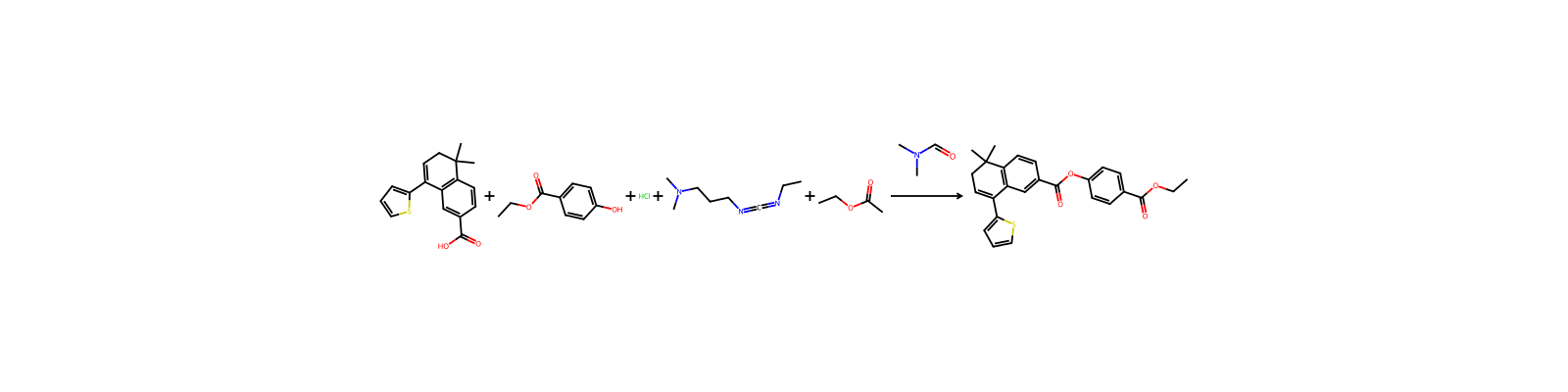

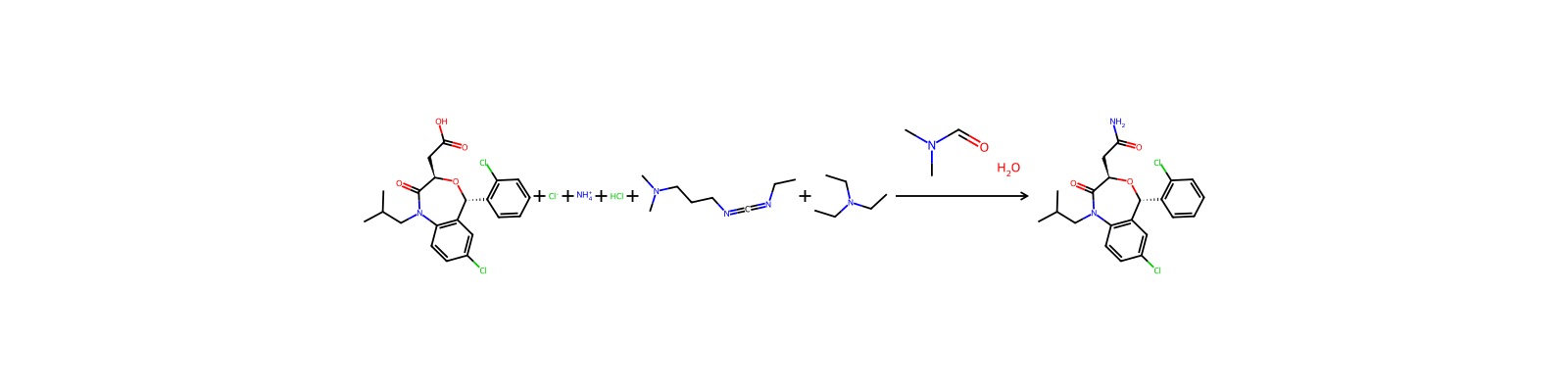

화합물 노트
불러오는 중…