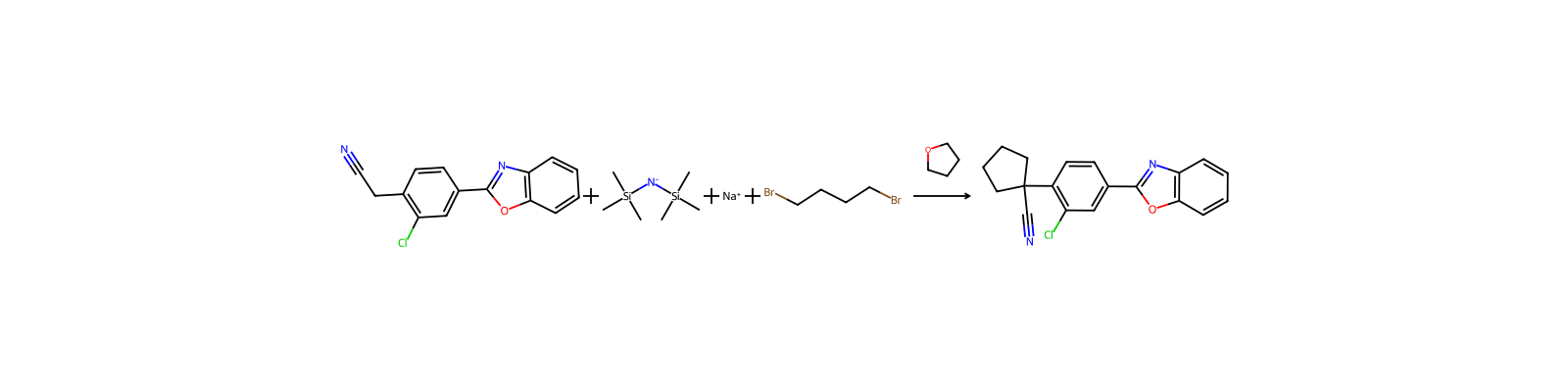
HRID 5562반응물로
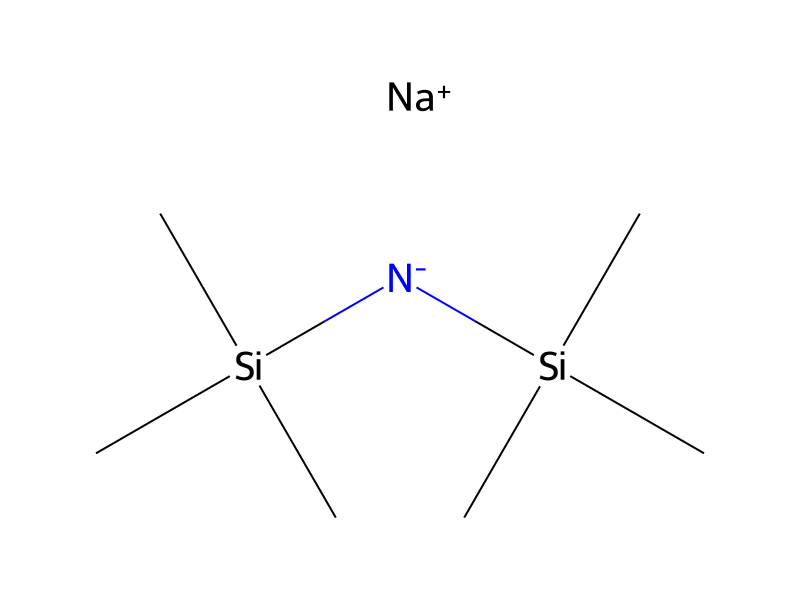
1070-89-9C[Si](C)(C)[N-][Si](C)(C)C.[Na+]WRIKHQLVHPKCJU-UHFFFAOYSA-N1070-89-9DTXSID5061451안전 정보는 참고용이며, 공급업체의 물질안전보건자료(SDS), 관련 법규 및 전문가 평가를 대체하지 않습니다.
Danger
H302 (63.4%): Harmful if swallowed [Warning Acute toxicity, oral]
P260, P261, P264, P264+P265, P270, P271, P273, P280, P301+P317, P301+P330+P331, P302+P352, P302+P361+P354, P304+P340, P305+P354+P338, P316, P317, P321, P330, P362+P364, P363, P405, and P501 (click each P-code to see the statement)
Aggregated GHS information provided per 235 reports by companies from 11 notifications to the ECHA C&L Inventory. Each notification may be associated with multiple companies.
REACH registered substance: N-sodiohexamethyldisilazane (EC: 213-983-8)
Silanamine, 1,1,1-trimethyl-N-(trimethylsilyl)-, sodium salt: Does not have an individual approval but may be used under an appropriate group standard
260 [mg/m3]
430 [mg/m3]
520 [mg/m3]
용도Sodium bis(trimethylsilyl)amide is a synthetically useful reagent in that it combines both high basicity and nucleophilicity, each of which may be exploited for useful organic transformations such as selective formation of enolates, preparation of Wittig reagents, formation of acyl anion equivalents, and the generation of carbenoid species. As a nucleophile, it has been used as a nitrogen source for the preparation of primary amines.It is useful as a sterically hindered base and as a nucleophile.
일반 설명Sodium bis(trimethylsilyl)amide solution (NaHMDS) is widely used as a strong base in organic synthesis for deprotonation reactions and base-catalyzed reactions. It is also involved in the generation of enolates, Wittig reagents and carbenes.
Slightly yellow to light beige crystalline powder