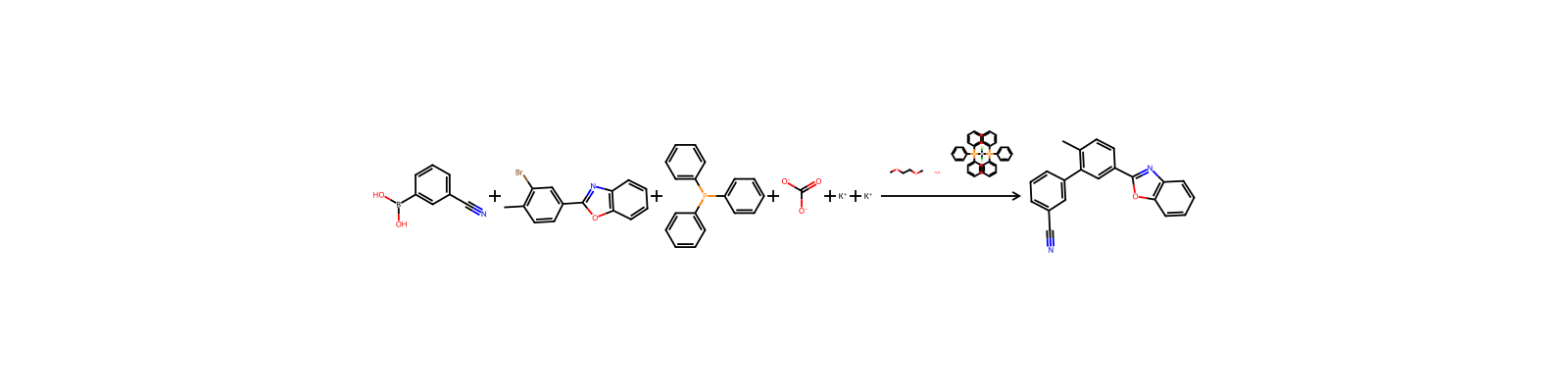
3-Cyanophenylboronic acid
데이터를 보충하는 중입니다. 잠시 후 페이지를 새로 고치면 최신 내용을 볼 수 있습니다
기본 정보
- CAS
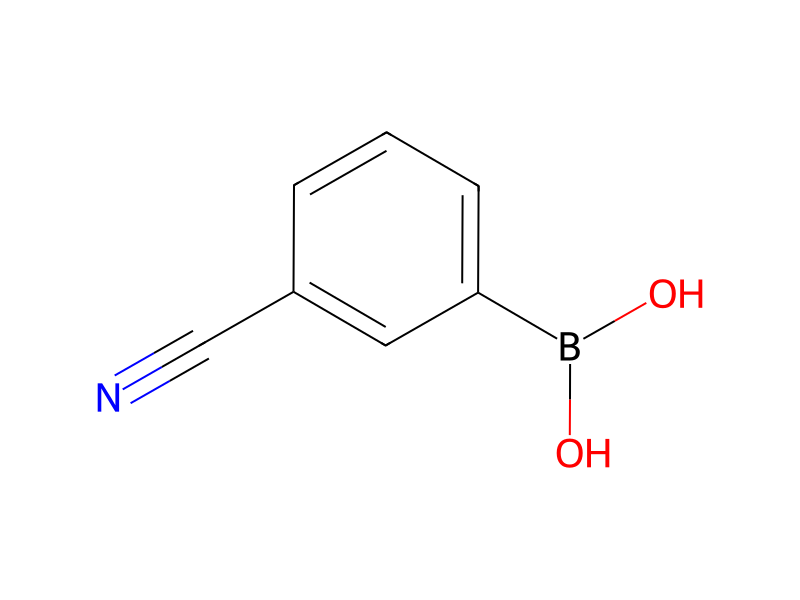
150255-96-2- 표준 SMILES
N#Cc1cccc(B(O)O)c1- InChIKey
XDBHWPLGGBLUHH-UHFFFAOYSA-N- 분자식
- C7H6BNO2
- 평균 분자량
- 146.94 g/mol
- 단동위원소 질량
- 147.04915883
이름 및 식별자
- 우선 이름
- 3-Cyanophenylboronic acid
- IUPAC
- (3-cyanophenyl)boronic acid
- 영어명
- 3-Cyanophenylboronic acid
- 분자식
- C7H6BNO2
- 분자량
- 146.94
이름 및 동의어
3-Cyanophenylboronic acid150255-96-2(3-cyanophenyl)boronic AcidDTXSID60370216RefChem:500649DTXCID50321252604-729-03-Cyanobenzeneboronic AcidMFCD01318967Boronic acid, B-(3-cyanophenyl)-3-cyano phenylboronic acid3-Boronobenzonitrile
이름 더 보기
1-p-Tolylpyrazole-4-boronic acid2-Methyl-3-nitrophenylboronic acid, pinacol ester4,4,5,5-Tetramethyl-2-(4-methyl-3-nitrophenyl)-1,3,2-dioxaborolane2-(3-Chloro-4-methylphenyl)-4,4,5,5-tetramethyl-1,3,2-dioxaborolaneAKOS BRN-0075CAS:150255-96-2RARECHEM AH PB 02073-CyanophenylboronicHydroxydip-tolylborane
3-Cyanophenylboronicacid3-cyanophenyl boronic acidBORONIC ACID, (3-CYANOPHENYL)-3-(dihydroxyboranyl)benzonitrilePhenylboronic Acid, 4m-cyanophenyl boronic acid3-cyano-phenylboronic acid3-cyanophenyl-boronic acid
데이터베이스 식별자
- CAS
150255-96-2- PubChem CID
- 2734325
- DTXSID
DTXSID60370216- ChEMBL
CHEMBL485740- EC Number
- 604-729-0
- Nikkaji
- J1.183.918E
물성
구조 계산 물성보충 중
- 극성 표면적
- 64.3 Ų
- 수소 결합 공여자 수
- 2
- 수소 결합 수용자 수
- 3
- 회전 가능 결합 수
- 1
- 무거운 원자 수
- 11
- 형식 전하
- 0
- 복잡도
- 175
물리화학적 성질
- 녹는점
- 298 °C · 298 °C (dec.) (lit.)
- 끓는 점
- 347.4 · 347.4±44.0 °C(Predicted)
- 밀도
- 1.25 · 1.25±0.1 g/cm3(Predicted)
- 저장 조건
- Keep in dark place,Sealed in dry,Room Temperature
- 용해도
- 메탄올에 용해됨
- 산도 계수 (pKa)
- 7.17 · 7.17±0.10(Predicted)
- 물리적 상태
- 고체
- 색상
- 흰색에서 밝은 노란색
- BRN
- 6136720 · 6136720
- InChI
- InChI=1S/C7H6BNO2/c9-5-6-2-1-3-7(4-6)8(10)11/h1-4,10-11H
- InChIKey
- XDBHWPLGGBLUHH-UHFFFAOYSA-N
- SMILES
- B(C1=CC=CC(C#N)=C1)(O)O
화학적 성질
light orange powder
안전 및 규제
안전 정보는 참고용이며, 공급업체의 물질안전보건자료(SDS), 관련 법규 및 전문가 평가를 대체하지 않습니다.
GHS 분류
GHS Classification
This chemical does not meet GHS hazard criteria for 7.4% (4 of 54) of reports.
Warning
H302 (20.4%): Harmful if swallowed [Warning Acute toxicity, oral]
P261, P264, P264+P265, P270, P271, P280, P301+P317, P302+P352, P304+P340, P305+P351+P338, P319, P321, P330, P332+P317, P337+P317, P362+P364, P403+P233, P405, and P501 (click each P-code to see the statement)
Aggregated GHS information provided per 54 reports by companies from 10 notifications to the ECHA C&L Inventory. Each notification may be associated with multiple companies.
유해성 정보
Regulatory InformationStatus: Active Update: 27-10-2022 https://echa.europa.eu/registration-dossier/-/registered-dossier/33068
Hazard Classes and CategoriesAcute Tox. 4 (20.4%)
안전 데이터
- wgk
- 3
- ridadr
- UN3439
- HS 번호
- 29163990
- risk_code
- 36/37/38-34-36-41-37/38-22
- hazard_code
- Xi,C,Xn
- safety_code
- 26-37/39-45-36/37/39-22-39-36
- 포장분류
- III
- 위험 등급
- 6.1
- 위험 참고 사항
- Harmful/Irritant
- Hazard Classifications
- Eye Irrit. 2Skin Irrit. 2STOT SE 3
- 스토리지 클래스
- 11 - Combustible Solids
화학 및 산업
응용 분야
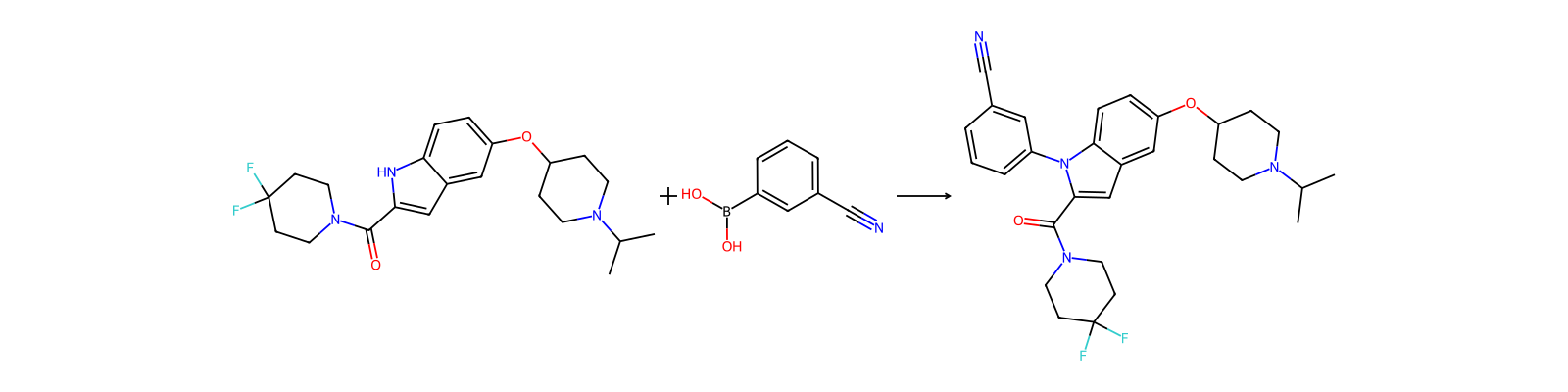
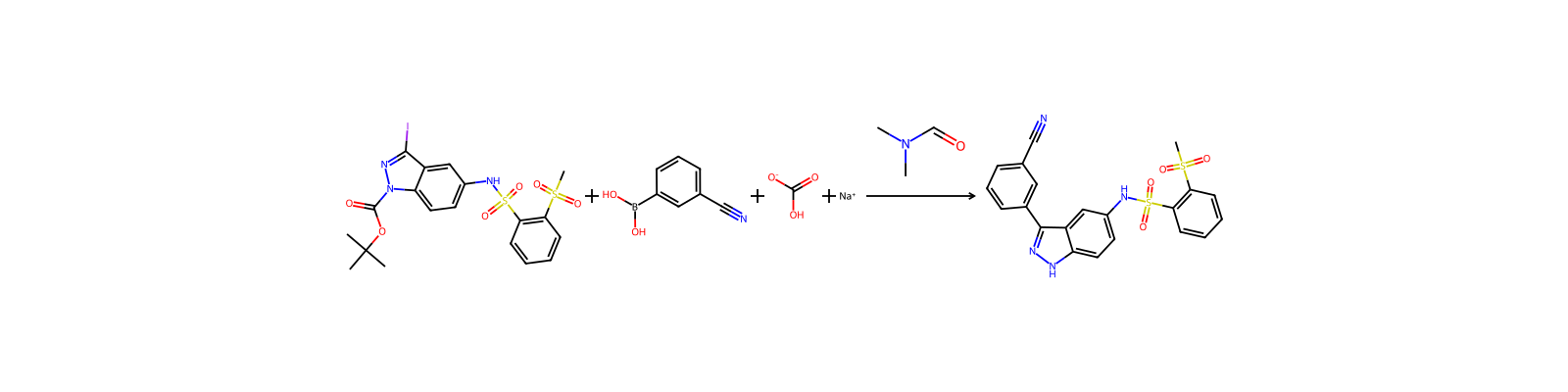
용도3-Cyanophenylboronic acid can be used:As an intermediate in the synthesis of piperidine-based MCH R1 antagonists.As a substrate in the Suzuki coupling reactions to prepare 4-aryl-1,8-naphthyridin-2(1H)-ones.As an intermediate in the synthesis of biaryl-basedphenylalanineamino acid analogs, which are used as kainate receptors ligands.To prepare phenylimidazole-basedIr(III) complexes for phosphorescent blue OLED applications.
상·하류 제품 정보
상류 원료
하류 제품
관련 반응
597건




화합물 노트
불러오는 중…