
기본 정보
- 표준 SMILES
C=CC(=O)OCC(CC)(COC(=O)C=C)COC(=O)C=C- InChIKey
DAKWPKUUDNSNPN-UHFFFAOYSA-N- 분자식
- C15H20O6
- 평균 분자량
- 296.31 g/mol
- 단동위원소 질량
- 296.12598836
개요
Trimethylolpropane triacrylate (Technical Grade) can cause cancer according to California Labor Code and the World Health Organization's International Agency for Research on Cancer (IARC).
이름 및 식별자
- 우선 이름
- Trimethylolpropane triacrylate
- IUPAC
- 2,2-bis(prop-2-enoyloxymethyl)butyl prop-2-enoate
- 현지명
- 트리메티올프로판 트리아크릴레이트
- 영어명
- Trimethylolpropane triacrylate
- 분자식
- C15H20O6
- 분자량
- 296.32
이름 및 동의어
TRIMETHYLOLPROPANE TRIACRYLATE15625-89-5TMPTAViscoat 295Sartomer SR 351Ogumont T 200Setalux UV 2241Saret 351NK Ester A TMPTUNII-4B67KGL96SDTXSID00277732-Ethyl-2-(hydroxymethyl)-1,3-propanediol triacrylate
이름 더 보기
트라이메틸올프로페인트라이아크릴레이트트라이메틸올프로판트라이아크릴산트라이메틸올프로페인트라이아크릴산트리메티올프로판트리아크릴레이트트리메틸롤프로판트리아크릴산염트라이메틸올프로판트라이아크릴레이트트라이메틸롤프로판트라이아크릴레이트트라이메틸올프로페인트라이아크릴산(TRIMETHYLOLPROPANETRIACRYLATE)트라이메틸올프로페인 트라이아크릴레이트1,1,1-TRIMETHYLOL PROPANE TRIACRYLATE2-((acryloyloxy)Methyl)-2-ethylpropane-1,3-diyl diacrylateHEXAGLYCERINE TRIACRYLATEsr351TTMPTAogumontt200Trimethylpropane triacrylate2,2-bis(acryloyloxymethyl)butyl acrylatem309
CCRIS 92EINECS 239-701-3SR 3514B67KGL96SM 309MFMHSDB 80541,3-Propanediol, 2-ethyl-2-(hydroxymethyl)-, triacrylate
데이터베이스 식별자
- CAS
15625-89-5- PubChem CID
- 27423
- DTXSID
DTXSID0027773- ChEMBL
CHEMBL1886556- ChEBI
CHEBI:35028- UNII
- 4B67KGL96S
- EC Number
- 239-701-3
- Nikkaji
- J38.143H
물성
구조 계산 물성
- XLogP
- 2.7
- 극성 표면적
- 78.9 Ų
- 수소 결합 공여자 수
- 0
- 수소 결합 수용자 수
- 6
- 회전 가능 결합 수
- 13
- 무거운 원자 수
- 21
- 형식 전하
- 0
- 복잡도
- 364
실험 및 물리화학적 성질
PolymersPlastics & Rubber -> (Meth)acrylates
CosmeticsCosmetics ingredient -> Other (Specify)
LogP
log Kow = 2.75
2.75
OdorAcrylic or pungent odor
Density1.11 g/cu cm at 20 °C
Color/FormViscous, colorless to tan liquid
SolubilityInsoluble in water
Boiling PointBP: >200 °C at 1 mm Hg
DecompositionWhen heated to decomposition it emits acrid smoke and irritating fumes.
Refractive IndexIndex of refraction = 1.4735 at 20 °C
Physical Description
Liquid; Dry Powder; CBI
Liquid; [IUCLID] Colorless liquid with a pungent odor; Hygroscopic; Tan or amber in color if impure; [NTP] Clear or yellow liquid with a pungent odor; [Alfa Aesar MSDS]
Collision Cross Section165.9 Ų [M+Na]+ [CCS Type: DT; Buffer gas: N2; Ionization: ESI+; Dataset: TOXCAST; Source Identifier: DTXSID0027773]
물리화학적 성질
- 녹는점
- -66 °C · -66°C
- 끓는 점
- 200 °C · >200°C
- 밀도
- 1.1 g/mL · 1.1 g/mL at 25 °C (lit.)
- 증기 밀도
- 1 · >1 (vs air)
- 증기압
- 0.01 mm · <0.01 mm Hg ( 20 °C)
- 굴절률
- 20 · n20/D 1.474(lit.)
- 인화점
- 230 °F · >230 °F
- 저장 조건
- Refrigerator
- 물리적 상태
- 액체
- 산도 계수 (pKa)
- 0 · 0[at 20 ℃]
- Specific Gravity
- 1.1 · 1.1
- 색상
- Colorless to Light yellow to Light orange
- 수용성
- 물과 섞일 수 있습니다.
- Henry's Law Constant
- 1.6 · 1.6×104 mol/(m3Pa) at 25℃, HSDB (2015)
- 화장품 원료 기능
- 필름 형성제헤어 컨디셔닝헤어 스타일링
- InChI
- 1S/C15H20O6/c1-5-12(16)19-9-15(8-4,10-20-13(17)6-2)11-21-14(18)7-3/h5-7H,1-3,8-11H2,4H3
- InChIKey
- DAKWPKUUDNSNPN-UHFFFAOYSA-N
- SMILES
- CCC(COC(=O)C=C)(COC(=O)C=C)COC(=O)C=C
- LogP
- 4.35 at · 4.35 at 20℃
- NIST
- TMPTA (Trimethylol propane triacrylate)(15625-89-5)
- EPA
- Trimethylolpropane triacrylate (15625-89-5)
화학적 성질
Colorless viscid liquid
안전 및 규제
GHS 분류
GHS Classification
Warning
H315: Causes skin irritation [Warning Skin corrosion/irritation]
P203, P261, P264, P264+P265, P272, P273, P280, P302+P352, P305+P351+P338, P318, P321, P332+P317, P333+P317, P337+P317, P362+P364, P391, P405, and P501 (click each P-code to see the statement)
This chemical does not meet GHS hazard criteria for 0.1% (4 of 3852) of reports.
Warning
H315 (99.9%): Causes skin irritation [Warning Skin corrosion/irritation]
유해성 정보
Regulatory Information
Chemical: 2-Propenoic acid, 2-ethyl-2-[[(1-oxo-2-propenyl)oxy]methyl]-1,3-propanediyl ester
Hazard Traits - Carcinogenicity
2-Propenoic acid, 1,1'-[2-ethyl-2-[[(1-oxo-2-propen-1-yl)oxy]methyl]-1,3-propanediyl] ester is listed on the EPA's Chemical Data Reporting (CDR) system. Manufacturers and importers of 2-Propenoic acid, 1,1'-[2-ethyl-2-[[(1-oxo-2-propen-1-yl)oxy]methyl]-1,3-propanediyl] ester are required to report information about their production and use of this chemical to the EPA under the Toxic Substances Control Act (TSCA). (40 eCFR Part 711)
Status: Active Update: 04-01-2023 https://echa.europa.eu/registration-dossier/-/registered-dossier/15232
Trimethylolpropane triacrylate: Does not have an individual approval but may be used under an appropriate group standard
Other Safety InformationIMAP assessments - 2-Propenoic acid, 2-ethyl-2-[[(1-oxo-2-propenyl)oxy]methyl]-1,3-propanediyl ester: Human health tier II assessment
Hazards Summary
Allergic contact dermatitis reported in workers exposed to UV-cured coatings and textile inks; [Kanerva, p. 1745] Labeled in the EU as causing skin and eye irritation with the potential to cause skin sensitization; [IUCLID] May spontaneously polymerize on exposure to heat or light (stabilized with monomethyl ester of hydroquinone); [NTP] Occupational asthma confirmed in a worker exposed for 20 years in a kiosk to a tint containing trimethylolpropane triacrylate from a thermal printer; [Reference #1]
Hazard Classes and Categories
Skin Irrit. 2 (99.9%)
Eye irritation - category 2
Skin corrosion/irritation - Category 2
Serious eye damage/eye irritation - Category 2A
Carc. 2
안전 및 보호
Disposal Methods
SRP: The most favorable course of action is to use an alternative chemical product with less inherent propensity for occupational harm/injury/toxicity or environmental contamination. Recycle any unused portion of the material for its approved use or return it to the manufacturer or supplier. Ultimate disposal of the chemical must consider: the material's impact on air quality; potential migration in soil or water; effects on animal and plant life; and conformance with environmental and public health regulations.
Other Standards Regulations and GuidelinesWorkplace Environmental Exposure Level (WEEL): 8-hr Time-weighted Average (TWA) 1 mg/cu m, skin.
독성 정보
Environmental Fate
TERRESTRIAL FATE: Based on a classification scheme(1), an estimated Koc value of 1510(SRC), determined from a structure estimation method(2), indicates that trimethylolpropane triacrylate is expected to have low mobility in soil(SRC). Volatilization of trimethylolpropane triacrylate from moist soil surfaces is not expected to be an important fate process(SRC) given an estimated Henry's Law constant of 6X10⁻¹⁰ atm-cu m/mole(SRC), using a fragment constant estimation method(2). Trimethylolpropane triacrylate's estimated vapor pressure of 5.9X10⁻⁴ mm Hg at 25 °C(SRC), determined from a fragment constant method(2), suggests that volatilization from dry soil surfaces will not be important fate process(SRC); however, trimethylolpropane triacrylate is a liquid with a noticeable acrylic odor(3) suggesting some volatilization may occur(SRC). A 19% of theoretical BOD using activated sludge in the Japanese MITI test(4) suggests that some biodegradation may occur in soil(SRC); in the 4-week biodegradation test, 87% of initial trimethylolpropane triacrylate was degraded yielding the di- and monoacrylate esters plus trimethylolpropane(4).
AQUATIC FATE: Based on a classification scheme(1), an estimated Koc value of 1510(SRC), determined from a structure estimation method(2), indicates that trimethylolpropane triacrylate is expected to adsorb to suspended solids and sediment(SRC). Volatilization from water surfaces is not expected(3) based upon an estimated Henry's Law constant of 6X10⁻¹⁰ atm-cu m/mole(SRC), developed using a fragment constant estimation method(2). According to a classification scheme(4), an estimated BCF of 30(SRC), from a log Kow of 2.75(5) and a regression-derived equation(2), suggests the potential for bioconcentration in aquatic organisms is low. Bioconcentration tests using 6 or 8 week exposures found low bioconcentration(6). A base-catalyzed second-order hydrolysis rate constant of 0.0242 L/mole-sec at 25 °C(SRC) was estimated using a structure estimation method(7); this corresponds to half-lives of 9 years and 331 days at pH values of 7 and 8, respectively(SRC). A 19% of theoretical BOD using activated sludge in the Japanese MITI test(6) suggests that some biodegradation may occur in soil(SRC); in the 4-week biodegradation test, 87% of initial trimethylolpropane triacrylate was degraded yielding the di- and monoacrylate esters plus trimethylolpropane(6).
ATMOSPHERIC FATE: According to a model of gas/particle partitioning of semivolatile organic compounds in the atmosphere(1), trimethylolpropane triacrylate, which has an estimated vapor pressure of 5.9X10⁻⁴ mm Hg at 25 °C(SRC), determined from a fragment constant method(2), is expected to exist solely as a vapor in the ambient atmosphere. Vapor-phase trimethylolpropane triacrylate is degraded in the atmosphere by reaction with photochemically-produced hydroxyl radicals(SRC); the half-life for this reaction in air is estimated to be 11 hours(SRC), calculated from its rate constant of 3.4X10⁻¹¹ cu cm/molecule-sec at 25 °C(SRC) that was derived using a structure estimation method(2). Vapor-phase trimethylolpropane triacrylate is also degraded in the atmosphere by reaction with ozone(SRC); the half-life for this reaction in air is estimated to be 2 days(SRC), calculated from its rate constant of 5.25X10⁻¹⁸ cu cm/molecule-sec at 25 °C(SRC) that was derived using a structure estimation method(2). Trimethylolpropane triacrylate is reported to be light sensitive when exposed to direct sunlight(3); therefore, direct photolysis may have some importance in the environment(SRC).
Adverse EffectsSkin Sensitizer - An agent that can induce an allergic reaction in the skin.
Ongoing Test Status
The following link will take the user to the National Toxicology Program (NTP) Test Agent Search Results page, which tabulates all of the "Standard Toxicology & Carcinogenesis Studies", "Developmental Studies", and "Genetic Toxicity Studies" performed with this chemical. Clicking on the "Testing Status" link will take the user to the status (i.e., in review, in progress, in preparation, on test, completed, etc.) and results of all the studies that the NTP has done on this chemical.[Available from, as of June 21, 2012: http://ntp-apps.niehs.nih.gov/ntp_tox/index.cfm?fuseaction=ntpsearch.searchresults&searchterm=15625-89-5]
Soil Adsorption/Mobility
Using a structure estimation method based on molecular connectivity indices(1), the Koc of trimethylolpropane triacrylate can be estimated to be 1510(SRC). According to a classification scheme(2), this estimated Koc value suggests that trimethylolpropane triacrylate is expected to have low mobility in soil.
Human Toxicity Excerpts
/HUMAN EXPOSURE STUDIES/ Skin sensitivity and photo patch testing of 0.2% trimethylolpropane triacrylate in petrolatum was performed on 47 employees of a citrus juice bottling plant who were exposed to ultraviolet-cured printing inks. All 47 workers had positive reactions to one or both tests. Because few workers showed skin sensitization to trimethylolpropane triacrylate, the past skin reactions were considered to be irritant, not allergic, reactions to the inks and their components.
/HUMAN EXPOSURE STUDIES/ Four workers in a plastic floor manufacturing facility developed hand and face dermatitis a year after the introduction of a varnish with an aziridine-based hardener containing 3% to 5% trimethylolpropane triacrylate. The workers had positive reactions to skin patch tests with trimethylolpropane triacrylate in acetone at 0.0001% (1/4), 0.03% (3/4), and 0.1% (4/4), with the most severe reactions occurring in the worker who reacted to the 0.0001% formulation.
/HUMAN EXPOSURE STUDIES/ Seven of 10 workers exposed to ultraviolet-curable printing inks at a plastic food container manufacturing plant developed contact dermatitis; one person had a positive reaction for sensitization to 0.1% trimethylolpropane triacrylate in petrolatum.
/HUMAN EXPOSURE STUDIES/ /Investigators/ reported the development of allergic dermatitis in six people who worked with ultraviolet-curable inks containing trimethylolpropane triacrylate for 3 to 32 weeks. All six had positive reactions to skin patch tests with 0.1% or 0.5% trimethylolpropane triacrylate in acetone.
For more Human Toxicity Excerpts (Complete) data for Trimethylolpropane triacrylate (6 total), please visit the HSDB record page.
Artificial Pollution Sources
Trimethylolpropane triacrylate's production and use as a multifunctional monomer, cross-linking agent, reactive diluent, and chemical intermediate and use in producing inks, coatings, varnishes, paints and resins(1) may result in its release to the environment through various waste streams(SRC).
Environmental Biodegradation
AEROBIC: Trimethylolpropane triacrylate, present at 100 mg/L, reached 19% of its theoretical BOD in 4 weeks using an activated sludge inoculum at 30 mg/L in the Japanese MITI test(1); however, total degradation of trimethylolpropane triacrylate was 87% over the 4-week period with the formation of the diacrylate and monoacrylate esters plus trimethylolpropane(1).
Carcinogen Classification
Trimethylolpropane triacrylate, technical grade
Group 2B: Possibly carcinogenic to humans
Volume 122: (2019) Isobutyl Nitrite, β-Picoline, and Some Acrylates
2019
2018
Trimethylolpropane Triacrylate
Environmental Bioconcentration
An estimated BCF of 30 was calculated in fish for trimethylolpropane triacrylate(SRC), using a log Kow of 2.75(1) and a regression-derived equation(2). According to a classification scheme(3), this BCF suggests the potential for bioconcentration in aquatic organisms is low(SRC). Based on exposure periods of 6 or 8 weeks in flow-through tests, the bioconcentration potential of trimethylolpropane triacrylate in carp has been classified as low (actual BCF values not reported)(4).
Volatilization from Water/Soil
The Henry's Law constant for trimethylolpropane triacrylate is estimated as 6X10⁻¹⁰ atm-cu m/mole(SRC) using a fragment constant estimation method(1). This Henry's Law constant indicates that trimethylolpropane triacrylate is expected to be essentially nonvolatile from water surfaces(2). Trimethylolpropane triacrylate's Henry's Law constant indicates that volatilization from moist soil surfaces is not expected to occur(SRC). Trimethylolpropane triacrylate's estimated vapor pressure of 5.9X10⁻⁴ mm Hg at 25 °C(SRC), determined from a fragment constant method(1), suggests that volatilize from dry soil surfaces will not be important fate process(SRC); however, trimethylolpropane triacrylate is a liquid with a noticeable acrylic odor(3) suggesting some volatilization may occur(SRC).
Non-Human Toxicity Excerpts
/LABORATORY ANIMALS: Acute Exposure/ Eye irritation was scored 9 on a 10-grade scale 24 hours after application of trimethylolpropane triacrylate. By a Draize test, instillation of trimethylolpropane triacrylate into rabbit eyes induced irritation and reversible corneal opacity for 7 days.
/LABORATORY ANIMALS: Acute Exposure/ The NTP conducted a contact hypersensitivity study in conjunction with a subchronic study of technical grade trimethylolpropane triacrylate. It was not shown to be a skin sensitizer in female BALB/c mice. Although there was a significant trend toward increased responses at doses of 0.05%, 0.1%, and 0.25% in the murine local lymph node assay (LLNA), no individual dose was significantly different from the vehicle control and the highest response did not reach the threefold stimulation index suggested for a positive in the LLNA. Trimethylolpropane triacrylate was negative in a mouse ear swelling test. In the same study, trimethylolpropane triacrylate was positive in the murine irritancy assay at concentrations of 0.05%, 0.25%, and 0.5% when applied directly to the skin.
/LABORATORY ANIMALS: Acute Exposure/ /Investigators/ immunized outbred male and female Hartley guinea pigs (number not specified) with subcutaneous injection into the footpad and the nape of the neck with 0.1 mL of an emulsion containing trimethylolpropane triacrylate in ethanol:saline (1:4) in FCA. The total trimethylolpropane triacrylate dose was 11.5 umol. Skin tests of 0.02 mL of 0.25% or 0.5% trimethylolpropane triacrylate in acetone:olive oil (4:1) were then applied to the shaved flank of the guinea pig, and reactions were recorded at 24, 48, 72, and 96 hours. Skin reactions were graded on a scale of 0 (no reaction) to 3 (severe reaction). On day 7, the reactions for both concentrations were mild at 24 hours and moderate at 48 hours; the 24- and 48-hour reactions on day 14 were moderate.
/LABORATORY ANIMALS: Acute Exposure/ In a maximization test of acrylates and methacrylate esters, outbred female SSc:AL guinea pigs were induced with three 2 x 50 uL intradermal injections, including one of FCA in sterile water and one each of a test compound (methyl methacrylate, ethyleneglycol dimethacrylate, triethyleneglycol dimethacrylate, or trimethylolpropane trimethylacrylate) in soybean oil and in a mixture of emulsified FCA and water. On day 7, approximately 250 mg of 10% sodium lauryl sulfate in petrolatum was applied to the neck and left uncovered for 24 hours. On day 8, the test compound or petrolatum (400 uL) was applied to a filter paper patch that was applied to the flank and left in place for 48 hours. On day 21, the guinea pigs were challenged with up to six patches containing 25 uL of the sensitizing compound: 2-hydroxy-methacrylate, 1,6-hexane diolodiacrylate, pentaerythritol triacrylate, or trimethylolpropane triacrylate. Sensitization determinations were made at 48 and 72 hours. The treatment was repeated on the opposite flank of each animal after 35 days. Positive skin sensitization reactions occurred in 14 of 19 guinea pigs induced with trimethylolpropane trimethylacrylate and challenged with 2% trimethylolpropane triacrylate; animals induced with the other test chemicals did not have cross reactions with trimethylolpropane triacrylate.
For more Non-Human Toxicity Excerpts (Complete) data for Trimethylolpropane triacrylate (22 total), please visit the HSDB record page.
Environmental Abiotic Degradation
The rate constant for the vapor-phase reaction of trimethylolpropane triacrylate with photochemically-produced hydroxyl radicals has been estimated as 3.4X10⁻¹¹ cu cm/molecule-sec at 25 °C(SRC) using a structure estimation method(1). This corresponds to an atmospheric half-life of about 11 hours at an atmospheric concentration of 5X10+5 hydroxyl radicals per cu cm(1). The rate constant for the vapor-phase reaction of trimethylolpropane triacrylate with ozone has been estimated as 5.25X10⁻¹⁸ cu cm/molecule-sec at 25 °C(SRC) that was derived using a structure estimation method(1) which corresponds to an atmospheric half-life of about 2 days at an atmospheric concentration of 7X10+11 ozone molecules per cu cm(1). A base-catalyzed second-order hydrolysis rate constant of 0.0242 L/mole-sec at 25 °C(SRC) was estimated using a structure estimation method(2); this corresponds to half-lives of 9 years and 331 days at pH values of 7 and 8, respectively(SRC). Trimethylolpropane triacrylate is reported to be light sensitive and may undergo spontaneous polymerization when exposed to direct sunlight(3); therefore, photodegradation may have some importance in the environment(SRC).
안전 데이터
- wgk
- 1
- tsca
- TSCA listed
- rtecs
- AT4810000
- 독성
- LD50 oral in rat: 5190uL/kg
- HS 번호
- 29161290
- risk_code
- 36/38-43
- hazard_code
- Xi
- safety_code
- 39
- 기존화학 물질
- KE-29547
- Hazard Classifications
- Aquatic Acute 1Aquatic Chronic 1Carc. 2Eye Irrit. 2Skin Irrit. 2Skin Sens. 1
- 스토리지 클래스
- 10 - Combustible liquids
- 유해 물질 데이터
- 15625-89-5(Hazardous Substances Data)
화학 및 산업
약리 정보
Absorption, Distribution and Excretion
In male B6C3F1 mice, 75% of the dose was absorbed 72 hours after a single application of 1.2 mg/kg. The percent dose remaining at the dose site was higher in mice (31%) than in rats (9%). Approximately 42% of the applied dose was recovered in urine, feces, and exhaled carbon dioxide 72 hours after application, an amount similar to that excreted by rats (45%) following dermal application of 1.7 mg/kg. The radioactivity associated with tissues at 72 hours was less than 1%. The nonapplication site skin had an elevated tissue:blood ratio.
Metabolism and disposition of (14)C-trimethylolpropane triacrylate was investigated in male F344/N rats and B6C3F1 mice following single intravenous administration and dermal application (protected from oral grooming). In male rats, the percent dose absorbed was 55.7%, 32.7%, or 18.7% at 72 hours following dermal application of 1.7, 15.2, or 130 mg/kg. In mass terms, approximately five times more trimethylolpropane triacrylate was absorbed as the dose concentration increased by one order of magnitude. About 9% of the dose was recovered from the dose site regardless of the applied dose. About 45%, 19%, or 5% of the applied dose was recovered in the excreta 72 hours after dermal application of 1.7, 15.2, or 130 mg/kg, respectively. The radioactivity associated with tissues at 72 hours was less than 1%. The kidney had elevated tissue:blood ratios at each dose. Following intravenous administration of 9.4 mg/kg (14)C-trimethylolpropane triacrylate in male rats, a total of 77.4% of the applied dose was excreted in urine, feces, and exhaled carbon dioxide 72 hours after administration. Among the tissues collected, the highest radiolabeled concentration was associated with blood.
After a single 124 mg/kg dermal application of (14)C-trimethylolpropane triacrylate in male rats followed by tape stripping the application site at 72 hours, most of the radioactivity associated with the dose site was trimethylolpropane triacrylate thereby confirming that the test article was stable on the skin.
용도 및 제조
Uses
Used in the chemical industry for synthesis and in the paints, lacquers, and varnishes industry; [IUCLID] Uses based on cross-linking in radiation curing: Making inks and coatings (wood, paper, glass, metal, textiles, vinyl, and other plastics), in coatings, print varnishes, inks, other polymer systems, and in colloidal dispersions for industrial baked goods; Non-radiation curing uses: Paper and wood impregnates, rubber cross-linking, wire and cable extrusion, and anaerobic adhesives; Also used as a chemical intermediate; Present in many consumer products; [NTP]
Pulp and Paper Processing [Category: Industry]
Used in the production of ultraviolet-curable inks, electron beam irradiation-curable coatings, and polymers and resins; as a component of photopolymer and flexographic printing plates and photoresists; and as an ingredient in acrylic glues and anaerobic sealants. Also used in paper and wood impregnates, wire and cable extrusion, polymer-impregnated concrete, and polymer concrete structural composites.
Trimethylolpropane triacrylate is a multifunctional monomer with a wide range of industrial applications as a cross-linking agent, reactive diluent, and chemical intermediate. It is used in the production of ultraviolet-curable inks, electron beam irradiation-curable coatings, thermal paper, plastic hardener, optical fibers, UV-cured acrylate varnishes in the furniture industry, and polymers and resins; as a component of photopolymer and flexographic printing plates and photoresists; and as an ingredient in acrylic glues, adhesives, and anaerobic sealants. It is incorporated in colloidal dispersions for industrial baked coatings, waterborne and solvent based alkyds, and vinyl/acrylic nonwoven binders. Additionally, trimethylolpropane triacrylate is used in paper and wood impregnates, wire and cable extrusion, polymer-impregnated concrete, polymer concrete structural composites, and production of superabsorbent polymers for baby diapers.
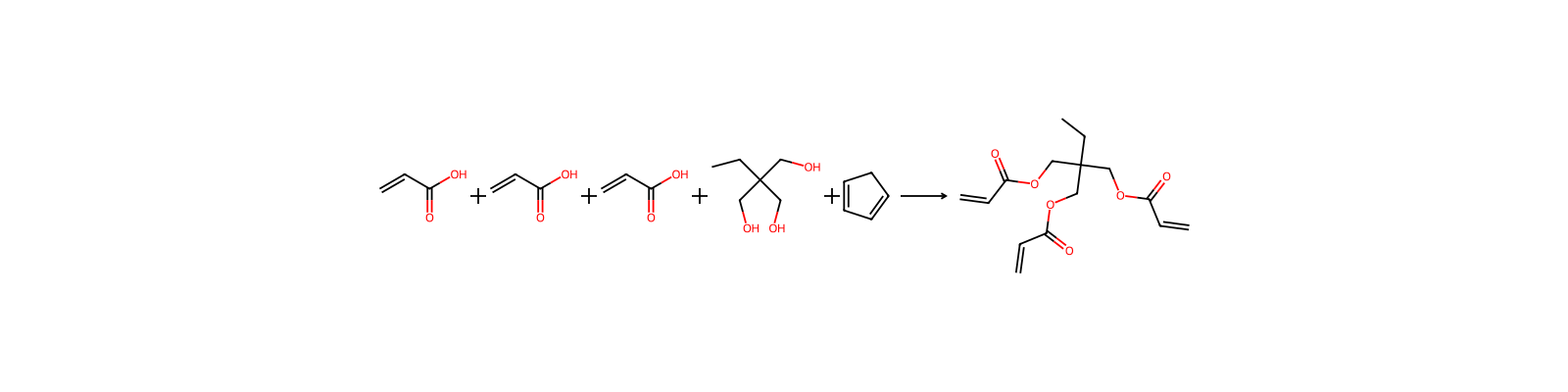
ImpuritiesTrimethylolpropane triacrylate is manufactured by esterification of trimethylolpropane; acrylic acid is a known impurity in the technical-grade compound.
U.S. Production
2023: 10,000,000 - <25,000,000 lb
2-Propenoic acid, 2-ethyl-2-[[(1-oxo-2-propenyl)oxy]methyl]-1,3-propanediyl ester is listed as a High Production Volume (HPV) chemical (65FR81686). Chemicals listed as HPV were produced in or imported into the U.S. in >1 million pounds in 1990 and/or 1994. The HPV list is based on the 1990 Inventory Update Rule. (IUR) (40 CFR part 710 subpart B; 51FR21438).[EPA/Office of Pollution Prevention and Toxics; High Production Volume (HPV) Challenge Program. 2-Propenoic acid, 2-ethyl-2-[
Production volumes for non-confidential chemicals reported under the Inventory Update Rule.[Table#8042]
Production volume for non-confidential chemicals reported under the 2006 Inventory Update Rule. Chemical: 2-Propenoic acid, 1,1'-[2-ethyl-2-[[(1-oxo-2-propen-1-yl)oxy]methyl]-1,3-propanediyl] ester. Aggregated National Production Volume: 10 to < 50 million lbs.[US EPA; Non-Confidential 2006 Inventory Update Reporting. National Chemical Information. 2-Propenoic acid, 1,1'-[2-ethyl-2-[
Consumer UsesNot Known or Reasonably Ascertainable
Industry UsesWaterproofing agent
Methods of ManufacturingTrimethylolpropane triacrylate is manufactured by esterification of trimethylolpropane; acrylic acid is a known impurity in the technical-grade compound.
Household ProductsCosmetics product ingredient: Trimethylolpropane triacrylate, technical grade
General Manufacturing Information
Primary Metal Manufacturing
2-Propenoic acid, 1,1'-[2-ethyl-2-[[(1-oxo-2-propen-1-yl)oxy]methyl]-1,3-propanediyl] ester: ACTIVE
Ethylenimine and propylenimine react with trifunctional acrylates, such as 2-ethyl-2-(hydroxymethyl)-1,3-propanediol triacrylate ... to produce trifunctional aziridines.
응용 분야
개요Trimethylolpropane triacrylate (TMPTA) is a multifunctional acrylie monomer. It reacts with propyleneimine to form polyfunctional aziridine. Sensitization was observed in a textile fabric printer. Patch tests were positive with the polyfunctional aziridine hardener, but were negative to TMPTA. TMPTA caused contact dermatitis in an optic-fiber manufacturing worker and was reported as a sensitizer in a floor top coat or in photopolymerizable inks.
용도Trimethylolpropane triacrylate has important properties like low volatility, resistance against weather, chemical, water and abrasion, and immediate curing property. The above mentioned properties prompted its use in the production of adhesives, plastics, sealant chemicals, paint additives, photosensitive chemicals, ink and toner. It finds application in alkyd coatings, dental polymers, compact discs, hardwood floors, concrete polymers, screen printing, elastomers, automobile headlamps, acrylics and plastic components for the medical industry.
제조 방법
Synthesis of trimethylolpropane triacrylate: 2.44 kg of trimethylolpropane, 3.93 kg of acrylic acid, 0.5 kg of an acid ion exchanger (Lewatit 3333 of BAYER AG), 9 g of hydroquinone and 1.5 liters of petroleum ether (boiling range 60° to 70° C) were heated under a water separator, whilst stirring, in a 10 liter three-necked flask equipped with a stirrer, water separator and gas inlet tube. At the same time, a constant stream of air saturated with allyl alcohol was passed through the flask at a rate of 2 liters/hour. In total, 16 ml of allyl alcohol were introduced into the esterification mixture in this way. After 80 hours, the reaction mixture had an acid number of 32 and the boiling point had risen to 72° C. The petroleum ether was distilled off, remnants being removed by applying a vacuum of 0.2 mm Hg at a product temperature of 40° C. The esterification catalyst was separated off by filtration and was kept for further use. The trimethylolpropane triacrylate obtained in practically quantitative yield was pale yellowish and clear. The viscosity corresponded to a time of outflow of 20 seconds measured in a DIN cup 4 at 20° C. The product showed no change even on storage for 4 months at 60° C. When used in a UV light-curing printing ink which contained a photoinitiator, the product polymerised at high speed.Literature source US04059721
상·하류 제품 정보
상류 원료
공급사50 곳
国药集团化学试剂有限公司86-21-63210123 · [email protected]
梯希爱(上海)化成工业发展有限公司021-67121386 · [email protected]
上海阿拉丁生化科技股份有限公司400-6206333 13167063860 · [email protected]
济南氟泽新材料有限公司00-15169181 15169181281 · [email protected]
河北创海生物科技有限公司+86-86-13131129325 · [email protected]
爱斯特(成都)生物制药股份有限公司+86-28-85122536 85324413 · [email protected]
Baoji Guokang Healthchem co.,ltd+8615604608665 15604608665 · [email protected]
Hebei Henghe Import and Export Trading Co. LTD+8618032935937 18032916000 · [email protected]
武汉科美沃化工有限公司+86-2785736489 +8618171418573 · [email protected]
Dayang Chem (Hangzhou) Co.,Ltd.+86-0571-88938639 17705817739 · [email protected]
宜兴市文成化工有限公司13961572207 13961572207 · [email protected]
上海将来实业股份有限公司400-0066400 13621662912 · [email protected]
Syntechem Co.,Ltd[email protected]
阿法埃莎(中国)化学有限公司400-6106006 · [email protected]
安耐吉化学&3A(安徽泽升科技股份有限公司)400-0056266 · [email protected]
上海瀚鸿科技股份有限公司021-54306202 13764082696 · [email protected]
山东洛克化工有限公司17653113209 13065062079 · [email protected]
吉良化学21-62165282 · [email protected]
上海比阳实业有限公司+86-15021878111 · [email protected]
山东西亚化学有限公司13355009207 13355009207 · [email protected]
玛雅试剂+86 (573) 82222445 (0)18006601000 452520369 · [email protected]
四川库利南科技有限公司400-1166-196 18981987031 · [email protected]
天津希恩思生化科技有限公司400 638 7771 · [email protected]
南京维奥化工有限公司Please Send Email 18652950785 · [email protected]
Connect Chemicals GmbH+49 2102 2077 19 · [email protected]
斯百全化学(上海)有限公司021-021-021-67601398-809-809-809 15221380277 · [email protected]
艾科试剂4008-755-333 18080918076 · [email protected]
烟台恒诺新材料有限公司0535-6397790 18653519533 · [email protected]
上海思域化工科技有限公司86-21-34053660 · [email protected]
TOKYO CHEMICAL INDUSTRY CO., LTD.03-36680489 · [email protected]
上海将来实业股份有限公司400-0066400 13621662912 · [email protected]
上海将来实业股份有限公司021-61552785 · [email protected]
HBCChem, Inc.+1-510-219-6317 · [email protected]
郑州鸿晟医药科技有限公司0371-0371-13526885213 15637198702 · [email protected]
成都零六生物科技有限公司400-1166-196 13458535857 · [email protected]
杭州宇昊化工科技有限公司0571-82693216 · [email protected]
上海麦克林生化科技股份有限公司15221275939 15221275939 · [email protected]
青岛瑞那斯高分子材料有限公司0532-0532-86867058 18562606086 · [email protected]
上海兴鲁化工科技有限公司02120970332 · [email protected]
湖北巨胜科技有限公司027-59599241 18871490274 · [email protected]
Sigma-Aldrich西格玛奥德里奇(上海)贸易有限公司021-61415566 800-8193336 · [email protected]
上海米修化工有限公司18101936766 · [email protected]
佛山市贝司化工有限公司19584229548 15218144393 · [email protected]
上海昕凯医药科技有限公司21-619849051-1 18521059765 · [email protected]
九鼎化学(上海)科技有限公司4009209199 · [email protected]
Henan Alfa Chemical Co., Ltd+8618339805032 · [email protected]
厦门志信化学有限公司+86-5922680277 +86-13806087780 · [email protected]
山东智尚新材料有限公司+8617653113209 · [email protected]
陕西缔都医药化工有限公司+86-29-81139210 +86-17392587031 · [email protected]
南京艾比克斯生化科技有限公司025-87193546 18652950785 · [email protected]
관련 반응
3건


연결된 노트
불러오는 중…