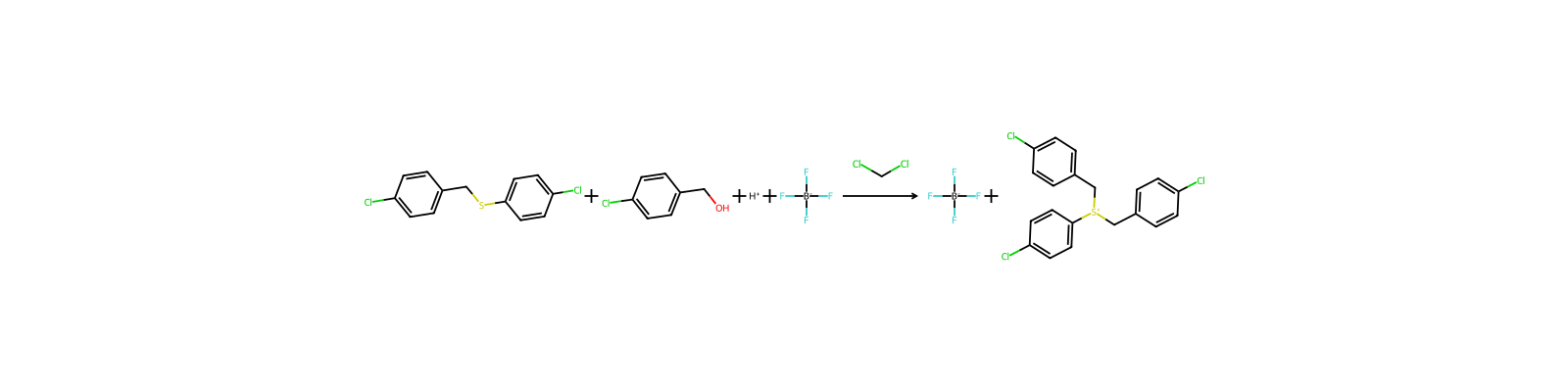
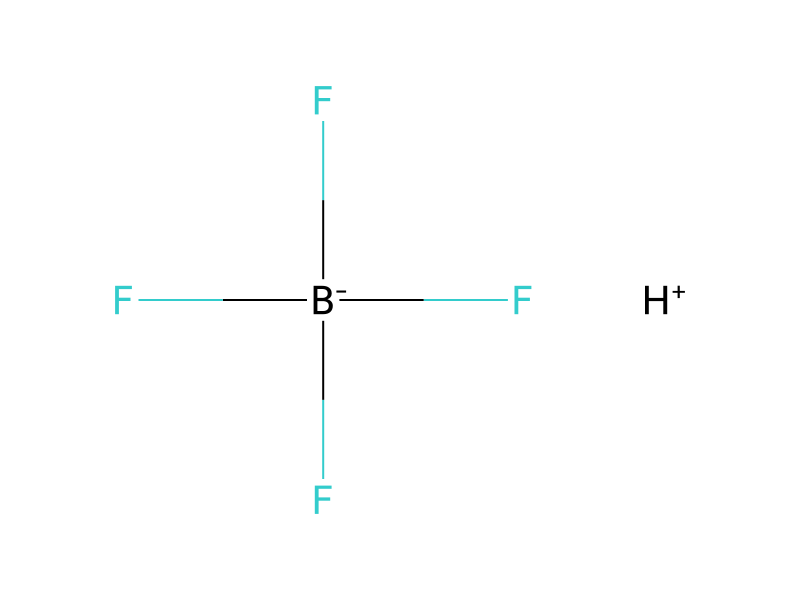
기본 정보
- 표준 SMILES
F[B-](F)(F)F.[H+]- InChIKey
ODGCEQLVLXJUCC-UHFFFAOYSA-O- 분자식
- BF4.H
- 평균 분자량
- 87.82 g/mol
- 단동위원소 질량
- 88.01074331
개요
Fluoroboric acid appears as a colorless odorless poisonous liquid. Corrosive to metals and tissue. It is used in electroplating, metal cleaning and making diazo salts.
이름 및 식별자
- 우선 이름
- Tetrafluoroboric acid
- IUPAC
- hydron tetrafluoroborate
- 현지명
- 붕불화수소산
- 영어명
- Fluoroboric acid
- 분자식
- BF4.H
- 분자량
- 87.81
이름 및 동의어
Tetrafluoroboric acidFluoroboric acid16872-11-0Fluoboric acidBorofluoric acidHydrofluoboric acidHydrogen tetrafluoroborate(1-)UN1775DTXSID8029739H429WZ9FBQFLUOBORIC ACID (HBF4)DTXCID809739
이름 더 보기
붕불화수소산테트라플루오르붕산,불화붕소산플루오로붕산플루오린화붕소산(불화붕소산)붕불산플루오붕산테트라플루오로붕산하이드로플루오로붕산HYDROFLUOROBORIC ACIDtetrafluoroboric acid solutionfluoroboricFluoroboric acid 50%Tetrafluoroboric aci48
CHEBI:38902UN-1775RefChem:599420240-898-3Hydrogen tetrafluoroboratehydron;tetrafluoroborateHBF4MFCD00011345
데이터베이스 식별자
- CAS
16872-11-0- PubChem CID
- 28118
- DTXSID
DTXSID8029739- ChEMBL
CHEMBL3186904- ChEBI
CHEBI:38902- UNII
- H429WZ9FBQ
- EC Number
- 240-898-3
물성
구조 계산 물성
- 극성 표면적
- 0 Ų
- 수소 결합 공여자 수
- 1
- 수소 결합 수용자 수
- 5
- 회전 가능 결합 수
- 0
- 무거운 원자 수
- 5
- 형식 전하
- 0
- 복잡도
- 19.1
실험 및 물리화학적 성질
Chemical Classes
Toxic Gases & Vapors -> Acids, Inorganic
Corrosives
Density
Approximately 1.8 g/cu cm
Relative density (water = 1): 1.4 (50% solution)
1.84 @25 °C
Color/FormColorless liquid
SolubilityVery soluble in water, ethanol
Boiling Point130 °C decomposes
DecompositionWhen heated to decomposition it emits toxic vapors of boron and /hydrogen fluoride/.
Vapor Pressure5.0 [mmHg]
Refractive IndexRefractive index of a 20% aqueous solution: 1.3284 at 20 °C/D
Physical Description
Fluoroboric acid appears as a colorless odorless poisonous liquid. Corrosive to metals and tissue. It is used in electroplating, metal cleaning and making diazo salts.
Liquid
Colorless liquid; [ICSC] Pungent odor; [Alfa Aesar MSDS]
COLOURLESS LIQUID.
Dissociation ConstantspKa: -4.9
Other Experimental Properties
Heat of formation: 388.5 kcal; undergoes limited hydrolysis in water to form hydroxyfluoborate ions; major product is BF3OH- ion; forms crystalline salts with metals
Heat of formation (aqueous, 1 molal at 25 °C): -1527 kJ/mol; specific gravity (48% solution): 1.37; specific gravity (42% solution): 1.32; specific gravity (30% solution): 1.20; surface tension (48% solution at 25 °C): 65.3 mN/m
Fluoroboric acid does not exist as a free, pure substance; the acid is only stable as the solvated ion pair, such as H3O+BF4-
물리화학적 성질
- 녹는점
- -90 °C · -90°C
- 끓는 점
- 130 °C · 130°C (dec.)
- 밀도
- 1.38 g/mL · 1.38 g/mL at 20 °C(lit.)
- 증기 밀도
- 3 · 3 (vs air)
- 증기압
- 5 mmHg · 5 mmHg ( 20 °C)
- 굴절률
- 20 of · nD20 of a 20% aq soln 1.3284
- 인화점
- 40 °F · −40 °F
- 용해도
- 2 O, · very soluble in H2O, ethanol
- 산도 계수 (pKa)
- -4.9 · -4.9[at 20 ℃]
- 물리적 상태
- 액체
- 색상
- 연노랑
- 냄새
- 냄새 없는
- 수용성
- 혼용 가능
- Merck
- 14 · 14,4149
- 안정성
- 안정적인. 강염기, 시안화물과 호환되지 않습니다.
- InChI
- 1S/BF3.FH/c2-1(3)4;/h;1H
- InChIKey
- LEMQFBIYMVUIIG-UHFFFAOYSA-N
- SMILES
- F.FB(F)F
- EPA
- Fluoroboric acid (16872-11-0)
화학적 성질
Fluoboric acid is a colourless liquid, completely solvable in water. Fluoboric acid is a stable chemical substance and extremely reactive or incompatible with strong bases, cyanides. It is very corrosive in the presence of steel, aluminium, zinc, and copper and highly corrosive in the presence of glass and stainless steel.
안전 및 규제
GHS 분류
GHS Classification
Danger
H314: Causes severe skin burns and eye damage [Danger Skin corrosion/irritation]
P260, P264, P280, P301+P330+P331, P302+P361+P354, P304+P340, P305+P354+P338, P316, P321, P363, P405, and P501 (click each P-code to see the statement)
Danger
H290 (34.5%): May be corrosive to metals [Warning Corrosive to Metals]
P234, P260, P264, P264+P265, P280, P301+P330+P331, P302+P361+P354, P304+P340, P305+P354+P338, P316, P317, P321, P363, P390, P405, P406, and P501 (click each P-code to see the statement)
유해성 정보
Regulatory Information
Chemical: Borate(1-), tetrafluoro-, hydrogen
Borate(1-), tetrafluoro-, hydrogen (1:1) is listed on the EPA's Chemical Data Reporting (CDR) system. Manufacturers and importers of Borate(1-), tetrafluoro-, hydrogen (1:1) are required to report information about their production and use of this chemical to the EPA under the Toxic Substances Control Act (TSCA). (40 eCFR Part 711)
Status: Active Update: 26-04-2018 https://echa.europa.eu/registration-dossier/-/registered-dossier/14214
Tetrafluoroboric acid: Does not have an individual approval but may be used under an appropriate group standard
The New Jersey Worker and Community Right to Know Act requires public and private employers to provide information about hazardous substances at their workplaces. (N.J.S.A. 34:5A-1 et. seq.)
DOT LabelCorrosive
Fire Hazards
Excerpt from ERG Guide 154 [Substances - Toxic and/or Corrosive (Non-Combustible)]:
· Non-combustible, substance itself does not burn but may decompose upon heating to produce corrosive and/or toxic fumes.
Not combustible. Gives off irritating or toxic fumes (or gases) in a fire.
Health Hazards
Excerpt from ERG Guide 154 [Substances - Toxic and/or Corrosive (Non-Combustible)]:
· TOXIC and/or CORROSIVE; inhalation, ingestion or skin contact with material may cause severe injury or death.
Hazards Summary
Solutions 30-70% are corrosive to skin; [Quick CPC] High inhalation exposure can cause pulmonary edema; [ICSC] Reacts with water evolving heat; Corrosive to tissue; [CAMEO] Not stored in bone, like the F- ion, because excretion is more rapid than hydrolysis; Causes burns to skin and eye; Inhalation may cause pulmonary edema; [IUCLID] Causes somnolence and ataxia in oral lethal-dose studies of mice and rats; [RTECS] Causes burns; Inhalation may cause corrosive injuries to upper respiratory tract and lungs; [Alfa Aesar MSDS]
DOT ID and Guide1775 154
Reactive GroupAcids, Strong Non-oxidizing
EC ClassificationSymbol: C; R: 34; S: (1/2)-26-27-45
UN ClassificationUN Hazard Class: 8; UN Pack Group: II
Reactivity AlertsKnown Catalytic Activity
OSHA StandardsPermissible Exposure Limit: Table Z-1 8-hr Time Weighted Avg: 2.5 mg/cu m. /Fluorides, as F/
Reactivity Profile
FLUOROBORIC ACID is a strong acid. Reacts exothermically with chemical bases (examples: amines, amides, and inorganic hydroxides). These reactions can generate dangerously large amounts of heat in small spaces. Dissolution in water or the dilution of a concentrated aqueous solution may generate significant heat. Reacts with active metals, including such structural metals as aluminum and iron, to release hydrogen, a flammable gas. Can initiate the polymerization of certain alkenes. Reacts with cyanide compounds to release gaseous hydrogen cyanide. Generates flammable and/or toxic gases in contact with dithiocarbamates, isocyanates, mercaptans, nitrides, nitriles, sulfides, and strong reducing agents. Additional gas-generating reactions occur with sulfites, nitrites, thiosulfates (to give H2S and SO3), dithionites (SO2), and carbonates. May catalyze (increase the rate of) chemical reactions. Attempted drying of the acid with acetic anhydride caused an explosion at 0 °C [J. Organomet. Chem., 1975, 94, 319].
안전 및 보호
Fire Fighting
Excerpt from ERG Guide 154 [Substances - Toxic and/or Corrosive (Non-Combustible)]:
In case of fire in the surroundings, use appropriate extinguishing media.
First Aid Measures
Fresh air, rest. Half-upright position. Refer immediately for medical attention.
Remove contaminated clothes. Rinse skin with plenty of water or shower. Refer immediately for medical attention. Apply calcium gluconate to the burn areas.
First rinse with plenty of water for several minutes (remove contact lenses if easily possible), then refer for medical attention.
Rinse mouth. Do NOT induce vomiting. Refer immediately for medical attention.
Accidental Release Measures
· CALL 911. Then call emergency response telephone number on shipping paper. If shipping paper not available or no answer, refer to appropriate telephone number listed on the inside back cover.
· ELIMINATE all ignition sources (no smoking, flares, sparks or flames) from immediate area.
First Aid
Excerpt from ERG Guide 154 [Substances - Toxic and/or Corrosive (Non-Combustible)]:
General First Aid:
Safe Storage
Separated from strong bases, metals and food and feedstuffs. Well closed. Ventilation along the floor. Store only in original container. Do NOT store or transport in containers made from metal or glass. Store in an area without drain or sewer access.
Exposure Control and Personal Protection· Wear positive pressure self-contained breathing apparatus (SCBA).
Fire Fighting Procedures
Use appropriate extinguishing agent for surrounding fire. Use water spray to keep fire-exposed containers cool.
If material involved in fire: Extinguish fire using agent suitable for type of surrounding fire (Material itself does not burn or burns with difficulty). Use water in flooding quantities as fog. Cool all affected containers with flooding quantities of water. Apply water from as far a distance as possible.
Storage Conditions
Separated from strong bases, food and feedstuffs. Well closed. Ventilation along the floor. /table/
Pure HBF4 (fluoroboric acid) may be stored in glass vessels at room temperature.
Cleanup Methods
Aqueous HBF4 and/or its salt is treated by aluminum sulfate or ferric chloride and aqueous ammonia, ammonium sulfate, ammonium chloride and urea, then with calcium hydroxide, and precipitate is filtered.
Spill or leak procedures: Stop or control the leak, if this can be done without undue risk. Approach release from upwind. Control runoff and isolate discharged material for proper disposal.
Environmental considerations: land spill: Dig a pit, pond, lagoon, holding area to contain liquid or solid material. Absorb bulk liquid with fly ash or cement powder. Neutralize with agriculture lime (CaO), crushed limestone (CaCO3), or sodium bicarbonate (NaHCO3).
Environmental considerations: water spill: Neutralize with agriculture lime (CaO), crushed limestone (CaCO3), or sodium bicarbonate (NaHCO3).
For more Cleanup Methods (Complete) data for FLUOBORIC ACID (6 total), please visit the HSDB record page.
Nonfire Spill ResponseExcerpt from ERG Guide 154 [Substances - Toxic and/or Corrosive (Non-Combustible)]:
Disposal Methods
SRP: The most favorable course of action is to use an alternative chemical product with less inherent propensity for occupational exposure or environmental contamination. Recycle any unused portion of the material for its approved use or return it to the manufacturer or supplier. Ultimate disposal of the chemical must consider: the material's impact on air quality; potential migration in soil or water; effects on animal, aquatic, and plant life; and conformance with environmental and public health regulations.
Waste treatment ... includes a pretreatment with aluminum sulfate to facilitate hydrolysis, and final precipitation of fluoride with lime.
Two methods for the treatment of fluoborate wastewater from the electroplating of tin, solder, copper and nickel striping were investigated. These involved specific ion flotation and electrodialysis. The fluoborate ion was found to bind with an alkylamine acetate by displacement of the acetate group and can be removed from dilute waste stream either by air flotation or ultrafiltration. A high density low porosity graphite anode that is resistant to the corrosive properties of fluoboric acid electrolyte was developed for electrodialysis treatment of the tin, solder and copper fluoborate containing wastewaters. In general, recoveries of the fluoborate ions were in excess of 80 percent.
Spillage Disposal
Personal protection: complete protective clothing including self-contained breathing apparatus. Consult an expert! Collect leaking liquid in sealable containers. Absorb remaining liquid in sand or inert absorbent. Then store and dispose of according to local regulations.
독성 정보
Adverse EffectsDermatotoxin - Skin burns.
Exposure RoutesSerious local effects and systemic effects by all routes of exposure.
Signs and Symptoms
Sore throat. Cough. Burning sensation. Shortness of breath. Laboured breathing.
Pain. Blisters.
Redness. Pain. Severe deep burns.
Burns in mouth and throat. Sore throat. Burning sensation. Abdominal pain. Diarrhoea. Vomiting. Shock or collapse.
ICSC Environmental DataThis substance may be hazardous to the environment. Special attention should be given to fish.
Medical Surveillance
Physical examinations of exposed personnel every six months including fluoride determinations in urine, studies of liver and kidney function; chest X-ray, annually. Protect from exposure those individuals with diseases of kidneys, liver, and lung. /Hydrofluoric acid/
No specific considerations are needed for boric acid or borates except for general health and liver and kidney function. /Boric acid and borates/
Human Toxicity Excerpts
/SIGNS AND SYMPTOMS/ Chronic effects: (from inhalation or ingestion), may cause fluorosis. Symptoms- weight loss, malaise, anemia, leukopenia, discoloration of teeth, osteosclerosis. /Hydrofluoric acid/
/SIGNS AND SYMPTOMS/ Contact of skin with anhydrous liquid produces severe burns that are felt immediately. Concentrated aqueous solution also cause early sensation of pain, but dilute solution may give no warning of injury. /Hydrofluoric acid/
/SIGNS AND SYMPTOMS/ All forms-dilute or concentrated solution or vapor of hydrofluoric acid (HF) ... cause severe burns. Inhalation of anhydrous HF or HF mists or vapors can cause severe respiratory tract irritation that may be fatal. /Hydrofluoric acid/
/SIGNS AND SYMPTOMS/ Effects of short-term exposure: Corrosive. The substance is corrosive to the eyes, the skin and the respiratory tract. Corrosive on ingestion. Inhalation of the aerosol may cause lung edema. The effects may be delayed. /from table/
For more Human Toxicity Excerpts (Complete) data for FLUOBORIC ACID (9 total), please visit the HSDB record page.
Non-Human Toxicity Excerpts
/LABORATORY ANIMALS: Acute Exposure/ For mice (5 per group), an approximate LD50 was given as <50 mg/kg bw for oral administration of tetrafluoroboric acid. The observation period was 14 days. Clinical signs of toxicity included weakness, ataxia and twisting motions. Deaths occurred between 15 minutes and 9 days after administration.
/LABORATORY ANIMALS: Acute Exposure/ Following ip administration of tetrafluoroboric acid to rats (5/group), an approximate LD50 of 10-25 mg/kg bw was reported. The observation period was 14 days. Clinical signs of toxicity observed included weakness and ataxia. Deaths occurred between 27 minutes and 9 days after administration.
/LABORATORY ANIMALS: Acute Exposure/ The danger of hydrofluoric acid solutions depends upon the concentration. Experimental splash burns in rabbits... have shown 20% solution to cause immediate damage with total corneal opacification with conjunctival eschemia, and with corneal stromal edema within an hour, followed by necrosis of anterior ocular structures. An 8% solution produced ischemia and corneal stromal edema persisting for 40-65 days, accompanied by corneal vascularization. Even a 2% solution caused mild persistent stromal edema and vascularization, but after 0.5% solution there was recovery in 10 days. /Hydrofluoric acid/
/LABORATORY ANIMALS: Acute Exposure/ The acute oral toxicity of tetrafluoroboric acid was investigated in groups of 5 male and 5 female rats... . A 51.5% aqueous solution of tetrafluoroboric acid was used for testing. Dose levels were 10, 100, 464, and 1000 mg/kg bw and the observation period was 14 days. The 10 mg/kg bw dose was tolerated without signs of toxicity. Following 100 mg/kg bw, dyspnea, sedation and lack of appetite were observed, and in the males, half-closed eyes. The signs of toxicity were reversible after 24 hours. Following 464 mg/kg bw, signs of intoxication included dyspnea, sedation, half or completely closed eyes, hyporeflexia, ataxia, body tremor, reduced muscle tone, squatting position and prone position, vocalization, slightly reduced locomotor activity and glassy eyes, but the dose was survived by all rats. Following 1000 mg/kg bw, all animals died within 24 hours. Autopsy of the deceased rats revealed edematous and highly hemorrhagic gastrointestinal walls as well as blood-piebalded livers. Dissection of the surviving rats showed no treatment-related findings.
For more Non-Human Toxicity Excerpts (Complete) data for FLUOBORIC ACID (7 total), please visit the HSDB record page.
Evidence for CarcinogenicityA4; Not classifiable as a human carcinogen. /Fluorides, as F/
Antidote and Emergency Treatment
Maintain an open airway and assist ventilation if nescessary. treat coma, seizures, hypotension, and renal failure if they occur. There is no specific antidote. Administer activated charcoal (although boric acid is not well absorbed). Consider gastric lavage for large ingestions. /Boric acid, Borates, and Boron/
Hemodialysis is effective and is indicated after massive ingestions and for supportive care of renal failure. Peritoneal dialysishas not proved effective in enhancing elimination in infants. /Boric acid, Borates, and Boron/
In acute poisonings, if a large amount has been ingested and the patient is seen within one hour of exposure, gastrointestinal decontamination should be considered ... .It is important to keep in mind that vomiting and diarrhea are common, and severe poisoning may be associated with seizures. Therefore induction of emesis by syrup of ipecac is probably contraindicated in these exposures. Catharsis is not indicated if diarrhea is present. /Boric acid and Borates/
If ingestion of borate has been massive (several grams), or has extended over several days, administer intravenous glucose and electrolyte solutions to sustain urinary excretion of borate. Monitor fluid balance and serum electrolytes (including bicarbonate capacity ) regularly. Monitor cardiac status by ECG. Test the urine for proteins and cells to detect renal injury, and monitor serum concentration of borate. Metabolic acidosis may be treated with sodium bicarbonate. If shock develops, it may be necessary to infuse plasma or whole blood. Administer oxygen continuously. If oliguria (less than 25 to 30 mL urine per hour) occurs, intravenous fluids must be slowed or stopped to avoid overloading the circulation. Such patients should be referred to a center capable of providing intensive care for critically ill patients. /Boric acid and Borates/
For more Antidote and Emergency Treatment (Complete) data for FLUOBORIC ACID (7 total), please visit the HSDB record page.
Non-Human Toxicity Values
LD50 Rat oral 100-200 mg/kg bw
LD50 Rat oral 464-1000 mg/kg bw /51% Tetrafluoroboric acid/
LD50 Mouse oral <50 mg/kg bw
LD50 Guinea pig dermal 2.5-5.0 mL/kg bw /21.7% Tetrafluoroboric acid/
LD50 Rat ip 10-25 mg/kg bw
규제 정보
State Drinking Water Guidelines
(CA) CALIFORNIA 1000 ug/L /Boron/
(NH) NEW HAMPSHIRE 630 ug/L /Boron/
(ME) MAINE 1,400 ug/L /Boron/
(MN) MINNESOTA 1,000 ug/L /Boron/
(WI) WISCONSIN 960 ug/L /Boron/
Federal Drinking Water GuidelinesEPA 600 ug/L /Boron/
안전 데이터
- wgk
- 1
- tsca
- TSCA listed
- rtecs
- ED2685000
- ridadr
- UN 1775
- HS 번호
- 28111990
- risk_code
- 34
- hazard_code
- C
- safety_code
- 26-36/37/39-45-37-27
- 포장분류
- II
- 위험 등급
- 8
- 기존화학 물질
- KE-33424
- F 고인화성물질
- 3
- 위험 참고 사항
- Corrosive
- Hazard Classifications
- Eye Dam. 1Skin Corr. 1B
- 스토리지 클래스
- 8B - Non-combustible corrosive hazardous materials
- 유해 물질 데이터
- 16872-11-0(Hazardous Substances Data)
- 함량 및 규제정보
- 물질구분: 유독물질; 혼합물(제품)함량정보: 플루오로붕산과 그 염류 및 이를 25% 이상 함유한 혼합물. 다만, 플루오로붕산 1-에틸-3-메틸-1H-이미다졸리움(1-Ethyl-3-methyl-1H-imidazolium, tetrafluoroborate(1-))은 제외
- 유해화학물질 필터링
- 97-1-377
화학 및 산업
약리 정보
Absorption, Distribution and Excretion
...All of a total of 6.4 mg/day of fluoroboric acid that /a subject/ ingested was recovered in the urine in a 14-day period, and less than 10% of the amount absorbed into the bloodstream was retained when ingestion was extended to 7 to 38 wk in other subjects. Contrary to the F- ion, the complex BF4- ion is not stored in the bone, and because of the slow rate of hydrolysis, excretion outruns hydrolysis, leaving little opportunity for F- ion storage.
In a further study... on the distribution of potassium tetrafluoroborate in various tissues, male albino rats (weighing 110 to 150 g; aged 11-13 weeks) were each iv injected with 1 umol 18F-labelled potassium tetrafluoroborate... . At 120 min after injection, the following relative specific activities (activity per gram of tissue/activity in serum) were determined: liver 0.29, spleen 0.37, kidney 0.60, lung 0.60, muscle 0.14, brain 0.03, femoral diaphysis 0.26, femoral epiphysis 0.29, incisors 0.27, cranial bone 0.27, cartilage 0.30. Further relative specific activities at 30, 120, and 240 min after injection were reported for serum/total injected dose as 1.75, 0.28, and 0.07, respectively, for muscle/serum as 0.14, 0.15, and 0.35, respectively, as well as for femoral epiphysis/serum as 0.35, 0.85, and 1.35, respectively, and for femoral epiphysis/femoral diaphysis as 1.0, 2.3, and 2.4, respectively. /Potassium tetrafluoroborate/
Rats (approx 200 g; 4 animals/group) were given a single ip injection of 5 ug 18F-labelled potassium tetrafluoroborate (it was not specified whether per kg bw or per rat). After 40, 60, 100, and 120 minutes, various organs were assessed for relative specific tetrafluoroborate activity (tissue/blood specific activity ratio). ...The highest activity was found in the thyroid gland, where it was 26 to 42 fold higher than in the other organs after 2 hours. Increases in dose to 50, 500, and 1000 ug potassium tetrafluoroborate did not increase the specific activity in the thyroid gland, but reduced it relative to the values found after administration of 5 ug, e.g. by about a factor of 20, 210 minutes after 1000 ug. /Potassium tetrafluoroborate/
용도 및 제조
Uses
Used in electroplating baths and in metal cleaning solutions; used in electronics industry to clean lead-tin printed circuits; [HSDB] Also used as a catalyst, to brighten aluminum, as a reagent, and for making stabilized diazo salts; [Merck Index] Used for chemical synthesis and for extraction, refining, and processing of metals; [IUCLID]
Acid and Alkali Cleaning of Metals [Category: Clean]
As catalyst for preparing acetals, esterifying cellulose; to clean metal surfaces before welding; to brighten aluminum; as solute in electrolytes for plating metals such as chromium, iron, nickel, copper, silver, zinc, cadmium, indium, tin, and lead (has high throwing power). Reagent for sodium in the presence of magnesium and potassium ions; for making stabilized diazo salts (diazonium and tetrazonium fluoborates). An 0.1-0.5% solution retards fermentation.
Used as a stripping solution for the removal of solder and plated metals from less active substrates; used in bright dipping solution for Sn-Pb alloys in printed circuits and other electrical components.
U.S. Production2023: 400,000 - <550,000 lb
Consumption Patterns60% FOR INDUSTRIAL PLATING SOLUTIONS, 20% FOR FLUOBORATE PRODUCTION, AND 20% FOR METAL TREATMENT (1976)
Consumer UsesNot Known or Reasonably Ascertainable
Industry UsesEtching agent
Methods of Manufacturing
Treatment of fluorspar with boric acid and sulfuric acid
... From boric acid and hydrofluoric acid ... .
French patent 843,726 (1939 To Soc Rhodiaceta).
Formulations/PreparationsGRADES: Technical (approximately 48%); Pure
General Manufacturing Information
Computer and Electronic Product Manufacturing
Borate(1-), tetrafluoro-, hydrogen (1:1): ACTIVE
응용 분야
용도Tetrafluoroboric acid is used in conjunction with various methods of cleaning and treat the surface of substrates. It is used as radiotracers.
일반 설명A colorless odorless poisonous liquid. Boiling point 130°C. Corrosive to metals and tissue. Fluoroboric acid is used in electroplating, metal cleaning and making diazo salts.
상·하류 제품 정보
상류 원료
하류 제품
공급사50 곳
国药集团化学试剂有限公司86-21-63210123 · [email protected]
北京华美互利生物化工010-56205725 · [email protected]
上海阿拉丁生化科技股份有限公司400-6206333 13167063860 · [email protected]
南通润丰石油化工有限公司66017690 19952660367 · [email protected]
聊城作之杭化工有限公司19163518031; 19163518031
桓台汇永化工产品销售有限公司18753319888 · [email protected]
温州共赢化学有限公司+86-0086-577-64498589 +86-15355981851 · [email protected]
Hebei Yanxi Chemical Co., Ltd.+86-17531190177 · [email protected]
上海迈瑞尔生化科技有限公司4006356688 18621169109 · [email protected]
阿法埃莎(中国)化学有限公司400-6106006 · [email protected]
安耐吉化学&3A(安徽泽升科技股份有限公司)400-0056266 · [email protected]
Allfluoro Pharmaceutical Company Limited+86-400-0216110 +86-15958047586 · [email protected]
武汉卡诺斯科技有限公司027-83238443 15327105076 · [email protected]
上海瀚鸿科技股份有限公司021-54306202 13764082696 · [email protected]
上海景颜化工科技有限公司13817811078 · [email protected]
唐山默内德贸易有限公司+86-315-8309571 +86-15633399667 · [email protected]
合肥天健化工有限公司551-65418679 15856988503;15837135945 · [email protected]
山东信恒化工有限公司152-15269160605-0605 15269160605 · [email protected]
苏州施亚生物科技有限公司86(512)5235 8471 17715136450 · [email protected]
山东西亚化学有限公司13355009207 13355009207 · [email protected]
唐山默内德贸易有限公司0315-8309571 15633399667 · [email protected]
湖北斯麦尔医药科技有限公司15527913960 · [email protected]
四川库利南科技有限公司400-1166-196 18981987031 · [email protected]
天津希恩思生化科技有限公司400 638 7771 · [email protected]
南京化学试剂股份有限公司025-58369808 17895012682 · [email protected]
武汉吉业升化工有限公司027-13545242311 13545242311 · [email protected]
斯百全化学(上海)有限公司021-021-021-67601398-809-809-809 15221380277 · [email protected]
艾科试剂4008-755-333 18080918076 · [email protected]
赛默飞世尔科技(中国)有限公司800-810-5118 · [email protected]
北京伊诺凯科技有限公司400-810-7969 010-59572699 · [email protected]
上海遐瑞医药科技有限公司+86 21 61551611
北京环宇世纪化学科技有限公司hysj_bj.com
上海湄水化工科技有限公司021-60549325 18616193163
上海将来实业股份有限公司021-61552785 · [email protected]
HBCChem, Inc.+1-510-219-6317 · [email protected]
日照力德士化工有限公司010-51268198 · [email protected]
成都零六生物科技有限公司400-1166-196 13458535857 · [email protected]
上海麦克林生化科技股份有限公司15221275939 15221275939 · [email protected]
烟台昊瑞化工产品有限公司13697882860 · [email protected]
池州凯隆进出口贸易有限公司[email protected]
Sigma-Aldrich西格玛奥德里奇(上海)贸易有限公司021-61415566 800-8193336 · [email protected]
康迪斯化工(湖北)有限公司13343438265 · [email protected]
上海昕凯医药科技有限公司21-619849051-1 18521059765 · [email protected]
九鼎化学(上海)科技有限公司4009209199 · [email protected]
厦门志信化学有限公司+86-5922680277 +86-13806087780 · [email protected]
Alfa Chemistry+1-5166625404 · [email protected]
山东崇成能源科技有限公司18253333366 · [email protected]
成都润泽本土化工有限公司028-88469284 18000562381 · [email protected]
南京艾比克斯生化科技有限公司025-87193546 18652950785 · [email protected]
南京熙朗化工产品有限公司18936048580 · [email protected]
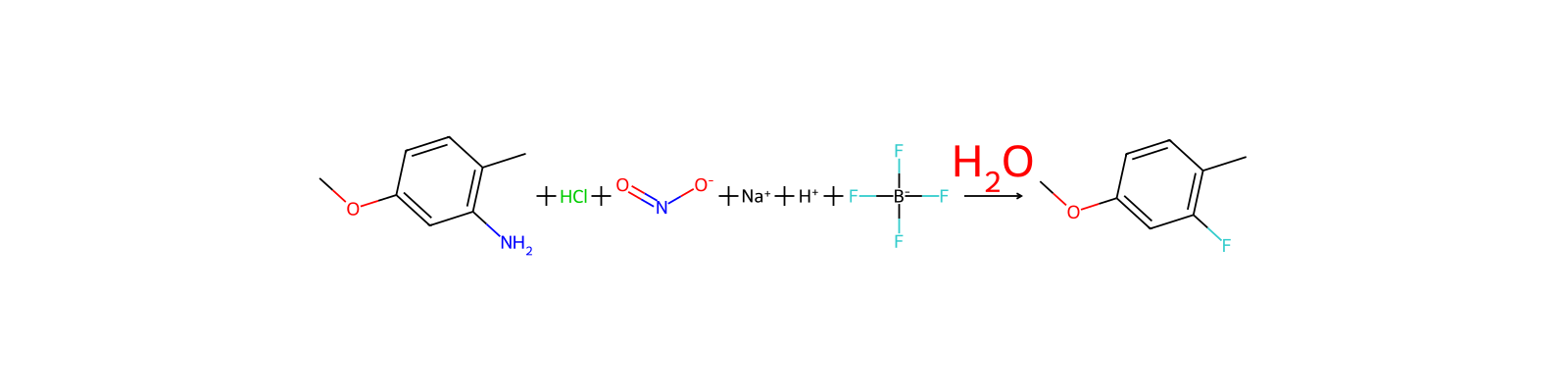
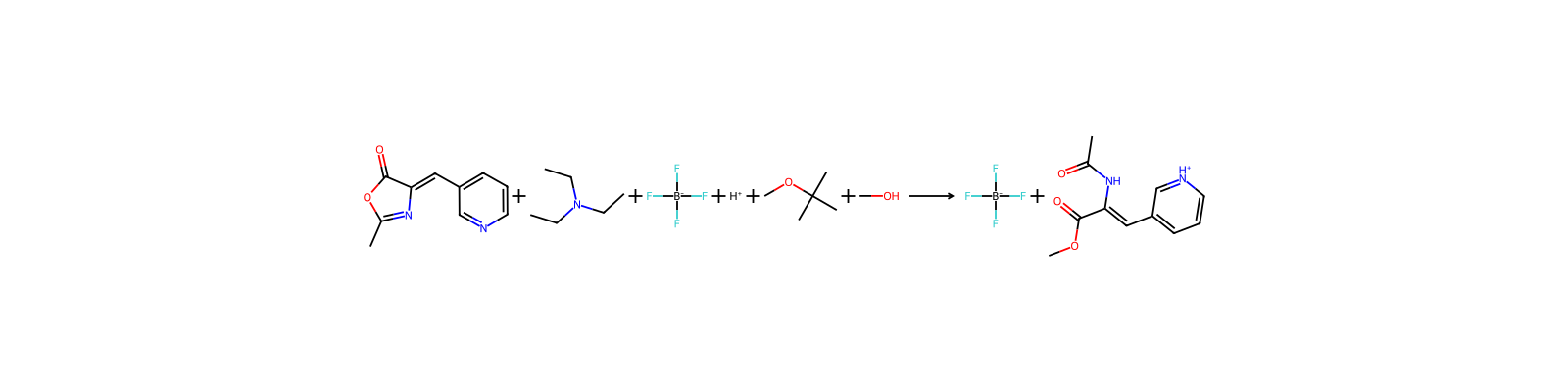
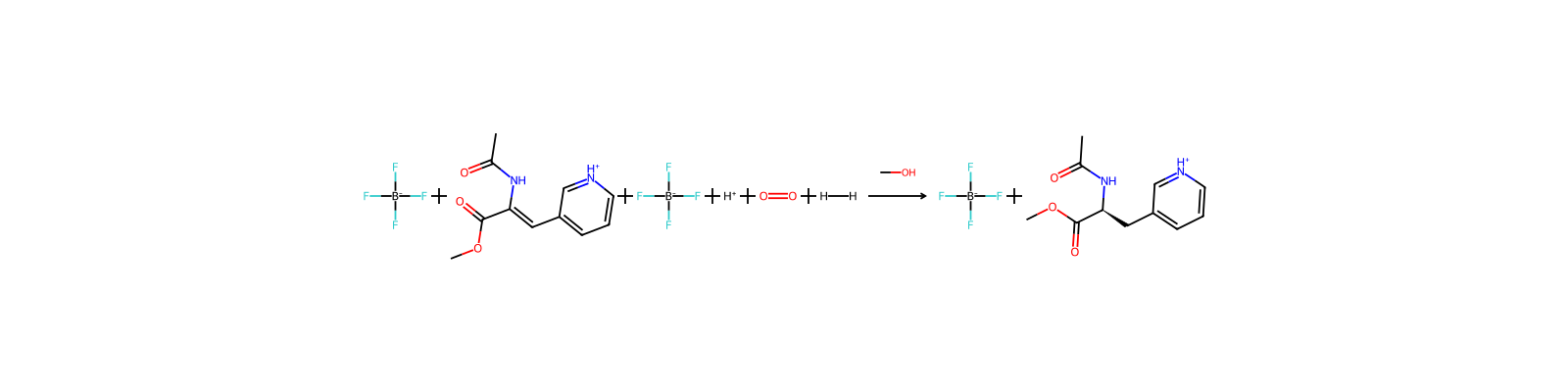
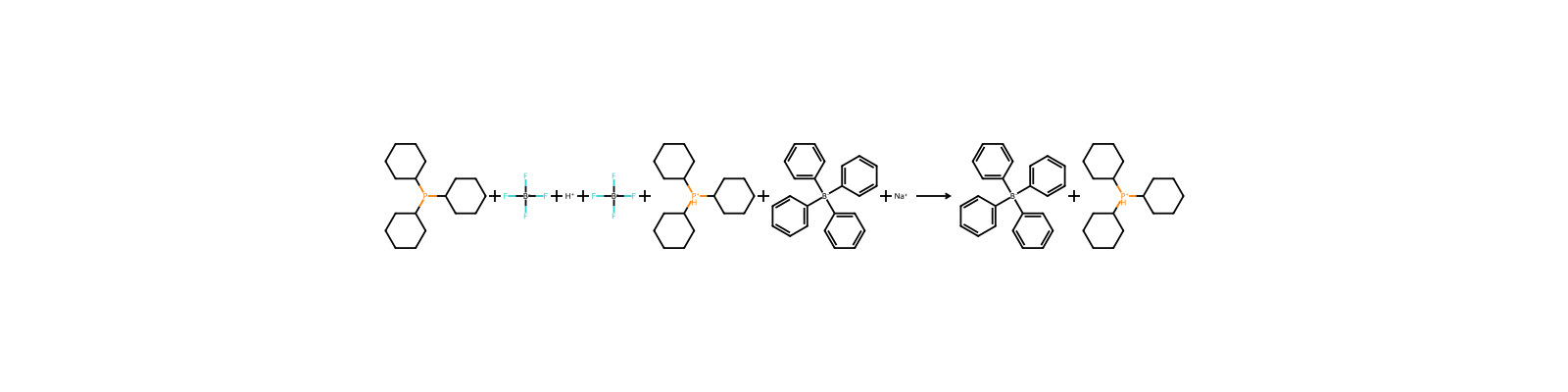
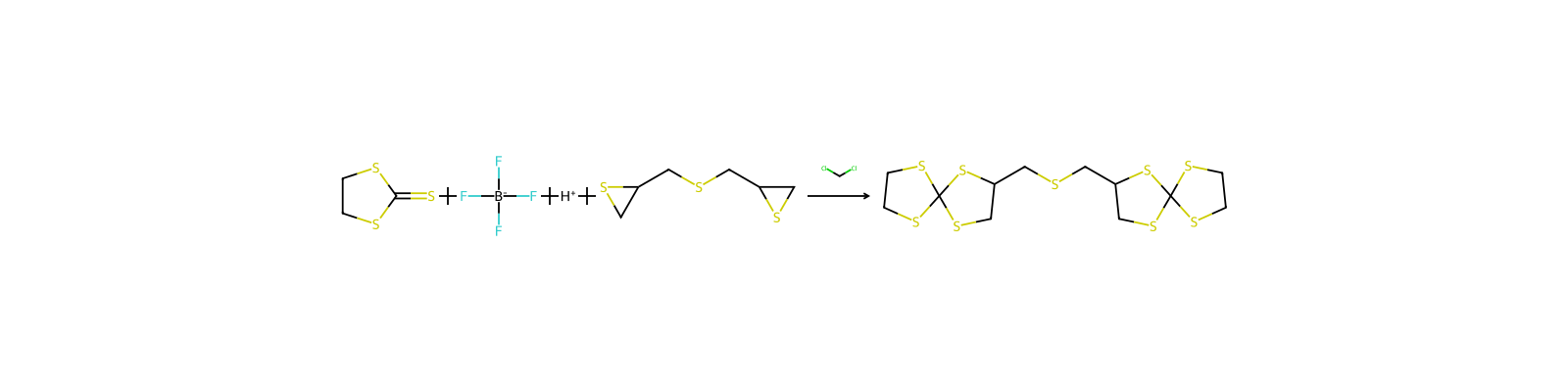
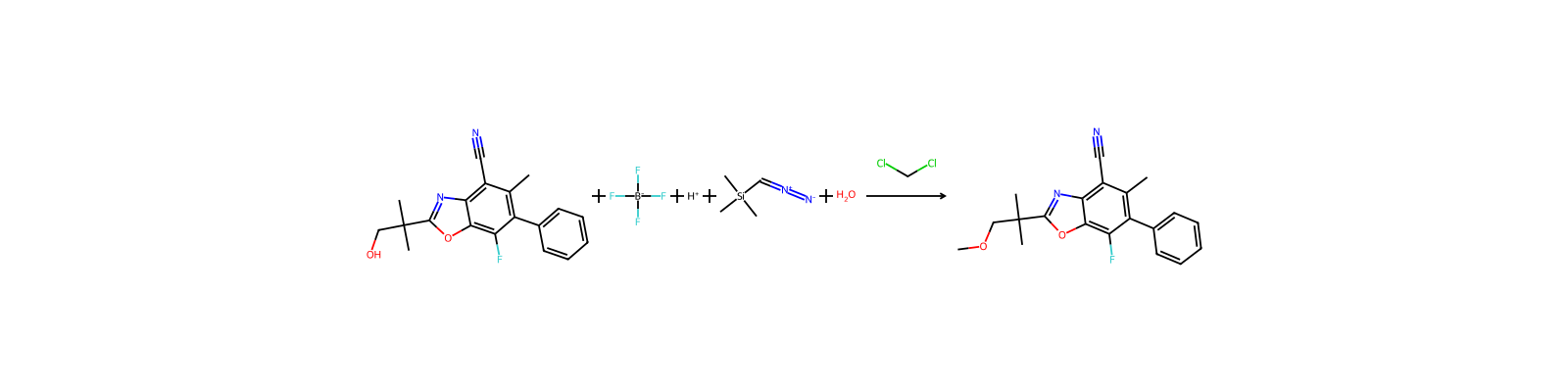
관련 반응
498건

연결된 노트
불러오는 중…