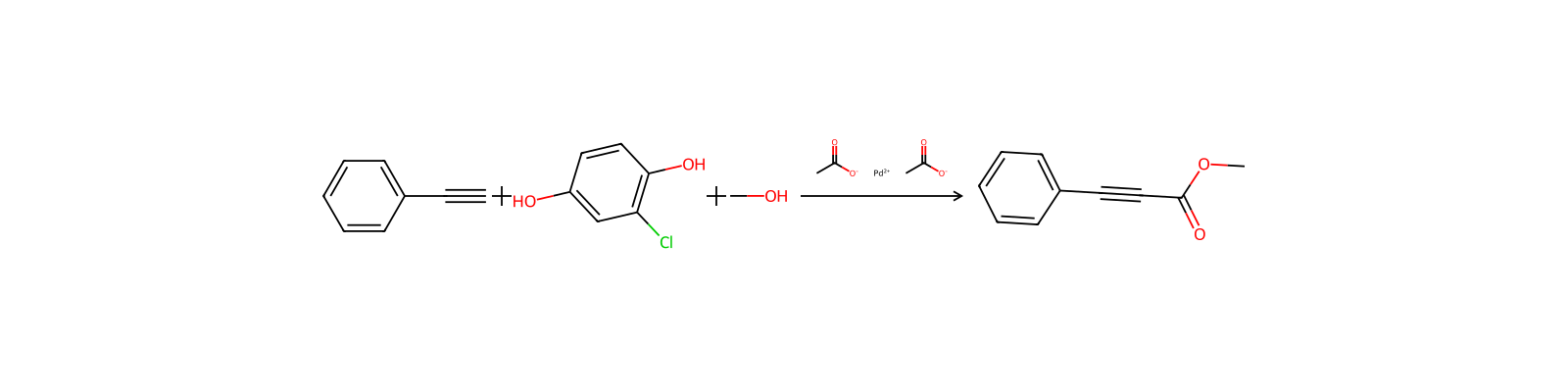
클로로하이드로퀴논
Chlorohydroquinone

기본 정보
- CAS
615-67-8- 표준 SMILES
Oc1ccc(O)c(Cl)c1- InChIKey
AJPXTSMULZANCB-UHFFFAOYSA-N- 분자식
- C6H5ClO2
- 평균 분자량
- 144.55 g/mol
- 단동위원소 질량
- 143.99780708
개요
Chlorohydroquinone is a benzenediol that consists of hydroquinone bearing a single chloro substituent. It has a role as a metabolite. It is a member of chlorohydroquinones and a member of monochlorobenzenes.
이름 및 식별자
- 우선 이름
- Chlorohydroquinone
- IUPAC
- 2-chlorobenzene-1,4-diol
- 현지명
- 클로로하이드로퀴논
- 영어명
- Chlorohydroquinone
- 분자식
- C6H5ClO2
- 분자량
- 144.56
이름 및 동의어
chlorohydroquinone615-67-82-chlorobenzene-1,4-diol2-ChlorohydroquinoneChloroquinolMonochlorohydroquinone2-Chloro-1,4-benzenediol1,4-Benzenediol, 2-chloro-Hydroquinone, chloro-2-Chloro-1,4-dihydroxybenzene2,5-Dihydroxychlorobenzene1,4-Dihydroxy-2-chlorobenzene
이름 더 보기
클로로하이드로퀴논chlorhydrochinonCHLOROHYDROCHINONchloro-hydroquinon2-Chlorohydroquininechloro-p-hydroquinoneChlorohydroquinone,99%
2-Chloro-1,4-hydroxyquinone1,4-Dihydroxyl-2-chlorobenzeneNSC-42793SNN9E3372-CHLORO-1,4-HYDROQUINONENSC-5934DTXSID4060656CHEBI:27675
데이터베이스 식별자
- CAS
615-67-8- PubChem CID
- 301
- DTXSID
DTXSID4060656- ChEBI
CHEBI:27675- UNII
- 93SNN9E337
- EC Number
- 210-442-8
- Nikkaji
- J86.748I
물성
구조 계산 물성
- XLogP
- 1.4
- 극성 표면적
- 40.5 Ų
- 수소 결합 공여자 수
- 2
- 수소 결합 수용자 수
- 2
- 회전 가능 결합 수
- 0
- 무거운 원자 수
- 9
- 형식 전하
- 0
- 복잡도
- 97.1
실험 및 물리화학적 성질
Chemical ClassesOther Classes -> Halogenated Monoaromatics
SpringerMaterials PropertiesBoiling point
LogP
log Kow = 1.40
1.4
Color/FormWHITE TO LIGHT-TAN FINE CRYSTALS
SolubilityVERY SOL IN WATER AND ALC, SLIGHTLY SOL IN ETHER
Boiling Point263 °C
DecompositionWhen heated to decomposition it emits toxic fumes ... .
Melting Point100 °C
Physical DescriptionWhite to light tan solid; [Hawley] Light brown powder; [MSDSonline]
물리화학적 성질
- 녹는점
- 100 · 100-104 °C (lit.)
- 끓는 점
- 263 °C · 263 °C (lit.)
- 밀도
- 1.2558 · 1.2558 (rough estimate)
안전 및 규제
안전 정보는 참고용이며, 공급업체의 물질안전보건자료(SDS), 관련 법규 및 전문가 평가를 대체하지 않습니다.
GHS 분류
GHS Classification
Danger
H302 (18.4%): Harmful if swallowed [Warning Acute toxicity, oral]
P261, P262, P264, P264+P265, P270, P271, P272, P280, P301+P317, P302+P352, P304+P340, P305+P351+P338, P316, P319, P321, P330, P332+P317, P333+P317, P337+P317, P361+P364, P362+P364, P403+P233, P405, and P501 (click each P-code to see the statement)
Aggregated GHS information provided per 49 reports by companies from 7 notifications to the ECHA C&L Inventory. Each notification may be associated with multiple companies.
유해성 정보
Regulatory InformationTP - indicates a substance that is the subject of a proposed TSCA section 4 test rule.
Hazards SummaryNot mutagenic in assays with Ames salmonella TA100 strain; Emergency medical treatment: see Hydroquinone-quinone; [HSDB] An irritant; [MSDSonline] See Hydroquinone.
Hazard Classes and CategoriesAcute Tox. 4 (18.4%)
안전 및 보호
Disposal Methods
SRP: At the time of review, criteria for land treatment or burial (sanitary landfill) disposal practices are subject to significant revision. Prior to implementing land disposal of waste residue (including waste sludge), consult with environmental regulatory agencies for guidance on acceptable disposal practices.
독성 정보
Human Toxicity Excerpts
IRRITATING BUT NOT CORROSIVE. HUMAN POISONINGS HAVE BEEN REPORTED FROM MIXTURE OF HYDROQUINONE & METOL. SYSTEMIC ACTIONS LIKE PHENOL, BUT IN ADDITION TREMORS & CONVULSIONS ARE PROMINENT, PLUS AN OCCASIONAL SEVERE HEMOLYTIC ANEMIA (SUBSEQUENT TO METHEMOGLOBINEMIA?). /HYDROQUINONE/
화학 및 산업
약리 정보
Metabolism/MetabolitesYIELDS 3-CHLORO-4-HYDROXYPHENYL-BETA-D-GLUCURONIDE IN RABBIT. /FROM TABLE/
용도 및 제조
Uses
Used as photographic developer, organic intermediate, bactericide, and in dyestuffs; [Hawley]
Using Disinfectants or Biocides [Category: Clean]
PHOTOGRAPHIC DEVELOPER; ORGANIC INTERMEDIATE; IN DYESTUFFS; BACTERICIDE
Methods of ManufacturingChlorination of hydroquinone.
Formulations/Preparations
EDWAL LIQUID CHQ- CHLOROHYDROQUINONE, 10% SOLN.
GRADES: PHOTOGRAPHIC; COMMERCIAL.
General Manufacturing Information1,4-Benzenediol, 2-chloro-: INACTIVE
응용 분야
용도Chlorohydroquinone is a component of polyethers based on organotin with potential application to breast cancer treatment via growth inhibition. Also a component in the synthesis of contraceptive agents in pharmaceutical compounds. It is also used within hydroxylation and catalysis organic reactions in the synthesis of pharmacologically active phenolic compounds.
제조 방법
Chlorohydroquinone is obtained by reacting p-benzoquinone with hydrochloric acid. First dissolve p-benzoquinone with chloroform and pass dry hydrogen chloride gas under cooling to obtain.
상·하류 제품 정보
상류 원료
관련 반응
10건


화합물 노트
불러오는 중…