홈MCP워크벤치Skills
홈워크벤치알림마이페이지
llms.txt · MCP 가이드개인정보처리방침 · 이용약관 · 지원v1.8.0
  1. 홈
  2. /화합물

스테아린산뷰틸

Butyl Stearate

HCID 31278
새 노트새 반응견적 요청하기
인쇄 미리보기

데이터를 보충하는 중입니다. 잠시 후 페이지를 새로 고치면 최신 내용을 볼 수 있습니다

기본 정보개요이름 및 식별자물성안전 및 규제화학 및 산업관련 반응화합물 노트
부분 구조 검색유사 구조 찾기

기본 정보

CAS
123-95-5
표준 SMILES
CCCCCCCCCCCCCCCCCC(=O)OCCCC
InChIKey
ULBTUVJTXULMLP-UHFFFAOYSA-N
분자식
C22H44O2
평균 분자량
340.6 g/mol
단동위원소 질량
340.33413065

개요

Butyl octadecanoate is a fatty acid ester that is the butyl ester of stearic acid. It has a role as an algal metabolite. It is functionally related to an octadecanoic acid.

이름 및 식별자

우선 이름
Butyl Stearate
IUPAC
butyl octadecanoate
현지명
스테아린산뷰틸
영어명
Butyl stearate
분자식
C22H44O2
분자량
340.58

이름 및 동의어

BUTYL STEARATE123-95-5Butyl octadecanoateN-Butyl stearateOctadecanoic acid, butyl esterKesscoflex BSKessco BSCn-Butyl octadecanoateButyl octadecylateStarfol BS-100Stearic acid, butyl esterRC plasticizer B-17
이름 더 보기
부틸옥타데칸산스테아릭산,부틸에스테르옥타데칸오익산,부틸에스테르테그에스테르부틸N-BUTYLSTEARATE부틸스테어산부틸스테아산뷰틸스테어산스테아린산뷰틸뷰틸스테어산부틸스테아레이트n-부틸스테아레이트BSFEMA 2214ButylstearatSTEARIC ACID BUTYL ESTERapex4groco5810Kessco BSkesscobsc
Tegester butyl stearateWickenol 122Witcizer 200Witcizer 201Emerest 2325Uniflex BYSGroco 5810APEX 4

데이터베이스 식별자

CAS
123-95-5、68154-28-9
PubChem CID
31278
DTXSID
DTXSID5027013
ChEBI
CHEBI:85983
UNII
6Y0AI5605C
EC Number
204-666-5
Nikkaji
J10.059E

물성

구조 계산 물성보충 중

XLogP
9.8
극성 표면적
26.3 Ų
수소 결합 공여자 수
0
수소 결합 수용자 수
2
회전 가능 결합 수
20
무거운 원자 수
24
형식 전하
0
복잡도
250

실험 및 물리화학적 성질

Chemical ClassesOther Classes -> Stearates
LipidsFatty Acyls [FA] -> Fatty esters [FA07] -> Short fatty esters [FA0710]
Cosmetics · 2건

Cosmetic ingredients (Butyl Stearate) -> CIR (Cosmetic Ingredient Review)

Emollient

FragrancesFragrance Ingredient (Butyl stearate) -> IFRA transparency List
Odor · 2건

ODORLESS OR FAINTLY FATTY ODOR

FATTY FRUITY ODOR

TasteFATTY FRUITY TASTE
Food AdditivesFLAVOR ENHANCER, FLAVORING AGENT OR ADJUVANT, FORMULATION AID -> FDA Substance added to food
Density · 2건

0.854 @ 25 °C/4 °C

0.855-0.875

Flavoring AgentsEU Flavoring substances
Color/Form · 3건

Crystals from alcohol, propanol, or ether

WAXY OR OILY (ABOVE 20 °C)

COLORLESS OR VERY PALE YELLOW LIQUID ABOVE 20 °C

안전 및 규제

안전 정보는 참고용이며, 공급업체의 물질안전보건자료(SDS), 관련 법규 및 전문가 평가를 대체하지 않습니다.

GHS 분류

GHS Classification · 3건

This chemical does not meet GHS hazard criteria for 91.6% (901 of 984) of all reports.

Not Classified

Aggregated GHS information provided per 984 reports by companies from 8 notifications to the ECHA C&L Inventory.

유해성 정보

Regulatory Information · 3건

Chemical: Octadecanoic acid, butyl ester

Octadecanoic acid, butyl ester is listed on the EPA's Chemical Data Reporting (CDR) system. Manufacturers and importers of Octadecanoic acid, butyl ester are required to report information about their production and use of this chemical to the EPA under the Toxic Substances Control Act (TSCA). (40 eCFR Part 711)

Butyl stearate: Does not have an individual approval but may be used under an appropriate group standard

Other Safety InformationIMAP assessments - Octadecanoic acid, butyl ester: Human health tier I assessment
Hazards SummarySafe to use as a flavoring agent in food; [JECFA] A moderate irritant on rabbit skin; [RTECS] Irritating to skin; [HSDB] May cause irritation; [MSDSonline] See STEARATES.
FDA Requirements · 3건

Butyl stearate is a food additive permitted for direct addition to food for human consumption as a synthetic flavoring substance and adjuvant in accordance with the following conditions: a) they are used in the minimum quantity required to produce their intended effect, and otherwise in accordance with all the principles of good manufacturing practice, and 2) they consist of one or more of the following, used alone or in combination with flavoring substances and adjuvants generally recognized as safe in food, prior-sanctioned for such use, or regulated by an appropriate section in this part.

Butyl stearate is an indirect food additive for use only as a component of adhesives.

Substances classified as plasticizers, when migrating from food-packaging material shall incl ... butyl stearate.

화학 및 산업

약리 정보

Cellular LocationsExtracellular

용도 및 제조

Uses · 6건

CIR ingredient: Butyl Stearate

Used as a flavor and solvent for flavors; as plasticizer for cellulose acetate butyrate, cellulose nitrate, ethyl cellulose, polystyrene, and laminated fiber products; as lubricant in extrusion and molding of polyvinyl chloride; as emollient in creams, lotions, and lipsticks; as solvent, spreading agent, and softening agent in plastics, textiles, cosmetics, and rubber industries; to make leather cloth and leather varnishes; in polishes, special lubricants, and coatings; in carbon paper and inks; as damp-proofer for concrete; in propellants; as water proofing agent and defoamer; [HSBD]

Pulp and Paper Processing [Category: Industry]

DIRECT FOOD ADDITIVE AS SYNTHETIC FLAVOR.

PLASTICIZER FOR CELLULOSE ACETATE BUTYRATE, CELLULOSE NITRATE, ETHYL CELLULOSE, POLYSTYRENE; LUBRICANT IN EXTRUSION & MOLDING OF POLYVINYL CHLORIDE; EMOLLIENT IN CREAMS, LOTIONS, & LIPSTICKS.

SOLVENT FOR FLAVORS--BUTTER, BANANA.

U.S. Production · 4건

2023: 1,000,000 - <2,500,000 lb

(1972) 3.76X10+9 GRAMS

(1975) 2.71X10+9 GRAMS

(1988) 6,427,000 lb

Consumer UsesNot Known or Reasonably Ascertainable
Industry UsesProcessing aids not otherwise specified
Methods of Manufacturing · 3건

Prepn from silver stearate and n-butyl iodide; from stearic acid and n-butanol.

BY TRANSESTERIFICATION OF GLYCERYL TRISTEARATE (TRISTEARIN) WITH N-BUTYL ALCOHOL.

Alcoholysis of stearin or esterification of stearic with butanol

Formulations/PreparationsGrades: Technical cosmetic, chemically pure.

관련 반응

7건
반응 기록 만들기
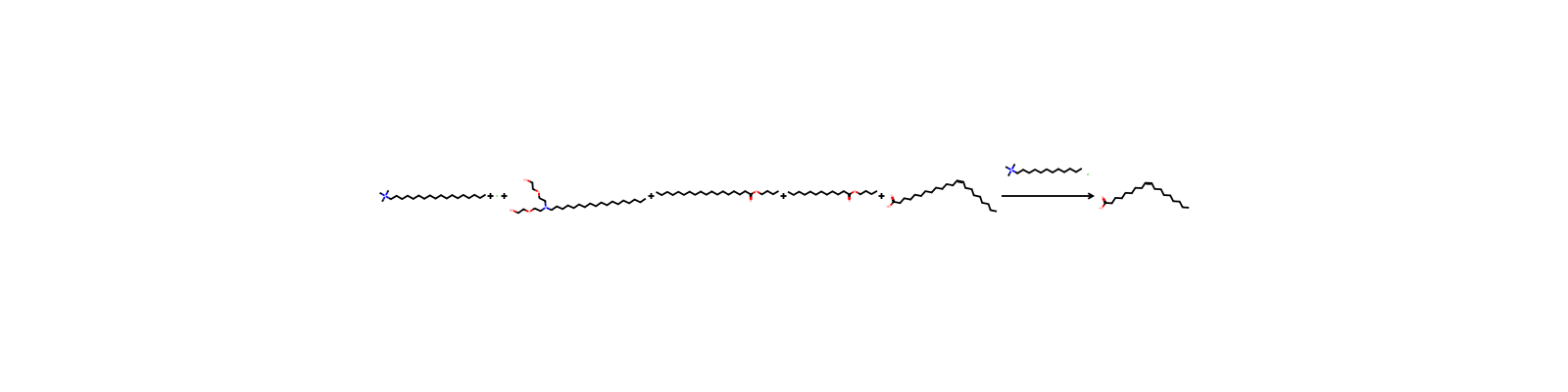
HRID 5288 반응식
HRID 5288반응물로uspto-grants-1993_09
HRID 131055 반응식
HRID 131055반응물로uspto-grants-2008_06
HRID 681218 반응식
HRID 681218반응물로Training data from https://doi.org/10.1039/C8SC04228D (3/10)
HRID 1593718 반응식
HRID 1593718반응물로uspto-grants-2007_11
HRID 1593719 반응식
HRID 1593719생성물로반응물로uspto-grants-2007_11
HRID 2129460 반응식
HRID 2129460생성물로Training data from https://doi.org/10.1039/C8SC04228D (4/10)
HRID 2372295 반응식
HRID 2372295반응물로uspto-grants-1992_03

화합물 노트

불러오는 중…

이 페이지에서기본 정보개요이름 및 식별자물성안전 및 규제화학 및 산업관련 반응화합물 노트
더보기
새 노트새 반응견적 요청하기
Solubility · 5건

Insoluble in water; soluble in ethanol; very soluble in acetone

SOL IN MINERAL OR VEGETABLE OILS

SOLUBILITY IN WATER: 0.29% @ 25 °C

1.7 mg/mL at 25 °C

(in ethanol)

Flash Point320 °F (160 °C) (CLOSED CUP)

물리화학적 성질

녹는점
17 · 17-22 °C
끓는 점
220 °C · 220°C (25 mmHg)
밀도
0.861 g/mL · 0.861 g/mL at 20 °C(lit.)
굴절률
20 · n20/D 1.443
FEMA
2214 · 2214 | BUTYL STEARATE
인화점
25 °C · 25 °C
저장 조건
2 · 2-8°C
물리적 상태
액체
Specific Gravity
0.856 · 0.856
색상
White or Colorless to Light yellow
냄새
100 %에서 · 100.00%에서. 순한 지방성 기름진
냄새 유형
지방이 많은
수용성
물과 섞이지 않습니다. 에탄올 및 아세톤과 혼합 가능
JECFA Number
184 · 184
Merck
14 · 14,1589
BRN
1792866 · 1792866
Henry's Law Constant
2.6 · 2.6×10-4 mol/(m3Pa) at 25℃, HSDB (2015)
Dielectric constant
3.1 · 3.1(30℃)
주요 응용
청소용품화장품음식 및 음료개인 위생 관리
화장품 원료 기능
피부 컨디셔닝향기피부 컨디셔닝 - 보습제
InChI
1S/C22H44O2/c1-3-5-7-8-9-10-11-12-13-14-15-16-17-18-19-20-22(23)24-21-6-4-2/h3-21H2,1-2H3
InChIKey
ULBTUVJTXULMLP-UHFFFAOYSA-N
SMILES
CCCCCCCCCCCCCCCCCC(=O)OCCCC
LogP
9.7 · 9.70
NIST
Octadecanoic acid, butyl ester(123-95-5)
EPA
Butyl stearate (123-95-5)

화학적 성질

Butyl stearate is a colorless or pale yellow oily liquid or low melting waxy solid. It has no odor or a faintly fatty odor. soluble in acetone, chloroform, soluble in ethanol, insoluble in water.

EPA Safer ChemicalChemical: Butyl stearate
FIFRA RequirementsButyl stearate is exempted from the requirement of a tolerance when used as a defoamer in accordance with good agricultural practice as inert (or occasionally active) ingredients in pesticide formulations applied to growing crops only.
NFPA Hazard Classification · 3건

1 - Materials that, under emergency conditions, can cause significant irritation.

1 - Materials that must be preheated before ignition can occur. Materials require considerable preheating, under all ambient temperature conditions, before ignition and combustion can occur.

0 - Materials that in themselves are normally stable, even under fire conditions.

Hazard Classes and CategoriesNot Classified
Skin, Eye, and Respiratory IrritationsA skin irritant.

안전 및 보호

Fire Fighting ProceduresCARBON DIOXIDE, DRY CHEMICAL, FOG OR MIST.
Disposal Methods · 1건

SRP: At the time of review, criteria for land treatment or burial (sanitary landfill) disposal practices are subject to significant revision. Prior to implementing land disposal of waste residue (including waste sludge), consult with environmental regulatory agencies for guidance on acceptable disposal practices.

Allowable TolerancesButyl stearate is exempted from the requirement of a tolerance when used as a defoamer in accordance with good agricultural practice as inert (or occasionally active) ingredients in pesticide formulations applied to growing crops only.
Threshold Limit Values (TLV) · 3건

8 hr Time Weighted Avg (TWA): 10 mg/cu m. /Stearates; does not include stearates of toxic metals/

Excursion Limit Recommendation: Excursions in worker exposure levels may exceed 3 times the TLV-TWA for no more than a total of 30 minutes during a work day, and under no circumstances should they exceed 5 times the TLV-TWA, provided that the TLV-TWA is not exceeded. /Stearates; does not include stearates of toxic metals/

A4; Not classifiable as a human carcinogen. /Stearates; does not include stearates of toxic metals/

독성 정보

Environmental Fate · 3건

TERRESTRIAL FATE: Based on a classification scheme(1), an estimated Koc value of 39,000(SRC), determined from a structure estimation method(2), indicates that n-butyl stearate is expected to be immobile in soil(SRC). Volatilization of n-butyl stearate from moist soil surfaces is expected to be an important fate process(SRC) given an estimated Henry's Law constant of 0.038 atm-cu m/mole(SRC), using a fragment constant estimation method(3). However, adsorption to soil is expected to attenuate volatilization(SRC). n-Butyl stearate is not expected to volatilize from dry soil surfaces(SRC) based upon a vapor pressure of 5.8X10⁻⁶ mm Hg(4). n-Butyl stearate is expected to rapidly biodegrade in aerobic soils as suggested by the rapid biodegradation of structurally similar long-chain fatty acid esters(5-7).

AQUATIC FATE: Based on a classification scheme(1), an estimated Koc value of 39,000(SRC), determined from a structure estimation method(2), indicates that n-butyl stearate is expected to adsorb to suspended solids and sediment in water(SRC). Volatilization from water surfaces is expected(3) based upon an estimated Henry's Law constant of 0.038 atm-cu m/mole(SRC), developed using a fragment constant estimation method(4). Volatilization half-lives for a model river and model lake are 5 hours and 7 days, respectively(SRC), using an estimation method(3). However, volatilization from water surfaces is expected to be attenuated by adsorption to suspended solids and sediment in the water column(SRC). The volatilization half-life from a model pond is estimated to be about 64 hours ignoring adsorption; when considering maximum adsorption the volatilization half-life increases to 12 months(5). According to a classification scheme(6), a estimated BCF of 3, from an estimated log Kow of 7.90(12) and a regression-derived equation(7), suggests the potential for bioconcentration in aquatic organisms is low. n-Butyl stearate is expected to rapidly biodegrade in aerobic waters as suggested by the rapid biodegradation of structurally similar long-chain fatty acid esters(8-10). An estimated base-catalyzed second-order hydrolysis rate constant of 0.024 L/mole-sec(11,SRC) corresponds to half-lives of 9 and 1 years at pH values of 7 and 8, respectively(11).

ATMOSPHERIC FATE: According to a model of gas/particle partitioning of semivolatile organic compounds in the atmosphere(1), n-butyl stearate, which has a vapor pressure of 5.8X10⁻⁶ mm Hg at 25 °C(2), will exist in both the vapor and particulate phases in the ambient atmosphere. Vapor-phase n-butyl stearate is degraded in the atmosphere by reaction with photochemically-produced hydroxyl radicals(SRC); the half-life for this reaction in air is estimated to be 15 hours(SRC) from its estimated rate constant of 2.6X10⁻¹¹ cu cm/molecule-sec at 25 °C(3). Particulate-phase n-butyl stearate may be removed from the air by wet and dry deposition(SRC).

Toxicity Summary · 2건

The CIR Expert Panel concluded that the alkyl esters, listed subsequently, are safe in the present practices of use and concentration described in this safety assessment when formulated to be non-irritating.

Safe for use in cosmetics, with qualifications

Soil Adsorption/Mobility · 1건

Using a structure estimation method based on molecular connectivity indices(1), the Koc for n-butyl stearate can be estimated to be about 39,000(SRC). According to a classification scheme(2), this estimated Koc value suggests that butyl stearate is expected to be immobile in soil.

Human Toxicity ExcerptsNONE OF ... /HIGHER MOL WT ALIPHATIC ESTERS/ IS KNOWN TO PRODUCE ANY ILL EFFECTS EITHER IN INDUSTRIAL HANDLING OR IN THEIR END USES. /ALIPHATIC ESTERS/
Artificial Pollution Sourcesn-Butyl stearate's production and use as a synthetic intermediate, plasticizer, and flavoring and in cosmetics, pharmaceuticals, lubricants, and coatings(1,2) may result in its release to the environment through various waste streams(SRC).
Environmental BiodegradationAEROBIC: By analogy to chemically similar long chain fatty acid esters that were rapidly degraded by mixed sewage sludge(1-3), n-butyl stearate is expected to rapidly biodegrade under aerobic conditions(SRC).
Environmental Bioconcentration · 1건

An estimated BCF of 1 was calculated for n-butyl stearate(SRC), using an estimated log Kow of 9.70(1,SRC) and a regression-derived equation(2). According to a classification scheme(3), the estimated BCF suggests the potential for bioconcentration in aquatic organisms is low.

Volatilization from Water/Soil · 1건

The Henry's Law constant for n-butyl stearate is estimated as 0.038 atm-cu m/mole(SRC) using a fragment constant estimation method(1). This Henry's Law constant indicates that n-butyl stearate is expected to volatilize rapidly from water surfaces(2). Based on this Henry's Law constant, the volatilization half-life from a model river (1 m deep, flowing 1 m/sec, wind velocity of 3 m/sec)(2) is estimated as approximately 5 hours(SRC). The volatilization half-life from a model lake (1 m deep, flowing 0.05 m/sec, wind velocity of 0.5 m/sec)(2) is estimated as approximately 7 days(SRC). The volatilization half-life from a model pond 2 m deep is estimated to be about 64 hours ignoring adsorption; when considering maximum adsorption the volatilization half-life increases to 12 months(3). n-Butyl stearate's Henry's Law constant(1) indicates that volatilization from moist soil surfaces may occur(SRC). n-Butyl stearate is not expected to volatilize from dry soil surfaces(SRC) based upon a vapor pressure of 5.1X10⁻⁶ mm Hg(4).

Non-Human Toxicity Excerpts · 2건

TWO-YEAR FEEDING STUDIES IN THE RAT AT 1.25 AND 6.25% PRODUCED NO EFFECTS ON GROWTH, MORTALITY OR FERTILITY.

... /ORAL, SC OR IP/ DOSES OF 32 G/KG BODY WT /BUTYL STEARATE GIVEN TO 5-6 WK OLD WHITE RATS WEIGHING 60-75 G/ CAUSED NO DEATHS IN THREE SERIES EACH OF FIFTEEN RATS. LETHAL DOSE ... IS THEREFORE OVER 32 G/KG & ... ACUTE TOXICITY ... IS LOW.

Evidence for CarcinogenicityA4; Not classifiable as a human carcinogen. /Stearates; does not include stearates of toxic metals/
Environmental Abiotic Degradation · 1건

The rate constant for the vapor-phase reaction of n-butyl stearate with photochemically-produced hydroxyl radicals has been estimated as 2.6X10⁻¹¹ cu cm/molecule-sec at 25 °C(SRC) using a structure estimation method(1). This corresponds to an atmospheric half-life of about 15 hours at an atmospheric concentration of 5X10+5 hydroxyl radicals per cu cm(1). A base-catalyzed second-order hydrolysis rate constant of 0.024 L/mol-sec(SRC) was estimated using a structure estimation method(2); this corresponds to half-lives of 9 and 1 years at pH values of 7 and 8, respectively(2). n-Butyl stearate is not expected to directly photolyze due to the lack of absorption in the environmental UV spectrum(3).

Probable Routes of Human Exposure · 1건

NIOSH (NOES Survey 1981-1983) has statistically estimated that 56,501 workers (14,513 of these are female) are potentially exposed to n-butyl stearate in the US(1). Occupational exposure to n-butyl stearate may occur through inhalation and dermal contact with this compound at workplaces where butyl stearate is produced or used(SRC). The general population may be exposed to n-butyl stearate via inhalation of ambient air, ingestion of food and drinking water, and dermal contact with this compound due to its use in cosmetics, pharmaceuticals, lubricants, and coatings and use as a flavoring and plasticizer(2,3). n-Butyl stearate has been used as a plasticizer for polymers used in food packaging and has been shown to migrate from the polymer to packaged or stored foods(4); therefore, the general population may be exposed to n-butyl stearate through oral consumption of foods packaged or stored in polymer containers that use n-butyl stearate as an additive(SRC).

규제 정보

FDA Requirements · 3건

Butyl stearate is a food additive permitted for direct addition to food for human consumption as a synthetic flavoring substance and adjuvant in accordance with the following conditions: a) they are used in the minimum quantity required to produce their intended effect, and otherwise in accordance with all the principles of good manufacturing practice, and 2) they consist of one or more of the following, used alone or in combination with flavoring substances and adjuvants generally recognized as safe in food, prior-sanctioned for such use, or regulated by an appropriate section in this part.

Butyl stearate is an indirect food additive for use only as a component of adhesives.

Substances classified as plasticizers, when migrating from food-packaging material shall incl ... butyl stearate.

FIFRA RequirementsButyl stearate is exempted from the requirement of a tolerance when used as a defoamer in accordance with good agricultural practice as inert (or occasionally active) ingredients in pesticide formulations applied to growing crops only.

안전 데이터

wgk
1
tsca
TSCA listed
rtecs
WI2900000
HS 번호
29157080
risk_code
36/37/38
hazard_code
Xi
safety_code
26-36
기존화학 물질
KE-26345
스토리지 클래스
10 - Combustible liquids
유해 물질 데이터
123-95-5(Hazardous Substances Data)
Household Products
Information on 6 consumer products that contain Butyl stearate in the following categories is provided:
Use Classification · 6건

EPA Safer Chemical Functional Use Classes -> Solvents

Safer Chemical Classes -> Green half-circle - The chemical is expected to be of low concern

Fragrance Ingredients

Flavouring Agent -> FLAVOURING_AGENT -> JECFA Functional Classes

Flavoring Agents -> JECFA Flavorings Index

Cosmetics -> Emollient

General Manufacturing Information · 3건

Fabricated Metal Product Manufacturing

Octadecanoic acid, butyl ester: ACTIVE

IT DISSOLVES ESTER GUM AND MOST RESINS BUT ... IS NOT SOLVENT FOR CELLULOSE ESTERS AND GUM LAC. ... IS GOOD SOLVENT FOR RUBBER, PARTICULARLY WHEN HOT, BUT ... HAS NO SPECIAL AFFINITY FOR VINYL RESINS.

응용 분야

출처Reported found in fresh apple and boiled mutton.

일반 설명Butyl stearate is a fatty acid ester, which has application in cosmetics, personal care products, and as an emollient in food industries.

제조 방법 · 1건

Butyl stearate is obtained by esterification of stearic acid and butanol, dealcoholization, washing with water and pressure filtration.By reacting silver state with n-butyl iodide at 100°C by transesterification of glyceryl tristearate (tristearin) with n-butyl alcohol.

상·하류 제품 정보

상류 원료

스테아르산tert-부틸알코올n-부탄올

추가 설명

정의ChEBI: Butyl octadecanoate is a fatty acid ester that is the butyl ester of stearic acid. It has a role as an algal metabolite. It derives from an octadecanoic acid.