
HRID 240241생성물로
Lidocaine
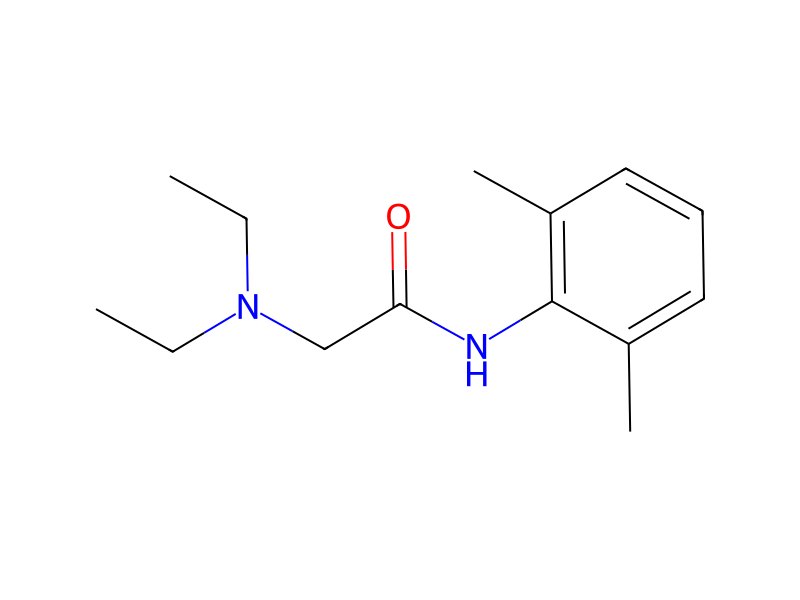
137-58-6CCN(CC)CC(=O)Nc1c(C)cccc1CNNJVILVZKWQKPM-UHFFFAOYSA-NLidocaine is the monocarboxylic acid amide resulting from the formal condensation of N,N-diethylglycine with 2,6-dimethylaniline. It has a role as a xenobiotic, a local anaesthetic, an anti-arrhythmia drug, an environmental contaminant and a drug allergen. It is a member of benzenes, a monocarboxylic acid amide and a tertiary amino compound. It is functionally related to a glycinamide.
137-58-6、73-78-9DTXSID1045166CHEMBL79CHEBI:6456Pharmaceuticals
Pharmaceuticals -> Analgesics
Pharmaceutical
Pharmaceuticals -> Used in Switzerland
Pharmaceuticals -> Listed in ZINC15
log Kow = 2.26 at pH 7.4
2.1
2.28
Needles from benzene or alcohol
Yellow needles from water
White or slightly yellow, crystalline powder
VERY SOL IN ALC; SOL IN CHLOROFORM; INSOL IN ETHER; WHITE CRYSTALLINE POWDER /LIDOCAINE HYDROCHLORIDE/
In water, 410 mg/L at 30 °C
Very soluble in alcohol, chloroform; freely soluble in ether, benzene. Dissolves in oils
Soluble in alcohol, ether, or chloroform
Very soluble in benzene, ethyl ether, ethanol, and chloroform
Breast Feeding; Lactation; Milk, Human; Antiarrhythmics; Local Anesthetics
안전 정보는 참고용이며, 공급업체의 물질안전보건자료(SDS), 관련 법규 및 전문가 평가를 대체하지 않습니다.
This chemical does not meet GHS hazard criteria for 1.2% (2 of 167) of reports.
Warning
H302 (98.2%): Harmful if swallowed [Warning Acute toxicity, oral]
P264, P270, P301+P317, P330, and P501 (click each P-code to see the statement)
Aggregated GHS information provided per 167 reports by companies from 10 notifications to the ECHA C&L Inventory.
Warning
REACH registered substance: Lidocaine (EC: 205-302-8)
Lidocaine: Does not have an individual approval but may be used under an appropriate group standard
External analgesic drug products for over-the-counter human use. Analgesic, anesthetic, and antipruritic active ingredients. The active ingredient of the product consists of any of the following within the specified concentration established for each ingredient: (a) Male genital desensitizers. ... Lidocaine in a metered spray with approximately 10 milligrams per spray.
Anorectal drug products for over-the-counter human use. Local anesthetic active ingredients. The active ingredient of the product consists of any of the following when used in the concentration or within the concentration range established for each ingredient: Lidocaine 2 to 5 percent.
Drug products containing certain active ingredients offered over-the-counter (OTC) for certain uses. A number of active ingredients have been present in OTC drug products for various uses, as described below. However, based on evidence currently available, there are inadequate data to establish general recognition of the safety and effectiveness of these ingredients for the specified uses: lidocaine is included in oral health care drug products.
Drug products containing certain active ingredients offered over-the-counter (OTC) for certain uses. A number of active ingredients have been present in OTC drug products for various uses, as described below. However, based on evidence currently available, there are inadequate data to establish general recognition of the safety and effectiveness of these ingredients for the specified uses: lidocaine hydrochloride is included in oral health care drug products. /Lidocaine hydrochloride/
N01BB02
N01BB02
S - Sensory organs
R - Respiratory system
C - Cardiovascular system
C - Cardiovascular system
The protein binding recorded for lidocaine is about 60 to 80% and is dependent upon the plasma concentration of alpha-1-acid glycoprotein. Such percentage protein binding bestows lidocaine with a medium duration of action when placed in comparison to other local anesthetic agents.
Excessive blood levels of lidocaine can cause changes in cardiac output, total peripheral resistance, and mean arterial pressure. With central neural blockade these changes may be attributable to the block of autonomic fibers, a direct depressant effect of the local anesthetic agent on various components of the cardiovascular system, and/or the beta-adrenergic receptor stimulating action of epinephrine when present. The net effect is normally a modest hypotension when the recommended dosages are not exceeded. In particular, such cardiac effects are likely associated with the principal effect that lidocaine elicits when it binds and blocks sodium channels, inhibiting the ionic fluxes required for the initiation and conduction of electrical action potential impulses necessary to facilitate muscle contraction. Subsequently, in cardiac myocytes, lidocaine can potentially block or otherwise slow the rise of cardiac action potentials and their associated cardiac myocyte contractions, resulting in possible effects like hypotension, bradycardia, myocardial depression, cardiac arrhythmias, and perhaps cardiac arrest or circulatory collapse. Moreover, lidocaine possesses a dissociation constant (pKa) of 7.7 and is considered a weak base. As a result, about 25% of lidocaine molecules will be un-ionized and available at the physiological pH of 7.4 to translocate inside nerve cells, which means lidocaine elicits an onset of action more rapidly than other local anesthetics that have higher pKa values. This rapid onset of action is demonstrated in about one minute following intravenous injection and fifteen minutes following intramuscular injection. The administered lidocaine subsequently spreads rapidly through the surrounding tissues and the anesthetic effect lasts approximately ten to twenty minutes when given intravenously and about sixty to ninety minutes after intramuscular injection. Nevertheless, it appears that the efficacy of lidocaine may be minimized in the presence of inflammation. This effect could be due to acidosis decreasing the amount of un-ionized lidocaine molecules, a more rapid reduction in lidocaine concentration as a result of increased blood flow, or potentially also because of increased production of inflammatory mediators like peroxynitrite that elicit direct actions on sodium channels.


FDA approved drugs -> Active ingredient
FDA approved drugs -> Active ingredient
Antiarrhythmic medicines
FDA approved animal drugs -> Active ingredient
Pharmaceuticals -> Animal Drugs -> Approved in Taiwan
Pharmaceuticals -> UK Veterinary Medicines Directorate List
159-160 °C at 2.00E+00 mm Hg
BP: 180-182 °C at 4 mm Hg; 159-160 °C at 2 mm Hg
181 °C
68 °C
68.5 °C
solid
For more FDA Requirements (Complete) data for LIDOCAINE (7 total), please visit the HSDB record page.
GREEN L ET AL; LIDOCAINE: COUNTERPOINT DISCUSSION; APPL PHARMACOKINET 392 (1980). A REVIEW ON METABOLISM AND PHARMACOKINETICS OF LIDOCAINE IN RELATION TO THERAPEUTIC & TOXIC EFFECTS.
RODMAN JH; LIDOCAINE; APPL PHARMACOKINET 350 (1980). A REVIEW OF METABOLISM AND PHARMACOKINETICS OF LIDOCAINE.
WALLER ES; PHARMACOKINETIC PRINCIPLES OF LIDOCAINE DOSING IN RELATION TO DISEASE STATE; J CLIN PHARMACOL 21 (4):1 81 (1981). PRINCIPLES OF DOSING WITH LIDOCAINE.
ASTRUP J, SORENSEN HR; INHIBITION OF CEREBRAL METABOLISM BY LIDOCAINE; EUR NEUROL 20 (3): 221 (1981). REVIEW ON EFFECTS IN HIGH DOSES (HIGHER THAN THOSE THAT INDUCE SEIZURES) ON CEREBRAL FUNCTION & METABOLISM.
BRUGUEROLLE B ET AL; FACTORS AFFECTING LIDOCAINE PHARMACOKINETICS; THERAPIE 38 (1): 27 (1983). A REVIEW WITH 69 REFERENCES OF PHYSIOLOGICAL, PHARMACOLOGICAL, AND PATHOLOGICAL FACTORS AFFECTING THE PHARMACOKINETICS OF LIDOCAINE.
Acute Tox. 4 (98.2%)
Acute Tox. 4 (100%)
Acute toxicity (Oral) - Category 4
Suitable extinguishing media: Use water spray, alcohol-resistant foam, dry chemical or carbon dioxide.
Advice for firefighters: Wear self contained breathing apparatus for fire fighting if necessary.
Lidocaine hydrochloride injections and commercially available solutions of the drug in 5% dextrose should be stored at 25 °C but may be exposed to temperatures up to 40 °C; the injection and solutions should not be frozen, and the solutions should be protected from excessive heat.
Conditions for safe storage, including any incompatibilities: Keep container tightly closed in a dry and well-ventilated place.
Lidocaine hydrochloride injections should be stored at a 20-25 °C; solutions containing epinephrine should be protected from light.
Accidental Release Measures. Personal precautions, protective equipment and emergency procedures: Use personal protective equipment. Avoid dust formation. Avoid breathing vapours, mist or gas. Ensure adequate ventilation. Avoid breathing dust. Environmental precautions: Do not let product enter drains. Methods and materials for containment and cleaning up: Pick up and arrange disposal without creating dust. Sweep up and shovel. Keep in suitable, closed containers for disposal.
SRP: Expired or waste pharmaceuticals shall carefully take into consideration applicable DEA, EPA, and FDA regulations. It is not appropriate to dispose by flushing the pharmaceutical down the toilet or discarding to trash. If possible return the pharmaceutical to the manufacturer for proper disposal being careful to properly label and securely package the material. Alternatively, the waste pharmaceutical shall be labeled, securely packaged and transported by a state licensed medical waste contractor to dispose by burial in a licensed hazardous or toxic waste landfill or incinerator.
Waste treatment methods. Product: Offer surplus and non-recyclable solutions to a licensed disposal company. Contact a licensed professional waste disposal service to dispose of this material. Dissolve or mix the material with a combustible solvent and burn in a chemical incinerator equipped with an afterburner and scrubber. Contaminated packaging: Dispose of as unused product.
Precautions for safe handling: Avoid contact with skin and eyes. Avoid formation of dust and aerosols. Provide appropriate exhaust ventilation at places where dust is formed. Normal measures for preventive fire protection.
Appropriate engineering controls: Handle in accordance with good industrial hygiene and safety practice. Wash hands before breaks and at the end of workday.
Gloves must be inspected prior to use. Use proper glove removal technique (without touching glove's outer surface) to avoid skin contact with this product. Dispose of contaminated gloves after use in accordance with applicable laws and good laboratory practices. Wash and dry hands.
Eye/face protection: Safety glasses with side-shields conforming to EN166 Use equipment for eye protection tested and approved under appropriate government standards such as NIOSH (US) or EN 166(EU).
Skin protection: Handle with gloves.
Body Protection: Complete suit protecting against chemicals, The type of protective equipment must be selected according to the concentration and amount of the dangerous substance at the specific workplace.
Respiratory protection: For nuisance exposures use type P95 (US) or type P1 (EU EN 143) particle respirator. For higher level protection use type OV/AG/P99 (US) or type ABEK-P2 (EU EN 143) respirator cartridges. Use respirators and components tested and approved under appropriate government standards such as NIOSH (US) or CEN (EU).
The first step in the management of systemic toxic reactions consists of immediate attention to the establishment and maintenance of a patent airway and assisted or controlled ventilation with oxygen and a delivery system capable of permitting immediate positive airway pressure by mask. If convulsions occur, the objective of the treatment is to maintain ventilation and oxygenation and support the circulation. Oxygen must be given and ventilation assisted if necessary (mask and bag or tracheal intubation). Should convulsions not stop spontaneously after 15-20 seconds, an anticonvulsant should be given i.v. to facilitate adequate ventilation and oxygenation. Thiopental sodium 1-3 mg/kg i.v. is the first choice. Alternatively diazepam 0.1 mg/kg bw i.v. may be used, although its action will be slow. Prolonged convulsions may jeopardise the patient's ventilation and oxygenation. If so, injection of a muscle relaxant (e.g. succinylcholine 1 mg/kg bw) will facilitate ventilation, and oxygenation can be controlled. Early endotracheal intubation must be considered in such situations. If cardiovascular depression is evident (hypotension, bradycardia), ephedrine 5-10 mg i.v. should be given and may be repeated, if necessary, after 2-3 minutes. Should circulatory arrest occur, immediate cardiopulmonary resuscitation should be instituted. Continual oxygenation and ventilation and circulatory support as well as treatment of acidosis are of vital importance. (L1712)
EMLA cream is a topical formulation based upon the eutectic mixture of lidocaine and prilocaine and is used in clinical settings to produce local analgesia after application under occlusive dressing. A blanching reaction has been reported to occur locally after application, but it is not clear whether this reaction is caused by the anesthetic mixture, by the vehicle or the occlusion. This blanching reaction was studied in 50 healthy volunteers in a double-blind randomized assay: EMLA versus placebo, under occlusive dressing for 1 hr, each subject being his own control. 33 Cases (66%) of blanching after application of EMLA cream were observed versus 3 cases (6%) after placebo, this difference being highly significant. Blanching was observed without delay, after removal of the dressing, and was very transient, disappearing in less than 3 hr in all cases. It is concluded that the blanching reaction is (1) frequent but very transient, and (2) determined by the anesthetic mixture included in EMLA cream and not by the vehicle alone, nor by the occlusion, since it is not found with the placebo. The precise mechanism of this reaction is unknown.
Recent studies have suggested that cytochrome P-450 isoenzyme 1A2 has an important role in lidocaine biotransformation. /This research/ studied the effect of a cytochrome P-450 1A2 inhibitor, ciprofloxacin, on the pharmacokinetics of lidocaine. In a randomized, double-blinded, cross-over study, nine healthy volunteers ingested for 2.5 days 500 mg oral ciprofloxacin or placebo twice daily. On day 3, they received a single dose of 1.5 mg/kg lidocaine intravenously over 60 min. Plasma concentrations of lidocaine, 3-hydroxylidocaine and monoethylglycinexylidide were determined for 11 hr after the start of the lidocaine infusion. Ciprofloxacin increased the mean peak concentration and area under plasma concentration-time curve of lidocaine by 12% (range [-6] to 46%; P<0.05) and 26% (8 to 59%; P 0.01), respectively. The mean plasma clearance of lidocaine was decreased by ciprofloxacin by 22% (7 to 38%; P<0.01). Ciprofloxacin decreased the area under the plasma concentration-time curve of monoethylglycinexylidide by 21% (P<0.01) and that of 3-hydroxylidocaine by 14% (P< 0.01). The plasma decay of intravenously administered lidocaine is modestly delayed by concomitantly administered ciprofloxacin. Ciprofloxacin may increase the systemic toxicity of lidocaine.
Epinephrine is commonly added to lidocaine solutions to increase the duration of spinal anesthesia. Despite this common usage, the effect of epinephrine on the neurotoxic potential of this anesthetic is not known. The current experiments investigated whether adding epinephrine increases functional impairment or histologic damage induced by spinal administration of lidocaine in the rat. Eighty rats were divided into four groups to receive an intrathecal injection of normal saline containing either 5% lidocaine, 5% lidocaine with 0.2 mg/mL of epinephrine, 0.2 mg/mL of epinephrine, or normal saline alone. Animals were assessed for persistent sensory impairment using the tail-flick test administered 4 and 7 days after infusion. Animals were then killed, and the spinal cord and nerve roots were prepared for neuropathologic evaluation. Rats given 5% lidocaine developed persistent sensory impairment and histologic damage, and the addition of epinephrine resulted in a further significant increase in injury. Sensory function in animals given epinephrine without anesthetic was similar to baseline and did not differ from saline. Histologic changes in animals treated with epinephrine alone did not differ significantly from saline controls. The neurotoxicity of intrathecally administered lidocaine is increased by the addition of epinephrine. When making clinical recommendations for maximum safe intrathecal dose of this anesthetic, one may need to consider whether the solution contains epinephrine.
PURPOSE: During continuous epidural anesthesia with lidocaine, plasma monoethylglycinexylidide (MEGX), an active metabolite of lidocaine, increases continuously. /This study/ assessed the effect of epinephrine on the absorption of lidocaine and the accumulation of MEGX during continuous epidural anesthesia in children. Anesthesia was administered as an initial bolus of 5 mg/kg of 1% lidocaine solution followed by continuous infusion at 2.5 mg/kg/hr. Patients in the control group (n = 8) received lidocaine alone, while patients in the epinephrine group (n = 8) received lidocaine + epinephrine (5 ug/mL). Concentrations of lidocaine and its active metabolite, MEGX, were measured in plasma samples obtained after 15 min, 30 min, and one, two, three, four, and five hours of infusion using high-performance liquid chromatography with ultraviolet detection. Plasma lidocaine concentrations were higher in samples from the control group for the first hour; however, after two hours the levels were the same in all samples. Plasma MEGX levels increased continuously in both groups and were significantly higher in the control group samples. The sum of lidocaine + MEGX was higher in the control group for the first two hours but there was no significant difference between groups after three hours. Reduction of the potential for systemic toxicity by the addition of epinephrine to lidocaine is limited, because the reduction of the sum of the plasma concentrations of lidocaine and its active metabolite MEGX is small and limited to the initial phase of infusion.
For more Interactions (Complete) data for LIDOCAINE (33 total), please visit the HSDB record page.
Systemic exposure to excessive quantities of lidocaine mainly result in central nervous system (CNS) and cardiovascular effects. CNS effects may include CNS excitation(nervousness, tingling around the mouth) followed by depression. [Wikipedia]
EC50; Species: Chlorella fusca var. vacuolata (Green Algae) strain 211-15; Conditions: freshwater, static, 25 °C, pH 9.5-10.0; Concentration: 459 uM for 24 hr (95% confidence interval: 158-1333 uM); Effect: decreased population growth rate /formulation/
EC50; Species: Chlorella fusca var. vacuolata (Green Algae) strain 211-15; Conditions: freshwater, static, 25 °C, pH 9.0; Concentration: 545 uM for 24 hr (95% confidence interval: 244-1217 uM); Effect: decreased population growth rate /formulation/
EC50; Species: Chlorella fusca var. vacuolata (Green Algae) strain 211-15; Conditions: freshwater, static, 25 °C, pH 6.5-7.2; Concentration: 575 uM for 24 hr (95% confidence interval: 52-6365 uM); Effect: decreased population growth rate /formulation/
EC50; Species: Chlorella fusca var. vacuolata (Green Algae) strain 211-15; Conditions: freshwater, static, 25 °C, pH 8.5-8.6; Concentration: 608 uM for 24 hr (95% confidence interval: 272-1360 uM); Effect: decreased population growth rate /formulation/
EC50; Species: Chlorella fusca var. vacuolata (Green Algae) strain 211-15; Conditions: freshwater, static, 25 °C, pH 7.5-7.9; Concentration: 686 uM for 24 hr (95% confidence interval: 158-2982 uM); Effect: decreased population growth rate /formulation/
TERRESTRIAL FATE: Based on a classification scheme(1), an estimated Koc value of 400(SRC), determined from a structure estimation method(2), indicates that lidocaine is expected to have moderate mobility in soil(SRC). The estimated pKa of lidocaine is 7.5(3), indicating that this compound will exist partially in the cation form in the environment and cations generally adsorb more strongly to soils containing organic carbon and clay than their neutral counterparts(4). Volatilization of the neutral species of lidocaine from moist soil surfaces is not expected to be an important fate process(SRC) given an estimated Henry's Law constant of 1.3X10⁻¹⁰ atm-cu m/mole(SRC), using a fragment constant estimation method(5). Lidocaine is not expected to volatilize from dry soil surfaces(SRC) based upon an estimated vapor pressure of 6.8X10⁻⁶ mm Hg at 25 °C(SRC), determined from a fragment constant method(2). Biodegradation data in soil were not available(SRC, 2014).
AQUATIC FATE: Based on a classification scheme(1), an estimated Koc value of 400(SRC), determined from a structure estimation method(2), indicates that lidocaine is expected to adsorb to suspended solids and sediment(SRC). Volatilization from water surfaces is not expected(3) based upon an estimated Henry's Law constant of 1.3X10⁻¹⁰ atm-cu m/mole(SRC), developed using a fragment constant estimation method(4). According to a classification scheme(5), an estimated BCF of 3(SRC), from its log Kow of 2.4467) and a regression-derived equation(2), suggests the potential for bioconcentration in aquatic organisms is low(SRC). Half-lives of 0.4 and 1.3 days for laboratory (Hg lamp) and field (natural sunlight), respectively, have been reported in river water media, which take into account photodegradation and biotic degradation(7). Biodegradation data in water were not available(SRC, 2014).
ATMOSPHERIC FATE: According to a model of gas/particle partitioning of semivolatile organic compounds in the atmosphere(1), lidocaine, which has an estimated vapor pressure of 6.8X10⁻⁶ mm Hg at 25 °C(SRC), determined from a fragment constant method(2), will exist in both the vapor and particulate phases in the ambient atmosphere. Vapor-phase lidocaine is degraded in the atmosphere by reaction with photochemically-produced hydroxyl radicals(SRC); the half-life for this reaction in air is estimated to be 1.2 hours(SRC), calculated from its rate constant of 1.1X10⁻¹⁰ cu cm/molecule-sec at 25 °C(SRC) that was derived using a structure estimation method(3). Particulate-phase lidocaine may be removed from the air by wet and dry deposition(SRC). Lidocaine contains chromophores that absorb at wavelengths >290 nm(4) and, therefore, may be susceptible to direct photolysis by sunlight(SRC).
Most adverse reactions associated with lidocaine occur when plasma concentrations rise to toxic levels. The drug reaches the intravascular compartment most rapidly when administered into the intercostal space, followed by the caudal, epidural, brachial plexus, femoral, and subcutaneous spaces. The maximum safe dose by body weight may range from 3 mg/kg to 7 mg/kg when using formulations containing epinephrine, although various other doses have been documented. Smaller doses can still result in adverse effects and toxicity if administered intravenously. Lidocaine is thought to be more neurotoxic than other local anesthetics, especially when high concentrations are applied directly to nervous tissue. Use of highly concentrated lidocaine (2.5% to 5%) for spinal anesthesia correlates with a greater incidence of transient radicular irritation syndrome, which is a painful but self-limiting condition affecting the calves, thighs, and buttocks.
Intravenous, Topical, Oral, Buccal, Dental, Intramuscular, or Urethral injection , Infiltration. Information derived from diverse formulations, concentrations and usages reveals that lidocaine is completely absorbed following parenteral administration, its rate of absorption depending, for example, upon various factors such as the site of administration and the presence or absence of a vasoconstrictor agent.
EXPERIMENTAL: Lidocaine ... is distributed into milk; in one lactating woman, milk lidocaine concentration was approximately 40% of the serum concentration (from a sample obtained 2 hours earlier).
EXPERIMENTAL: ... The purpose of this study is to determine the amount of lidocaine and its metabolite monoethyl-glycinexylidide (MEGX) in breast milk after local anesthesia during dental procedures. The study population consisted of seven nursing mothers (age, 23-39 years) who received 3.6 to 7.2 mL 2% lidocaine without adrenaline. Blood and milk concentrations of lidocaine and its metabolite MEGX were assayed using high-performance liquid chromatography. The milk-to-plasma ratio and the possible daily doses in infants for both lidocaine and MEGX were calculated. The lidocaine concentration in maternal plasma 2 hours after injection was 347.6 +/- 221.8 ug/L, the lidocaine concentration in maternal milk ranged from 120.5 +/- 54.1 ug/L (3 hours after injection) to 58.3 +/- 22.8 ug/L (6 hours after injection), the MEGX concentration in maternal plasma 2 hours after injection was 58.9 +/- 30.3 ug/L, and the MEGX concentration in maternal milk ranged from 97.5 +/- 39.6 ug/L (3 hours after injection) to 52.7 +/- 23.8 ug/L (6 hours after injection). According to these data and considering an intake of 90 mL breast milk every 3 hours, the daily infant dosages of lidocaine and MEGX were 73.41 +/- 38.94 ug/L/day and 66.1 +/- 28.5 ug/L/day respectively. ...
IDENTIFICATION AND USE: Lidocaine is a white or slightly yellow, crystalline powder or needle with a characteristic odor. It is commonly used as a medication including for local anesthetics, anti-arrhythmia agent, or as a voltage-gated sodium channel blocker. Lidocaine may also be used in the treatment of hypertensive emergencies, or acute coronary syndrome associated with the toxicity of various stimulants and antiarrhythmic agents. A lidocaine transdermal patch is used for relief of pain associated with postherpetic neuralgia. An oral patch is available for application to accessible mucous membranes of the mouth prior to superficial dental procedures. The combination of lidocaine (2.5%) and prilocaine (2.5%) in an occlusive dressing is used as an anesthetic prior to venipuncture, skin graft harvesting, and infiltration of anesthetics into genitalia. Lidocaine in combination with tetracaine in a formulation that generates a "peel" is approved for topical local analgesia prior to superficial dermatological procedures. HUMAN EXPOSURE AND TOXICITY: Adverse effects of the drug mainly involve the CNS because of its rapid entry in the brain. Adverse CNS reactions may be manifested by drowsiness; dizziness; disorientation; confusion; lightheadedness; tremulousness; psychosis; nervousness; apprehension; agitation; euphoria; tinnitus; visual disturbances including blurred or double vision; nausea; vomiting; paresthesia; sensations of neat, cold or numbness; difficulty swallowing; dyspnea; and slurred speech. Muscle twitching or tremors, seizures, unconsciousness, coma, and respiratory depression and arrest may also occur. Shortly following the CNS effects, patients with lidocaine toxicity may also experience cardiovascular effects. If the patient is supported through this period, the drug rapidly distributes away from the heart, and spontaneous cardiac function returns. Lidocaine, when administered to a baby may induce convulsions. Lidocaine intoxication in the neonate, occurring as a result of inadvertent injection into the fetal scalp or cranium during local anesthesia (caudal or paracervical block or episiotomy), produces apnea, hypotonia, and seizures. Dilated pupils and loss of the oculocephalic reflex may also be observed. The more severe of these effects develop when serum lidocaine concentrations exceed 5 ug/mL and are often preceded by paresthesias or somnolence. Continuous application for 72 hours of four lidocaine patches 5%, changed every 12 or 24 hours, produced mild application-site erythema in most patients, but no systemic adverse reactions. No loss in sensation at the application site was reported. Systemic exposure to lidocaine and monoethylglycinexylidide (MEGX), the primary active metabolite of lidocaine, after application of lidocaine gel or patches was minimal in normal volunteers, patients with post-herpetic neuralgia, and patients with acute herpes zoster. In human SH-SY5Y neuroblastoma cells, local anesthesia caused rapid cell death, which was primarily due to necrosis. Lidocaine can trigger apoptosis with either increased time of exposure or increased concentration. ANIMAL STUDIES: In rats persistent functional impairment and histologic damage in the nerve roots and the spinal cord was less severe after epidural lidocaine than after intrathecal lidocaine. In 8 New Zealand Rabbits receiving 0.2 mL 1% lidocaine hydrochloride applied intracamerally to the lenses, had morphological abnormalities in both cornea and iris of the lidocaine injected eyes. Another experiment in rabbits with 2% lidocaine HCl applied intracamerally on the corneal endothelium found that lidocaine caused statistically significant corneal thickening and clinically significant corneal opacification. Lidocaine injection into the dorsal root ganglion of rats produced hyperalgesia, possibly due to activation of resident satellite glial cells. One-hour exposure of primary rabbit urothelial cells (PRUC) culture to 0.5 or 1.0% lidocaine decreased cell viability. Lidocaine rapidly crosses the placenta in pregnant guinea pigs. High concentrations are found in the fetal liver, heart, and brain. High myocardial levels of drug in the fetus may possibly account for marked depressant effects that local anesthetics produce. In another study, no significant effects were observed in offspring of rats administered lidocaine at by constant infusion for 2 weeks before mating and throughout pregnancy. Additionally, pregnancy did not enhance the CNS and cardiovascular toxic effects of lidocaine when studied in pregnant sheep receiving continuous IV drug infusion and compared to data from nonpregnant ewes. Lidocaine did not induce genotoxicity in the wing somatic mutation and recombination test in Drosophila melanogaster, which detects point and chromosomal mutations as well as recombination induced by the activity of genotoxins of direct and indirect action. Lidocaine 0.25% did decrease cell viability and caused DNA degradation in murine fibroblasts 3T6. Lidocaine was not oncogenic when administered topically weekly to the dorsal skin of mice for 26 weeks.
External analgesic drug products for over-the-counter human use. Analgesic, anesthetic, and antipruritic active ingredients. The active ingredient of the product consists of any of the following within the specified concentration established for each ingredient: (a) Male genital desensitizers. ... Lidocaine in a metered spray with approximately 10 milligrams per spray.
Anorectal drug products for over-the-counter human use. Local anesthetic active ingredients. The active ingredient of the product consists of any of the following when used in the concentration or within the concentration range established for each ingredient: Lidocaine 2 to 5 percent.
Drug products containing certain active ingredients offered over-the-counter (OTC) for certain uses. A number of active ingredients have been present in OTC drug products for various uses, as described below. However, based on evidence currently available, there are inadequate data to establish general recognition of the safety and effectiveness of these ingredients for the specified uses: lidocaine is included in oral health care drug products.
Drug products containing certain active ingredients offered over-the-counter (OTC) for certain uses. A number of active ingredients have been present in OTC drug products for various uses, as described below. However, based on evidence currently available, there are inadequate data to establish general recognition of the safety and effectiveness of these ingredients for the specified uses: lidocaine hydrochloride is included in oral health care drug products. /Lidocaine hydrochloride/
For more FDA Requirements (Complete) data for LIDOCAINE (7 total), please visit the HSDB record page.
Lidocaine is a local anesthetic of the amide type. It is used to provide local anesthesia by nerve blockade at various sites in the body. It does so by stabilizing the neuronal membrane by inhibiting the ionic fluxes required for the initiation and conduction of impulses, thereby effecting local anesthetic action. In particular, the lidocaine agent acts on sodium ion channels located on the internal surface of nerve cell membranes. At these channels, neutral uncharged lidocaine molecules diffuse through neural sheaths into the axoplasm where they are subsequently ionized by joining with hydrogen ions. The resultant lidocaine cations are then capable of reversibly binding the sodium channels from the inside, keeping them locked in an open state that prevents nerve depolarization. As a result, with sufficient blockage, the membrane of the postsynaptic neuron will ultimately not depolarize and will thus fail to transmit an action potential. This facilitates an anesthetic effect by not merely preventing pain signals from propagating to the brain but by aborting their generation in the first place. In addition to blocking conduction in nerve axons in the peripheral nervous system, lidocaine has important effects on the central nervous system and cardiovascular system. After absorption, lidocaine may cause stimulation of the CNS followed by depression and in the cardiovascular system, it acts primarily on the myocardium where it may produce decreases in electrical excitability, conduction rate, and force of contraction.
Abnormal, repetitive impulse firing arising from incomplete inactivation of Na+ channels may be involved in several diseases of muscle and nerve, including familial myotonias and neuropathic pain syndromes. Systemic local anesthetics have been shown to have clinical efficacy against myotonias and some forms of neuropathic pain, so we sought to develop an in vitro model to examine the cellular basis for these drugs' effects. In frog sciatic nerves, studied in vitro by the sucrose-gap method, peptide alpha-toxins from sea anemone (ATXII) or scorpion (LQIIa) venom, which inhibit Na+ channel inactivation, induced repetitively firing compound action potentials (CAPs) superimposed on a plateau depolarization lasting several seconds. The initial spike of the CAP was unaffected, but the plateau and repetitive firing were strongly suppressed by 5-30 uM lidocaine. Lidocaine caused a rapid, concentration-dependent decay of the plateau, quantitatively consistent with blockade of open Na(+) channels. Early and late repetitive firing were equally suppressed by lidocaine with IC50 = 10 uM. After washout of lidocaine and LQIIa, the plateau and repetitive firing remained for > 1 hr, showing that lidocaine had not caused dissociation of channel-bound alpha-toxin. These findings indicate that therapeutic concentrations of lidocaine can reverse the "abnormal" features of action potentials caused by non-inactivating Na+ channels without affecting the normal spike component.
Lidocaine controls ventricular arrhythmias by suppressing automaticity in the His-Purkinje system and by suppressing spontaneous depolarization of the ventricles during diastole. These effects occur at lidocaine concentrations that do not suppress automaticity of the sinoatrial (SA) node. At therapeutic plasma concentrations, lidocaine has little effect on atrioventricular (AV) node conduction and His-Purkinje conduction in the normal heart. Specialized conducting tissues of the atria are less sensitive to the effects of lidocaine than are those of ventricular tissues. Lidocaine has a variable effect on the effective refractory period (ERP) of the AV node; the drug shortens the ERP and the action potential duration of the His-Purkinje system. Lidocaine does not appear to affect excitability of normal cardiac tissue.
Prilocaine and lidocaine are classified as amide-type local anesthetics for which serious adverse effects include methemoglobinemia. Although the hydrolyzed metabolites of prilocaine (o-toluidine) and lidocaine (2,6-xylidine) have been suspected to induce methemoglobinemia, the metabolic enzymes that are involved remain uncharacterized. In the present study, we aimed to identify the human enzymes that are responsible for prilocaine- and lidocaine-induced methemoglobinemia. Our experiments revealed that prilocaine was hydrolyzed by recombinant human carboxylesterase (CES) 1A and CES2, whereas lidocaine was hydrolyzed by only human CES1A. When the parent compounds (prilocaine and lidocaine) were incubated with human liver microsomes (HLM), methemoglobin (Met-Hb) formation was lower than when the hydrolyzed metabolites were incubated with HLM. In addition, Met-Hb formation when prilocaine and o-toluidine were incubated with HLM was higher than that when lidocaine and 2,6-xylidine were incubated with HLM. Incubation with diisopropyl fluorophosphate and bis-(4-nitrophenyl) phosphate, which are general inhibitors of CES, significantly decreased Met-Hb formation when prilocaine and lidocaine were incubated with HLM. An anti-CYP3A4 antibody further decreased the residual formation of Met-Hb. Met-Hb formation after the incubation of o-toluidine and 2,6-xylidine with HLM was only markedly decreased by incubation with an anti-CYP2E1 antibody. o-Toluidine and 2,6-xylidine were further metabolized by CYP2E1 to 4- and 6-hydroxy-o-toluidine and 4-hydroxy-2,6-xylidine, respectively, and these metabolites were shown to more efficiently induce Met-Hb formation than the parent compounds. Collectively, we found that the metabolites produced by human CES-, CYP2E1-, and CYP3A4-mediated metabolism were involved in prilocaine- and lidocaine-induced methemoglobinemia.
Lidocaine acts primarily to inhibit sodium movement across cell membranes. In peripheral nerves, this action results in a decreased rate and degree of depolarization of nerve cells and failure to achieve the threshold potential necessary to propagate action potentials, resulting in conduction blockade and anesthesia. In the heart, lidocaine also inhibits sodium conductance, decreasing the maximal rate of depolarization of myocardial conducting cells. This effect is more prominent in cells that are ischemic and at rapid heart rates. For this reason lidocaine is most effective in the termination of rapid ventricular tachycardia, especially during acute ischemia or after myocardial infarction. Lidocaine may also increase the ventricular fibrillation threshold. At therapeutic doses, lidocaine has minimal electrophysiologic effects on normal cells.
The elimination half-life of lidocaine hydrochloride following an intravenous bolus injection is typically 1.5 to 2.0 hours. Because of the rapid rate at which lidocaine hydrochloride is metabolized, any condition that affects liver function may alter lidocaine HCl kinetics. The half-life may be prolonged two-fold or more in patients with liver dysfunction.
... In 30 patients (aged 18-70 yr) undergoing surgery ... mean half-life ... lidocaine was ... 94 min.
... In patients with myocardial infarction (with or without cardiac failure), the half-lives of lidocaine and MEGX have been reported to be prolonged; the half-life of GX is reportedly prolonged in patients with cardiac failure secondary to myocardial infarction. The half-life of lidocaine is reportedly also prolonged in patients with congestive heart failure or liver disease and may be prolonged following continuous IV infusions lasting longer than 24 hours.
Lidocaine has an initial half-life of 7-30 minutes and a terminal half-life of 1.5-2 hours. In healthy individuals, the elimination half-lives of the active metabolites, monoethylglycinexylidide (MEGX) and glycinexylidide (GX) are 2 hours and 10 hours, respectively...
Lidocaine is extensively metabolized by the liver; heaptic disease and reduced hepatic blood flow prolong the half life, which is normally < 1 hr in dogs.
The elimination half-life of lidocaine in the newborn following maternal epidual anesthesia averaged 3 hr.
Lidocaine is metabolized predominantly and rapidly by the liver, and metabolites and unchanged drug are excreted by the kidneys. Biotransformation includes oxidative N-dealkylation, ring hydroxylation, cleavage of the amide linkage, and conjugation. N-dealkylation, a major pathway of biotransformation, yields the metabolites monoethylglycinexylidide and glycinexylidide. The pharmacological/toxicological actions of these metabolites are similar to, but less potent than, those of lidocaine HCl. Approximately 90% of lidocaine HCl administered is excreted in the form of various metabolites, and less than 10% is excreted unchanged. The primary metabolite in urine is a conjugate of 4-hydroxy-2,6-dimethylaniline.
Approximately 90% of a parenteral dose of lidocaine is rapidly metabolized in the liver by de-ethylation to form MEGX and GX followed by cleavage of the amide bond to form xylidine and 4-hydroxyxylidine which are excreted in urine. Less than 10% of a dose is excreted unchanged in urine.
The rate of lidocaine metabolism may also be decreased in patients with liver disease, possibly because of altered perfusion in the liver or hepatic tissue necrosis. Distribution and elimination of lidocaine and /monoethylglycinexylidide/ MEGX appear to remain normal in patients with renal failure, but /glycinexylidide/ GX may accumulate in these patients when lidocaine is administered IV for several days.
... The purpose of this study is to determine the amount of lidocaine and its metabolite monoethyl-glycinexylidide (MEGX) in breast milk after local anesthesia during dental procedures. The study population consisted of seven nursing mothers (age, 23-39 years) who received 3.6 to 7.2 mL 2% lidocaine without adrenaline. Blood and milk concentrations of lidocaine and its metabolite MEGX were assayed using high-performance liquid chromatography. The milk-to-plasma ratio and the possible daily doses in infants for both lidocaine and MEGX were calculated. The lidocaine concentration in maternal plasma 2 hours after injection was 347.6 +/- 221.8 ug/L, the lidocaine concentration in maternal milk ranged from 120.5 +/- 54.1 ug/L (3 hours after injection) to 58.3 +/- 22.8 ug/L (6 hours after injection), the MEGX concentration in maternal plasma 2 hours after injection was 58.9 +/- 30.3 ug/L, and the MEGX concentration in maternal milk ranged from 97.5 +/- 39.6 ug/L (3 hours after injection) to 52.7 +/- 23.8 ug/L (6 hours after injection). According to these data and considering an intake of 90 mL breast milk every 3 hours, the daily infant dosages of lidocaine and MEGX were 73.41 +/- 38.94 ug/L/day and 66.1 +/- 28.5 ug/L/day respectively. This study suggests that even if a nursing mother undergoes dental treatment with local anesthesia using lidocaine without adrenaline, she can safely continue breastfeeding.
... To determine the time/concentration profile of lidocaine and its active metabolites glycinexylidide (GX) and monoethylglycinexylidide (MEGX) during a 96 hr lidocaine infusion. lidocaine was administered to 8 mature healthy horses as a continuous rate infusion (0.05 mg/kg bwt/min) for 96 hr. Blood concentrations of lidocaine, GX and MEGX were determined using high performance liquid chromatography during and after discontinuation of the infusion. Serum lidocaine concentrations reached steady state by 3 hr and did not accumulate thereafter. Concentrations were above the target therapeutic concentration (980 ng/mL) only at 6 and 48 hr, and did not reach the range described as potentially causing toxicity (>1850 ng/mL) at any time. MEGX did not accumulate over time, while the GX accumulated significantly up to 48 hr and then remained constant. The serum concentrations of lidocaine, MEGX and GX were below the limit of detection within 24 hr of discontinuation of the infusion. None of the horses developed any signs of lidocaine toxicity during the study. The metabolism of lidocaine was not significantly impaired by prolonged infusion and no adverse effects were observed. Prolonged infusions appear to be safe in normal horses but the accumulation of GX, a potentially toxic active metabolite, is cause for concern.
For more Metabolism/Metabolites (Complete) data for LIDOCAINE (11 total), please visit the HSDB record page.
98PI200987
LIDOCAINE
Established Pharmacologic Class [EPC] - Amide Local Anesthetic
Chemical Structure [CS] - Amides
Established Pharmacologic Class [EPC] - Antiarrhythmic
Physiologic Effects [PE] - Local Anesthesia
Drugs that block nerve conduction when applied locally to nerve tissue in appropriate concentrations. They act on any part of the nervous system and on every type of nerve fiber. In contact with a nerve trunk, these anesthetics can cause both sensory and motor paralysis in the innervated area. Their action is completely reversible. (From Gilman AG, et. al., Goodman and Gilman's The Pharmacological Basis of Therapeutics, 8th ed) Nearly all local anesthetics act by reducing the tendency of voltage-dependent sodium channels to activate.
Agents used for the treatment or prevention of cardiac arrhythmias. They may affect the polarization-repolarization phase of the action potential, its excitability or refractoriness, or impulse conduction or membrane responsiveness within cardiac fibers. Anti-arrhythmia agents are often classed into four main groups according to their mechanism of action: sodium channel blockade, beta-adrenergic blockade, repolarization prolongation, or calcium channel blockade.
A class of drugs that inhibit the activation of VOLTAGE-GATED SODIUM CHANNELS.
In general, lidocaine is readily absorbed across mucous membranes and damaged skin but poorly through intact skin. The agent is quickly absorbed from the upper airway, tracheobronchial tree, and alveoli into the bloodstream. And although lidocaine is also well absorbed across the gastrointestinal tract the oral bioavailability is only about 35% as a result of a high degree of first-pass metabolism. After injection into tissues, lidocaine is also rapidly absorbed and the absorption rate is affected by both vascularity and the presence of tissue and fat capable of binding lidocaine in the particular tissues. The concentration of lidocaine in the blood is subsequently affected by a variety of aspects, including its rate of absorption from the site of injection, the rate of tissue distribution, and the rate of metabolism and excretion. Subsequently, the systemic absorption of lidocaine is determined by the site of injection, the dosage given, and its pharmacological profile. The maximum blood concentration occurs following intercostal nerve blockade followed in order of decreasing concentration, the lumbar epidural space, brachial plexus site, and subcutaneous tissue. The total dose injected regardless of the site is the primary determinant of the absorption rate and blood levels achieved. There is a linear relationship between the amount of lidocaine injected and the resultant peak anesthetic blood levels. Nevertheless, it has been observed that lidocaine hydrochloride is completely absorbed following parenteral administration, its rate of absorption depending also on lipid solubility and the presence or absence of a vasoconstrictor agent. Except for intravascular administration, the highest blood levels are obtained following intercostal nerve block and the lowest after subcutaneous administration. Additionally, lidocaine crosses the blood-brain and placental barriers, presumably by passive diffusion.
The excretion of unchanged lidocaine and its metabolites occurs predominantly via the kidney with less than 5% in the unchanged form appearing in the urine. The renal clearance is inversely related to its protein binding affinity and the pH of the urine. This suggests by the latter that excretion of lidocaine occurs by non-ionic diffusion.
The volume of distribution determined for lidocaine is 0.7 to 1.5 L/kg. In particular, lidocaine is distributed throughout the total body water. Its rate of disappearance from the blood can be described by a two or possibly even three-compartment model. There is a rapid disappearance (alpha phase) which is believed to be related to uptake by rapidly equilibrating tissues (tissues with high vascular perfusion, for example). The slower phase is related to distribution to slowly equilibrating tissues (beta phase) and to its metabolism and excretion (gamma phase). Lidocaine's distribution is ultimately throughout all body tissues. In general, the more highly perfused organs will show higher concentrations of the agent. The highest percentage of this drug will be found in skeletal muscle, mainly due to the mass of muscle rather than an affinity.
The mean systemic clearance observed for intravenously administered lidocaine in a study of 15 adults was approximately 0.64 +/- 0.18 L/min.
Binding of lidocaine to plasma proteins is variable and concentration dependent. At concentrations of 1-4 ug/mL, the drug is approximately 60-80% bound to plasma proteins. Lidocaine is partially bound to a1-acid glycoprotein (a1-AGP), and the extent of binding to a1-AGP depends on the plasma concentration of the protein. In patients with myocardial infarction, increases in plasma a1-AGP concentration are associated with increased lidocaine binding and increased total plasma concentrations of the drug, but only small increases in plasma concentration of free drug; these changes in a1-AGP concentration and lidocaine binding are believed to account in part for accumulation of the drug observed in patients with myocardial infarction receiving prolonged infusions.
The volume of distribution is decreased in patients with congestive heart failure and increased in patients with liver disease.
THERAPEUTIC CATEGORY (VETERINARY): Anesthetic (local)
MEDICATION
MEDICATION (VET)
Anesthetics, Local; Anti-Arrhythmia Agents; Voltage-Gated Sodium Channel Blockers
Use (kg) in Switzerland (2009): >1000
For production of local or regional anesthesia by infiltration techniques such as percutaneous injection and intravenous regional anesthesia by peripheral nerve block techniques such as brachial plexus and intercostal and by central neural techniques such as lumbar and caudal epidural blocks.
Prepared by acylation of 2,6-dimethylaniline with chloroacetyl chloride and subsequent reaction with diethylamine.
By action of diethylamine on chloroacetylxylidide.
Preparation: N. M. Lofgren, B. J. Lundqvist, United States of America patent 2441498 (1948 to Astra); A. D. H. Self, A. P. T. Easson, United Kingdom patent 706409 (1954 to May & Baker); I. P. S. Hardie, E. S. Stern, United Kingdom patent 758224 (1956 to J. F. MacFarlane & Co.)
... Synthesized by reacting 2,6-dimethylaniline with chloroacetyl chloride in glacial acetic acid and adding sodium acetate. The product (chloroacetyl-2,6-dimethylanilide) is boiled with diethylamine in an inert solvent (e.g., benzene). The hydrochloride crystallizes with one molecule of water which can be removed by careful drying. /Lidocaine hydrochloride/
Table: Lidocaine Hydrochloride Preparations [Table#4541]
Table: Lidocaine Hydrochloride in Dextrose Preparations [Table#4542]
Table: Lidocaine Hydrochloride in Dextrose Preparations [Table#4543]
Table: Lidocaine Hydrochloride Preparations [Table#4544]
For more Formulations/Preparations (Complete) data for LIDOCAINE (7 total), please visit the HSDB record page.
Pharmaceuticals -> Nervous System -> Anaesthetics -> Local anaesthetics -> Amides
Pharmaceuticals -> Animal Drugs -> Approved in Taiwan
Acetamide, 2-(diethylamino)-N-(2,6-dimethylphenyl)-: ACTIVE
List of Essential Medicines: The core list presents a list of minimum medicine needs for a basic health-care system, listing the most efficacious, safe and cost-effective medicines for priority conditions. Priority conditions are selected on the basis of current and estimated future public health relevance, and potential for safe and cost-effective treatment. Lidocaine is included on this list.
... Synthetic nonnarcotic substitutes for cocaine, the first anesthetic ever used. ... Lidocaine is preferred in veterinary medicine.
용도Lidocaine (Alphacaine)is a selective inverse peripheral histamine H1-receptor agonist with an IC50 of >32 μM. [1] Histamine is responsible for many features of allergic reactions. Lidocaine (Alphacaine)is a second-generation antihistamine agent closely st
일반 설명Lidocaine was the first amino amide synthesized in 1948and has become the most widely used local anesthetic. Thetertiary amine has a pKa of 7.8 and it is formulated as thehydrochloride salt with a pH between 5.0 and 5.5. When lidocaineis formulated premixed with epinephrine the pH ofthe solution is adjusted to between 2.0 and 2.5 to prevent the hydrolysis of the epinephrine. Lidocaine is also availablewith or without preservatives. Some formulations of lidocainecontain a methylparaben preservative that maycause allergic reactions in PABA-sensitive individuals. Thelow pKa and medium water solubility provide intermediateduration of topical anesthesia of mucous membranes.Lidocaine can also be used for infiltration, peripheral nerveand plexus blockade, and epidural anesthesia.
정의ChEBI: Lidocaine is the monocarboxylic acid amide resulting from the formal condensation of N,N-diethylglycine with 2,6-dimethylaniline. It has a role as a local anaesthetic, an anti-arrhythmia drug, an environmental contaminant, a xenobiotic and a drug allergen. It is a monocarboxylic acid amide, a tertiary amino compound and a member of benzenes. It derives from a glycinamide.
Signs and Symptoms of Overdose
Lidocaine stabilizes the neuronal membrane by inhibiting the ionic fluxes required for the initiation and conduction of impulses thereby effecting local anesthetic action. Lidocaine alters signal conduction in neurons by blocking the fast voltage gated sodium (Na+) channels in the neuronal cell membrane that are responsible for signal propagation. With sufficient blockage the membrane of the postsynaptic neuron will not depolarize and will thus fail to transmit an action potential. This creates the anaesthetic effect by not merely preventing pain signals from propagating to the brain but by aborting their birth in the first place.