

기본 정보
- 표준 SMILES
CC(C(=O)O)c1ccc(CC2CCCC2=O)cc1- InChIKey
YMBXTVYHTMGZDW-UHFFFAOYSA-N- 분자식
- C15H18O3
- 평균 분자량
- 246.3 g/mol
- 단동위원소 질량
- 246.12559444
개요
Loxoprofen is a monocarboxylic acid that is propionic acid in which one of the hydrogens at position 2 is substituted by a 4-[(2-oxocyclopentyl)methyl]phenyl group. A prodrug that is rapidly converted into its active trans-alcohol metabolite following oral administration. It has a role as a non-steroidal anti-inflammatory drug, a non-narcotic analgesic, an antipyretic, an EC 1.14.99.1 (prostaglandin-endoperoxide synthase) inhibitor and a prodrug. It is a monocarboxylic acid and a member of cyclopentanones. It is functionally related to a propionic acid. It is a conjugate acid of a loxoprofen(1-).
이름 및 식별자
- 우선 이름
- Loxoprofen
- IUPAC
- 2-[4-[(2-oxocyclopentyl)methyl]phenyl]propanoic acid
- 영어명
- Loxoprofen
- 분자식
- C15H18O3
- 분자량
- 246.31
이름 및 동의어
Loxoprofen68767-14-62-(4-((2-Oxocyclopentyl)methyl)phenyl)propanoic acidLoxoprofeneLoxoprofenoLoxoprofen acidLoxoprofenum2-{4-[(2-oxocyclopentyl)methyl]phenyl}propanoic acid2-[4-[(2-oxocyclopentyl)methyl]phenyl]propanoic acid3583H0GZAPDTXSID1045164CS-600
이름 더 보기
IOXOPROFEN2-[4-(2-OXO-CYCLOPENTYLMETHYL)-PHENYL]-PROPIONIC ACIDA-METHYL-4-[(2-OXOCYCLOPENTYL)METHYL]BENZENEACETIC ACIDLoxoprofen-d6Loxoprofen RS
DTXCID9025164CHEBI:761722-(4-((2-oxocyclopentyl)methyl)phenyl)propionic acid2-OCPPP2-[4-[(2-Oxocyclopentyl)methyl]phenyl]propionic Acidalpha-Methyl-4-((2-oxocyclopentyl)methyl)benzeneacetate sodium salt dihydrateRefChem:924941Koloxo
데이터베이스 식별자
- CAS
68767-14-6、80382-23-6- PubChem CID
- 3965
- DTXSID
DTXSID1045164- ChEMBL
CHEMBL19299- ChEBI
CHEBI:76172- UNII
- 3583H0GZAP
- EC Number
- 807-110-5
- Nikkaji
- J22.351D
물성
구조 계산 물성
- XLogP
- 2.4
- 극성 표면적
- 54.4 Ų
- 수소 결합 공여자 수
- 1
- 수소 결합 수용자 수
- 3
- 회전 가능 결합 수
- 4
- 무거운 원자 수
- 18
- 형식 전하
- 0
- 복잡도
- 316
실험 및 물리화학적 성질
DrugsPharmaceutical
물리화학적 성질
- 녹는점
- 108.5 · 108.5-111°
- 끓는 점
- 0.3 · bp0.3 190-195°
- 밀도
- 1.182 · 1.182±0.06 g/cm3(Predicted)
- 저장 조건
- Sealed in dry,Room Temperature
- 용해도
- 클로로포름(약간 용해됨), 메탄올(약간 용해됨)
- 물리적 상태
- 고체
- 산도 계수 (pKa)
- 4.39 · 4.39±0.10(Predicted)
- 색상
- 흰색에서 황백색까지
- Merck
- 14 · 14,5589
- InChI
- InChI=1S/C15H18O3/c1-10(15(17)18)12-7-5-11(6-8-12)9-13-3-2-4-14(13)16/h5-8,10,13H,2-4,9H2,1H3,(H,17,18)
- InChIKey
- YMBXTVYHTMGZDW-UHFFFAOYSA-N
- SMILES
- C(C1CCCC1=O)C1C=CC(C(C)C(=O)O)=CC=1
안전 및 규제
GHS 분류
GHS ClassificationNot Classified
유해성 정보
Hazard Classes and CategoriesNot Classified
독성 정보
Drug Induced Liver Injury
Drug-Induced Liver Injury Severity and Toxicity (DILIst)
Loxoprofen
DILI Positive
DOI:10.1016/j.drudis.2019.09.022
안전 데이터
- wgk
- 3
- HS 번호
- 2918.99.3000
- safety_code
- 22-24/25
- 스토리지 클래스
- 11 - Combustible Solids
화학 및 산업
약리 정보
ATC Code
M - Musculo-skeletal system
M - Musculo-skeletal system
QM - Musculo-skeletal system
QM - Musculo-skeletal system
Protein Binding99% albumin-bound. At doses of loxoprofen greater than 500 mg/day, clearance of the drug increases as saturation of plasma protein binding occurs at higher doses.
Pharmacodynamics
Loxoprofen is a non-selective inhibitor of cyclooxygenase enzymes, which are responsible for the formation of various biologically active pain, fever, and inflammatory mediators. These include prostaglandins, prostacyclin, thromboxane, and arachidonic acid.
Mechanism of Action
Loxoprofen itself is a prodrug and carries little-to-no pharmacological activity - it is rapidly metabolized to its trans-alcohol form, which is a potent and non-selective inhibitor of cyclooxygenase. Cyclooxygenase (COX) is present in 2 forms, COX-1 and COX-2, with each serving different functions. COX-1 is present in human cells and is constitutively released, performing cellular housekeeping functions such as mucus production and platelet aggregation. COX-2 is induced in human cells post-injury or due to other stimuli, is triggered to appear in large quantities at the sites of injury/stimuli, and is ultimately responsible for the mediation of inflammation and pain. Loxoprofen's active metabolite inhibits both COX isoforms, resulting in reduced expression of several mediators of pain, inflammation, and fever (e.g. prostaglandins, prostacyclin, thromboxane, etc).
Biological Half-LifeThe elimination half-life of Loxoprofen is approximately 15 hours. Steady concentration is achieved after 2-3 doses.
Metabolism/Metabolites
Loxoprofen is a prodrug that is rapidly converted to its active trans-alcohol metabolite by carbonyl reductase in the liver. This same process also results in a cis-alcohol metabolite, though this isomer carries little pharmacological activity. The parent drug has also been observed to undergo oxidation via CYP3A4/5 to two hydroxylated metabolites (M3 and M4) and glucuronidation by UGT2B7 to two glucuronide metabolites (M5 and M6). The alcohol metabolites of loxoprofen also undergo glucuronide conjugation via UGT2B7 to two glucuronide metabolites (M7 and M8) prior to excretion. When applied in topical formulations, loxoprofen is metabolized to its active trans-alcohol form by carbonyl reductase in the skin.
MeSH Pharmacological Classification
Anti-inflammatory agents that are non-steroidal in nature. In addition to anti-inflammatory actions, they have analgesic, antipyretic, and platelet-inhibitory actions. They act by blocking the synthesis of prostaglandins by inhibiting cyclooxygenase, which converts arachidonic acid to cyclic endoperoxides, precursors of prostaglandins. Inhibition of prostaglandin synthesis accounts for their analgesic, antipyretic, and platelet-inhibitory actions; other mechanisms may contribute to their anti-inflammatory effects.
Absorption, Distribution and Excretion
Loxoprofen is rapidly and completely absorbed from the GI tract with a bioavailability of 95%. The absorption phase of the medication occurs in the first 4-6 hours after ingestion. Food ingestion with the medication causes a slight decrease in the rate of loxoprofen absorption.
50% renal excretion. This drug is 20% - 30% excreted in the stool.
Loxoprofen has a volume of distribution of 0.16 L/kg.
Most of the drug as unchanged loxoprofen, 6-0-desmethyl loxoprofen (less than 1%) and glucuronide or other conjugates (66-92%). In patients with renal failure, metabolites may accumulate.
Cellular LocationsMembrane
응용 분야
용도Loxoprofen is a non-selective nonsteroidal anti-inflammatory drug (NSAID) that has been effective in reducing atherosclerosis in mice by reducing inflammation. Loxoprofen becomes active after metabolism in the body and inhibits the activation of cyclooxygenase.
상·하류 제품 정보
상류 원료
공급사50 곳
北京华美互利生物化工010-56205725 · [email protected]
广州隽沐生物科技股份有限公司020-36607679; 13502246435 · [email protected]
Baoji Guokang Healthchem co.,ltd+8615604608665 15604608665 · [email protected]
Hebei Yanxi Chemical Co., Ltd.+86-17531190177 · [email protected]
LGM Pharma1-(800)-881-8210 · [email protected]
上海将来实业股份有限公司400-0066400 13621662912 · [email protected]
安耐吉化学&3A(安徽泽升科技股份有限公司)400-0056266 · [email protected]
上海柯维化学技术有限公司021-64609169 18901607656 · [email protected]
上海钰康生物科技有限公司+86-18930848214 +86-021-56762820 · [email protected]
上海泰坦科技股份有限公司400-6009262 15618770481 · [email protected]
MedChemexpress LLC021-58955995 · [email protected]
上海瀚香生物科技有限公司177-54423994 17754423994 · [email protected]
山东捷承制药有限公司0531-83130525 18560095177 · [email protected]
孝感深远化工有限公司15527621225; 15527621225 · [email protected]
云南西力生物技术股份有限公司0871-65217109 · [email protected]
天津希恩思生化科技有限公司400 638 7771 · [email protected]
上海萨科化学有限公司021-53292253 · [email protected]
上海乔木化学科技有限公司021-60451683 15021268886 · [email protected]
泰州志诚化工科技有限公司0523-82837785 13914525028 · [email protected]
上海遐瑞医药科技有限公司+86 21 61551611
南京诺利斯医药科技有限公司13901585132 · [email protected]
上海赢瑞生物医药科技有限公司21-33585366 13311639313 · [email protected]
TCI AMERICA800-4238616 · [email protected]
TOKYO CHEMICAL INDUSTRY CO., LTD.03-36680489 · [email protected]
TCI Europe320-37350700 · [email protected]
上海睿升化工科技有限公司+86-021-50935922
广州爱纯医药科技有限公司020-39119399 18927568969 · [email protected]
南京生利德生物科技有限公司025-57798810 18652991625 · [email protected]
杭州迈世腾药物科技有限公司0571-82896630 18969958410 · [email protected]
上海将来实业股份有限公司400-0066400 13621662912 · [email protected]
上海将来实业股份有限公司021-61552785 · [email protected]
HBCChem, Inc.+1-510-219-6317 · [email protected]
上海笛柏生物科技有限公司400-008-9730,021-54359730 400-008-9730 · [email protected]
上海石洋化工有限公司021-56795766 · [email protected]
湖南华腾制药有限公司400-8592883 · [email protected]
杭州杰恒化工有限公司0571-87396432 · [email protected]
上海寰川实业有限公司021-61478794 · [email protected]
上海永叶生物科技有限公司86-021-61559134 15921386130 · [email protected]
南京百鑫德诺生物科技有限公司025-58849295 · [email protected]
广州市慈铭生物科技有限公司020-38082199,29065168,38082986,29878298,29866629,4000192398
上海孚一生物科技有限公司+86 (21) 61124340
池州凯隆进出口贸易有限公司[email protected]
南京熙泽医药科技有限公司025-66023220 15250997978 · [email protected]
TargetMol中国(陶术生物)021-021-33632979 15002134094 · [email protected]
南京欣丰康生物科技有限公司025-84683399 13952017251 · [email protected]
上海陶术生物科技股份有限公司+1-781-999-5354; +1-00000000000 · [email protected]
BOC Sciences16314854226; +8616314854226 · [email protected]
杭州鼎燕化工有限公司0571-87157530-8003 18267553885 · [email protected]
西安美川生物科技有限公司029-89275612 +8618991951683 · [email protected]
EMMX Biotechnology LLC888-539-0666 · [email protected]
추가 설명
정의ChEBI: A monocarboxylic acid that is propionic acid in which one of the hydrogens at position 2 is substituted by a 4-[(2-oxocyclopentyl)methyl]phenyl group. A prodrug that is rapidly converted to its active trans-alcohol metabolite following ora administration.
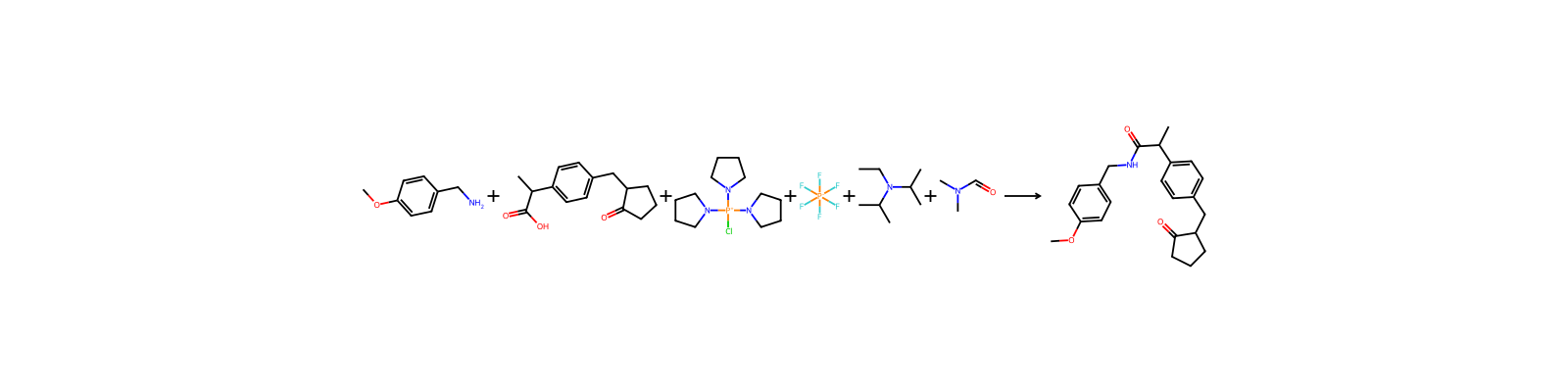
관련 반응
643건




연결된 노트
불러오는 중…