
HRID 1672708반응물로
데이터를 보충하는 중입니다. 잠시 후 페이지를 새로 고치면 최신 내용을 볼 수 있습니다
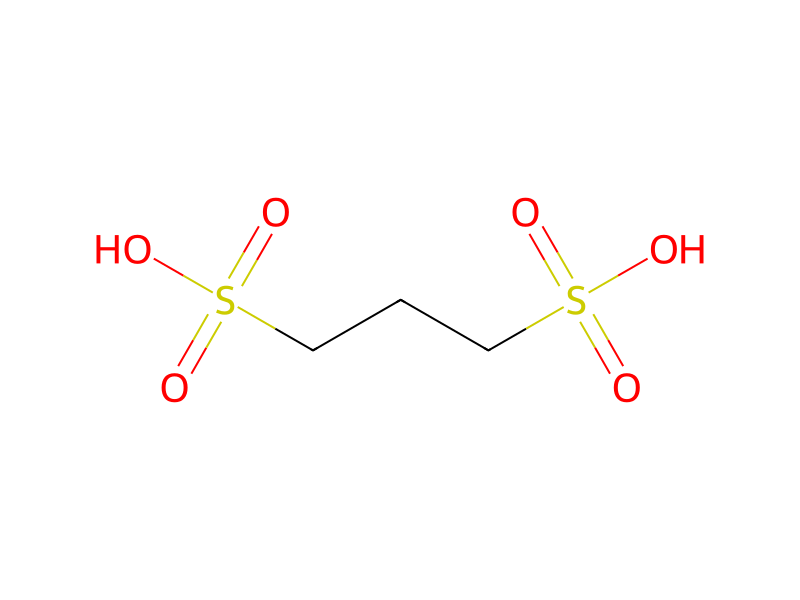
21668-77-9O=S(=O)(O)CCCS(=O)(=O)OMGNVWUDMMXZUDI-UHFFFAOYSA-NEprodisate slows the decline of renal function in AA amyloidosis.
21668-77-9DTXSID4048301CHEMBL2111092안전 정보는 참고용이며, 공급업체의 물질안전보건자료(SDS), 관련 법규 및 전문가 평가를 대체하지 않습니다.
Danger
H302 (88.4%): Harmful if swallowed [Warning Acute toxicity, oral]
P260, P261, P264, P270, P271, P280, P301+P317, P301+P330+P331, P302+P352, P302+P361+P354, P304+P340, P305+P354+P338, P316, P317, P321, P330, P362+P364, P363, P405, and P501 (click each P-code to see the statement)
Aggregated GHS information provided per 43 reports by companies from 3 notifications to the ECHA C&L Inventory. Each notification may be associated with multiple companies.
Decline in renal function associated with Amyloid A (AA) amyloidosis can be slowed by eprodisate (Kiacta), a drug that inhibits the deposit of the complex protein in tissues. AA amyloidosis is a serious, frequently fatal disorder involving deposits of amyloid fibrils in various organs and tissues. It is a complication of many chronic inflammatory disorders, but little is known about its etiology or natural history. Eprodisate delays the progression of AA amyloidosis-associated renal disease.
용도Treatment of secondary (AA) amyloidosis.