

기본 정보
- CAS
127779-20-8- 표준 SMILES
CC(C)(C)NC(=O)[C@@H]1C[C@@H]2CCCC[C@@H]2CN1C[C@@H](O)[C@H](Cc1ccccc1)NC(=O)[C@H](CC(N)=O)NC(=O)c1ccc2ccccc2n1- InChIKey
QWAXKHKRTORLEM-UGJKXSETSA-N- 분자식
- C38H50N6O5
- 평균 분자량
- 670.8 g/mol
- 단동위원소 질량
- 670.3842687
개요
Saquinavir is an aspartic acid derivative obtained by formal condensation of the primary amino group of (2S,3R)-4-[(3S,4aS,8aS)-3-(tert-butylcarbamoyl)octahydroisoquinolin-2(1H)-yl]-3-hydroxy-1-phenylbutan-2-ylamine with the carboxy group of N2(-quinolin-2-ylcarbonyl)-L-asparagine. An inhibitor of HIV-1 protease. It has a role as a HIV protease inhibitor and an antiviral drug. It is a member of quinolines and a L-asparagine derivative.
이름 및 식별자
- 우선 이름
- Saquinavir
- IUPAC
- (2S)-N-[(2S,3R)-4-[(3S,4aS,8aS)-3-(tert-butylcarbamoyl)-3,4,4a,5,6,7,8,8a-octahydro-1H-isoquinolin-2-yl]-3-hydroxy-1-phenylbutan-2-yl]-2-(quinoline-2-carbonylamino)butanediamide
- 영어명
- Saquinavir
- 분자식
- C38H50N6O5
- 분자량
- 670.84
이름 및 동의어
SAQUINAVIR127779-20-8FortovaseSaquinavirumL3JE09KZ2FRo 31-8959/000CHEBI:63621SCH-52852DTXSID6044012Ro-31-8959/000NSC722663Butanediamide, N1-(3-(3-(((1,1-dimethylethyl)amino)carbonyl)octahydro-2(1H)-isoquinolinyl)-2-hydroxy-1-(phenylmethyl)propyl)-2-((2-quinolinylcarbonyl)amino)-, (3S-(2(1R*(R*),2S*),3alpha,4aalpha,8aalpha))-
이름 더 보기
FLUNIXINFLUNIXINE(S)-N1-((2S,3R)-4-((3S,4aS,8aS)-3-(tert-butylcarbamoyl)octahydroisoquinolin-2(1H)-yl)-3-hydroxy-1-phenylbutan-2-yl)-2-(quinoline-2-carboxamido)succinamideSch 52852SAGUINAVIRSaquinavir USP/EP/BPSaquinavir - Bio-X ?SAQUINAVIR(RO 31-8959)
N(1)-{(2S,3R)-4-[(3S,4aS,8aS)-3-(tert-butylcarbamoyl)octahydroisoquinolin-2(1H)-yl]-3-hydroxy-1-phenylbutan-2-yl}-N(2)-(quinolin-2-ylcarbonyl)-L-aspartamideSaquinivirsaquinaviri mesilasN(1)-((2S,3R)-4-((3S,4aS,8aS)-3-(tert-butylcarbamoyl)octahydroisoquinolin-2(1H)-yl)-3-hydroxy-1-phenylbutan-2-yl)-N(2)-(quinolin-2-ylcarbonyl)-L-aspartamideRefChem:57420Monomethanesulfonate, SaquinavirDTXCID4024012J05AE01
데이터베이스 식별자
- CAS
127779-20-8- PubChem CID
- 441243
- DTXSID
DTXSID6044012- ChEMBL
CHEMBL114- ChEBI
CHEBI:63621- UNII
- L3JE09KZ2F
- Nikkaji
- J378.898I
물성
구조 계산 물성
- XLogP
- 4.2
- 극성 표면적
- 167 Ų
- 수소 결합 공여자 수
- 5
- 수소 결합 수용자 수
- 7
- 회전 가능 결합 수
- 13
- 무거운 원자 수
- 49
- 형식 전하
- 0
- 복잡도
- 1,140
실험 및 물리화학적 성질
DrugsPharmaceuticals -> Listed in ZINC15
LogP
log Kow = 2.5 @ 25 °C /Estimated/
3.0
Color/Form
White crystalline solid
Off-white to white very fine powder
Solubility
Insoluble
In water, 0.22 g/100 mL @ 25 °C
Human Drugs
Breast Feeding; Lactation; Milk, Human; Anti-Infective Agents; Anti-HIV Agents; Antiviral Agents; Anti-Retroviral Agents; HIV Protease Inhibitors
FDA approved drugs -> Active ingredient
FDA approved drugs -> Active ingredient
Vapor Pressure2X10-31 mm Hg @ 25 °C /Estimated/
Henry's Law ConstantHenry's Law constant = 9.9X10⁻³⁵ atm-cu m/mol @ 25 °C /Estimated/
Other Experimental PropertiesHydroxyl radical reaction rate constant = 2.1X10⁻¹⁰ cu cm/molec sec @ 25 °C /Estimated/
물리화학적 성질
- 끓는 점
- 1015 · 1015.0±65.0 °C(Predicted)
- 밀도
- 1.211 · 1.211±0.06 g/cm3(Predicted)
- 저장 조건
- -20 °C · Sealed in dry,Store in freezer, under -20°C
- 용해도
- 100 mg/mL · DMSO : 100 mg/mL (149.07 mM; Need ultrasonic)
- 물리적 상태
- 가루
- 산도 계수 (pKa)
- 11.05 · 11.05±0.46(Predicted)
- 색상
- White to off-white
- 수용성
- 35.8 mg/L · 35.8mg/L(25℃)
- BCS Class
- 4 · 4
안전 및 규제
유해성 정보
FDA Requirements
The Approved Drug Products with Therapeutic Equivalence Evaluations List identifies currently marketed prescription drug products, incl saquinavir and saquinavir mesylate, approved on the basis of safety and effectiveness by FDA under sections 505 of the Federal Food, Drug, and Cosmetic Act.
안전 및 보호
Storage Conditions
Commercially available saquinavir liquid-filled capsules should be refrigerated at 28 °C in a tight container. Once dispensed, the liquid-filled capsules should be refrigerated, but may be stored at a temperature lower than 25 °C for up to 3 months. Saquinavir mesylate hard gelatin capsules should be stored at 15-30 °C in a tight container.
Disposal Methods
SRP: The most favorable course of action is to use an alternative chemical product with less inherent propensity for occupational exposure or environmental contamination. Recycle any unused portion of the material for its approved use or return it to the manufacturer or supplier. Ultimate disposal of the chemical must consider: the material's impact on air quality; potential migration in soil or water; effects on animal, aquatic, and plant life; and conformance with environmental and public health regulations.
독성 정보
Interactions
Concurrent use of saquinavir with terfenadine has resulted in an increase in the plasma concentrations of terfenadine; competition for the cytochrome p450 enzyme CYP3A by saquinavir may also inhibit the metabolism of astemizole, cisapride, ergot derivatives, midazolam, or triazolam, due to the potential for serious and/or life-threatening cardiac arrhythmias or prolonged sedation, concurrent use of any of these medications with saquinavir mesylate capsules or saquinavir soft gelatin capsules is not recommended.
Concurrent administration of saquinavir mesylate capsules with these medications /calcium channel blocking agents, clindamycin, dapsone, or quinidine/ which are substrates of the CYP3A4 isoenzyme of the cytochrome p450 enzyme system, may result in elevated plasma concentrations of these medications; patients should be monitored for toxicities associated with these medications.
Ethanol-intake decreases the bioavailability of SQV /saquinavir/ after oral administration alone or with RTV /ritonavir/.
Concurrent administration of rifabutin or rifampin with saquinavir mesylate capsules has resulted in a decrease in the steady-state AUC and peak plasma concentration of saquinavir by approximately 80% and 40%, respectively; carbamazepine, dexamethasone, phenobarbital, phenytoin, or other medications that induce CYP3A4 may also reduce saquinavir plasma concentrations; use of alternative medications should be considered if patients are taking either formulation of saquinavir.
For more Interactions (Complete) data for SAQUINAVIR (17 total), please visit the HSDB record page.
Hepatotoxicity
Some degree of serum aminotransferase elevations occur in a high proportion of patients taking saquinavir containing antiretroviral regimens. Moderate-to severe elevations in serum aminotransferase levels (>5 times the upper limit of normal) are found in 3% to 10% of patients, although rates may be higher in patients with HIV-HCV coinfection. These elevations are usually asymptomatic and self-limited and can resolve even with continuation of the medication.
Human Toxicity Excerpts
/HUMAN EXPOSURE STUDIES/ Limited information is available on the acute toxicity of saquinavir. The acute lethal dose of the drug in humans is not known. In a phase II study, patients receiving a saquinavir dosage of 1.2 g every 4 hours as hard gelatin capsules (7.2 g daily) had no evidence of serious toxicity through the first 25 weeks of therapy. There was no evidence of acute toxicities or sequelae in a patient who ingested a single 8-g dose of saquinavir as hard gelatin capsules; emesis was induced within 2-4 hours of ingestion. One patient who ingested 2.4 g of saquinavir as hard gelatin capsules in conjunction with 600 mg of ritonavir experienced throat pain which lasted 6 hours and then resolved.
/HUMAN EXPOSURE STUDIES/ Substantial increases in serum concentrations of AST (SGOT) or ALT (SGPT) (more than 5 times the upper limit of normal) has occurred in 1.2-5.7% of patients receiving saquinavir liquid-filled capsules in conjunction with other antiretroviral agents. Substantial increases in total serum bilirubin concentrations (more than 2.5 times the upper limit of normal) has occurred in 1.6% of patients receiving saquinavir. Increased serum Gamma-glutamyltransferase (GGT, Gamma-glutamyltranspeptidase, GGTP) concentrations have been reported in 5.7-7.1% of patients receiving saquinavir.
/HUMAN EXPOSURE STUDIES/ Pancreatitis occurred in less than 2% of patients receiving saquinavir alone or in conjunction with other antiretroviral agents; pancreatitis resulting in death has been reported. Pancreatitis resulting in death has been reported in a few patients receiving didanosine, stavudine, and an HIV protease inhibitor (i.e., indinavir, nelfinavir). Pancreatitis also has been reported in patients receiving other HIV protease inhibitors (e.g., lopinavir). In clinical studies evaluating saquinavir in conjunction with other antiretroviral agents, substantial increases in serum amylase concentrations (more than 2 times the upper limit of normal) occurred in up to 1.9% of patients.
/HUMAN EXPOSURE STUDIES/ A severe cutaneous reaction associated with increased liver function test results, substantial increases in liver function test results (more than 10 times the usual normal value) in association with exacerbation of chronic liver disease, isolated increases in transaminase values, jaundice, upper left and right quadrant abdominal pain, ascites, hepatitis, hepatomegaly, or hepatosplenomegaly have occurred rarely in patients receiving saquinavir. Although a causal relationship to saquinavir has not been established, exacerbation of chronic liver dysfunction, including portal hypertension, has occurred in patients with hepatitis B or C, cirrhosis, or other liver abnormalities receiving the drug. Cholelithiasis, hepatitis, hepatomegaly, hepatosplenomegaly, jaundice, and sclerosing cholangitis have occurred in less than 2% of patients receiving saquinavir in clinical studies.
For more Human Toxicity Excerpts (Complete) data for SAQUINAVIR (7 total), please visit the HSDB record page.
Drug Induced Liver Injury
Benchmark Dataset for the Liver Toxicity Knowledge Base (LTKB)
saquinavir
Invirase®
Antivirals
3
less-DILI-concern drugs
Non-Human Toxicity Excerpts
/LABORATORY ANIMALS: Developmental or Reproductive Toxicity/ Reproduction studies in rats or rabbits at saquinavir exposure levels (based on measurements of the area under the plasma concentration-time curve (AUC)) of approximately 50 or 40%, respectively, of those achieved in individuals receiving the recommended dosage of saquinavir liquid-filled capsules have not revealed evidence of embryotoxicity or teratogenicity.
/LABORATORY ANIMALS: Developmental or Reproductive Toxicity/ Reproduction studies in rats using saquinavir from late pregnancy through lactation at exposure levels (based on AUC measurements) approximately 50% of those achieved in individuals receiving the recommended dosage of saquinavir liquid-filled capsules have shown no effect on survival, growth, or development of offspring to weaning.
Antidote and Emergency Treatment
Treatment of overdose: To decrease absorption: Patients may benefit from treatment with activated charcoal. Monitoring: Patient's vital signs should be monitored. Supportive care: Patients in whom intentional overdose is confirmed or suspected should be referred for psychiatric consultation.
Basic treatment: Establish a patent airway. Suction if necessary. Watch for signs of respiratory insufficiency and assist ventilations if needed. Administer oxygen by nonrebreather mask at 10 to 15 L/min. Monitor for pulmonary edema and treat if necessary ... . Monitor for shock and treat if necessary ... . Anticipate seizures and treat if necessary ... . For eye contamination, flush eyes immediately with water. Irrigate each eye continuously with normal saline during transport ... . Do not use emetics. For ingestion, rinse mouth and administer 5 ml/kg up to 200 ml of water for dilution if the patient can swallow, has a strong gag reflex, and does not drool ... . Cover skin burns with dry sterile dressings after decontamination ... . /Poison A and B/
Advanced treatment: Consider orotracheal or nasotracheal intubation for airway control in the patient who is unconscious, has severe pulmonary edema, or is in respiratory arrest. Positive pressure ventilation techniques with a bag valve mask device may be beneficial. Monitor cardiac rhythm and treat arrhythmias as necessary ... . Start an IV with D5W /SRP: "To keep open", minimal flow rate/. Use lactated Ringer's if signs of hypovolemia are present. Watch for signs of fluid overload. Consider drug therapy for pulmonary edema ... . For hypotension with signs of hypovolemia, administer fluid cautiously. Watch for signs of fluid overload ... . Treat seizures with diazepam (Valium) ... . Use proparacaine hydrochloride to assist eye irrigation ... . /Poison A and B/
Maintain an open airway and assist ventilation if needed. Treat coma, seizures, hypotension or anaphylaxis if they occur. replace fluid losses resulting from gastroenteritis with intravenous crystalloids. Maintain steady urine flow with intravenous fluids to alleviate crystalluria and reverse renal dysfunction. Treat lactic acidosis with judicious doses of sodium bicarbonate and by withdrawal of the offending drug. There are no specific antidotes for these agents. Administer activated charcoal.
Effects During Pregnancy and Lactation◉ Summary of Use during Lactation
규제 정보
FDA Requirements
The Approved Drug Products with Therapeutic Equivalence Evaluations List identifies currently marketed prescription drug products, incl saquinavir and saquinavir mesylate, approved on the basis of safety and effectiveness by FDA under sections 505 of the Federal Food, Drug, and Cosmetic Act.
안전 데이터
- 유해 물질 데이터
- 127779-20-8(Hazardous Substances Data)
화학 및 산업
약리 정보
ATC Code
J05AE01
J - Antiinfectives for systemic use
QJ - Antiinfectives for systemic use
Protein BindingSaquinavir is approximately 98% plasma protein-bound independent of serum concentration.
Pharmacodynamics
Saquinavir exerts its antiviral activity by inhibiting an enzyme critical for the HIV-1 viral lifecycle. Like other protease inhibitors, saquinavir has a propensity for participating in drug interactions - use caution when administering saquinavir to patients maintained on other pharmaceutical agents as pharmacodynamic and pharmacokinetic interactions are common. Saquinavir is known to increase the QTc-interval in otherwise healthy individuals, and should therefore be used with caution in patients maintained on other QTc-prolonging medications or for whom prolongation of the QTc-interval may be of particular consequence (e.g. patients with pre-existing heart disease). Careful and regular monitoring of patient bloodwork is recommended, as saquinavir has been associated with the development of metabolic complications (e.g. diabetes mellitus, hyperlipidemia) and worsening of pre-existing liver disease.
Mechanism of Action
The HIV lifecycle is comprised of 3 distinct stages: assembly, involving creation and packaging of essential viral components; budding, wherein the viral particle crosses the host cell plasma membrane and forms a lipid envelope; and maturation, wherein the viral particle alters its structure and becomes infectious. At the center of this lifecycle is the Gag polyprotein which, along with the products of its proteolysis, coordinate these stages and function as the major structural proteins of the virus. The HIV-1 protease enzyme, a dimeric aspartic protease, is the enzyme responsible for cleaving the Gag polyprotein and thus plays a critical role in many aspects of the HIV viral lifecycle. Saquinavir is an inhibitor of the HIV-1 protease enzyme. Its design is based on the "peptidomimetic" principle, wherein the molecule contains a hydroxyethylene scaffold that mimics the normal peptide linkage (cleaved by HIV protease) but which itself cannot be cleaved. By preventing HIV-1 protease activity, and thus the proteolysis of the Gag polyprotein, saquinavir results in the production of immature, non-infectious viral particles.
While the complete mechanisms of antiviral activity of saquinavir have not been fully elucidated, saquinavir apparently inhibits replication of retroviruses, including human immunodeficiency virus type 1 (HIV-1) and type 2 (HIV-2), by interfering with HIV protease. The drug, therefore, exerts a virustatic effect against retroviruses by acting as an HIV protease inhibitor.
Saquinavir is a selective, competitive, reversible inhibitor of HIV protease. HIV protease, an aspartic endopeptidase that functions as a homodimer, plays an essential role in the replication cycle of HIV and the formation of infectious virus. During HIV replication, HIV protease cleaves viral polypeptide products of the gag and gag-pol genes (i.e., p55 and p160) to form structural proteins of the virion core (i.e., p17, p24, p9, and p7) and essential viral enzymes (i.e., reverse transcriptase, integrase, and protease). Because saquinavir is a structural analog of the HIV Phe-Pro protease cleavage site, the drug inhibits the function of the enzyme. By interfering with the formation of these essential proteins and enzymes, saquinavir blocks maturation of the virus and causes the formation of nonfunctional, immature, noninfectious virions. Saquinavir is active in both acutely and chronically infected cells since it targets the HIV replication cycle after translation and before assembly. Thus, the drug is active in chronically infected cells (e.g., monocytes and macrophages) that generally are not affected by nucleoside reverse transcriptase inhibitors (e.g., didanosine, lamivudine, stavudine, zalcitabine, zidovudine). Saquinavir does not affect early stages of the HIV replication cycle; however, the drug interferes with the production of infectious HIV and limits further infectious spread of the virus.
Unlike nucleoside antiretroviral agents, the antiviral activity of saquinavir does not depend on intracellular conversion to an active metabolite. Saquinavir and other HIV protease inhibitors (e.g., amprenavir, indinavir, lopinavir, nelfinavir, ritonavir) act at a different stage of the HIV replication cycle than nucleoside and nonnucleoside reverse transcriptase inhibitors, and results of in vitro studies indicate that the antiretroviral effects of some nucleoside reverse transcriptase inhibitors and HIV protease inhibitors may be additive or synergistic.
Metabolism/Metabolites
Saquinavir is extensively metabolized in the liver following oral administration, and _in vitro_ studies have shown that >90% of its biotransformation is mediated by the CYP3A4 isoenzyme. Saquinavir is rapidly metabolized to a number of inactive mono- and di-hydroxylated compounds.
Results of in vitro studies indicate that saquinavir is rapidly metabolized in the liver to several monohydroxylated and dihydroxylated inactive metabolites. Metabolism of saquinavir is mediated by cytochrome P450; the isoenzyme CYP3A4 is involved in more than 90% of this metabolism. Orally administered saquinavir appears to undergo substantial metabolism on first pass through the liver.
Saquinavir is metabolized primarily by hepatic CYP3A4. The metabolites of saquinavir are not active against HIV-1.
Saquinavir has known human metabolites that include (2S)-N-[(2S,3R)-4-[(3S,4aR,8aS)-3-(tert-butylcarbamoyl)-6-hydroxy-decahydroisoquinolin-2-yl]-3-hydroxy-1-phenylbutan-2-yl]-2-[(quinolin-2-yl)formamido]butanediamide, (2S)-N-[(2S,3R)-4-[(3S,4aS,8aS)-3-(tert-butylcarbamoyl)-7-hydroxy-decahydroisoquinolin-2-yl]-3-hydroxy-1-phenylbutan-2-yl]-2-[(quinolin-2-yl)formamido]butanediamide, and (2S)-N-[(2S,3R)-4-[(3S,4aS,8aS)-3-[(1-hydroxy-2-methylpropan-2-yl)carbamoyl]-decahydroisoquinolin-2-yl]-3-hydroxy-1-phenylbutan-2-yl]-2-[(quinolin-2-yl)formamido]butanediamide.
FDA Pharmacological Classification
L3JE09KZ2F
SAQUINAVIR
Mechanisms of Action [MoA] - HIV Protease Inhibitors
Established Pharmacologic Class [EPC] - Protease Inhibitor
Mechanisms of Action [MoA] - Cytochrome P450 3A Inhibitors
Saquinavir is a Protease Inhibitor. The mechanism of action of saquinavir is as a HIV Protease Inhibitor and Cytochrome P450 3A Inhibitor.
MeSH Pharmacological Classification
Inhibitors of HIV PROTEASE, an enzyme required for production of proteins needed for viral assembly.
Drugs and compounds which inhibit or antagonize the biosynthesis or actions of CYTOCHROME P-450 CYP3A.
Absorption, Distribution and Excretion
The absolute bioavailability of orally administered saquinavir is only ~4%, thought to be a consequence of incomplete absorption and extensive first-pass metabolism. It is co-administered with ritonavir, another protease inhibitor and a potent inhibitor of the enzymes responsible for saquinavir's first-pass metabolism, in order to dramatically boost its serum concentrations and, by extension, its therapeutic efficacy. Following administration of saquinavir 1000mg twice daily with ritonavir 100mg twice daily the AUC24h at steady-state was 39026 ng.h/mL.
The primary means of elimination of saquinavir appears to be extensive hepatic metabolism followed by fecal excretion of both the parent drug and metabolic products. Following the administration of radiolabeled saquinavir (both orally and intravenously), approximately 81-88% of radioactivity is recovered in the feces within 5 days of dosing while only 1-3% is recovered in the urine. Mass balance studies indicate that only 13% of orally-administered plasma radioactivity is attributed to unchanged parent drug, with the remainder comprising metabolic products of saquinavir's hepatic metabolism. In contrast, intravenous administration resulted in approximately 66% of the circulating plasma radioactivity being attributed to unchanged parent drug, suggesting a high degree of first-pass metabolism with oral administration.
The steady-state volume of distribution of saquinavir is approximately 700 L, suggesting extensive distribution into tissues.
The systemic clearance of saquinavir is approximately 1.14 L/h/kg following intravenous administration.
Following administration of saquinavir in a dosage of 1200 mg 3 times daily as liquid-filled capsules, mean steady-state AUC at 3 weeks was 7249 ngh/mL compared with an AUC of 866 ngh/mL reported following administration of saquinavir hard gelatin capsules in a dosage of 600 mg 3 times daily. While the AUC of saquinavir in adults receiving liquid-filled capsules was lower at week 61-69 compared with the AUC at week 3, the AUC at week 61-69 was greater than the AUC at the same time point in HIV-infected adults receiving saquinavir as hard gelatin capsules (600 mg 3 times daily).
The relative oral bioavailability of saquinavir from liquid-filled (soft gelatin) capsules is estimated to average 331% (range: 207-530%) of that achieved with hard gelatin capsules of the drug when single 600-mg doses are administered. This would represent a calculated average oral bioavailability from the liquid-filled capsules of about 13% based on an average absolute bioavailability of 4% from the hard capsules; however, these are calculated estimates and not based on actual determination of absolute oral bioavailability from the liquid-filled capsules.
용도 및 제조
Uses
MEDICATION
Antiviral
Use (kg; approx.) in Germany (2009): >1000
Methods of ManufacturingPreparation: J.A. Martin and S. Redshaw, EP 432695; US 5196438 (1991, 1993 both to Hoffmann-LaRoche)
Formulations/Preparations
Saquinavir: Oral: Capsules, liquid-filled, 200 mg, Fortovase Softgel (with povidone), Roche
Saquinavir Mesylate: Oral: Capsules, 200 mg (of saquinavir), Invirase, Roche
응용 분야
개요Saquinavir mesylate, the first HIV protease inhibitor to reach the market, was launched in the U.S.A.. It is indicated for use in combination with approved nucleoside analogs for the treatment of advanced HIV infection. Saquinavir, a transition state analog of Phe-Pro, is a very potent and competitive inhibitor of HIV-1 and HIV-2 proteases with high specificity. Saquinavir inhibits the last stage in the replication process of HIV and prevents virion maturation in both acute and chronically infected cells. Combination of saquinavir with the nucleoside analogs such as zidovudine (AZT) or/and zalcitabine which inhibit the enzyme reverse transcriptase and target at an earlier stage in the HIV replication process, shows a greater than additive effect in increase in CD4 cell counts and reduction in viral load, with the combination delaying the onset of resistance to either drug alone. Saquinavir is well tolerated alone and in combination with A n .
용도Antiviral (HIV protease inhibitor).
일반 설명Saquinavir (Invirase) is well tolerated following oral administration.Absorption of saquinavir is poor but is increasedwith a fatty meal. The drug does not distribute intothe CSF, and it is approximately 98% bound to plasma proteins.Saquinavir is extensively metabolized by the firstpasseffect. Bioavailability is 4% from a hard capsule and12% to 15% from a soft capsule. Saquinavir lowers p24antigen levels in HIV-infected patients, elevates CD4+counts, and exerts a synergistic antiviral effect when combinedwith RT inhibitors such as AZT and ddC.Although HIV-1 resistance to saquinavir and other HIVPIs occurs in vivo, it is believed to be less stringent andless frequent than resistance to the RT inhibitors.Nevertheless,cross-resistance between different HIV PIsappears to be common and additive,suggesting thatusing combinations of inhibitors from this class would notconstitute rational prescribing. The drug should be used incombination with at least two other antiretroviral drugs tominimize resistance. Dosage forms are Invirase (hard capsule)and Fortovase (soft capsule).
상·하류 제품 정보
상류 원료
공급사100 곳
北京华美互利生物化工010-56205725 · [email protected]
上海阿拉丁生化科技股份有限公司400-6206333 13167063860 · [email protected]
武汉英诺医药科技有限公司+86-027-59232304 15387063101 · [email protected]
成都超九八生物科技有限公司13348960310 13348960310 · [email protected]
艾吉析科技(上海)有限公司17717235263 · [email protected]
上海麦克林生化科技股份有限公司021-50706066 15221275939 · [email protected]
咸宁深蓝生物医药研发有限公司18171815831 · [email protected]
上海毕得医药科技股份有限公司400-1647117 13681763483 · [email protected]
湖北科乐精细化工有限公司027-59101668 19945030958 · [email protected]
浙江珲达生物科技有限公司0571-89903022 18679456698 · [email protected]
LGM Pharma1-(800)-881-8210 · [email protected]
北京索莱宝科技有限公司010-50973130 17801761073 · [email protected]
湖北威德利化学试剂有限公司17771473825 13385289472 · [email protected]
上海波以尔化工有限公司[email protected]
XI'AN TIANGUANGYUAN BIOTECH CO., LTD.—
广东元丰化学试剂有限公司0751-2829979 13318593351 · [email protected]
欧利希(湖北)医药科技有限公司17316404525 17316404525 · [email protected]
InvivoChem中国13549236410 · [email protected]
MedBio脉铂医药021-69568360 18916172912 · [email protected]
銳迪國際科技有限公司18024082417 · [email protected]
学研惠(武汉)科技有限公司15727060112 · [email protected]
上海瀚香生物科技有限公司177-54423994 17754423994 · [email protected]
佛山宝诺生物科技有限公司0757-85921206 18520245316 · [email protected]
湖北成海化工有限公司027-59220433 18327245847 · [email protected]
ChemeGen 中国18818260767 · [email protected]
AdooQ BioScience, LLC+1 (866) 930-6790 · [email protected]
上海遐瑞医药科技有限公司+86 21 61551611
Shanghai Witofly Chemical Co.,Ltd[email protected]
Clearsynth Labs Limited+91-22-26355700 · [email protected]
济南铭雅医药科技有限公司0531-85828981 · [email protected]
上海喀露蓝科技有限公司18149758185 18149758185 · [email protected]
北京奥秘佳得医药科技有限公司+86-13522808617 · [email protected]
天津普西唐生物医药科技有限公司010-60605840 · [email protected]
杭州宇昊化工科技有限公司0571-82693216 · [email protected]
南京百鑫德诺生物科技有限公司025-58849295 · [email protected]
Chongqing jooe co., ltd+86-15223382610 · [email protected]
青岛海智微元生物科技有限公司18317699790 18317699790 · [email protected]
天津阿尔塔科技有限公司022-6537-8550 15522853686 · [email protected]
上海陶术生物科技股份有限公司+1-781-999-5354; +1-00000000000 · [email protected]
上海波以尔化工有限公司021-50182298 021-50180596 · [email protected]
湖北威德利化学科技有限公司027-83989310 18627915365
湖北威德利化学试剂有限公司18327179646 · [email protected]
HANGZHOU LEAP CHEM CO., LTD.+86-571-87711850 +86-15355479329 · [email protected]
西安天广源生物科技有限公司+86-029-86333380 +86-18829239519 · [email protected]
湖北辰心化工有限公司17362916295
武汉多普乐生物医药有限公司+86-02787215551 19945035818 · [email protected]
风咏生物(AbMole)021-10000000 13000000000 · [email protected]
上海珞珐生化科技有限公司021-51111890 15317326293 · [email protected]
BOC Sciences16314854226 · [email protected]
药渡经纬信息科技(北京)有限公司+86-400-851-9921 · [email protected]
추가 설명
정의ChEBI: An aspartic acid derivative obtained by formal condensation of the primary amino group of (2S,3R)-4-[(3S,4aS,8aS)-3-(tert-butylcarbamoyl)octahydroisoquinolin- (1H)-yl]-3-hydroxy-1-phenylbutan-2-ylamine with the carboxy group of N2(-quinolin-2-ylcarbonyl)-L-asparagine. An inhibitor of HIV-1 protease.
관련 반응
7건


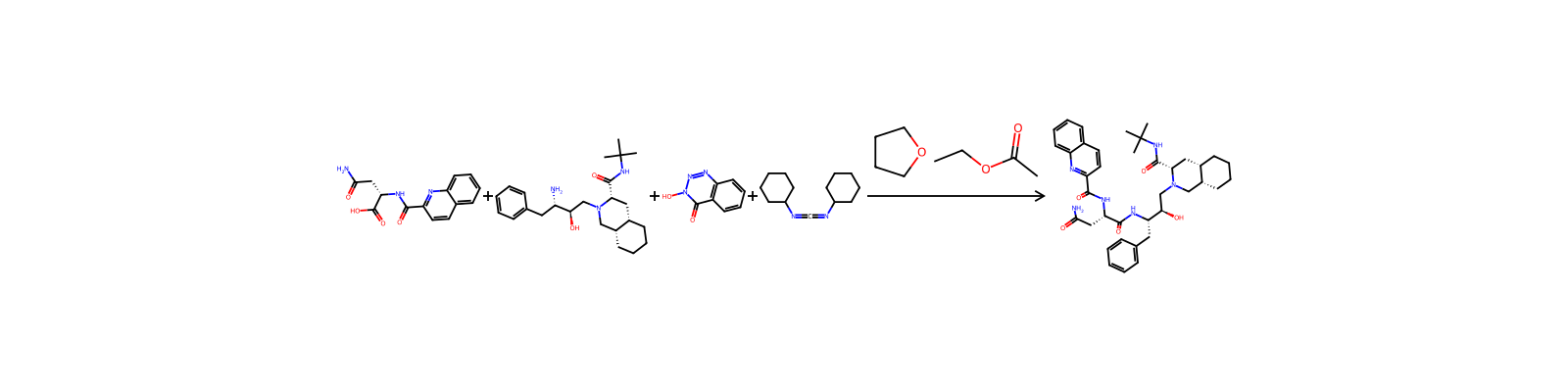
화합물 노트
불러오는 중…