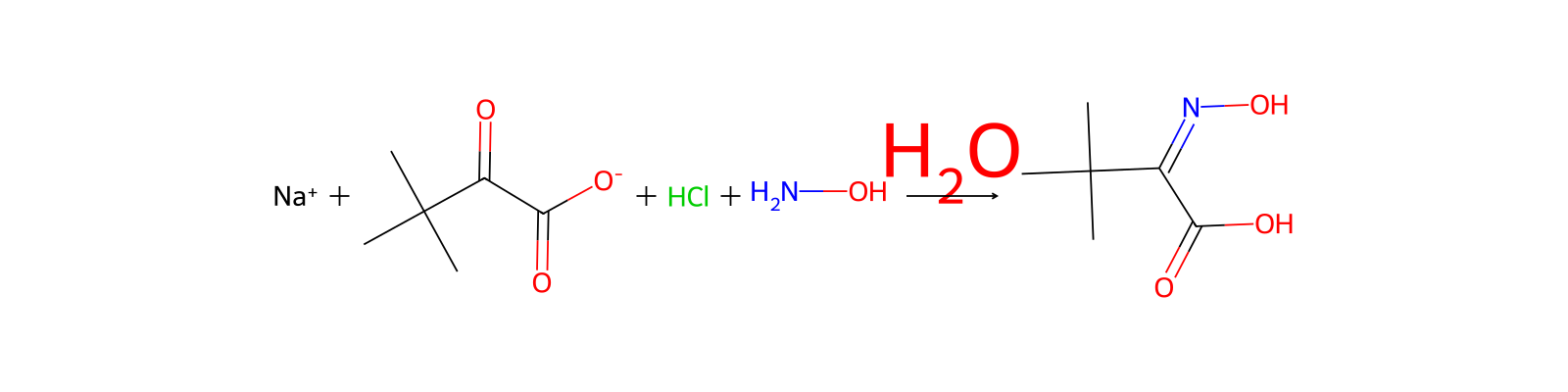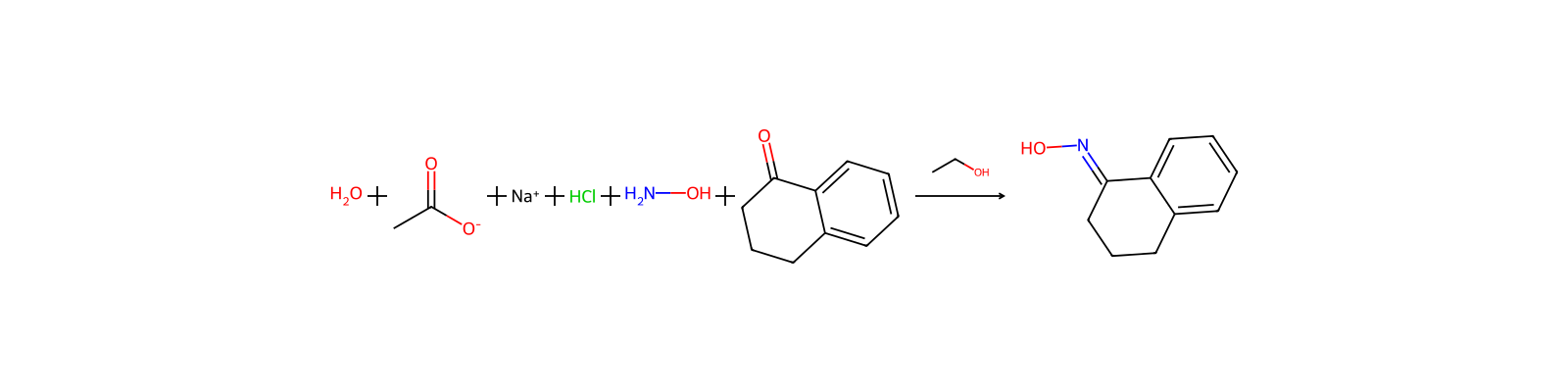
HRID 832반응물로
Hydroxyamine hydrochloride

5470-11-1Cl.NOWTDHULULXKLSOZ-UHFFFAOYSA-NHydroxylamine hydrochloride appears as colorless or off-white crystalline solid. pH (0.1 molar aqueous solution) 3.4. pH (0.2 molar aqueous solution) 3.2. (NTP, 1992)
5470-11-1CHEMBL542448CHEBI:58071.67 at 63 °F (NTP, 1992) - Denser than water; will sink
1.7 g/cm³
1.6717 @25 °C
greater than or equal to 100 mg/mL at 66 °F (NTP, 1992)
Solubility in water, g/100ml at 25 °C: 94 (freely soluble)
304 °F (Decomposes) (NTP, 1992)
304 °F (decomposes)
154 °C
Hydroxylamine hydrochloride appears as colorless or off-white crystalline solid. pH (0.1 molar aqueous solution) 3.4. pH (0.2 molar aqueous solution) 3.2. (NTP, 1992)
Colorless to off-white crystals that are hygroscopic and water soluble; [CAMEO]
COLOURLESS HYGROSCOPIC CRYSTALS.
안전 정보는 참고용이며, 공급업체의 물질안전보건자료(SDS), 관련 법규 및 전문가 평가를 대체하지 않습니다.
Warning
H290: May be corrosive to metals [Warning Corrosive to Metals]
P203, P234, P260, P261, P264, P264+P265, P270, P272, P273, P280, P301+P317, P302+P352, P305+P351+P338, P317, P318, P319, P321, P330, P332+P317, P333+P317, P337+P317, P362+P364, P390, P391, P405, P406, and P501 (click each P-code to see the statement)
Warning
H290 (99.8%): May be corrosive to metals [Warning Corrosive to Metals]
P203, P234, P260, P261, P264, P264+P265, P270, P272, P273, P280, P301+P317, P302+P352, P305+P351+P338, P317, P318, P319, P321, P330, P332+P317, P333+P317, P337+P317, P362+P364, P390, P391, P405, P406, and P501 (click each P-code to see the statement)
Chemical: Hydroxylamine, hydrochloride
REACH registered substance: Hydroxylammonium chloride (EC: 226-798-2)
Hydroxylammonium chloride: Does not have an individual approval but may be used under an appropriate group standard
Flash point data for this chemical are not available; however, it is probably combustible. (NTP, 1992)
Not combustible. Gives off irritating or toxic fumes (or gases) in a fire. Risk of explosion as a result of decomposition when heated.
SYMPTOMS: Symptoms of exposure to this chemical include eye, skin and mucous membrane irritation; burning sensation, coughing, wheezing, laryngitis, shortness of breath, headache, nausea, vomiting and methemoglobinemia. Inhalation may be fatal as a result of spasm, inflammation and edema of the larynx and bronchi; chemical pneumonitis and pulmonary edema.
Hydroxylamine is used in organic synthesis; in photographic developers; in the production of rubber, plastics, and steel; and in the separation of uranium and plutonium; [Ullmann]
Steel Producing [Category: Industry]
용도이 제품은 항암제 (hydroxyurea), sulfamethylamine (sulfamide) 및 살충제 (methomyl)의 합성 원료뿐만 아니라 유기 합성에서 옥심의 제조에 사용되는 환원제 및 이미징 제로 주로 사용됩니다. 그것은 전기 분석에서 depolarization 에이전트 및 합성 고무 산업에서 비 착색 단기 정지 에이전트로 사용됩니다. 제약 업계는 nenomine의 중간체로 사용됩니다. 합성 염료는 indirubin 중간체의 제조에 사용됩니다. 그리스 산업은 지방산과 비누의 산화 방지제로 사용됩니다. 분석 화학은 포름 알데히드, 푸르 푸랄, 녹나무 및 포도당의 분석에 사용됩니다. 전기 화학 분석에서의 탈분극. 또한 철과 강철의 마그네슘 측정, 설 폰산과 지방산의 미량 분석, 알데히드와 케톤의 측정 및 탈 극성 화제로 사용됩니다. 또한, 컬러 필름 현상 등에도 사용됩니다.
개요Hydroxylamine hydrochloride is a reducing agent that is routinely used for the deacetylation of SATA to form free sulfhydryls (Figure 1), for cleavage of protein cross‐linkers that contain carbonyl groups (i.e. EGS) and for mutagenesis of plasmid DNA.Hydroxylamine converts aldehydes and ketones (carbonyls) to their oxime derivative in weak bases, therefore cross‐linkers and other compounds with carbonyl groups are cleavable with Hydroxylamine hydrochloride.SATA and SATP are modification reagents that add a sulfhydryl group to primary amines on biomolecules. The initial modification results in the addition of an acetyl‐protected sulfur enabling storage of the biomolecule. To generate a free sulfhydryl the biomolecule is treated with hydroxylamine to remove the protecting acetyl group (see figure).EGS and sulfo‐EGS are homobifunctional, succinimidyl ester, amine reactive crosslinkers that are resistant to cleavage by denaturants used in SDS‐PAGE conditions, but may be cleaved with hydroxylamine.
용도Hydroxylamine hydrochloride is a monomoamine oxidase inhibitor. It is used to prepare oximes and hydroxmic acids in organic synthesis. It acts as a copolymerization inhibitor. It can be used to remove bromine and polybromide from a solution during extraction of lignin from lignocellulosic biomass. It is key starting material for the preparation of pharmaceuticals and agrochemicals. It plays a vital role in rubber and plastic industries as an antioxidant, a vulcanization accelerator and a radical scavenger. It is also used as a color stabilizer and emulsion additive in color films.
Hydroxylamine Hydrochloride(NH2OH.HCl) is an inorganic compound that is the hydrochloric acid salt of hydroxylamine. It is highly hygroscopic and decomposes when exposed to dampness above 151℃. This compound is primarily used as a reducing agent and imaging agent and is instrumental in the preparation of oximes in organic synthesis. It can convert aldehydes and ketones to oximes and acid chlorides to hydroxamic acids. However, This product is highly toxic and irritating to the skin.
A powerful reducing agent and a strong irritant of the skin and eyes; Can cause methemoglobinemia; Inhalation of high concentrations can induce toxic pneumonitis; [CAMEO] Negligible evaporation at room temperature; Harmful if dispersed particles are inhaled; A skin sensitizer; [ICSC] Causes skin burns; [MSDSonline] See Hydroxylamine.
Fires involving this material can be controlled using a dry chemical, carbon dioxide or Halon extinguisher. (NTP, 1992)
In case of fire in the surroundings, use appropriate extinguishing media.
Fresh air, rest. Refer for medical attention.
Remove contaminated clothes. Rinse skin with plenty of water or shower. Refer for medical attention .
First rinse with plenty of water for several minutes (remove contact lenses if easily possible), then refer for medical attention.
Rinse mouth. Give a slurry of activated charcoal in water to drink. Refer for medical attention .
EYES: First check the victim for contact lenses and remove if present. Flush victim's eyes with water or normal saline solution for 20 to 30 minutes while simultaneously calling a hospital or poison control center. Do not put any ointments, oils, or medication in the victim's eyes without specific instructions from a physician. IMMEDIATELY transport the victim after flushing eyes to a hospital even if no symptoms (such as redness or irritation) develop.
SMALL SPILLS AND LEAKAGE: If you spill this chemical, you should dampen the solid spill material with water, then transfer the dampened material to a suitable container. Use absorbent paper dampened with water to pick up any remaining material. Seal your contaminated clothing and the absorbent paper in a vapor-tight plastic bag for eventual disposal. Wash all contaminated surfaces with a soap and water solution. Do not reenter the contaminated area until the Safety Officer (or other responsible person) has verified that the area has been properly cleaned.
Personal protection: particulate filter respirator adapted to the airborne concentration of the substance. Do NOT let this chemical enter the environment. Sweep spilled substance into covered non-metallic containers. If appropriate, moisten first to prevent dusting. Carefully collect remainder. Then store and dispose of according to local regulations.
Blue lips, fingernails and skin. Headache. Dizziness. Nausea. Confusion. Convulsions. Unconsciousness.
MAY BE ABSORBED! Redness. Pain. Further see Inhalation.
Redness. Pain.
See Inhalation.
일반 설명Hydroxylamine hydrochloride appears as colorless or off-white crystalline solid. pH (0.1 molar aqueous solution) 3.4. pH (0.2 molar aqueous solution) 3.2. (NTP, 1992)
Hydroxylamine hydrochloride is prepared by electrolytic reduction of ammonium chloride. Or by the action of nitromethane with hydrochloric acid and water to obtain hydroxylamine hydrochloride.
정의ChEBI: Hydroxylamine hydrochloride is an organic molecular entity. It is a colorless inorganic compound (HONH2) used in organic synthesis and as a reducing agent, due to its ability to donate nitric oxide.