
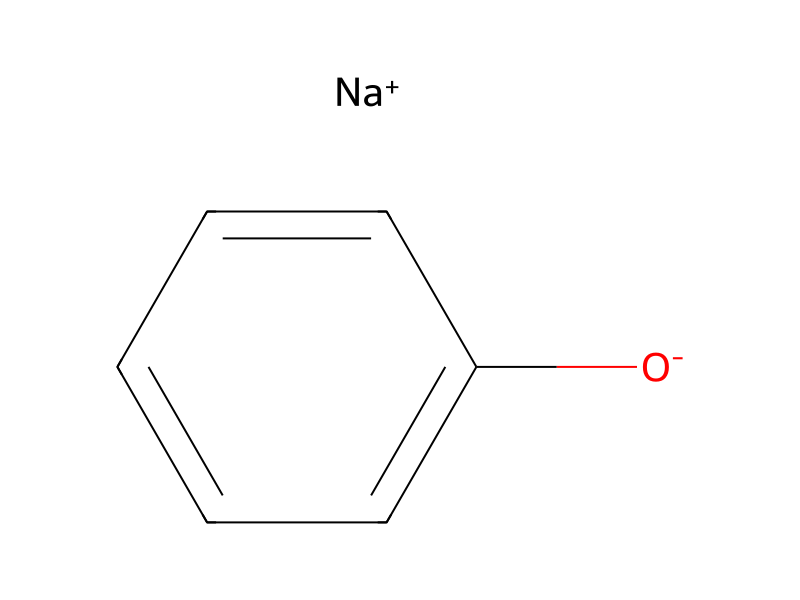
기본 정보
- 표준 SMILES
[Na+].[O-]c1ccccc1- InChIKey
NESLWCLHZZISNB-UHFFFAOYSA-M- 분자식
- C6H5NaO
- 평균 분자량
- 116.09 g/mol
- 단동위원소 질량
- 116.02380906
이름 및 식별자
- 우선 이름
- Phenolate Sodium
- IUPAC
- sodium phenoxide
이름 및 동의어
SODIUM PHENOLATEPhenolate sodiumSodium phenateSodium carbolatePhenol sodium saltPhenol sodiumPhenol, sodium salt (solid)DTXSID40270724NC0T56V35DTXCID607072CHEBI:52476RefChem:861470
이름 더 보기
205-347-3sodium;phenoxidePhenolate sodium [USAN]naophC6H5NaOsodium benzenolatePhenol, sodium salt (1:1)MFCD00013134
데이터베이스 식별자
- CAS
139-02-6- PubChem CID
- 4445035
- DTXSID
DTXSID4027072- ChEMBL
CHEMBL2107497- ChEBI
CHEBI:52476- UNII
- 4NC0T56V35
- Nikkaji
- J5.639A
물성
구조 계산 물성
- 극성 표면적
- 23.1 Ų
- 수소 결합 공여자 수
- 0
- 수소 결합 수용자 수
- 1
- 회전 가능 결합 수
- 0
- 무거운 원자 수
- 8
- 형식 전하
- 0
- 복잡도
- 50
실험 및 물리화학적 성질
pHAqueous solution is caustic
Color/Form
White, deliquescent crystals
Hygroscopic crystals
Solubility
Very soluble in water
Soluble in alcohol
Soluble in acetone
CorrosivityThe material and solutions are corrosive to metals.
Decomposition
When heated to decomposition it emits toxic fumes of /sodium oxide/.
Decomposes in acid
Decomposed by carbon dioxide in the air
Melting Point384 °C
Vapor Pressure0.00000003 [mmHg]
Physical DescriptionColorless solid; [Merck Index] White deliquescent solid; [Hawley] White to reddish deliquescent solid; [HSDB] Powder; [MSDSonline]
Other Experimental Properties
Deliquescent
Decomposed by carbon dioxide in air
안전 및 규제
유해성 정보
Fire PotentialNot flammable or combustible
Hazards Summary
A strong skin and tissue irritant; [Hawley] Causes spastic paralysis and seizures in subcutaneous lethal-dose testing of mice; [RTECS] Forms corrosive solution in air--highly irritating to skin and eyes; [CAMEO] Toxic by ingestion; >4.8 grams is lethal dose; [HSDB] A corrosive substance that can cause injury to the skin, eyes, and respiratory tract; Inhalation may cause chemical pneumonitis; Effects in high-dose animal studies include convulsions and spastic paralysis; [MSDSonline] See Phenol.
Special Reports
NIOSH; Criteria Document: Phenol p.65 (1976) DHEW Pub NIOSH 76-196
USEPA; Ambient Water Quality Criteria Doc: Phenol p.C-16-19 (1980) EPA 440/5-80-066
Atmospheric Standards
This action promulgates standards of performance for equipment leaks of Volatile Organic Compounds (VOC) in the Synthetic Organic Chemical Manufacturing Industry (SOCMI). The intended effect of these standards is to require all newly constructed, modified, and reconstructed SOCMI process units to use the best demonstrated system of continuous emission reduction for equipment leaks of VOC, considering costs, non air quality health and environmental impact and energy requirements. Sodium phenate is produced, as an intermediate or a final product, by process units covered under this subpart.
DOT Emergency Guidelines
/GUIDE 154: SUBSTANCES - TOXIC AND/OR CORROSIVE (NON-COMBUSTIBLE)/ Health: TOXIC; inhalation, ingestion, or skin contact with material may cause severe injury or death. Contact with molten substance may cause severe burns to skin and eyes. Avoid any skin contact. Effects of contact or inhalation may be delayed. Fire may produce irritating, corrosive and/or toxic gases. Runoff from fire control or dilution water may be corrosive and/or toxic and cause pollution. /Phenolates, liquid; Phenolates, solid/
/GUIDE 154: SUBSTANCES - TOXIC AND/OR CORROSIVE (NON-COMBUSTIBLE)/ Fire or Explosion: Non-combustible, substance itself does not burn but may decompose upon heating to produce corrosive and/or toxic fumes. Some are oxidizers and may ignite combustibles (wood, paper, oil, clothing, etc.). Contact with metals may evolve flammable hydrogen gas. Containers may explode when heated. /Phenolates, liquid; Phenolates, solid/
/GUIDE 154: SUBSTANCES - TOXIC AND/OR CORROSIVE (NON-COMBUSTIBLE)/ Public Safety: CALL Emergency Response Telephone Number ... As an immediate precautionary measure, isolate spill or leak area in all directions for at least 50 meters (150 feet) for liquids and at least 25 meters (75 feet) for solids. Keep unauthorized personnel away. Stay upwind. Keep out of low areas. Ventilate enclosed areas. /Phenolates, liquid; Phenolates, solid/
/GUIDE 154: SUBSTANCES - TOXIC AND/OR CORROSIVE (NON-COMBUSTIBLE)/ Protective Clothing: Wear positive pressure self-contained breathing apparatus (SCBA). Wear chemical protective clothing that is specifically recommended by the manufacturer. It may provide little or no thermal protection. Structural firefighters' protective clothing provides limited protection in fire situations ONLY; it is not effective in spill situations where direct contact with the substance is possible. /Phenolates, liquid; Phenolates, solid/
For more DOT Emergency Guidelines (Complete) data for SODIUM PHENOLATE (8 total), please visit the HSDB record page.
Skin, Eye, and Respiratory IrritationsStrong irritant to skin and tissue.
안전 및 보호
Fire Fighting Procedures
Use water spray, alcohol-resistant foam, dry chemical or carbon dioxide.
Wear self contained breathing apparatus for fire fighting if necessary.
Storage ConditionsKeep container tightly closed in a dry and well-ventilated place.
Cleanup Methods
Use personal protective equipment. Avoid dust formation. Avoid breathing vapors, mist or gas. Ensure adequate ventilation. Evacuate personnel to safe areas. Avoid breathing dust. Do not let product enter drains. Pick up and arrange disposal without creating dust. Sweep up and shovel. Keep in suitable, closed containers for disposal.
Disposal Methods
SRP: The most favorable course of action is to use an alternative chemical product with less inherent propensity for occupational harm/injury/toxicity or environmental contamination. Recycle any unused portion of the material for its approved use or return it to the manufacturer or supplier. Ultimate disposal of the chemical must consider: the material's impact on air quality; potential migration in soil or water; effects on animal and plant life; and conformance with environmental and public health regulations.
A good candidate for rotary kiln incineration at a temperature range of 820 to 1,600 °C and residence times of seconds for liquids and gases, and hours for solids. A good candidate for fluidized bed incineration at a temperature range of 450 to 980 °C and residence times of seconds for liquids and gases, and longer for solids. /Phenol/
Preventive Measures
Avoid formation of dust and aerosols. Provide appropriate exhaust ventilation at places where dust is formed.
Handle with gloves. Gloves must be inspected prior to use. Use proper glove removal technique (without touching glove's outer surface) to avoid skin contact with this product. Dispose of contaminated gloves after use in accordance with applicable laws and good laboratory practices. Wash and dry hands.
Face shield and safety glasses Use equipment for eye protection tested and approved under appropriate government standards such as NIOSH (US) or EN 166(EU).
Complete suit protecting against chemicals, The type of protective equipment must be selected according to the concentration and amount of the dangerous substance at the specific workplace.
Personal Protective Equipment (PPE)
Where risk assessment shows air-purifying respirators are appropriate use a full-face particle respirator type N100 (US) or type P3 (EN 143) respirator cartridges as a backup to engineering controls. If the respirator is the sole means of protection, use a full-face supplied air respirator. Use respirators and components tested and approved under appropriate government standards such as NIOSH (US) or CEN (EU).
독성 정보
Adverse Effects
Neurotoxin - Other CNS neurotoxin;Occupational hepatotoxin - Secondary hepatotoxins: the potential for toxic effect in the occupational setting is based on cases of poisoning by human ingestion or animal experimentation.;Nephrotoxin - The chemical is potentially toxic to the kidneys in the occupational setting.;Methemoglobinemia - The presence of increased methemoglobin in the blood; the compound is classified as secondary toxic effect;Dermatotoxin - Skin burns.;Toxic Pneumonitis - Inflammation of the lungs induced by inhalation of metal fumes or toxic gases and vapors.
Ecotoxicity Excerpts/AQUATIC SPECIES/ Phenol is very toxic to fish and has a nearly unique quality of tainting the taste of fish if present in marine environments at 0.1-1.0 ppm. /Phenol/
Medical Surveillance
... There is some suggestive evidence that a biologic monitoring method may be useful for detecting an excessive internal dose on an individual ... and/or on a group basis /for phenol/. Tentative max value in urine <20 mg/g creatinine, permissible value 300 mg/g creatinine. /From table/
Physical examinations of exposed personnel annually, including studies of liver and kidney function. /Protect/ those individuals with diseases of central nervous system, liver, kidney, and lung. /Phenol/
Human Toxicity Excerpts
/SIGNS AND SYMPTOMS/ Burning pain in mouth and throat. White necrotic lesions in mouth, esophagus and stomach. Abdominal pain, vomiting ... and bloody diarrhea. Pallor, sweating, weakness, headache, dizziness, tinnitus. Shock: Weak irregular pulse, hypotension, shallow respirations, cyanosis, pallor, and a profound fall in body temperature. Possibly fleeting excitement and confusion, followed by unconsciousness ... Stentorous breathing, mucous rales, rhonchi, frothing at nose and mouth and other signs of pulmonary edema are sometimes seen. Characteristic odor of phenol on the breath. Scanty, dark-colored ... urine ... moderately severe renal insufficiency may appear.Methemoglobinemia, Heinz body hemolytic anemia and hyperbilirubinemia have been reported ... Death from respiratory, circulatory or cardiac failure. If spilled on skin, pain is followed promptly by numbness. The skin becomes blanched, and a dry opaque eschar forms over the burn. When the eschar sloughs off, a brown stain remains. /Phenol/
/SIGNS AND SYMPTOMS/ Oral ingestion can result in mucocutaneous and gastrointestinal corrosion. Both oral ingestion and extensive application to the skin can cause systemic toxicity manifested by transient CNS stimulation followed by CNS and cardiovascular depression; death may result. /Phenol/
/SIGNS AND SYMPTOMS/ 14 mg/kg resulted in gastrointestinal effects, and ingestion of 140 mg/kg caused death.
/SIGNS AND SYMPTOMS/ Severe & fatal phenol poisonings have occurred after such superficial exposure as to suggest hypersensitivity or idiosyncrasy. /Phenol/
For more Human Toxicity Excerpts (Complete) data for SODIUM PHENOLATE (9 total), please visit the HSDB record page.
Non-Human Toxicity Excerpts
/LABORATORY ANIMALS: Acute Exposure/ Sodium phenolate (3, 12.5, 25, or 50% solutions, 50 mL) applied to the skin of chickens destroyed surface lice, mites, & bugs within 24 hr. The 3 highest concentrations produced temporary hyperemia, hematologic shifts, & behavior changes in chickens, rabbits, & mice. Repeated (4-8 times) topical application produced prolonged (2-3 days) exfoliative dermatitis & hyperemia in rabbits.
/LABORATORY ANIMALS: Acute Exposure/ Crystalline or concentrated aqueous phenol on rabbit eyes causes almost instantaneous white opacification of corneal epithelium. Hr after application cornea is anesthetized, surface ulcerated & stroma opaque. In 5 weeks there is entropion, scarring of conjunctiva & opacity of cornea. /Phenol/
/LABORATORY ANIMALS: Acute Exposure/ Glaucoma has been induced experimentally in rabbits by injecting 5% phenol in almond oil subconjunctivally in all four quadrants. /Phenol/
/LABORATORY ANIMALS: Developmental or Reproductive Toxicity/ /Investigators/ injected rats /with phenol/ ip on days 8-10 or 11-15 /of gestation/ with up to 200 mg/kg. No adverse fetal effects were observed. /Phenol/
For more Non-Human Toxicity Excerpts (Complete) data for SODIUM PHENOLATE (8 total), please visit the HSDB record page.
Populations at Special RiskThose affected with hepatic or kidney diseases should not be exposed to phenol for any length of time, because even intermittent exposure to vapors ... may become dangerous, particularly when ... handled at elevated temp. /Phenol/
Probable Routes of Human Exposure
According to the 2006 TSCA Inventory Update Reporting data, the number of persons reasonably likely to be exposed in the industrial manufacturing, processing, and use of sodium phenolate is 100 to 999; the data may be greatly underestimated(1).
NIOSH (NOES Survey 1981-1983) has statistically estimated that 7152 workers (1339 of these were female) were potentially exposed to sodium phenolate in the USA(1). Occupational exposure to sodium phenolate may occur through dermal contact with this compound at workplaces where sodium phenolate is produced or used. Use of sodium phenolate as an antimicrobial preservative in cosmetics(2) and in antiseptics(3) indicate that the general population may be exposed to sodium phenolate via dermal contact with this compound in consumer products containing sodium phenolate(SRC).
Antidote and Emergency Treatment
Immediate first aid: Ensure that adequate decontamination has been carried out. If patient is not breathing, start artificial respiration, preferably with a demand-valve resuscitator, bag-valve-mask device, or pocket mask, as trained. Perform CPR as necessary. Immediately flush contaminated eyes with gently flowing water. Do not induce vomiting. If vomiting occurs, lean patient forward or place on left side (head-down position, if possible) to maintain an open airway and prevent aspiration. Keep patient quiet and maintain normal body temperature. Obtain medical attention. /Phenols and related compounds/
Basic treatment: Establish a patent airway (oropharyngeal or nasopharyngeal airway, if needed). Suction if necessary. Watch for signs of respiratory insufficiency and assist ventilations if necessary. Administer oxygen by nonrebreather mask at 10 to 15 L/min. Monitor for pulmonary edema and treat if necessary ... . Monitor for shock and treat if necessary ... . Anticipate seizures and treat if necessary ... . For eye contamination, flush eyes immediately with water. Irrigate each eye continuously with 0.9% saline (NS) during transport ... . Administer activated charcoal ... . Do not use emetics. Cover skin burns with dry, sterile dressings after decontamination ... . Maintain body temperature. /Phenols and related compounds/
Advanced treatment: Consider orotracheal or nasotracheal intubation for airway control in the patient who is unconscious, has severe pulmonary edema, or is in severe respiratory distress. Positive pressure ventilation techniques with a bag valve mask device may be beneficial. Consider drug therapy for pulmonary edema ... . Monitor cardiac rhythm and treat arrhythmias if necessary ... . Start IV administration of D5W /SRP: "To keep open", minimal flow rate/. Use 0.9% saline (NS) or lactated Ringer's (LR) if signs of hypovolemia are present. For hypotension with signs of hypovolemia, administer fluid cautiously. Consider vasopressors if patient is hypotensive with a normal fluid volume. Watch for signs of fluid overload ... . Administer 1% solution methylene blue if patient is symptomatic with severe hypoxia, cyanosis, and cardiac compromise not responding to oxygen. ... Treat seizures with diazepam or lorazepam. ... Use proparacaine hydrochloride to assist eye irrigation ... . /Phenols and related compounds/
Human Toxicity Values... ingestion of 140 mg/kg caused death.
규제 정보
Atmospheric Standards
This action promulgates standards of performance for equipment leaks of Volatile Organic Compounds (VOC) in the Synthetic Organic Chemical Manufacturing Industry (SOCMI). The intended effect of these standards is to require all newly constructed, modified, and reconstructed SOCMI process units to use the best demonstrated system of continuous emission reduction for equipment leaks of VOC, considering costs, non air quality health and environmental impact and energy requirements. Sodium phenate is produced, as an intermediate or a final product, by process units covered under this subpart.
화학 및 산업
약리 정보
Metabolism/Metabolites
A portion of absorbed drug is oxidized to hydroquinone and pyrocatechol. Phenol/
Phenols are subjected to oxidative metabolism leading to ortho- and para-hydroxylated products. These metabolites are then transformed into equimolar amounts of two conjugates, sulfates and glucuronides. /Phenols/
Metabolism in rabbits given a lethal dose of phenol (0.5 g/kg) resulted in: 47% oxidation to carbon dioxide and water plus traces of 1,4-dihydroxybenzene and ortho-dihydroxybenzene, 3% excreted in urine, 50% remaining in the carcass. Amounts were exhaled in air and excreted in the feces. Metabolism in rabbits given a sublethal dose of phenol (0.3 g/kg) resulted in: 23% oxidation to carbon dioxide and water plus traces of 1,4-dihydroxybenzene and ortho-dihydroxybenzene, 72% excreted in the urine, 4% remaining in the carcass, 1% excreted in the feces, and trace amounts exhaled in air. Urinary route resulted in either excretion as free phenol or as conjugate. Conjugation with sulfuric acid, glucuronic acid or other acids. /From table, Phenol/
In man, 90% of oral dose of phenol was excreted in 24 hr, mainly as phenylsulfate (77% of 24 hr excretion) & phenylglucuronide (16%), with very small amt of quinol sulfate & glucuronide. These metabolites were also excreted by rat, mouse, jerbon, gerbil, hamster, lemming & guinea pig. /Phenol/
MeSH Pharmacological Classification
Substances used on humans and other animals that destroy harmful microorganisms or inhibit their activity. They are distinguished from DISINFECTANTS, which are used on inanimate objects.
Substances used on inanimate objects that destroy harmful microorganisms or inhibit their activity. Disinfectants are classed as complete, destroying SPORES as well as vegetative forms of microorganisms, or incomplete, destroying only vegetative forms of the organisms. They are distinguished from ANTISEPTICS, which are local anti-infective agents used on humans and other animals. (From Hawley's Condensed Chemical Dictionary, 11th ed)
Chemical agents injected into blood vessels and lymphatic sinuses to shrink or cause localized THROMBOSIS; FIBROSIS, and obliteration of the vessels. This treatment is applied in a number of conditions such as VARICOSE VEINS; HEMORRHOIDS; GASTRIC VARICES; ESOPHAGEAL VARICES; PEPTIC ULCER HEMORRHAGE.
Absorption, Distribution and Excretion
Phenol is absorbed by all routes of administration and can reach circulation even when applied to intact skin. /Phenol/
Renal excretion is principal route of elimination. In man 90% of non-toxic oral dose (0.01 mg/kg) of (14)C-labeled phenol was excreted in 24 hr, principally as sulfate (77% of the excreted label) and as glucuronide (16%), with small amounts of sulfate and glucuronide conjugates of ... hydroquinone. With larger doses, free (unmetabolized) phenol can presumably be found in urine. /Phenol/
/From/ intermittent indust exposure (5-10 min/hr) ... /to/ avg phenol concentration ... /of 48 ppm/ urine sulfate ratios were 79.4 & 86.7%. /Phenol/
After absorption into body ... traces of "free" phenol are eliminated with feces and expired air. /Phenol/
For more Absorption, Distribution and Excretion (Complete) data for SODIUM PHENOLATE (6 total), please visit the HSDB record page.
용도 및 제조
Uses
Used to make antiseptics and salicylic acid; Used therapeutically as local disinfectant, in sclerosing solutions, as a sympatholytic, and in solution as veterinary disinfectant and topical pesticide; [HSDB]
Using Disinfectants or Biocides [Category: Clean];Farming (Pesticides) [Category: Industry]
Antiseptic, salicylic acid, organic syntheses
Antimicobial preservative useful in cosmetics
As an extraction intermediate in the recovery of tar acids and phenols from tar distillate oils. For extraction, the oils are mixed with an excess of 10% aqueous caustic soda which forms a crude sodium phenolate-sodium cresylate solution that is separated for additional processing and purification. The purified sodium solution is then decomposed in process called springing with a resulting yield of crude tar acids.
As a general disinfectant, either in solution or mixed with slacked lime, ect, for toilets, stables, cesspools, floors, drains, etc; for the manufacture of colorless or light colored artificial resins, many medical and industrial compounds and dyes; as a reagent in chemical analysis. Pharmaceutical aid (preservative)
U.S. Production
Phenol, sodium salt is listed as a High Production Volume (HPV) chemical (65FR81686). Chemicals listed as HPV were produced in or imported into the U.S. in >1 million pounds in 1990 and/or 1994. The HPV list is based on the 1990 Inventory Update Rule. (IUR) (40 CFR part 710 subpart B; 51FR21438).
Production volumes for non-confidential chemicals reported under the Inventory Update Rule.[Table#5464]
Production volume for non-confidential chemicals reported under the 2006 Inventory Update Rule. Chemical: Phenol, sodium salt. Aggregated National Production Volume: 1 to < 10 million pounds.
Non-confidential 2012 Chemical Data Reporting (CDR) information on the production and use of chemicals manufactured or imported into the United States. Chemical: Phenol, sodium salt. National Production Volume: Withheld.
Methods of Manufacturing
... From phenol and sodium hydroxide in dilute methanol.
Phenol is dissolved in caustic soda solution, concentrated and crystallized.
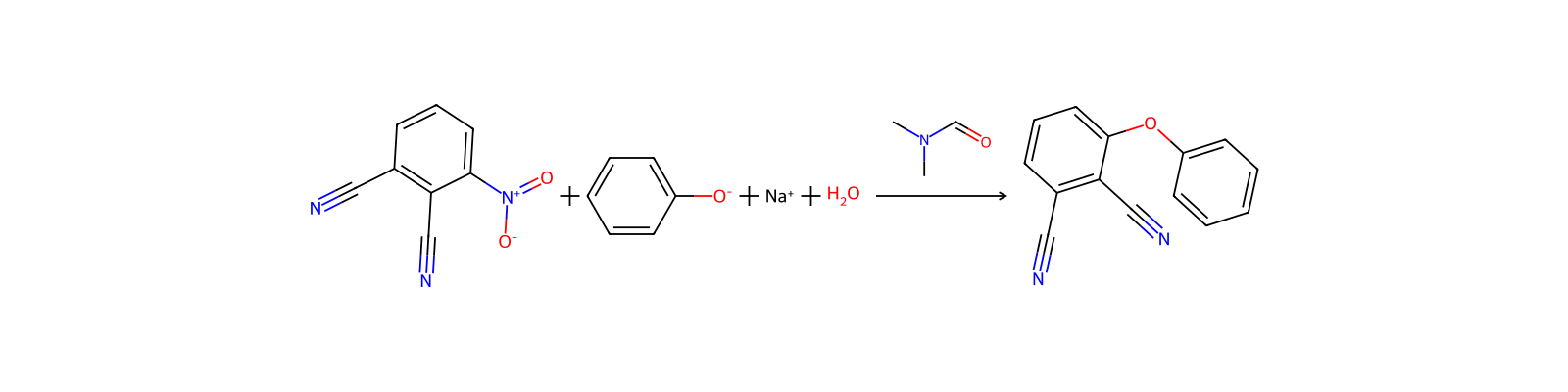
관련 반응
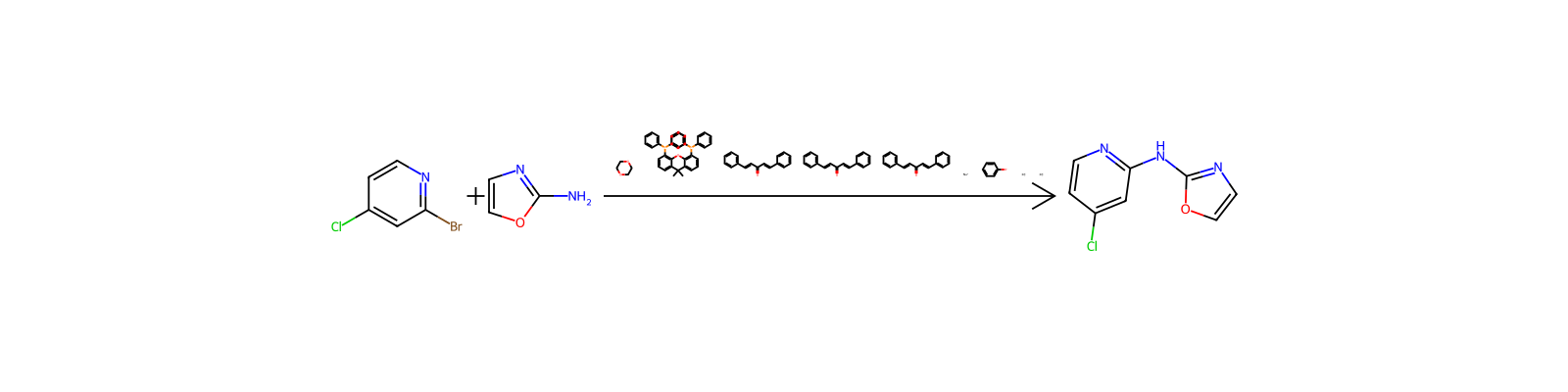
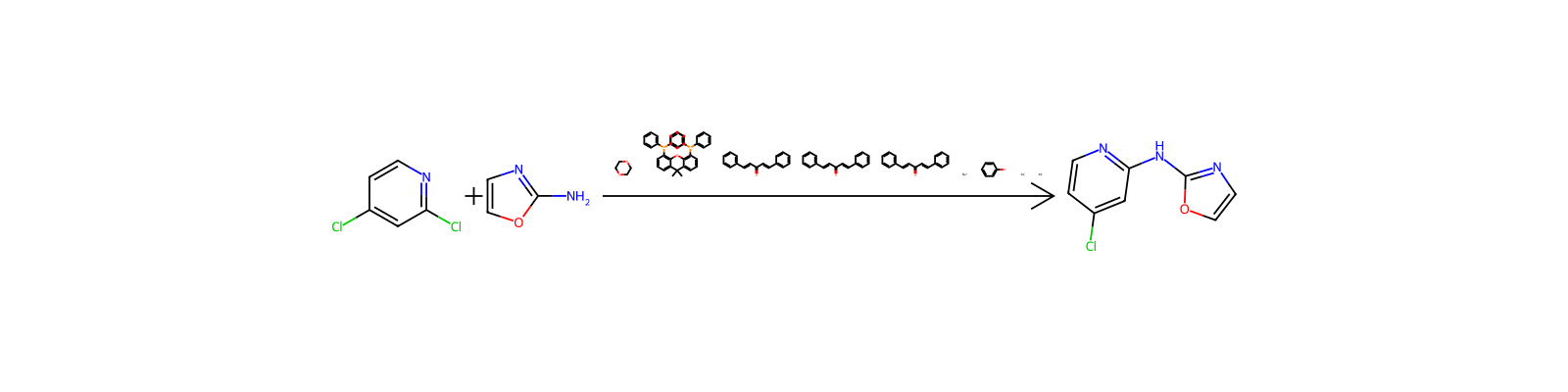
240건


연결된 노트
불러오는 중…