

기본 정보
- 표준 SMILES
CCCCCCCC/C=C\CCCCCCCC(=O)O- InChIKey
ZQPPMHVWECSIRJ-KTKRTIGZSA-N- 분자식
- C18H34O2
- 평균 분자량
- 282.5 g/mol
- 단동위원소 질량
- 282.25588032
이름 및 식별자
- 우선 이름
- Oleic Acid
- IUPAC
- (Z)-octadec-9-enoic acid
- 현지명
- 9-옥타데센산(Z)-,에폭시화,이소옥틸에스테르
- 영어명
- 9-Octadecenoic acid (Z)-, epoxidized, isooctyl ester
- 분자식
- C18H34O2
- 분자량
- 282.46136
이름 및 동의어
oleic acid112-80-1cis-9-Octadecenoic acid(Z)-Octadec-9-enoic acidWecoline OOVopcolene 27cis-Oleic acidGlycon woGlycon ROOelsauerePamolyn 100Elaidoic acid
이름 더 보기
9-옥타데센산(Z)-,에폭시화,이소옥틸에스테르9-Octadecenoic acid (Z)-, epoxidized, isooctyl ester
Groco 5lOleinic acidGroco 2Groco 4Groco 6Tego-oleic 130Emersol 211Pamolyn
데이터베이스 식별자
- CAS
112-80-1、68412-07-7、90459-83-9、90459-84-0、90459-85-1、90459-86-2、93925-19-0、99148-48-8- PubChem CID
- 445639
- DTXSID
DTXSID1025809- ChEMBL
CHEMBL8659- ChEBI
CHEBI:16196- UNII
- 2UMI9U37CP
- EC Number
- 204-007-1、291-730-0、291-731-6、291-732-1、291-733-7、300-319-8、308-954-2
- Nikkaji
- J2.460K
물성
구조 계산 물성
- XLogP
- 6.5
- 극성 표면적
- 37.3 Ų
- 수소 결합 공여자 수
- 1
- 수소 결합 수용자 수
- 2
- 회전 가능 결합 수
- 15
- 무거운 원자 수
- 20
- 형식 전하
- 0
- 복잡도
- 234
실험 및 물리화학적 성질
LogP
log Kow = 7.64
7.73 (estimated)
OdorPECULIAR LARD-LIKE ODOR
TastePECULIAR LARD-LIKE TASTE
Density
0.89 at 77 °F (USCG, 1999) - Less dense than water; will float
0.895 at 25 °C/25 °C
Yellowish, oily liquid; density 0.87; bp 205-206 °C (some decomposition). Insoluble in water; miscible with alcohol, ether /Ethyl ester/
Relative density (water = 1): 0.89
0.892-0.898
~0.895 @25 °C
Viscosity25.6 cP at 30 °C
Color/Form
Colorless or nearly colorless liq (above 5-7 °C)
YELLOWISH, OILY LIQUID
WATER-WHITE LIQUID
Solubility
Insoluble (NTP, 1992)
Practically insol in water; sol in chloroform; ether; fixed & volatile oils; alcohol; benzene
Miscible with ethanol, ether, acetone, benzene, chloroform, carbon tetrachloride
Miscible with methanol
Solubility in water: none
insoluble in water; miscible in alcohol, ether, fixed oils
Flash Point
372 °F (NTP, 1992)
189 °C
390-425 °F (open cup)
372 °F (189 °C) (closed cup)
189 °C c.c.
Boiling Point
547 °F at 100 mmHg (NTP, 1992)
360
286 °C at 100 mm Hg
Boiling Point - Decomposes at 360 °C and 1 atm
194-195 °C (1.2 mm Hg)
DecompositionWhen heated to decomposition it emits acrid smoke and irritating fumes.
Melting Point
61.3 °F (NTP, 1992)
13.4
16.3 °C
13.4 °C
13.4 °C
Vapor Pressure
0.00000055 [mmHg]
5.46X10⁻⁷ mm Hg at 25 °C
1 [mm Hg] @176.5 °C
안전 및 규제
GHS 분류
GHS Classification
This chemical does not meet GHS hazard criteria for 65.4% (1368 of 2091) of all reports.
Warning
H315 (31.5%): Causes skin irritation [Warning Skin corrosion/irritation];H319 (22%): Causes serious eye irritation [Warning Serious eye damage/eye irritation]
P264, P264+P265, P280, P302+P352, P305+P351+P338, P321, P332+P317, P337+P317, and P362+P364 (click each P-code to see the statement)
Aggregated GHS information provided per 2091 reports by companies from 23 notifications to the ECHA C&L Inventory. Each notification may be associated with multiple companies.;Reported as not meeting GHS hazard criteria per 1368 of 2091 reports by companies.;There are 21 notifications provided by 723 of 2091 reports by companies with hazard statement code(s).;Information may vary between notifications depending on impurities, additives, and other factors. The percentage value in parenthesis indicates the notified classification ratio from companies that provide hazard codes. Only hazard codes with percentage values above 10% are shown. For more detailed information, please visit ECHA C&L website.
유해성 정보
Regulatory Information
Chemical: 9-Octadecenoic acid, (Z)-
Council Directive (EEC) No 109/1989 (Repealed by Reg. EC No 1935/2004 (amended))
9-Octadecenoic acid (9Z)- is listed on the EPA's Chemical Data Reporting (CDR) system. Manufacturers and importers of 9-Octadecenoic acid (9Z)- are required to report information about their production and use of this chemical to the EPA under the Toxic Substances Control Act (TSCA). (40 eCFR Part 711)
2008/127, Reg. (EU) 2017/195, Reg. (EU) 2020/1160, Reg. (EU) 2024/1280, Reg. (EU) 2024/2221, Reg. (EU) No 540/2011
Oleic acid: Does not have an individual approval but may be used under an appropriate group standard
Other Safety InformationIMAP assessments - 9-Octadecenoic acid, (Z)-: Environment tier I assessment;IMAP assessments - 9-Octadecenoic acid, (Z)-: Human health tier I assessment
Fire Hazards
This chemical is combustible. (NTP, 1992)
Combustible.
Fire Potential
Combustible
Combustible when exposed to heat or flame.
Health HazardsIndustrial use of compound involves no known hazards. Ingestion causes mild irritation of mouth and stomach. Contact with eyes or skin causes mild irritation. (USCG, 1999)
Hazards SummaryA skin and eye irritant; [ICSC] An irritant; [MSDSonline] Carcinogenicity in man cannot be assessed conclusively because of insufficient data (Group 3A); [MAK]
FDA Requirements
Oleic acid is a food additive permitted for direct addition to food for human consumption, as long as 1) the quantity of the substance added to food does not exceed the amount reasonably required to accomplish its intended physical, nutritive, or other technical effect in food, and 2) any substance intended for use in or on food is of appropriate food grade and is prepared and handled as a food ingredient.
/Oleic acid derived from tall oil fatty acids/ is a food additive permitted for direct addition to food for human consumption, as long as 1) the quantity of the substance added to food does not exceed the amount reasonably required to accomplish its intended physical, nutritive, or other technical effect in food, and 2) any substance intended for use in or on food is of appropriate food grade and is prepared and handled as a food ingredient.
/Oleic acid, sulfated/ is an indirect food additive for use only as a component of adhesives.
Substances migrating to food from paper and paperboard products used in food packaging that are generally recognized as safe for their intended use, within section 409 of the Act. Oleic acid is included on this list.
Reactive GroupAcids, Carboxylic;Hydrocarbons, Aliphatic Unsaturated
Special Reports
Cosmetic Ingredient Review; Final Report of the Cosmetic Ingredient Review Expert Panel; Final Report on the Safety Assessment of Oleic Acid, Lauric Acid, Palmitic Acid, Myristic Acid, and Stearic Acid; June 2005.
European Chemicals Bureau; IUCLID Dataset, (Z)-docos-13-enoic acid (CAS #112-86-7) (2000 CD-ROM edition). Available from the Database Query page at: http://ecb.jrc.it/esis/esis.php as of January 28, 2008.
EPA Safer ChemicalChemical: Oleic acid; Green circle - The chemical has been verified to be of low concern based on experimental and modeled data.
FIFRA Requirements
As the federal pesticide law FIFRA directs, EPA is conducting a comprehensive review of older pesticides to consider their health and environmental effects and make decisions about their future use. Under this pesticide reregistration program, EPA examines health and safety data for pesticide active ingredients initially registered before November 1, 1984, and determines whether they are eligible for reregistration. In addition, all pesticides must meet the new safety standard of the Food Quality Protection Act of 1996. Pesticides for which EPA had not issued Registration Standards prior to the effective date of FIFRA, as amended in 1988, were divided into three lists based upon their potential for human exposure and other factors, with List B containing pesticides of greater concern and List D pesticides of less concern. Oleic acid is found on List D. Case No: 4083; Pesticide type: insecticide, fungicide, herbicide, rodenticide, antimicrobial; Case Status: RED Approved 09/92; OPP has made a decision that some/all uses of the pesticide are eligible for reregistration, as reflected in a Reregistration Eligibility Decision (RED) document.; Active ingredient (AI): Oleic acid; AI Status: The active ingredient is no longer contained in any registered pesticide products ... "cancelled."
Residues of oleic acid are exempted from the requirement of a tolerance when used as a diluent in accordance with good agricultural practice as inert (or occasionally active) ingredients in pesticide formulations applied to growing crops or to raw agricultural commodities after harvest.
Residues of oleic acid are exempted from the requirement of a tolerance when used as a defoaming agent in accordance with good agricultural practice as inert (or occasionally active) ingredients in pesticide formulations applied to animals.
Reactivity AlertsPeroxidizable Compound
안전 및 보호
Fire Fighting
Fire Extinguishing Agents Not to Be Used: Water or foam may cause frothing.;Fire Extinguishing Agents: Dry chemical, carbon dioxide (USCG, 1999)
Use water spray, powder, foam, carbon dioxide.
First Aid Measures
Fresh air, rest.
Rinse and then wash skin with water and soap.
First rinse with plenty of water for several minutes (remove contact lenses if easily possible), then refer for medical attention.
First Aid
EYES: First check the victim for contact lenses and remove if present. Flush victim's eyes with water or normal saline solution for 20 to 30 minutes while simultaneously calling a hospital or poison control center. Do not put any ointments, oils, or medication in the victim's eyes without specific instructions from a physician. IMMEDIATELY transport the victim after flushing eyes to a hospital even if no symptoms (such as redness or irritation) develop.;SKIN: IMMEDIATELY flood affected skin with water while removing and isolating all contaminated clothing. Gently wash all affected skin areas thoroughly with soap and water. If symptoms such as redness or irritation develop, IMMEDIATELY call a physician and be prepared to transport the victim to a hospital for treatment.;INHALATION: IMMEDIATELY leave the contaminated area; take deep breaths of fresh air. If symptoms (such as wheezing, coughing, shortness of breath, or burning in the mouth, throat, or chest) develop, call a physician and be prepared to transport the victim to a hospital. Provide proper respiratory protection to rescuers entering an unknown atmosphere. Whenever possible, Self-Contained Breathing Apparatus (SCBA) should be used; if not available, use a level of protection greater than or equal to that advised under Protective Clothing.;INGESTION: DO NOT INDUCE VOMITING. If the victim is conscious and not convulsing, give 1 or 2 glasses of water to dilute the chemical and IMMEDIATELY call a hospital or poison control center. Be prepared to transport the victim to a hospital if advised by a physician. If the victim is convulsing or unconscious, do not give anything by mouth, ensure that the victim's airway is open and lay the victim on his/her side with the head lower than the body. DO NOT INDUCE VOMITING. IMMEDIATELY transport the victim to a hospital. (NTP, 1992)
Safe StorageSeparated from strong bases.
Fire Fighting Procedures
Use water spray, dry chemical, foam or carbon dioxide. Water or foam may cause frothing. Water spray may be used to flush spills away from exposures.
Water or foam may cause frothing.
Storage ConditionsKeep containers closed and store in cool and dark places.
Cleanup MethodsCover with soda ash or sodium bicarbonate. Mix and add water. Neutralize and drain into a drain with sufficient water.
Nonfire Spill Response
SMALL SPILLS AND LEAKAGE: If you spill this chemical, use absorbent paper to pick up all liquid spill material. Your contaminated clothing and absorbent paper should be sealed in a vapor-tight plastic bag for eventual disposal. Solvent wash all contaminated surfaces with alcohol followed by washing with a strong soap and water solution. Do not reenter the contaminated area until the Safety Officer (or other responsible person) has verified that the area has been properly cleaned.;STORAGE PRECAUTIONS: You should protect this chemical from exposure to light. Keep the container tightly closed under an inert atmosphere, and store under refrigerated temperatures. (NTP, 1992)
Disposal Methods
SRP: The most favorable course of action is to use an alternative chemical product with less inherent propensity for occupational exposure or environmental contamination. Recycle any unused portion of the material for its approved use or return it to the manufacturer or supplier. Ultimate disposal of the chemical must consider: the material's impact on air quality; potential migration in soil or water; effects on animal, aquatic, and plant life; and conformance with environmental and public health regulations.
Charge directly or after dissolving in a flammable solvent into the furnace with afterburner.
Spillage DisposalCollect leaking and spilled liquid in covered containers as far as possible. Wash away remainder with plenty of water.
Preventive Measures
SRP: The scientific literature for the use of contact lenses in industry is conflicting. The benefit or detrimental effects of wearing contact lenses depend not only upon the substance, but also on factors including the form of the substance, characteristics and duration of the exposure, the uses of other eye protection equipment, and the hygiene of the lenses. However, there may be individual substances whose irritating or corrosive properties are such that the wearing of contact lenses would be harmful to the eye. In those specific cases, contact lenses should not be worn. In any event, the usual eye protection equipment should be worn even when contact lenses are in place.
SRP: Contaminated protective clothing should be segregated in such a manner so that there is no direct personal contact by personnel who handle, dispose, or clean the clothing. Quality assurance to ascertain the completeness of the cleaning procedures should be implemented before the decontaminated protective clothing is returned for reuse by the workers. Contaminated clothing should not be taken home at end of shift, but should remain at employee's place of work for cleaning.
Eye PreventionWear safety spectacles.
독성 정보
Interactions
LOW CONCN OF ... OLEIC ACID ... CAUSED CONSIDERABLE INCREASE IN THE INTESTINAL ABSORPTION OF AMORPHOUS & POLYMORPHIC CHLORAMPHENICOL IN THE CAT.
LIVER TRITIATED-LABELED OLEATE SHOWED ACCUMULATION OF NEWLY SYNTHESIZED TRIGLYCERIDES WITHOUT ANY EFFECT ON PHOSPHOLIPIDS, AFTER SINGLE INJECTION OF CEROUS CHLORIDE IN RATS. /TRITIATED-LABELED OLEATE/
ALTERATIONS IN PHOSPHOLIPID COMPOSITION IN BRAIN & HEART OCCURS IN RESPONSE TO ETHANOL IN THOSE STRAINS OF MICE THAT SHOW RAPID TOLERANCE TO ETHANOL. AN INCREASE IN LIVER PHOSPHOLIPIDS CONTAINING OLEIC ACID WERE FOUND IN ALL STRAINS.
AFTER 16 MIN OF BRAIN ISCHEMIA IN RATS, BRAIN OLEATE INCREASED 2.5-FOLD. POSTISCHEMIA THERAPY WITH THIOPENTAL ACCELERATED THE RATE OF FALL OF BRAIN OLEATE. /OLEATE/
For more Interactions (Complete) data for OLEIC ACID (11 total), please visit the HSDB record page.
Ecotoxicity Values
LC50; Species: Pimephales promelas (Fathead minnow, juvenile 4-8 wk, length 1.1-3.1 cm); Conditions: freshwater, static, 18-22 °C, dissolved oxygen < or =4.0 mg/L; Concentration: 1000000 ug/L for 1 hr
LC50; Species: Pimephales promelas (Fathead minnow, juvenile 4-8 wk, length 1.1-3.1 cm); Conditions: freshwater, static, 18-22 °C, dissolved oxygen < or =4.0 mg/L; Concentration: 285000 ug/L for 24 hr
LC50; Species: Pimephales promelas (Fathead minnow, juvenile 4-8 wk, length 1.1-3.1 cm); Conditions: freshwater, static, 18-22 °C, dissolved oxygen < or =4.0 mg/L; Concentration: 252000 ug/L for 48 hr
LC50; Species: Pimephales promelas (Fathead minnow, juvenile 4-8 wk, length 1.1-3.1 cm); Conditions: freshwater, static, 18-22 °C, dissolved oxygen < or =4.0 mg/L; Concentration: 205000 ug/L for 72 hr
LC50; Species: Pimephales promelas (Fathead minnow, juvenile 4-8 wk, length 1.1-3.1 cm); Conditions: freshwater, static, 18-22 °C, dissolved oxygen < or =4.0 mg/L; Concentration: 205000 ug/L for 96 hr
Environmental Fate
TERRESTRIAL FATE: Based on a classification scheme(1), an estimated Koc value of 340,000 for the free acid(SRC), determined from a log Kow of 7.64(2) and a regression-derived equation(3), indicates that undissociated oleic acid is expected to be immobile in soil(SRC). The pKa of oleic acid is 5.02(4), indicating that this compound will exist almost entirely in anion form in the environment and anions generally do not adsorb more strongly to soils containing organic carbon and clay than their neutral counterparts(5). Volatilization of oleic acid from moist soil is not expected to be an important fate process because the acid is in the anion form and anions do not volatilize(SRC). Oleic acid is not expected to volatilize from dry soil surfaces(SRC) based upon a vapor pressure of 5.46X10⁻⁷ mm Hg(6). Biodegradation is expected to be an important fate process in soil based on half-lives of 0.2 and 0.66 days in screening tests(7,8).
AQUATIC FATE: Based on a classification scheme(1), an estimated Koc value of 340,000 for the free acid(SRC), determined from a log Kow of 7.64(2) and a regression-derived equation(3), indicates that undissociated oleic acid is expected to adsorb to suspended solids and sediment(SRC). A pKa of 5.02(4) indicates oleic acid will exist almost entirely in the anion form at pH values of 5 to 9 and therefore volatilization from water surfaces is not expected to be an important fate process(5). According to a classification scheme(6), an estimated BCF of 10(SRC), from its log Kow(2) and a regression-derived equation(7), suggests the potential for bioconcentration in aquatic organisms is low(SRC). A 47 and 52 theoretical %BOD for oleic acid measured over a period of 5 days using sewage inoculum(8) and a biodegradation half-life of 0.66 days using activated sludge inocula(9) suggest that biodegradation may be an important environmental fate process in aquatic ecosystems(SRC).
ATMOSPHERIC FATE: According to a model of gas/particle partitioning of semivolatile organic compounds in the atmosphere(1), oleic acid, which has a vapor pressure of 5.46X10⁻⁷ mm Hg at 25 °C(2), will exist in both the vapor and particulate phases in the ambient atmosphere. Vapor-phase oleic acid is degraded in the atmosphere by reaction with photochemically-produced hydroxyl radicals(SRC); the half-life for cis-oleic acid and trans-oleic acid reactions in air are estimated to be 5.1 and 4.6 hours(SRC), calculated from rate constants of 7.6X10⁻¹¹ and 8.3X10⁻¹¹cu cm/molecule-sec at 25 °C(SRC) that were derived using a structure estimation method(3). Vapor-phase oleic acid is also degraded in the atmosphere by reaction with ozone(SRC); the half-life for cis-oleic acid and trans-oleic acid reactions in air are estimated to be 2.1 and 1.4 hours(SRC), respectively, calculated from rate constants of 1.3X10⁻¹⁶ and 2.0X10⁻¹⁶ cu cm/molecule-sec at 25 °C(SRC) that were derived using a structure estimation method(3). Particulate-phase oleic acid may be removed from the air by wet or dry deposition(SRC). Oleic acid does not contain chromophores that absorb at wavelengths >290 nm and therefore is not expected to be susceptible to direct photolysis by sunlight(4).
Food Survey Values
Hydrogenated coconut oil, regular hard margarine, and hard butter contain 3.6, 59, and 83 grams oleic acid per 100 grams of fat, respectively(1). Oleic acid is a natural constituent of peanut oil (36-72 wt%), palm kernel oil (9-16 wt%), coconut oil (6-8 wt%), olive oil (65-85 wt%), corn oil (19-50 wt%), palm oil (38-44 wt%), rapeseed oil (11-60 wt%), soybean oil (20-30 wt%), sunflower oil (14-65 wt %), herring oil (8-15 wt%), sardine oil (15-25 wt%), and beef tallow (20-50 wt%)(2). Oleic acid's composition in brown rice ranges from 37.9-51.6 wt% of total acids(3). Oleic is a volatile compound found in peanuts(4).
Toxicity Summary
The CIR Expert Panel concluded that the following ingredients are safe in the present practices of use andconcentration described in the safety assessment when formulated to be non-irritating and non-sensitizing, which may be basedon a QRA...Oleic Acid...
Safe for use in cosmetics, with qualifications
Average Daily Intake
Fatty acids are an important part of the normal daily diet of mammals, birds and invertebrates.
Annual consumption is 8466.67 lb. Individual consumption is 0.007175 mg/kg/day.
Ecotoxicity Excerpts
/AQUATIC SPECIES/ The toxicities of chemicals found in bleached kraft pulp mill effluent were assessed using a sea urchin sperm toxicity test. Sperm of the purple sea urchin, Strongylocentrotus purpuratus, were preincubated with 12 individual compounds, including resin acids, unsaturated fatty acids, their chlorinated derivatives and chlorinated guaiacols. Sperm were then coincubated with eggs and inhibition of fertilization and the effects on sperm motility were assessed. Resin acids, which are highly toxic to juvenile salmonids in freshwater, were less toxic in seawater (EC50s ranging from 2 to more than 20 mg/L). Unsaturated linoleic and linolenic fatty acids inhibited fertilization at lower concentrations (EC50s of 0.28 to 1.07 mg/L) than resin acids, although they are less toxic than resin acids to freshwater fishes. Oleic acid was not significantly toxic up to 75 mg/L. Chlorinated derivatives showed increasing toxicity with increasing chlorination, and chlorinated resin acids were more toxic than their unchlorinated parent compound. Dichlorostearic acid was the most toxic compound tested, with an EC50 of 0.057 mg/L. All compounds except fatty acids inhibited sperm motility. These results indicate that some of the major constituents of pulp mill effluent exhibit very different levels of toxicity in seawater using a sea urchin sperm cell toxicity test as compared to freshwater bioassays using juvenile salmonids. In addition, mechanisms of action on the sperm appear to differ among the compounds. Accurate quantification of the compounds in effluent as well as the potential effect of the effluent on other marine organisms remains to be determined.
Animal ConcentrationsOleic acid is a natural constituent of whale oil (22-35 wt%) and beef tallow (20-50 wt%)(1).
Signs and Symptoms
Redness.
Redness.
Effluent Concentrations
Wastewater from olive oil production contains oleic acid(1). Oleic acid was qualitatively identified in advanced waste treatment concentrates from Orange County on January 27, 1976 and February 3, 1976 and from Blue Plains, Washington DC(2). Frying of extra-lean and regular hamburger was found to emit 10.1 mg oleic acid/kg meat(3). Charbroiling of extra-lean and regular hamburger was found to emit 82.4-568 mg oleic acid/kg meat(3); it was suggested that meat cooking operations may be an important source of organic aerosol emissions in Los Angeles, CA(3). Oleic acid is present in kraft paper mill wastewaters(4). Oleic acid was found at a concn of 60-891 ug/L in wastewater at the Iona treatment plant in Vancouver, British Columbia(5). Oleic acid was qualitatively identified in wheat and rye straw pulp mill effluents(6). Oleic acid was detected at a concn range of 6-11 ppb in publically owned treatment work effluents from three New Jersey facilities(7). cis-Oleic acid was found at 333.8 ug/g from heated roofing tar pot fumes(8).
Both the cis- and trans- isomers of oleic acid were found in wood smoke from red maple(1), red oak(1), white pine(1), hemlock(1), balsam fir(1), yellow poplar(2), white ash(2), sweet gum(2), mockernut hickory(2), loblolly pine(2), and slash pine(2). trans-Oleic acid was found in wood smoke from paper birch(1). cis-Oleic acid was detected in wood smoke from pine, oak and synthetic logs at 7.62, 1.15 and 0.93 mg/kg of wood burnt(3).
Soil Adsorption/Mobility
The Koc of undissociated oleic acid is estimated as 340,000(SRC), using a log Kow of 7.64(1) and a regression-derived equation(2). According to a classification scheme(3), this estimated Koc value suggests that oleic acid is expected to be immobile in soil. The pKa of oleic acid is 5.02(4), indicating that this compound will exist almost entirely in anion form in the environment and anions generally do not adsorb more strongly to soils containing organic carbon and clay than their neutral counterparts(5).
Natural Pollution Sources
Oleic acid is a natural constituent of cotton seed oil, linseed oil, peanut oil, coconut oil, palm kernel oil, olive oil, corn oil, palm oil, rapeseed oil, soybean oil, sunflower oil, herring oil, sardine oil, whale oil, beef tallow(1), and brown rice(2). Furthermore, oleic acid can be released in runoff from its natural sources(3) and in emissions from biomass combustion(4).
규제 정보
Regulatory Information
Chemical: 9-Octadecenoic acid, (Z)-
Council Directive (EEC) No 109/1989 (Repealed by Reg. EC No 1935/2004 (amended))
9-Octadecenoic acid (9Z)- is listed on the EPA's Chemical Data Reporting (CDR) system. Manufacturers and importers of 9-Octadecenoic acid (9Z)- are required to report information about their production and use of this chemical to the EPA under the Toxic Substances Control Act (TSCA). (40 eCFR Part 711)
2008/127, Reg. (EU) 2017/195, Reg. (EU) 2020/1160, Reg. (EU) 2024/1280, Reg. (EU) 2024/2221, Reg. (EU) No 540/2011
Oleic acid: Does not have an individual approval but may be used under an appropriate group standard
FDA Requirements
Oleic acid is a food additive permitted for direct addition to food for human consumption, as long as 1) the quantity of the substance added to food does not exceed the amount reasonably required to accomplish its intended physical, nutritive, or other technical effect in food, and 2) any substance intended for use in or on food is of appropriate food grade and is prepared and handled as a food ingredient.
/Oleic acid derived from tall oil fatty acids/ is a food additive permitted for direct addition to food for human consumption, as long as 1) the quantity of the substance added to food does not exceed the amount reasonably required to accomplish its intended physical, nutritive, or other technical effect in food, and 2) any substance intended for use in or on food is of appropriate food grade and is prepared and handled as a food ingredient.
/Oleic acid, sulfated/ is an indirect food additive for use only as a component of adhesives.
Substances migrating to food from paper and paperboard products used in food packaging that are generally recognized as safe for their intended use, within section 409 of the Act. Oleic acid is included on this list.
FIFRA Requirements
As the federal pesticide law FIFRA directs, EPA is conducting a comprehensive review of older pesticides to consider their health and environmental effects and make decisions about their future use. Under this pesticide reregistration program, EPA examines health and safety data for pesticide active ingredients initially registered before November 1, 1984, and determines whether they are eligible for reregistration. In addition, all pesticides must meet the new safety standard of the Food Quality Protection Act of 1996. Pesticides for which EPA had not issued Registration Standards prior to the effective date of FIFRA, as amended in 1988, were divided into three lists based upon their potential for human exposure and other factors, with List B containing pesticides of greater concern and List D pesticides of less concern. Oleic acid is found on List D. Case No: 4083; Pesticide type: insecticide, fungicide, herbicide, rodenticide, antimicrobial; Case Status: RED Approved 09/92; OPP has made a decision that some/all uses of the pesticide are eligible for reregistration, as reflected in a Reregistration Eligibility Decision (RED) document.; Active ingredient (AI): Oleic acid; AI Status: The active ingredient is no longer contained in any registered pesticide products ... "cancelled."
Residues of oleic acid are exempted from the requirement of a tolerance when used as a diluent in accordance with good agricultural practice as inert (or occasionally active) ingredients in pesticide formulations applied to growing crops or to raw agricultural commodities after harvest.
Residues of oleic acid are exempted from the requirement of a tolerance when used as a defoaming agent in accordance with good agricultural practice as inert (or occasionally active) ingredients in pesticide formulations applied to animals.
화학 및 산업
약리 정보
Protein BindingAs with other fatty acids originating from adipose tissue stores, oleic acid may bind to serum albumin or remain unesterified in the blood.
Mechanism of Action
Insulin resistance is linked with a cluster of multiple risk factors and excessive acceleration of atherosclerosis. The underlying mechanism is not, however, fully understood. To determine the link between insulin resistance and altered vascular function, we focused on the effect of various non-esterified fatty acids on diacylglycerol-protein kinase C pathway and mitogen-activated protein kinase activity in cultured aortic smooth muscle cells. Incubation of the cells with saturated non-esterified fatty acids (200 micromol/L) for 24 hr, such as palmitate or stearate, induced a significant increase in diacylglycerol concentrations by about fivefold or eightfold, respectively, whereas oleate induced a slight increase in diacylglycerol concentrations by 1.8-fold and arachidonate induced none. In addition, the increased diacylglycerol concentrations induced by palmitate were completely restored to control concentrations by triacsin C, acyl-CoA synthetase inhibitor. These results suggest that saturated non-esterified fatty acids may increase diacylglycerol concentrations through de novo pathway by stepwise acylation. In parallel with the increased diacylglycerol, incubation of the cells with saturated non-esterified fatty acids significantly induced the activation of protein kinase C and mitogen-activated protein kinase. The palmitate-induced increase in mitogen-activated protein kinase activity was restored to control concentrations by GF109203X (5 x 10(-7) mol/L), a specific protein kinase C inhibitor, suggesting a protein kinase C-dependent activation of mitogen-activated protein kinase. Saturated non-esterified fatty acids induced an increase in de novo diacylglycerol synthesis and subsequent activation of protein kinase C and mitogen-activated protein kinase in cultured aortic smooth muscle cells. This could contribute to the altered vascular functions in the insulin resistant state.
Biological Half-Life
No pharmacokinetic data available.
METABOLISM OF TRITIATED OLEIC ACID WAS STUDIED IN RATS DURING 600 DAYS. /ELIMINATION OCCURED/ SLOWLY WITH T/2 OF ABOUT 200 DAYS.
Metabolism/Metabolites
Like most fatty acids, oleic acid may undergo oxidation via beta-oxidation and tricarboxylic acid cycle pathways of catabolism, where an additional isomerization reaction is required for the complete catabolism of oleic acid. Via a series of elongation and desaturation steps, oleic acid may be converted into longer chain eicosatrienoic and nervonic acid.
Proposed mechanisms for fatty acid uptake by different tissues range from passive diffusion to facilitated diffusion or a combination of both. Fatty acids taken up by the tissues can either be stored in the form of triglycerides (98% of which occurs in adipose tissue depots) or they can be oxidized for energy via the beta-oxidation and tricarboxylic acid cycle pathways of catabolism.
The beta-oxidation of fatty acids occurs in most vertebrate tissues (except the brain) using an enzyme complex for the series of oxidation and hydration reactions resulting in the cleavage of acetate groups as acetyl-CoA (coenzyme A). An additional isomerization reaction is required for the complete catabolism of Oleic Acid. Alternate oxidation pathways can be found in the liver (omega-oxidation) and in the brain (alpha-oxidation).
Fatty acid biosynthesis from acetyl-CoA takes place primarily in the liver, adipose tissue, and mammary glands of higher animals. Successive reduction and dehydration reactions yield saturated fatty acids up to a 16-carbon chain length. Stearic Acid is synthesized by the condensation of palmitoyl-CoA and acetyl-CoA in the mitochondria, and Oleic Acid is formed via a mono-oxygenase system in the endoplasmic reticulum.
The normal metabolic pathway of palmitic and stearic acids in mammals produces oleic acid. Oleic acid, on a series of elongation and desaturation steps, may be converted into longer chain eicosatrienoic and nervonic acid.
Weanling rats were fed diets containing rapeseed, canbra or ground nut oils for 8 or 60 days. They received simultaneously (14)C erucate and (3)H2 oleate by iv application. Animals were killed 2 or 19 hr after injection, lungs were removed and the distribution of (14)C and (3)H radioactivities was determined in pulmonary lipid fractions and in fatty acids of phospholipids and neutral lipids. More (14)C than (3)H radioactivity was recovered in lung lipids 3 and 19 hr after admin of labelled fatty acids. (14)C and (3)H radioactivity in the phospholipid fraction was larger than in the triglyceride fraction, the inverse was observed after 19 hr. The main part of (14)C radioactivity was present in the monounsaturated fatty acids, in decr order: 18:1, 24:1, 16:1 and 20:1. Erucic acid was slightly esterified in phospholipids.
Absorption, Distribution and Excretion
Fatty acid uptake by different tissues may be mediated via passive diffusion to facilitated diffusion or a combination of both. Fatty acids taken up by tissues are then stored in the form of triglycerides or oxidized. Oleic acid was shown to penetrate rat skin. Following oral administration of Brucea javanica oil emulsion in rats, the time of oleic acid to reach peak plasma concentration was approximately 15.6 hours.
Following oral administration of trace amounts of oleic acid, less than 10% of total oleic acid was found to be eliminated via fecal excretion.
Radio-labelled oleic acid was detected in the heart, liver, lung, spleen, kidney, muscle, intestine, adrenal, blood, and lymph, and adipose, mucosal, and dental tissues. Oleic acid is primarily transported via the lymphatic system.
No pharmacokinetic data available.
Radioactivity has been traced to the heart, liver, lung, spleen, kidney, muscle, intestine, adrenal, blood, and lymph, and adipose, mucosal, and dental tissues after administration of radioactive oleic, palmitic, and stearic acids.
Simultaneous ingestion of trace amounts of 14C-triolein (10 uCi) and 3H-oleic acid (20 uCi) in 42 g of carrier fat by patients with normal fecal fat excretion resulted in estimated fecal excretion of less than 10% of both substances. Gastrointestinal transit times for 14C-triolein, 3H-oleic acid, and a nonabsorbable marker, CrCl3, did not differ significantly.
Tissue LocationsAdipose Tissue;Epidermis;Intestine;Liver;Pancreas;Placenta;Prostate;Skeletal Muscle
Cellular LocationsExtracellular;Membrane
용도 및 제조
Uses
CIR ingredient: Oleic Acid
Used to make soaps and detergents, to prepare turkey red oil, and to waterproof fabrics; Also used in polishing compounds, oiling wool, thickening lubricating oils, anionic and nonionic surfactants, plasticizers, waxes, ointments, cosmetics, and food-grade additives; Other uses are ore flotation, rodent extermination, and defoaming; [HSDB]
Textiles (Fiber & Fabric Manufacturing) [Category: Industry];Textiles (Printing, Dyeing, or Finishing) [Category: Industry];Metal Extraction and Refining [Category: Industry]
For oleic acid (USEPA/OPP Pesticide Code: 031702) there are 0 labels match. /SRP: Not registered for current use in the U.S., but approved pesticide uses may change periodically and so federal, state and local authorities must be consulted for currently approved uses./
The active ingredient is no longer contained in any registered pesticide products ... "cancelled."
Prepn of turkey red oil, soft soap and other oleates; used in polishing cmpd; waterproofing textiles; in oiling wool; mfr driers; thickening lubricating oils. Pharmaceutical aid (solvent). The barium salt in rodent extermination.
U.S. Exports(1984) 2.70X10+8 g
U.S. Imports
(1972) 4.2X10+8 GRAMS
(1975) 4.17X10+8 GRAMS
U.S. Production
2023: 250,000,000 - <400,000,000 lb;2022: 250,000,000 - <400,000,000 lb;2021: 250,000,000 - <400,000,000 lb;2020: 250,000,000 - <400,000,000 lb
(1972) 6.4X10+10 GRAMS
(1975) 5.36X10+10 GRAMS
(1984) 2.93X10+8 g
Production volumes for non-confidential chemicals reported under the Inventory Update Rule. [Table#3048]
9-Octadecenoic acid (9Z)- is listed as a High Production Volume (HPV) chemical (65FR81686). Chemicals listed as HPV were produced in or imported into the U.S. in >1 million pounds in 1990 and/or 1994. The HPV list is based on the 1990 Inventory Update Rule. (IUR) (40 CFR part 710 subpart B; 51FR21438).
Consumer UsesLubricating agent;Binder;Fuel agents;Emulsifier;Soil amendments (fertilizers);Not Known or Reasonably Ascertainable;Softener and conditioner;Intermediate
Industry Uses
Viscosity modifiers;Soil amendments (fertilizers);Not Known or Reasonably Ascertainable;Intermediate;Pigment;Anti-static agent;Softener and conditioner;Surface modifier;Humectant;Lubricating agent;Binder;Surfactant (surface active agent);Fuel agents
Methods of Manufacturing
Hydrolytic splitting of tallow, followed by fractional distillation and solvent crystallization
Obtained by hydrolysis of various animal and vegetable fats and oils. ... Separation from olive oil by double fractionation via urea adducts.
Derived from hydrolysis & distillation of triolein.
Free fatty acid is obtained from the glyceride by hydrolysis, steam distillation & separation by crystallization or solvent extraction. Filtration from press cake results in oleic acid of commerce (red oil) which is purified & bleached for specific uses.
Formulations/Preparations
GRADE: Variety of technical grades; grade free from chick edema factor; USP; FCC; 99+%. A purified technical oleic acid containing 90% or more oleic, 4% maximum linoleic and 6% maximum saturated acids is available.
Several commercial grades of Oleic Acid are available, distinguished by varying proportions of saturated fatty acids. The commercial grade contains 7-12% saturated acids and some unsaturated acids and is usually derived from edible sources (internally administered Oleic Acid must be derived from edible sources. Oleic Acid derived from tallow contains varying amounts of linolenic and Stearic Acids and small but significant quantities of elaidic (trans-9-octadecenoic) acid, some of which is generated from certain processing operations (e.g., distillation and high-temperature bleaching with clays). /The literature/ reported several technical grades of Oleic Acid: chick edema factor-free grade, U.S. Pharmacopeia (USP) grade, Food Chemicals Codex (FCC) grade, and purified technical grade Oleic Acid. The latter technical grade Oleic Acid contains 90% Oleic Acid and has a 4% maximum linoleic acid.
Commercial products contain 67-80% oleic acid, 6-12& linoleic acid and linolenic acids, and 7-12% saturdated acids.
Household ProductsInformation on 306 consumer products that contain Oleic acid in the following categories is provided:;• Auto Products;• Commercial / Institutional;• Home Maintenance;• Inside the Home;• Personal Care
Use Classification
EPA Safer Chemical Functional Use Classes -> Surfactants
Safer Chemical Classes -> Green circle - The chemical has been verified to be of low concern
Fragrance Ingredients
Flavouring Agent -> FLAVOURING_AGENT -> JECFA Functional Classes
Flavoring Agents -> JECFA Flavorings Index
Herbicides, Insecticides, Other substances, Repellents, Adjuvants, Fungicides
General Manufacturing Information
Plastics Product Manufacturing;Transportation Equipment Manufacturing;Petroleum Lubricating Oil and Grease Manufacturing;Oil and Gas Drilling, Extraction, and Support activities;Soap, Cleaning Compound, and Toilet Preparation Manufacturing;Wholesale and Retail Trade;Agriculture, Forestry, Fishing and Hunting;Mining (except Oil and Gas) and support activities;Pharmaceutical and Medicine Manufacturing;Rubber Product Manufacturing;Food, beverage, and tobacco product manufacturing;Paper Manufacturing;Miscellaneous Manufacturing;Textiles, apparel, and leather manufacturing;All Other Basic Organic Chemical Manufacturing;Services;Paint and Coating Manufacturing;Plastics Material and Resin Manufacturing;All Other Chemical Product and Preparation Manufacturing;Not Known or Reasonably Ascertainable
9-Octadecenoic acid (9Z)-: ACTIVE
... Consists chiefly of (z)-9-octadecenoic acid ... usually contains variable amounts of other fatty acids present in tallow such as linolenic & stearic acids.
Heavy metals & calcium salts form insoluble oleates. Iodine solution are decolorized by formation of iodine addition compounds of oleic acid.
Emulsions of 10% fat (intralipid 10%) are prepared from refined soy bean oil, egg-yolk phospholipids, & glycerin. The major fatty acids are linoleic, oleic, palmitic, & linolenic. The preparation is isotonic & may be administered into a peripheral vein ... in parenteral alimentation.
Oleic acid ... most abundant of all natural fatty acids.
관련 반응
309건


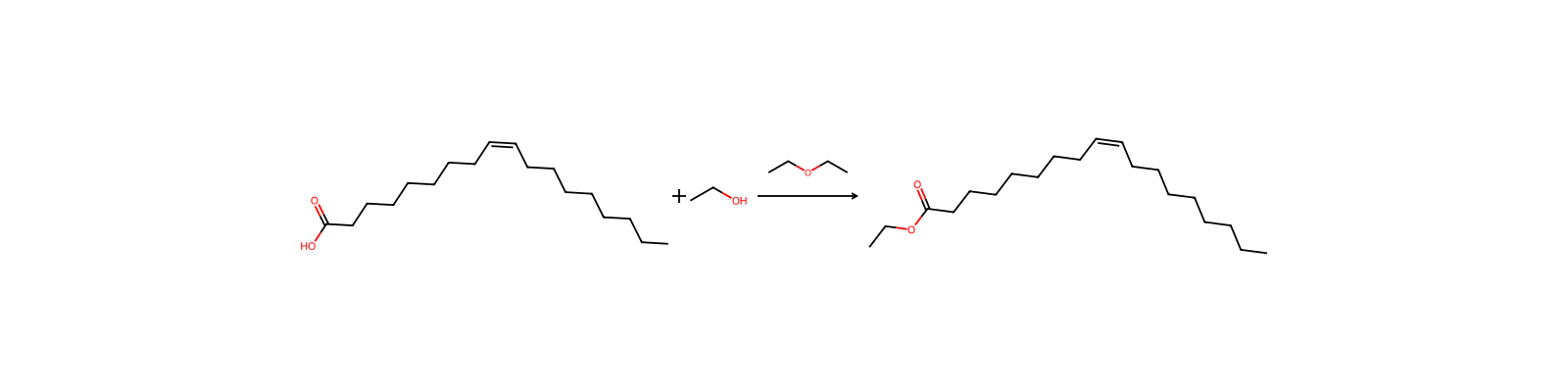
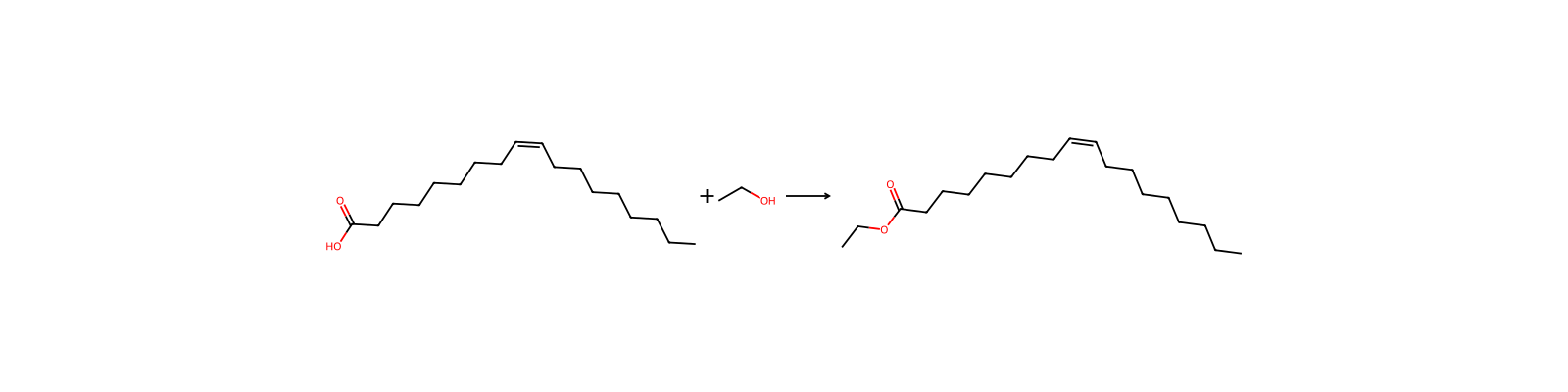



연결된 노트
불러오는 중…