

기본 정보
- 표준 SMILES
O=C(O)[C@@H](O)[C@@H](O)C(=O)O- InChIKey
FEWJPZIEWOKRBE-XIXRPRMCSA-N- 분자식
- C4H6O6
- 평균 분자량
- 150.09 g/mol
- 단동위원소 질량
- 150.01643791
개요
Meso-tartaric acid is a 2,3-dihydroxybutanedioic acid that has meso configuration. It is a conjugate acid of a meso-tartrate(1-).
이름 및 식별자
- 우선 이름
- Meso-Tartaric acid
- IUPAC
- (2R,3S)-2,3-dihydroxybutanedioic acid
- 현지명
- DL-타타르산
- 영어명
- DL-Tartaric acid
- 분자식
- C4H6O6
- 분자량
- 150.09
이름 및 동의어
mesotartaric acidmeso-tartaric acid147-73-9erythraric acid(2R,3S)-2,3-dihydroxybutanedioic acidi-Tartaric acid(r,s)-tartaric acid(2R,3S)-tartaric acidm-tartaric acid(2R,3S)-2,3-dihydroxysuccinic acidTartaric acid, meso-(R*,S*)-2,3-Dihydroxybutanedioic acid
이름 더 보기
DL-타타르산DL-타르타릭산2,3-디하이드록시-부탄디오익산DL-디하이드록시숙신산TARTARIC ACIDRACEMIC ACIDdl-Tartaric acid anhydrousDL-TARTRATEDL-TartaricClopidogrel Impurity 45DL-Tartaric acid concentrateButanedioic acid, 2,3-dihydroxy-, (2R,3R)-rel-DL-Tartaric acid 133-37-9 pure 99% food additives Paratartaric acid kf-wang(at)kf-chem.comUvic acid
JQO211TF1ACHEBI:15673DTXSID60883336RefChem:156674GlyTouCan:G12655FYDTXCID501774085G12655FY205-696-1
데이터베이스 식별자
- CAS
133-37-9、147-73-9、5990-63-6- PubChem CID
- 447315
- DTXSID
DTXSID60883336- ChEMBL
CHEMBL225983- ChEBI
CHEBI:15673- UNII
- JQO211TF1A
- EC Number
- 205-105-7、205-696-1、629-249-9
- Nikkaji
- J134.706C
물성
구조 계산 물성
- XLogP
- -1.9
- 극성 표면적
- 115 Ų
- 수소 결합 공여자 수
- 4
- 수소 결합 수용자 수
- 6
- 회전 가능 결합 수
- 3
- 무거운 원자 수
- 10
- 형식 전하
- 0
- 복잡도
- 134
실험 및 물리화학적 성질
Chemical ClassesOther Classes -> Organic Acids
SpringerMaterials PropertiesCrystal structure
FragrancesFragrance Ingredient (Tartaric acid (d-, l-, dl-, meso-)) -> IFRA transparency List
LogP-0.76 (calculated)
DensityRelative density (water = 1): 1.79
Flavoring AgentsEU Flavoring substances
SolubilitySolubility in water, g/l at 20 °C: 1400 (very soluble)
Flash Point210 °C c.c.
Melting Point206 °C
Physical Description
Dry Powder
White solid; [ICSC] Colorless or white odorless solid; [JECFA] White odorless crystalline powder; [Acros Organics MSDS]
WHITE CRYSTALLINE POWDER.
Collision Cross Section
120.87 Ų [M-H]- [CCS Type: DT; Method: stepped-field]
118.4 Ų [M-H]-
Autoignition Temperature425 °C
물리화학적 성질
- 녹는점
- 210 · 210-212 °C(lit.)
- 끓는 점
- 191.59 °C · 191.59°C (rough estimate)
- 밀도
- 1.788 · 1.788
- 증기압
- 0.1 hPa · <0.1 hPa (20 °C)
- FEMA
- 3044 · 3044 | TARTARIC ACID (D-, L-, DL-, MESO-)
- 굴절률
- 1.586 · 1.5860 (estimate)
- 인화점
- 210 °C · 210 °C
- 저장 조건
- 30 °C · Store below +30°C.
- 용해도
- 2 O: · H2O: 0.1 g/mL, 투명
- 물리적 상태
- 액체
- 산도 계수 (pKa)
- 3.03 · 3.03, 4.37(at 25℃)
- 색상
- 하얀색
- 수소이온지수(pH)
- 3.19 · 3.19(1 mM solution);2.58(10 mM solution);2.03(100 mM solution);
- 냄새
- 100 %에서 · 100.00%에서. 아주 순한 카라멜
- 냄새 유형
- 냄새 없는
- 생물학적 소스
- synthetic
- 수용성
- 녹는
- Merck
- 14 · 14,9069
- JECFA Number
- 621 · 621
- BRN
- 1725148 · 1725148
- Dielectric constant
- 35.9 · 35.9(-10℃)
- 안정성
- 안정적인. 염기, 산화제, 환원제, 은과 호환되지 않습니다.
- 주요 응용
- 향료 및 향
- 화장품 원료 기능
- 버퍼링향기
- InChI
- 1S/C4H6O6/c5-1(3(7)8)2(6)4(9)10/h1-2,5-6H,(H,7,8)(H,9,10)/t1-,2-/m0/s1
- InChIKey
- FEWJPZIEWOKRBE-UHFFFAOYSA-N
- SMILES
- O[C@@H]([C@H](O)C(O)=O)C(O)=O
- LogP
- -1.43 · -1.43
- NIST
- Tartaric acid(133-37-9)
- EPA
- 2 · Butanedioic acid, 2,3-dihydroxy-, (2R,3R)-rel- (133-37-9)
화학적 성질
DL-Tartaric acid is a water- and alcohol-soluble colorless crystalline solid with a characteristic acid taste and a melting temperature of 170°C(338°F). Naturally occurring tartaric acid is generally of the L-configuration (based on the absolute configuration of D-glyceric acid). The L-forms of tartrates are dextrorotatory in solution and thus are designated as L(+)-tartrates. It is also known as dihydroxy succinic acid. Tartaric acid is used as a chemical intermediate and a sequestrant,as well as in tanning, effervescent beverages, baking powder, ceramics, photography, textile processing,mirror silvering,and metal coloring.
안전 및 규제
GHS 분류
GHS Classification
This chemical does not meet GHS hazard criteria for 5.1% (26 of 506) of reports.
Danger
H315 (22.1%): Causes skin irritation [Warning Skin corrosion/irritation]
P261, P264, P264+P265, P271, P280, P302+P352, P304+P340, P305+P351+P338, P305+P354+P338, P317, P319, P321, P332+P317, P337+P317, P362+P364, P403+P233, P405, and P501 (click each P-code to see the statement)
Aggregated GHS information provided per 506 reports by companies from 13 notifications to the ECHA C&L Inventory. Each notification may be associated with multiple companies.
Warning
유해성 정보
Regulatory Information
Chemical: Butanedioic acid, 2,3-dihydroxy-, (R*,R*)-(.+-.)-
Butanedioic acid, 2,3-dihydroxy-, (2R,3R)-rel- is listed on the EPA's Chemical Data Reporting (CDR) system. Manufacturers and importers of Butanedioic acid, 2,3-dihydroxy-, (2R,3R)-rel- are required to report information about their production and use of this chemical to the EPA under the Toxic Substances Control Act (TSCA). (40 eCFR Part 711)
Status: Active Update: 03-10-2022 https://echa.europa.eu/registration-dossier/-/registered-dossier/34095
DL-Tartaric acid: Does not have an individual approval but may be used under an appropriate group standard
Other Safety InformationIMAP assessments - Butanedioic acid, 2,3-dihydroxy-, (R*,R*)-(.+-.)-: Human health tier I assessment
Fire HazardsCombustible.
Hazards SummaryCauses burns; Inhalation of aerosol may cause pulmonary edema; [ICSC] An irritant; [Acros Organics MSDS]
Chemical DangersThe solution in water is a medium strong acid. Reacts with fluorine, strong oxidants, hydrogen peroxide, alkaline compounds and silver. This produces toxic fumes.
Physical DangersThe vapour is heavier than air.
Hazard Classes and Categories
Skin Irrit. 2 (22.1%)
Skin Irrit. 2 (50%)
Skin Irrit. 2 (100%)
안전 및 보호
Fire FightingUse water spray, powder, foam, carbon dioxide.
First Aid Measures
Fresh air, rest. Seek medical attention if you feel unwell.
Remove contaminated clothes. Rinse skin with plenty of water or shower.
Rinse with plenty of water for several minutes (remove contact lenses if easily possible). Refer immediately for medical attention.
Rinse mouth. Give one or two glasses of water to drink. Seek medical attention if you feel unwell.
Safe StorageStore only in original packaging.
Spillage Disposal
Personal protection: particulate filter respirator adapted to the airborne concentration of the substance. Sweep spilled substance into covered containers. If appropriate, moisten first to prevent dusting. Store and dispose of according to local regulations.
Eye PreventionWear safety goggles.
Fire PreventionNO open flames.
Inhalation RiskA harmful concentration of airborne particles can be reached quickly when dispersed, especially if powdered.
Skin PreventionProtective gloves. Protective clothing.
Exposure PreventionPREVENT DISPERSION OF DUST! STRICT HYGIENE!
Ingestion PreventionDo not eat, drink, or smoke during work.
Inhalation PreventionUse local exhaust, ventilation or breathing protection.
Effects of Short Term ExposureThe substance is corrosive to the eyes. The substance is irritating to the skin and upper respiratory tract.
독성 정보
Adverse EffectsDermatotoxin - Skin burns.
Exposure RoutesThe substance can be absorbed into the body by inhalation and by ingestion.
Signs and Symptoms
Cough. Sore throat. Burning sensation.
Redness.
Redness. Pain. Severe burns.
Cough. Sore throat. Burning sensation. Nausea. Vomiting.
안전 데이터
- wgk
- 3
- tsca
- TSCA listed
- HS 번호
- 29181200
- risk_code
- 36/37/38-41
- hazard_code
- Xi
- safety_code
- 26-37/39-36
- 기존화학 물질
- KE-10802
- 자연 발화 온도
- 425 °C
- Hazard Classifications
- Eye Dam. 1
- 스토리지 클래스
- 11 - Combustible Solids
화학 및 산업
용도 및 제조
UsesUsed as a synergist for antioxidants, acid, emulsifier, sequestrant, and flavoring agent; [JECFA]
U.S. Production2023: 43,652 lb
Industry UsesNot Known or Reasonably Ascertainable
Use Classification
Fragrance Ingredients
Flavouring Agent -> FLAVOURING_AGENTFood Additives -> ACID; ANTIOXIDANT_SYNERGIST; EMULSIFIER; SEQUESTRANT; SYNERGIST -> JECFA Functional Classes
Flavouring Agent -> FLAVOURING_AGENTFood Additives -> ACID; ANTIOXIDANT_SYNERGIST; EMULSIFIER; SEQUESTRANT; SYNERGIST -> JECFA Functional Classes
General Manufacturing Information
Soap, Cleaning Compound, and Toilet Preparation Manufacturing
Butanedioic acid, 2,3-dihydroxy-, (2R,3R)-rel-: ACTIVE
Butanedioic acid, 2,3-dihydroxy-, (2R,3S)-rel-: ACTIVE
응용 분야
출처d-Tartaric acid occurs in many fruits or other parts of the plant, free or combined with potassium, calcium or magnesium. It is also reported found in raw, lean fish, white wine, red wine and port wine.
용도DL-Tartaric acid is used as a synergist for antioxidants, emulsifier, sequestrant and flavoring agent. It is also added with citric acid to prepare effervescent salts, thereby enhancing the taste of oral medications. It is also utilized in pigments, processing aids, ink, toner and colorant products. It acts as a chelating agent in metal and farming industries. Further, it is used as lubricant and grease. It is mixed with sodium bicarbonate and used as a leavening agent in food preparation. In the pharmaceutical industry, it is utilized in the preparation of tartar emetic, which is used in cough syrup as an expectorant.
제조 방법
The tartrates used in commerce are obtained as a by-product of wine manufacture and have the L(+) configuration. Produced from argols or wine lees, which are formed in the manufacture of wine by extracting the potassium acid tartrate, transforming this into the calcium salt and then acidifying with dilute sulfuric acid; also by oxidation of d-glucose with nitric acid. The dl-tartaric acid is obtained by boiling the d-tartaric acid with an aqueous solution of NaOH or by oxidation of fumaric acid. The l- and the meso-tartaric acid are also known, but are less important.
상·하류 제품 정보
상류 원료
하류 제품
공급사50 곳
国药集团化学试剂有限公司86-21-63210123 · [email protected]
梯希爱(上海)化成工业发展有限公司021-67121386 · [email protected]
上海阿拉丁生化科技股份有限公司400-6206333 13167063860 · [email protected]
天津市恒兴化学试剂制造有限公司022-26772349 15822233318 · [email protected]
爱斯特(成都)生物制药股份有限公司+86-28-85122536 85324413 · [email protected]
上海如吉生物科技发展有限公司+86-21-65211385-8001 36031160 · [email protected]
科瑞迪化学400-821-5857 021-64326257 · [email protected]
Syntechem Co.,Ltd[email protected]
上海迈瑞尔生化科技有限公司4006356688 18621169109 · [email protected]
阿法埃莎(中国)化学有限公司400-6106006 · [email protected]
上海德默医药科技有限公司400-021-7337 2355568890 · [email protected]
安耐吉化学&3A(安徽泽升科技股份有限公司)400-0056266 · [email protected]
上海瀚鸿科技股份有限公司021-54306202 13764082696 · [email protected]
成都普思生物科技股份有限公司028-85370565-229 18080489829 · [email protected]
上海景颜化工科技有限公司13817811078 · [email protected]
合肥天健化工有限公司551-65418679 15856988503;15837135945 · [email protected]
孝感深远化工有限公司15527621225; 15527621225 · [email protected]
山东西亚化学有限公司13355009207 13355009207 · [email protected]
玛雅试剂+86 (573) 82222445 (0)18006601000 452520369 · [email protected]
天津希恩思生化科技有限公司400 638 7771 · [email protected]
南京瑞泰生化技术有限公司+86-(0)25-84931986,(0)18951962398
斯百全化学(上海)有限公司021-021-021-67601398-809-809-809 15221380277 · [email protected]
上海源叶生物科技有限公司13636370518 · [email protected]
艾科试剂4008-755-333 18080918076 · [email protected]
青岛保税区鲁联国际贸易有限公司0532-83893697 18561902820 · [email protected]
上海思域化工科技有限公司86-21-34053660 · [email protected]
赛默飞世尔科技(中国)有限公司800-810-5118 · [email protected]
北京伊诺凯科技有限公司400-810-7969 010-59572699 · [email protected]
上海遐瑞医药科技有限公司+86 21 61551611
江苏艾康生物医药研发有限公司025-66113011 13913916777 · [email protected]
TOKYO CHEMICAL INDUSTRY CO., LTD.03-36680489 · [email protected]
上海贤鼎生物科技有限公司4009209199 · [email protected]
潍坊沃腾进出口有限公司0536-2456718
南京生利德生物科技有限公司025-57798810 18652991625 · [email protected]
北京环宇世纪化学科技有限公司hysj_bj.com
湖北鑫源顺医药化工有限公司13971561712, 13995564702, 027-50664929 · [email protected]
上海将来实业股份有限公司400-0066400 13621662912 · [email protected]
天津阿尔塔科技有限公司022-65378550-8551 · [email protected]
HBCChem, Inc.+1-510-219-6317 · [email protected]
日照力德士化工有限公司010-51268198 · [email protected]
美岚实业(上海)有限公司021-58958189 · [email protected]
上海爱蝶实业有限公司021-58957966 18930537195 · [email protected]
成都零六生物科技有限公司400-1166-196 13458535857 · [email protected]
广拓化学(上海)有限公司021-60899189-8001 18918189673 · [email protected]
雷丁试剂0510-85629785 18013409632 · [email protected]
上海御略医药科技有限公司021-60345187 13671753212 · [email protected]
上海麦克林生化科技股份有限公司15221275939 15221275939 · [email protected]
杭州杰恒化工有限公司0571-87396432 · [email protected]
上海永叶生物科技有限公司86-021-61559134 15921386130 · [email protected]
上海嵩爰化工科技有限公司010-1234567 18521000990 · [email protected]
추가 설명
순도시험(1) 융점 : 이 품목의 융점은 200~206℃이어야 한다. (2) 황산염 : 「L-주석산」의 순도시험 (2)에 따라 시험한다. (3) 비소 : 이 품목을 비소시험법에 따라 시험할 때, 그 양은 4.0ppm 이하이어야 한다. (4) 납 : 이 품목 5.0g을 취하여 원자흡광광도법 또는 유도결합플라즈마발광광도법에 따라 시험할 때, 그 양은 2.0ppm 이하이어야 한다. (5) 산화되기 쉬운 물질 : 이 품목 1g에 물 25mL 및 묽은황산 25mL를 가하여 녹이고 이를 20℃로 유지하면서 0.1N 과망간산칼륨용액 4mL를 가할 때, 시액의 색이 3분 이내에 없어져서는 아니 된다.
확인시험(1) 이 품목의 수용액(1→10)은 선광성을 가지고 있지 않다. (2) 「L-주석산」의 확인시험 (2), (3) 및 (4)에 따라 시험한다.
정량법「L-주석산」의 정량법에 따라 정량한다.
정의ChEBI: DL-Tartaric acid is a tetraric acid that is butanedioic acid substituted by hydroxy groups at positions 2 and 3. It has a role as a human xenobiotic metabolite and a plant metabolite. It is a conjugate acid of a 3-carboxy-2,3-dihydroxypropanoate.
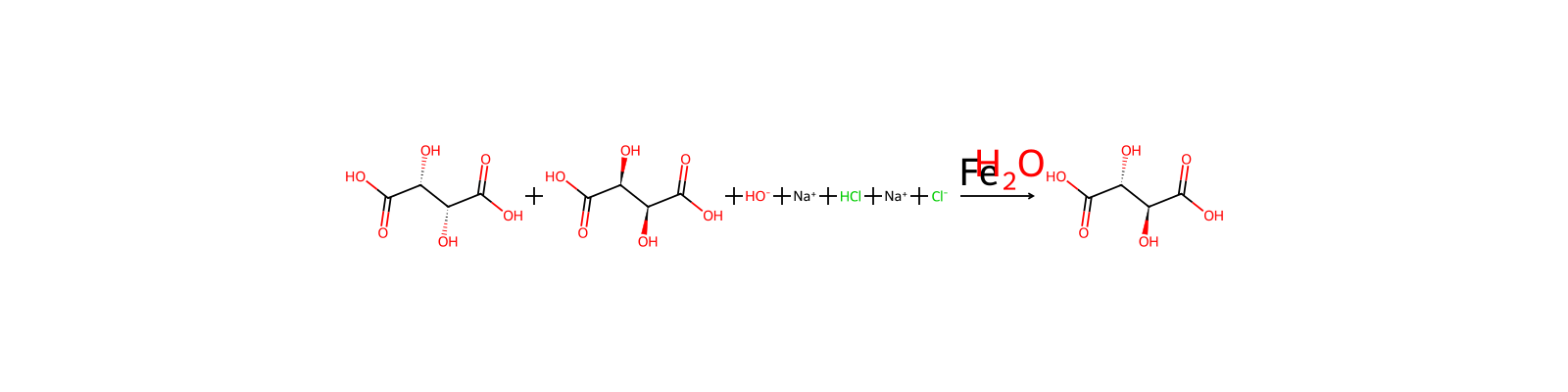
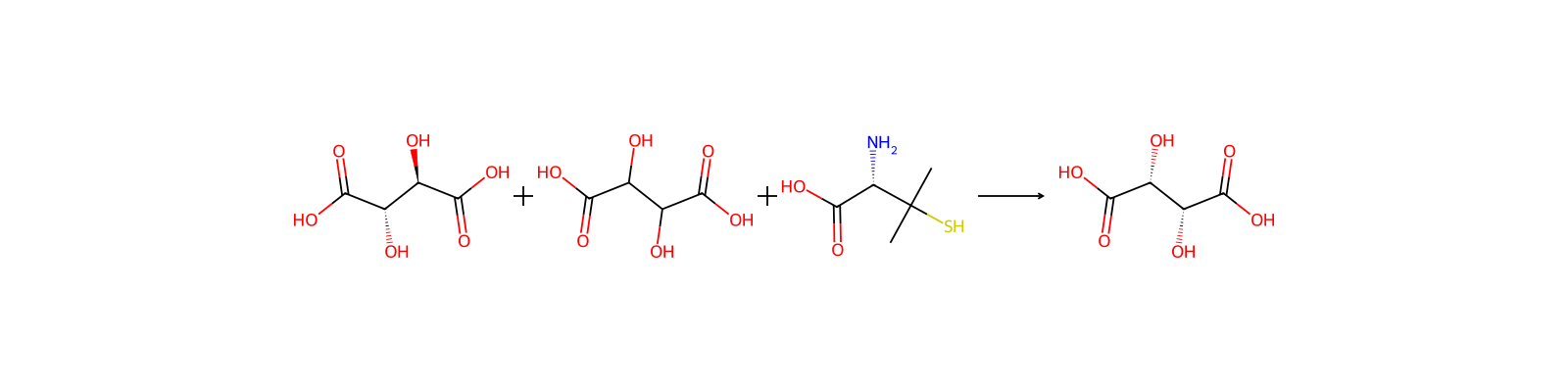
관련 반응
12건



연결된 노트
불러오는 중…