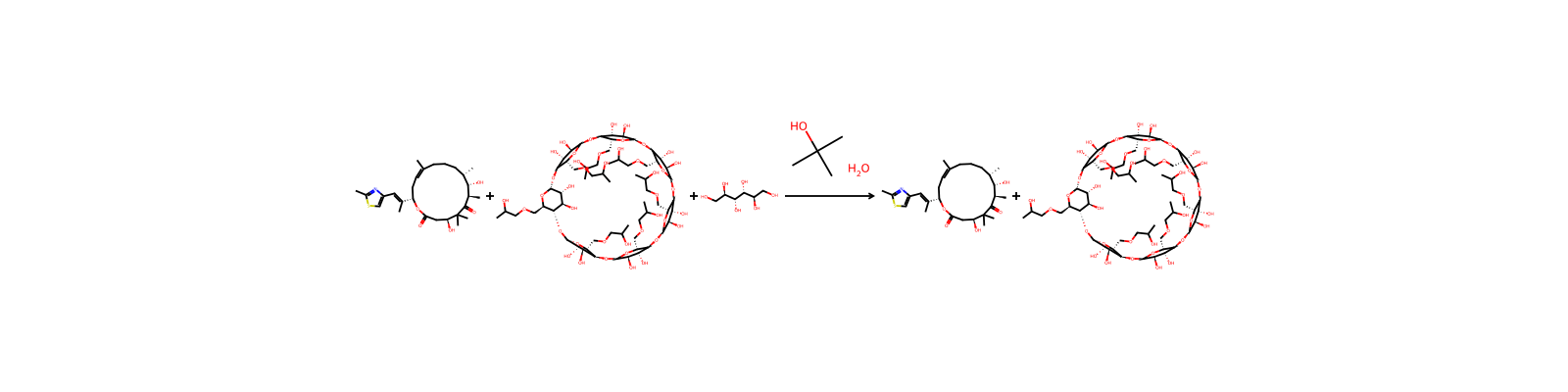
Epothilone D

기본 정보
- CAS
189453-10-9- 표준 SMILES
C/C1=C/C[C@@H](/C(C)=C/c2csc(C)n2)OC(=O)C[C@H](O)C(C)(C)C(=O)[C@H](C)[C@@H](O)[C@@H](C)CCC1- InChIKey
XOZIUKBZLSUILX-GIQCAXHBSA-N- 분자식
- C27H41NO5S
- 평균 분자량
- 491.7 g/mol
- 단동위원소 질량
- 491.27054441
개요
Epothilone D is an epithilone that is epithilone C in which the hydrogen at position 13 of the oxacyclohexadec-13-ene-2,6-dione macrocycle has been replaced by a methyl group. It has a role as a microtubule-stabilising agent.
이름 및 식별자
- 우선 이름
- Epothilone D
- IUPAC
- (4S,7R,8S,9S,13Z,16S)-4,8-dihydroxy-5,5,7,9,13-pentamethyl-16-[(E)-1-(2-methyl-1,3-thiazol-4-yl)prop-1-en-2-yl]-1-oxacyclohexadec-13-ene-2,6-dione
- 영어명
- Epothilone D
- 분자식
- C27H41NO5S
- 분자량
- 491.68
이름 및 동의어
Epothilone D189453-10-9Desoxyepothilone b(-)-Desoxyepothilone BKOS-86212,13-Desoxyepothilone B(-)-Epothilone DEpothilon DNSC-703147KOS 86212,13-Deoxyepothilone BEpothiolone D
이름 더 보기
Epo DCS-1161Ebomycin12,13-Deoxyepo13-Desoxyepothilone BEpothilone D (KOS-862)
DEpoB cpdNSC 703147T0358E0YUFEpothilone B, desoxy12,13-desoxyepothilone b, cisKOS862Oxacyclohexadec-13-ene-2,6-dione, 4,8-dihydroxy-5,5,7,9,13-pentamethyl-16-[(1E)-1-methyl-2-(2-methyl-4-thiazolyl)ethenyl]-, (4S,7R,8S,9S,13Z,16S)-R1492
데이터베이스 식별자
- CAS
189453-10-9- PubChem CID
- 447865
- DTXSID
DTXSID70880053- ChEMBL
CHEMBL96172- ChEBI
CHEBI:29579- UNII
- T0358E0YUF
물성
구조 계산 물성
- XLogP
- 5
- 극성 표면적
- 125 Ų
- 수소 결합 공여자 수
- 2
- 수소 결합 수용자 수
- 7
- 회전 가능 결합 수
- 2
- 무거운 원자 수
- 34
- 형식 전하
- 0
- 복잡도
- 777
실험 및 물리화학적 성질
LipidsPolyketides [PK] -> Macrolides and lactone polyketides [PK04]
물리화학적 성질
- 녹는점
- 63 · 63-66°C
- 끓는 점
- 663.7 · 663.7±55.0 °C(Predicted)
- 밀도
- 1.084 · 1.084±0.06 g/cm3(Predicted)
- 저장 조건
- -20 °C · -20°C Freezer
- 용해도
- DMSO에 용해됨
- 물리적 상태
- 고체
- 산도 계수 (pKa)
- 13.47 · 13.47±0.70(Predicted)
- 색상
- 흰색에서 황백색까지
- InChIKey
- XOZIUKBZLSUILX-GIQCAXHBSA-N
- SMILES
- O1[C@H](/C(/C)=C/C2=CSC(C)=N2)CC=C(C)CCC[C@H](C)[C@H](O)[C@@H](C)C(=O)C(C)(C)[C@@H](O)CC1=O |t:13|
화학적 성질
White Foam
안전 및 규제
안전 정보는 참고용이며, 공급업체의 물질안전보건자료(SDS), 관련 법규 및 전문가 평가를 대체하지 않습니다.
유해성 정보
Regulatory Information
Oxacyclohexadec-13-ene-2,6-dione, 4,8-dihydroxy-5,5,7,9,13-pentamethyl-16-(1E)-1-methyl-2-(2-methyl-4-thiazolyl)ethenyl-, (4S,7R,8S,9S,13Z,16S)-: Does not have an individual approval but may be used as a component in a product covered by a group standard. It is not approved for use as a chemical in its own right.
화학 및 산업
약리 정보
ATC Code
L - Antineoplastic and immunomodulating agents
QL - Antineoplastic and immunomodulating agents
Mechanism of ActionThe principal mechanism of the epothilone class is inhibition of microtubule function. Microtubules are essential to cell division, and epothilones therefore stop cells from properly dividing.
MeSH Pharmacological ClassificationAgents that interact with TUBULIN to inhibit or promote polymerization of MICROTUBULES.
응용 분야
개요Epothilones are microtubule-stabilizing agents with potential anti-neoplastic actions. They are natural macrolides that have high potency in both taxane-sensitive and taxane-resistant models. Epothilone D is a desoxy form of epothilone B (Item No. 10924) that inhibits the growth of a variety of cancer cells both in vitro (IC50 values range from 0.97 to 21 nM) and in mice. Epothilone D is brain penetrant and reduces neurodegeneration in aged tau transgenic mice. Effects include improved axonal transport, decreased tau neuropathology, and reduced hippocampal neuron loss. Epothilone D also rescues microtubule defects and attenuates nigrostriatal degeneration in a mouse model of Parkinson’s disease.
상·하류 제품 정보
하류 제품
추가 설명
정의ChEBI: An epithilone that is epithilone C in which the hydrogen at position 13 of the oxacyclohexadec-13-ene-2,6-dione macrocycle has been replaced by a methyl group.
관련 반응
23건




화합물 노트
불러오는 중…