

기본 정보
- 표준 SMILES
OC[C@@H](O)[C@@H](O[C@H]1O[C@H](CO)[C@@H](O)[C@H](O)[C@H]1O)[C@H](O)[C@@H](O)CO- InChIKey
VQHSOMBJVWLPSR-WUJBLJFYSA-N- 분자식
- C12H24O11
- 평균 분자량
- 344.31 g/mol
- 단동위원소 질량
- 344.13186158
이름 및 식별자
- 우선 이름
- Maltitol
- IUPAC
- (2S,3R,4R,5R)-4-[(2R,3R,4S,5S,6R)-3,4,5-trihydroxy-6-(hydroxymethyl)oxan-2-yl]oxyhexane-1,2,3,5,6-pentol
- 현지명
- 말티톨
- 영어명
- Maltitol
- 분자식
- C12H24O11
- 분자량
- 344.31
이름 및 동의어
maltitol585-88-6D-Maltitol4-O-alpha-D-Glucopyranosyl-D-glucitolAmalty MR 100Lycasin hbcMaltisweet 3145Sweetpearl p 200Cerestar 16303Malbit ch 16385Maltidex ch 16385D65DG142WK
이름 더 보기
말티톨malbitMaltitol CrystalMALTITOL-BASEDPRODUCTSD-Glucitol, 4-O-α-D-glucopyranosyl-titoLmaltitmaltimrmaltisorb
D-Glucitol, 4-O-alpha-D-glucopyranosyl-INS NO.965(I)INS-965(I)E-965(I)alpha-D-glucopyranosyl-(1->4)-D-glucitol(2S,3R,4R,5R)-4-[(2R,3R,4S,5S,6R)-3,4,5-trihydroxy-6-(hydroxymethyl)oxan-2-yl]oxyhexane-1,2,3,5,6-pentolDTXSID0044444CHEBI:68428
데이터베이스 식별자
- CAS
585-88-6- PubChem CID
- 493591
- DTXSID
DTXSID0044444- ChEMBL
CHEMBL63558- ChEBI
CHEBI:68428- UNII
- D65DG142WK
- EC Number
- 209-567-0
- Nikkaji
- J60.868H
물성
구조 계산 물성
- XLogP
- -5.2
- 극성 표면적
- 201 Ų
- 수소 결합 공여자 수
- 9
- 수소 결합 수용자 수
- 11
- 회전 가능 결합 수
- 8
- 무거운 원자 수
- 23
- 형식 전하
- 0
- 복잡도
- 343
실험 및 물리화학적 성질
OdorNeutral
TasteSweet
Color/FormWhite powder
SolubilityVery soluble in water, slightly soluble in ethanol
Decomposition
When /maltitol/ is heated at temperatures above 200 °C, decomposition begins (depending on time, temperature, adn other prevailing conditions). Maltitol does not undergo browning reactions with amino acids, and absorbs atmospheric moisture only at relative humidities of 89% and above, at 20 °C.
Melting Point
148 to 151 °C
146-147 °C
147 - 153 °C
Optical Rotation
[α]D/20 + 105,5° to + 108,5° (5 % w/v solution)
Specific optical rotation: +106.5 deg at 20 °C/D
Physical Description
Dry Powder
White crystalline powder
Solid
Stability/Shelf LifeMaltitol has good thermal and chemical stability.
Other Experimental PropertiesWater content: 2% (max); weakly hygroscopic in the solid state
물리화학적 성질
- 녹는점
- 149 · 149-152 °C (lit.)
- 끓는 점
- 399.42 °C · 399.42°C (rough estimate)
- 밀도
- 1.3863 · 1.3863 (rough estimate)
- 증기압
- 0.001 Pa · 0.001Pa at 20℃
- 굴절률
- 105 ° · 105 ° (C=10, H2O)
- 저장 조건
- 2 · 2-8°C
- 용해도
- 물에 매우 잘 녹고 무수 에탄올에는 거의 녹지 않습니다.
- 산도 계수 (pKa)
- 12.84 · 12.84±0.70(Predicted)
- 물리적 상태
- 결정성 분말
- 색상
- 하얀색
- 냄새
- Neutral odor
- 수용성
- 물에 용해됩니다. 에탄올에 약간 용해됩니다.
- BRN
- 89983 · 89983
- Henry's Law Constant
- 2.3 · 2.3×1015 mol/(m3Pa) at 25℃, HSDB (2015)
- 안정성
- 흡습성
- 화장품 원료 기능
- 향기보습제보습피부 컨디셔닝
- InChI
- 1S/C12H24O11/c13-1-4(16)7(18)11(5(17)2-14)23-12-10(21)9(20)8(19)6(3-15)22-12/h4-21H,1-3H2/t4-,5+,6+,7+,8+,9-,10+,11+,12+/m0/s1
- InChIKey
- VQHSOMBJVWLPSR-WUJBLJFYSA-N
- SMILES
- OC[C@H](O)[C@@H](O)[C@H](O[C@H]1O[C@H](CO)[C@@H](O)[C@H](O)[C@H]1O)[C@H](O)CO
- LogP
- -3.87 at · -3.87 at 24℃
- EPA
- 4 · D-Glucitol, 4-O-.alpha.-D-glucopyranosyl- (585-88-6)
화학적 성질
Maltitol is a-D-glucopyranosyl-1.4-glucitol. The solubility in water is approximately 1,750 g/L at room temperature. Maltitol is stable under the common processing conditions of foods. In addition to dry maltitol several types of syrups are available. Maltitol is, depending on the concentration, approximately 90 % as sweet as sucrose and noncariogenic . In the European Union, maltitol is approved as E 965 for a large number of food applications. It is GRAS in the United States and also approved in many other countries.
안전 및 규제
GHS 분류
GHS Classification
This chemical does not meet GHS hazard criteria for 91.7% (66 of 72) of all reports.
Not Classified;Reported as not meeting GHS hazard criteria by 66 of 72 companies (only 8.3% companies provided GHS information). For more detailed information, please visit ECHA C&L website.
Aggregated GHS information provided per 72 reports by companies from 4 notifications to the ECHA C&L Inventory.;Reported as not meeting GHS hazard criteria per 66 of 72 reports by companies.;There are 3 notifications provided by 6 of 72 reports by companies with hazard statement code(s).;Information may vary between notifications depending on impurities, additives, and other factors. The percentage value in parenthesis indicates the notified classification ratio from companies that provide hazard codes. Only hazard codes with percentage values above 10% are shown. For more detailed information, please visit ECHA C&L website.
유해성 정보
Regulatory Information
Chemical: D-Glucitol, 4-O-.alpha.-D-glucopyranosyl-
D-Glucitol, 4-O-.alpha.-D-glucopyranosyl- is listed on the EPA's Chemical Data Reporting (CDR) system. Manufacturers and importers of D-Glucitol, 4-O-.alpha.-D-glucopyranosyl- are required to report information about their production and use of this chemical to the EPA under the Toxic Substances Control Act (TSCA). (40 eCFR Part 711)
PMN - indicates a commenced PMN (Pre-Manufacture Notices) substance.
Status: Active Update: 08-10-2020 https://echa.europa.eu/registration-dossier/-/registered-dossier/31638
D-Glucitol, 4-O-.alpha.-D-glucopyranosyl-: Does not have an individual approval but may be used under an appropriate group standard
FDA Requirements
Food labeling. Health claims: dietary noncariogenic carbohydrate sweeteners and dental caries. ... Eligible noncariogenic carbohydrate sweeteners are the sugar alcohols xylitol, sorbitol, mannitol, maltitol, isomalt, lactitol, hydrogenated starch hydrolysates, hydrogenated glucose syrups, and erythritol, or a combination of these.
Hazard Classes and CategoriesNot Classified
안전 및 보호
Fire Fighting Procedures
Water spray, dry chemical, carbon dioxide, or foam as appropriate for surrounding fire and materials.
This material is assumed to be combustible. As with all dry powders, it is advisable to ground mechanical equipment in contact with dry material to dissipate the potential buildup of static electricity.
Storage ConditionsStore in tight container as defined in the USP-NF. This material should be handled and stored per label instructions to ensure product integrity.
Cleanup Methods
Wear approved respiratory protection, chemically compatible gloves, and protective clothing. Wipe up spillage or collect spillage using a high-efficiency vacuum cleaner. Avoid breathing dust. Place spillage in appropriately labeled container for disposal. Wash spill site.
Disposal Methods
SRP: Criteria for land treatment or burial (sanitary landfill) disposal practices are subject to significant revision. Prior to implementing land disposal of waste residue (including waste sludge), consult with environmental regulatory agencies for guidance on acceptable disposal practices.
Preventive Measures
As with all fires, evacuate personnel to a safe area. Firefighters should use self-contained breathing equipment and protective clothing.
As a general rule, when handling USP Reference Standards, avoid all contact and inhalation of dust, mists, and/or vapors associated with the material. Wash thoroughly after handling.
/Wear/ chemically compatible gloves /and/ safety glasses or goggles. Protect exposed skin.
Personal Protective Equipment (PPE)
Use a NIOSH-approved respirator, if it is determined to be necessary by an industrial hygiene survey involving air monitoring. In the event that a respirator is not required, an approved dust mask should be used.
Engineering controls such as exhaust ventilation are recommended.
독성 정보
Interactions
The effects of maltitol and mannitol on the /gastrointestinal/ absorption of acetaminophen, sulfisoxazole and riboflavin in mice were investigated in a controlled double-blind fashion. Oral maltitol or mannitol was administered to 6 mice and 2 hr after ingestion the blood levels of the 3 drugs were found to be lower than in the controls, and drug absorption was inhibited. It was suggested that these results were caused by the action of maltitol and mannitol which accelerated small intestine motility, secretion and vascular permeability in the intestinal membrane. These changes may be mediated by biogenic amine, serotonin, histamine and polyamines in the small intestine.
To estimate the suppressive effect of partially hydrolyzed guar gum (PHGG) on transitory diarrhea induced by ingestion of a sufficient amount of maltitol or lactitol in female subjects. The first, the minimal dose level of maltitol and lactitol that would induce transitory diarrhea was estimated separately for each subject. Individual subject was administered a dose that increased by 5 g stepwise from 10 to 45 g until diarrhea was experienced. Thereafter, the suppressive effect on diarrhea was observed after each subject ingested a mixture of 5 g of PHGG and the minimal dose level of maltitol or lactitol. Thirty-four normal female subjects (21.3+/-0.9 years; 49.5+/-5.3 kg). Incidence of diarrhea caused by the ingestion of maltitol or lactitol and the ratio of suppression achieved by adding PHGG for diarrhea. The ingestion of amounts up to 45 g of maltitol, diarrhea caused in 29 of 34 subjects (85.3%), whereas the ingestion of lactitol caused diarrhea in 100%. The diarrhea owing to maltitol was improved in 10 of 28 subjects by the addition of 5 g of PHGG to minimal dose-induced diarrhea, and that owing to lactitol was in seven of 19 subjects. Adding 10 g of PHGG strongly suppressed the diarrhea caused by maltitol, and the cumulative ratio was 82.1% (23/28). The transitory diarrhea caused by the ingestion of maltitol or lactitol was clearly suppressed by the addition of PHGG. These results strongly suggest that diarrhea caused by the ingestion of a sufficient amount of non-digestible sugar substitute can be suppressed by the addition of dietary fiber.
The enhancing effects of maltitol (alpha-D-glucopyranosyl-1,4-sorbitol) on absorption of calcium by the rat intestine have been studied by use of [(45)Ca]CaCl2 in-vivo. After intragastric administration of [(45)Ca]CaCl2 solution with maltitol, plasma (45)Ca concentration remained at the maximum level for more than 80 min, whereas for animals given [(45)Ca]CaCl2 solution without maltitol, plasma (45)Ca concentration declined sharply after the peak. Determination of (45)Ca radioactivity remaining in the various segments of the gastrointestinal tract revealed that administration of maltitol elicited slower gastric emptying and slower intestinal transit, resulting in extensive (45)Ca distribution along the small intestine throughout the experimental period. The luminal contents of the small intestine were significantly higher in rats given maltitol than in the control group. These results suggest that the enhancing action of maltitol on intestinal calcium absorption could be attributed to reduced gastrointestinal calcium transit and increased luminal fluid content, presumably because of the osmotic activity of maltitol; this would not only accelerate the dissolution of calcium into the increased luminal contents, but also enable a larger area of the small intestine to absorb calcium for a longer period of time.
Dental caries and periodontal disease are wide-spread oral illnesses whose etiology is intimately associated with the consumption of carbohydrate sweeteners. ...Human clinical trials and several animal experiments have shown promising clinical results obtained by replacing sucrose with certain sugar alcohols (polyols). Among the sugar alcohols, the best results so far have been obtained with xylitol, which is chemically a pentitol containing five carbon atoms. Chewing gums containing xylitol have been shown to be strong instruments against caries in caries-active age-groups and in high-risk subjects. More research is needed to assess the ability of mixtures of xylitol with sorbitol, palatinit, maltitol, other sugar alcohols, and intense sweeteners to prevent oral plaque diseases. Although thorough clinical trials on the relationship between carbohydrate sweeteners and periodontal diseases have not been performed, the available data indicate that dietary polyols may have a restricted dampening effect on periodontal and gingival inflammations.
Environmental Fate
TERRESTRIAL FATE: Based on a classification scheme(1), an estimated Koc value of 69(SRC), determined from a structure estimation method(2), indicates that maltitol is expected to have high mobility in soil(SRC). Volatilization of maltitol from moist soil surfaces is not expected to be an important fate process(SRC) given an estimated Henry's Law constant of 4.2X10⁻²¹ atm-cu m/mole(SRC), using a fragment constant estimation method(3). Maltitol is not expected to volatilize from dry soil surfaces(SRC) based upon an estimated vapor pressure of 4.82X10⁻¹⁶ mm Hg at 25 °C(SRC), determined from a fragment constant method(4). Biodegradation data in soil were not available(SRC, 2011).
AQUATIC FATE: Based on a classification scheme(1), an estimated Koc value of 69(SRC), determined from a structure estimation method(2), indicates that maltitol is not expected to adsorb to suspended solids and sediment(SRC). Volatilization from water surfaces is not expected(3) based upon an estimated Henry's Law constant of 4.2X10⁻²¹ atm-cu m/mole(SRC), developed using a fragment constant estimation method(4). According to a classification scheme(5), an estimated BCF of 3(SRC), from an estimated log Kow of -5.61(6) and a regression-derived equation(7), suggests the potential for bioconcentration in aquatic organisms is low(SRC). Biodegradation data in water were not available(SRC, 2011).
ATMOSPHERIC FATE: According to a model of gas/particle partitioning of semivolatile organic compounds in the atmosphere(1), maltitol, which has an estimated vapor pressure of 4.8X10⁻¹⁶ mm Hg at 25 °C(SRC), determined from a fragment constant method(2), is expected to exist solely in the particulate phase in the ambient atmosphere. Particulate-phase maltitol may be removed from the air by wet or dry deposition(SRC). Maltitol does not contain chromophores that absorb at wavelengths >290 nm(4), and therefore is not expected to be susceptible to direct photolysis by sunlight(SRC).
Toxicity SummarySafe in the present practices of use and concentration. Ingredient, concentration, and use information are available in documents discoverable at https://cir-reports.cir-safety.org
Soil Adsorption/Mobility
Using a structure estimation method based on molecular connectivity indices(1), the Koc of maltitol can be estimated to be 69(SRC). According to a classification scheme(2), this estimated Koc value suggests that maltitol is expected to have high mobility in soil.
Human Toxicity Excerpts
/HUMAN EXPOSURE STUDIES/ To estimate the clinical effect of the maltitol chewing gums in plaque control. Thirty 13-15 years old susceptible adolescent were divided into three groups randomly, group A (maltitol chewing gums), group B (xylitol chewing gums) and group C (gum base chewing gums). Subjects chewed gums 5 times each day, 10 min each time. At baseline and at 4-week, subjects were evaluated for supragingival plaque. SPSS 17.0 software package was used for statistical analysis. Four weeks later, plaque index of the three groups continuously step down. Significant difference was observed between baseline and 4-week (P = 0.000, 0.000, 0.006). Four weeks later, there was statistically significant difference in clearance rate of plaque among the three groups (P = 0.015). There was still no statistically significant difference between group A and group B (P = 0.687), but they were both different from C group(P = 0.019, 0.007). Maltitol chewing gum can lead to similar effect on reduction of plaque as xylitol chewing gum.
/HUMAN EXPOSURE STUDIES/ Four healthy men (21-23 years of age) were given daily doses of 10 g maltitol containing 79.65 uCi (14)C-U-maltitol for a period of 7 days. Expired breath, blood, urine, and feces were collected. An average of 17% of the total (14)CO2 recovered was exhaled within the first 2 hours, and 43% of the total (14)CO2 was exhaled within 4 hours. The total recovery of (14)CO2 suggests a caloric utilization of maltitol in man of approximately 90%. This value is substantiated by the low radioactivity levels found in the feces (5%) and by the presence of appreciable quantities of radioactive metabolites in the blood and urine 7 days after administration.
/HUMAN EXPOSURE STUDIES/ Daily amounts of 35 g maltitol were given with meals for a period of 10 days to 4 subjects aged 34-53 years. Subjective signs (flatulence, gripes, and nausea) and fecal parameters (amount, frequency, pH, and content of maltitol) were compared with data from a control period without maltitol application. During the 10-day test period, there were no significant alterations of frequency and amount of feces or of the pH. No maltitol was detected in the excreta by thin-layer chromatography.
/HUMAN EXPOSURE STUDIES/ Two healthy volunteers (aged 30 and 35 years) each received a test meal of 69.5 g maltitol on an empty stomach. Twenty minutes after oral administration, blood glucose concentrations had increased by 20 and 30 mg/dL, respectively. They remained at this level for 2 hours and started to normalize 3 hours after maltitol application. At that time, the 2 individuals suffered from diarrhea (2 and 3.5 hours, respectively).
For more Human Toxicity Excerpts (Complete) data for Maltitol (17 total), please visit the HSDB record page.
Artificial Pollution SourcesMaltitol's production and use as an artificial sweetener(1) may result in its release to the environment through various waste streams(SRC).
Environmental Bioconcentration
An estimated BCF of 3 was calculated in fish for maltitol(SRC), using an estimated log Kow of -5.61(1) and a regression-derived equation(2). According to a classification scheme(3), this BCF suggests the potential for bioconcentration in aquatic organisms is low(SRC).
Volatilization from Water/Soil
The Henry's Law constant for maltitol is estimated as 4.2X10⁻²¹ atm-cu m/mole(SRC) using a fragment constant estimation method(1). This Henry's Law constant indicates that maltitol is expected to be essentially nonvolatile from water and moist soil surfaces(2). Maltitol is not expected to volatilize from dry soil surfaces(SRC) based upon an estimated vapor pressure of 4.8X10⁻¹⁶ mm Hg(SRC), determined from a fragment constant method(3).
Non-Human Toxicity Excerpts
/LABORATORY ANIMALS: Acute Exposure/ Three rats were injected with maltitol (250 mg/animal). The dose was virtually cleared from the blood within 1 hr, and at most the equivalent of approximately 30 mg was recovered as sorbitol in the excreta after 24 hr. There was no evidence of a rise in blood glucose after injection of maltitol. Little or no metabolism of maltitol had occurred in the tissues because hydrolysis was catalyzed by gastric or intestinal enzymes.
/LABORATORY ANIMALS: Acute Exposure/ Ten grams maltitol was given to fasted germ-free or normal rats by stomach tube. Urine and feces were collected for 24 hours after intubation and analyzed for sorbitol and maltitol. No glucose was detected in the urine or feces of any of the animals, and there was no significant difference in the maltitol content of the urine. The sorbitol content of the urine was higher in germ-free than in normal animals, but no statistical differences were found. In normal animals there was a 96% utilization of maltitol, while in germ-free animals, utilization was 84%, indicating that microbial utilization is not the major factor in maltitol metabolism. Maltitol injected i.v. (0.25 g/animal) was excreted almost quantitatively (88%) in the urine, producing no significant rise in blood glucose. No sorbitol was detected in the blood. The small amount of sorbitol in the urine indicated slight utilization of maltitol in body tissues.
/LABORATORY ANIMALS: Acute Exposure/ Maltitol was administered to rats either by gastric probe at a dosage of 2 g/kg or i.v. at a dosage of 1 g/kg. Blood glucose and insulin levels and the liver glycogen content were measured at 4.5 hours. Maltitol induced hyperglycemia similar to that observed by the administration of an equivalent amount of glucose or sucrose.
/LABORATORY ANIMALS: Acute Exposure/ Groups of 35 male Wistar rats (about 200 g each) received by gavage 1.2 mL of a 50%-aqueous solution of maltitol, xylitol, sorbitol, or glucose, and their blood glucose and residual sugar alcohols in the digestive tract were determined hourly for 6 consecutive hrs. Animals given the sugar alcohols exhibited lower blood glucose values than animals receiving glucose itself. Maltitol disappeared from the digestive tract the most quickly of the sugars that were investigated.
For more Non-Human Toxicity Excerpts (Complete) data for Maltitol (11 total), please visit the HSDB record page.
Environmental Abiotic Degradation
Maltitol is not expected to undergo hydrolysis in the environment due to the lack of functional groups that hydrolyze under environmental conditions(1). Maltitol does not contain chromophores that absorb at wavelengths >290 nm(1), and therefore is not expected to be susceptible to direct photolysis by sunlight(SRC).
Probable Routes of Human Exposure
Occupational exposure to maltitol may occur through inhalation and dermal contact with this compound at workplaces where maltitol is produced or used. Use data indicate that the general population may be exposed to maltitol via ingestion of and dermal contact with consumer products containing maltitol. (SRC)
Environmental Fate/Exposure Summary
Maltitol's production and use as an artificial sweetener may result in its release to the environment through various waste streams. If released to air, an estimated vapor pressure of 4.8X10⁻¹⁶ mm Hg at 25 °C indicates maltitol will exist solely in the particulate phase in the atmosphere. Particulate-phase maltitol will be removed from the atmosphere by wet or dry deposition. Maltitol does not contain chromophores that absorb at wavelengths >290 nm, and therefore is not expected to be susceptible to direct photolysis by sunlight. If released to soil, maltitol is expected to have high mobility based upon an estimated Koc of 69. Volatilization from moist soil surfaces is not expected to be an important fate process based upon an estimated Henry's Law constant of 4.2X10⁻²¹ atm-cu m/mole. Biodegradation data were not available. If released into water, maltitol is not expected to adsorb to suspended solids and sediment based upon the estimated Koc. Volatilization from water surfaces is not expected to be an important fate process based upon this compound's estimated Henry's Law constant. An estimated BCF of 3 suggests the potential for bioconcentration in aquatic organisms is low. Hydrolysis is not expected to be an important environmental fate process since this compound lacks functional groups that hydrolyze under environmental conditions. Occupational exposure to maltitol may occur through inhalation and dermal contact with this compound at workplaces where maltitol is produced or used. Use data indicate that the general population may be exposed to maltitol via ingestion of and dermal contact with consumer products containing maltitol. (SRC)
규제 정보
Regulatory Information
Chemical: D-Glucitol, 4-O-.alpha.-D-glucopyranosyl-
D-Glucitol, 4-O-.alpha.-D-glucopyranosyl- is listed on the EPA's Chemical Data Reporting (CDR) system. Manufacturers and importers of D-Glucitol, 4-O-.alpha.-D-glucopyranosyl- are required to report information about their production and use of this chemical to the EPA under the Toxic Substances Control Act (TSCA). (40 eCFR Part 711)
PMN - indicates a commenced PMN (Pre-Manufacture Notices) substance.
Status: Active Update: 08-10-2020 https://echa.europa.eu/registration-dossier/-/registered-dossier/31638
D-Glucitol, 4-O-.alpha.-D-glucopyranosyl-: Does not have an individual approval but may be used under an appropriate group standard
FDA Requirements
Food labeling. Health claims: dietary noncariogenic carbohydrate sweeteners and dental caries. ... Eligible noncariogenic carbohydrate sweeteners are the sugar alcohols xylitol, sorbitol, mannitol, maltitol, isomalt, lactitol, hydrogenated starch hydrolysates, hydrogenated glucose syrups, and erythritol, or a combination of these.
안전 데이터
- wgk
- 3
- tsca
- TSCA listed
- rtecs
- LZ4394000
- HS 번호
- 29400090
- safety_code
- 24/25
- 스토리지 클래스
- 11 - Combustible Solids
- 유해 물질 데이터
- 585-88-6(Hazardous Substances Data)
화학 및 산업
약리 정보
Mechanism of Action
... Reports from authoritative bodies and reviews indicates that the decrease in pH in plaque as a consequence of metabolic acid production by saccharolytic bacteria when exposed to fermentable carbohydrates (i.e. sugars and starches) may promote demineralization and prevent remineralization of the hydroxyapatite crystals. Tooth hydroxyapatite crystals are very resistant to dissolution at neutral pH, but their solubility drastically increases as pH drops. Typically, the critical pH for dental enamel is around 5.5. ... Demineralization of tooth tissues can also occur as a result of consumption of dietary acids in foods or beverages, and that frequent consumption can lead to dental erosion. Xylitol, sorbitol, mannitol, maltitol, lactitol, isomalt, erythritol, D-tagatose, isomaltulose, sucralose and polydextrose are slowly metabolized by bacteria in the mouth. The rate and amount of acid production from these food constituents is significantly less than that from sucrose. ... Xylitol, sorbitol, mannitol, maltitol, lactitol, isomalt, erythritol, D-tagatose, isomaltulose, sucralose and polydextrose do not promote dental caries because they do not lower plaque pH to the level associated with enamel demineralization. ... A cause and effect relationship has been established between the consumption of sugar-containing foods/drinks at an exposure frequency of four times daily or more and an increased tooth demineralization, and that the consumption of foods/drinks containing xylitol, sorbitol, mannitol, maltitol, lactitol, isomalt, erythritol, D-tagatose, isomaltulose, sucralose or polydextrose, instead of sugar in sugar-containing foods/drinks, may maintain tooth mineralization by decreasing tooth demineralization compared with sugar-containing foods, provided that such foods/drinks do not lead to dental erosion.
The food constituents xylitol, sorbitol, mannitol, maltitol, lactitol, isomalt, erythritol, D-tagatose, isomaltulose, sucralose or polydextrose resulted in reduced post-prandial blood glucose (or insulinemic) responses compared with sugars on a weight by weight basis owing to their reduced/delayed digestion/absorption and/or to a decrease in the amount of available carbohydrates, and that the consumption of foods/drinks in which xylitol, sorbitol, mannitol, maltitol, lactitol, isomalt, erythritol, D-tagatose, isomaltulose, sucralose or polydextrose replaced sugars induced lower post-prandial glycemic and insulinemic responses than sugar-containing foods/drinks. ... A cause and effect relationship has been established between the consumption of foods/drinks containing xylitol, sorbitol, mannitol, maltitol, lactitol, isomalt, erythritol, D-tagatose, isomaltulose, sucralose or polydextrose instead of sugar and reduction in post-prandial blood glucose responses (without disproportionally increasing post-prandial insulinemic responses) as compared to sugar-containing foods/drinks.
Metabolism/Metabolites
The metabolism of maltitol (4-alpha-D-glucosylsorbitol) was assessed in fasting conventional (C) rats, C mice and germ-free (GF) mice, using [U-14C]maltitol. The radiorespirometric patterns of (14)CO2 collected for 48 hr after the administration of labelled maltitol were characterized by a constant rate of (14)CO2 production lasting 4 hr for both C rats and mice. The pattern for the GF mice showed a peak at the second hour followed immediately by a slow decrease. The percentage recovery of (14)CO2 was significantly lower for the GF mice (59%) compared with C animals (72-74%). Urine, feces and intestinal contents after 48 hr totalled 19% of the administered radioactivity in the C rats and mice and 39% in the GF mice. The digestibility of maltitol and the absorption of sorbitol in GF mice was also assessed. The cecum and small intestine of GF mice, 3 hr after administration of equimolar quantities of maltitol (140 mg/kg body-weight) or sorbitol (70 mg/kg body-weight), contained 39 and 51% of the ingested dose respectively, present mostly in the cecum as sorbitol. The alpha-glucosidase (maltase) activity of the small intestine was appreciably higher (1.5-1.7 times) in the GF mice than in the C mice. These results suggest that the enzymic activities in the small intestine of mice and rats are sufficient to hydrolyse maltitol extensively. Consequently, the slow absorption of sorbitol seems to be an important factor limiting the overall assimilation of maltitol in the small intestine.
Conventional (CV) rats were given a single oral dose of 1 or 2 g maltitol. Urine and faeces were collected during the following 24 hr and their contents of maltitol and sorbitol were measured. Very little of either substance appeared in the faeces but appreciable amounts of sorbitol found in the urine indicated that the maltitol had been hydrolysed. Excretion of maltitol and sorbitol was compared in germ-free and CV rats given an oral dose of 2 g maltitol. Significantly less of both substances was recovered in the faeces of CV rats, but urinary excretion was similar in both environments. Maltitol injected intravenously gave rise to only traces of sorbitol in the excreta. A dose of 250 mg was cleared almost completely from the circulation within 1 hr. It is concluded that maltitol is hydrolysed by animal tissues, either in the gut lumen before absorption or in the gut wall during absorption. Maltitol and sorbitol are also degraded by gut bacteria, mostly in sites distal to the main absorptive area. The contribution to the host's nutrition would depend on the extent to which the end-products of fermentation are absorbed from the colon.
Weanling Wistar rats placed on diets containing 13 or 26% maltitol for 9 weeks had reduced body-weight gains and increased intestinal weights as compared with controls. Enzymatic tests in dosed rats indicated that the alpha-glycosidic linkage of maltitol was not hydrolysed with pancreatic enzymes or enzymes of the intestinal mucosa. Maltitol dehydrogenase was not observed in liver-cell cytoplasm and prolonged maltitol administration did not induce hepatic sorbitol dehydrogenase.
Absorption, Distribution and Excretion
Chemical changes in the blood induced by maltitol were compared with those induced by glucose in both healthy people and patients with several disorders, including diabetes mellitus. Blood glucose levels of healthy subjects were determined after the administration of glucose (12.5, 25, or 50 g) or maltitol (50 g). Based on the glucose absorption curve, 38% of the maltitol that was orally administered was absorbed through the intestinal tract, but the absorption of maltitol was more delayed than that of glucose.
Pieces of New Zealand rabbit small intestine were everted and incubated with 100 mM substrate (maltitol, sucrose, or glucose). After removal at different times (20, 40, or 60 min.) of incubation, the volume of serosal fluid and the dry mass of the gut pieces were determined. Maltitol was hydrolyzed, and the hydrolysis products were absorbed by the everted sacs. No maltitol was detected in the serosal fluid. The serosal glucose concentration increased at a slower rate after incubation with maltitol than after incubation with glucose or sucrose. The rate of hydrolysis and absorption decreased with the longer time of incubation.
In an in vitro study of (14)C-U-maltitol in everted intestinal sacs, the highest transport of (14)C-maltitol was displayed in the jejunum, followed by the ileum and duodenum. Twenty-four hr after oral administration of (14)C-U-maltitol, 60% of the radioactivity was detected in the cecum, large intestine, and feces. Five percent was excreted in the urine and 1.2% was expired as CO2 within 24 hr. When (14)C-U-maltitol was injected i.v., over 35, 60, and 85% of the administered dose was excreted in the urine within 1, 3, and 24 hr, respectively.
Two male beagle dogs were given maltitol-U-(14)C (51.2 uCi) by stomach tube. Blood samples were collected until 32 hr after dosing. The peak radiolabel concentration in plasma was 2 hr after maltitol administration (304 and 263 ug/mL, expressed as maltitol equivalent in the 2 dogs). The radioactivity present in the urine after 48 hr was 7.8 and 3.8% of the administered dose in the 2 animals.
For more Absorption, Distribution and Excretion (Complete) data for Maltitol (11 total), please visit the HSDB record page.
Cellular LocationsCytoplasm
용도 및 제조
Uses
CIR ingredient: Maltitol
Maltitol is widely used in the pharmaceutical industry in the formulation of oral dosage forms. It is a noncariogenic bulk sweetener, approximately as sweet as sucrose, well adapted as a diluent for different oral dosage forms, wet granulation, and sugar-free hard coating.
The applications of maltitol correspond largely to those of sugar. However, its hygroscopicity and capacity for browning or flavor development differ. Maltitol can be used in the production of chocolates, hard and soft caramel, toffees, gummy bears, chewing gum, jams, ice cream, etc.
U.S. Production
2023: 3,021,963 lb;2022: 4,504,951 lb;2021: 3,845,414 lb;2020: 3,383,000 lb
Production volumes for non-confidential chemicals reported under the Inventory Update Rule. [Table#7897]
Consumer UsesNot Known or Reasonably Ascertainable
Industry UsesNot Known or Reasonably Ascertainable
Methods of Manufacturing
For the production of maltitol, high-maltose glucose corn syrups are the starting material from which pure maltose is obtained by chromatographic separation on ion-exchange resins. Depending on the separation technique, maltose of varying purity (85-98%) is obtained.
Household ProductsInformation on 6 consumer products that contain Maltitol in the following categories is provided:;• Personal Care
Use Classification
Food additives
Food Additives -> BULKING_AGENT; HUMECTANT; STABILIZER; SWEETENER; TEXTURIZER; THICKENER -> JECFA Functional Classes
Food Additives -> BULKING_AGENT; HUMECTANT; STABILIZER; SWEETENER -> JECFA Functional Classes
Food Additives -> BULKING_AGENT; HUMECTANT; STABILIZER; SWEETENER; TEXTURIZER; THICKENER -> JECFA Functional Classes
Food Additives -> BULKING_AGENT; HUMECTANT; STABILIZER; SWEETENER -> JECFA Functional Classes
Cosmetics -> Humectant; Moisturising; Skin conditioning; Masking
General Manufacturing Information
Food, beverage, and tobacco product manufacturing;Not Known or Reasonably Ascertainable
D-Glucitol, 4-O-.alpha.-D-glucopyranosyl-: ACTIVE
Table of percent relative sweetness and caloric values: [Table#7896]
The relative sweetness of maltitol is generally given as 0.65, although values up to 0.9 are encountered in chocolates.
응용 분야
개요Maltitol is a-D-glucopyranosyl-1.4-glucitol. The solubility in water is approximately 1,750 g/L at room temperature. Maltitol is stable under the common processing conditions of foods. In addition to dry maltitol several types of syrups are available.Maltitol is, depending on the concentration, approximately 90 % as sweet as sucrose and noncariogenic.In the European Union, maltitol is approved as E 965 for a large number of food applications. It is GRAS in the United States and also approved in many other countries.
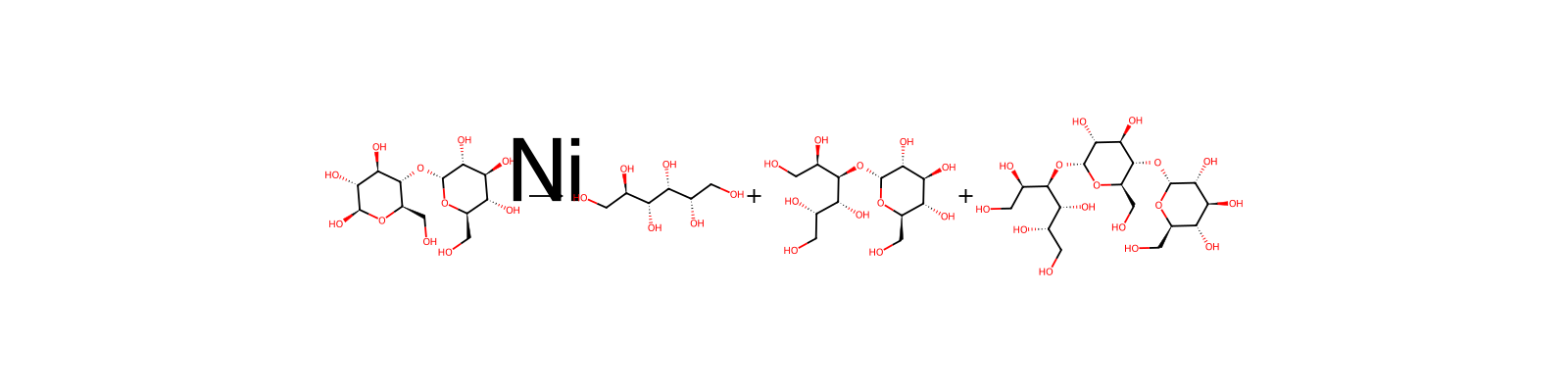
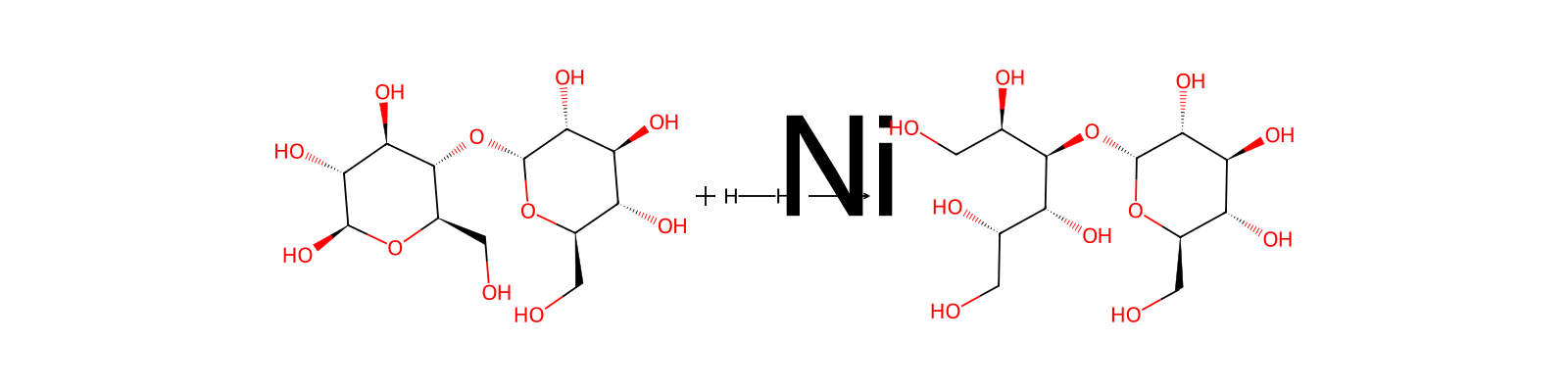
용도Maltitol is a polyhydric alcohol (polyol) produced by hydrogenation of maltose. it is approximately 90% as sweet as sucrose, has good stability, and is nonhygroscopic. uses include chewing gum, dry nut bakery products, and chocolate.
일반 설명Maltitol is a low-caloric artificial sweetener, consisting of a sugar alcohol (polyol),
제조 방법
생산 방법Maltitol is produced by chemical hydrogenation of maltose, which can be obtained by enzymatic degradation of starch under conditions similar to those used for other starch hydrolysates such as glucose. The Starting material can be the different commercially available starches including corn, potato, and others. A partially degraded starch, which can be obtained by treatment with diluted hydrochloric or sulphuric acid and subsequent neutralization or with heat-stable a-amylase, is then subjected to enzyme treatment for further degradation to maltose-rich products.Enzymes used for maltose production are b-amylases, fungal a-amylases, a-1.6- glucosidases, maltogenic amylases, and debranching enzymes, preferably with high temperature optimum.
상·하류 제품 정보
상류 원료
하류 제품
공급사50 곳
国药集团化学试剂有限公司86-21-63210123 · [email protected]
北京华美互利生物化工010-56205725 · [email protected]
梯希爱(上海)化成工业发展有限公司021-67121386 · [email protected]
上海阿拉丁生化科技股份有限公司400-6206333 13167063860 · [email protected]
陕西晨明生物科技有限公司15529026321
上海如吉生物科技发展有限公司+86-21-65211385-8001 36031160 · [email protected]
上海迈瑞尔生化科技有限公司4006356688 18621169109 · [email protected]
大连美仑生物技术有限公司0411-62910999 13889544652 · [email protected]
阿法埃莎(中国)化学有限公司400-6106006 · [email protected]
安耐吉化学&3A(安徽泽升科技股份有限公司)400-0056266 · [email protected]
上海瀚鸿科技股份有限公司021-54306202 13764082696 · [email protected]
上海诗丹德标准技术服务有限公司021-021-57127007-6622-6622 17621252073 · [email protected]
成都普思生物科技股份有限公司028-85370565-229 18080489829 · [email protected]
合肥天健化工有限公司551-65418679 15856988503;15837135945 · [email protected]
南京美博生物科技有限公司025-58619198 · [email protected]
山东西亚化学有限公司13355009207 13355009207 · [email protected]
玛雅试剂+86 (573) 82222445 (0)18006601000 452520369 · [email protected]
天津希恩思生化科技有限公司400 638 7771 · [email protected]
湖南汇百侍生物科技有限公司0731-85526065 13308475853 · [email protected]
斯百全化学(上海)有限公司021-021-021-67601398-809-809-809 15221380277 · [email protected]
上海源叶生物科技有限公司13636370518 · [email protected]
艾科试剂4008-755-333 18080918076 · [email protected]
上海思域化工科技有限公司86-21-34053660 · [email protected]
赛默飞世尔科技(中国)有限公司800-810-5118 · [email protected]
北京伊诺凯科技有限公司400-810-7969 010-59572699 · [email protected]
TCI AMERICA800-4238616 · [email protected]
TOKYO CHEMICAL INDUSTRY CO., LTD.03-36680489 · [email protected]
TCI Europe320-37350700 · [email protected]
上海贤鼎生物科技有限公司4009209199 · [email protected]
深圳振强药物研发有限公司0755-66853366 13670046396 · [email protected]
南京杜莱生物技术有限公司025-84699383-8003;025-846993838003-8003 18013301590 · [email protected]
南京生利德生物科技有限公司025-57798810 18652991625 · [email protected]
山东思扬生物科技有限公司15666921172
上海倍卓生物科技有限公司021-61119791,13386096464 · [email protected]
上海将来实业股份有限公司400-0066400 13621662912 · [email protected]
天津阿尔塔科技有限公司022-65378550-8551 · [email protected]
四川省维克奇生物科技有限公司028-81700200 18116577057 · [email protected]
成都零六生物科技有限公司400-1166-196 13458535857 · [email protected]
上海麦克林生化科技股份有限公司15221275939 15221275939 · [email protected]
杭州杰恒化工有限公司0571-87396432 · [email protected]
湖北巨胜科技有限公司027-59599241 18871490274 · [email protected]
Sigma-Aldrich西格玛奥德里奇(上海)贸易有限公司021-61415566 800-8193336 · [email protected]
桦特昇生物科技(武汉)有限公司027-59207879 1972026995 18140587686 · [email protected]
天津阿尔塔科技有限公司022-6537-8550 15522853686 · [email protected]
TargetMol中国(陶术生物)021-021-33632979 15002134094 · [email protected]
Alfa Chemistry1-516-6625404 · [email protected]
武汉天植生物技术有限公司18607101326 15172504745 · [email protected]
北京诺其雅盛生物科技有限公司4000-819-385 010-62329685 13718666987
成都润泽本土化工有限公司028-88469284 18000562381 · [email protected]
Target molecule Corp.857-239-0968 · [email protected]
추가 설명
순도시험(1) 환원당류 : 이 품목 약 7g을 정밀히 달아 「D-말티톨」의 순도시험 (1)에 따라 시험할 때, 산화동의 무게는 50mg 이하이어야 한다. (2) 염화물 : 이 품목 10g을 취하여 염화물시험법에 따라 시험할 때, 그 양은 0.01N염산 1.5mL에 대응하는 양 이하이어야 한다. (3) 황산염 : 이 품목 10g을 취하여 황산염시험법에 따라 시험할 때, 그 양은 0.01N 황산 2mL에 대응하는 양 이하이어야 한다. (4) 납 : 이 품목 5g을 취하여 원자흡광광도법 또는 유도결합플라즈마발광광도법에 따라 시험할 때, 그 양은 1.0ppm 이하이어야 한다. (5) 니켈 : 이 품목 5.0g을 취하여 원자흡광광도법 또는 유도결합플라즈마발광광도법에 따라 시험할 때, 그 양은 2.0ppm 이하이어야 한다.
확인시험(1) 이 품목은 물에 매우 잘 녹고, 에탄올에는 약간 녹는다. (2) 이 품목 25~50mg을 물 20mL에 녹인 것을 시험용액으로 하여 「D-말티톨」의 확인시험 (4)에 따라 시험한다.
확인시험(1) 이 품목은 물에 매우 잘 녹고, 에탄올에는 약간 녹는다. (2) 이 품목의 융점은 148~151℃이어야 한다. (3) 이 품목 약 5g을 정밀히 달아 물에 녹여 100mL로 하고, 이 액의 선광도를 측정할 때 =+105.5~+108.5°이어야 한다. (4) 이 품목 50mg을 물 20mL에 녹인 것을 시험용액으로 하고, 시험용액 2μL와 대조액 2μL를 사용하여 박층크로마토그래피에 따라 시험한다. 다만, 박층판은 담체로서 실리카겔을 사용하고 전개용매가 약 17cm 올라갔을 때 전개를 중지하고 풍건한 다음 발색시액 1을 분무한 후, 건조시키기 위해 공기 중에 15분간 정치시키고 다시 발색시액 2를 분무하여 발색된 반점을 비교 관찰할 때, 대조액에서 얻어진 주요반점과 거의 같은 위치, 색 및 크기를 나타내어야 한다.대 조 액 : 말티톨표준품 50mg을 물 20mL에 녹여 사용한다.전개용용매 : 프로판올․에틸아세테이트․물의 혼액(70 : 20 : 10)발색시액 : 1. 0.2% 과요오드산나트륨 2. 테트라메틸디아미노페닐메탄 2g을 빙초산․아세톤의 혼액(20 : 80)에녹여 100mL로 한다.
정량법이 품목 1.5g을 정밀히 달아 100mL 메스플라스크에 넣고 물을 가하여 완전히 용해되도록 1시간 동안 일정한 속도로 저어준 다음 100mL로 눈금을 맞추고, 0.45μm 밀리포아여과기를 사용하여 여과한 액을 시험용액으로 한다. 따로, 정량용 말티톨 0.5g, 1.0g, 1.5g 및 2.0g을 정밀히 달아 4개의 100mL 메스플라스크에 각각 넣고 물을 가하여 녹인 다음 100mL로 하고(단, 완전히 용해되도록 1시간 동안 일정한 속도로 저어준다) 0.45μm 밀리포아여과기를 사용하여 여과한 액을 표준용액으로 하여 다음의 액체크로마토그래피 조작조건에 따라 표준용액 20μL씩을 주입하여 검량선을 작성한다. 동시에 시험용액 20μL를 주입하여 얻어진 피크의 높이 또는 면적으로 미리 작성한 검량선으로 부터 시험용액 중의 말티톨 농도 A(g/100mL)를 구하고 다음 계산식에 따라 함량을 구한다. 조작조건 검 출 기 : 시차굴절계 칼 럼 : AMINEX HPX 87C 또는 이와 동등한 것(30cm×8mm) 칼럼온도 : 85℃ 이 동 상 : 물 유 량 : 0.5mL/min
정량법정 량 법 (2) 말티톨 : 이 품목 약 1g을 정밀히 달아 물을 가하여 50mL로 한 다음 0.45μm 필터로 여과한 액을 시험용액으로 하여 표준용액 및 시험용액 20μL씩 액체크로마토그래피에 주입하고 다음식에 따라 말티톨의 함량을 구한다. 조작조건 칼 럼 : Aminex HPX 87C(칼슘 형태) 또는 이와 동등한 것 검 출 기 : 시차굴절계(RI Detector) 칼럼온도 : 85℃ 이 동 상 : 물 유 속 : 0.5mL/min 시 액 표준용액 : 말티톨표준품 0.5g을 정밀히 달아 50mL 메스플라스크에 넣고 물을 가하여 50mL로 한다.(이 액 1mL는 말티톨 10mg 함유)
정의이 품목은 소비톨, 수소화올리고당류 및 다당류를 가진 말티톨혼합물이다.
정의ChEBI: An alpha-D-glucoside consisting of D-glucitol having an alpha-D-glucosyl residue attached at the 4-position. Used as a sugar substitute.
관련 반응
30건


연결된 노트
불러오는 중…