홈MCP워크벤치Skills
홈워크벤치알림마이페이지
llms.txt · MCP 가이드개인정보처리방침 · 이용약관 · 지원v1.8.3
  1. 홈
  2. /화합물

나트륨 사이아노브로민하이드라이드(나트륨 시아노브롬하이드리드)

Sodium cyanoborohydride

HCID 5003444
새 반응
인쇄
기본 정보개요이름 및 식별자물성안전 및 규제화학 및 산업관련 반응화합물 노트
부분 구조 검색유사 구조 찾기

기본 정보

CAS
25895-60-7
표준 SMILES
[BH3-]C#N.[Na+]
InChIKey
CVDUGUOQTVTBJH-UHFFFAOYSA-N
분자식
CH3BN.Na
평균 분자량
62.84 g/mol
단동위원소 질량
63.0256235

개요

reagent for preparing biologically active nitroxides

이름 및 식별자

우선 이름
Sodium cyanoborohydride
IUPAC
sodium cyanoboranuide
현지명
나트륨 사이아노브로민하이드라이드(나트륨 시아노브롬하이드리드)
영어명
Sodium cyanoborohydride
분자식
CH3BNNa
분자량
62.84

이름 및 동의어

sodium cyanohydridoborateNaBH(3)CNsodium borocyanohydrideDTXSID40894864sodium cyanoborohydride, borate (1-) ionC4I8C58P9TBorate(1-), (cyano-kappaC)trihydro-, sodium, (T-4)-Borate(1-), (cyano-kappaC)trihydro-, sodium (1:1), (T-4)-Borate(1-), (cyano-C)trihydro-, sodium, (T-4)-RefChem:887464DTXCID001838713247-317-2
이름 더 보기
나트륨사이아노브로민하이드라이드(나트륨시아노브롬하이드리드)나트륨사이아노브로민하이드라이드(나트륨시아노브롬하이드리드)(SODIUMCYANOBOROHYDRIDE)나트륨 사이아노보로하이드라이드보레이트(1-), (사이아노-C)트라이하이드로-, 소듐, (T-4)-보레이트(1-), (사이아노-kC)트라이하이드로-, 소듐 (1:1), (T-4)-보레이트(1-), (사이아노-kC)트라이하이드로-, 소듐, (T-4)-보레이트(1-), 사이아노트라이하이드로-, 소듐소듐 보로사이아노하이드라이드소듐 사이아노보로하이드라이드소듐 사이아노트라이하이드로보레이트소듐 사이아노트라이하이드로보레이트(1-)NaBH3CNNaCNBH3SODIUM CYANOTRIHYDRIDOBORATESodium cyanoboronhydrideSodium cyanborohydrideCyanoborohydride SodiumCyano sodiuM borohydridesodium (cyano-kappaC)(trihydrido)borate(1-)Sodium cyanoborohydride, 1M solution in THF, AcroSeal
25895-60-7Sodium cyanoborohydrideSodium cyanotrihydroboratecyanoborohydrideCH3BNNasodiumcyanoborohydrideSodium (cyanido-kappaC)trihydridoborate(1-)CVDUGUOQTVTBJH-UHFFFAOYSA-N

데이터베이스 식별자

CAS
25895-60-7
PubChem CID
5003444
DTXSID
DTXSID40894864
UNII
C4I8C58P9T
EC Number
247-317-2

물성

구조 계산 물성

극성 표면적
23.8 Ų
수소 결합 공여자 수
0
수소 결합 수용자 수
2
회전 가능 결합 수
0
무거운 원자 수
4
형식 전하
0
복잡도
34.5

실험 및 물리화학적 성질

Chemical ClassesMetals -> Metalloid Compounds (Boron)
Physical DescriptionWhite hygroscopic solid; [Merck Index] White powder; [Alfa Aesar MSDS]

물리화학적 성질

녹는점
242 °C · >242 °C (dec.) (lit.)
끓는 점
307 °C · 307°C
밀도
1.083 g/mL · 1.083 g/mL at 25 °C
인화점
1 °F · −1 °F
저장 조건
30 °C · Store below +30°C.
용해도
물(100mg/ml, 가열 시), 메탄올, 에탄올 및 THF에 용해됩니다. 벤젠이나 헥산과 같은 비극성 용매에는 녹지 않습니다.
물리적 상태
가루
색상
하얀색
Specific Gravity
1.2 · 1.2
생물학적 소스
synthetic
수용성
29 °C · 29°C(12월)에서 2120g/L
Merck
14 · 14,8606
BRN
4152656 · 4152656
안정성
안정적인. 흡습성. 물과 격렬하게 반응하여 수소를 방출하고 발화함. 이 화학물질과 관련된 화재에는 물을 사용하지 마십시오. 대신 건조한 소다회를 사용하십시오. 강산, 물, 강산화제와 호환되지 않습니다.
InChI
1S/CH3BN.Na/c2-1-3;/h2H3;/q-1;+1
InChIKey
CVDUGUOQTVTBJH-UHFFFAOYSA-N
SMILES
[Na+].[BH3-]C#N
EPA
Borate(1-), (cyano-.kappa.C)trihydro-, sodium, (T-4)- (25895-60-7)
화학적 성질 · 1건

Sodium cyanoborohydride is a white or slightly yellow solid powder, It is a versatile reducing agent stable in aqueous solution at pH 7.2. It is a weaker reducing agent as compared to NaBH4. It effectively reduces Schiff bases. NaCNBH4 participates in the reductive methylation for the efficient and selective conversion of the e-amino groups of lysyl residues in proteins to the mono- and dimethyl derivatives.

안전 및 규제

안전 정보는 참고용이며, 공급업체의 물질안전보건자료(SDS), 관련 법규 및 전문가 평가를 대체하지 않습니다.

GHS 분류

GHS Classification · 4건

Danger

H228 (97.1%): Flammable solid [Danger Flammable solids]

P210, P240, P241, P260, P262, P264, P264+P265, P270, P271, P273, P280, P284, P301+P316, P301+P330+P331, P302+P352, P302+P361+P354, P304+P340, P305+P354+P338, P316, P317, P320, P321, P330, P361+P364, P363, P370+P378, P391, P403+P233, P405, and P501 (click each P-code to see the statement)

Aggregated GHS information provided per 244 reports by companies from 16 notifications to the ECHA C&L Inventory. Each notification may be associated with multiple companies.

유해성 정보

Regulatory Information · 2건

Chemical: Borate(1-), (cyano-C)trihydro-, sodium, (T-4)-

Sodium cyanoborohydride: HSNO Approval: HSR004685 Approved with controls

Other Safety InformationIMAP assessments - Borate(1-), (cyano-C)trihydro-, sodium, (T-4)-: Human health tier I assessment
Hazards SummaryReacts with water evolving extremely flammable gases; Causes burns; Highly toxic by ingestion, inhalation, and skin absorption; [Alfa Aesar MSDS]
Hazard Classes and CategoriesFlam. Sol. 1 (97.1%)

독성 정보

Adverse EffectsDermatotoxin - Skin burns.

안전 데이터

wgk
1
tsca
TSCA listed
ridadr
UN 3179 4.1/PG 2
HS 번호
28500020
risk_code
26/27/28-32-34-50/53-16-15-11-51/53-36-23/24/25-19-14-40-36/37/38
hazard_code
T+,N,T,F
safety_code
26-28-36/37/39-45-60-61-8-50A-43-28A-1-16-36/37
포장분류
I
위험 등급
6.1
기존화학 물질
KE-05-1186
F 고인화성물질
10-21
위험 참고 사항
Toxic/Highly Flammable
Hazard Classifications
Acute Tox. 2 DermalAcute Tox. 2 InhalationAcute Tox. 2 OralAquatic Acute 1Aquatic Chronic 1Eye Dam. 1Flam. Sol. 1Skin Corr. 1BWater-react 1
스토리지 클래스
4.3 - Hazardous materials which set free flammable gases upon contact with water
함량 및 규제정보
물질구분: 유독물질; 혼합물(제품)함량정보: 무기시안 화합물 및 이를 1% 이상 함유한 혼합물. 다만, 베를린청(Ferric ferrocyanide), 페로시안염(Ferrocyanide, salts), 페리시안염(Ferricyanide, salts) 및 그 중 하나를 함유한 혼합물은 제외
유해화학물질 필터링
97-1-90

화학 및 산업

약리 정보

MeSH Pharmacological Classification · 1건

Substances used for the detection, identification, analysis, etc. of chemical, biological, or pathologic processes or conditions. Indicators are substances that change in physical appearance, e.g., color, at or approaching the endpoint of a chemical titration, e.g., on the passage between acidity and alkalinity. Reagents are substances used for the detection or determination of another substance by chemical or microscopical means, especially analysis. Types of reagents are precipitants, solvents, oxidizers, reducers, fluxes, and colorimetric reagents. (From Grant & Hackh's Chemical Dictionary, 5th ed, p301, p499)

용도 및 제조

UsesUsed as a reducing agent (aldehydes, ketones, oximes, and enamines); Also used for reductive amination, reductive alkylation, reductive displacement, and deoxygenation; [Merck Index]
응용 분야 · 3건

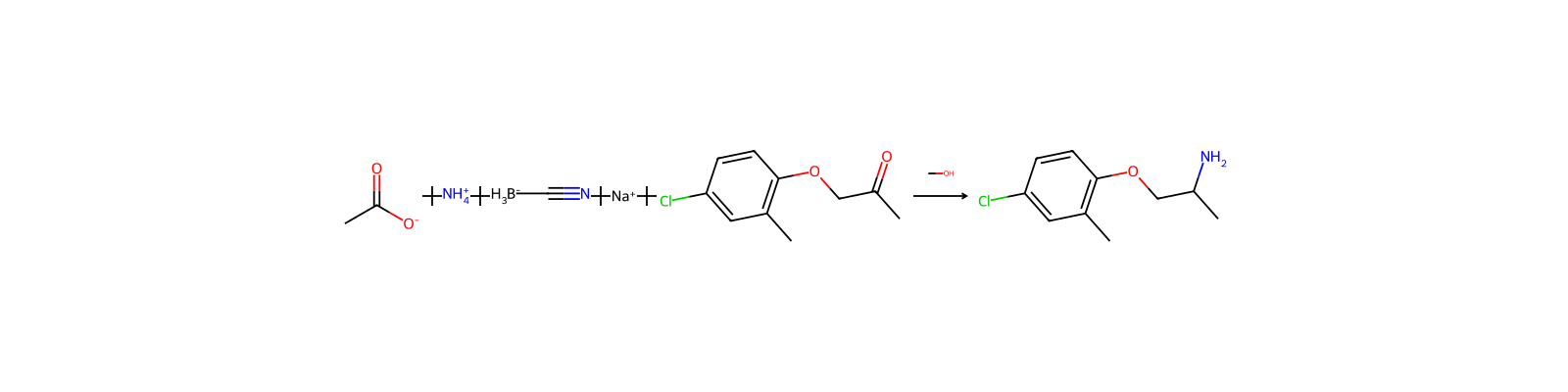
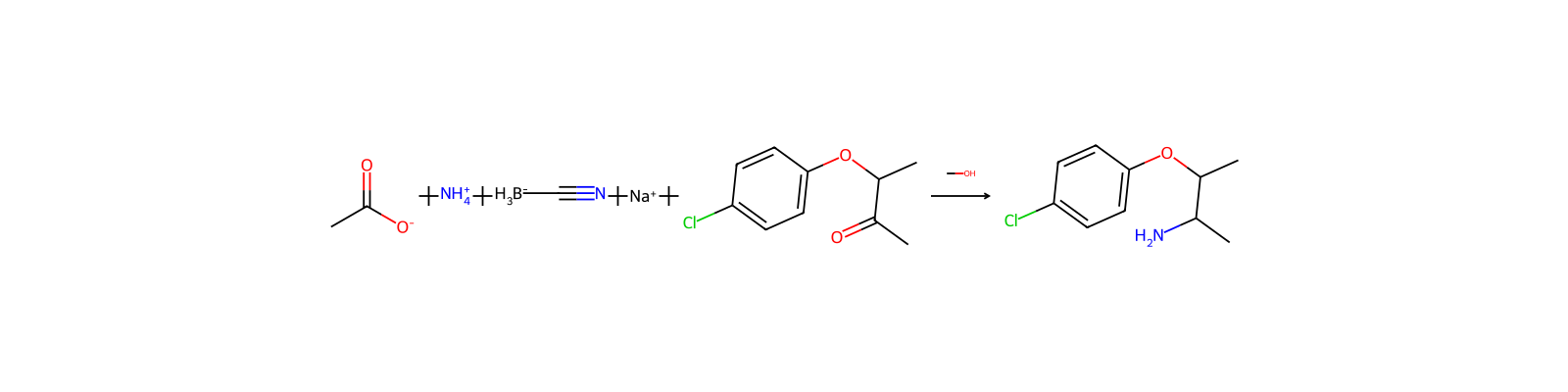
용도사용 나트륨 시아 노 수소화 붕소는 알데하이드 및 케톤의 환원성 아미 노화 및 아민의 환원성 알킬화 시약으로 일반적으로 사용된다.

개요Sodium cyanoborohydride (NaBH3CN) is a selective reducing agent used for a variety of chemical reductions, including aldehyde, ketones, acetals, epoxides, oximes, enamines, reductive aminations of aldehydes and ketones, and reductive alkylations of amines and hydrazines. The utility of sodium cyanoborohydride as a reducing agent is greatly enhanced by its stability under acid conditions, and its solubility in aprotic solvents. Sodium cyanoborohydride is a milder and more selective reducing agent than sodium borohydride. Sodium cyanoborohydride is a weaker and more-selective reducing agent than sodium borohydride because of the electron-withdrawing effect of the cyano group. It has the further advantage that it is stable in acid to pH = 3 and can be employed to effect reductions in the presence of functional groups that are sensitive to the more-basic conditions of reduction with sodium borohydride. Aldehydes and ketones are unaffected by sodium cyanoborohydride in neutral solution, but they are readily reduced to the corresponding alcohol at pH=3-4 by way of the protonated carbonyl group. By previous exchange of the hydrogens of the borohydride for deuterium or tritium, by reaction with D2O or tritiated water, an efficient and economical route is available for deuteride or tritiide reduction of aldehydes and ketones.

용도Sodium Cyanoborohydride is a commonly used as a reagent in the reductive amination of aldehydes and ketones and in the reductive alkylation of amines. It is also used in the synthesis of a novel phenolate-bridged dilanthanum(III) complex of interest as a model for metalloproteins as well as for its importance in basic and applied chemistry.

제조 방법 · 1건

Synthesis of Sodium cyanoborohydride(NaBH3CN): NaBH3CN was made by stirring equimolar BH3·THF (~1 M) with NaCN in THF in excellent yield.To a rapidly stirred slurry of sodium borohydride (80.2g, 2.09 mol) in THF (1000mL) in a 2-L flask is added a solution of hydrogen cyanide in THF (294g containing 58.8g of hydrogen cyanide) at 25°C. Evolution of hydrogen occurs slowly during the addition. Following the addition, the reaction mixture is stirred for 1 h at 25°C and then heated at reflux until hydrogen evolution has ceased. Filtration followed by vacuum removal of THF gives white solid sodium cyanoborohydride; yield 120g (91%).
상·하류 제품 정보

상류 원료

Cyclopropanecarboxamide, 1-(3,4-dichlorophenyl)-N-[(4-fluorophenyl)methyl]-2-formyl-N-methyl-, (1S,2R)-1,3-디옥솔란-2-일메틸)트리페닐포스포늄 브로마이드테트라하이드로푸란

하류 제품

N,N-디메틸피페리딘-4-아민N-isopropyl-2-(piperazin-1-yl)pyridin-3-amine1-Cyclopropylpiperazine3-Dimethylaminophenylboronic acidEnalaprilNETILMICIN7-브로모-1,2,3,4-테트라하이드로퀴놀린염산염6-bromo-3,4-dihydro-3-nitro-2H-chromeneLisinopril Dihydrate4-N-Boc-4-N-메틸-아미노피페리딘1-(Cyclopropylmethyl)piperazine2-Aminocyclohexanecarbonitrile1-PiperonylpiperazineN-Methyl-p-anisidine에틸인돌린-6-카르복실레이트tert-Butyl 4-hydrazinylpiperidine-1-carboxylate4-(1-피롤리디닐)피페리딘Indoline-6-carboxylic acidN-Boc-4-(사이클로프로필메틸)피페라진1-Boc-4-메틸아미노피페리딘4-Aminopyrimidine1-(3-Pyrrolidinopropyl)piperazine

관련 반응

9,344건
반응 기록 만들기
HRID 923 반응식
HRID 923반응물로
HRID 924 반응식
HRID 924반응물로
HRID 925 반응식
HRID 925반응물로
HRID 1175 반응식
HRID 1175반응물로
HRID 1440 반응식
HRID 1440반응물로
HRID 1624 반응식
HRID 1624반응물로
HRID 1791 반응식
HRID 1791반응물로
HRID 1809 반응식
HRID 1809반응물로
이전1 / 1168 페이지

화합물 노트

이 페이지에서기본 정보개요이름 및 식별자물성안전 및 규제화학 및 산업관련 반응화합물 노트