

기본 정보
- 표준 SMILES
NCCc1c[nH]c2ccc(O)cc12- InChIKey
QZAYGJVTTNCVMB-UHFFFAOYSA-N- 분자식
- C10H12N2O
- 평균 분자량
- 176.21 g/mol
- 단동위원소 질량
- 176.094963
개요
Serotonin is a primary amino compound that is the 5-hydroxy derivative of tryptamine. It has a role as a neurotransmitter, a mouse metabolite and a human metabolite. It is a monoamine molecular messenger, a member of tryptamines, a member of phenols, a primary amino compound and a member of hydroxyindoles. It is functionally related to a tryptamine. It is a conjugate base of a serotonin(1+).
이름 및 식별자
- 우선 이름
- Serotonin
- IUPAC
- 3-(2-aminoethyl)-1H-indol-5-ol
- 영어명
- 5-Hydroxytryptamine
- 분자식
- C10H12N2O
- 분자량
- 176.22
이름 및 동의어
serotonin5-HYDROXYTRYPTAMINE50-67-93-(2-Aminoethyl)-1H-indol-5-olEnteramineThrombotoninThrombocytinSerotonine1H-Indol-5-ol, 3-(2-aminoethyl)-Hippophaine3-(beta-Aminoethyl)-5-hydroxyindole333DO1RDJY
이름 더 보기
3-(2-aminoethyl)-1H-indol-5-ol hydrochloride5-htaSEROTONIN BASE5-Hydroxytryptamine,freebaseantemoquaantemovissubstanzds
DTXSID8075330CHEBI:287903-(2-Aminoethyl)-1H-indol-5-oSerotonin (Human)5 HydroxytryptamineSerotonin 1543RefChem:6493DTXCID4040765
데이터베이스 식별자
- CAS
50-67-9- PubChem CID
- 5202
- DTXSID
DTXSID8075330- ChEMBL
CHEMBL39- ChEBI
CHEBI:28790- UNII
- 333DO1RDJY
- EC Number
- 200-058-9
- Nikkaji
- J4.107F
물성
구조 계산 물성
- XLogP
- 0.2
- 극성 표면적
- 62 Ų
- 수소 결합 공여자 수
- 3
- 수소 결합 수용자 수
- 2
- 회전 가능 결합 수
- 2
- 무거운 원자 수
- 13
- 형식 전하
- 0
- 복잡도
- 174
실험 및 물리화학적 성질
DrugsPharmaceuticals -> Listed in ZINC15
SpringerMaterials PropertiesAngular frequency
LogP0.21
Solubility25.5 mg/mL
Physical DescriptionSolid
Ionization Efficiency
Positive
2.35
2.7
Agilent XCT
Electrospray ionization
formic acid (5.3nM)
Collision Cross Section
150.8 Ų [M+Na]+ [CCS Type: DT; Method: stepped-field]
146.9 Ų [M+Na]+ [CCS Type: DT; Method: single field calibrated with ESI Low Concentration Tuning Mix (Agilent)]
135.85 Ų [M-H]- [CCS Type: DT; Method: single field calibrated with Agilent tune mix (Agilent)]
139.08 Ų [M+Na]+ [CCS Type: TW; Method: calibrated with polyalanine and drug standards]
149.8 Ų [M+Na]+
물리화학적 성질
- 녹는점
- 167.5 °C · 167.5 °C
- 끓는 점
- 307.83 °C · 307.83°C (rough estimate)
- 밀도
- 1.1102 · 1.1102 (rough estimate)
- 굴절률
- 1.711 · 1.7110 (estimate)
- 저장 조건
- 2 · 2-8°C
- 용해도
- 클로로포름(약간 용해됨), DMSO(약간 용해됨), 메탄올(약간 용해됨)
- 산도 계수 (pKa)
- 9.8 · 9.8(at 25℃)
- 물리적 상태
- Solid
- 색상
- White to off-white
- BRN
- 143524 · 143524
- 안정성
- 흡습성
- InChI
- InChI=1S/C10H12N2O/c11-4-3-7-6-12-10-2-1-8(13)5-9(7)10/h1-2,5-6,12-13H,3-4,11H2
- InChIKey
- QZAYGJVTTNCVMB-UHFFFAOYSA-N
- SMILES
- N1C2=C(C=C(O)C=C2)C(CCN)=C1
- EPA
- Serotonin (50-67-9)
안전 및 규제
GHS 분류
GHS Classification
Danger
H301 (100%): Toxic if swallowed [Danger Acute toxicity, oral]
P203, P264, P270, P280, P301+P316, P318, P321, P330, P405, and P501 (click each P-code to see the statement)
Aggregated GHS information provided per 67 reports by companies from 3 notifications to the ECHA C&L Inventory. Each notification may be associated with multiple companies.
유해성 정보
Hazard Classes and CategoriesAcute Tox. 3 (100%)
안전 데이터
- wgk
- 3
- ridadr
- UN 2811 6.1 / PGIII
- risk_code
- 63-25
- hazard_code
- T
- safety_code
- 36/37-45
- 위험 등급
- IRRITANT
- Hazard Classifications
- Acute Tox. 3 OralRepr. 2
- 스토리지 클래스
- 6.1C - Combustible acute toxic Cat.3toxic compounds or compounds which causing chronic effects
화학 및 산업
약리 정보
Metabolism/MetabolitesSerotonin has known human metabolites that include (2S,3S,4S,5R)-6-[[3-(2-Aminoethyl)-1H-indol-5-yl]oxy]-3,4,5-trihydroxy-2-oxanecarboxylic acid and 3-Ethyl-1H-indol-5-ol.
MeSH Pharmacological ClassificationEndogenous compounds and drugs that bind to and activate SEROTONIN RECEPTORS. Many serotonin receptor agonists are used as ANTIDEPRESSANTS; ANXIOLYTICS; and in the treatment of MIGRAINE DISORDERS.
Tissue LocationsAdipose Tissue
Cellular LocationsCytoplasm
Metabolite Pathways3-Methylthiofentanyl Action Pathway
응용 분야
개요Serotonin is the baby boomer of neurotransmitters: It was identified in the late 1940s, its adolescence was troubled and turbulent, it made the drug scene in the 1960s, and it nearly died of an overdose in the early 1970s. At one point, the remark was made that serotonin doesn't do anything. On reaching its middle years, serotonin has matured and become an important topic of study, a household name, and more complicated than ever. Serotonin has been associated with, among other things, anxiety, depression, schizophrenia, drug abuse, sleep, dreaming, hallucinogenic activity, headache, cardiovascular disorders, and appetite control, and it is now dabbling in acupuncture and transcendental meditation. Serotonin was independently identified in the late 1940s by two groups of investigators: In the United States, it was called serotonin, whereas in Italy, it was called enteramine. Its total synthesis in the early 1950s confirmed that both substances were 5-hydroxytryptamine (5-HT ). Serotonin (5-HT ) was detected in numerous plant and animal species and, in the mid-1950s, was identified in the central nervous system (CNS) of animals. A neurotransmitter role was subsequently proposed for this substance. Later, 5-HT was implicated in a variety of central and peripheral physiologic actions. It seemed to be involved in vasoconstriction and vasodilation, regulation of body temperature, sleep, and hormonal regulation, and evidence suggested that it might be involved in depression. The structural similarity between 5-HT and the then recently discovered hallucinogenic agent (+)-lysergic acid diethylamide (LSD) intrigued investigators. This observation led to speculation that 5-HT might be involved in the mechanism of action of psychoactive substances and that it might play a seminal role in various mental disorders.
용도neurotransmitter
상·하류 제품 정보
하류 제품
공급사50 곳
湖北永阔科技有限公司027-59223108 15972152991 · [email protected]
湖南韵邦生物科技股份有限公司85561037 15386497078 · [email protected]
成都乐美天医药科技有限公司17308096051 17308096051 · [email protected]
湖北万得化工有限公司15377098680 15377098680 · [email protected]
Career Henan Chemica Co+86-0371-86658258 +86-13203830695 · [email protected]
成都超九八生物科技有限公司13348960310 13348960310 · [email protected]
上海金试生化科技有限公司18601717983 18601717983 · [email protected]
艾吉析科技(上海)有限公司17717235263 · [email protected]
成都健腾生物技术有限公司028-85159085 · [email protected]
武汉欣扬瑞和化学科技有限公司153-07155313 15307155313 · [email protected]
河南多贝化工有限公司0370-6999054 17550096163 · [email protected]
湖北云镁科技有限公司027-59206672 18995657604 · [email protected]
云南西力生物技术股份有限公司0871-65217109 · [email protected]
Baoji Guokang Healthchem co.,ltd+8615604608665 15604608665 · [email protected]
Dayang Chem (Hangzhou) Co.,Ltd.+86-0571-88938639 17705817739 · [email protected]
上海赛可锐生物科技有限公司021-58000709 13120558703 · [email protected]
Syntechem Co.,Ltd[email protected]
上海颖心实验室设备有限公司021-59178156 17002132182 · [email protected]
武汉凯威斯科技有限公司86-027-67849912 · [email protected]
上海道鞅科技有限公司QQ:3150471267 13381681725 · [email protected]
梯希爱(上海)化工贸易有限公司021-61109150 · [email protected]
上海瀚鸿科技股份有限公司021-54306202 13764082696 · [email protected]
江苏艾康生物医药研发有限公司025-5885952 15955137747 · [email protected]
銳迪國際科技有限公司18024082417 · [email protected]
湖北广奥生物科技有限公司027-02702759223056 18162699093 · [email protected]
武汉市皇臻生物化工有限公司13795480948 · [email protected]
佛山宝诺生物科技有限公司0757-85921206 18520245316 · [email protected]
湖北成海化工有限公司027-59220433 18327245847 · [email protected]
贵州迪大科技有限责任公司0851-8475-2296 18096062265 · [email protected]
合肥朝博科技有限公司19322001459
杭州云易国科生物科技有限公司18457506494 · [email protected]
TargetMol 中国(陶术生物)400-821-0310 15002144251 · [email protected]
山东博洛达生物科技有限公司0531-68659041 · [email protected]
上海陶素生化科技有限公司021-33632979 · [email protected]
深圳菲斯生物科技有限公司0755-83725350 13380397412 · [email protected]
北京奥秘佳得医药科技有限公司+86-13522808617 · [email protected]
上海卓因生物科技有限公司021-61317773 · [email protected]
天津普西唐生物医药科技有限公司010-60605840 · [email protected]
上海马氏化学科技有限公司19916721580 · [email protected]
上海麦克林生化科技股份有限公司15221275939 15221275939 · [email protected]
苏州凯若利新材料科技有限公司0512-66834346 17751187418
盖米科技(青岛)有限公司19524370118 · [email protected]
凯试(上海)科技有限公司021-50135380 · [email protected]
池州凯隆进出口贸易有限公司[email protected]
TargetMol中国(陶术生物)021-021-33632979 15002134094 · [email protected]
上海陶术生物科技股份有限公司+1-781-999-5354; +1-00000000000 · [email protected]
上海谱振生物科技有限公司4001650900 13817534909 · [email protected]
上海玻尔化学试剂有限公司19102157732 · [email protected]
上海阿拉丁生化科技股份有限公司6206333 13167063860 · [email protected]
湖北扬信医药科技有限公司07143299675 13092790750 · [email protected]
추가 설명
정의ChEBI: A primary amino compound that is the 5-hydroxy derivative of tryptamine.
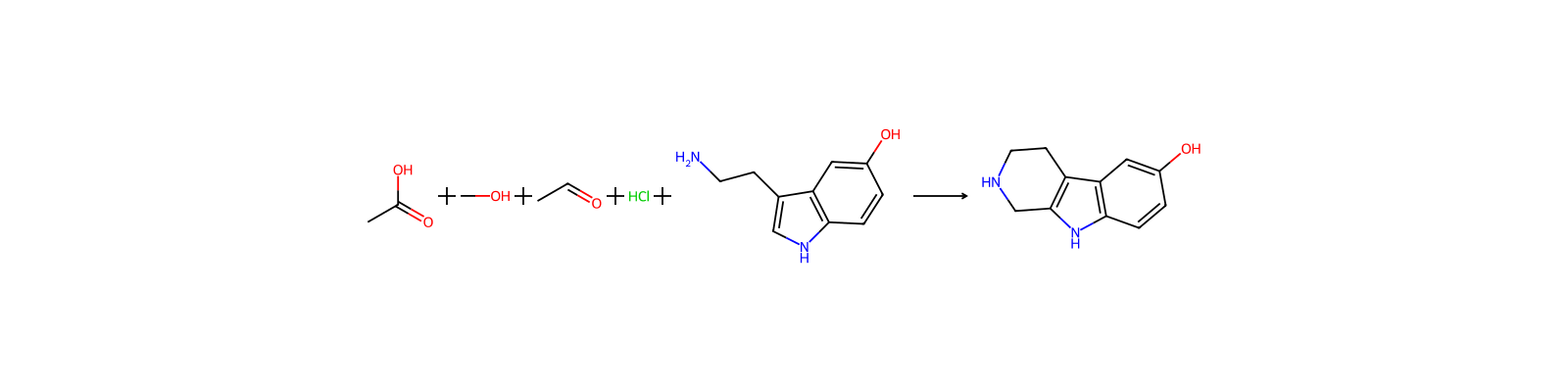
관련 반응
30건



연결된 노트
불러오는 중…