브로모디플루오로아세틸클로라이드
Bromodifluoroacetyl chloride
HCID 520892
데이터를 보충하는 중입니다. 잠시 후 페이지를 새로 고치면 최신 내용을 볼 수 있습니다

기본 정보
- CAS
3832-48-2- 표준 SMILES
O=C(Cl)C(F)(F)Br- InChIKey
LYJKGSALBRSKNL-UHFFFAOYSA-N- 분자식
- C2BrClF2O
- 평균 분자량
- 193.37 g/mol
- 단동위원소 질량
- 191.87891
개요
Bromodifluoroacetyl chloride is an organobromide compound. It is used as a starting material for the synthesis of (biologically active) _,_-difluoro-_-lactams and the synthesis of trifluoromethylated C-nucleosides. Bromine is a halogen element with the symbol Br and atomic number 35. Diatomic bromine does not occur naturally, but bromine salts can be found in crustal rock. (L625, L681)
이름 및 식별자
- 우선 이름
- Bromodifluoroacetyl chloride
- IUPAC
- 2-bromo-2,2-difluoroacetyl chloride
- 현지명
- 브로모디플루오로아세틸클로라이드
- 영어명
- Bromodifluoroacetyl chloride
- 분자식
- C2BrClF2O
- 분자량
- 193.37
이름 및 동의어
Bromodifluoroacetyl chloride3832-48-22-bromo-2,2-difluoroacetyl chlorideDTXSID90334487RefChem:570341DTXCID002855772-Bromo-2,2-difluoro-ethanoyl chloride671-811-0bromo(difluoro)acetyl chlorideMFCD00069081Bromodifluoroacetylchloridebromodifluoroacetic chloride
이름 더 보기
브로모디플루오로아세틸클로라이드Bromodifluoroacetylchloride97%acetyl chloride, bromodifluoro-Bromodifluoroacetyl chloride 97%2-Bromo-2,2-difluoroethanoyl chlorideAcetyl chloride, 2-bromo-2,2-difluoro-Bromodifluoroacetyl Chloride extrapure, 97%
2-bromanyl-2,2-bis(fluoranyl)ethanoyl chlorideA824108Bromodi(fluoro)acetyl chlorideSCHEMBL11613142-bromo-2,2-difluoro-acetyl chlorideAKOS005173358FS-4964DB-022977
데이터베이스 식별자
- CAS
3832-48-2
물성
구조 계산 물성보충 중
- XLogP
- 2.3
- 극성 표면적
- 17.1 Ų
- 수소 결합 공여자 수
- 0
- 수소 결합 수용자 수
- 3
- 회전 가능 결합 수
- 1
- 무거운 원자 수
- 7
- 형식 전하
- 0
- 복잡도
- 93.7
물리화학적 성질
- 끓는 점
- 50 °C · 50 °C
- 밀도
- 2.053 · 2.053±0.06 g/cm3(Predicted)
- 굴절률
- 1.3853 · 1.3853
- 물리적 상태
- 액체
- 색상
- Clear, colourless
- InChI
- InChI=1S/C2BrClF2O/c3-2(5,6)1(4)7
- InChIKey
- LYJKGSALBRSKNL-UHFFFAOYSA-N
- SMILES
- C(Cl)(C(Br)(F)F)=O
안전 및 규제
안전 정보는 참고용이며, 공급업체의 물질안전보건자료(SDS), 관련 법규 및 전문가 평가를 대체하지 않습니다.
GHS 분류
GHS Classification
Danger
H226 (90.9%): Flammable liquid and vapor [Warning Flammable liquids]
P210, P233, P240, P241, P242, P243, P260, P264, P280, P301+P330+P331, P302+P361+P354, P303+P361+P353, P304+P340, P305+P354+P338, P316, P321, P363, P370+P378, P403+P235, P405, and P501 (click each P-code to see the statement)
Aggregated GHS information provided per 44 reports by companies from 3 notifications to the ECHA C&L Inventory. Each notification may be associated with multiple companies.
유해성 정보
Hazard Classes and CategoriesFlam. Liq. 3 (90.9%)
독성 정보
Treatment
EYES: irrigate opened eyes for several minutes under running water. INGESTION: do not induce vomiting. Rinse mouth with water (never give anything by mouth to an unconscious person). Seek immediate medical advice. SKIN: should be treated immediately by rinsing the affected parts in cold running water for at least 15 minutes, followed by thorough washing with soap and water. If necessary, the person should shower and change contaminated clothing and shoes, and then must seek medical attention. INHALATION: supply fresh air. If required provide artificial respiration.
Health Effects
Bromine vapour causes irritation and direct damage to the mucous membranes. Elemental bromine also burns the skin. The bromide ion is a central nervous system depressant and chronic exposure produces neuronal effects. This is called bromism and can result in central reactions reaching from somnolence to coma, cachexia, exicosis, loss of reflexes or pathologic reflexes, clonic seizures, tremor, ataxia, loss of neural sensitivity, paresis, papillar edema of the eyes, abnormal speech, cerebral edema, delirium, aggressiveness, and psychoses. (L625, L626, L627)
화학 및 산업
약리 정보
Metabolism/Metabolites
Bromine is mainly absorbed via inhalation, but may also enter the body through dermal contact. Bromine salts can be ingested. Due to its reactivity, bromine quickly forms bromide and may be deposited in the tissues, displacing other halogens. (L626)
용도 및 제조
Uses
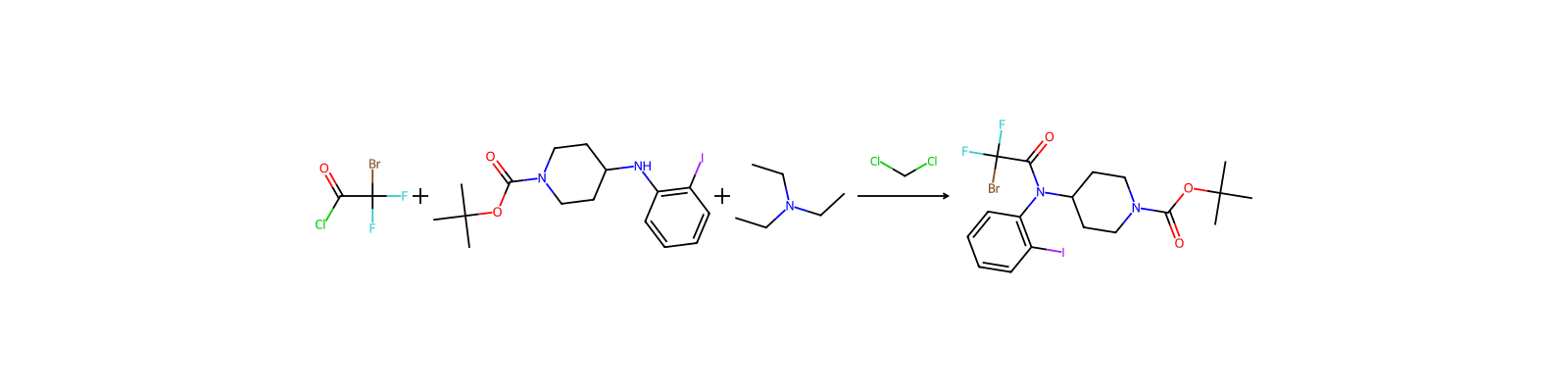
It is used as a starting material for the synthesis of (biologically active) _,_-difluoro-_-lactams and the synthesis of trifluoromethylated C-nucleosides. Diatomic bromine does not occur naturally, but bromine salts can be found in crustal rock.
상·하류 제품 정보
하류 제품
관련 반응
4건