

기본 정보
- 표준 SMILES
C=C1/C(=C\C=C2/CCC[C@]3(C)[C@@H]([C@H](C)CCCC(C)C)CC[C@@H]23)C[C@@H](O)C[C@@H]1O- InChIKey
OFHCOWSQAMBJIW-AVJTYSNKSA-N- 분자식
- C27H44O2
- 평균 분자량
- 400.6 g/mol
- 단동위원소 질량
- 400.33413065
개요
Alfacalcidol is a member of the class of D3 vitamins that is calciol in which the hydrogen at the 1alpha position is replaced by a hydroxy group. It is an active metabolite of cholecalciferol, which performs important functions in regulation of the calcium balance and the bone metabolism. It has a role as a bone density conservation agent. It is a diol, a seco-cholestane, a hydroxycalciol and a member of D3 vitamins. It is functionally related to a calciol.
이름 및 식별자
- 우선 이름
- Alfacalcidol
- IUPAC
- trans-(1R,3S,5Z)-5-[(2E)-2-[(1R,3aS,7aR)-7a-methyl-1-[(2R)-6-methylheptan-2-yl]-2,3,3a,5,6,7-hexahydro-1H-inden-4-ylidene]ethylidene]-4-methylidenecyclohexane-1,3-diol
- 영어명
- Alfacalcidol
- 분자식
- C27H44O2
- 분자량
- 400.64
이름 및 동의어
alfacalcidol41294-56-81-HydroxycholecalciferolAlphacalcidol1alpha-Hydroxyvitamin D3AlfarolEinsAlpha1-Hydroxyvitamin D31alpha-HydroxycholecalciferolAlsiodolOxydevitBondiol
이름 더 보기
HYDROXYVITAMIN D3Alfacalcidiol1α-Hydroxyvitamin D3EtαUn Alfa
alpha-CalcidolOne-AlphaEtalphaAlfacalcidolumAlpha D3AlpharolTevabone1alpha-Hydroxy-vitamin D3
데이터베이스 식별자
- CAS
41294-56-8- PubChem CID
- 5282181
- DTXSID
DTXSID0022569- ChEMBL
CHEMBL1601669- ChEBI
CHEBI:31186- UNII
- URQ2517572
- EC Number
- 255-297-1
- Nikkaji
- J9.282G
물성
구조 계산 물성
- XLogP
- 6.8
- 극성 표면적
- 40.5 Ų
- 수소 결합 공여자 수
- 2
- 수소 결합 수용자 수
- 2
- 회전 가능 결합 수
- 6
- 무거운 원자 수
- 29
- 형식 전하
- 0
- 복잡도
- 643
실험 및 물리화학적 성질
DrugsPharmaceuticals -> Listed in ZINC15
LipidsLipids -> Sterol Lipids [ST] -> Secosteroids [ST03] -> Vitamin D3 and derivatives [ST0302]
Solubility
<1 mg/mL
1.63e-03 g/L
Melting Point136 °C
Physical DescriptionSolid
물리화학적 성질
- 녹는점
- 134 · 134-136°C
- 끓는 점
- 531.5 · 531.5±50.0 °C(Predicted)
- 밀도
- 1.01 · 1.01±0.1 g/cm3(Predicted)
- 저장 조건
- 20 °C · −20°C
- 용해도
- 물에는 거의 녹지 않으며, 에탄올(96%)에는 잘 녹고, 지방유에는 녹습니다.
- 물리적 상태
- 백색 결정성 고체
- 산도 계수 (pKa)
- 14.43 · 14.43±0.40(Predicted)
- 색상
- 흰색에서 거의 흰색
- 생물학적 소스
- synthetic
- Merck
- 14 · 14,4819
- 안정성
- 감광성
- InChIKey
- OFHCOWSQAMBJIW-GITLSTMWSA-N
- SMILES
- [C@@H]1(O)CC(=C/C=C2\CCC[C@@]3(C)[C@@]\2([H])CC[C@@H]3[C@H](C)CCCC(C)C)C(=C)[C@H](O)C1
- EPA
- Alphacalcidol (41294-56-8)
화학적 성질
White Solid
안전 및 규제
GHS 분류
GHS Classification
Danger
H300 (100%): Fatal if swallowed [Danger Acute toxicity, oral]
P260, P262, P264, P270, P271, P280, P284, P301+P316, P302+P352, P304+P340, P316, P320, P321, P330, P361+P364, P403+P233, P405, and P501 (click each P-code to see the statement)
Aggregated GHS information provided per 48 reports by companies from 7 notifications to the ECHA C&L Inventory. Each notification may be associated with multiple companies.
유해성 정보
Regulatory InformationAlfacalcidol: Does not have an individual approval but may be used as a component in a product covered by a group standard. It is not approved for use as a chemical in its own right.
Hazard Classes and CategoriesAcute Tox. 2 (100%)
독성 정보
Drug Induced Liver Injury
Drug-Induced Liver Injury Severity and Toxicity (DILIst)
Alfacalcidol
DILI Positive
DOI:10.1016/j.drudis.2019.09.022
안전 데이터
- wgk
- 3
- rtecs
- VS2851000
- ridadr
- UN 2811 6.1/PG 1
- HS 번호
- 29361000
- risk_code
- 26/27/28-36/37/38
- hazard_code
- T+,Xi
- safety_code
- 28-36/37-45-36-26
- 포장분류
- I
- 위험 등급
- 6.1(a)
- F 고인화성물질
- 8-10
- Hazard Classifications
- Acute Tox. 1 Oral
- 스토리지 클래스
- 6.1A - Combustible acute toxic Cat. 1 and 2very toxic hazardous materials
화학 및 산업
약리 정보
ATC Code
A11CC03
A - Alimentary tract and metabolism
QA - Alimentary tract and metabolism
Protein BindingThe active metabolite of alfacalcidol, 1,25-dihydroxyvitamin D, is transported to tissues via globulin, a specific transport protein.
Pharmacodynamics
Alfacalcidol works to increase serum levels of calcium by stimulating intestinal calcium absorption, reabsorption of calcium from bone, and possibly the renal reabsorption of calcium. It also modestly promotes intestinal phosphorus absorption. In patients with renal failure, alfacalcidol increased intestinal calcium and phosphorus absorption in a dose-related manner. This increase in calcium and phosphorus levels occurs within three days following drug administration: this effect was reversed within three days of drug discontinuation. In patients with chronic renal failure, serum calcium levels were elevated while parathyroid hormone and alkaline phosphatase levels returned to normal levels within five days following alfacalcidol administration. Since alfacalcidol suppresses parathyroid hormone, a reduction in parathyroid hormone levels is achieved more rapidly in patients on intermittent intravenous therapy, with significant reductions occurring within three months of therapy. In patients receiving daily oral therapy of alfacalcidol, the time it takes alfacalcidol to normalize plasma calcium levels may be up to several months, possibly reflecting calcium being utilized for bone mineralization. In patients with nutritional osteomalacia, alfacalcidol increased calcium absorption with six hours of oral administration and the effects peaked at 24 hours.
Mechanism of Action
In conditions like chronic renal failure, renal bone disease, hypoparathyroidism, and vitamin D dependent rickets, the kidneys' capacity for 1α-hydroxylation is impaired, leading to reduced production of endogenous 1,25-dihydroxyvitamin D and aberrated mineral metabolism. As an active and potent analog of vitamin D, alfacalcidol works to restore the functions and activities of endogenous 1,25-dihydroxyvitamin D.
Biological Half-LifeThe half-life of alfacalcidol ranges from three to four hours.
Metabolism/Metabolites
Alfacalcidol is rapidly converted in the liver to 1,25-dihydroxyvitamin D, which is essentially the metabolite of vitamin D that regulates calcium and phosphate metabolism. Alfacalcidol is further metabolized to other polar inactive metabolites, excreted primarily through the bile.
MeSH Pharmacological ClassificationAgents that inhibit BONE RESORPTION and/or favor BONE MINERALIZATION and BONE REGENERATION. They are used to heal BONE FRACTURES and to treat METABOLIC BONE DISEASES such as OSTEOPOROSIS.
Absorption, Distribution and ExcretionAlfacalcidol is absorbed passively and almost completely in the small intestine.
Cellular LocationsCytoplasm
응용 분야
용도A synthetic analog of Calcitiol (the hormonal form of vitamin D3), which shows identical potency with respect to stimulation of intestinal calcium absorption and bone mineral mobilization. Vitamin D source
일반 설명Has biological properties similar to 1α-Hydroxyvitamin D2 (Cat. No. 679100). Converted to active Calcitriol (1α,25-Dihydroxyvitamin D3; Cat. No. 679101) in vivo. Inhibits the formation of nephrocalcinosis in streptozotocin-induced diabetic rats fed on low zinc diets.
상·하류 제품 정보
상류 원료
공급사50 곳
北京华美互利生物化工010-56205725 · [email protected]
上海阿拉丁生化科技股份有限公司400-6206333 13167063860 · [email protected]
上海策嵘生物科技有限公司[email protected]
Hong Kong Tiansheng New Material Trading Co., Ltd+8617320695765 · [email protected]
温州共赢化学有限公司+86-0086-577-64498589 +86-15355981851 · [email protected]
Dayang Chem (Hangzhou) Co.,Ltd.+86-0571-88938639 17705817739 · [email protected]
LGM Pharma1-(800)-881-8210 · [email protected]
武汉易泰科技有限公司上海分公司18930552037 · [email protected]
上海汉尊生物科技有限公司021-50215258
大连美仑生物技术有限公司0411-62910999 13889544652 · [email protected]
广州市亿邦医药科技有限公司+86 (20) 28996708,29078958,28139708,29076128,28133708,28139728,28139738,28133718,021-31663278,021-31663578,021-60538387
上海瀚鸿科技股份有限公司021-54306202 13764082696 · [email protected]
China Kouting Group Limited+86 (21) 5811-6473 5811-6475 · [email protected]
上海诗丹德标准技术服务有限公司021-021-57127007-6622-6622 17621252073 · [email protected]
杭州润颜医药科技有限公司571-13989459766 18112526015 · [email protected]
武汉瑞立升科技发展有限公司27-027-83314682 13554138826 · [email protected]
上海景颜化工科技有限公司13817811078 · [email protected]
Pure Chemistry Scientific Inc.001-857-928-2050 or 1-888-588-9418 · [email protected]
武汉丰泰威远科技有限公司+86-27-8746-5837 +86-18627785180 · [email protected]
Zhejiang J&C Biological Technology Co.,Limited+1-2135480471 · [email protected]
武汉丰泰威远科技有限公司027-87465837 19945049750 · [email protected]
杭州东帆化学有限公司86-0571-85151182
AdooQ BioScience, LLC+1 (866) 930-6790 · [email protected]
Wuhan NCE Biomedical Co.,Ltd.4000-027-021 |24 +86-13986109188 | +86-15623472865 | +81-08033611988
TCI AMERICA800-4238616 · [email protected]
TOKYO CHEMICAL INDUSTRY CO., LTD.03-36680489 · [email protected]
TCI Europe320-37350700 · [email protected]
深圳振强药物研发有限公司0755-66853366 13670046396 · [email protected]
深圳康特腾科技有限公司86-0755-86635001 · [email protected]
南京生利德生物科技有限公司025-57798810 18652991625 · [email protected]
武汉恒和达生物医药有限公司027-84888681 18086046872 · [email protected]
重庆福腾医药有限公司18696571988 · [email protected]
湖北威德利化学试剂有限公司186-02735115 18602735115 · [email protected]
上海将来实业股份有限公司400-0066400 13621662912 · [email protected]
成都零六生物科技有限公司400-1166-196 13458535857 · [email protected]
湖南华腾制药有限公司400-8592883 · [email protected]
上海创赛科技有限公司400-6087598 15021221957 · [email protected]
上海御略医药科技有限公司021-60345187 13671753212 · [email protected]
杭州杰恒化工有限公司0571-87396432 · [email protected]
南京百鑫德诺生物科技有限公司025-58849295 · [email protected]
广州市慈铭生物科技有限公司020-38082199,29065168,38082986,29878298,29866629,4000192398
成都润泽本土化工有限公司13096311329 028-88469284 616445927 · [email protected]
凯试(上海)科技有限公司021-50135380 · [email protected]
湖北巨胜科技有限公司027-59599241 18871490274 · [email protected]
池州凯隆进出口贸易有限公司[email protected]
甘肃皓天科技股份有限公司0943-6900332 17789447501 · [email protected]
Sigma-Aldrich西格玛奥德里奇(上海)贸易有限公司021-61415566 800-8193336 · [email protected]
上海泽涵生物医药科技有限公司021-61350663 13052117465 · [email protected]
TargetMol中国(陶术生物)021-021-33632979 15002134094 · [email protected]
上海陶术生物科技股份有限公司+1-781-999-5354; +1-00000000000 · [email protected]
추가 설명
정의ChEBI: A member of the class of D3 vitamins that is calciol in which the hydrogen at the 1alpha position is replaced by a hydroxy group. It is an active metabolite of cholecalciferol, which performs important functions in reg lation of the calcium balance and the bone metabolism.
관련 반응
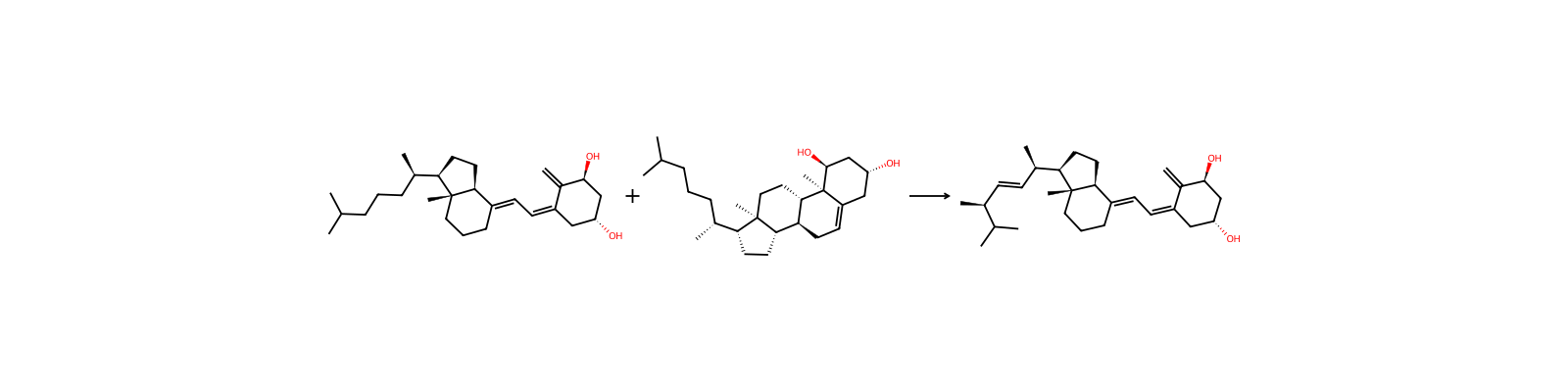
5건



연결된 노트
불러오는 중…