기본 정보
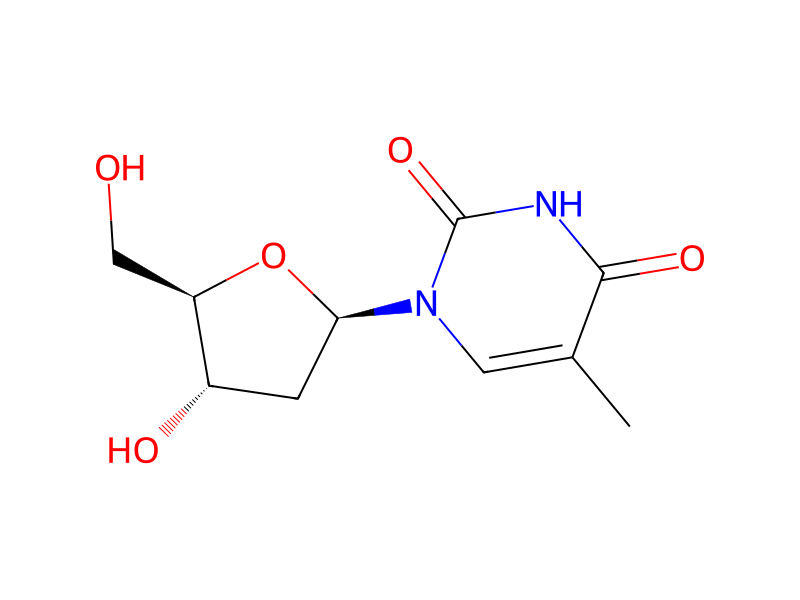
- 표준 SMILES
Cc1cn([C@H]2C[C@H](O)[C@@H](CO)O2)c(=O)[nH]c1=O- InChIKey
IQFYYKKMVGJFEH-XLPZGREQSA-N- 분자식
- C10H14N2O5
- 평균 분자량
- 242.23 g/mol
- 단동위원소 질량
- 242.09027155
이름 및 식별자
- 우선 이름
- Thymidine
- IUPAC
- 1-[(2R,4S,5R)-4-hydroxy-5-(hydroxymethyl)oxolan-2-yl]-5-methylpyrimidine-2,4-dione
- 영어명
- 1-[(2R,4S,5R)-4-hydroxy-5-(hydroxymethyl)oxolan-2-yl]-5-methyl-pyrimidine-2,4-dione
- 분자식
- C10H14N2O5
- 분자량
- 242.23
이름 및 동의어
thymidine50-89-52'-DeoxythymidineDThydThymidinThymine-2-desoxyriboside5-Methyl-2'-deoxyuridineThyminedeoxyribosideDeoxyribothymidineDoxribtiminedThd2'-thymidine
이름 더 보기
DTXSID50236611-[(2R,4S,5R)-4-hydroxy-5-(hydroxymethyl)oxolan-2-yl]-5-methyl-1,2,3,4-tetrahydropyrimidine-2,4-dionethymine 2'-deoxyribosideVC2W18DGKR1-[(2R,4S,5R)-4-hydroxy-5-(hydroxymethyl)oxolan-2-yl]-5-methylpyrimidine-2,4-dione2'-deoxy-5-methyluridineCHEBI:17748NSC-21548
데이터베이스 식별자
- CAS
146183-25-7、50-88-4、50-89-5- PubChem CID
- 5789
- DTXSID
DTXSID5023661- ChEMBL
CHEMBL52609- ChEBI
CHEBI:17748- UNII
- VC2W18DGKR
- EC Number
- 200-070-4
- Nikkaji
- J4.548I
물성
구조 계산 물성
- XLogP
- -1.2
- 극성 표면적
- 99.1 Ų
- 수소 결합 공여자 수
- 3
- 수소 결합 수용자 수
- 5
- 회전 가능 결합 수
- 2
- 무거운 원자 수
- 17
- 형식 전하
- 0
- 복잡도
- 381
실험 및 물리화학적 성질
LogP
-0.93
-0.93
Solubility
73.5 mg/mL
Water 50 (mg/mL)
Melting Point187-189
Optical Rotation(c = 1, H2O) [a]25 D = +18 ± 0.5°
Physical Description
Solid; [Merck Index] White odorless powder; [Alfa Aesar MSDS]
Solid
Stability/Shelf LifeSolution: A 1% solution of thymidine in water, kept at room temperature, is stable for at least 24 hours (HPLC).
Collision Cross Section
161 Ų [M+Na]+ [CCS Type: DT; Method: single field calibrated with Agilent tune mix (Agilent)];151.22 Ų [M-H]- [CCS Type: DT; Method: single field calibrated with Agilent tune mix (Agilent)]
164.51 Ų [M+Na]+ [CCS Type: DT; Method: stepped-field];157.04 Ų [M-H]- [CCS Type: DT; Method: stepped-field]
161.6 Ų [M+Na]+ [CCS Type: DT; Method: single field calibrated with ESI Low Concentration Tuning Mix (Agilent)];154.1 Ų [M-H]- [CCS Type: DT; Method: single field calibrated with ESI Low Concentration Tuning Mix (Agilent)]
154.2 Ų [M-H]-;161.2 Ų [M+Na]+
안전 및 규제
GHS 분류
GHS Classification
This chemical does not meet GHS hazard criteria for 97.6% (121 of 124) of all reports.
Not Classified;Reported as not meeting GHS hazard criteria by 121 of 124 companies (only 2.4% companies provided GHS information). For more detailed information, please visit ECHA C&L website.
Aggregated GHS information provided per 124 reports by companies from 4 notifications to the ECHA C&L Inventory.;Reported as not meeting GHS hazard criteria per 121 of 124 reports by companies.;There are 3 notifications provided by 3 of 124 reports by companies with hazard statement code(s).;Information may vary between notifications depending on impurities, additives, and other factors. The percentage value in parenthesis indicates the notified classification ratio from companies that provide hazard codes. Only hazard codes with percentage values above 10% are shown. For more detailed information, please visit ECHA C&L website.
유해성 정보
Regulatory Information
Chemical: Thymidine
Status: Active Update: 02-09-2014 https://echa.europa.eu/registration-dossier/-/registered-dossier/15994
Thymidine: Does not have an individual approval but may be used under an appropriate group standard
Other Safety InformationEvaluation - Chemicals that are unlikely to require further regulation to manage risks to environment
Hazards SummaryCauses somnolence and changes in motor activity in intraperitoneal lethal-dose studies of mice (LD50 = 2,512 mg/kg); [RTECS] May cause irritation; [Alfa Aesar MSDS]
Hazard Classes and CategoriesNot Classified
독성 정보
Toxicity DataMouse(ip): LD50 2512 mg/kg
규제 정보
Regulatory Information
Chemical: Thymidine
Status: Active Update: 02-09-2014 https://echa.europa.eu/registration-dossier/-/registered-dossier/15994
Thymidine: Does not have an individual approval but may be used under an appropriate group standard
화학 및 산업
약리 정보
Protein BindingIn vitro plasma protein binding of thymidine was less than 10% over the concentration range between 0.23 mcg/mL and 23 mcg/mL.
Pharmacodynamics
Thymidine acts systemically as a biochemical modulator to optimize the efficacy and reduce the toxicity of standard anti-metabolite chemotherapeutic agents. Its core action is the metabolic modulation of key enzymes in the DNA salvage pathway, which results in the potentiation of anti-tumor effects (e.g., when combined with 5-Fluorouracil) or protection against host toxicity (e.g., host cell rescue from Methotrexate toxicity). Furthermore, TdR, through its conversion to dTTP, significantly accelerates DNA replication fork progression and helps alleviate replication stress in rapidly proliferating cells, a fundamental effect that contributes to its role in preserving genomic stability and altering the selectivity of drug therapy.
Mechanism of Action
The primary molecular function of Thymidine is its role as a precursor in the DNA salvage pathway, which it exploits to act as a potent biochemical modulator of anti-metabolite chemotherapy. Unlike its use as a traditional drug, thymidine's effect is achieved by manipulating the intracellular balance of deoxyribonucleotide triphosphate (dNTP) pools, which are essential for DNA synthesis and repair. Upon administration, thymidine is rapidly salvaged and phosphorylated by thymidine kinases to form dTTP (deoxythymidine triphosphate). This supplementation significantly increases the intracellular concentration of both dTTP and dGTP pools. This alteration of dNTP balance is directly responsible for thymidine's observed therapeutic effects, which are dependent on the co-administered drug. The elevated dTTP pools influence the metabolism of cytotoxic drugs. For example, it is thought to enhance the activation and incorporation of the active cytotoxic form of 5-Fluorouracil (FU) into DNA and RNA. The increase in dTTP and dGTP is linked to the observed acceleration of DNA replication fork progression in various cell types.
Biological Half-LifeThe mean half-life was approximately five hours following a single oral administration of 133 mg/kg dose under fed conditions in healthy adults.
Metabolism/Metabolites
Thymidine is primarily degraded (catabolized) by thymidine phosphorylase to the nucleobases and the 2-deoxy-α-D-ribose 1-phosphate moiety. Thymine, the pyrimidine nucleobase of doxribtimine, is subsequently catabolized to dihydrothymine and ultimately to γ-amino-isobutyric acid and CO2.
Absorption, Distribution and Excretion
The absolute bioavailability of thymidine following oral administration has not been determined. The median time to peak plasma concentration (Tmax) was approximately four hours.
Urinary excretion of intact thymidine was <1% of the dose in healthy subjects following an oral administration.
Thymidine's transfer across the blood-brain barrier is generally considered extremely low, with studies suggesting an active transport system in the choroid plexus transfers it into the cerebrospinal fluid (CSF) before it enters brain cells.
Tissue LocationsAdipose Tissue;Adrenal Gland;Bladder;Epidermis;Fibroblasts;Intestine;Kidney;Neuron;Pancreas;Placenta;Platelet;Prostate;Skeletal Muscle;Spleen;Testis;Thyroid Gland
Cellular LocationsExtracellular;Lysosome;Mitochondria
Metabolite PathwaysBeta Ureidopropionase Deficiency;Dihydropyrimidinase Deficiency;MNGIE (Mitochondrial Neurogastrointestinal Encephalopathy);Pyrimidine metabolism;UMP Synthase Deficiency (Orotic Aciduria)
용도 및 제조
UsesComponent of DNA; [Merck Index]
General Manufacturing InformationThymidine: ACTIVE
관련 반응
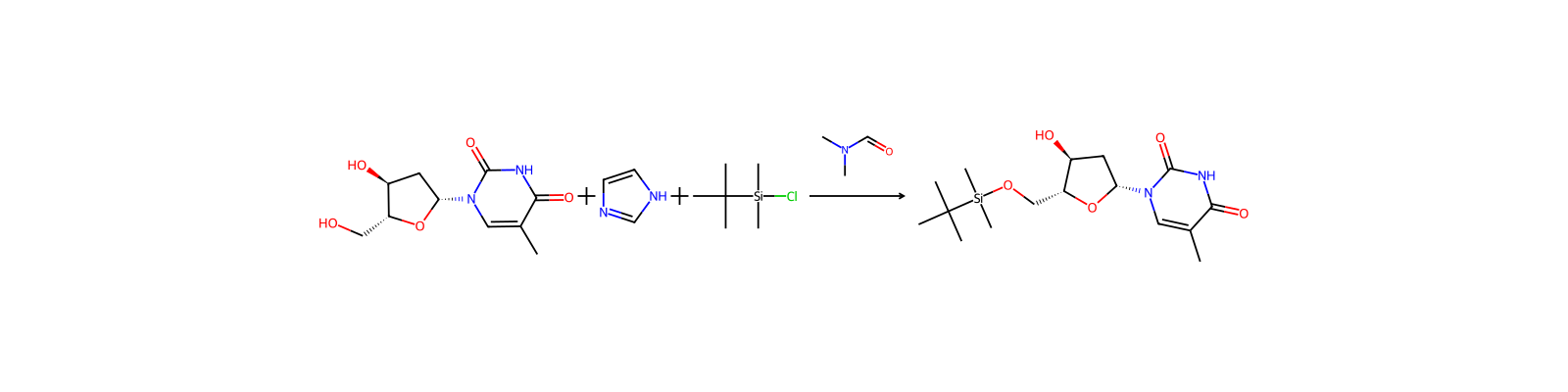
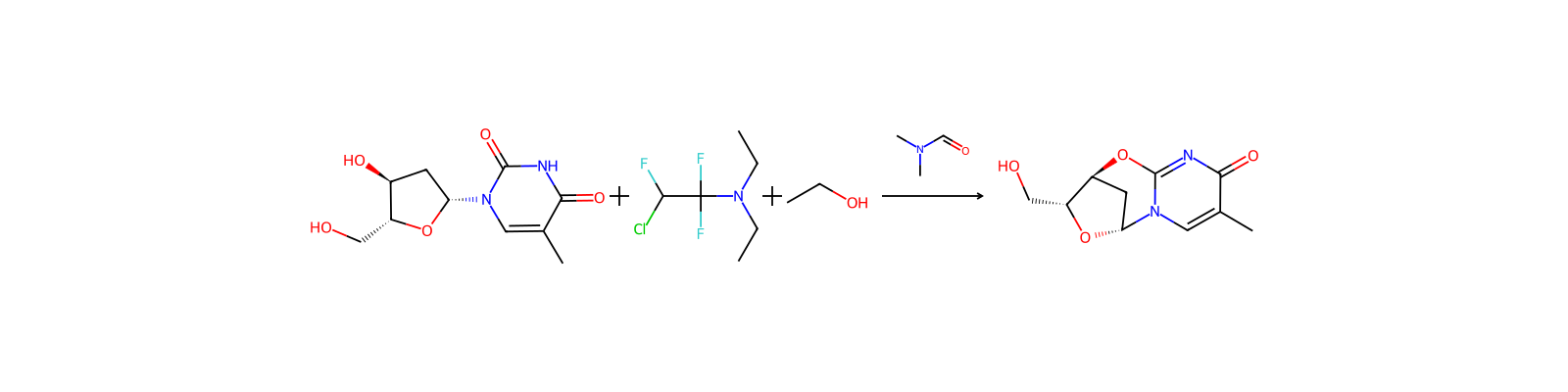
195건



연결된 노트
불러오는 중…