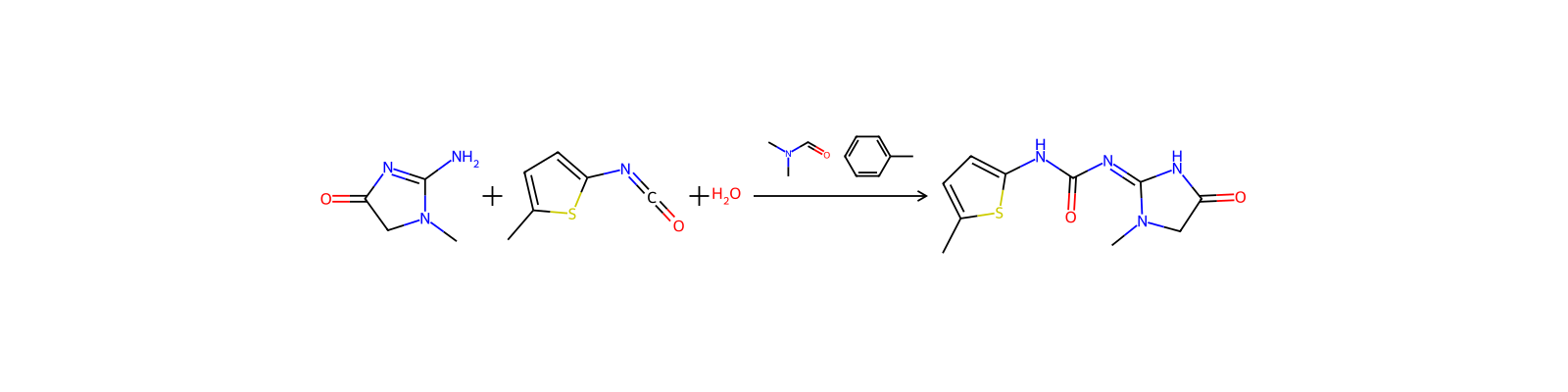
HRID 857301반응물로
creatinine

60-27-5CN1CC(=O)N=C1NDDRJAANPRJIHGJ-UHFFFAOYSA-NCreatinine is a lactam obtained by formal cyclocondensation of creatine. It is a metabolite of creatine. It has a role as a diagnostic agent and a human metabolite. It is a lactam and an imidazolidinone. It is functionally related to a creatine.
60-27-5CHEMBL65567CHEBI:16737Solid; [Merck Index] White crystalline powder; [Alfa Aesar MSDS]
Solid
white powder
안전 정보는 참고용이며, 공급업체의 물질안전보건자료(SDS), 관련 법규 및 전문가 평가를 대체하지 않습니다.
This chemical does not meet GHS hazard criteria for 60% (6 of 10) of all reports.
Warning
H315 (40%): Causes skin irritation [Warning Skin corrosion/irritation]
P261, P264, P264+P265, P271, P280, P302+P352, P304+P340, P305+P351+P338, P319, P321, P332+P317, P337+P317, P362+P364, P403+P233, P405, and P501 (click each P-code to see the statement)
Aggregated GHS information provided per 10 reports by companies from 4 notifications to the ECHA C&L Inventory. Each notification may be associated with multiple companies.
Chemical: 4H-Imidazol-4-one, 2-amino-1,5-dihydro-1-methyl-
Status: Active Update: 11-10-2022 https://echa.europa.eu/registration-dossier/-/registered-dossier/16337
Creatinine: Does not have an individual approval but may be used under an appropriate group standard
개요Creatinine is together with urea, the most widely known "uremic toxin", and is usually assessed when- ever a reduction in kidney function is suspected. This is mainly because creatinine evaluation is cheap, widely accessible and relatively well reflects the renal function. It also forms the basis for estimation of estimated glomerular filtration rate (eGFR) and thus is a major component of all principal eGFR equations.Creatinine, which is nonenzymatically produced from the creatine pool in skeletal muscle, but is also to some extent generated from exogenous creatine present in meat, is the major guanidine compound retained in patients with diminished glomerular filtration rate. Creatinine is routinely determined in plasma or serum as a measure of impairment of renal function and it might be expected that a variety of uremic symptoms correlate with the plasma creatinine level; this does not, however, necessarily imply a causal relationship. In fact, high serum creatinine levels correlate with low mortality in HD patients, presumably because the creatinine generation rate reflects the size of the muscle mass. Creatinine seems to be relatively nontoxic. Large amounts of creatinine have been fed to healthy subjects without any adverse effects and animals also tolerate large doses.
용도Creatinine is the end product of creatine catabolism. Creatinine is a normal constituent of urine. Also found together with creatine in muscle tissues and blood. Creatinine is found in all soils and i n grain seeds and other vegetable matter as well as in certain fish and in crab meat extract.
일반 설명Creatinine is a breakdown product formed by the degradation of creatine phosphate from muscles. The kidneys extract creatinine from the body by filtering almost all of it from the blood and excreting it in the urine. Serum creatinine is the most commonly used indicator for renal functioning. In chemical synthesis, creatinine is used as a heterocyclic nitrogenous compound that produces electron-rich and highly basic creatinine derivatives.
정의ChEBI: A lactam obtained by formal cyclocondensation of creatine. It is a metabolite of creatine.