홈MCP워크벤치Skills
홈워크벤치알림마이페이지
llms.txt · MCP 가이드개인정보처리방침 · 이용약관 · 지원v1.8.0
  1. 홈
  2. /화합물

시아나이드

Cyanide

HCID 5975
새 노트새 반응견적 요청하기
인쇄 미리보기
기본 정보개요이름 및 식별자물성안전 및 규제화학 및 산업관련 반응화합물 노트
부분 구조 검색유사 구조 찾기

기본 정보

CAS
57-12-5
표준 SMILES
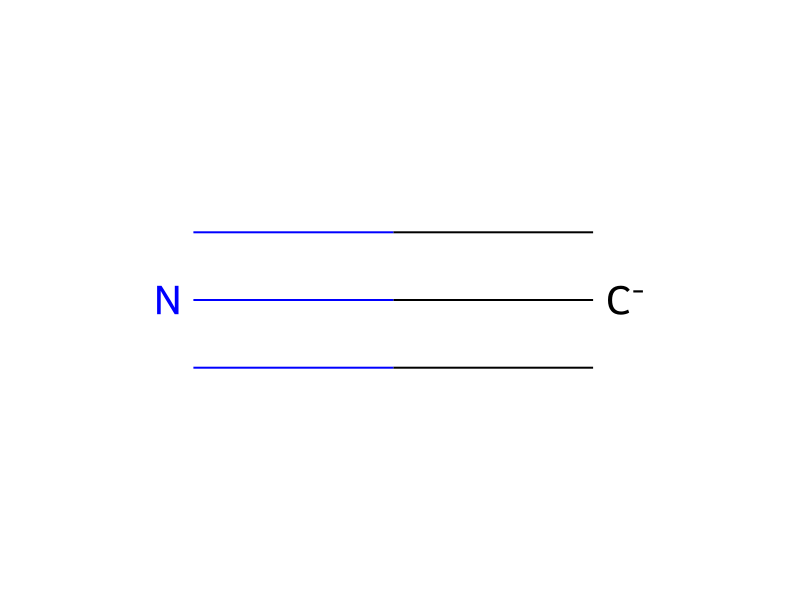
[C-]#N
InChIKey
XFXPMWWXUTWYJX-UHFFFAOYSA-N
분자식
CN-
평균 분자량
26.017 g/mol
단동위원소 질량
26.003074

개요

Aqueous solutions with a faint odor of bitter almonds. Toxic by skin absorption, by ingestion, and inhalation of the hydrogen cyanide from the decomposition of the material. Toxic oxides of nitrogen are produced in fires involving this material. Obtain the technical name of the material from the shipping papers and contact CHEMTREC, 800-424-9300 for specific response information.

이름 및 식별자

우선 이름
Cyanide
IUPAC
cyanide
현지명
시아나이드
영어명
Cyanide
분자식
CHN
분자량
26.02

이름 및 동의어

cyanideCYANIDE IONIsocyanide57-12-5Cyanide anionNitrile anionCyanide ionsCyanide(1-) ioniminomethanideCyanide(1-)CyanureCarbon nitride ion (CN1-)
이름 더 보기
시안화물시아나이드사이아나이드 이온Cyanogen ionCyanides (as CN)TIANFU-CHEM Methyl4-(cyanomethyl)benzoate57-12-5Cyanides, except hydrogen cyanide, cyanogen & cyanogen chloride, (as CN)
PrussiateOXN4E7L11KDTXSID6023991CHEBI:17514HYDROCYANIC ACID, ION(1-)methylidyneazanidylRefChem:1082356DTXCID203991

데이터베이스 식별자

CAS
57-12-5
PubChem CID
5975
DTXSID
DTXSID6023991
ChEMBL
CHEMBL183419
ChEBI
CHEBI:17514
UNII
OXN4E7L11K
Nikkaji
J55.295J

물성

구조 계산 물성

XLogP
0.1
극성 표면적
23.8 Ų
수소 결합 공여자 수
0
수소 결합 수용자 수
2
회전 가능 결합 수
0
무거운 원자 수
2
형식 전하
-1
복잡도
10

실험 및 물리화학적 성질

Chemical Classes · 4건

Hazardous Air Pollutants (HAPs)

Toxic Gases & Vapors -> Cyanides

Toxic Gases & Vapors -> Chemical Asphyxiants

Major ion

PesticidesPesticide -> EPA IRIS
Physical Description · 3건

Aqueous solutions with a faint odor of bitter almonds. Toxic by skin absorption, by ingestion, and inhalation of the hydrogen cyanide from the decomposition of the material. Toxic oxides of nitrogen are produced in fires involving this material. Obtain the technical name of the material from the shipping papers and contact CHEMTREC, 800-424-9300 for specific response information.

Generally white crystals or powders but possibly colored Toxic by skin absorption through open wounds, by ingestion, and inhalation of the hydrogen cyanide from the decomposition of the material. Toxic oxides of nitrogen are produced in fires. Obtain the technical name of the material form the shipping papers and contact CHEMTREC, 800-424-9300 for specific response information.

Varies; See specific cyanide salt;

물리화학적 성질

녹는점
148 °C · 148 °C (decomp)
수용성
물과 섞일 수 있습니다.
비열
1.12 J/ · Cp(gas): 1.12 J/(g·K), at 25℃
EPA
Cyanide (57-12-5)

안전 및 규제

안전 정보는 참고용이며, 공급업체의 물질안전보건자료(SDS), 관련 법규 및 전문가 평가를 대체하지 않습니다.

유해성 정보

Regulatory Information · 3건

Regulation (EC) No 178/2002 (amended)

Cyanide: Does not have an individual approval but may be used as a component in a product covered by a group standard. It is not approved for use as a chemical in its own right.

The New Jersey Worker and Community Right to Know Act requires public and private employers to provide information about hazardous substances at their workplaces. (N.J.S.A. 34:5A-1 et. seq.)

DOT Label · 2건

Poison

Poison

Fire Hazards · 2건

Excerpt from ERG Guide 157 [Substances - Toxic and/or Corrosive (Non-Combustible / Water-Sensitive)]:

Excerpt from ERG Guide 157 [Substances - Toxic and/or Corrosive (Non-Combustible / Water-Sensitive)]:

Health Hazards · 2건

Excerpt from ERG Guide 157 [Substances - Toxic and/or Corrosive (Non-Combustible / Water-Sensitive)]:

Excerpt from ERG Guide 157 [Substances - Toxic and/or Corrosive (Non-Combustible / Water-Sensitive)]:

Hazards Summary · 3건

Cyanide is used in a number of industries and is found at low levels in air from car exhaust. Cyanide is extremely toxic to humans. Chronic (long-term) inhalation exposure of humans to cyanide results primarily in effects on the central nervous system (CNS). Other effects in humans include cardiovascular and respiratory effects, an enlarged thyroid gland, and irritation to the eyes and skin. No data are available on the carcinogenic effects of cyanide in humans via inhalation. Animal studies have suggested that oral exposure to cassava (a cyanide-containing vegetable) may be associated with malformations in the fetus and low fetal body weights. EPA has classified cyanide as a Group D, not classifiable as to human carcinogenicity.

A fatal inhalation dose of hydrogen cyanide is 600 to 700 ppm for 5 minutes or 200 ppm for 30 minutes. In victims overcome by smoke inhalation, hypoxia from carbon monoxide is initially indistinguishable from that caused by cyanide. Smokers have elevated whole blood cyanide levels up to 0.4 ug/ml. In poisoning cases, victims are agitated at levels above 1.0 ug/ml and comatose at levels above 2.5 ug/ml. Acrylonitrile, acetonitrile, and other aliphatic nitriles can cause cyanide poisoning after absorption and hepatic transformation. [ATSDR Case Studies # 15] Symptoms of cyanide toxicity can occur within seconds of inhalation of hydrogen cyanide or within minutes of ingestion of cyanide salts. Onset may be delayed up to 12 h after ingestion of cyanogenic glycosides, nitriles, or thiocyanates. [INCHEM: CICAD 61] Cyanide is detoxified in the body when it is combined with sulfur to form thiocyanate. [Ford, p. 705] Urine thiocyanate levels are <0.11 mg/24h without occupational exposure. The no-adverse-effect-level is 6.5 mg/24h. Smokers have higher levels. [LaDou, 4th edition, p. 633] In nitroprusside poisoning cases, the half-life of thiocyanate is 2.7 days (normal renal function). [Ford, p. 410] Thiocyanate levels correlate with thiocyanate toxicity, not with degree of cyanide poisoning. Thiocyanate toxicity occurs when thiocyanate levels exceed 100 mg/L. [Haddad, p. 985] Chronic exposure to cyanide causes tobacco amblyopia (from cigarette smoking) and tropical ataxic neuropathy (from eating improperly processed cassava). Both conditions are associated with low B12 levels. Thiocyanate can competitively inhibit the entry of iodide into the thyroid gland and cause hypothyroidism and goiters. [Goldfrank, p. 1680] Handle all cyanide compounds with care. HCN may be released from relatively stable compounds like ferro- and ferricyanides in the presence of strong acids. Even weak acids can cause a slow release of cyanide. [Ullmann] Workers exposed to HCN for seven years at 4.2 to 12.4 ppm in breathing zone air had increased headache, weakness, and thyroid gland enlargement. [ACGIH: HCN] See Hydrogen cyanide. See NITRILES.

화학 및 산업

약리 정보

Biological Half-LifeWhole body: 19 hours; [TDR, p. 422]
Metabolism/Metabolites · 2건

Organic nitriles are converted into cyanide ions through the action of cytochrome P450 enzymes in the liver. Cyanide is rapidly absorbed and distributed throughout the body. Cyanide is mainly metabolized into thiocyanate by either rhodanese or 3-mercaptopyruvate sulfur transferase. Cyanide metabolites are excreted in the urine. (L96)

Organic nitriles are converted into cyanide ions through the action of cytochrome P450 enzymes in the liver. Cyanide is rapidly absorbed and distributed throughout the body. Cyanide is mainly metabolized into thiocyanate by either rhodanese or 3-mercaptopyruvate sulfur transferase. Cyanide metabolites are excreted in the urine. (L96)

용도 및 제조

Uses · 6건

The major uses of hydrogen cyanide are as an intermediate in the production of a number of chemicals and as an insecticide for fumigating enclosed spaces. Hydrogen cyanide has also been used in gas chamber executions.

Used in electroplating, silver and gold extraction, metal cleaning, metal nitriding, ship fumigating, mining processes, cement stabilizing, photo developing, and organic synthesis; Used in the past to fumigate fruit trees, railroad cars, ships, warehouses, rabbit and rat burrows, and termite nests; In tropical countries where the potato-like tubers of the cassava plant are grown, cyanide poisonings due to ingestion of the cassava root have been reported. [ATSDR ToxProfiles] In the past, occupational cyanide poisoning was most common in metal extraction, electroplating, metal hardening, and fumigation; [Sullivan, p. 706] The cyanides of mercury, lead, cobalt, and nickel do not have any major industrial importance. [Ullmann]

Steel Producing [Category: Industry]

Sculpturing plastics [Category: Hobbies]

Cyanide compounds are used in electroplating, metallurgy, organic chemicals production, photographic developing, manufacture of plastics, fumigation of ships, and some mining processes. (L96)

Hydrogen cyanide is a precursor to many chemical compounds, ranging from polymers to pharmaceuticals. (L101)

관련 반응

1,031건
반응 기록 만들기
HRID 9932 반응식
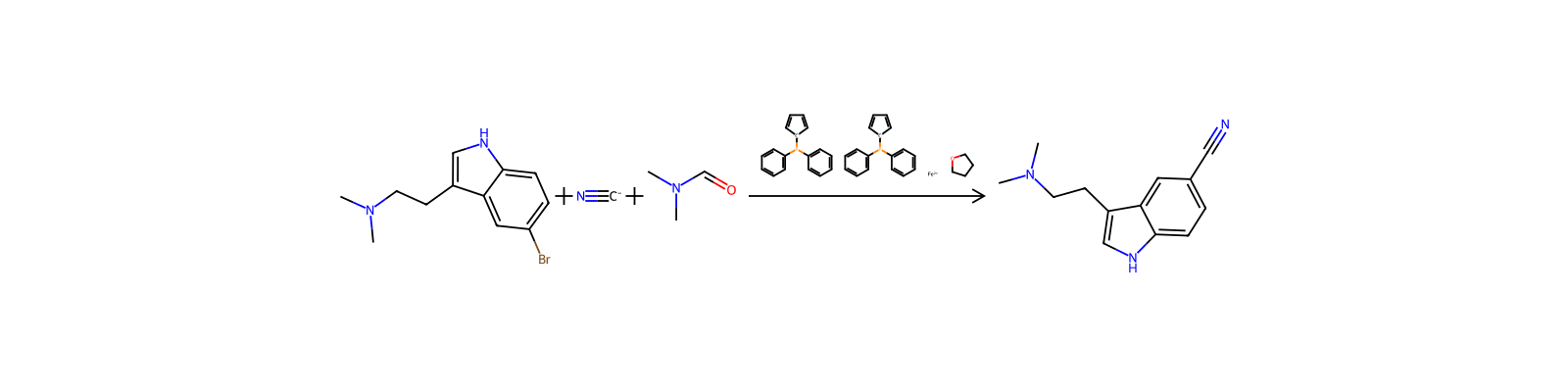
HRID 9932반응물로uspto-grants-2006_08
HRID 11228 반응식
HRID 11228반응물로uspto-grants-2006_08
HRID 52018 반응식
HRID 52018반응물로uspto-grants-1997_04
HRID 71041 반응식
HRID 71041반응물로uspto-grants-2014_09
HRID 86000 반응식
HRID 86000반응물로Training data from https://doi.org/10.1039/C8SC04228D (2/10)
HRID 86481 반응식
HRID 86481반응물로Training data from https://doi.org/10.1039/C8SC04228D (2/10)
HRID 87228 반응식
HRID 87228반응물로Training data from https://doi.org/10.1039/C8SC04228D (2/10)
HRID 88018 반응식
HRID 88018반응물로Training data from https://doi.org/10.1039/C8SC04228D (2/10)
1 / 129 페이지

화합물 노트

불러오는 중…

이 페이지에서기본 정보개요이름 및 식별자물성안전 및 규제화학 및 산업관련 반응화합물 노트
더보기
새 노트새 반응견적 요청하기
화학적 성질 · 1건

Cyanides comprise a wide range of compounds, all of which have a CN molecule and exist in either a solid, liquid, or gaseous form. Physical characteristics range froma colorless or pale blue liquid with a faint bitter almond-like odor (hydrogen cyanide, HCN) to a white solid, powder, or crystalline hygroscopic salt (sodium cyanide, NaCN) to a colorless toxic gas also with an almond-like odor (cyanogens, NCCN). Cyanide compounds are either organic or inorganic. Organic cyanides contain a noncovalent CN functional group and are typically called the cyano group or nitriles. A common nitrile is methyl cyanide, also known as acetonitrile (CH3CN). Inorganic cyanides have a negatively charged polyatomic cyanide ion (CN) and are generally referred to as cyanides. This group includes the cyanide salts (i.e., sodium cyanide, NaCN) which are considered the most toxic form. KCN and NaCN are white crystalline solids with a faint almond odor. Sodium cyanide also has a slight odor of hydrocyanic acid when damp. KCN: boiling point=1625℃ ; freezing/melting point=634℃ . NaCN: boiling point 1496℃; freezing/melting point=564℃ . NFPA 704 M Hazard identification (KCN and NaCN): Health 3, flammability 0 , reactivity 1. Soluble in water; slow decomposition releases highly toxic and flammable hydrogen cyanide gas.

Causes tremor, convulsions, and dyspnea in intraperitoneal lethal-dose studies of mice (LD50 = 3 mg/kg); [RTECS] Aqueous solutions slowly evolve hydrogen cyanide; [CAMEO] Free cyanide (as HCN or CN-) is the most toxic form of cyanide; [EPA: Exposure Risk Assessment] See CYANIDES.

Reactive Group · 2건

Cyanides, Inorganic

Cyanides, Inorganic

Reactivity Profile · 2건

CYANIDE SOLUTIONS slowly evolve hydrogen cyanide, a flammable and poisonous gas. Acids cause the rapid evolution of HCN. Carbon dioxide from the air is sufficiently acidic to liberate HCN from solutions of cyanides. Incompatible with isocyanates, nitrides, and peroxides. Mayinitiate polymerization reactions of epoxides. May react exothermically with metal salts to produce explosive products or evolve gaseous hydrogen.

CYANIDES, INORGANIC, SOLID, N.O.S. react slowly with water to evolve gaseous hydrogen cyanide (HCN). Acids cause the rapid evolution of HCN; carbon dioxide from the air is sufficiently acidic to liberate HCN from solutions of inorganic cyanides. Incompatible with isocyanates, nitrides, and peroxides. May initiate polymerization reactions of epoxides. Form compounds with metal salt in exothermic reactions that may produce flammable hydrogen. Some inorganic cyanides can detonate when shocked, heated or rubbed.

Air and Water Reactions · 2건

Water soluble. Inorganic cyanides react slowly with water to evolve gaseous hydrogen cyanide (HCN).

Water soluble. Slowly decomposed by water to give off hydrogen cyanide, a flammable poison gas.

안전 및 보호

Fire Fighting · 2건

Excerpt from ERG Guide 157 [Substances - Toxic and/or Corrosive (Non-Combustible / Water-Sensitive)]:

Excerpt from ERG Guide 157 [Substances - Toxic and/or Corrosive (Non-Combustible / Water-Sensitive)]:

First Aid · 2건

Excerpt from ERG Guide 157 [Substances - Toxic and/or Corrosive (Non-Combustible / Water-Sensitive)]:

Excerpt from ERG Guide 157 [Substances - Toxic and/or Corrosive (Non-Combustible / Water-Sensitive)]:

Exposure Control and Personal Protection2.0 [mg/m3], as CN, inhalable fraction[German Research Foundation (DFG)]
Nonfire Spill Response · 2건

Excerpt from ERG Guide 157 [Substances - Toxic and/or Corrosive (Non-Combustible / Water-Sensitive)]:

Excerpt from ERG Guide 157 [Substances - Toxic and/or Corrosive (Non-Combustible / Water-Sensitive)]:

Isolation and Evacuation · 2건

Excerpt from ERG Guide 157 [Substances - Toxic and/or Corrosive (Non-Combustible / Water-Sensitive)]:

Excerpt from ERG Guide 157 [Substances - Toxic and/or Corrosive (Non-Combustible / Water-Sensitive)]:

Threshold Limit Values (TLV)5.0 [mg/m3], as CN(calcium,hydrogen,sodium,and potassium cyanide)
Permissible Exposure Limit (PEL)5.0 [mg/m3],as CN(calcium,sodium,and potassium cyanide), 11 mg/m3(hydrogen cyanide)
Protective Action Criteria (PAC) · 3건

0.45 [mg/m3]

5.0 [mg/m3]

25 [mg/m3]

Personal Protective Equipment (PPE) · 2건

Excerpt from ERG Guide 157 [Substances - Toxic and/or Corrosive (Non-Combustible / Water-Sensitive)]:

Excerpt from ERG Guide 157 [Substances - Toxic and/or Corrosive (Non-Combustible / Water-Sensitive)]:

Immediately Dangerous to Life or Health (IDLH)25.0 [mg/m3], as CN(sodium and potassium cyanide), 50 ppm(hydrogen cyanide)

독성 정보

Toxicological InformationRanking: 68 (total points: 1235.74)
Treatment · 2건

Antidotes to cyanide poisoning include hydroxocobalamin and sodium nitrite, which release the cyanide from the cytochrome system, and rhodanase, which is an enzyme occurring naturally in mammals that combines serum cyanide with thiosulfate, producing comparatively harmless thiocyanate. Oxygen therapy can also be administered. (L97)

Antidotes to cyanide poisoning include hydroxocobalamin and sodium nitrite, which release the cyanide from the cytochrome system, and rhodanase, which is an enzyme occurring naturally in mammals that combines serum cyanide with thiosulfate, producing comparatively harmless thiocyanate. Oxygen therapy can also be administered. (L97)

Target OrgansReproductive
Health Effects · 2건

Exposure to high levels of cyanide for a short time harms the brain and heart and can even cause coma, seizures, apnea, cardiac arrest and death. Chronic inhalation of cyanide causes breathing difficulties, chest pain, vomiting, blood changes, headaches, and enlargement of the thyroid gland. Skin contact with cyanide salts can irritate and produce sores. (L96, L97)

Exposure to high levels of cyanide for a short time harms the brain and heart and can even cause coma, seizures, apnea, cardiac arrest and death. Chronic inhalation of cyanide causes breathing difficulties, chest pain, vomiting, blood changes, headaches, and enlargement of the thyroid gland. Skin contact with cyanide salts can irritate and produce sores. (L96, L97)

Adverse Effects · 2건

Other Poison - Chemical Asphyxiant

Other Poison - Chemical Asphyxiant

Exposure Routes · 2건

Oral (L96) ; inhalation (L96) ; dermal (L96)

Oral (L96) ; inhalation (L96) ; dermal (L96)

Toxicity Summary · 2건

Organic nitriles decompose into cyanide ions both in vivo and in vitro. Consequently the primary mechanism of toxicity for organic nitriles is their production of toxic cyanide ions or hydrogen cyanide. Cyanide is an inhibitor of cytochrome c oxidase in the fourth complex of the electron transport chain (found in the membrane of the mitochondria of eukaryotic cells). It complexes with the ferric iron atom in this enzyme. The binding of cyanide to this cytochrome prevents transport of electrons from cytochrome c oxidase to oxygen. As a result, the electron transport chain is disrupted and the cell can no longer aerobically produce ATP for energy. Tissues that mainly depend on aerobic respiration, such as the central nervous system and the heart, are particularly affected. Cyanide is also known produce some of its toxic effects by binding to catalase, glutathione peroxidase, methemoglobin, hydroxocobalamin, phosphatase, tyrosinase, ascorbic acid oxidase, xanthine oxidase, succinic dehydrogenase, and Cu/Zn superoxide dismutase. Cyanide binds to the ferric ion of methemoglobin to form inactive cyanmethemoglobin. (L97)

Organic nitriles decompose into cyanide ions both in vivo and in vitro. Consequently the primary mechanism of toxicity for organic nitriles is their production of toxic cyanide ions or hydrogen cyanide. Cyanide is an inhibitor of cytochrome c oxidase in the fourth complex of the electron transport chain (found in the membrane of the mitochondria of eukaryotic cells). It complexes with the ferric iron atom in this enzyme. The binding of cyanide to this cytochrome prevents transport of electrons from cytochrome c oxidase to oxygen. As a result, the electron transport chain is disrupted and the cell can no longer aerobically produce ATP for energy. Tissues that mainly depend on aerobic respiration, such as the central nervous system and the heart, are particularly affected. Cyanide is also known produce some of its toxic effects by binding to catalase, glutathione peroxidase, methemoglobin, hydroxocobalamin, phosphatase, tyrosinase, ascorbic acid oxidase, xanthine oxidase, succinic dehydrogenase, and Cu/Zn superoxide dismutase. Cyanide binds to the ferric ion of methemoglobin to form inactive cyanmethemoglobin. (L97)

Signs and Symptoms · 2건

Cyanide poisoning is identified by rapid, deep breathing and shortness of breath, general weakness, giddiness, headaches, vertigo, confusion, convulsions/seizures and eventually loss of consciousness. (L96, L97)

Cyanide poisoning is identified by rapid, deep breathing and shortness of breath, general weakness, giddiness, headaches, vertigo, confusion, convulsions/seizures and eventually loss of consciousness. (L96, L97)

EPA IRIS Information · 3건

Cyanide, free

Reproductive

6.3 x 10 ^-4 mg/kg-day

Carcinogen Classification · 2건

No indication of carcinogenicity to humans (not listed by IARC).

No indication of carcinogenicity to humans (not listed by IARC).

Toxicity DataLD50: 3700 ug/kg (Subcutaneous, Rat) (N010) LD50: 810 ug/kg (Intravenous, Rat) LD50: 3700 ug/kg (Oral, Mouse) LD50: 2990 ug/kg (Intraperitoneal, Mouse) LC50: 142 ppm over 30 minutes (Inhalation, Rat) (T32)
RAIS Toxicity Values · 6건

0.0008

SURROGATE. See Hydrogen Cyanide

0.0006

IRIS Current

0.02

HEAST Current

안전 데이터

OEL
STEL: 4.7 ppm; 5.0 mg/m3
tsca
TSCA listed
ridadr
1588
HS 번호
2926909090
포장분류
II
위험 등급
6.1(a)
General Manufacturing Information
Cyanide: ACTIVE
응용 분야 · 2건

용도Cyanide, standard solution is used to dissolve metals and their ores. It is also used in clinical chemistry and in waste water treatment facilities to determine the concentration of dissolved and particulate materials.

일반 설명Aqueous solutions with a faint odor of bitter almonds. Toxic by skin absorption, by ingestion, and inhalation of the hydrogen cyanide from the decomposition of the material. Toxic oxides of nitrogen are produced in fires involving Methyl4-(cyanomethyl)benzoate. Obtain the technical name of the material from the shipping papers and contact CHEMTREC, 800-424-9300 for specific response information.

제조 방법

생산 방법Hydrogen cyanide is generally produced at point of use. Production is covered under 40 CFR 415.420, applicability; description of the hydrogen cyanide production subcategory.

상·하류 제품 정보

상류 원료

시안화수소

하류 제품

시아노겐 요오드화물시아노겐2,3-디아미노부트-2-엔디니트릴시안화은

추가 설명

정의ChEBI: A pseudohalide anion that is the conjugate base of hydrogen cyanide.