153-61-7CC(=O)OCC1=C(C(=O)O)N2C(=O)[C@@H](NC(=O)Cc3cccs3)[C@H]2SC1XIURVHNZVLADCM-IUODEOHRSA-NCefalotin is a semisynthetic, first-generation cephalosporin antibiotic with acetoxymethyl and (2-thienylacetyl)nitrilo moieties at positions 3 and 7, respectively, of the core structure. Administered parenterally during surgery and to treat a wide spectrum of blood infections. It has a role as an antimicrobial agent and an antibacterial drug. It is a cephalosporin, a member of thiophenes, a carboxylic acid, an azabicycloalkene, a semisynthetic derivative and a beta-lactam antibiotic allergen. It is a conjugate acid of a cefalotin(1-).
153-61-7DTXSID4022783CHEMBL617Pharmaceuticals -> Listed in ZINC15
Pharmaceuticals -> Antibiotics
log Kow = -0.41 (pH 2.0)
-0.2
WHITE TO OFF-WHITE, CRYSTALLINE POWDER; PRACTICALLY ODORLESS; FREELY SOL IN WATER, SALINE TS, DEXTROSE SOLUTION; SPARINGLY SOL IN METHANOL; SLIGHTLY SOL IN ALCOHOL; INSOL IN MOST ORGANIC SOLVENTS; DEXTROROTATORY; MODERATELY HYGROSCOPIC; DECOMP ON HEATING /SODIUM/
5.21e-02 g/L
160-160.5 °C
160-160.5 °C
160 - 160.5 °C
Mol wt 418.42. mp 204-205 °C. Specific optical rotation = +135 °For D sodium line (c = 1.0 in water). uv max: 236, 260 nm (epsilon 12950, 9350) /Sodium salt/
Specific optical rotation = +50 °For D sodium line at 20 °C (c = 1.03 in acetonitrile)
Danger
H317 (100%): May cause an allergic skin reaction [Warning Sensitization, Skin]
P233, P260, P261, P271, P272, P280, P284, P302+P352, P304+P340, P321, P333+P317, P342+P316, P362+P364, P403, and P501 (click each P-code to see the statement)
Aggregated GHS information provided per 46 reports by companies from 2 notifications to the ECHA C&L Inventory. Each notification may be associated with multiple companies.
The Approved Drug Products with Therapeutic Equivalence Evaluations List identifies currently marketed discontinued drug products, incl cephalothin sodium, approved on the basis of safety and effectiveness by FDA under sections 505 of the Federal Food, Drug, and Cosmetic Act. /Cephalothin sodium/
The Generic Animal Drug and Patent Restoration act requires that each sponsor of an approved animal drug must submit to the FDA certain information regarding patents held for the animal drug or its method of use. The Act requires that this information, as well as a list of all animal drug products approved for safety and effectiveness, be made available to the public. Cephalothin is included on this list.
SRP: At the time of review, criteria for land treatment or burial (sanitary landfill) disposal practices are subject to significant revision. Prior to implementing land disposal of waste residue (including waste sludge), consult with environmental regulatory agencies for guidance on acceptable disposal practices.
J - Antiinfectives for systemic use
QJ - Antiinfectives for systemic use
The bactericidal activity of cefalotin results from the inhibition of cell wall synthesis via affinity for penicillin-binding proteins (PBPs). The PBPs are transpeptidases which are vital in peptidoglycan biosynthesis. Therefore, their inhibition prevents this vital cell wall compenent from being properly synthesized.
Bactericidal; action depends on ability to reach and bind penicillin-binding proteins located in bacterial cytoplasmic membranes. Cephalosporins inhibit bacterial septum and cell wall synthesis, probably by action of membrane-bound transpeptidase enzymes. This prevents cross-linkage of peptidoglycan chains, which is necessary for bacterial cell wall strength and rigidity. Also, cell division and growth are inhibited, and elongation of susceptible bacteria and lysis frequently occur. Rapidly dividing bacteria are those most susceptible to the actin of cephalosporins. /Cephalosporins/
30 minutes
Half-life = 0.6 hr /by/ injection /From table/
Metabolized to a less active desacetyl metabolite, although 50-75% of the drug is eliminated unchanged in the urine.
Approx 25% of cephalothin dose admin was eliminated in urine as deacetylcephalothin.
Cephalothin ... /is/ deacetylated in vivo, and these metabolites have less antimicrobial activity than the parent cmpd ... The deacetylated metabolites also are excreted by the kidneys.
불러오는 중…
CHEBI:124991Solutions of cephalothin may darken, especially if stored at room temperature. A slight discoloration does not affect potency. Solutions stored under refrigeration may precipitate, but the precipitate can be redissolved by warming to room temperature with constant agitation.
White Solid
Concurrent administration with probenecid may prolong the serum half-life of cephalothin.
ANIMAL STUDIES INDICATED THAT FUROSEMIDE ENHANCES NEPHROTOXICITY OF...CEPHALOTHIN...
...CEPHALOSPORINS...MAY BE AFFECTED BY CONCURRENT USE OF SULFINPYRAZONE. DIMINISHED TUBULAR SECRETION OF...WEAK ACIDS COULD RESULT IN HIGHER & MORE SUSTAINED SERUM LEVELS & HENCE, INTENSIFICATION OF DRUG ACTIVITY. /CEPHALOSPORINS/
NON-IONIC, ANIONIC, & ZWITTERIONIC SURFACTANTS INDUCED RAPIDLY REVERSIBLE HYPER-ABSORPTIVE STATE IN THOMAS CANINE FUNDIC POUCH FOR...CEPHALOTHIN...
For more Interactions (Complete) data for CEPHALOTHIN (10 total), please visit the HSDB record page.
TERRESTRIAL FATE: Based on a classification scheme(1), an estimated Koc value of 14(SRC), determined from a log Kow of -0.41(2) and a regression-derived equation(3), indicates that cephalothin is expected to have very high mobility in soil(SRC). An estimated pKa value of 3.8 (carboxylic acid)(SRC), calculated using a method based on linear free energy relationships and perturbed molecular orbital theory(4), indicates that this compound will exist primarily as an anion in the environment and anions generally have higher mobility in soil than their neutral counterparts(5). Volatilization of cephalothin from moist soil surfaces is not expected to be an important fate process(SRC) because anions do not volatilize. Cephalothin is not expected to volatilize from dry soil surfaces(SRC) based upon an estimated vapor pressure of 1.7X10⁻¹⁴ mm Hg(SRC), determined from a fragment constant method(6). Biodegradation data were not available for cephalothin(SRC, 2006).
AQUATIC FATE: Based on a classification scheme(1), an estimated Koc value of 14(SRC), determined from a log Kow of -0.41(2) and a regression-derived equation(3), indicates that cephalothin is not expected to adsorb to suspended solids and sediment(SRC). An estimated pKa value of 3.8 (carboxylic acid)(SRC), calculated using a method based on linear free energy relationships and perturbed molecular orbital theory(4), indicates that this compound will exist primarily as an anion in the environment. Volatilization from water surfaces is not expected(SRC) because anions do not volatilize. According to a classification scheme(5), an estimated BCF of 0.3(SRC), from its log Kow(2) and a regression-derived equation(6), suggests the potential for bioconcentration in aquatic organisms is low(SRC). Biodegradation data were not available for cephalothin(SRC, 2006).
ATMOSPHERIC FATE: According to a model of gas/particle partitioning of semivolatile organic compounds in the atmosphere(1), cephalothin, which has an estimated vapor pressure of 1.7X10⁻¹⁴ mm Hg at 25 °C(SRC), determined from a fragment constant method(2), is expected to exist solely in the particulate phase in the ambient atmosphere. Particulate-phase cephalothin may be removed from the air by wet or dry deposition(SRC). Cephalothin may absorb at wavelengths >290 nm (UV max = 260 nm with a possible shoulder above 290 nm)(3) and therefore may be susceptible to direct photolysis by sunlight(4).
The Koc of cephalothin is estimated as 14(SRC), using a log Kow of -0.41(1) and a regression-derived equation(2). According to a classification scheme(3), this estimated Koc value suggests that cephalothin is expected to have very high mobility in soil. An estimated pKa value of 3.8 (carboxylic acid)(SRC), calculated using a method based on linear free energy relationships and perturbed molecular orbital theory(4), indicates that this compound will exist primarily as an anion in the environment, and anions generally do not adsorb to soils as strongly as their neutral counterparts(5).
/SIGNS AND SYMPTOMS/ Anaphylaxis presents clinically as the acute onset of peripheral vascular collapse and shock. This may begin minutes after contact with the precipitating allergen. It is the most feared and serious of the allergic reactions and carries with it a significant risk of death. Skin and mucosal lesions, including urticaria and angioedema, may immediately precede the onset of anaphylaxis. Nausea, vomiting, diarrhea, and bronchospasm may occur as part of the acute reaction to the drug. These end-organ responses are initiated by the release of histamine, serotonin, bradykinin and other vasoactive substances released by the basophils and mast cells. ... Penicillins, cephalosporins, and sulfonamides are the antimicrobials most often associated with anaphylactic reactions. /Penicillins and cephalosporins/
/SIGNS AND SYMPTOMS/ Renal insufficiency, manifested by an increase in serum creatinine levels and decrease in creatinine clearance, represents a major adverse effect of the use of polymyxins. Occurrence of hematuria, proteinuria, cylindruria, or oliguria may also be associated with the administration of polymyxins. In addition, acute tubular necrosis can also develop. Histological findings of colistin-induced renal damage usually involve focal irregular dilatation of tubules, epithelial and polymorphonuclear cell cast formation, and degeneration and regeneration of epithelial cells. In addition, separation of tubules by loose collagenous tissue, suggestive of edema, has also been reported. The basement membrane is usually intact, as well as the glomeruli./Polymyxins/
/SIGNS AND SYMPTOMS/ Cephalothin can cause nephrotoxicity, neutropenia, false-positive Coombs' test results, allergic rash, poor passage through blood brain barrier in neonates.
/SIGNS AND SYMPTOMS/ A positive Coombs reaction appears frequently in patients who receive large doses of a cephalosporin. Hemolysis is not usually associated with this phenomenon, although it has been reported. Cephalosporins have produced rare instances of bone-marrow depression, characterized by granulocytopenia ... Serious bleeding related either to ... thrombocytopenia, and/or platelet dysfunction has been reported with several beta-lactam antibiotics. This appears to be a particular problem with certain patients (elderly, poorly nourished, or those with renal insufficiency) who are receiving moxalactam. /Cephalosporins/
For more Human Toxicity Excerpts (Complete) data for CEPHALOTHIN (9 total), please visit the HSDB record page.
Drug-Induced Liver Injury Severity and Toxicity (DILIst)
cefalotin
DILI Positive
Intramuscular; Intravenous
DOI:10.1016/j.drudis.2019.09.022
An estimated BCF of 0.3 was calculated for cephalothin(SRC), using a log Kow of -0.41(1) and a regression-derived equation(2). According to a classification scheme(3), this BCF suggests the potential for bioconcentration in aquatic organisms is low(SRC).
An estimated pKa value of 3.8 (carboxylic acid)(SRC), calculated using a method based on linear free energy relationships and perturbed molecular orbital theory(1), indicates that this compound will exist primarily as an anion in the environment. Cephalothin is not expected to volatilize from moist soil or water surfaces(SRC) because anions do not volatilize. Cephalothin is not expected to volatilize from dry soil surfaces(SRC) based upon an estimated vapor pressure of 1.7X10⁻¹⁴ mm Hg(SRC), determined from a fragment constant method(2).
/LABORATORY ANIMALS: Acute Exposure/ Renal effects of cefodizime sodium (THR-221) administered by the intravenous route singly and for 7 consecutive days to male rabbits, were compared with those of cefazolin sodium (CEZ) and cephalothin sodium (CET). Four animals were used in each group including control groups. In the single-dose study, THR-221 (600 and 1800 mg/kg) and CET (1800 mg/kg) caused no nephrotoxic effects. In the CEZ groups (600 and 1800 mg/kg), findings indicative of the decreased renal function were obtained: serum urea nitrogen and creatinine levels increased over the control values, and phenolsulfonphthalein (PSP) retention test showed a delay in PSP excretion from the blood. In addition, the white surface of the kidney was macroscopically observed, and microscopic examination revealed renal proximal tubular changes such as necrosis, hyaline cast and calcification, suggesting renal disorders. The repeated-dose study also showed similar results to those described above. Administration of THR-221 (200 and 600 mg/kg/day) and CET (600 mg/kg/day) caused no effects on the kidney. In the CEZ groups (200 and 600 mg/kg/day), serum chemical and PSP test results suggested the decreased renal function, and macroscopic and microscopic findings included organic changes in the kidney. These results suggest that under the conditions tested THR-221 dose not elicit signs of nephrotoxicity in contrast to CEZ, and behaves almost equally to CET. /Cephalothin sodium/
/LABORATORY ANIMALS: Acute Exposure/ RENAL TUBULAR NECROSIS WAS OBSERVED FOLLOWING IM INJECTIONS OF CEPHALOTHIN NA INTO RATS. LESIONS WERE CONSISTENTLY PRODUCED WITH 5.0 G/KG & WERE MAXIMAL IN SEVERITY @ 2ND & 3RD DAYS FOLLOWING INJECTION.
/LABORATORY ANIMALS: Acute Exposure/ Eight-week-old Wistar female rats were treated intramuscularly with 300, 1,000 and 3,000 mg/kg/day of cefotiam for five days. The nephrotoxicity of cefotiam was determined on the basis of the number of tubular epithelial cells excreted, the malate dehydrogenase activity in the urine and the histological examination of the kidneys. Cephalothin (3,000 mg/kg/day) was used as a reference compound. There were slight increases in the number of tubular epithelial cells excreted and in the malate dehydrogenase activity in the urine of some animals receiving 3,000 mg/kg/day of cefotiam or cephalothin. All of these changes disappeared within a few days after the dosing period. The histological examination of the kidneys at the end of both the dosing (5 days) and the recovery (7 days) periods revealed no pathological changes indicating nephrotoxicity. It was concluded that the nephrotoxicity of cefotiam was comparable to that of cephalothin; the urinary changes in animals receiving the highest dose were considered to be an early sign of nephrotoxicity. The maximum non-toxic dose of cefotiam was 1,000 mg/kg/day under the present experimental conditions.
/ALTERNATIVE IN VITRO TESTS/ The rabbit kidney cell line LLC-RK1 was tested for its ability to discriminate the toxicities of six cephalosporin antibiotics according to their in vivo nephrotoxic potentials in rabbits. With the exception of cephalothin, which was markedly toxic to kidney cells in vitro, a good correlation between in vitro toxicity and in vivo nephrotoxicity was obtained, yielding the following toxicity rank order: ceftazidime less than cefazolin approximately cefoperazone less than cephaloglycin approximately cephaloridine. The addition of a kidney microsomal S9 fraction to the cell cultures desacetylated cephalothin as occurs in vivo and detoxified this antibiotic, providing it with the proper toxicity relative to the other cephalosporins. When compared with parent structures, desacetylated derivatives of other cephalosporins such as cephapirin were similarly found to be less toxic to LLC-RK1 cells. The acetylated cephalosporin cephaloglycin was not detoxified by the kidney S9 fraction and was desacetylated three to four times slower than cephalothin by renal esterases. Thus, the rate and extent of desacetylation of cephalosporins may play a role in their in vivo nephrotoxic potential. The results further suggest that LLC-RK1 cells will provide a useful model for evaluating the potential nephrotoxicity of new cephalosporin antibiotics before in vivo studies.
Serious bleeding related either to ... thrombocytopenia, and/or platelet dysfunction has been reported with several beta-lactam antibiotics. This appears to be a particular problem with certain patients (elderly, poorly nourished, or those with renal insufficiency) who are receiving moxalactam. /Cephalosporins/
A base-catalyzed second-order hydrolysis rate constant of 3.5X10⁻¹ L/mole-sec(SRC) was estimated using a structure estimation method(1); this corresponds to half-lives of 230 and 23 days at pH values of 7 and 8, respectively(1). Cephalothin may absorb at wavelengths >290 nm (UV max = 260 nm with a possible shoulder above 290 nm)(2) and therefore may be susceptible to direct photolysis by sunlight(3).
NIOSH (NOES Survey 1981-1983) has statistically estimated that 21,013 workers (19,052 of these are female) are potentially exposed to cephalothin in the US(1). Occupational exposure to cephalothin may occur through dermal contact with this compound at workplaces where cephalothin is produced or used(SRC). Exposure to cephalothin among the general population may be limited to those administered this substance as a drug and to those who administer cephalothin to animals(SRC).
The Approved Drug Products with Therapeutic Equivalence Evaluations List identifies currently marketed discontinued drug products, incl cephalothin sodium, approved on the basis of safety and effectiveness by FDA under sections 505 of the Federal Food, Drug, and Cosmetic Act. /Cephalothin sodium/
The Generic Animal Drug and Patent Restoration act requires that each sponsor of an approved animal drug must submit to the FDA certain information regarding patents held for the animal drug or its method of use. The Act requires that this information, as well as a list of all animal drug products approved for safety and effectiveness, be made available to the public. Cephalothin is included on this list.
CEPHALOTHIN ENTERS AQUEOUS HUMOR AFTER SUBCONJUNCTIVAL INJECTIONS YIELDING PEAK LEVELS CA 1-2 HR AFTER DOSING. RATIO OF AQ HUMOR:SERUM ANTIBIOTIC LEVELS RANGES FROM 4.0 TO 67.0 DURING 5 HR AFTER DOSING, & LOSS OF ANTIBIOTIC FROM AQ HUMOR OCCURS BY BIPHASIC PROCESS.
...CEPHALOTHIN...WERE SHOWN...TO PENETRATE INTO BONE TO VERY LIMITED EXTENT AFTER SC OR ORAL DOSES TO RATS. RATIOS OF BONE TO SERUM CONCN AVG 1:4 FOR CEPHALOTHIN... DESPITE DIFFERENCES IN CONCN, T/2 IN BONE & SERUM WERE SIMILAR.
DRUGS RECENTLY SHOWN TO ACTIVELY CROSS HUMAN PLACENTA INCL...CEPHALOTHIN...
Concn of cephalothin present in urine after admin of 1 g range from 0.7 to 5 mg/mL. Excretion is delayed in presence of decr renal function ...
For more Absorption, Distribution and Excretion (Complete) data for CEPHALOTHIN (11 total), please visit the HSDB record page.
Vet: Antibacterial ... usually quite active against many gram-positive bacteria ... moderately active against gram-negative bacteria ... relatively susceptible to beta-lactamases ... not as effetive against anaerobes as ... penicillins. /First-generation cephalosporins/
Mesh Heading: anti-bacterial agents
MEDICATION
MEDICATION (VET)
(1977) PROBABLY GREATER THAN 4.54X10+5 GRAMS
(1979) PROBABLY GREATER THAN 4.5X10+5 G-SODIUM
... E. H. Flynn, US patent 3,218,318 (1965 to Lilly); French patent 1,384,197 (1965 to Glaxo).
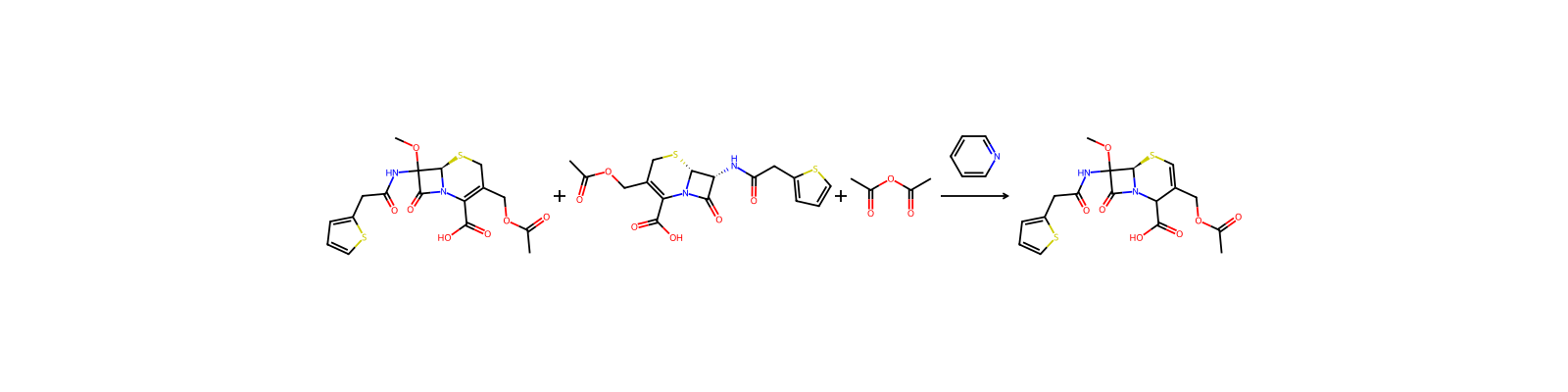
REACTION OF 7-AMINOCEPHALOSPORANIC ACID WITH THIOPHENE ACETYL CHLORIDE IN ACETONE
7-AMINOCEPHALOSPORANIC ACID IS N-ACETYLATED...WITH 2-THIOPHENEACETYL CHLORIDE IN...DEHYDROCHLORINATING ENVIRONMENT. STARTING ACID...PREPD FROM NATURAL ANTIBIOTIC, CEPHALOSPORIN C, BY EITHER PROTON-CATALYZED OR ENZYMATIC HYDROLYSIS. CEPHALOTHIN...CONVERTED TO SODIUM SALT BY INTERACTION WITH SODIUM ACETATE... /SODIUM/
Cephalothin is semisynthetic derivative of cephalosporin C ...
CEPHALOSPORINS ARE INCOMPATIBLE WITH ERYTHROMYCIN & TETRACYCLINES IN PARENTERAL MIXTURES. /CEPHALOSPORINS, FROM TABLE/
Cephalosporin C is very resistant to action of penicillinase, for which it is both competitive and noncompetitive inhibitor, depending on substrate tested ... /Cephalosporins/
개요Cephalothin is a semisynthetic, beta-lactam, first-generation cephalosporin antibiotic with bactericidal activity. Cephalothin binds to and inactivates penicillin-binding proteins (PBP) located on the inner membrane of the bacterial cell wall. PBPs participate in the terminal stages of assembling the bacterial cell wall, and in reshaping the cell wall during cell division. Inactivation of PBPs interferes with the cross-linkage of peptidoglycan chains necessary for bacterial cell wall strength and rigidity. This results in the weakening of the bacterial cell wall and causes cell lysis.
용도A first generation cephalosporin antibiotic with a wide range antibacterial activity. It is effective against gram-positive and gram-negative bacteria, and has been tested in respiratory disease and neuromuscular junction studies.Cephalothin is most effective against Gram-positive cocci and is also effective against several Gram-negative organisms. First generation cephalosporins are used primarily to treat skin and soft tissue infections caused by Staphylococcus and Streptococcus species. Cephalothin is ineffective against enterococci and evidence of in vitro sensitivity should be discounted.
/ALTERNATIVE IN VITRO TESTS/ ... an in vitro model for investigation of nephron heterogeneity and cell type-specific patterns of renal injury /was developed/. To further validate a model and to study biochemical mechanisms of cephalosporin-induced injury, cytotoxicity of three cephalosporins was studied in freshly isolated proximal tubular (PT) and distal tubular (DT) cells from rat kidney. The three cephalosporins (cephaloridine (CPH), cephalexin (CXN), cephalothin (CTN)) were chosen because they exhibit varying degrees of nephrotoxicity in vivo and contain different functional groups. CPH produced greater amounts of lactate dehydrogenase release from PT cells than either CXN or CTN, indicating greater toxicity of CPH, which agrees with in vivo observations. DT cells were not affected by any of the cephalosporins. Thus, the cephem ring is sufficient to produce PT cell injury but the presence of other functional groups modifies toxicity. SKF-525A and alpha-tocopherol protected PT cells from both CPH and CTN, suggesting involvement of cytochrome P-450 metabolism and oxidative stress. Both PT and DT cells exhibited transport of CPH or CXN and transport of CPH into PT cells was inhibitable by probenecid, consistent with action of a specific carrier. Transport alone, therefore, cannot account for the cell type specificity pattern in vitro. Effects on intracellular glutathione status, malondaldehyde formation, and uncoupler-stimulated respiration were also investigated, and these generally correlated with cell type specificity patterns but not always with degree of cytotoxicity. These results validate further the isolated PT and DT cells as in vitro models to study cell type-specific renal injury and show a role for oxidative stress, cytochrome P-450 bioactivation, and mitochondrial dysfunction in cephalosporin-induced PT cell injury.