홈MCP워크벤치Skills
홈워크벤치알림마이페이지
llms.txt · MCP 가이드개인정보처리방침 · 이용약관 · 지원v1.8.3
  1. 홈
  2. /화합물

클로로(3-)피발로일클로라이드

3-Chloro-2,2-dimethylpropanoyl chloride

HCID 61345
새 반응
인쇄
기본 정보개요이름 및 식별자물성안전 및 규제화학 및 산업관련 반응화합물 노트
부분 구조 검색유사 구조 찾기

기본 정보

CAS
4300-97-4
표준 SMILES
CC(C)(CCl)C(=O)Cl
InChIKey
MQZNDDUMJVSIMH-UHFFFAOYSA-N
분자식
C5H8Cl2O
평균 분자량
155.02 g/mol
단동위원소 질량
153.9952203

개요

Chloropivaloyl chloride appears as a colorless liquid. Very toxic by ingestion, inhalation and skin absorption. Corrosive. Contact may severely irritate skin, eyes, and mucous membranes. Used to make other chemicals.

이름 및 식별자

우선 이름
3-Chloro-2,2-dimethylpropanoyl chloride
IUPAC
3-chloro-2,2-dimethylpropanoyl chloride
현지명
클로로(3-)피발로일클로라이드
영어명
3-Chloropivaloyl chloride
분자식
C5H8Cl2O
분자량
155.02

이름 및 동의어

3-Chloropivaloyl chloride4300-97-43-chloro-2,2-dimethylpropanoyl chlorideCHLOROPIVALOYL CHLORIDEPropanoyl chloride, 3-chloro-2,2-dimethyl-DTXSID0027567UNII-6UH44S0ZZF6UH44S0ZZFEINECS 224-311-8DTXCID307567MQZNDDUMJVSIMH-UHFFFAOYSA-3-CHLORO-2,2-DIMETHYLPROPIONOYL CHLORIDE
이름 더 보기
클로로(3-)피발로일클로라이드3-클로로피발로일 클로라이드CPC3-CHLOROPIVALIC CHLORIDE3-CHLORO-2,2-DIMETHYLPROPIONYL CHLORIDEDe pivaloyl chlorideEsophagus EpitheliumChlorothaloyl chlorideB-Chloropivaloyl chloride
3Chloropivaloyl chlorideRefChem:93372betaChloropivaloyl chloride3Chloro2,2dimethylpropaneyl chlorideUN9263Propanoyl chloride, 3chloro2,2dimethyl224-311-8InChI=1/C5H8Cl2O/c1-5(2,3-6)4(7)8/h3H2,1-2H3

데이터베이스 식별자

CAS
4300-97-4
PubChem CID
61345
DTXSID
DTXSID0027567

물성

구조 계산 물성

XLogP
2.2
극성 표면적
17.1 Ų
수소 결합 공여자 수
0
수소 결합 수용자 수
1
회전 가능 결합 수
2
무거운 원자 수
8
형식 전하
0
복잡도
98.6

실험 및 물리화학적 성질

Chemical Classes · 2건

Toxic Gases & Vapors -> Acid Halides

Corrosives

Flash Pointabout 70 °F
Physical Description · 2건

Chloropivaloyl chloride appears as a colorless liquid. Very toxic by ingestion, inhalation and skin absorption. Corrosive. Contact may severely irritate skin, eyes, and mucous membranes. Used to make other chemicals.

Colorless liquid; [CAMEO]

물리화학적 성질

끓는 점
85 · 85-86 °C60 mm Hg(lit.)
밀도
1.199 g/mL · 1.199 g/mL at 25 °C(lit.)
굴절률
20 · n20/D 1.453(lit.)
인화점
145 °F · 145 °F
물리적 상태
액체
Specific Gravity
1.199 · 1.199
색상
Clear, colourless
수용성
물과 반응
InChI
InChI=1S/C5H8Cl2O/c1-5(2,3-6)4(7)8/h3H2,1-2H3
InChIKey
MQZNDDUMJVSIMH-UHFFFAOYSA-N

안전 및 규제

안전 정보는 참고용이며, 공급업체의 물질안전보건자료(SDS), 관련 법규 및 전문가 평가를 대체하지 않습니다.

GHS 분류

GHS Classification · 5건

This chemical does not meet GHS hazard criteria for 2.2% (1 of 46) of reports.

Danger

H314 (97.8%): Causes severe skin burns and eye damage [Danger Skin corrosion/irritation]

P260, P261, P264, P264+P265, P271, P280, P284, P301+P330+P331, P302+P361+P354, P304+P340, P305+P354+P338, P316, P317, P319, P320, P321, P363, P403+P233, P405, and P501 (click each P-code to see the statement)

Aggregated GHS information provided per 46 reports by companies from 8 notifications to the ECHA C&L Inventory. Each notification may be associated with multiple companies.

유해성 정보

Hazards IdentificationToxic/poison by inhalation (TIH/PIH)
Regulatory Information · 4건

PMN - indicates a commenced PMN (Pre-Manufacture Notices) substance.

REACH registered substance: 3-chloro-2,2-dimethylpropaneyl chloride (EC: 224-311-8)

Propanoyl chloride, 3-chloro-2,2-dimethyl-: Does not have an individual approval but may be used under an appropriate group standard

The New Jersey Worker and Community Right to Know Act requires public and private employers to provide information about hazardous substances at their workplaces. (N.J.S.A. 34:5A-1 et. seq.)

DOT LabelPoison Inhalation Hazard Corrosive
Fire Hazards · 2건

Excerpt from ERG Guide 156 [Substances - Toxic and/or Corrosive (Combustible / Water-Sensitive)]:

· Combustible material: may burn but does not ignite readily.

Health Hazards · 2건

Excerpt from ERG Guide 156 [Substances - Toxic and/or Corrosive (Combustible / Water-Sensitive)]:

· TOXIC and/or CORROSIVE; inhalation, ingestion or contact (skin, eyes) with vapors, dusts or substance may cause severe injury, burns or death.

화학 및 산업

용도 및 제조

UsesUsed as a chemical intermediate; [CAMEO]
General Manufacturing InformationPropanoyl chloride, 3-chloro-2,2-dimethyl-: ACTIVE
응용 분야 · 3건

개요3-Chloropivaloyl chloride (also known as 3-chloro-2, 2-dimethylpropionyl chloride) is a vital acylation reagent and isoxazolone cyclization reagent, is widely used in the organic synthesis industry, is used primarily as a medical intermediate and a pesticide intermediate at present, and is used as a synthetic raw material of a rubber additive and a photographic photosensitive material.

용도3-Chloropivaloyl Chloride is useful in the synthesis of compounds with antimicrobial and antioxidant activities.

일반 설명A colorless liquid. Very toxic by ingestion, inhalation and skin absorption. Flash point near 70°F. Corrosive. Contact may severely irritate skin, eyes, and mucous membranes. Used to make other chemicals.

상·하류 제품 정보

상류 원료

3-Chloro-2,2-dimethylpropionic acid염소(기체)피발로일 클로라이드

하류 제품

디메틸에존3-CHLORO-N-HYDROXY-2,2-디메틸-프로판아미드3-Amino-2,2-dimethylpropionamide

관련 반응

71건
반응 기록 만들기
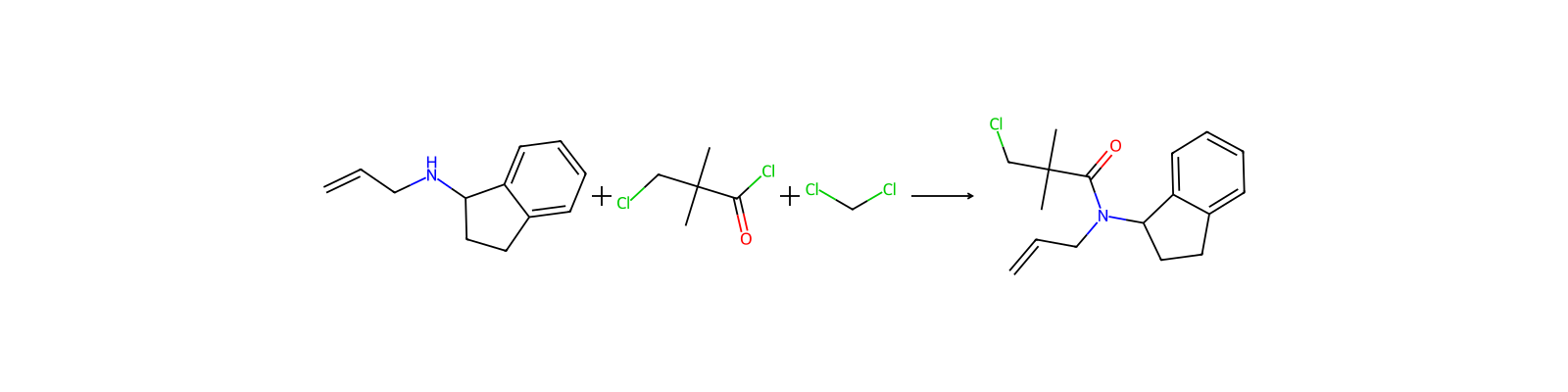
HRID 16602 반응식
HRID 16602반응물로
HRID 21636 반응식
HRID 21636반응물로
HRID 76197 반응식
HRID 76197반응물로
HRID 80270 반응식
HRID 80270반응물로
HRID 82893 반응식
HRID 82893반응물로
HRID 86366 반응식
HRID 86366반응물로
HRID 163378 반응식
HRID 163378반응물로
HRID 186074 반응식
HRID 186074반응물로
이전1 / 9 페이지

화합물 노트

이 페이지에서기본 정보개요이름 및 식별자물성안전 및 규제화학 및 산업관련 반응화합물 노트
ChEMBL
CHEMBL3183011
UNII
6UH44S0ZZF
EC Number
224-311-8
Nikkaji
J26.727I
SMILES
C(Cl)(=O)C(C)(C)CCl
EPA
3 · 3-Chloropivaloyl chloride (4300-97-4)

화학적 성질

clear colorless to light yellow-brown liquid

Hazards SummaryCorrosive to skin and eyes; Reacts with water to release hydrochloric acid; [CAMEO]
DOT ID and Guide9263 156
Reactive GroupHalogenated Organic Compounds
Reactivity AlertsHighly Flammable
Reactivity Profile · 1건

CHLOROPIVALOYL CHLORIDE is incompatible with strong oxidizing agents, alcohols, bases, including amines. May react vigorously or explosively if mixed with diisopropyl ether or other ethers in the presence of trace amounts of metal salts [J. Haz. Mat., 1981, 4, 291].

DOT Hazard Classification · 6건

Chloropivaloyl chloride

NA9263

Div 6.1 Poisonous materials (49 eCFR § 173.132)

Div 6.1 Poisonous materials (49 eCFR § 173.132)

PG I: the degree of danger presented by the material is great

Symbol D: The proper shipping name which is appropriate for describing material for domestic transportation

Air and Water ReactionsHighly flammable. Slightly soluble in water and less dense than water. Hence floats on water. Reacts with water to form hydrochloric acid (hydrogen chloride).

안전 및 보호

Fire FightingExcerpt from ERG Guide 156 [Substances - Toxic and/or Corrosive (Combustible / Water-Sensitive)]:
Accidental Release Measures · 2건

· CALL 911. Then call emergency response telephone number on shipping paper. If shipping paper not available or no answer, refer to appropriate telephone number listed on the inside back cover.

· ELIMINATE all ignition sources (no smoking, flares, sparks or flames) from immediate area.

First Aid · 2건

Excerpt from ERG Guide 156 [Substances - Toxic and/or Corrosive (Combustible / Water-Sensitive)]:

General First Aid:

Exposure Control and Personal Protection · 2건

· Wear positive pressure self-contained breathing apparatus (SCBA).

TIH (Toxic Inhalation Hazard) - Term used to describe gases and volatile liquids that are toxic when inhaled. Some are TIH materials themselves, e.g., chlorine, and some release TIH gases when spilled in water, e.g., chlorosilanes. [ERG 2016].

Nonfire Spill ResponseExcerpt from ERG Guide 156 [Substances - Toxic and/or Corrosive (Combustible / Water-Sensitive)]:
Isolation and Evacuation · 4건

Excerpt from ERG Guide 156 [Substances - Toxic and/or Corrosive (Combustible / Water-Sensitive)]:

Immediate precautionary measure

Small spill:

Small spill:

Personal Protective Equipment (PPE)Excerpt from ERG Guide 156 [Substances - Toxic and/or Corrosive (Combustible / Water-Sensitive)]:
Emergency Response Planning Guidelines· Note: Most foams will react with the material and release corrosive/toxic gases.
Acute Exposure Guideline Levels (AEGLs)The compound is currently at the Holding Status AEGLs which have been reviewed by the NAC/AEGL Committee and are on hold due to insufficient data to develop AEGL values.
AEGLs NotesAEGLs Status: Holding

독성 정보

Adverse EffectsDermatotoxin - Skin burns.

안전 데이터

wgk
3
tsca
TSCA listed
ridadr
UN 3390 6.1/PG 1
HS 번호
2915900090
risk_code
34-36/37-23-22-26
hazard_code
C,Xi,T+
safety_code
26-36/37/39-45-28
포장분류
III
위험 등급
8
F 고인화성물질
19
위험 참고 사항
Irritant
3-클로로-N-(3,5-DIMETHOXYPHENYL)-2,2-DIMETHYLPROPANAMIDE
3,3-Dimethyl-1-[2-nitro-4-(trifluoromethyl)phenyl]azetidin-2-one