N,N-다이메틸폼아마이드
다이메틸폼아마이드 · N,N-다이메틸폼아마이드 · N,N-디메틸포름아미드 · N-포밀다이메틸아민 · 디메틸포름아미드 · 디엠에프 · N,N-다이메틸포름아마이드 · 다이메틸포름아마이드
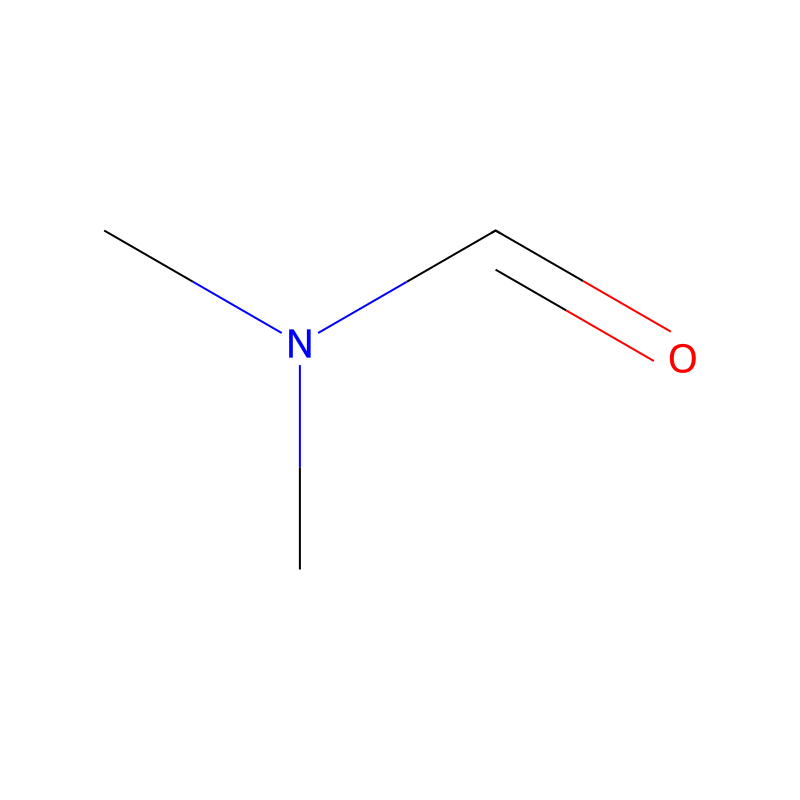
식별자 및 물리적 특성
| CAS No. | 68-12-2 |
|---|---|
| 분자식 | C3H7NO |
| 평균 분자량 | 73.09 g/mol |
| 단동위원소 질량 | 73.05276385 g/mol |
| SMILES | CN(C)C=O |
| InChIKey | ZMXDDKWLCZADIW-UHFFFAOYSA-N |
| PubChem CID | 6228 |
| ChEMBL | CHEMBL268291 |
| ChEBI | CHEBI:17741 |
| EC No. | 200-679-5 |
| DTXSID | DTXSID6020515 |
| 현지명 | N,N-다이메틸폼아마이드 |
화학 및 물리적 성질
| XLogP | -1 |
|---|---|
| 극성 표면적 | 20.3 |
| 수소 결합 공여자 수 | 0 |
| 수소 결합 수용자 수 | 1 |
| 회전 가능 결합 수 | 0 |
| 무거운 원자 수 | 5 |
| 형식 전하 | 0 |
| 복잡도 | 33 |
| pH | pH = 6.7 (0.5 molar solution in water)7 (200g/l, H2O, 20℃) |
| LogP(분배 계수) | -1.01log Kow = -1.01-0.87 |
| 냄새 | Fishy odorFaint, amine-like odor100ppm에서 희미한 암모니아 냄새가 감지됨 |
| 밀도 | 0.95 at 68 °F (USCG, 1999) - Less dense than waterwill float0.9445 at 25 °C/4 °CRelative density (water = 1): 0.950.9455 @25 °C0.944 g/mL (lit.) |
| Viscosity | 0.802 cP at 25 °C0.85 mm²/s at 25 °C |
| Color/Form | Colorless to very slightly yellow liquidWater-white liquid |
| 용해도 | greater than or equal to 100 mg/mL at 72 °F (NTP, 1992)1000000Miscible with water and most common organic solventsMiscible with ethanol, ethyl ether, acetone, benzeneslightly soluble in ligroin1000000 mg/L at 25 °CSolubility in water: miscible물: 섞일 수 있음 |
| Corrosivity | Pure dimethylformamide is essentially noncorrosive to metals. However, copper, tin and their alloys should be avoided. |
| 인화점 | 153 °F (NTP, 1992)58 °C, closed cup67 °C (open cup)58 °C (Closed cup)136 °F (58 °C)58 °C c.c. |
| 끓는 점 | 300 to 313 °F at 760 mmHg (NTP, 1992)153152.8 °CBP: 76 °C at 39 mm Hg25 °C at 3.7 mm Hg153 °C307 °F153 °C (lit.) |
| Decomposition | When heated to decomposition it emits toxic fumes of /nitrogen oxides/.Temperatures >350 °C may cause decomposition to form dimethylamine and carbon dioxide, with pressure developing in closed containers. |
| 녹는점 | -78 °F (NTP, 1992)-60.4-60.3 °C-60.4 °C-61 °C-61 °C (lit.) |
| 증기 밀도 | 2.5 (vs air) |
| 증기압 | 2.7 mm Hg ( 20 °C) |
| 굴절률 | n20/D 1.430(lit.) |
| 저장 조건 | Store at +5°C to +30°C. |
| 물리적 상태 | 액체 |
| pKa(산도 계수) | -0.44±0.70(Predicted) |
| 색상 | APHA: ≤15 |
| 폭발한계 | 2.2-16%(V) |
| 후각 역치 | 1.8ppm |
| 용해도 | 녹는 |
| 비열 | Cp(liquid): 2.06 J/(g·K), at 25℃ |
| Merck | 14,3243 |
| BRN | 605365 |
| 헨리 상수 | 1.3×10² mol/(m3Pa) at 25℃, Burkholder et al. (2019) |
| 유전율 | 36.710000000000001 |
| InChI | 1S/C3H7NO/c1-4(2)3-5/h3H,1-2H3 |
| InChIKey | ZMXDDKWLCZADIW-UHFFFAOYSA-N |
| SMILES | [H]C(=O)N(C)C |
| LogP(분배 계수) | -1.010 |
| 표면장력 | 35.20mN/m at 298.15K |
| NIST | Formamide, N,N-dimethyl-(68-12-2) |
| EPA | N,N-Dimethylformamide (68-12-2) |
화학적 성질
N,N-Dimethylformamide is a colorless or slightly yellow liquid with a boiling point of 153°C and a vapor pressure of 380 Pa at 20°C. It is freely soluble in water and soluble in alcohols, acetone and benzene. N,N-Dimethylformamide is used as solvent, catalyst and gas absorbent. React violently with concentrated sulfuric acid, fuming nitric acid and can even explode. Pure Dimethylformamide is odorless, but industrial grade or modified Dimethylformamide has a fishy smell because it contains impurities of Dimethylamine. Dimethylformamide is unstable (especially at high temperatures) in the presence of a strong base such as sodium hydroxide or a strong acid such as hydrochloric acid or sulfuric acid, and is hydrolyzed to formic acid and dimethylamine. N,N-Dimethylformamide structure
안전 및 규제
| GHS 분류 | DangerH312: Harmful in contact with skin [Warning Acute toxicity, dermal]H319: Causes serious eye irritation [Warning Serious eye damage/eye irritation]H332: Harmful if inhaled [Warning Acute toxicity, inhalation]H360D ***: May damage the unborn child [Danger Reproductive toxicity]P203, P261, P264+P265, P271, P280, P302+P352, P304+P340, P305+P351+P338, P317, P318, P321, P337+P317, P362+P364, P405, and P501 (click each P-code to see the statement)This chemical does not meet GHS hazard criteria for < 0.1% (1 of 1434) of reports. |
|---|---|
| 규제 정보 | Chemical: Formamide, N,N-dimethyl-Hazard Traits - CarcinogenicityDermatotoxicityHepatotoxicity and Digestive System ToxicityReproductive ToxicityRespiratory ToxicityAuthoritative List - CA TACsEC Annex VI CMRs - Cat. 1BIARC Carcinogens - 2AOEHHA RELsProp 65Report - regardless of intended function of ingredient in the productFormamide, N,N-dimethyl- is listed on the EPA's Chemical Data Reporting (CDR) system. Manufacturers and importers of Formamide, N,N-dimethyl- are required to report information about their production and use of this chemical to the EPA under the Toxic Substances Control Act (TSCA). (40 eCFR Part 711)Status: Active Update: 17-12-2022 https://echa.europa.eu/registration-dossier/-/registered-dossier/15093Status: Cease Manufacture Update: 13-08-2013 https://echa.europa.eu/registration-dossier/-/registered-dossier/6164Restricted substance: N,N-dimethylformamideEC: 200-679-5Restriction condition document: PDF linkSubstance: N,N-dimethylformamideDate of inclusion: >19-Dec-2012Reason for inclusion: Toxic for reproduction (Article 57c) |
| 기타 안전 정보 | IMAP assessments - Formamide, N,N-dimethyl-: Human health tier II assessmentIMAP assessments - Formamide, N,N-dimethyl-: Environment tier I assessment |
| 운송 라벨(DOT) | Flammable Liquid |
| 화재 위험 | Special Hazards of Combustion Products: Vapors are irritating (USCG, 1999)· HIGHLY FLAMMABLE: Will be easily ignited by heat, sparks or flames.· Vapors may form explosive mixtures with air.· Vapors may travel to source of ignition and flash back.· Most vapors are heavier than air. They will spread along the ground and collect in low or confined areas (sewers, basements, tanks, etc.).· Vapor explosion hazard indoors, outdoors or in sewers.· Those substances designated with a (P) may polymerize explosively when heated or involved in a fire.· Runoff to sewer may create fire or explosion hazard.· Containers may explode when heated.· Many liquids will float on water.Flammable. Gives off irritating or toxic fumes (or gases) in a fire. Above 58 °C explosive vapour/air mixtures may be formed. |
| 화재 가능성 | CombustibleFlammable liquid when exposed to heat or flame. |
| 건강 유해성 | Irritation of eyes, skin and nose. May cause nausea. (USCG, 1999)· May cause toxic effects if inhaled or absorbed through skin.· Inhalation or contact with material may irritate or burn skin and eyes.· Fire will produce irritating, corrosive and/or toxic gases.· Vapors may cause dizziness or asphyxiation, especially when in closed or confined areas.· Runoff from fire control or dilution water may cause environmental contamination. |
| 유해성 요약 | Dimethylformamide is used as an industrial solvent and in the production of fibers, films, and surface coatings. Acute (short-term) exposure to dimethylformamide has been observed to damage the liver in animals and in humans. Symptoms of acute exposure in humans include abdominal pain, nausea, vomiting, jaundice, alcohol intolerance, and rashes. Chronic (long-term) occupational exposure to dimethylformamide by inhalation has resulted in effects on the liver and digestive disturbances in workers. Human studies suggested a possible association between dimethylformamide exposure and testicular cancer, but further studies failed to confirm this relationship. EPA has not classified dimethylformamide with respect to its carcinogenicity.Liquid causes first degree burns on short exposure[CHRIS] Contact dermatitis reported in epoxy resin handlerAlso can provoke alcohol-induced flushing[Kanerva, p. 1786] DMF is toxic to the liver. [Reference #1] May cause liver injury and jaundice[ICSC] Animals exposed to single lethal doses have CNS depression, anesthesia, convulsions, and coma. [HSDB] In the list of 15 chemicals classified as potentially fetotoxic even if MAK value observed[Reference #2] Detailed reviews of these data indicate adverse effects on reproductive and teratogenic endpoints, but only at maternal toxicity. [ACGIH] See Carcinogenicity of some industrial chemicals, Volume 115. [IARC, News Release, 23 February 2016] The BEI for Total N-methylformamide (NMF), which represents the sum of N-methylformamide (NMF) and N-(hydroxymethyl)-N-methylformamide (HMMF), is intended to protect almost all workers from liver damage due to exposure to N,N-dimethylformamide (DMF) by all routes of exposure. [ACGIH: BEI Documentation] |
| 운송 번호 및 가이드(DOT) | 2265 129 |
| FDA 요건 | Dimethylformamide is an indirect food additive for use only as a component of adhesives. |
| 반응성 그룹 | Amides and Imides |
| EC 분류 | Symbol: TR: 61-20/21-36S: 53-45Note: E |
| UN 분류 | UN Hazard Class: 3UN Pack Group: III |
| 소화 | Excerpt from ERG Guide 129 [Flammable Liquids (Water-Miscible / Noxious)]:CAUTION: The majority of these products have a very low flash point. Use of water spray when fighting fire may be inefficient.SMALL FIRE: Dry chemical, CO2, water spray or alcohol-resistant foam. Do not use dry chemical extinguishers to control fires involving nitromethane (UN1261) or nitroethane (UN2842).LARGE FIRE: Water spray, fog or alcohol-resistant foam. Avoid aiming straight or solid streams directly onto the product. If it can be done safely, move undamaged containers away from the area around the fire.FIRE INVOLVING TANKS, RAIL TANK CARS OR HIGHWAY TANKS: Fight fire from maximum distance or use unmanned master stream devices or monitor nozzles. Cool containers with flooding quantities of water until well after fire is out. Withdraw immediately in case of rising sound from venting safety devices or discoloration of tank. ALWAYS stay away from tanks in direct contact with flames. For massive fire, use unmanned master stream devices or monitor nozzlesif this is impossible, withdraw from area and let fire burn. (ERG, 2024)Use water spray, powder, alcohol-resistant foam, carbon dioxide. In case of fire: keep drums, etc., cool by spraying with water. |
| 응급 조치 | Fresh air, rest. Refer for medical attention.Remove contaminated clothes. Rinse and then wash skin with water and soap. Refer for medical attention .First rinse with plenty of water for several minutes (remove contact lenses if easily possible), then refer for medical attention.Rinse mouth. Do NOT induce vomiting. Refer for medical attention . |
| 누출 비상 조치 | · CALL 911. Then call emergency response telephone number on shipping paper. If shipping paper not available or no answer, refer to appropriate telephone number listed on the inside back cover.· Keep unauthorized personnel away.· Stay upwind, uphill and/or upstream.· Ventilate closed spaces before entering, but only if properly trained and equipped.· ELIMINATE all ignition sources (no smoking, flares, sparks or flames) from immediate area.· All equipment used when handling the product must be grounded.· Do not touch or walk through spilled material.· Stop leak if you can do it without risk.· Prevent entry into waterways, sewers, basements or confined areas.· A vapor-suppressing foam may be used to reduce vapors.· Absorb or cover with dry earth, sand or other non-combustible material and transfer to containers.· Use clean, non-sparking tools to collect absorbed material.Large Spill· Dike far ahead of liquid spill for later disposal.· Water spray may reduce vapor, but may not prevent ignition in closed spaces. |
| 응급 처치 | EYES: First check the victim for contact lenses and remove if present. Flush victim's eyes with water or normal saline solution for 20 to 30 minutes while simultaneously calling a hospital or poison control center. Do not put any ointments, oils, or medication in the victim's eyes without specific instructions from a physician. IMMEDIATELY transport the victim after flushing eyes to a hospital even if no symptoms (such as redness or irritation) develop.SKIN: IMMEDIATELY flood affected skin with water while removing and isolating all contaminated clothing. Gently wash all affected skin areas thoroughly with soap and water. If symptoms such as redness or irritation develop, IMMEDIATELY call a physician and be prepared to transport the victim to a hospital for treatment.INHALATION: IMMEDIATELY leave the contaminated areatake deep breaths of fresh air. If symptoms (such as wheezing, coughing, shortness of breath, or burning in the mouth, throat, or chest) develop, call a physician and be prepared to transport the victim to a hospital. Provide proper respiratory protection to rescuers entering an unknown atmosphere. Whenever possible, Self-Contained Breathing Apparatus (SCBA) should be usedif not available, use a level of protection greater than or equal to that advised under Protective Clothing.INGESTION: DO NOT INDUCE VOMITING. If the victim is conscious and not convulsing, give 1 or 2 glasses of water to dilute the chemical and IMMEDIATELY call a hospital or poison control center. Be prepared to transport the victim to a hospital if advised by a physician. If the victim is convulsing or unconscious, do not give anything by mouth, ensure that the victim's airway is open and lay the victim on his/her side with the head lower than the body. DO NOT INDUCE VOMITING. IMMEDIATELY transport the victim to a hospital. (NTP, 1992)General First Aid:· Call 911 or emergency medical service.· Ensure that medical personnel are aware of the material(s) involved, take precautions to protect themselves and avoid contamination.· Move victim to fresh air if it can be done safely.· Administer oxygen if breathing is difficult.· If victim is not breathing:-- DO NOT perform mouth-to-mouth resuscitationthe victim may have ingested or inhaled the substance.-- If equipped and pulse detected, wash face and mouth, then give artificial respiration using a proper respiratory medical device (bag-valve mask, pocket mask equipped with a one-way valve or other device).-- If no pulse detected or no respiratory medical device available, provide continuous compressions. Conduct a pulse check every two minutes or monitor for any signs of spontaneous respirations.· Remove and isolate contaminated clothing and shoes.· For minor skin contact, avoid spreading material on unaffected skin.· In case of contact with substance, remove immediately by flushing skin or eyes with running water for at least 20 minutes.· For severe burns, immediate medical attention is required.· Effects of exposure (inhalation, ingestion, or skin contact) to substance may be delayed.· Keep victim calm and warm.· Keep victim under observation.· For further assistance, contact your local Poison Control Center.· Note: Basic Life Support (BLS) and Advanced Life Support (ALS) should be done by trained professionals.Specific First Aid:· Wash skin with soap and water.(General first aid procedures)Eye: Irrigate immediately - If this chemical contacts the eyes, immediately wash (irrigate) the eyes with large amounts of water, occasionally lifting the lower and upper lids. Get medical attention immediately.Skin: Water flush promptly - If this chemical contacts the skin, flush the contaminated skin with water promptly. If this chemical penetrates the clothing, immediately remove the clothing and flush the skin with water promptly. If irritation persists after washing, get medical attention.Breathing: Respiratory supportSwallow: Medical attention immediately - If this chemical has been swallowed, get medical attention immediately. |
| 안전 보관 | Separated from incompatible materials. See Chemical Dangers. |
| 노출 관리 및 개인 보호 | · Wear positive pressure self-contained breathing apparatus (SCBA).· Structural firefighters' protective clothing provides thermal protection but only limited chemical protection.Biological Exposure Indices (BEI) [ACGIH] - N-Methylformamide in urine = 30 mg/L at end of shiftN-Acetyl-S-(N-methylcarbamoyl)cysteine in urine = 30 mg/L at end of shift at end of workweek[TLVs and BEIs]5.0 [ppm] |
| 소화 절차 | Wear self contained breathing apparatus for fire fighting if necessary.Suitable extinguishing media: Use water spray, alcohol-resistant foam, dry chemical or carbon dioxide.Use water spray to cool unopened containers.If material on fire or involved in fire: Use water in flooding quantities as fog. Solid streams of water may be ineffective. Use "alcohol" foam, dry chemical or carbon dioxide. Apply water from as far a distance as possible. Keep run-off water out of sewers and water sources. |
| 보관 조건 | Keep container tightly closed in a dry and well-ventilated place. Containers which are opened must be carefully resealed and kept upright to prevent leakage. Handle and store under inert gas.Ideal materials for ... storage are nonalloy (carbon) steels, austenitic chromium nickel steels ... and aluminum. Seals ... should be made of polytetrafluoroethylene, polyethylene or polypropylene of high molecular weight. Ethylene-propylene rubber may also be used. Graphite can be used for lubricating moving parts in contact with DMF ... Since dimethylformamide (DMF) is hygroscopic, it should be kept under a blanket of dry nitrogen. High purity DMF, as required for acrylic fibers, is best stored in aluminum tanks. |
| 정리 방법 | Use personal protective equipment. Avoid breathing vapors, mist or gas. Ensure adequate ventilation. Remove all sources of ignition. Evacuate personnel to safe areas. Beware of vapors accumulating to form explosive concentrations. Vapors can accumulate in low areas.Prevent further leakage or spillage if safe to do so. Do not let product enter drains.Contain spillage, and then collect with an electrically protected vacuum cleaner or by wet-brushing and place in container for disposal according to local regulations. |
| 비화재 누출 대응 | Excerpt from ERG Guide 129 [Flammable Liquids (Water-Miscible / Noxious)]:ELIMINATE all ignition sources (no smoking, flares, sparks or flames) from immediate area. All equipment used when handling the product must be grounded. Do not touch or walk through spilled material. Stop leak if you can do it without risk. Prevent entry into waterways, sewers, basements or confined areas. A vapor-suppressing foam may be used to reduce vapors. Absorb or cover with dry earth, sand or other non-combustible material and transfer to containers. Use clean, non-sparking tools to collect absorbed material.LARGE SPILL: Dike far ahead of liquid spill for later disposal. Water spray may reduce vapor, but may not prevent ignition in closed spaces. (ERG, 2024) |
| 처리 방법 | SRP: The most favorable course of action is to use an alternative chemical product with less inherent propensity for occupational harm/injury/toxicity or environmental contamination. Recycle any unused portion of the material for its approved use or return it to the manufacturer or supplier. Ultimate disposal of the chemical must consider: the material's impact on air qualitypotential migration in soil or watereffects on animal and plant lifeand conformance with environmental and public health regulations.SRP: Wastewater from contaminant suppression, cleaning of protective clothing/equipment, or contaminated sites should be contained and evaluated for subject chemical or decomposition product concentrations. Concentrations shall be lower than applicable environmental discharge or disposal criteria. Alternatively, pretreatment and/or discharge to a permitted wastewater treatment facility is acceptable only after review by the governing authority and assurance that "pass through" violations will not occur. Due consideration shall be given to remediation worker exposure (inhalation, dermal and ingestion) as well as fate during treatment, transfer and disposal. If it is not practicable to manage the chemical in this fashion, it must be evaluated in accordance with EPA 40 CFR Part 261, specifically Subpart B, in order to determine the appropriate local, state and federal requirements for disposal.Recovering: Burn in soln in flammable solvent in furnace equipped with alkali scrubber. Recovery and recycle is an alternative to disposal for dimethyl formamide (DMF) from fiber spin baths and from PVC /polyvinyl chloride/ reactor cleaning solvents. Recommendable method: Incineration.Product: Burn in a chemical incinerator equipped with an afterburner and scrubber but exert extra care in igniting as this material is highly flammable. Offer surplus and non-recyclable solutions to a licensed disposal company. Contact a licensed professional waste disposal service to dispose of this material.Contaminated packaging: Dispose of as unused product. |
| 누출 처리 | Personal protection: complete protective clothing including self-contained breathing apparatus. Ventilation. Remove all ignition sources. Collect leaking and spilled liquid in sealable containers as far as possible. Absorb remaining liquid in sand or inert absorbent. Then store and dispose of according to local regulations. |
| 체내 부담 | N,N-Dimethylformamide was detected in the urine of synthetic leather factory workers(1)the ave and range of concentrations at the end of shift were 449 ug/L and 100-990 ug/L, respectively, for workers exposed to N,N-dimethylformamide in the workplace(1). Urinary levels of N,N-dimethylformamide (detected as N-monomethylformamide) for workers at leather, polyurethane, and shoe-sole production facilities were 19.7 ppm, 7.8 ppm, and 2.6 ppm, respectively(2). |
| Treatment | As there is no antidote for dimethyl formamide poisoning, treatment is mainly supportive and symptomatic. (T36) |
| 상호 작용 | In acetone pretreated male CD 1 mice, dimethy1formamide, given as a single ip dose of 1000 mg/kg bw, resulted in liver necrosis and a strong incr in serum alanine aminotransferase activity. In contrast, no signs of hepatotoxicity were found in non pretreated mice given the same dose or in pretreated or nonpretreated male Sprague Dawley rats given up to 2000 mg/kg bw as a single ip dose. These differences are probably related to the highly different substrate affinities of CYP2EI in rats and mice.In a study of 102 workers, 19 had experienced manifestation of alcohol intolerance, among them facial flushing, sweating, dizziness, and palpitation, mainly within 24 hr of exposure /to DMF/. Of the 34 episodes recorded, 26 occurred after the workers had consumed alcoholic drinks.Among the work population that included a total of 13 workers, seven had abdominal colic which was sustained for more than 3 days, three had abnormal liver function, and two had facial flushing. /DMF (Dimethylformamide) exposure/A veterinary euthanasia drug containing embutramide, mebezonium, tetracaine, and dimethylformamide (DMFT-61 or Tanax) may cause serious manifestations or even fatalities after self-poisoning. Immediate toxicity is mainly due to a general anesthetic and due to a neuromuscular blocking agent, while delayed hepatotoxicity seems related to the solvent DMF. The protective role of N-acetylcysteine (NAC) administration remains debatable. Two male veterinarians (50- and 44-year-old) attempted suicide by injecting T-61 in the precordial area for the first one, and by ingesting 50 mL for the second. Both received NAC (for 14 days in the first case and only for 20 hr in the second). Urine was collected for the serial determination of DMF, N-methylformamide (NMF), and N-acetyl-S-(N-methylcarbamoyl)cysteine (AMCC). Both patients developed only mild signs of liver injury. The metabolite of DMF, NMF, appeared rapidly in the urine, while a further delay was necessary for AMCC excretion. The kinetics of elimination of DMF and DMF metabolites were slightly slower than those reported in exposed workers. While both patients had a favorable outcome, there is no clear evidence that NAC could directly influence NMF and AMCC excretion...For more Interactions (Complete) data for N,N-DIMETHYLFORMAMIDE (12 total), please visit the HSDB record page. |
| 표적 장기 | HepaticEyes, skin, respiratory system, liver, kidneys, cardiovascular system |
| 건강 영향 | Dimethyl formamide is a known hepatatotoxin. It may also cause birth defects, kidney damage, and temporary alcohol intolerance. (L1658) |
| 생태독성 수치 | LC50Species: /Oncorhynchus mykiss/ (rainbow trout) weight 0.8 gConditions: static bioassayConcentration: 12,000 mg/L for 96 hr (95% confidence limits 10,000-13,000 mg/L)Species: Pimephales promelas (fathead minnow) weight 0.12 gConditions: flow through bioassay, water hardness 45.5 mg/L CaCO3, 25 +/- 1 °C, pH 7.5, dissolved oxygen >60% of saturationConcentration: 1430 mg/L for 96 hrEC50Species: Anabaena inaequalis (Blue-Green Algae) 1X10+6 cells/mLConditions: freshwater, staticConcentration: 0.6% for 10-14 days (95% confidence interval: 0.36-0.84%)Effect: growth, general /formulation/Species: Daphnia magna (Water flea) age <24 hrConditions: freshwater, static, 20.5 °C, pH 7.04-7.97, hardness 46.4 (40.4-56.3) mg/L CaCO3, alkalinity 41.7 (30.0-46.0) mg/L CaCO3, dissolved oxygen 85.5 (77.5-90.8) mg/LConcentration: 26300000 ug/L for 24 hr (95% confidence interval: 23400000-29600000 ug/L)Effect: intoxication, immobilizationFor more Ecotoxicity Values (Complete) data for N,N-DIMETHYLFORMAMIDE (28 total), please visit the HSDB record page. |
| 환경 거동 | TERRESTRIAL FATE: Based on a classification scheme(1), an estimated Koc value of 1(SRC), determined from a structure estimation method(2), indicates that N,N-dimethylformamide is expected to have very high mobility in soil(SRC). Volatilization of N,N-dimethylformamide from moist soil surfaces is not expected to be an important fate process(SRC) given a Henry's Law constant of 7.39X10⁻⁸ atm-cu m/mole(3). N,N-Dimethylformamide is expected to volatilize from dry soil surfaces(SRC) based upon a vapor pressure of 3.87 mm Hg at 25 °C(4). N,N-Dimethylformamide may biodegrade in soil based upon river die-away tests (100% in 6 days)(5), however, utilizing the Japanese MITI test, only 4.4% of the theoretical BOD was reached in 2 weeks(6).AQUATIC FATE: Based on a classification scheme(1), an estimated Koc value of 1(SRC), determined from a structure estimation method(2), indicates that N,N-dimethylformamide is not expected to adsorb to suspended solids and sediment(SRC). Volatilization from water surfaces is not expected(3) based upon a Henry's Law constant of 7.39X10⁻⁸ atm-cu m/mole(4). According to a classification scheme(5), BCFs of 0.3-1.2(6), suggest bioconcentration in aquatic organisms is low(SRC). Hydrolysis is not expected to be an important environmental fate process since neutral hydrolysis rate constants for amides are <10-9/sec under environmental conditions (pH 5 to 9)(7). N,N-Dimethylformamide may biodegrade in the aqueous environment based on river die-away tests (100% in 6 days)(8)however, utilizing the Japanese MITI test, only 4.4% of the theoretical BOD was reached in 2 weeks(6).ATMOSPHERIC FATE: According to a model of gas/particle partitioning of semivolatile organic compounds in the atmosphere(1), N,N-dimethylformamide, which has a vapor pressure of 3.87 mm Hg at 25 °C(2), is expected to exist solely as a vapor in the ambient atmosphere. Vapor-phase N,N-dimethylformamide is degraded in the atmosphere by reaction with photochemically-produced hydroxyl radicals(SRC)the half-life for this reaction in air is estimated to be 20 hours(SRC), calculated from its rate constant of 1.8X10⁻¹¹ cu cm/molecule-sec at 25 °C(SRC) that was derived using a structure estimation method(3). N,N-Dimethylformamide contains chromophores that absorb at wavelengths >290 nm(4) and, therefore, may be susceptible to direct photolysis by sunlight(SRC). |
| 유해 작용 | Neurotoxin - Acute solvent syndromeOccupational hepatotoxin - Primary hepatotoxins: the toxic effect to the liver is the principal adverse effect of the chemical.Dermatotoxin - Skin burns.IARC Carcinogen - Class 2: International Agency for Research on Cancer classifies chemicals as probable (2a), or possible (2b) human carcinogens.ACGIH Carcinogen - Confirmed Animal. |
| 노출 경로 | The substance can be absorbed into the body by inhalation and through the skin.inhalation, skin absorption, ingestion, skin and/or eye contactOraldermal |
| 독성 요약 | Dimethylformamide ... is an organic solvent produced in large quantities through-out the world. It is used in the chemical industry as a solvent, an intermediate & an additive. Dimethylformamide is a colorless liquid with an unpleasant slight odor that ... has poor warning properties & individuals may be exposed through the inhalation of vapor. Occupational exposure occurs via skin contact with dimethylformamide liquid & vapors. ... Toxic amounts of dimethylformamide may be absorbed by inhalation & through the skin. Absorbed dimethylformamide is distributed uniformily. The /metabolism/ of dimethylformamide takes place mainly in the liver, with the aid of microsomal enzyme systems. In animals & humans, the main product of dimethylformamide biotransformation is N-hydroxymethyl-N-methylformamide. This metabolite is converted during gas chromatographic analysis to N-methylformamide, which itself (together with N-hydroxymethylformamide & formamide) a minor metabolite. ... In metabolic studies & biological monitoring, urinary concentration are expressed as N-hydroxymethylformamide. ... The determination of the /metabolites/ ... in the urine may be a suitable biological indicator of total dimethylformamide exposure. In experimental animals, it has been demonstrated that dimethylformamide metabolism is saturated at high levels &, at very high levels, dimethylformamide inhibits its own metabolism. Metabolic interaction occurs between dimethylformamide & ethanol. ... The effects of dimethylformamide on the environment have not been well studied. The toxicity for aquatic organisms appears to be low ... The acute toxicity of dimethylformamide in a variety of species is low ... . It is a slight to moderate skin & eye irritant. One study on guinea pigs indicated no sensitization potential. Dimethylformamide can facilitate the absorption of other chemical substances through the skin. Exposure of experimental animals to dimethylformamide via all routes of exposure may cause dose reWhile the mechanism of action of dimethyl formamide has not bee fully elucidated, thiocarbamate pesticides have been shown to inhibit aldehyde dehydrogenases. (A2459) |
| Signs and Symptoms | Sore throat. Abdominal pain. Diarrhoea. Vomiting. Symptoms may be delayed.MAY BE ABSORBED! See Inhalation.Redness. Pain.Aspiration hazard! Abdominal pain. Jaundice.irritation eyes, skin, respiratory systemnausea, vomiting, colicliver damage, enlarged liverhigh blood pressureface flushdermatitisIn Animals: kidney, heart damageSymptoms of dimethyl formamide exposure may include abdominal pain, nausea, vomiting, dizziness, fatigue, headache, loss of appetite, and temporary alcohol intolerance. (L1658) |
| Acute Toxicity Link | Chemical: DIMETHYL FORMAMIDE |
| TSCA 요건 | Pursuant to section 8(d) of TSCA, EPA promulgated a model Health and Safety Data Reporting Rule. The section 8(d) model rule requires manufacturers, importers, and processors of listed chemical substances and mixtures to submit to EPA copies and lists of unpublished health and safety studies. N,N,-Dimethylformamide is included on this list. Effective date: 4/13/89Sunset date: 12/19/95. |
| 대기 기준 | This action promulgates standards of performance for equipment leaks of Volatile Organic Compounds (VOC) in the Synthetic Organic Chemical Manufacturing Industry (SOCMI). The intended effect of these standards is to require all newly constructed, modified, and reconstructed SOCMI process units to use the best demonstrated system of continuous emission reduction for equipment leaks of VOC, considering costs, non air quality health and environmental impact and energy requirements. N,N,-Dimethylformamide is produced, as an intermediate or a final product, by process units covered under this subpart.Listed as a hazardous air pollutant (HAP) generally known or suspected to cause serious health problems. The Clean Air Act, as amended in 1990, directs EPA to set standards requiring major sources to sharply reduce routine emissions of toxic pollutants. EPA is required to establish and phase in specific performance based standards for all air emission sources that emit one or more of the listed pollutants. N,N-Dimethyl formamide is included on this list. |
| CERCLA 보고 수량 | Persons in charge of vessels or facilities are required to notify the National Response Center (NRC) immediately, when there is a release of this designated hazardous substance, in an amount equal to or greater than its reportable quantity of 100 lb or 45.4 kg. The toll free number of the NRC is (800) 424-8802. The rule for determining when notification is required is stated in 40 CFR 302.4 (section IV.D.3.b). |
| 주 식수 지침 | (FL) FLORIDA 700 ug/L(ME) MAINE 700 ug/L |
| 직업 노출 등급(OEB) | A |
| 직업 노출 한계(OEL) | TWA: 10 ppm (30 mg/m3) [skin] |
| 수질 위해 등급(WGK) | 1 |
| 즉시 생명 위험 농도 | 500 ppm |
| TSCA 등재 상태 | TSCA listed |
| RTECS 번호 | LQ2100000 |
| 운송 번호(UN) | UN 2265 |
| 독성 | LD50 in mice, rats (ml/kg): 6.8, 7.6 orally6.2, 4.7 i.p. (Bartsch) |
| 관세 코드 | 29241990 |
| 위험 문구(R) | 61-20/21-36 |
| 위험 표시 | T |
| 안전 문구(S) | 53-45 |
| 포장분류 | III |
| 위험 등급 | 3Acute Tox. 4 DermalAcute Tox. 4 InhalationEye Irrit. 2Flam. Liq. 3Repr. 1B |
| 기존화학 물질 | KE-11411 |
| F 고인화성물질 | 3-10 |
| 위험 참고 사항 | Toxic |
| 자연 발화 온도 | 445 °C |
| 저장 분류 | 3 - Flammable liquids |
| 유해 물질 데이터 | 68-12-2(Hazardous Substances Data) |
| 함량 및 규제정보 | 물질구분: 유독물질혼합물(제품)함량정보: N,N-디메틸포름아미드 및 이를 0.3% 이상 함유한 혼합물 |
| 유해화학물질 필터링 | 2014-1-694 |
| 중점관리물질 필터링 | 별표1-10 |
용도
용도
DMF의 주요 용도는 증발 속도가 낮은 용제입니다 .DMF는 아크릴 섬유 및 플라스틱 생산에 사용됩니다. 또한 의약품의 펩타이드 커플 링, 살충제의 개발 및 생산, 접착제, 합성기, 섬유, 필름 및 표면 코팅의 제조에 용매로 사용됩니다.
용도
디메틸포름아미드는 특히 합성 피혁 제품의 생산을 위한 폴리우레탄 공정 영역에서 현저하게 많이 사용되고 있습니다. 작물 보호와 제약 산업에서는 활성 원료의 제조 시 사용됩니다. 또한 석유화학 산업에서는 벤젠이나 부타디엔 같은 특정한 제품의 추출을 위한 용도로 사용됩니다. 그 외에도 전기 산업에서는 회로 기판의 생산에 필요한 시재료의 제조 시 용매로서 사용됩니다.
용도
N, N- 디메틸 포름 아미드 (N, N-Dimethyl Formamide, DMF)는 주로 의약품의 제조 또는 첨단 산업 분야의 용제로서 사용됩니다. DMF는 주로 공업용 용매로 사용됩니다. DMF 용액은 폴리머 섬유, 필름 및 표면 코팅을 처리하는 데 사용됩니다. 아크릴 섬유를 쉽게 방사 할 수 있도록; 와이어 에나멜을 생산하고, 제약 업계의 결정화 매체로 사용됩니다.
용도
유기합성에서는 극성화합물의 용매로서 널리 쓰이는 외에 방향족화합물의 핵포르밀화, 기타 활성수소의 포르밀치환의 시약으로서 사용된다.
용도
N,N-Dimethylformamide (DMF) is a clear liquid that has been widely used in industries as a solvent, an additive, or an intermediate because of its extensive miscibility with water and most common organic solvents. Dimethylformamide solutions are used toprocess polymer fibers, films, and surface coatings; to permit easy spinning of acrylic fibers; to produce wire enamels, and as a crystallization medium in the pharmaceutical industry.DMF can also be used for formylation with alkyllithium or Grignard reagents. It is used as a reagent in Bouveault aldehyde synthesis and also in Vilsmeier-Haack reaction. It acts as a catalyst in the synthesis of acyl chlorides. It is used for separating and refining crude from olefin gas. DMF along with methylene chloride acts as a remover of varnish or lacquers. It is also used in the manufacture of adhesives, fibers and films.
일반 설명
A water-white liquid with a faint fishy odor. Flash point 136°F. Slightly less dense than water. Vapors heavier than air. Toxic by inhalation or skin absorption. May irritate eyes.
제조 및 합성 방법
제조 방법
Two processes are used commercially to produce dimethylformamide. In the direct or one-step process, dimethylamine and carbon monoxide react at 100°C and 200 psia in the presence of a sodium methoxide catalyst to make dimethylformamide. The homogenous catalyst is separated from the crude DMF, which is then refined to the final product. In the indirect process, methyl formate is isolated, and then reacted with dimethylamine to form DMF. To obtain methyl formate, two methods may be used - dehydrogenation of methanol and esterification of formic acid.The two-step process for the synthesis of N,N-dimethylformamide differs from direct synthesis because methyl formate is prepared separately and introduced in the form of ca. 96% pure (commercialgrade) material. Equimolar amounts of methyl formate and N,N-dimethylamine are subjected to a continuous reaction at 60-100°C and 0.1 – 0.3 MPa. The resulting product is a mixture of N,N-dimethylformamide and methanol. The purification process involves distillation and is analogous to that described for direct synthesis. However, no separation of salts is required because no catalysts are involved in the process. According to the corrosive properties of both starting materials and products, stainless steel has to be used as material of construction for production facilities.
생산 방법
Industrial production of N,N-Dimethylformamide (DMF) is via three separate processes (Eberling 1980). Dimethylamine in methanol is reacted with carbon monoxide in the presence of sodium methoxide or metal carbonyls at 110-150°C and high pressure. Alternately, methyl formate is produced from carbon monoxide and methanol under high pressure at 60-100°C in the presence of sodium methoxide. The resulting methyl formate is distilled and then reacted with dimethylamine at 80-100°C and low pressure. The third process involves reaction of carbon dioxide, hydrogen and dimethylamine in the presence of halogen-containing transition metal compounds to yield DMF.