
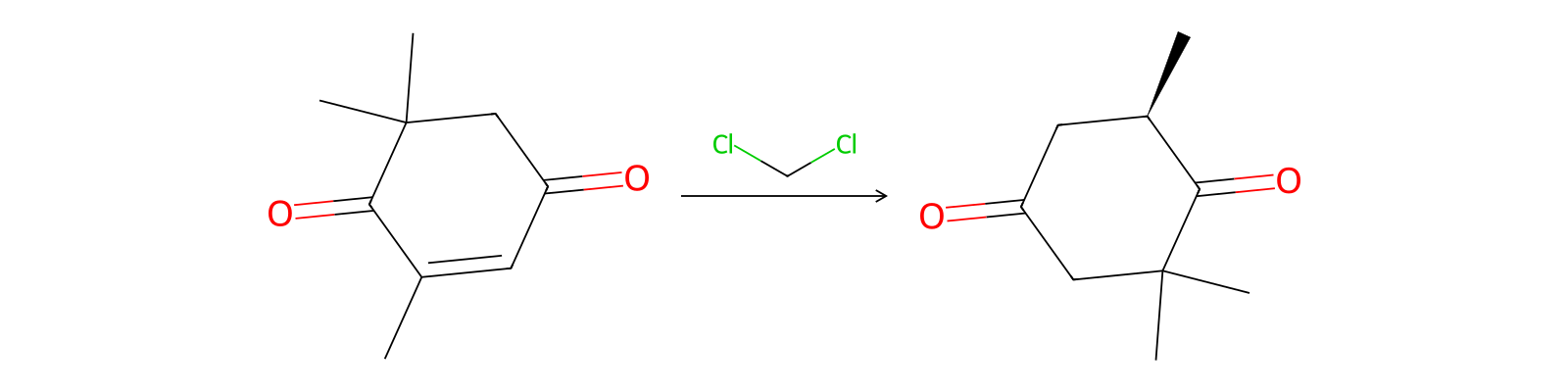
HRID 66050반응물로

1125-21-9CC1=CC(=O)CC(C)(C)C1=OAYJXHIDNNLJQDT-UHFFFAOYSA-N2,6,6-Trimethyl-2-cyclohexene-1,4-dione is a member of cyclohexenones.
1125-21-9DTXSID9021685CHEBI:179251slightly
Slightly soluble in water
Soluble (in ethanol)
Solid
White to colourless solid; Woody, musty sweet, aroma
안전 정보는 참고용이며, 공급업체의 물질안전보건자료(SDS), 관련 법규 및 전문가 평가를 대체하지 않습니다.
This chemical does not meet GHS hazard criteria for 3.4% (54 of 1568) of reports.
Warning
H302 (85.3%): Harmful if swallowed [Warning Acute toxicity, oral]
P261, P264, P270, P272, P280, P301+P317, P302+P352, P321, P330, P333+P317, P362+P364, and P501 (click each P-code to see the statement)
Aggregated GHS information provided per 1568 reports by companies from 10 notifications to the ECHA C&L Inventory. Each notification may be associated with multiple companies.
Chemical: 2-Cyclohexene-1,4-dione, 2,6,6-trimethyl-
Regulation (EC) No 1831/2003 (amended)
Status: Active Update: 29-01-2020 https://echa.europa.eu/registration-dossier/-/registered-dossier/16629
2-Cyclohexene-1,4-dione, 2,6,6-trimethyl-: Does not have an individual approval but may be used under an appropriate group standard
Fragrance Ingredients
Flavouring Agent -> FLAVOURING_AGENT -> JECFA Functional Classes
Flavoring Agents -> JECFA Flavorings Index
출처Reported found among the volatile components in saffron and in cigarette smoke. Also reported found in saffron, cognac, black tea, green tea, microbial fermented tea, lemon balm, cooked shrimp, roasted shrimp, corn oil and lamb’s lettuce.
용도4-Oxoisophorone is one of the major components of saffron (Crocus sativus L.) and also found to be a product of degradation of carotenoids in paprika, tomato and marigold oleoresins.
일반 설명2,6,6-Trimethyl-2-cyclohexene-1,4-dione is also known as 4-ketoisophorone and is the major component of saffron spice. It is a cyclic olefin and was reported as a product of the thermal degradation of β-carotene in aqueous suspension.




clear yellow to orange liquid or low melting solid