
기본 정보
- CAS
29662-90-6- 표준 SMILES
CCCCCCC(C)(C)C(=O)O- InChIKey
IKNDGHRNXGEHTO-UHFFFAOYSA-N- 분자식
- C10H20O2
- 평균 분자량
- 172.26 g/mol
- 단동위원소 질량
- 172.14632988
이름 및 식별자
- 우선 이름
- 2,2-Dimethyloctanoic acid
- IUPAC
- 2,2-dimethyloctanoic acid
- 현지명
- 2,2-디메틸옥탄산
- 영어명
- 2,2-Dimethyloctanoic acid
- 분자식
- C10H20O2
- 분자량
- 172.26
이름 및 동의어
2,2-Dimethyloctanoic acidOctanoic acid, 2,2-dimethyl-2,2-dimethyl octanoic acidUNII-5RV14V52PN5RV14V52PNDTXSID0058356.ALPHA.,.ALPHA.-DIMETHYLOCTANOIC ACIDRefChem:810972,2,-dimethyl octanoic acidalpha,alpha-dimethyloctanoic acidDTXCID40320872,2-DIMETHYLCAPRYLIC ACID
이름 더 보기
2,2-디메틸옥탄산Butyl Parahydroxybenzoate Impurity 1 (Butyl Parahydroxybenzoate EP Impurity A)
29662-90-62,2-Dimethyloctanoicacid2,2-Dimethyloctanoic Acid; a,a-Dimethyloctanoic Acid; 2,2-Dimethyl-Octanoic Acid;2,2-Dimethyloctanoic acid #SCHEMBL284791EBA66290AKOS012034274AT41178
데이터베이스 식별자
- CAS
29662-90-6- PubChem CID
- 62847
- DTXSID
DTXSID0058356- UNII
- 5RV14V52PN
- EC Number
- 980-158-3
- Nikkaji
- J283.209G
물성
구조 계산 물성
- XLogP
- 3.7
- 극성 표면적
- 37.3 Ų
- 수소 결합 공여자 수
- 1
- 수소 결합 수용자 수
- 2
- 회전 가능 결합 수
- 6
- 무거운 원자 수
- 12
- 형식 전하
- 0
- 복잡도
- 139
실험 및 물리화학적 성질
Physical Description2,2-dimethyl octanoic acid is a colorless liquid with a burning, rancid odor. Floats on water. (USCG, 1999)
물리화학적 성질
- 끓는 점
- 262.98 °C · 262.98°C (estimate)
- 밀도
- 0.9047 · 0.9047 (rough estimate)
- 굴절률
- 1.4175 · 1.4175 (estimate)
- 용해도
- DMSO(약간 용해됨), 메탄올(약간 용해됨)
- 물리적 상태
- 기름
- 산도 계수 (pKa)
- 4.86 · 4.86±0.45(Predicted)
- 색상
- 무색
- EPA
- 2 · Octanoic acid, 2,2-dimethyl- (29662-90-6)
안전 및 규제
GHS 분류
GHS Classification
Danger
H315 (100%): Causes skin irritation [Warning Skin corrosion/irritation];H318 (100%): Causes serious eye damage [Danger Serious eye damage/eye irritation];H335 (100%): May cause respiratory irritation [Warning Specific target organ toxicity, single exposure; Respiratory tract irritation]
P261, P264, P264+P265, P271, P280, P302+P352, P304+P340, P305+P354+P338, P317, P319, P321, P332+P317, P362+P364, P403+P233, P405, and P501 (click each P-code to see the statement)
Aggregated GHS information provided per 3 reports by companies from 2 notifications to the ECHA C&L Inventory. Each notification may be associated with multiple companies.;Information may vary between notifications depending on impurities, additives, and other factors. The percentage value in parenthesis indicates the notified classification ratio from companies that provide hazard codes. Only hazard codes with percentage values above 10% are shown. For more detailed information, please visit ECHA C&L website.
유해성 정보
Regulatory InformationOctanoic acid, 2,2-dimethyl-: Does not have an individual approval but may be used under an appropriate group standard
Health Hazards
Irritating to the eyes, nose, throat, upper respiratory tract, and skin. Inhalation may be fatal as a result of spasm, inflammation and edema of the larynx and bronchi, chemical pneumonitis, and pulmonary edema. Symptoms of exposure may include burning sensation, coughing, wheezing, laryngitis, shortness of breath, headache, nausea, and vomiting. (USCG, 1999)
Reactive GroupAcids, Carboxylic
Reactivity Profile
2,2-DIMETHYL OCTANOIC ACID reacts exothermically with bases. May corrode or dissolve iron, steel, and aluminum parts and containers. May react with active metals to form gaseous hydrogen and a metal salt. Reacts with cyanide salts to generate gaseous hydrogen cyanide. Reacts with diazo compounds, dithiocarbamates, isocyanates, mercaptans, nitrides, and sulfides to generate flammable and/or toxic gases and heat. Reacts with sulfites, nitrites, thiosulfates (to give H2S and SO3), dithionites (SO2), to generate flammable and/or toxic gases and heat. Reacts with carbonates and bicarbonates to generate a harmless gas (carbon dioxide) but some heat. Exothermically oxidized by strong oxidizing agents and reduced by strong reducing agents to give a range of products. May initiate polymerization reactions or catalyze other chemical reactions.
Air and Water ReactionsNo rapid reaction with air. No rapid reaction with water.
Hazard Classes and CategoriesSkin Irrit. 2 (100%);Eye Dam. 1 (100%);STOT SE 3 (100%)
안전 및 보호
Fire FightingFire Extinguishing Agents: CO2, dry chemical, foam, or water spray. (USCG, 1999)
First Aid
INHALATION: Remove victim to fresh air. If breathing has stopped, give artificial respiration. If breathing is difficult, give oxygen.;EYES: Hold eyelids open, flush with running water for at least 15 minutes.;SKIN: Remove contaminated clothing and shoes, flush affected areas with plenty of water.;INGESTION: Do nothing except keep victim warm. DO NOT INDUCE VOMITING. Call a physician. (USCG, 1999)
Nonfire Spill ResponseNeutralizing Agents for Acids and Caustics: Caustic soda, soda ash, lime (USCG, 1999)
Personal Protective Equipment (PPE)Approved respirator, chemical resistant gloves, chemical safety gloves, other protective clothing. (USCG, 1999)
규제 정보
Regulatory InformationOctanoic acid, 2,2-dimethyl-: Does not have an individual approval but may be used under an appropriate group standard
안전 데이터
- 신호 어
- Warning
- 유해·위험 문구
- 암호 유해·위험 문구 위험 등급 범주 신호 어 그림 문자 P- 코드 H302
화학 및 산업
응용 분야
용도2,2-Dimethyloctanoic Acid is used in biological studies as benzyl dimethyloctanoate metabolite of sewage bacteria.
일반 설명Colorless liquid with a burning, rancid odor. Floats on water.
공급사4 곳
安耐吉化学&3A(安徽泽升科技有限公司)021-58432009 400-005-6266 · [email protected]
艾吉析科技(上海)有限公司17721401538;17717235263 17721401538 · [email protected]
上海修时生物医药有限公司15002184385 15021598081 15002184385 · [email protected]
烟台盛凯伦化学科技有限公司开发区第一分公司13356901049 · [email protected]
관련 반응
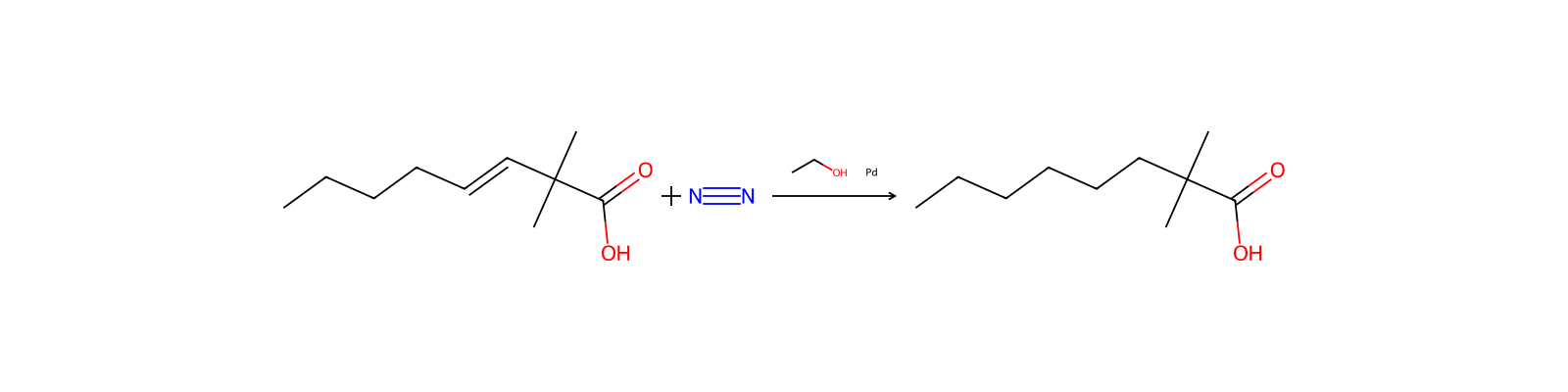
3건


화합물 노트
불러오는 중…