
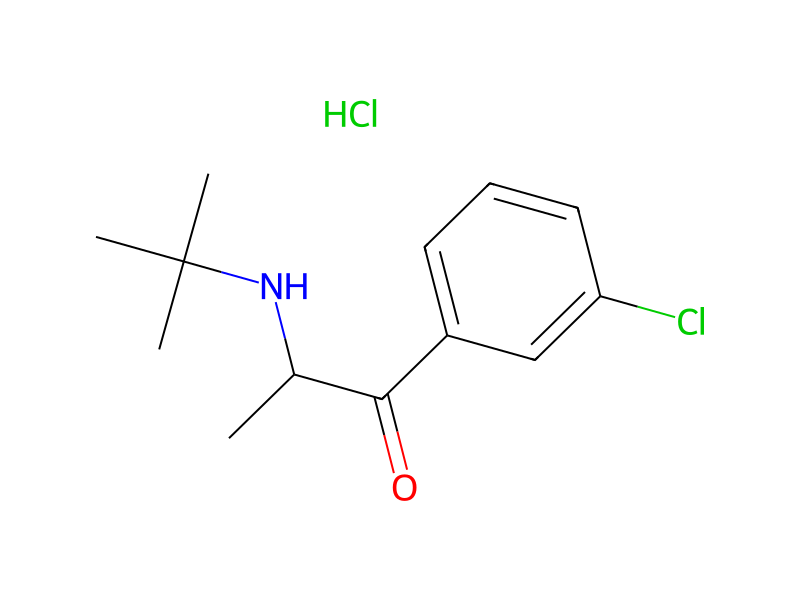
기본 정보
- 표준 SMILES
CC(NC(C)(C)C)C(=O)c1cccc(Cl)c1.Cl- InChIKey
HEYVINCGKDONRU-UHFFFAOYSA-N- 분자식
- C13H19Cl2NO
- 평균 분자량
- 276.2 g/mol
- 단동위원소 질량
- 275.08436959
개요
Bupropion hydrochloride is an aromatic ketone.
이름 및 식별자
- 우선 이름
- Bupropion Hydrochloride
- IUPAC
- 2-(tert-butylamino)-1-(3-chlorophenyl)propan-1-one;hydrochloride
이름 및 동의어
Bupropion hydrochloride31677-93-7Bupropion HclAmfebutamone hydrochlorideWellbutrin XLWellbutrin SRForfivo XLMysimbaBudeprion XLBW 323DTXSID6044561ZG7E5POY8O
이름 더 보기
NSC-315851BW323BW-323DTXCID4024561NSC315851CONTRAVE COMPONENT BUPROPION HYDROCHLORIDEAppbutamoneForfivo
데이터베이스 식별자
- CAS
234447-17-7、31677-93-7、34841-36-6、34911-55-2- PubChem CID
- 62884
- DTXSID
DTXSID6044561- ChEMBL
CHEMBL1698- ChEBI
CHEBI:3220- UNII
- ZG7E5POY8O
- EC Number
- 250-759-9、252-243-9
물성
구조 계산 물성
- 극성 표면적
- 29.1 Ų
- 수소 결합 공여자 수
- 2
- 수소 결합 수용자 수
- 2
- 회전 가능 결합 수
- 4
- 무거운 원자 수
- 17
- 형식 전하
- 0
- 복잡도
- 247
실험 및 물리화학적 성질
Human Drugs
Breast Feeding; Lactation; Milk, Human; Antidepressive Agents; Antidepressive Agents, Second-Generation; Dopamine Uptake Inhibitors; Smoking Cessation Agents
FDA approved drugs -> Active ingredient
EMA approved medicines: Human medicine
FDA approved drugs -> Active ingredient
안전 및 규제
GHS 분류
GHS Classification
This chemical does not meet GHS hazard criteria for 48.1% (52 of 108) of reports.
Warning
H302 (51.9%): Harmful if swallowed [Warning Acute toxicity, oral]
P264, P270, P301+P317, P330, and P501 (click each P-code to see the statement)
Aggregated GHS information provided per 108 reports by companies from 10 notifications to the ECHA C&L Inventory.
유해성 정보
Hazard Classes and CategoriesAcute Tox. 4 (51.9%)
독성 정보
Treatment
Ensure an adequate airway, oxygenation, and ventilation. Monitor cardiac rhythm and vital signs. EEG monitoring is also recommended for the first 48 hours post-ingestion. General supportive and symptomatic measures are also recommended. Induction of emesis is not recommended. Activated charcoal should be administered. There is no experience with the use of forced diuresis, dialysis, hemoperfusion, or exchange transfusion in the management of bupropion overdoses. No specific antidotes for bupropion are known. Due to the dose-related risk of seizures with Bupropion, hospitalization following suspected overdose should be considered. Based on studies in animals, it is recommended that seizures be treated with intravenous benzodiazepine administration and other supportive measures, as appropriate. (L1712)
Exposure RoutesFor sustained release, peak plasma concentrations are achieved within 3 hours.
Toxicity Summary
Bupropion selectively inhibits the neuronal reuptake of dopamine, norepinephrine, and serotonin; actions on dopaminergic systems are more significant than imipramine or amitriptyline whereas the blockade of norepinephrine and serotonin reuptake at the neuronal membrane is weaker for bupropion than for tricyclic antidepressants. The increase in norepinephrine may attenuate nicotine withdrawal symptoms and the increase in dopamine at neuronal sites may reduce nicotine cravings and the urge to smoke. Bupropion exhibits moderate anticholinergic effects.
Signs and SymptomsSymptoms of overdose include seizures, hallucinations, loss of consciousness, tachycardia, and cardiac arrest.
Carcinogen ClassificationNo indication of carcinogenicity to humans (not listed by IARC).
Drug Induced Liver Injury
Drug Induced Liver Injury Rank (DILIrank 2.0)
Bupropion hydrochloride
vLess-DILI-concern
5
Adverse reactions
DOI:10.1016/j.drudis.2016.02.015
Effects During Pregnancy and Lactation◉ Summary of Use during Lactation
화학 및 산업
약리 정보
Metabolism/Metabolites
Reduction of the carbonyl groupand/or hydroxylation of the tert-butyl group of bupropion. Route of Elimination: Bupropion is extensively metabolized in humans. Oxidation of the bupropion side chain results in the formation of a glycine conjugate of metachlorobenzoic acid, which is then excreted as the major urinary metabolite. Following oral administration of 200 mg of 14C-bupropion in humans, 87% and 10% of the radioactive dose were recovered in the urine and feces, respectively. However, the fraction of the oral dose of bupropion excreted unchanged was only 0.5%, a finding consistent with the extensive metabolism of bupropion. Half Life: 24 hours
FDA Pharmacological Classification
BUPROPION HCL
Increased Norepinephrine Activity [PE]; Increased Dopamine Activity [PE]; Norepinephrine Uptake Inhibitors [MoA]; Dopamine Uptake Inhibitors [MoA]; Aminoketone [EPC]
BUPROPION HYDROCHLORIDE
Dopamine Uptake Inhibitors [MoA]; Aminoketone [EPC]; Increased Norepinephrine Activity [PE]; Increased Dopamine Activity [PE]; Norepinephrine Uptake Inhibitors [MoA]
BUPROPION HYDROCHLORIDE SR
Dopamine Uptake Inhibitors [MoA]; Aminoketone [EPC]; Increased Norepinephrine Activity [PE]; Norepinephrine Uptake Inhibitors [MoA]; Increased Dopamine Activity [PE]
MeSH Pharmacological Classification
Substances that facilitate the cessation of tobacco smoking.
A structurally and mechanistically diverse group of drugs that are not tricyclics or monoamine oxidase inhibitors. The most clinically important appear to act selectively on serotonergic systems, especially by inhibiting serotonin reuptake.
Drugs that block the transport of DOPAMINE into axon terminals or into storage vesicles within terminals. Most of the ADRENERGIC UPTAKE INHIBITORS also inhibit dopamine uptake.
Agents that increase energy expenditure and weight loss by neural and metabolic regulation.
Drugs and compounds which inhibit or antagonize the biosynthesis or actions of CYTOCHROME P-450 CYP2D6.
용도 및 제조
UsesFor the treatment of depression and as aid to smoking cessation.
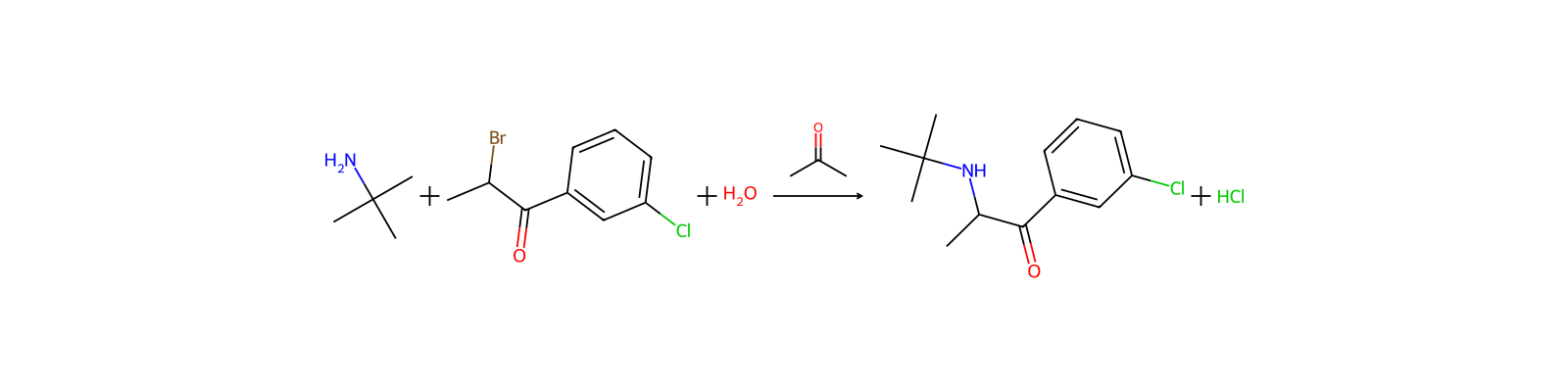
관련 반응
41건


연결된 노트
불러오는 중…