홈MCP워크벤치Skills
홈워크벤치알림마이페이지
llms.txt · MCP 가이드개인정보처리방침 · 이용약관 · 지원v1.8.0
  1. 홈
  2. /화합물

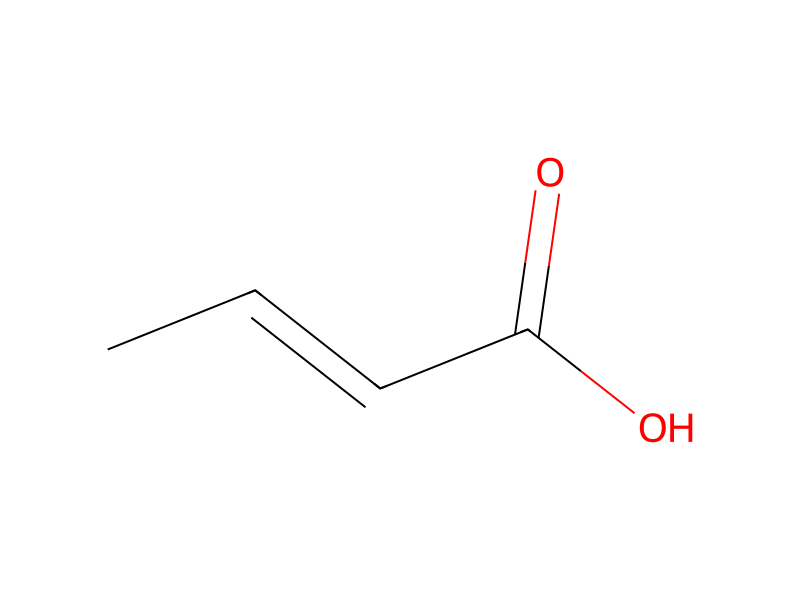
크로톤산

Crotonic Acid

HCID 637090
새 노트새 반응견적 요청하기
인쇄 미리보기
기본 정보개요이름 및 식별자물성안전 및 규제화학 및 산업관련 반응화합물 노트
부분 구조 검색유사 구조 찾기

기본 정보

CAS
107-93-7
표준 SMILES
C/C=C/C(=O)O
InChIKey
LDHQCZJRKDOVOX-NSCUHMNNSA-N
분자식
C4H6O2
평균 분자량
86.09 g/mol
단동위원소 질량
86.03677943

개요

Crotonic acid appears as a white crystalline solid. Shipped as either a solid or liquid. Soluble in water and less dense than water. Corrosive to metals and tissue.

이름 및 식별자

우선 이름
Crotonic Acid
IUPAC
(E)-but-2-enoic acid
현지명
크로톤산
영어명
Crotonic acid
분자식
C4H6O2
분자량
86.09

이름 및 동의어

CROTONIC ACID(E)-but-2-enoic acidtrans-2-Butenoic acid3-Methylacrylic acid(2E)-but-2-enoic acid3724-65-0beta-Methylacrylic acidalpha-Butenoic acidalpha-Crotonic acidSolid crotonic acidbeta-Methacrylic acidKyselina krotonova
이름 더 보기
CrotonateBUTENOIC ACIDBUT-2-ENOIC ACIDTRANS-CROTONIC ACID(E)-2-BUTENOIC ACID2-Butenoic acid, (E)-FEMA 3908(2E)-2-Butenoic acidNSC 8751
Acrylic acid, 3-methyl-2E-butenoic acidYW5WZZ4O5QNSC-8751FEMA NO. 3908CHEBI:41131NSC-206946RefChem:919215

데이터베이스 식별자

CAS
107-93-7、3724-65-0
PubChem CID
637090
DTXSID
DTXSID30880973
ChEMBL
CHEMBL1213528
ChEBI
CHEBI:41131
UNII
YW5WZZ4O5Q
EC Number
203-533-9、223-077-4
Nikkaji
J109.464E、J367K

물성

구조 계산 물성

XLogP
0.7
극성 표면적
37.3 Ų
수소 결합 공여자 수
1
수소 결합 수용자 수
2
회전 가능 결합 수
1
무거운 원자 수
6
형식 전하
0
복잡도
73.6

실험 및 물리화학적 성질

Chemical Classes · 2건

Other Classes -> Organic Acids

Corrosives

DrugsPharmaceuticals -> Listed in ZINC15
LipidsFatty Acyls [FA] -> Fatty Acids and Conjugates [FA01] -> Unsaturated fatty acids [FA0103]
CosmeticsStabilizing
SpringerMaterials PropertiesCoriolis coupling
LogP · 4건

Log Kow = 0.72 /isomer not specified/

0.72

0.72

0.71

Food AdditivesFLAVORING AGENT OR ADJUVANT -> FDA Substance added to food
Density · 5건

Density = 1.018 at 15 °C/4 °C

Density = 0.9604 g/ cu cm at 77 °C /TRANS ISOMER/

Density = 1.0267 g/ cu cm at 20 °C /CIS ISOMER/

Relative density (water = 1): 1.02

1.018 @ 15°C

Flavoring AgentsEU Flavoring substances
Color/Form · 3건

MONOCLINIC NEEDLES OR PRISMS (FROM WATER OR PETROLEUM ETHER)

안전 및 규제

안전 정보는 참고용이며, 공급업체의 물질안전보건자료(SDS), 관련 법규 및 전문가 평가를 대체하지 않습니다.

GHS 분류

GHS Classification · 6건

This chemical does not meet GHS hazard criteria for 0.3% (5 of 1826) of reports.

Danger

H302 (95.3%): Harmful if swallowed [Warning Acute toxicity, oral]

P260, P264, P264+P265, P270, P280, P301+P317, P301+P330+P331, P302+P352, P302+P361+P354, P304+P340, P305+P354+P338, P316, P317, P321, P330, P362+P364, P363, P405, and P501 (click each P-code to see the statement)

Aggregated GHS information provided per 1826 reports by companies from 14 notifications to the ECHA C&L Inventory. Each notification may be associated with multiple companies.

This chemical does not meet GHS hazard criteria for 0.4% (1 of 227) of reports.

유해성 정보

Regulatory Information · 6건

Chemical: 2-Butenoic acid

Commission Regulation (EC) No 1565/2000 (Repealed by Com. Implementing Reg. (EU) No 872/2012)

2-Butenoic acid is listed on the EPA's Chemical Data Reporting (CDR) system. Manufacturers and importers of 2-Butenoic acid are required to report information about their production and use of this chemical to the EPA under the Toxic Substances Control Act (TSCA). (40 eCFR Part 711)

2-Butenoic acid, (2E)- is listed on the EPA's Chemical Data Reporting (CDR) system. Manufacturers and importers of 2-Butenoic acid, (2E)- are required to report information about their production and use of this chemical to the EPA under the Toxic Substances Control Act (TSCA). (40 eCFR Part 711)

REACH registered substance: trans-crotonic acid (EC: 203-533-9)

2-Butenoic acid, (2E)-: Does not have an individual approval but may be used under an appropriate group standard

DOT LabelCorrosive
Fire Hazards · 4건

Excerpt from ERG Guide 153 [Substances - Toxic and/or Corrosive (Combustible)]:

· Combustible material: may burn but does not ignite readily.

· Combustible material: may burn but does not ignite readily.

Combustible. Risk of fire and explosion on contact with incompatible substances. See Chemical Dangers. Above 88 °C explosive vapour/air mixtures may be formed.

화학 및 산업

약리 정보

Metabolism/Metabolites...IT /CROTONIC ACID/ IS KNOWN TO BE CONVERTED TO BETA-HYDROXYBUTYRYL-COA BY THE ENZYME KNOWN AS CROTONASE ENOYL CoA HYDRATE PRESENT IN LIVER & OTHER TISSUES.
Cellular LocationsExtracellular
Metabolite PathwaysFatty Acid Biosynthesis

용도 및 제조

Uses · 6건

Used to make copolymers (for lacquers, paper sizing, resins, plasticizers, and drugs) and softening agents for synthetic rubber; Also used as a coating, fungicide, and corrosion-resistant additive; [HSDB]

Painting (Pigments, Binders, and Biocides) [Category: Paint]

MFR OF COPOLYMERS WITH VINYL ACETATE USED IN LACQUERS & PAPER SIZING; MFR OF SOFTENING AGENTS FOR SYNTHETIC RUBBER; IN MEDICINAL CHEMISTRY, EG, MFR OF DL-THREONINE, VIT A

Coating, resins, fungicide, corrosion resistance improvement additive. Water-soluble resins and copolymers are suitable for pharmaceuticals, binders, and film

Chemical modifications rendering the surface layers of silicone rubber contact lenses hydrophilic property.

Carboxylated comonomer (polyvinyl acetate latex).

U.S. Production · 2건

2023: 224,869 lb

2023: 7,040 lb

Consumer UsesDye
Industry Uses · 2건

Monomers

Not Known or Reasonably Ascertainable

Methods of Manufacturing · 3건

Obtained on a commercial scale exclusively by oxygen-air-oxidation of crotonaldehyde.

LAB PROCEDURE USING ALKALINE SILVER OXIDE; FROM ACETALDEHYDE & MALONIC ACID IN PYRIDINE.

Isomerization of vinylacetic acid by warming with 50% sulfuric acid.

관련 반응

85건
반응 기록 만들기
HRID 34445 반응식
HRID 34445반응물로uspto-grants-1988_08
HRID 54886 반응식
HRID 54886반응물로uspto-grants-1997_04
HRID 129981 반응식
HRID 129981반응물로uspto-grants-1995_11
HRID 249533 반응식
HRID 249533반응물로uspto-grants-1993_05
HRID 280005 반응식
HRID 280005반응물로uspto-grants-1986_05
HRID 327270 반응식
HRID 327270생성물로uspto-grants-1993_12
HRID 327271 반응식
HRID 327271생성물로uspto-grants-1993_12
HRID 355431 반응식
HRID 355431반응물로uspto-grants-1998_11
1 / 11 페이지

화합물 노트

불러오는 중…

이 페이지에서기본 정보개요이름 및 식별자물성안전 및 규제화학 및 산업관련 반응화합물 노트
더보기
새 노트새 반응견적 요청하기

COLORLESS NEEDLE-LIKE CRYSTALS

WHITE CRYSTALLINE SOLID

Solubility · 5건

VERY SOL IN WATER; SOL IN ETHER, ACETONE & IN HOT PETROLEUM ETHER

IN ETHANOL @ 25 °C: 52.5% WT/WT; ACETONE @ 25 °C: 53.0% W/W; IN TOLUENE @ 25 °C: 37.5% WT/WT

Water solubility: 8.6X10+4 mg/l at 25 °C

555 g/l in water at 20 °C

8.60E+04 mg/L @ 25 °C (exp)

Flash Point · 3건

190 °F (NFPA, 2010)

190 °F (OPEN CUP)

88 °C o.c.

물리화학적 성질

녹는점
70 · 70-72 °C (lit.)
끓는 점
180 · 180-181 °C (lit.)
밀도
1.027 g/mL · 1.027 g/mL at 25 °C (lit.)
증기 밀도
2.97 · 2.97 (vs air)
증기압
0.19 mm · 0.19 mm Hg ( 20 °C)
굴절률
1.4228 · 1.4228
FEMA
3908 · 3908 | (E)-2-BUTENOIC ACID
인화점
190 °F · 190 °F
저장 조건
30 °C · Store below +30°C.
용해도
2 O: · H2O: 용해성
산도 계수 (pKa)
4.69 · 4.69(at 25℃)
물리적 상태
플레이크 크리스탈
색상
흰색에서 밝은 노란색
수소이온지수(pH)
3 · 3 (10g/l, H2O, 20℃)
냄새
1 %에서 · 1.00%에서. 젖을 섞은
냄새 유형
젖을 섞은
폭발한계
15.1 %, · 15.1%, 171°F
수용성
94 g/L · 94g/L(25℃)
Merck
14 · 14,2597
JECFA Number
1371 · 1371
BRN
1719943 · 1719943
Henry's Law Constant
4.1 · 4.1×101 mol/(m3Pa) at 25℃, HSDB (2015)
InChI
1S/C4H6O2/c1-2-3-4(5)6/h2-3H,1H3,(H,5,6)/b3-2+
InChIKey
LDHQCZJRKDOVOX-NSCUHMNNSA-N
SMILES
[H]\C(C)=C(\[H])C(O)=O
LogP
0.85 at · 0.85 at 25℃
NIST
Crotonic acid(107-93-7)
EPA
2 · 2-Butenoic acid, (2E)- (107-93-7)
Fire PotentialMODERATE, WHEN EXPOSED TO HEAT OR FLAME
Health Hazards · 3건

Excerpt from ERG Guide 153 [Substances - Toxic and/or Corrosive (Combustible)]:

· TOXIC and/or CORROSIVE; inhalation, ingestion or skin contact with material may cause severe injury or death.

· TOXIC and/or CORROSIVE; inhalation, ingestion or skin contact with material may cause severe injury or death.

Hazards Summary · 1건

A strong tissue irritant; [Hawley] May polymerize on exposure to UV light or moisture; A corrosive substance that can cause injury to the skin, eyes, and respiratory tract; Inhalation may cause pulmonary edema; [ICSC] Emergency treatment: acids; [HSDB]

DOT ID and Guide · 2건

2823 153

3472 153

Reactive GroupAcids, Carboxylic
UN ClassificationUN Hazard Class: 8; UN Pack Group: III
Reactivity Profile · 1건

CROTONIC ACID is a carboxylic acid. Carboxylic acids donate hydrogen ions if a base is present to accept them. They react in this way with all bases, both organic (for example, the amines) and inorganic. Their reactions with bases, called "neutralizations", are accompanied by the evolution of substantial amounts of heat. Neutralization between an acid and a base produces water plus a salt. Carboxylic acids with six or fewer carbon atoms are freely or moderately soluble in water; those with more than six carbons are slightly soluble in water. Soluble carboxylic acid dissociate to an extent in water to yield hydrogen ions. The pH of solutions of carboxylic acids is therefore less than 7.0. Many insoluble carboxylic acids react rapidly with aqueous solutions containing a chemical base and dissolve as the neutralization generates a soluble salt. Carboxylic acids in aqueous solution and liquid or molten carboxylic acids can react with active metals to form gaseous hydrogen and a metal salt. Such reactions occur in principle for solid carboxylic acids as well, but are slow if the solid acid remains dry. Even "insoluble" carboxylic acids may absorb enough water from the air and dissolve sufficiently in it to corrode or dissolve iron, steel, and aluminum parts and containers. Carboxylic acids, like other acids, react with cyanide salts to generate gaseous hydrogen cyanide. The reaction is slower for dry, solid carboxylic acids. Insoluble carboxylic acids react with solutions of cyanides to cause the release of gaseous hydrogen cyanide. Flammable and/or toxic gases and heat are generated by the reaction of carboxylic acids with diazo compounds, dithiocarbamates, isocyanates, mercaptans, nitrides, and sulfides. Carboxylic acids, especially in aqueous solution, also react with sulfites, nitrites, thiosulfates (to give H2S and SO3), dithionites (SO2), to generate flammable and/or toxic gases and heat. Their reaction with carbonates and bicarbonates generates a harmless gas (carbon dioxide) but still heat. Like other organic compounds, carboxylic acids can be oxidized by strong oxidizing agents and reduced by strong reducing agents. These reactions generate heat. A wide variety of products is possible. Like other acids, carboxylic acids may initiate polymerization reactions; like other acids, they often catalyze (increase the rate of) chemical reactions.

Chemical Dangers · 1건

The substance may polymerize under the influence of UV light or moisture. This generates fire and explosion hazard. The solution in water is a weak acid. Reacts violently with strong bases and peroxides. This generates fire and explosion hazard.

Physical DangersThe vapour is heavier than air.

안전 및 보호

Fire Fighting · 2건

Excerpt from ERG Guide 153 [Substances - Toxic and/or Corrosive (Combustible)]:

Use water spray, foam, dry powder, carbon dioxide. In case of fire: keep drums, etc., cool by spraying with water.

First Aid Measures · 4건

Fresh air, rest. Seek medical attention if you feel unwell.

Remove contaminated clothes. Rinse skin with plenty of water or shower. Refer for medical attention if skin irritation occurs.

Rinse with plenty of water for several minutes (remove contact lenses if easily possible). Refer immediately for medical attention.

Rinse mouth. Give one or two glasses of water to drink. Seek medical attention if you feel unwell.

Accidental Release Measures · 4건

· CALL 911. Then call emergency response telephone number on shipping paper. If shipping paper not available or no answer, refer to appropriate telephone number listed on the inside back cover.

· ELIMINATE all ignition sources (no smoking, flares, sparks or flames) from immediate area.

· CALL 911. Then call emergency response telephone number on shipping paper. If shipping paper not available or no answer, refer to appropriate telephone number listed on the inside back cover.

· ELIMINATE all ignition sources (no smoking, flares, sparks or flames) from immediate area.

First Aid · 3건

Excerpt from ERG Guide 153 [Substances - Toxic and/or Corrosive (Combustible)]:

General First Aid:

General First Aid:

Safe StorageStore only in original container. Store only if stabilized. Separated from food and feedstuffs, strong bases and peroxides. Well closed. Dry. Keep in the dark. Ventilation along the floor. Store in an area without drain or sewer access.
Exposure Control and Personal Protection · 2건

· Wear positive pressure self-contained breathing apparatus (SCBA).

· Wear positive pressure self-contained breathing apparatus (SCBA).

Fire Fighting Procedures · 1건

If material on fire or involved in fire: Use water in flooding quantities as fog. Solid streams of water may be ineffective. Cool all affected containers with flooding quantities of water. Apply water from as far a distance as possible. Use "alcohol" foam, dry chemical or carbon dioxide.

Nonfire Spill ResponseExcerpt from ERG Guide 153 [Substances - Toxic and/or Corrosive (Combustible)]:
Disposal Methods · 1건

SRP: At the time of review, criteria for land treatment or burial (sanitary landfill) disposal practices are subject to significant revision. Prior to implementing land disposal of waste residue (including waste sludge), consult with environmental regulatory agencies for guidance on acceptable disposal practices.

Spillage Disposal · 1건

Evacuate danger area! Remove all ignition sources. Consult an expert! Personal protection: face shield. Do NOT let this chemical enter the environment. Let solidify. Sweep spilled substance into covered containers. Carefully collect remainder. Then store and dispose of according to local regulations.

Preventive Measures · 3건

If material not on fire and not involved in fire: Keep material out of water sources and sewers. Neutralize spilled material with crushed limestone, soda ash, or lime.

Personnel protection: Avoid breathing vapors. Avoid bodily contact with the material. ... Do not handle broken packages unless wearing appropriate personal protective equipment. Wash away any material which may have contacted the body with copious amounts of water or soap and water. If contact with the material anticipated, wear appropriate chemical protective clothing.

SRP: The scientific literature for the use of contact lenses in industry is conflicting. The benefit or detrimental effects of wearing contact lenses depend not only upon the substance, but also on factors including the form of the substance, characteristics and duration of the exposure, the uses of other eye protection equipment, and the hygiene of the lenses. However, there may be individual substances whose irritating or corrosive properties are such that the wearing of contact lenses would be harmful to the eye. In those specific cases, contact lenses should not be worn. In any event, the usual eye protection equipment should be worn even when contact lenses are in place.

Isolation and Evacuation · 3건

Excerpt from ERG Guide 153 [Substances - Toxic and/or Corrosive (Combustible)]:

Immediate precautionary measure

Immediate precautionary measure

독성 정보

Environmental Fate · 3건

TERRESTRIAL FATE: Based on a classification scheme(1), an estimated Koc value of 59(SRC), determined from a measured log Kow of 0.72(2) and a regression-derived equation(3), indicates that crotonic acid is expected to have high mobility in soil(SRC). Volatilization of trans-crotonic acid is not expected to be important from moist soil surfaces(SRC) given an estimated Henry's Law constant of 2.4X10⁻⁷ atm-cu m/mole(SRC), determined from a vapor pressure of 0.18 mm Hg at 20 °C(4) and a measured water solubility of 8.6X10+4 mg/l at 25 °C(5).

AQUATIC FATE: Based on a classification scheme(1), an estimated Koc value of 59(SRC), determined from a measured log Kow of 0.72(2) and a regression-derived equation(3), indicates that crotonic acid is not expected to adsorb to suspended solids and sediment in water(SRC). trans-Crotonic acid is not expected to volatilize from water surfaces(3,SRC) based on an estimated Henry's Law constant of 2.4X10⁻⁷ atm-cu m/mole(SRC), determined from a vapor pressure of 0.18 mm Hg at 20 °C(4) and a measured water solubility of 8.6X10+4 mg/l at 25 °C(5). According to a classification scheme(6), an estimated BCF value of 2.1(3,SRC), from a measured log Kow(2), suggests that bioconcentration in aquatic organisms is low(SRC). Crotonic acid was biodegraded by anaerobic bacteria to butyrate and acetate(7-9). After a lag period of 2 days, crotonic acid was metabolized, at a rate of 200 mg/l day, by anaerobic bacteria acclimated to acetate culture(9). Crotonic acid reached 44% of its theoretical BOD in 5 days using a sewage inoculum(10).

ATMOSPHERIC FATE: According to a model of gas/particle partitioning of semivolatile organic compounds in the atmosphere(1), trans-crotonic acid, which has a vapor pressure of 0.18 mm Hg at 20 °C(2), is expected to exist solely as a vapor in the ambient atmosphere. Vapor-phase trans-crotonic acid is degraded in the atmosphere by reaction with photochemically-produced hydroxyl radicals(SRC); the half-life for this reaction in air is estimated to be 17 hours(3,SRC).

Adverse EffectsDermatotoxin - Skin burns.
Exposure RoutesThe substance can be absorbed into the body by inhalation of its aerosol and by ingestion.
Signs and Symptoms · 4건

Cough. Sore throat.

Redness.

Redness. Pain. Burning sensation. Burns.

Sore throat.

Effluent Concentrations · 1건

Crotonic acid was identified as an oxygenated organic emission from bench-scale fires using individual components derived from ponderosa pine as fuel(1). Smoldering wood fires emitted crotonic acid at a mean concentration of 0.068 g/kg; smoldering needle fires emitted crotonic acid at a mean concentration of 0.037 g/kg; smoldering bark fires emitted a mean crotonic acid concentration of 0.039 g/kg; self-sustained smoldering bark fires emitted 0.03 g/kg crotonic acid; and smoldering litter (consisting primarily of loose brown needles, with lesser amounts of cones, bark, grass) fires emitted a mean concentration of 0.04 g/kg crotonic acid(1).

ICSC Environmental DataThe substance is harmful to aquatic organisms.
Soil Adsorption/Mobility · 1건

The Koc of crotonic acid is estimated as approximately 59(SRC), using a measured log Kow of 0.72(1) and a regression-derived equation(2,SRC). According to a classification scheme(3), this estimated Koc value suggests that crotonic acid is expected to have high mobility in soil(SRC).

Human Toxicity ExcerptsNO CUMULATIVE EFFECTS WOULD BE EXPECTED @ NONIRRITATING EXPOSURE LEVELS... CROTONIC ACID SHOULD BE REGARDED AS HAVING SAME HAZARDS AS OTHER STRONG ACIDS.
Fish/Seafood ConcentrationsCrotonic acid was detected in fresh mussels collected at the Oarai coast in Ibaraki, Japan, on July 31, 1985, at a concentration of 0.16 ug/g fresh weight(1).
Artificial Pollution Sources · 1건

Crotonic acid's production and use in the synthesis of resins, polymers, plasticizers, and drugs(1) may result in its release to the environment(SRC). Only the trans form of crotonic acid and its derivatives have industrial importance as monomers in copolymerization reactions and as intermediates in the synthesis of pharmaceuticals or fungicides(2).

Environmental Biodegradation · 1건

Crotonic acid (mixture) was identified as being amenable to anaerobic biodegradation(1). Anaerobic bacteria isolated from mesophilic digester sludge acclimatized with 4-chlorobutyrate tentatively classified in the genus Clostridium, degraded crotonate to butyrate, acetate, and hydrogen(2). Ilyobacter polytropus anaerobically degraded crotonate to butyrate and acetate(2). Crotonate was degraded by an anaerobic bacterium to butyrate and acetate(3). After a lag period of 2 days, crotonic acid (isomer not specified) was metabolized, at a rate of 200 mg/l day, by anaerobic bacteria acclimated to acetate culture(4). Crotonic acid (isomer not specifed) reached 44% of its theoretical BOD in 5 days using a sewage inoculum(5).

Environmental Bioconcentration · 1건

An estimated BCF value of 2.1 was calculated for crotonic acid(SRC), using a measured log Kow of 0.72(1) and a regression-derived equation(2). According to a classification scheme(3), this BCF value suggests that bioconcentration in aquatic organisms is low(SRC).

안전 데이터

wgk
3
rtecs
GQ2900000
ridadr
UN 3472 8/PG III (CROTONIC ACID, LIQUID)
독성
LD50 orally in rats: 1.0 g/kg (Smyth, Carpenter)
HS 번호
29161940
risk_code
21/22-34-50/53-36/37/38
hazard_code
C,N,Xi
safety_code
26-36/37/39-45-61-37/39
포장분류
III
위험 등급
8
기존화학 물질
KE-05-0371
자연 발화 온도
744 °F
Hazard Classifications
Eye Dam. 1
스토리지 클래스
8A - Combustible corrosive hazardous materials
Formulations/Preparations · 2건

GRADE: 97%

Technical grade, 98.5% min

Use Classification · 4건

Flavouring Agent -> FLAVOURING_AGENT -> JECFA Functional Classes

Flavoring Agents -> JECFA Flavorings Index

Flavouring Agent -> FLAVOURING_AGENT -> JECFA Functional Classes

Cosmetics -> Stabilizing

General Manufacturing Information · 5건

All Other Basic Organic Chemical Manufacturing

Not Known or Reasonably Ascertainable

2-Butenoic acid: ACTIVE

IT /CROTONIC ACID/ IS PRESENT AS CONSTITUENT OF CROTON OIL.

Only the trans form of crotonic acid and its derivatives have industrial importance as monomers in copolymerization reactions and as intermediates in the synthesis of pharmaceuticals or fungicides.

응용 분야

용도trans-Crotonic acid is used in the copolymerization of crotonic acid hydrogel systems by using gamma-rays. The crosslinked copolymeric crotonic acid hydrogels release fertilizers and drugs that help to prevent environmental pollution.

일반 설명Crotonic acid undergoes esterification with butan-2-ol by following second order reaction kinetics.

제조 방법

(E)-2-Butenoic acid may be formed by oxidation of crotonaldehyde, 2-butenal. If (Z)-butenoic acid is heated at 180°C, it is converted to (E)-2-butenoid acid.

상·하류 제품 정보

상류 원료

코발트(II) 아세테이트크로톤알데하이드구리 아세트산 모노수화물크로톤산말론산

하류 제품

3-Phenylbutyric acidDL-3-Hydroxybutyric acid monosodium salt크로타미톤DL-3-Hydroxybutyric acid sodium salt4-브로모크로톤산베타-메틸레불린산2,3-디브로모부티르산3-Mercaptobutyric acidDL-3-Aminobutyric acid2-부텐산,사이클로헥실에스테르,(2E)-헵틸-크로토네이트헥실크로톤산염