
레티놀 아세트산
Retinol, acetate

기본 정보
- CAS
127-47-9- 표준 SMILES
CC(=O)OC/C=C(C)/C=C/C=C(C)/C=C/C1=C(C)CCCC1(C)C- InChIKey
QGNJRVVDBSJHIZ-QHLGVNSISA-N- 분자식
- C22H32O2
- 평균 분자량
- 328.5 g/mol
- 단동위원소 질량
- 328.24023026
개요
Retinyl acetate is an acetate ester. It is functionally related to an all-trans-retinol.
이름 및 식별자
- 우선 이름
- Retinol, acetate
- IUPAC
- [(2E,4E,6E,8E)-3,7-dimethyl-9-(2,6,6-trimethylcyclohexen-1-yl)nona-2,4,6,8-tetraenyl] acetate
- 현지명
- 레티놀 아세트산
- 영어명
- Retinyl acetate
- 분자식
- C22H32O2
- 분자량
- 328.49
이름 및 동의어
RETINYL ACETATEVitamin A acetateRetinol acetate127-47-9Retinol, acetateVitamin A1 acetateall-trans-Retinol acetateCrystaletsVitamin A alcohol acetateDavitan A 650all-trans-Vitamin A acetateRetinol, acetate, all-trans-
이름 더 보기
레티놀아세트산레티놀아세트산레티닐아세테이트retinylVITAMIN A ACETATALL-TRANS-RETINYL ACETATERetinylacetatRETINOL ACETATE ALL TRANSMyvakMyvax
(2E,4E,6E,8E)-3,7-dimethyl-9-(2,6,6-trimethylcyclohex-1-en-1-yl)nona-2,4,6,8-tetraen-1-yl acetateall-trans-RetinylacetateAcetic acid, retinyl ester[(2E,4E,6E,8E)-3,7-dimethyl-9-(2,6,6-trimethylcyclohexen-1-yl)nona-2,4,6,8-tetraenyl] acetateDTXSID60212403LE3D9D6OYVitamin A, acetateVitamin A acetate (tritiated)
데이터베이스 식별자
- CAS
127-47-9、64536-04-5- PubChem CID
- 638034
- DTXSID
DTXSID6021240- ChEMBL
CHEMBL486193- ChEBI
CHEBI:32095- UNII
- 3LE3D9D6OY
- EC Number
- 204-844-2
- Nikkaji
- J34.628D
물성
구조 계산 물성
- XLogP
- 6.3
- 극성 표면적
- 26.3 Ų
- 수소 결합 공여자 수
- 0
- 수소 결합 수용자 수
- 2
- 회전 가능 결합 수
- 7
- 무거운 원자 수
- 24
- 형식 전하
- 0
- 복잡도
- 595
실험 및 물리화학적 성질
LipidsLipids -> Prenol Lipids [PR] -> Isoprenoids [PR01] -> Retinoids [PR0109]
CosmeticsSkin conditioning
SpringerMaterials PropertiesChemical diffusion
Food AdditivesNUTRIENT SUPPLEMENT -> FDA Substance added to food
물리화학적 성질
- 녹는점
- 57 · 57-58 °C
- 끓는 점
- 406.22 °C · 406.22°C (rough estimate)
- 밀도
- 1.0474 · 1.0474 (rough estimate)
- 굴절률
- 1.547 · 1.547-1.555
- 인화점
- 14 ℃ · 14℃
- 저장 조건
- 2 · 2-8°C
- 용해도
- 25 mg/mL · 무수 에탄올: 25mg/mL
- 물리적 상태
- 고체 또는 점성 액체
- 색상
- 황색 분말
- 냄새
- 아민 같은
- 생물학적 소스
- synthetic (organic)
- 수용성
- 녹는
- Merck
- 14 · 14,10013
안전 및 규제
안전 정보는 참고용이며, 공급업체의 물질안전보건자료(SDS), 관련 법규 및 전문가 평가를 대체하지 않습니다.
GHS 분류
GHS Classification
This chemical does not meet GHS hazard criteria for 0.3% (1 of 374) of reports.
Danger
H315 (83.4%): Causes skin irritation [Warning Skin corrosion/irritation]
P203, P264, P273, P280, P302+P352, P318, P321, P332+P317, P362+P364, P405, and P501 (click each P-code to see the statement)
Aggregated GHS information provided per 374 reports by companies from 22 notifications to the ECHA C&L Inventory. Each notification may be associated with multiple companies.
유해성 정보
Regulatory Information
Chemical: Retinol, acetate
Regulation (EC) No 1831/2003 (amended)
REACH registered substance: Retinyl acetate (EC: 204-844-2)
Retinol acetate: Does not have an individual approval but may be used under an appropriate group standard
Hazard Classes and CategoriesSkin Irrit. 2 (83.4%)
독성 정보
Carcinogen ClassificationNo indication of carcinogenicity to humans (not listed by IARC).
안전 데이터
- wgk
- 2
- tsca
- TSCA listed
- rtecs
- VH6825000
- ridadr
- UN1170 - class 3 - PG 2 - Ethanol
- 독성
- LD50 (10 day) orally in mice: 4100 mg/kg (Kamm)
- HS 번호
- 29362100
- risk_code
- 38-63-36/37/38-53-61-11
- hazard_code
- Xn,Xi,T,F
화학 및 산업
약리 정보
MeSH Pharmacological Classification
Substances that augment, stimulate, activate, potentiate, or modulate the immune response at either the cellular or humoral level. The classical agents (Freund's adjuvant, BCG, Corynebacterium parvum, et al.) contain bacterial antigens. Some are endogenous (e.g., histamine, interferon, transfer factor, tuftsin, interleukin-1). Their mode of action is either non-specific, resulting in increased immune responsiveness to a wide variety of antigens, or antigen-specific, i.e., affecting a restricted type of immune response to a narrow group of antigens. The therapeutic efficacy of many biological response modifiers is related to their antigen-specific immunoadjuvanticity.
Agents that reduce the frequency or rate of spontaneous or induced tumors independently of the mechanism involved.
용도 및 제조
Household ProductsInformation on 4 consumer products that contain Retinyl acetate in the following categories is provided:
Use ClassificationCosmetics -> Skin conditioning
General Manufacturing InformationRetinol, acetate: ACTIVE
응용 분야
개요Retinyl acetate (retinol acetate, vitamin A acetate,127-47-9) is a natural form of vitamin A. It is the acetate ester of retinol. It consists of yellow crystals which are greasy or sticky. It has a mild, characteristic odor. It has potential antineoplastic and chemo-preventive activities. It can be used to fortify food with vitamin A. As vitamin A acetate can induce cell differentiation and inhibit cell proliferation, it is used in skin-conditioning agent.
용도Retinyl acetate has been used: a control diet to study its effect at different developmental periods in fish larvae to study its inhibitory effects on Mycobacterium aviumsubspeciesparatuberculosis(MAP) strains as an internal standard in high performance liquid chromatography (HPLC) to quantify vitamin A in fortified milk
관련 반응
6건

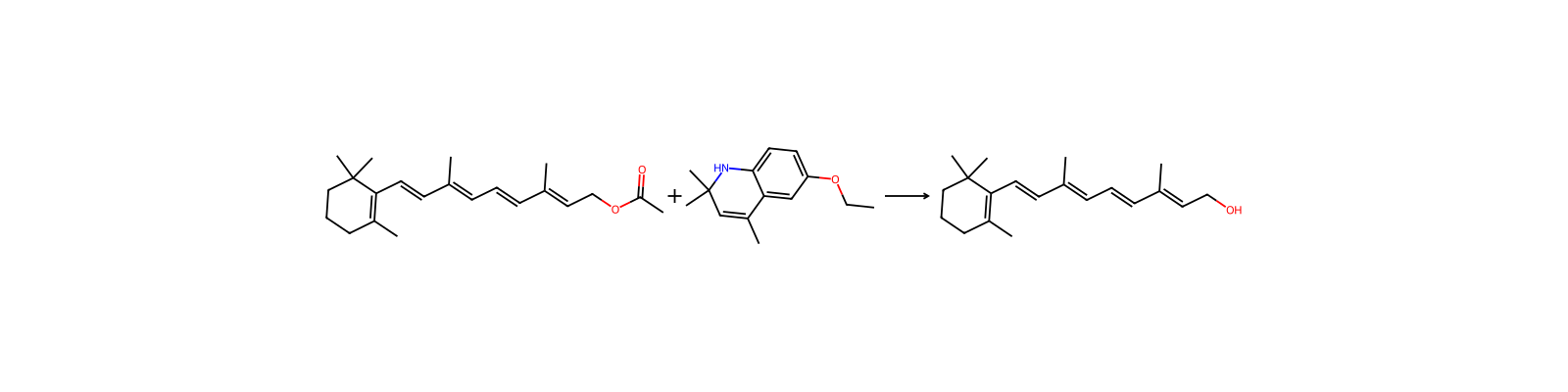


화합물 노트
불러오는 중…