
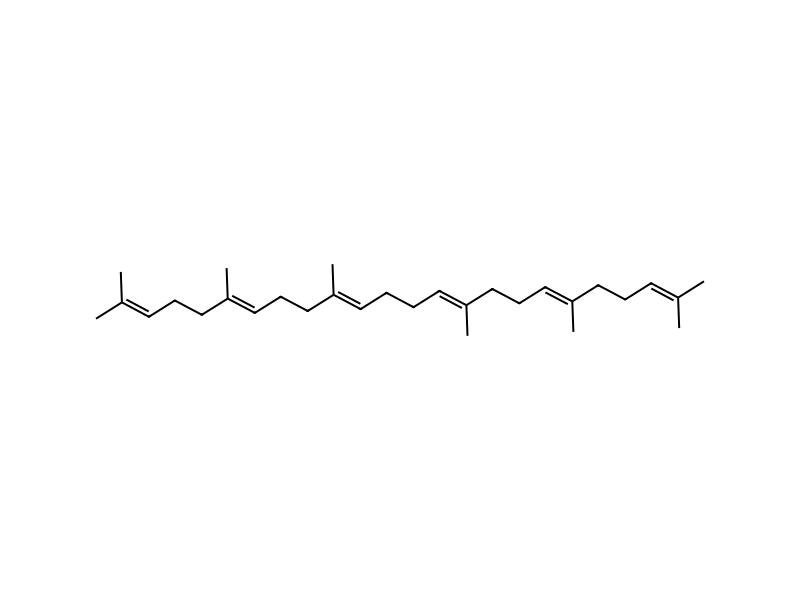
기본 정보
- 표준 SMILES
CC(C)=CCC/C(C)=C/CC/C(C)=C/CC/C=C(\C)CC/C=C(\C)CCC=C(C)C- InChIKey
YYGNTYWPHWGJRM-AAJYLUCBSA-N- 분자식
- C30H50
- 평균 분자량
- 410.7 g/mol
- 단동위원소 질량
- 410.3912516
개요
Trans-squalene is a clear, slightly yellow liquid with a faint odor. Density 0.858 g / cm3.
이름 및 식별자
- 우선 이름
- Squalene
- IUPAC
- (6E,10E,14E,18E)-2,6,10,15,19,23-hexamethyltetracosa-2,6,10,14,18,22-hexaene
- 현지명
- 데히드로스쿠알렌
- 영어명
- dehydrosqualene
- 분자식
- C30H50
- 분자량
- 410.718
이름 및 동의어
squalene111-02-4Spinacenetrans-SqualeneAll-trans-Squalene(6E,10E,14E,18E)-2,6,10,15,19,23-hexamethyltetracosa-2,6,10,14,18,22-hexaeneSpinacenNikko Squalane EXSuper SqualeneSqualen(All-E)-2,6,10,15,19,23-hexamethyl-2,6,10,14,18,22-tetracosahexaene7QWM220FJH
이름 더 보기
데히드로스쿠알렌dehydrosqualene
CHEBI:154402,6,10,15,19,23-Hexamethyl-2,6,10,14,18,22-tetracosahexaene2,6,10,14,18,22-Tetracosahexaene, 2,6,10,15,19,23-hexamethyl-, (all-E)-2,6,10,14,18,22-tetracosahexaene, 2,6,10,15,19,23-hexamethyl-, (6E,10E,14E,18E)-2,6,10,14,18,22-Tetracosahexaene, 2,6,10,15,19,23-hexamethyl-, (2E,6E,10E,14E,18E)-RefChem:6257DTXCID8047921203-826-1
데이터베이스 식별자
- CAS
11051-27-7、111-02-4、7683-64-9- PubChem CID
- 638072
- DTXSID
DTXSID0026044- ChEMBL
CHEMBL458402- ChEBI
CHEBI:15440- UNII
- 7QWM220FJH
- EC Number
- 203-826-1
- Nikkaji
- J5.103I、J8.960E
물성
구조 계산 물성
- XLogP
- 11.6
- 극성 표면적
- 0 Ų
- 수소 결합 공여자 수
- 0
- 수소 결합 수용자 수
- 0
- 회전 가능 결합 수
- 15
- 무거운 원자 수
- 30
- 형식 전하
- 0
- 복잡도
- 578
실험 및 물리화학적 성질
Chemical ClassesOther Uses -> Lubricants
DrugsPharmaceuticals -> Listed in ZINC15
LipidsLipids -> Prenol Lipids [PR] -> Isoprenoids [PR01] -> C30 isoprenoids (triterpenes) [PR0106]
Cosmetics
Cosmetic ingredients (Squalene) -> CIR (Cosmetic Ingredient Review)
Antistatic; Emollient; Refatting; Hair conditioning
Personal care product
SpringerMaterials PropertiesChemical diffusion
FragrancesFragrance Ingredient (Squalene) -> IFRA transparency List
OdorFaint agreeable odor
Density
0.8584 at 68 °F (NTP, 1992) - Less dense than water; will float
0.8584 g/cu cm at 20 °C
0.858 @25 °C
Viscosity12 cP at 25 °C
Color/FormOil; crystals from ether/methanol (-5 °C)
Solubility
less than 1 mg/mL at 66 °F (NTP, 1992)
Practically insoluble in water.
Freely soluble in ether, petroleum ether, carbon tetrachloride, acetone, other fat solvents; sparingly soluble in alcohol, glacial acetic acid
Slightly soluble in alcohol; soluble in lipids and organic solvents
Flash Point
greater than 235 °F (NTP, 1992)
110 °C - closed cup
안전 및 규제
GHS 분류
GHS Classification
This chemical does not meet GHS hazard criteria for 25.5% (80 of 314) of reports.
Danger
H304 (73.6%): May be fatal if swallowed and enters airways [Danger Aspiration hazard]
P301+P316, P331, P405, and P501 (click each P-code to see the statement)
Aggregated GHS information provided per 314 reports by companies from 3 notifications to the ECHA C&L Inventory.
Danger
유해성 정보
Regulatory Information
Chemical: 2,6,10,14,18,22-Tetracosahexaene, 2,6,10,15,19,23-hexamethyl-, (all-E)-
Status: Active Update: 17-04-2023 https://echa.europa.eu/registration-dossier/-/registered-dossier/13247
2,6,10,14,18,22-Tetracosahexaene, 2,6,10,15,19,23-hexamethyl-, (all-E)-: Does not have an individual approval but may be used under an appropriate group standard
2,6,10,14,18,22-Tetracosahexaene, 2,6,10,15,19,23-hexamethyl-: Does not have an individual approval but may be used under an appropriate group standard
Fire HazardsThis chemical is probably combustible. (NTP, 1992)
Health HazardsACUTE/CHRONIC HAZARDS: When heated to decomposition this compound emits toxic fumes of carbon monoxide and carbon dioxide. (NTP, 1992)
Hazards SummaryCauses changes in blood serum composition, allergic autoimmune response (multiple organ involvement), and inflammatory effects in acute intraperitoneal studies of mice; [RTECS] May cause irritation; [Acros Organics MSDS]
Reactive GroupHydrocarbons, Aliphatic Unsaturated
Special Reports
WHO; Squalene-based adjuvants in vaccines (2006)[WHO; Squalene-based adjuvants in vaccines (2006); Available from, as of May 21, 2015: http://www.who.int/vaccine_safety/committee/topics/adjuvants/squalene/questions_and_answers/en/]
Elsayed RK, Evans JD; Emerging lipid-lowering drugs: squalene synthase inhibitors. Expert Opin Emerg Drugs 13 (2): 309-22 (2008)[Elsayed RK, Evans JD; Expert Opin Emerg Drugs 13 (2): 309-22 (2008)]
Popa O et al; Methods for Obtaining and Determination of Squalene from Natural Sources. Hindawi Publishing Corporation BioMed Research International 2015: 367202 doi: 10.1155/2015/367202 Epub 2015 Jan 28 (2015) 16 pages[Popa O et al; Biomed Res Int 2015: 367202 doi: 10.1155/2015/367202 Epub 2015 Jan 28 (2015)]
Reactivity ProfileTRANS-SQUALENE is incompatible with strong oxidizing agents. (NTP, 1992).
Air and Water ReactionsMay become discolored on exposure to air. Insoluble in water.
Toxic Combustion ProductsCarbon oxides
Hazard Classes and CategoriesAsp. Tox. 1 (73.6%)
Hazardous Reactivities and IncompatibilitiesStrong oxidizing agents
안전 및 보호
Fire FightingFires involving this material can be controlled with a dry chemical, carbon dioxide or Halon extinguisher. (NTP, 1992)
First Aid
EYES: First check the victim for contact lenses and remove if present. Flush victim's eyes with water or normal saline solution for 20 to 30 minutes while simultaneously calling a hospital or poison control center. Do not put any ointments, oils, or medication in the victim's eyes without specific instructions from a physician. IMMEDIATELY transport the victim after flushing eyes to a hospital even if no symptoms (such as redness or irritation) develop.
Fire Fighting Procedures
Wear self-contained breathing apparatus for firefighting if necessary.
Use water spray, alcohol-resistant foam, dry chemical or carbon dioxide.
Storage Conditions
Keep container tightly closed in a dry and well-ventilated place. Containers which are opened must be carefully resealed and kept upright to prevent leakage. Recommended storage temperature 2 - 8 °C. Storage class (TRGS 510): Combustible liquids
Cleanup Methods
Personal precautions, protective equipment and emergency procedures Use personal protective equipment. Avoid breathing vapors, mist or gas. Ensure adequate ventilation. Evacuate personnel to safe areas. Environmental precautions: Prevent further leakage or spillage if safe to do so. Do not let product enter drains. Methods and materials for containment and cleaning up: Soak up with inert absorbent material and dispose of as hazardous waste. Keep in suitable, closed containers for disposal.
Nonfire Spill Response
SMALL SPILLS AND LEAKAGE: If you should spill this chemical, FIRST REMOVE ALL SOURCES OF IGNITION, then use absorbent paper to pick up all liquid spill material. Your contaminated clothing and absorbent paper should be sealed in a vapor-tight plastic bag for eventual disposal. Solvent wash all contaminated surfaces with acetone followed by washing with a soap and water solution. Do not reenter the contaminated area until the Safety Officer (or other responsible person) has verified that the area has been properly cleaned.
Disposal Methods
SRP: Recycle any unused portion of the material for its approved use or return it to the manufacturer or supplier. Ultimate disposal of the chemical must consider: the material's impact on air quality; potential migration in air, soil or water; effects on animal, aquatic and plant life; and conformance with environmental and public health regulations. If it is possible or reasonable use an alternative chemical product with less inherent propensity for occupational harm/injury/toxicity or environmental contamination.
Product: Offer surplus and non-recyclable solutions to a licensed disposal company. Contaminated packaging: Dispose of as unused product.
Preventive Measures
Gloves must be inspected prior to use. Use proper glove removal technique (without touching glove's outer surface) to avoid skin contact with this product. Dispose of contaminated gloves after use in accordance with applicable laws and good laboratory practices. Wash and dry hands.
Avoid contact with skin and eyes. Avoid inhalation of vapor or mist.
Protective Action Criteria (PAC)
8.2 [mg/m3]
90 [mg/m3]
540 [mg/m3]
Personal Protective Equipment (PPE)
RECOMMENDED RESPIRATOR: Where the neat test chemical is weighed and diluted, wear a NIOSH-approved half face respirator equipped with an organic vapor/acid gas cartridge (specific for organic vapors, HCl, acid gas and SO2) with a dust/mist filter. (NTP, 1992)
Skin protection: Handle with gloves.
Eye/face protection: Face shield and safety glasses. Use equipment for eye protection tested and approved under appropriate government standards such as NIOSH (US) or EN 166(EU).
Respiratory protection: Where risk assessment shows air-purifying respirators are appropriate use a full-face respirator with multipurpose combination (US) or type ABEK (EN 14387) respirator cartridges as a backup to engineering controls. If the respirator is the sole means of protection, use a full-face supplied air respirator. Use respirators and components tested and approved under appropriate government standards such as NIOSH (US) or CEN (EU).
Body Protection: Complete suit protecting against chemicals. The type of protective equipment must be selected according to the concentration and amount of the dangerous substance at the specific workplace.
독성 정보
Body Burden
Squalene is manufactured in the liver of every human body and circulates in the bloodstream(1). Squalene is one of the most important lipids of skin cells(2); it is synthesized in sebaceous glands where it accounts for 13% of total lipids(2); its total concentration in the skin and the squalene to cholesterol ratio vary with the skin site. Secretion of squalene was found to depend on the individual in a range from 125 to 475 mg per day(2).
Interactions
The study aimed to identify endogenous lipid mediators of metabolic and inflammatory responses of human keratinocytes to solar UV irradiation. Physiologically relevant doses of solar simulated UVA+UVB were applied to human skin surface lipids (SSL) or to primary cultures of normal human epidermal keratinocytes (NHEK). The decay of photo-sensitive lipid-soluble components, alpha-tocopherol, squalene (Sq), and cholesterol in SSL was analysed and products of squalene photo-oxidation (SqPx) were quantitatively isolated from irradiated SSL. When administered directly to NHEK, low-dose solar UVA+UVB induced time-dependent inflammatory and metabolic responses. To mimic UVA+UVB action, NHEK were exposed to intact or photo-oxidised SSL, Sq or SqPx, 4-hydroxy-2-nonenal (4-HNE), and the product of tryptophan photo-oxidation 6-formylindolo[3,2-b]carbazole (FICZ). FICZ activated exclusively metabolic responses characteristic for UV, i.e. the aryl hydrocarbon receptor (AhR) machinery and downstream CYP1A1/CYP1B1 gene expression, while 4-HNE slightly stimulated inflammatory UV markers IL-6, COX-2, and iNOS genes. On contrast, SqPx induced the majority of metabolic and inflammatory responses characteristic for UVA+UVB, acting via AhR, EGFR, and G-protein-coupled arachidonic acid receptor (G2A). /These/ findings indicate that Sq could be a primary sensor of solar UV irradiation in human SSL, and products of its photo-oxidation mediate/induce metabolic and inflammatory responses of keratinocytes to UVA+UVB, which could be relevant for skin inflammation in the sun-exposed oily skin.
Active oxygen has been implicated in the pathogenesis of Parkinson's disease (PD); therefore, antioxidants have attracted attention as a potential way to prevent this disease. Squalene, a natural triterpene and an intermediate in the biosynthesis of cholesterol, is known to have active oxygen scavenging activities. Squalane, synthesized by complete hydrogenation of squalene, does not have active oxygen scavenging activities. We examined the effects of oral administration of squalene or squalane on a PD mouse model, which was developed by intracerebroventricular injection of 6-hydroxydopamine (6-OHDA). Squalene administration 7 days before and 7 days after one 6-OHDA injection prevented a reduction in striatal dopamine (DA) levels, while the same administration of squalane enhanced the levels. Neither squalene nor squalane administration for 7 days changed the levels of catalase, glutathione peroxidase, or superoxide dismutase activities in the striatum. Squalane increased thiobarbituric acid reactive substances, a marker of lipid peroxidation, in the striatum. Both squalane and squalene increased the ratio of linoleic acid/linolenic acid in the striatum. These results suggest that the administration of squalene or squalane induces similar changes in the composition of fatty acids and has no effect on the activities of active oxygen scavenging enzymes in the striatum. However, squalane increases oxidative damage in the striatum and exacerbates the toxicity of 6-OHDA, while squalene prevents it. The effects of squalene or squalane treatment in this model suggest their possible uses and risks in the treatment of PD.
A mouse study showed squalene to confer radioprotection against lethal whole-body radiation.
The present study aims to evaluate the protective effect of squalene against the genotoxicity of the chemotherapeutic agent doxorubicin (Dox) using two genotoxicity assays, the micronucleus assay and the comet assay. Different groups of mice were fed squalene at the doses of 1 and 4 mmol/g body weight (100 or 400 uL as squalene oil) either at 4 hr before or 1 hr after Dox (20 mg/kg) treatment. 24 hr after the Dox treatment, bone marrow erythrocytes were evaluated for the incidence of micronuclei, and the induced DNA strand breaks were examined in heart tissue by the alkaline comet assay. As expected, Dox significantly induced micronuclei in polychromatic (immature) erythrocytes, as well as in total erythrocytes. The frequency of Dox-induced micronucleated erythrocytes was significantly reduced in the mice treated with squalene both before and after Dox administration. Squalene itself obviously did not induce any micronuclei in bone marrow erythrocytes. The comet assay also demonstrated a significant increase in DNA damage, especially DNA single strand breaks in the Dox-treated group of mice as compared to the control. The Dox-induced DNA damage was also effectively reduced by squalene when it was administered either before or after the Dox treatment. Squalene did not induce any significant DNA damage by itself. Compared to the pre-treatment of squalene, post treatment gave rise to more effective prevention against Dox-induced DNA damage. The data suggest that the complimentary use ofsqualene with Dox will be beneficial to reduce the adverse effect of Dox in cancer chemotherapy, such as the increased incidence of undesirable mutagenic side effects.
For more Interactions (Complete) data for Squalene (9 total), please visit the HSDB record page.
Environmental Fate
TERRESTRIAL FATE: Based on a classification scheme(1), an estimated Koc value of 1X10+8(SRC), determined from a structure estimation method(2), indicates that squalene is expected to be immobile mobility in soil(SRC). Volatilization of squalene from moist soil surfaces is expected to be an important fate process(SRC) given an estimated Henry's Law constant of 2.0 atm-cu m/mole(SRC), using a fragment constant estimation method(2). However, adsorption to soil is expected to attenuate volatilization(SRC). Squalene is not expected to volatilize from dry soil surfaces(SRC) based upon an estimated vapor pressure of 6.3X10⁻⁶ mm Hg at 25 °C(SRC), determined from a fragment constant method(1). Using OECD Guideline 301F (Ready Biodegradability: Manometric Respirometry Test), squalene achieved 80.1 and 42.6% degradation at 20 and 100 mg/L, respectively, over 28-day incubation periods classifying the compound as inherently biodegradable, but not readily biodegradable(3). Microorganisms isolated from soil have been able to use squalene as a carbon source(4).
AQUATIC FATE: Based on a classification scheme(1), an estimated Koc value of 1X10+8(SRC), determined from a structure estimation method(2), indicates that squalene is expected to adsorb to suspended solids and sediment(SRC). Volatilization from water surfaces is expected(3) based upon an estimated Henry's Law constant of 2.0 atm-cu m/mole(SRC), developed using a fragment constant estimation method(2). Using this Henry's Law constant and an estimation method(3), volatilization half-lives for a model river and model lake are 6 hours and 8 days, respectively(SRC). However, volatilization from water surfaces is expected to be attenuated by adsorption to suspended solids and sediment in the water column. The estimated volatilization half-life from a model pond is >5 years if adsorption is considered(4). According to a classification scheme(5), an estimated BCF of 4(SRC), from an estimated log Kow of 14.1(2) and a regression-derived equation(2), suggests the potential for bioconcentration in aquatic organisms is low(SRC). Using OECD Guideline 301F (Ready Biodegradability: Manometric Respirometry Test), squalene achieved 80.1 and 42.6% degradation at 20 and 100 mg/L, respectively, over 28-day incubation periods classifying the compound as inherently biodegradable, but not readily biodegradable(6). Squalene is not expected to undergo hydrolysis in the environment due to the lack of functional groups that hydrolyze under environmental conditions(3).
ATMOSPHERIC FATE: According to a model of gas/particle partitioning of semivolatile organic compounds in the atmosphere(1), squalene, which has an estimated vapor pressure of 6.3X10⁻⁶ mm Hg at 25 °C(SRC), determined from a fragment constant method(2), will exist in both the vapor and particulate phases in the ambient atmosphere. Vapor-phase squalene is degraded in the atmosphere by reaction with photochemically-produced hydroxyl radicals(SRC); the half-life for this reaction in air is estimated to be about 43 minutes(SRC), calculated from its rate constant of 5.3X10⁻¹⁰ cu cm/molecule-sec at 25 °C(SRC) that was derived using a structure estimation method(2). Vapor-phase squalene is also degraded in the atmosphere by reaction with ozone(SRC); the half-life for this reaction in air is estimated to be about 7 minutes(SRC), calculated from its rate constant of 2.6X10⁻¹⁵ cu cm/molecule-sec at 25 °C(SRC) that was derived using a structure estimation method(2). Several studies have found that squalene reacts readily with ozone in indoor air and yields reaction products that include mono- and bifunctional group compounds such as aldehydes, ketones and carboxylic acids(3). Squalene, which is a major component of lipid found in human skin, is starting to be recognized as the most important ozone scavenger in indoor ozone chemistry(3). Particulate-phase squalene may be removed from the air by wet and dry deposition(SRC).
Food Survey ValuesSqualene was detected in the volatiles of raw beef(1).
Toxicity Summary
Safe in the present practices of use and concentration. Ingredient, concentration, and use information are available in documents discoverable at https://cir-reports.cir-safety.org
IDENTIFICATION AND USE: Squalene is a liquid. The source of squalene is usually from shark liver and sometimes from olive oil. It is used as traditional medicine, experimental medication, and dietary supplement. Squalene is a component of some adjuvants that are added to vaccines to enhance the immune response. MF59, an adjuvant added to the FLUAD flu vaccine, is such an example. Squalene by itself is not an adjuvant, but emulsions of squalene with surfactants do enhance the immune response. Squalene is also found in a variety of foods, cosmetics. HUMAN EXPOSURE AND TOXICITY: Squalene is not a significant human skin irritant or sensitizer. Limited contact sensitization tests indicate squalene is not a significant contact allergen or irritant. Twenty two million doses of the influenza vaccine FLUAD have been administered safely since 1997. This vaccine contains about 10 mg of squalene per dose. No severe adverse events have been associated with the vaccine. Some mild local reactions have been observed. Clinical studies on squalene-containing vaccines have been done in infants and neonates without evidence of safety concerns. One of the many possible exposures suspected of causing chronic multisymptom illnesses of Gulf War veterans is squalene, thought to be present in anthrax vaccine. However further studies found no association between squalene antibody status and chronic multisymptom illness. Most adults, whether or not they have received vaccines containing squalene, have antibodies against squalene. The genotoxic potential of the vaccine adjuvant squalene was assessed by the chromosomal aberrations (CAs), sister chromatid exchanges (SCEs) and micronucleus (MNs) tests in human lymphocytes and comet assay in human lymphocytes. Squalene did not affect the CAs and MN frequency, in all treatments in vitro. A significant increase in SCEs was observed in almost all concentrations at 24 hr treatment. Squalene did not affect significantly the comet tail length (CTL) (except 2500 ug/mL) and comet tail intensity (CTI) at all treatments in vitro. Therefore, squalene cannot be regarded as genotoxic in human lymphocytes. ANIMAL STUDIES: The acute animal toxicity of squalene by all routes is low. Squalene was nonirritant to rabbit skin and eye at 100% concentration. Dietary squalene promotes changes in HDL- cholesterol and paraoxonase 1 and decreases reactive oxygen species in lipoproteins and plasma malondialdehyde levels in mice. Squalene emulsion showed increased inflammation at 20% and 10% emulsions and the inflammatory response was mild at a concentration of 5% oil emulsion after intra-peritoneal vaccination of olive flounder. In rat lymphocytes genotoxicity assays squalene significantly increased and decreased CTL and CTI in some doses.
Plant Concentrations
The essential oil of Pandanus amaryllifolius leaves was analyzed and squalene was detected (16.81% of the total) in the 95 compounds identified(1). Squalene was identified as a chemical constituent from the leaf of Bombax ceiba(2).
Squalene was deteced at 200 ppm in apricot seeds, Prunus armeniaca L. (Rosaceae) and at 59 ppm in poppyseed seeds, Papaver somniferum L. (Papaveraceae). It has been detected, not quantified in the following plants(1):[Table#8217]
Effluent Concentrations
Squalene was detected in the particulate matter (PM2.5) collected are a prescribed burning in a GA forest area in 2004 at an average emission rate of 2.6824 mg/g(1). Squalene was detected at concentrations of 1-26 ppb in effluent water collected from three publicly owned treatment works in NJ(2). Squalene was detected in fireplace particle emissions from burning wood from six species of trees grown in the northeaster US(3). Squalene was detected in wastewater effluents from Finnish pulp and paper mill(4).
Soil Adsorption/Mobility
Using a structure estimation method based on molecular connectivity indices(1), the Koc of squalene can be estimated to be 1X10+8(SRC). According to a classification scheme(2), this estimated Koc value suggests that squalene is expected to be immobile mobility in soil.
Natural Pollution Sources
Squalene is a naturally occurring substance found in plants, animals, and humans(1). It is manufactured in the liver of every human body and circulates in the bloodstream(1). It is a found in human sebum (5%)(2). Squalene is found in large quantities in shark liver oil(3). Squalene occurs in smaller amounts (0.1-0.7%) in olive oil, wheat germ oil, rice bran oil and yeast(3).
Atmospheric Concentrations
URBAN/SUBURBAN: Squalene was detected in atmospheric aerosol samples collected in Barcelona Spain in 1989(1). Atmospheric particulate samples collected at 12 sites in southern California in 1995 contained average squalene concentrations of 0.323-7.69 ng/cu m(2). Atmospheric particulate matter (PM2.5) collected at sites in the southeastern US in 1999-2000 sampling contained squalene concentrations of 0.15-1.14 ng/cu m(3).
RURAL/REMOTE: Organic aerosol samples collected in the tropical winds in the Caribbean in 1996 (including open ocean sampling sites) were found to contain squalene(1).
Human Toxicity Excerpts
/HUMAN EXPOSURE STUDIES/ Formulations containing squalene indicate it is not a significant human skin irritant or sensitizer. Limited contact sensitization tests indicate squalene is not a significant contact allergen or irritant. It is concluded that both squalane and squalene are safe as cosmetic ingredients in the present practices of use and concentration.
/HUMAN EXPOSURE STUDIES/ Twenty two million doses of/the/ influenza vaccine FLUAD have been administered safely since 1997. This vaccine contains about 10 mg of squalene per dose. No severe adverse events have been associated with the vaccine. Some mild local reactogenicity has been observed. Clinical studies on squalene-containing vaccines have been done in infants and neonates without evidence of safety concerns.
/HUMAN EXPOSURE STUDIES/ Over 22 million doses of squalene-containing flu vaccine have been administered. The absence of significant vaccine related adverse events following this number of doses suggests that squalene in vaccines has no significant risk. This vaccine has been given primarily to older age groups.
/EPIDEMIOLOGY STUDIES/ Familial combined hyperlipidemia (FCH) is a common familial lipid disorder characterized by increases in plasma total cholesterol, triglyceride, and apolipoprotein B-100 levels. In light of prior metabolic and genetic research, our purpose was to ascertain whether FCH cases had significant abnormalities of plasma markers of cholesterol synthesis and absorption as compared to unaffected kindred members. Plasma levels of squalene, desmosterol, and lathosterol (cholesterol synthesis markers) and campesterol, sitosterol, and cholestanol (cholesterol absorption markers) were measured by gas-liquid chromatography in 103 FCH patients and 240 normolipidemic relatives (NLR). Squalene, desmosterol, and lathosterol levels were 6% (0.078), 31%, (P<0.001) and 51% (P<0.001) higher in FCH as compared to NLR, and these differences were especially pronounced in women. An interaction with obesity was also noted for a subset of these markers. We did not observe any apparent differences for the cholesterol absorption markers among FCH patients and NLR. /These/ data indicate that both men and women with FCH have alterations in the cholesterol synthesis pathway, resulting in 51% higher levels of lathosterol (and additionally desmosterol in women). Plasma levels of the cholesterol precursor sterol squalene were only slightly increased (6%), suggesting enhanced conversion of squalene to lathosterol in this disorder.
For more Human Toxicity Excerpts (Complete) data for Squalene (12 total), please visit the HSDB record page.
Artificial Pollution Sources
Squalene's production and use as an intermediate in manufacture of pharmaceuticals, organic coloring materials, rubber chemicals, aromatics and surface active agents(1) and cosmetics(2) may result in its release to the environment through various waste streams(SRC).
화학 및 산업
약리 정보
Bionecessity
Squalene is a naturally occurring substance found in plants, animals, and humans. It is manufactured in the liver of every human body and circulates in ...bloodstream.
It is a key intermediate in the biosynthesis of cholesterol... Squalene is also found in human sebum. Squalene has the ability to absorb oxygen. However, the amount of oxygen absorbed would be physiologically significant only for the shark.
Mechanism of Action
Squalene, an isoprenoid compound structurally similar to beta-carotene, is an intermediate metabolite in the synthesis of cholesterol. In humans, about 60 percent of dietary squalene is absorbed. It is transported in serum generally in association with very low density lipoproteins and is distributed ubiquitously in human tissues, with the greatest concentration in the skin, where it is one of the major components of skin surface lipids. Squalene is not very susceptible to peroxidation and appears to function in the skin as a quencher of singlet oxygen, protecting human skin surface from lipid peroxidation due to exposure to UV and other sources of ionizing radiation. Supplementation of squalene to mice has resulted in marked increases in cellular and non-specific immune functions in a dose-dependent manner. Squalene may also act as a "sink" for highly lipophilic xenobiotics. Since it is a nonpolar substance, it has a higher affinity for un-ionized drugs. In animals, supplementation of the diet with squalene can reduce cholesterol and triglyceride levels. In humans, squalene might be a useful addition to potentiate the effects of some cholesterol-lowering drugs. The primary therapeutic use of squalene currently is as an adjunctive therapy in a variety of cancers. Although epidemiological, experimental and animal evidence suggests anti-cancer properties, to date no human trials have been conducted to verify the role this nutrient might have in cancer therapy regimens.
Based on previous finding of singlet oxygen generation from coproporphyrin excreted on the skin surface from Propionibacterium acnes, we hypothesized that singlet oxygen formed in this way under UV exposure would promote peroxidation of skin surface lipids. We found that squalene was oxidized efficiently by singlet oxygen derived from coproporphyrin under UV exposure, and that the rate constant of squalene peroxidation by singlet oxygen was ten-fold higher than that of other skin surface lipids examined. The reaction was promoted more efficiently by UVA than by UVB. Furthermore, we found that topical application of squalene peroxide induced skin hyperpigmentation through increasing prostaglandin E(2) release from keratinocytes in guinea pigs. These results suggest that squalene peroxide formation by singlet oxygen plays a key role in photo-induced skin damage.
Metabolism/Metabolites
A review of the oxidization of squalene, a specific human compound produced by the sebaceous gland, is proposed. Such chemical transformation induces important consequences at various levels. Squalene by-products, mostly under peroxidized forms, lead to comedogenesis, contribute to the development of inflammatory acne and possibly modify the skin relief (wrinkling). Experimental conditions of oxidation and/or photo-oxidation mechanisms are exposed, suggesting that they could possibly be bio-markers of atmospheric pollution upon skin. Ozone, long UVA rays, cigarette smoke ... are shown powerful oxidizing agents of squalene. Some in vitro, ex vivo and in vivo testings are proposed as examples, aiming at studying ingredients or products capable of boosting or counteracting such chemical changes that, globally, bring adverse effects to various cutaneous compartments.
This study has used proton transfer reaction-mass spectrometry (PTR-MS) for direct air analyses of volatile products resulting from the reactions of ozone with human skin lipids. An initial series of small-scale in vitro and in vivo experiments were followed by experiments conducted with human subjects in a simulated office. The latter were conducted using realistic ozone mixing ratios (approximately 15 ppb with occupants present). Detected products included mono- and bifunctional compounds that contain carbonyl, carboxyl, or alpha-hydroxy ketone groups. Among these, three previously unreported dicarbonyls have been identified, and two previously unreported alpha-hydroxy ketones have been tentatively identified. The compounds detected in this study (excepting acetone) have been overlooked in surveys of indoor pollutants, reflecting the limitations of the analytical methods routinely used to monitor indoor air. The results are fully consistent with the Criegee mechanism for ozone reacting with squalene, the single most abundant unsaturated constituent of skin lipids, and several unsaturated fatty acid moieties in their free or esterified forms. Quantitative product analysis confirms that squalene is the major scavenger of ozone at the interface between room air and the human envelope. Reactions between ozone and human skin lipids reduce the mixing ratio of ozone in indoor air, but concomitantly increase the mixing ratios of volatile products and, presumably, skin surface concentrations of less volatile products. Some of the volatile products, especially the dicarbonyls, may be respiratory irritants. Some of the less volatile products may be skin irritants.
Squalene is metabolized to cholesterol.
Absorption, Distribution and Excretion
Squalene is used in the oil phase of certain emulsion vaccine adjuvants, but its fate as a vaccine component following intramuscular (IM) injection in humans is unknown. In this study, we constructed a physiologically-based pharmacokinetic (PBPK) model for intramuscularly injected squalene-in-water (SQ/W) emulsion, in order to make a quantitative estimation of the tissue distribution of squalene following a single IM injection in humans. The PBPK model incorporates relevant physicochemical properties of squalene; estimates of the time course of cracking of a SQ/W emulsion; anatomical and physiological parameters at the injection site and beyond; and local, preferential lymphatic transport. The model predicts that a single dose of SQ/W emulsion will be removed from human deltoid muscle within six days following IM injection. The major proportion of the injected squalene will be distributed to draining lymph nodes and adipose tissues. The model indicates slow decay from the latter compartment most likely due to partitioning into neutral lipids and a low rate of squalene biotransformation there. Parallel pharmacokinetic modeling for mouse muscle suggests that the kinetics of SQ/W emulsion correspond to the immunodynamic time course of a commercial squalene-containing adjuvant reported in that species. In conclusion, this study makes important pharmacokinetic predictions of the fate of asqualene-containing emulsion in humans. The results of this study may be relevant for understanding the immunodynamics of this new class of vaccine adjuvants and may be useful in future quantitative risk analyses that incorporate mode-of-action data.
Over 60% of ingested squalene is absorbed from the small intestine; from there it is carried in the lymph in the form of chylomicrons into the systemic circulation. In the blood, squalene is carried mainly in very-low-density lipoproteins and distributed to the various tissues of the body. A large percentage of squalene gets distributed to the skin.
Animal studies indicate Squalene is slowly absorbed through the skin, while both compounds /Squalane and Squalene/ are poorly absorbed from the gastrointestinal tract.
Tissue LocationsEpidermis
Cellular LocationsEndoplasmic reticulum
Metabolite PathwaysAlendronate Action Pathway
용도 및 제조
Uses
CIR ingredient: Squalene
Present in large quantities in shark liver oil, and in minute amounts in olive oil, wheat germ oil, rice bran oil, and yeast; An intermediate in the biosynthesis of cholesterol; Used as a bactericide, and as an intermediate for pharmaceuticals, organic coloring agents, rubber chemicals, aromatics, and surface active agents; [Merck Index] Also used in biochemical and pharmaceutical research; [NTP]
Bactericide; intermediate in manufacture of pharmaceuticals, organic coloring materials, rubber chemicals, aromatics and surface active agents.
Biochemical and pharmaceutical research, a percursor of cholestrol in biosynthesis, chemical intermediate.
Squalane and Squalene have been identified as natural components of human sebum. Both ingredients are used in a variety of cosmetics at concentrations ranging from < or =0.1 to >50%.
Squalene is a polyunsaturated hydrocarbon with a formula of C30H50. Squalene can be found in certain fish oils, especially shark liver oil, in high amounts and some vegetable oils in relatively smaller amounts. Human sebum also contains 13% squalene as one of its major constituents. Squalane is a saturated derivative of squalene and also found in these sources. Interest in squalene has been raised after its characterization in shark liver oil which is used as a traditional medicine for decades. Several studies exhibited results that prove certain bioactivities for squalene and squalane. Up to date, anticancer, antioxidant, drug carrier, detoxifier, skin hydrating, and emollient activities of these substances have been reported both in animal models and in vitro environments. According to promising results from recent studies, squalene and squalane are considered important substances in practical and clinical uses with a huge potential in nutraceutical and pharmaceutical industries.
Methods of Manufacturing
Squalene is commercially extracted from fish oil, and in particular shark liver oil. Squalene used in pharmaceutical products and vaccines is purified from this source.
Commercially available methods for squalene extraction from olive oil yield to a vegetable squalene with around 97.5% purity, while squalene obtained from shark liver oil can reach 99.9% purity.
Squalene is extracted from shark liver or synthesized from hexaphenyl-1,4-butanediyldiphosphonium dibromide and 6,10-dimethyl-5,9-undecadien-2-one (geranylacetone, industrial intermediate in the vitamin E synthesis).
Household ProductsInformation on 1 consumer products that contain Squalene in the following categories is provided:
Use Classification
Fragrance Ingredients
Cosmetics -> Antistatic; Emollient; Refatting; Hair conditioning
General Manufacturing Information
2,6,10,14,18,22-Tetracosahexaene, 2,6,10,15,19,23-hexamethyl-, (6E,10E,14E,18E)-: ACTIVE
Squalene is a liquid that is available in capsules for oral use. Doses of 500 milligrams to 4 grams are used; the higher doses are used by some cancer /patients/. The source of squalene is usually from shark liver and sometimes from olive oil.
Squalene, a 30-carbon isoprenoid, is a lipid found in large quantities in shark liver and in smaller amounts (0.1 to 0.7%) in olive oil, wheat germ oil, rice bran oil and yeast.
Squalene was discovered in 1906 by the Japanese researcher Dr. Mitsumaru Tsujimoto, an expert in oils and fats at Tokyo Industrial Testing Station. He separated the unsaponifiable fraction from the shark liver oil "kurokozame" and discovered the existence of a highly unsaturated hydrocarbon. Ten years later, Tsujimoto succeeded to obtain by fractional vacuum of the liver oil from two deep-sea shark species an unsaturated hydrocarbon, with the chemical formula C30H50, which he named "squalene". The name came from the denomination of the sharks' family: Squalidae.
In the case of deep-sea sharks, the liver is the main organ for lipids' storage, being in the same time an energy source and means for adjusting the buoyancy. In their case, the unsaponifiable matter represents 50-80% of the liver, the great majority thereof being squalene. For example, Centrophorus artomarginatus deep-sea sharks which live in waters at 600 to 1000m depth, without sunlight, manage to survive where pressure is consistently high and the oxygen supply is very poor, due to this compound from their liver, which accounts for 25% to 30% of their total body weight. The liver of the shark Centrophorus squamosus represents 18.1% from the body mass; 77.2% by weight of the liver composition is oil and the squalene concentration in this oil is 79.6%. Similar values have been obtained for Centroscymnus crepidater. An interesting discovery has been made-squalene can be found in higher amounts not only in the liver of some shark species but also in other organs thereof.
For more General Manufacturing Information (Complete) data for Squalene (7 total), please visit the HSDB record page.
공급사50 곳
国药集团化学试剂有限公司86-21-63210123 · [email protected]
北京华美互利生物化工010-56205725 · [email protected]
梯希爱(上海)化成工业发展有限公司021-67121386 · [email protected]
上海阿拉丁生化科技股份有限公司400-6206333 13167063860 · [email protected]
上海康朗生物科技有限公司021-61998208 18217752821 · [email protected]
合肥翰刚医药科技有限公司+8618062405514 · [email protected]
广州隽沐生物科技股份有限公司020-36607679; 13502246435 · [email protected]
成都健腾生物技术有限公司028-85159085 · [email protected]
上海如吉生物科技发展有限公司+86-21-65211385-8001 36031160 · [email protected]
Hebei Yanxi Chemical Co., Ltd.+86-17531190177 · [email protected]
江西瑞威尔生物科技有限公司400-880-2824 18107960669 · [email protected]
上海迈瑞尔生化科技有限公司4006356688 18621169109 · [email protected]
上海晶抗生物工程有限公司021-54721350 13524668266 · [email protected]
阿法埃莎(中国)化学有限公司400-6106006 · [email protected]
安耐吉化学&3A(安徽泽升科技股份有限公司)400-0056266 · [email protected]
北京绿百草科技发展有限公司010-61136123 · [email protected]
上海诗丹德标准技术服务有限公司021-021-57127007-6622-6622 17621252073 · [email protected]
成都普思生物科技股份有限公司028-85370565-229 18080489829 · [email protected]
MedBio脉铂医药021-69568360 18916172912 · [email protected]
贵州迪大科技有限责任公司0851-8475-2296 18096062265 · [email protected]
云南西力生物技术股份有限公司0871-65217109 · [email protected]
玛雅试剂+86 (573) 82222445 (0)18006601000 452520369 · [email protected]
HONG KONG IPURE BIOLOGY CO.,LIMITED86 18062405514 18062405514 · [email protected]
四川库利南科技有限公司400-1166-196 18981987031 · [email protected]
天津希恩思生化科技有限公司400 638 7771 · [email protected]
斯百全化学(上海)有限公司021-021-021-67601398-809-809-809 15221380277 · [email protected]
上海源叶生物科技有限公司13636370518 · [email protected]
艾科试剂4008-755-333 18080918076 · [email protected]
上海思域化工科技有限公司86-21-34053660 · [email protected]
赛默飞世尔科技(中国)有限公司800-810-5118 · [email protected]
北京伊诺凯科技有限公司400-810-7969 010-59572699 · [email protected]
TCI AMERICA800-4238616 · [email protected]
TOKYO CHEMICAL INDUSTRY CO., LTD.03-36680489 · [email protected]
TCI Europe320-37350700 · [email protected]
南京杜莱生物技术有限公司025-84699383-8003;025-846993838003-8003 18013301590 · [email protected]
广州爱纯医药科技有限公司020-39119399 18927568969 · [email protected]
上海将来实业股份有限公司021-61552785 · [email protected]
Labnetwork lnc.+86-27-50766799 +86-18062016861 · [email protected]
四川省维克奇生物科技有限公司028-81700200 18116577057 · [email protected]
雷丁试剂0510-85629785 18013409632 · [email protected]
上海麦克林生化科技股份有限公司15221275939 15221275939 · [email protected]
成都润泽本土化工有限公司13096311329 028-88469284 616445927 · [email protected]
凯试(上海)科技有限公司021-50135380 · [email protected]
Sigma-Aldrich西格玛奥德里奇(上海)贸易有限公司021-61415566 800-8193336 · [email protected]
TargetMol中国(陶术生物)021-021-33632979 15002134094 · [email protected]
Alfa Chemistry1-516-6625404 · [email protected]
武汉天植生物技术有限公司18607101326 15172504745 · [email protected]
上海陶术生物科技股份有限公司+1-781-999-5354; +1-00000000000 · [email protected]
九鼎化学(上海)科技有限公司4009209199 · [email protected]
Wuhan ChemNorm Biotech Co.,Ltd.+86-27-8439 4403 18971486879 · [email protected]
관련 반응
23건


연결된 노트
불러오는 중…