홈MCP워크벤치Skills
홈워크벤치알림마이페이지
llms.txt · MCP 가이드개인정보처리방침 · 이용약관 · 지원v1.8.0
  1. 홈
  2. /화합물

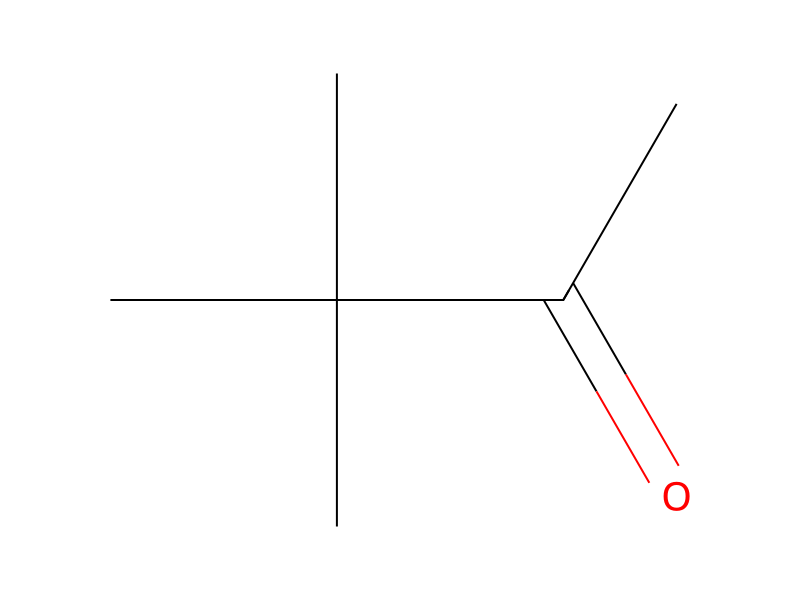
피나콜린

Pinacolone

HCID 6416
새 노트새 반응견적 요청하기
인쇄 미리보기
기본 정보개요이름 및 식별자물성안전 및 규제화학 및 산업관련 반응화합물 노트
부분 구조 검색유사 구조 찾기

기본 정보

CAS
75-97-8
표준 SMILES
CC(=O)C(C)(C)C
InChIKey
PJGSXYOJTGTZAV-UHFFFAOYSA-N
분자식
C6H12O
평균 분자량
100.16 g/mol
단동위원소 질량
100.088815

개요

3,3-dimethylbutan-2-one is a methyl ketone that is butane substituted by an oxo group at position 2 and two methyl groups at position 3. It is a dialkyl ketone and a methyl ketone.

이름 및 식별자

우선 이름
Pinacolone
IUPAC
3,3-dimethylbutan-2-one
현지명
피나콜린
영어명
Pinacolone
분자식
C6H12O
분자량
100.16

이름 및 동의어

Pinacolone75-97-83,3-DIMETHYL-2-BUTANONEPinacolintert-Butyl methyl ketonePinacoline2-Butanone, 3,3-dimethyl-Methyl tert-butyl ketonet-Butyl methyl ketone1,1,1-TrimethylacetoneMethyl t-butyl ketonePinakolin
이름 더 보기
3,3-다이메틸-2-뷰탄온3,3-다이메틸-2-부타논피나콜린피나콜론3,3-DIMETHYLBUTAN-2-ONEPinnatong
2,2-Dimethylbutanone2,2-Dimethyl-3-butanoneKetone, t-butyl methylMethyltert-butyl ketoneDTXSID5021752NSC-9353U1AAG3528DTXCID801752

데이터베이스 식별자

CAS
75-97-8
PubChem CID
6416
DTXSID
DTXSID5021752
ChEMBL
CHEMBL3183565
ChEBI
CHEBI:197349
UNII
3U1AAG3528
EC Number
200-920-4
Nikkaji
J4.165C

물성

구조 계산 물성

XLogP
1.2
극성 표면적
17.1 Ų
수소 결합 공여자 수
0
수소 결합 수용자 수
1
회전 가능 결합 수
1
무거운 원자 수
7
형식 전하
0
복잡도
76.7

실험 및 물리화학적 성질

Chemical ClassesOther Classes -> Aliphatic Ketones, Other
SpringerMaterials PropertiesBoiling point
LogP · 2건

log Kow = 1.20

1.2

OdorPeppermint or camphor-like odor
Density · 2건

0.7229 at 25 °C/25 °C

0.7229 @25 °C

Viscosity2.47X10-03 Pa-sec at melting point
Color/FormColorless liquid
Solubility · 3건

Soluble in ethanol, ether, acetone, carbon tetrachloride

Sol in water (2.44% at 15 °C); soluble in alcohol, ether, acetone

In water, 1.9X10+4 mg/L at 25 °C

Flash Point · 2건

23 °C

5 °C (41 °F) - closed cup

Boiling Point · 2건

106.1 °C

106.1 °C @760 [mm Hg]

Melting Point · 2건

안전 및 규제

안전 정보는 참고용이며, 공급업체의 물질안전보건자료(SDS), 관련 법규 및 전문가 평가를 대체하지 않습니다.

GHS 분류

GHS Classification · 6건

This chemical does not meet GHS hazard criteria for 3.6% (5 of 137) of reports.

Danger

H225 (68.6%): Highly Flammable liquid and vapor [Danger Flammable liquids]

P210, P233, P240, P241, P242, P243, P261, P264, P264+P265, P270, P271, P273, P280, P301+P317, P303+P361+P353, P304+P340, P305+P351+P338, P317, P319, P330, P337+P317, P370+P378, P403+P233, P403+P235, P405, and P501 (click each P-code to see the statement)

Aggregated GHS information provided per 137 reports by companies from 12 notifications to the ECHA C&L Inventory. Each notification may be associated with multiple companies.

Danger

유해성 정보

Regulatory Information · 2건

Chemical: 2-Butanone, 3,3-dimethyl-

REACH registered substance: 3,3-dimethylbutanone (EC: 200-920-4)

Fire PotentialHighly flammable liquid and vapor.
Hazards SummaryAn irritant; [MSDSonline] See 2-Butanone.
DOT Emergency Guidelines · 5건

/GUIDE 127: FLAMMABLE LIQUIDS (POLAR/WATER-MISCIBLE)/ Fire or Explosion: HIGHLY FLAMMABLE: Will be easily ignited by heat, sparks or flames. Vapors may form explosive mixtures with air. Vapors may travel to source of ignition and flash back. Most vapors are heavier than air. They will spread along ground and collect in low or confined areas (sewers, basements, tanks). Vapor explosion hazard indoors, outdoors or in sewers. Those substances designated with a "P" may polymerize explosively when heated or involved in a fire. Runoff to sewer may create fire or explosion hazard. Containers may explode when heated. Many liquids are lighter than water.

/GUIDE 127: FLAMMABLE LIQUIDS (POLAR/WATER-MISCIBLE)/ Health: Inhalation or contact with material may irritate or burn skin and eyes. Fire may produce irritating, corrosive and/or toxic gases. Vapors may cause dizziness or suffocation. Runoff from fire control may cause pollution.

화학 및 산업

용도 및 제조

Uses · 2건

Used in the synthesis of fungicides and herbicides; [HSDB]

Produced in large amounts for synthesis of fungicides and herbicides.

U.S. Production · 3건

(1992) NO DATA

Production volumes for non-confidential chemicals reported under the Inventory Update Rule. [Table#5272]

2-Butanone, 3,3-dimethyl- is listed as a High Production Volume (HPV) chemical (65FR81686). Chemicals listed as HPV were produced in or imported into the U.S. in >1 million pounds in 1990 and/or 1994. The HPV list is based on the 1990 Inventory Update Rule. (IUR) (40 CFR part 710 subpart B; 51FR21438).

Methods of Manufacturing · 2건

PREPD BY DISTILLATION OF PINACOLE HYDRATE WITH DIL H2SO4... ALMOST QUANTITATIVE YIELDS ARE OBTAINED WHEN 56.5 G PINACOL HYDRATE IS BOILED FOR 3 HR WITH 0.5 L 25% H2SO4 & THE PRODUCT IS STEAM DISTILLED...

3,3-Dimethyl-2-butanone can be produced by the following routes: hydrolysis of 4,4,5-trimethyl-1,3-dioxane, the product of the Prins reaction of isoprene with formaldehyde; ... the reduction dimerization of acetone under the influence of an acid catalyst with simultaneous rearrangement (the pinacol rearrangement); ... ketonization of pivalic acid with acetic acid or acetone over thorium, zirconium, or cerium catalysts; ... and oxidation of 2,3-dimethyl-2-butene with hydrogen peroxide

Formulations/Preparations95% grade
General Manufacturing Information · 3건

2-Butanone, 3,3-dimethyl-: ACTIVE

Has been prepared in 74% yield by reaction of tert-amyl alcohol with formaldehyde in the presence of strong acid catalysts

Precursor for soman

응용 분야 · 1건

용도Pinacolone is a precursor to triazolylpinacolone, triadimefon, paclobutrazol, uniconazole and metribuzin. Furthermore, it acts as an intermediate for biologically active products such as antibacterial, antifungal, antiviral and antituberculous products. It is an important ketone in organic chemistry and participates in condensation, hydrogenation and reductive amination reactions.

관련 반응

151건
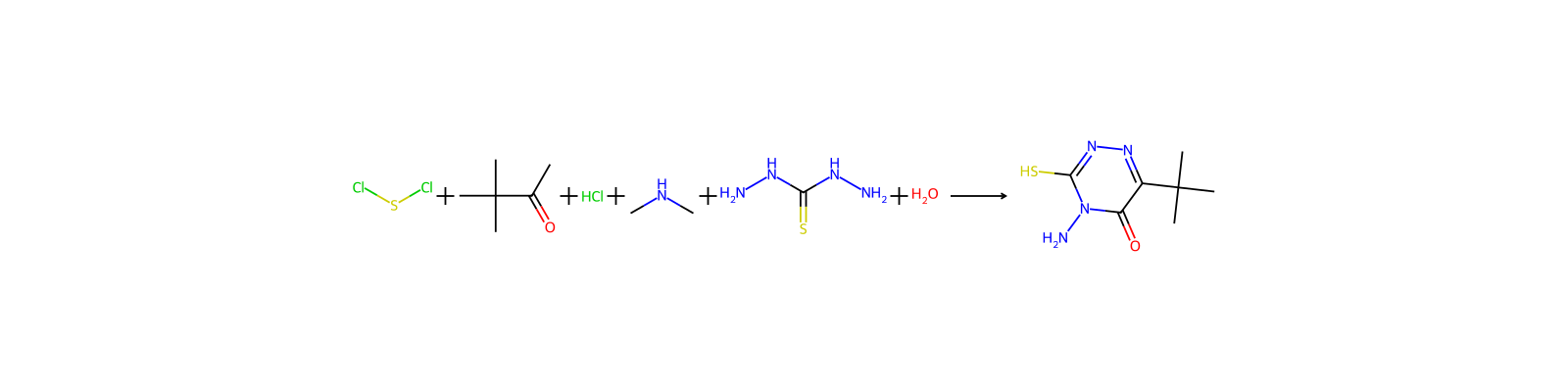
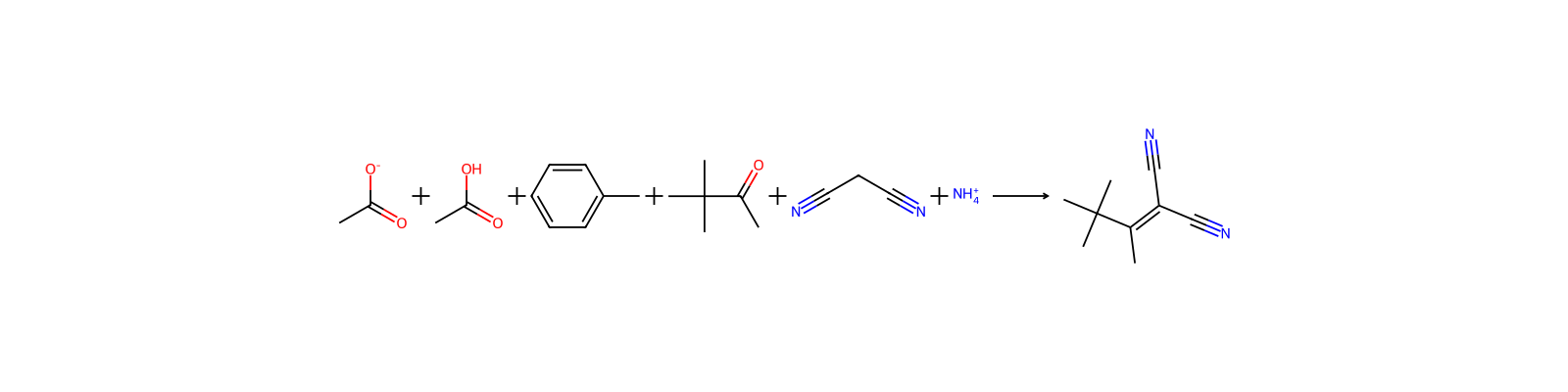
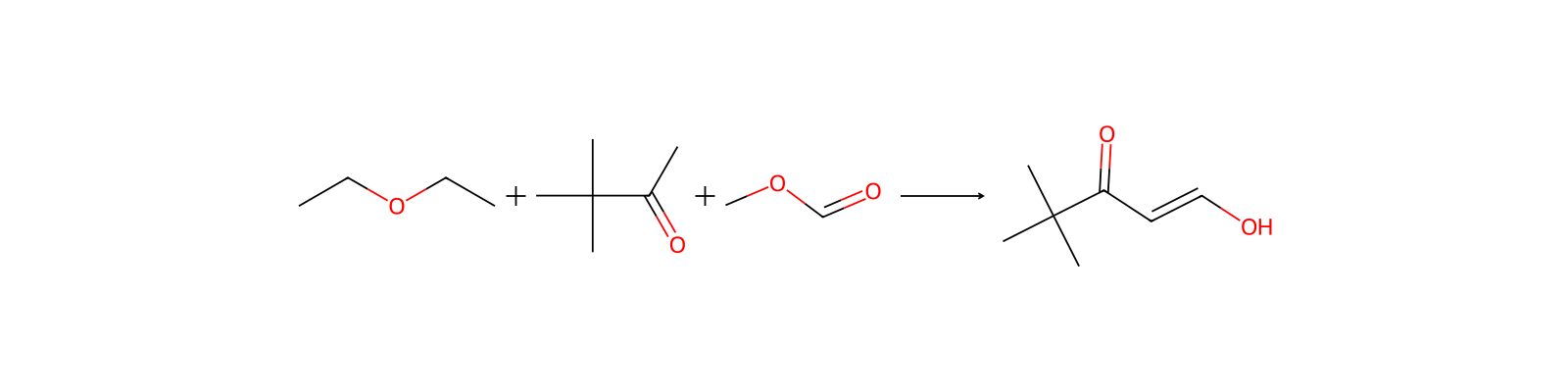
반응 기록 만들기
HRID 26952 반응식
HRID 26952반응물로uspto-grants-1979_04
HRID 26953 반응식
HRID 26953반응물로uspto-grants-1979_04
HRID 70753 반응식
HRID 70753반응물로uspto-grants-2014_09
HRID 91907 반응식
HRID 91907반응물로Training data from https://doi.org/10.1039/C8SC04228D (2/10)
HRID 93447 반응식
HRID 93447반응물로Training data from https://doi.org/10.1039/C8SC04228D (2/10)
HRID 104726 반응식
HRID 104726반응물로Training data from https://doi.org/10.1039/C8SC04228D (2/10)
HRID 113876 반응식
HRID 113876반응물로Training data from https://doi.org/10.1039/C8SC04228D (2/10)
HRID 114265 반응식
HRID 114265반응물로Training data from https://doi.org/10.1039/C8SC04228D (2/10)
1 / 19 페이지

화합물 노트

불러오는 중…

이 페이지에서기본 정보개요이름 및 식별자물성안전 및 규제화학 및 산업관련 반응화합물 노트
더보기
새 노트새 반응견적 요청하기

-52.5 °C

-52.5 °C

Vapor Pressure · 3건

31.5 [mmHg]

31.5 mm Hg at 25 °C

31.5 [mm Hg] @25 °C

물리화학적 성질

녹는점
-52.5 °C · -52.5 °C
끓는 점
106 °C · 106 °C(lit.)
밀도
0.801 g/mL · 0.801 g/mL at 25 °C(lit.)
증기압
33 hPa · 33 hPa ( 20 °C)
굴절률
20 · n20/D 1.396(lit.)
인화점
75 °F · 75 °F
저장 조건
Flammables area
용해도
19 g/L · 19g/L
물리적 상태
액체
색상
무색투명~연황색
냄새
ethereal-minty-camphoraceous,warm-sweet odor
Odor Threshold
0.043 ppm · 0.043ppm
수용성
2.44 g/100mL · 2.44g/100mL(15℃)
Merck
14 · 14,7440
BRN
1209331 · 1209331
Henry's Law Constant
4.3 · 4.3×10-2 mol/(m3Pa) at 25℃, Brockbank (2013)
Dielectric constant
12.8 · 12.8(17℃)
안정성
안정적인. 강한 산화제와 호환되지 않습니다. 가연성.
InChI
1S/C6H12O/c1-5(7)6(2,3)4/h1-4H3
InChIKey
PJGSXYOJTGTZAV-UHFFFAOYSA-N
SMILES
O=C(C(C)(C)C)C
NIST
2 · 2-Butanone, 3,3-dimethyl-(75-97-8)
EPA
Pinacolone (75-97-8)
화학적 성질 · 1건

3,3-Dimethyl-2-butanone is a colorless liquid with a light peppermint- or camphor-like odor. 3,3-Dimethyl-2-butanone is stable toward autoxidation; under standard conditions it does not form hydroperoxides. Only the a-methyl group can undergo condensation reactions. At the carbonyl group the usual reactions (hydrogenation, reductive amination) can take place.

/GUIDE 127: FLAMMABLE LIQUIDS (POLAR/WATER-MISCIBLE)/ Public Safety: CALL Emergency Response Telephone Number ... As an immediate precautionary measure, isolate spill or leak area for at least 50 meters (150 feet) in all directions. Keep unauthorized personnel away. Stay upwind. Keep out of low areas. Ventilate closed spaces before entering.

/GUIDE 127: FLAMMABLE LIQUIDS (POLAR/WATER-MISCIBLE)/ Protective Clothing: Wear positive pressure self-contained breathing apparatus (SCBA). Structural firefighters' protective clothing will only provide limited protection.

For more DOT Emergency Guidelines (Complete) data for 3,3-DIMETHYL-2-BUTANONE (8 total), please visit the HSDB record page.

Hazard Classes and Categories · 2건

Flam. Liq. 2 (68.6%)

Flammable liquids - Category 2

State Drinking Water Guidelines(FL) FLORIDA 210 ug/L
Explosive Limits and PotentialVapors may form explosive mixture with air.
Critical Temperature and PressureCritical temp = 564 K; Critical pressure = 3.32E+06 Pa

안전 및 보호

Fire Fighting Procedures · 3건

Use water spray to cool unopened containers.

Wear self contained breathing apparatus for fire fighting if necessary.

For small (incipient) fires, use media such as "alcohol" foam, dry chemical, or carbon dioxide. For large fires, apply water from as far as possible. Use very large quantities (flooding) of water applied as a mist or spray; solid streams of water may be ineffective. Cool all affected containers with flooding quantities of water.

Storage ConditionsKeep container tightly closed in a dry and well-ventilated place. Containers which are opened must be carefully resealed and kept upright to prevent leakage. Store in cool place.
Cleanup Methods · 2건

Contain spillage, and then collect with an electrically protected vacuum cleaner or by wet-brushing and place in container for disposal according to local regulations.

Environmental precautions: Prevent further leakage or spillage if safe to do so. Do not let product enter drains. Discharge into the environment must be avoided.

Disposal Methods · 2건

SRP: The most favorable course of action is to use an alternative chemical product with less inherent propensity for occupational exposure or environmental contamination. Recycle any unused portion of the material for its approved use or return it to the manufacturer or supplier. Ultimate disposal of the chemical must consider: the material's impact on air quality; potential migration in soil or water; effects on animal, aquatic, and plant life; and conformance with environmental and public health regulations.

Burn in a chemical incinerator equipped with an afterburner and scrubber but exert extra care in igniting as this material is highly flammable. Offer surplus and non-recyclable solutions to a licensed disposal company. Contact a licensed professional waste disposal service to dispose of this material.

Preventive Measures · 4건

Avoid contact with skin and eyes. Avoid inhalation of vapor or mist. Use explosion-proof equipment. Keep away from sources of ignition. No smoking. Take measures to prevent the build up of electrostatic charge.

ACCIDENTAL RELEASE MEASURES Personal precautions: Use personal protective equipment. Avoid breathing vapors, mist or gas. Ensure adequate ventilation. Remove all sources of ignition. Evacuate personnel to safe areas. Beware of vapors accumulating to form explosive concentrations. Vapors can accumulate in low areas.

Handle with gloves. Gloves must be inspected prior to use. Use proper glove removal technique (without touching glove's outer surface) to avoid skin contact with this product. Dispose of contaminated gloves after use in accordance with applicable laws and good laboratory practices. Wash and dry hands.

Handle in accordance with good industrial hygiene and safety practice. Wash hands before breaks and at the end of workday.

Protective Action Criteria (PAC) · 3건

1.8 [mg/m3]

20 [mg/m3]

120 [mg/m3]

Personal Protective Equipment (PPE) · 3건

Complete suit protecting against chemicals, Flame retardant antistatic protective clothing, The type of protective equipment must be selected according to the concentration and amount of the dangerous substance at the specific workplace.

Face shield and safety glasses Use equipment for eye protection tested and approved under appropriate government standards such as NIOSH (US) or EN 166(EU).

Where risk assessment shows air-purifying respirators are appropriate use a full-face respirator with multi-purpose combination (US) or type ABEK (EN 14387) respirator cartridges as a backup to engineering controls. If the respirator is the sole means of protection, use a full-face supplied air respirator. Use respirators and components tested and approved under appropriate government standards such as NIOSH (US) or CEN (EU).

독성 정보

Body Burden · 1건

In an analysis of expired human air collected from 28 normal, healthy, non-smoking humans, 3,3-dimethyl-2-butanone was detected at concns ranging from approximately 0.12 to 2 ng/L of expired air(1); positive identifactions of 3,3-dimethyl-2-butanone were made in approximately 10% of all samples. In a similar study of 54 humans (387 expired air samples collected), 3,3-dimethyl-2-butanone was detected in 8.3% of all samples with a mean concn of 0.184 ng/L(2).

Ecotoxicity ValuesLC50 Pimephales promelas (fathead minnow) 87 mg/L/96 hr flow-through bioassay, wt 0.12 g, water hardness 45.5 mg/L CaCO3, temp: 25 + or - 1 °C, pH 7.5, dissolved oxygen greater than 60% of saturation
Environmental Fate · 3건

TERRESTRIAL FATE: Based on a classification scheme(1), an estimated Koc value of 110(SRC), determined from a log Kow of 1.2(2) and a regression-derived equation(3), indicates that 3,3-dimethyl-2-butanone is expected to have high mobility in soil(SRC). Volatilization of 3,3-dimethyl-2-butanone from moist soil surfaces is expected to be an important fate process(SRC) given an estimated Henry's Law constant of 2.2X10⁻⁴ atm-cu m/mole(SRC), derived from its vapor pressure, 31.5 mm Hg(4), and water solubility, 19,000 mg/L(5). 3,3-Dimethyl-2-butanone is expected to volatilize from dry soil surfaces(SRC) based upon its vapor pressure(4). Biodegradation data were not available(SRC, 2007).

AQUATIC FATE: Based on a classification scheme(1), an estimated Koc value of 110(SRC), determined from a log Kow of 1.2(2) and a regression-derived equation(3), indicates that 3,3-dimethyl-2-butanone is not expected to adsorb to suspended solids and sediment(SRC). Volatilization from water surfaces is expected(3) based upon an estimated Henry's Law constant of 2.2X10⁻⁴ atm-cu m/mole(SRC), derived from its vapor pressure, 31.5 mm Hg(4), and water solubility, 19,000 mg/L(5). Using this Henry's Law constant and an estimation method(3), volatilization half-lives for a model river and model lake are 7 hours and 5.2 days, respectively(SRC). According to a classification scheme(6), an estimated BCF of 2(SRC), from its log Kow(2) and a regression-derived equation(7), suggests the potential for bioconcentration in aquatic organisms is low(SRC). Biodegradation data were not available(SRC, 2007).

ATMOSPHERIC FATE: According to a model of gas/particle partitioning of semivolatile organic compounds in the atmosphere(1), 3,3-dimethyl-2-butanone, which has a vapor pressure of 31.5 mm Hg at 25 °C(2), is expected to exist solely as a vapor in the ambient atmosphere. Vapor-phase 3,3-dimethyl-2-butanone is degraded in the atmosphere by reaction with photochemically-produced hydroxyl radicals(SRC); the half-life for this reaction in air is estimated to be 14 days(SRC), calculated from its rate constant of 1.21X10⁻¹² cu cm/molecule-sec at 25 °C(3). 3,3-Dimethyl-2-butanone contains chromophores that absorb at wavelengths >290 nm and therefore may be susceptible to direct photolysis by sunlight(4).

Adverse EffectsNeurotoxin - Acute solvent syndrome
Effluent Concentrations · 1건

In an analysis of 63 chemical manufacturing effluent discharges collected from across the US, 3,3-dimethyl-2-butanone was detected in one effluent at a concn of <10 ug/L(1). It has been reported that 3,3-dimethyl-2-butanone can be released to the atmosphere through auto emissions and solvents(2).

Soil Adsorption/Mobility · 1건

The Koc of 3,3-dimethyl-2-butanone is estimated as 110(SRC), using a log Kow of 1.2(1) and a regression-derived equation(2). According to a classification scheme(3), this estimated Koc value suggests that 3,3-dimethyl-2-butanone is expected to have high mobility in soil.

Natural Pollution Sources3,3-Dimethyl-2-butanone has been detected in expired human air (breath) collected from healthy, non-smoking humans(1,2).
Artificial Pollution Sources3,3-Dimethyl-2-butanone's production and use as an intermediate in the production of fungicides and herbicides(1) may result in its release to the environment through various waste streams(SRC).
Environmental Bioconcentration · 1건

An estimated BCF of 2 was calculated in fish for 3,3-dimethyl-2-butanone(SRC), using a log Kow of 1.2(1) and a regression-derived equation(2). According to a classification scheme(3), this BCF suggests the potential for bioconcentration in aquatic organisms is low(SRC).

Volatilization from Water/Soil · 1건

The Henry's Law constant for 3,3-dimethyl-2-butanone is estimated as 2.2X10⁻⁴ atm-cu m/mole(SRC) derived from its vapor pressure, 31.5 mm Hg(1), and water solubility, 19,000 mg/L(2). This Henry's Law constant indicates that 3,3-dimethyl-2-butanone is expected to volatilize from water surfaces(3). Based on this Henry's Law constant, the volatilization half-life from a model river (1 m deep, flowing 1 m/sec, wind velocity of 3 m/sec)(3) is estimated as 7 hours(SRC). The volatilization half-life from a model lake (1 m deep, flowing 0.05 m/sec, wind velocity of 0.5 m/sec)(3) is estimated as 5.2 days(SRC). 3,3-Dimethyl-2-butanone's estimated Henry's Law constant indicates that volatilization from moist soil surfaces may occur(SRC). The potential for volatilization of 3,3-dimethyl-2-butanone from dry soil surfaces may exist(SRC) based upon its vapor pressure(1).

Non-Human Toxicity Excerpts · 2건

/LABORATORY ANIMALS: Acute Exposure/ Sprague-Dawley rats were given 15, 70 and 140 min exposures to 15 mg/L 3,3-dimethyl-2-butanol, pinacolyl alcohol (PA), or 6-hour exposures to 0.2, 1.0 and 5.0 mg/L PA (1 mg/L = 240 ppm). A 50% mortality rate was obtained at the longest exposure to 15 mg/L. Sex related differences in the blood levels of PA and pinacolone were noted, and the surviving male rats failed to gain weight normally in the first week after exposure. In rats exposed to 5.0 mg/L for 6 hours, there were reductions in horizontal and vertical activity and the minute volume was 55% of controls at the end of exposure. Like many secondary alcohols, PA poses only a possible inhalation hazard; however, male rats may be somewhat more susceptible than females. /Pinacolyl alcohol/

/ALTERNATIVE and IN VITRO TESTS/ Following the pretreatment of guinea pigs with 90% LD50 soman, enhancement of microsomal esterase activity was noted 12 and 24 hr after pretreatment. Using Michaelis-Menten enzyme kinetic studies, enhancement was found to occur with liver carboxylesterase and procaine esterase, but not with aniline hydroxylase. Since the soman-enzyme complex was known to undergo aging with the release of pinacolyl alcohol and the subsequent formation of pinacolone, the effects of these metabolites on the activity of liver microsomal enzymes in vitro were explored. Pinacolone and pinacolyl alcohol produced enzyme enhancement in vitro in a manner similar to that produced by soman pretreatment. These effects were compared with those made by acetone in the same incubations, since the enhancing influence of acetone has already been well documented. Similarity was found between the in vitro effects of acetone and the effects of pinacolone and pinacolyl alcohol. Lastly, the in vivo effects of pinacolone on the activities of the same liver microsomal enzymes were studied following pretreatment of the guinea pigs with 90% LDLo (lowest published lethal dose) pinacolone. Pretreating guinea pigs with pinacolone prior to killing them enhanced liver microsomal carboxylesterase and procaine esterase activities, but had no effect on microsomal aniline hydroxylase activity. This pattern of enzyme enhancement was similar to that observed after soman pretreatment. Therefore, soman was found to enhance hepatic microsomal esterase activity in the guinea pig in a manner similar to that seen with its metabolites, as well as acetone. ...

Environmental Abiotic Degradation · 1건

The rate constant for the vapor-phase reaction of 3,3-dimethyl-2-butanone with photochemically-produced hydroxyl radicals has been measured as 1.21X10⁻¹² cu cm/molecule-sec at 25 °C(1). This corresponds to an atmospheric half-life of about 14 days at an atmospheric concentration of 5X10+5 hydroxyl radicals per cu cm(1). 3,3-Dimethyl-2-butanone is not expected to undergo hydrolysis in the environment due to the lack of functional groups that hydrolyze under environmental conditions(2). 3,3-Dimethyl-2-butanone contains chromophores that absorb at wavelengths >290 nm and therefore may be susceptible to direct photolysis by sunlight(2).

규제 정보

State Drinking Water Guidelines(FL) FLORIDA 210 ug/L

안전 데이터

wgk
2
tsca
TSCA listed
rtecs
EL7700000
ridadr
UN 1224 3/PG 2
HS 번호
29141990
risk_code
11-22-10
hazard_code
F,Xn,Xi
safety_code
9-16-29-33-20/21
포장분류
II
위험 등급
3
기존화학 물질
KE-11259
위험 참고 사항
Irritant/Highly Flammable
Hazard Classifications
Acute Tox. 4 OralFlam. Liq. 2
스토리지 클래스
3 - Flammable liquids
유해 물질 데이터
75-97-8(Hazardous Substances Data)

제조 방법

Pinacolone is prepared by distillation of Pinacolhydrate with diluted Sulfuric acid.

상·하류 제품 정보

상류 원료

Pinacol3-메틸-1-뷰텐삼차-아밀알코올아이소아밀 알코올1,3-디옥산

하류 제품

5-tert-Butyl-1H-pyrazole-3-carboxylic acidPaclobutrazol W.P.에틸5-(tert-부틸)-2H-피라졸-3-카르복실레이트테브코나졸디피바로일메탄3-Tert-butyl-1H-pyrazole-5-carboxamide ,97%3-클로로-4,4-디메틸펜트-2-에니트릴1-브로모-3,3-디메틸-2-부타논Triapenthenol5-tert-Butyl-4-hydroxymethyl-2-methyl-furan-3-carboxylic acidUNICONAZOLE(1,2,2-Trimethyl-propyl)-hydrazine3-(tert-부틸)-1-메틸-1H-피라졸-5-카르복실산파클로부트라졸Diclobutrazol2-Amino-6-t-butyl-4-(trifluoromethyl)pyrimidine5-(tert-부틸)-2-메틸푸란-3-카르보닐클로라이드메트리뷰진메틸3-아미노-5-(tert-부틸)티오펜-2-카르복실레이트1-(4-클로로페녹시)-3,3-다이메틸-1-(1H-1,2,4-트리아졸-1-일)-2- 부타논비테르탄올3-(tert-부틸)-1-메틸-1H-피라졸-5-카보닐클로라이드3-아미노-5-(TERT-부틸)티오펜-2-카르복스아미드3-(tert-부틸)-1H-피라졸-5-카르보히드라지드