
기본 정보
- 표준 SMILES
O=C(Cl)C(Cl)(Cl)Cl- InChIKey
PVFOMCVHYWHZJE-UHFFFAOYSA-N- 분자식
- C2Cl4O
- 평균 분자량
- 181.8 g/mol
- 단동위원소 질량
- 179.87032534
개요
Trichloroacetyl chloride appears as a colorless volatile liquid with a strong odor. Denser than water. Contact severely irritates skin, eyes and mucous membranes. May be very toxic by ingestion and inhalation. May be combustible.
이름 및 식별자
- 우선 이름
- Trichloroacetyl chloride
- IUPAC
- 2,2,2-trichloroacetyl chloride
- 현지명
- 트라이클로로아세틸 염화물
- 영어명
- Trichloroacetyl chloride
- 분자식
- C2Cl4O
- 분자량
- 181.83
이름 및 동의어
TRICHLOROACETYL CHLORIDE76-02-82,2,2-trichloroacetyl chlorideSuperpaliteAcetyl chloride, trichloro-TrichloroacetochlorideTrichloroacetic acid chlorideDTXSID9034070Acetyl chloride, 2,2,2-trichloro-9SN86T76Y6NSC-190466DTXCID7014070
이름 더 보기
트라이클로로아세틸염화물트라이클로로아세틸 염화물트리클로로아세틸클로라이드Trichloroacetic chlorideGreen cross gastrichloroacetylTrichloroacetyl chlotrichloro-acetylchlorid
RefChem:191002200-926-7CCl3COClNSC 190466trichloroacetylchlorideCCRIS 6764HSDB 6321Trichloro-acetylchloride
데이터베이스 식별자
- CAS
76-02-8- PubChem CID
- 6420
- DTXSID
DTXSID9034070- ChEMBL
CHEMBL3186657- UNII
- 9SN86T76Y6
- EC Number
- 200-926-7
- Nikkaji
- J1.472I
물성
구조 계산 물성
- XLogP
- 2.6
- 극성 표면적
- 17.1 Ų
- 수소 결합 공여자 수
- 0
- 수소 결합 수용자 수
- 1
- 회전 가능 결합 수
- 0
- 무거운 원자 수
- 7
- 형식 전하
- 0
- 복잡도
- 82.2
실험 및 물리화학적 성질
Chemical Classes
Toxic Gases & Vapors -> Acid Halides
Corrosives
SpringerMaterials PropertiesSchoenflies notation
Density
1.654 at 32 °F (EPA, 1998) - Denser than water; will sink
1.6202 at 20 °C/4 °C
1.629 @25 °C
Color/FormLiquid
Solubility
Sol in ether
Sol in alcohol
Boiling Point
244 °F at 760 mmHg (EPA, 1998)
244 °F
117.9 °C
Melting Point
-31.8 °C
-146 °C
Vapor Pressure
21.3 [mmHg]
21.32 mm Hg @ 25 °C, determined from experimentally derived coefficients
21.32 [mm Hg] @25 °C
Refractive IndexIndex of refraction: 1.4695 at 20 °C
Physical Description
Trichloroacetyl chloride appears as a colorless volatile liquid with a strong odor. Denser than water. Contact severely irritates skin, eyes and mucous membranes. May be very toxic by ingestion and inhalation. May be combustible.
Liquid that decomposes in water; [Hawley]
Other Experimental Properties
Decomposes in water
Liquid molar volume = 0.112702 cu m/Kmol
물리화학적 성질
- 녹는점
- -57 °C · -57 °C
- 끓는 점
- 114 · 114-116 °C(lit.)
- 밀도
- 1.629 g/mL · 1.629 g/mL at 25 °C(lit.)
- 증기압
- 16 mm · 16 mm Hg ( 20 °C)
- 굴절률
- 20 · n20/D 1.470(lit.)
- 인화점
- 100 °C · 100 °C
- 저장 조건
- Refrigerator, Under inert atmosphere
- 용해도
- 클로로포름(가용성), 에틸아세테이트(가용성)
- 물리적 상태
- 기름
- 색상
- 무색
- 수소이온지수(pH)
- 1.11 · 1.11 (25°C, 16.2g/L in H2O)
- 수용성
- 물 에 용해
- BRN
- 774120 · 774120
- Henry's Law Constant
- 2 · 2.0×10-2 mol/(m3Pa) at 25℃, Mirabel et al. (1996)
- 안정성
- 안정적인. 물과 격렬하게 반응함. 알코올, 산화제, 강염기와 호환되지 않습니다.
- InChI
- 1S/C2Cl4O/c3-1(7)2(4,5)6
- InChIKey
- PVFOMCVHYWHZJE-UHFFFAOYSA-N
- SMILES
- ClC(Cl)(Cl)C(=O)Cl
- NIST
- Trichloroacetyl chloride(76-02-8)
- EPA
- Trichloroacetyl chloride (76-02-8)
화학적 성질
Trichloroacetyl chloride is similar to dichloroacetyl chloride. It is a clear colourless liquid. Decomposes in water; soluble in alcohol.The acid chloride can be hydrolyzed at 75 – 85°C with water to form the free acid and hydrolyzed with ammonium hydroxide or concentrated sodium carbonate solution to form the salts.
안전 및 규제
GHS 분류
GHS Classification
Danger
H290 (67.5%): May be corrosive to metals [Warning Corrosive to Metals]
P234, P260, P261, P264, P264+P265, P270, P271, P273, P280, P284, P301+P317, P301+P330+P331, P302+P361+P354, P304+P340, P305+P354+P338, P316, P317, P319, P320, P321, P330, P363, P390, P391, P403+P233, P405, P406, and P501 (click each P-code to see the statement)
Aggregated GHS information provided per 160 reports by companies from 12 notifications to the ECHA C&L Inventory. Each notification may be associated with multiple companies.
유해성 정보
Hazards IdentificationToxic/poison by inhalation (TIH/PIH)
Regulatory Information
Chemical: Acetyl chloride, trichloro-
Status: Cease Manufacture Update: 28-11-2022 https://echa.europa.eu/registration-dossier/-/registered-dossier/11166
Trichloroacetyl chloride: Does not have an individual approval but may be used under an appropriate group standard
The New Jersey Worker and Community Right to Know Act requires public and private employers to provide information about hazardous substances at their workplaces. (N.J.S.A. 34:5A-1 et. seq.)
DOT LabelCorrosive Poison Inhalation Hazard
Fire Hazards
Material may burn but does not ignite readily. Poisonous if inhaled or swallowed; skin contact poisonous. Contact may cause burns to skin and eyes. (EPA, 1998)
· Combustible material: may burn but does not ignite readily.
Health Hazards
Highly toxic by ingestion and inhalation; strong irritant to skin and tissues. (EPA, 1998)
· TOXIC and/or CORROSIVE; inhalation, ingestion or contact (skin, eyes) with vapors, dusts or substance may cause severe injury, burns or death.
Hazards SummaryExperiments conducted at Argonne showed that no gas is generated upon mixing with water. No apparent evolution of hydrochloric acid after mixing with water; A strong skin irritant; [CAMEO]
DOT ID and Guide2442 156
Reactive GroupHalogenated Organic Compounds
Reactivity AlertsWater-Reactive
Reactivity Profile
TRICHLOROACETYL CHLORIDE is incompatible with water, with strong oxidizing agents, alcohols, bases (including amines). May react vigorously or explosively if mixed with diisopropyl ether or other ethers in the presence of trace amounts of metal salts [J. Haz. Mat., 1981, 4, 291].
DOT Emergency Guidelines
If ... THERE IS NO FIRE, go directly to the Table of Initial Isolation and Protective Action Distances /(see table below)/ ... to obtain initial isolation and protective action distances. IF THERE IS A FIRE, or IF A FIRE IS INVOLVED, go directly to the appropriate guide /(see guide(s) below)/ and use the evacuation information shown under PUBLIC SAFETY.
/GUIDE 156: SUBSTANCES - TOXIC and/or CORROSIVE (Combustible/Water-Sensitive)/ Fire or Explosion: Combustible material: may burn but does not ignite readily. Substance will react with water (some violently) releasing flammable, toxic or corrosive gases and runoff. When heated, vapors may form explosive mixtures with air: indoors, outdoors and sewers explosion hazards. Most vapors are heavier than air. They will spread along ground and collect in low or confined areas (sewers, basements, tanks). Vapors may travel to source of ignition and flash back. Contact with metals may evolve flammable hydrogen gas. Containers may explode when heated or if contaminated with water.
/GUIDE 156: SUBSTANCES - TOXIC and/or CORROSIVE (Combustible/Water-Sensitive)/ Health: TOXIC; inhalation, ingestion or contact (skin, eyes) with vapors, dusts or substance may cause severe injury, burns or death. Contact with molten substance may cause severe burns to skin and eyes. Reaction with water or moist air will release toxic, corrosive or flammable gases. Reaction with water may generate much heat that will increase the concentration of fumes in the air. Fire will produce irritating, corrosive and/or toxic gases. Runoff from fire control or dilution water may be corrosive and/or toxic and cause pollution.
/GUIDE 156: SUBSTANCES - TOXIC and/or CORROSIVE (Combustible/Water-Sensitive)/ Public Safety: CALL Emergency Response Telephone Number on Shipping Paper first. If Shipping Paper not available or no answer, refer to appropriate telephone number listed on the inside back cover. As an immediate precautionary measure, isolate spill or leak area in all directions for at least 50 meters (150 feet) for liquids and at least 25 meters (75 feet) for solids. Keep unauthorized personnel away. Stay upwind. Keep out of low areas. Ventilate enclosed areas.
For more DOT Emergency Guidelines (Complete) data for TRICHLOROACETYL CHLORIDE (9 total), please visit the HSDB record page.
DOT Hazard Classification
Trichloroacetyl chloride
UN2442
Class 8 Corrosive material (49 eCFR § 173.136)
Class 8 Corrosive material (49 eCFR § 173.136)
PG II: the degree of danger presented by the material is medium
Symbol +: Fixes the proper shipping name, hazard class and packing group for that entry
안전 및 보호
Fire Fighting
Move container from fire area if you can do so without risk. Spray cooling water on containers that are exposed to flames until well after fire is out. Keep unnecessary people away; isolate hazard area and deny entry. Stay upwind; keep out of low areas. Wear positive pressure breathing apparatus and special protective clothing.
Accidental Release Measures
· CALL 911. Then call emergency response telephone number on shipping paper. If shipping paper not available or no answer, refer to appropriate telephone number listed on the inside back cover.
· ELIMINATE all ignition sources (no smoking, flares, sparks or flames) from immediate area.
First Aid
Warning: Trichloroacetyl chloride is a strong irritant. Direct contact may result in severe dermal or corneal burns.
General First Aid:
Exposure Control and Personal Protection
· Wear positive pressure self-contained breathing apparatus (SCBA).
TIH (Toxic Inhalation Hazard) - Term used to describe gases and volatile liquids that are toxic when inhaled. Some are TIH materials themselves, e.g., chlorine, and some release TIH gases when spilled in water, e.g., chlorosilanes. [ERG 2016].
Fire Fighting Procedures
If material on fie or involved in fire: Use water in flooding quantities as fog. Use "alcohol" foam, dry chemical or carbon dioxide. Keep run-off water out of sewers and water sources. Cool all affected containers with flooding quantities of water. Apply water from as far a distance as possible.
Nonfire Spill ResponseExcerpt from ERG Guide 156 [Substances - Toxic and/or Corrosive (Combustible / Water-Sensitive)]:
Disposal Methods
SRP: At the time of review, criteria for land treatment or burial (sanitary landfill) disposal practices are subject to significant revision. Prior to implementing land disposal of waste residue (including waste sludge), consult with environmental regulatory agencies for guidance on acceptable disposal practices.
Preventive Measures
If material not on fire and not involved in fire: Keep sparks, flames, and other sources of ignition away. Keep material out of water sources and sewers. Build dikes to contain flow as necessary. Attempt to stop leak if without undue personnel hazard Use water spray to knock-down vapors.
Personnel protection: Keep upwind. Avoid breathing vapors. ... Avoid bodily contact with the material.
Isolation and Evacuation
Excerpt from ERG Guide 156 [Substances - Toxic and/or Corrosive (Combustible / Water-Sensitive)]:
Immediate precautionary measure
Small spill:
Small spill:
Protective Action Criteria (PAC)
0.41 [ppm]
4.5 [ppm]
21 [ppm]
Personal Protective Equipment (PPE)
For emergency situations, wear a positive pressure, pressure-demand, full facepiece self-contained breathing apparatus (SCBA) or pressure- demand supplied air respirator with escape SCBA and a fully-encapsulating, chemical resistant suit. (EPA, 1998)
Emergency Response Planning Guidelines· Note: Most foams will react with the material and release corrosive/toxic gases.
독성 정보
Environmental Fate
TERRESTRIAL FATE: Data on the hydrolysis of trichloroacetyl chloride are not available. Hydrolysis of trichloroacetyl chloride is expected to be a major fate process for this compound. Based on analogy to similar compounds, acetyl chloride at 25 °C has a hydrolysis half-life of 0.8 sec(1); dichloroacetyl chloride at -20 °C has a hydrolysis rate of 0.004/min(2). An estimated Koc of 72(4,SRC), based on an estimated log Kow(3,SRC), indicates that trichloroacetyl chloride will have high mobility in soil(1,2,5,SRC); the rate of hydrolysis of trichloroacetyl chloride is expected to be so fast that leaching is unlikely(SRC).
AQUATIC FATE: Data on the hydrolysis of trichloroacetyl chloride are not available. Hydrolysis of trichloroacetyl chloride is expected to be a major fate process for this compound. Based on analogy to similar compounds, acetyl chloride at 25 °C has a half-life of 0.8X10⁻¹/sec(1) and the hydrolysis rate of dichloroacetyl chloride is 0.004/min at -20 °C(2). An estimated BCF value of 3(3,SRC), based on an estimated log Kow(4,SRC), indicates that trichloroacetyl chloride will not bioconcentrate in an aquatic system(3,4,SRC).
ATMOSPHERIC FATE: Based on a vapor pressure of 21 mm Hg at 25 °C obtained from experimentally derived coefficients(1,SRC), trichloroacetyl chloride will exist solely in the vapor phase in the ambient atmosphere(2,SRC). Trichloroacetyl chloride is not expected to degrade appreciably in the vapor phase by reaction with photochemically produced hydroxyl radicals(3,SRC). A hydrolysis half-life of 455 years in the atmosphere was estimated by calculating gas phase hydrolysis rate constants for trichloroacetyl chloride(4). This suggests that gas phase hydrolysis is not an effective removal mechanism for this compound in the atmosphere(4,SRC).
Adverse EffectsToxic Pneumonitis - Inflammation of the lungs induced by inhalation of metal fumes or toxic gases and vapors.
Soil Adsorption/Mobility
Based on an estimated log Kow of 0.88(1,SRC), the Koc of trichloroacetyl chloride is estimated as approximately 72 using a regression-derived equation(2,SRC). According to a suggested classification scheme(3), this estimated Koc value suggests that trichloroacetyl chloride has high mobility in soil(SRC). This compound's rapid rate of hydrolysis, by analogy to acetyl chloride(4) and dichloroacetyl chloride(5), indicates that hydrolysis should preclude leaching in soil environments(SRC).
Human Toxicity Excerpts
New labelling processes installed without adequate ventilation control in an electric motor factory exposed production line workers to toxic gases. Symptoms of eye & resp tract irritation & complaints of headache, fever, chills, dizziness, malaise, general weakness, nausea, & vomiting were reported in numerous cases. Chest signs, radiographic abnormalities, reduction in ventilatory function, & blood gas abnormalities were found in some cases. Epidemiological analysis of the spatial & temporal distribution of cases supported an exposure effect relationship. Investigations suggested ozone & possibly phosgene & assoc trichloroacetyl chlorides as the toxic agents that were generated by an ultraviolet print curing arrangement & perchloroethylene used as a cleaning solvent.
Highly toxic by ingestion & inhalation.
Artificial Pollution Sources
Trichloroacetyl chloride's production and subsequent use as an intermediate in the manufacture of esters and anhydrides of trichloroacetic acid(1) and in the manufacture of the antibiotic, cephacetrile(2) may result in its release to the environment through various waste streams(SRC).
Environmental Bioconcentration
A BCF of 3 was calculated for trichloroacetyl chloride, using an estimated log Kow of 0.88(1,SRC) and a recommended regression-derived equation(2,SRC). This BCF value suggests that trichloroacetyl chloride will not bioconcentrate in aquatic organisms(2,SRC).
Volatilization from Water/Soil
The Henry's Law constant for trichloroacetyl chloride is estimated as 2.9X10⁻⁵ atm-cu m/mole(1,SRC). This value indicates that volatilization of trichloroacetyl chloride from water proceeds slowly( 2,SRC). This compound's rapid rate of hydrolysis, by analogy to acetyl chloride(3) and dichloroacetyl chloride(4), indicates that hydrolysis should preclude volatilization in aquatic environments(SRC).
Non-Human Toxicity Excerpts
Dichloroacetylene (DCA) decomposes rapidly in contact with air into a series of chlorinated hydrocarbons which incl trichloroacetyl chloride. Expt were performed to compare mutagenic properties of DCA & its degradation products on the histidine-dependent tester strains TA98 & TA100 of Salmonella typhimurium. Trichloroacetyl chloride was not mutagenic in presence or absence of rat liver homogenate.
Environmental Abiotic Degradation
Rate constants for the homogeneous gas phase hydrolysis of trichloroacetyl chloride were calculated at temperatures ranging from 473-533 deg K; these rate constant values were extrapolated to 25 °C and 760 Torr in order to calculate a half-life for trichloroacetyl chloride in the atmosphere based on hydrolysis(1). A value of 455 years was calculated with a range from 130 to 1595 years(1). This suggests that gas phase hydrolysis is not an effective removal mechanism for this compound in the atmosphere. A study was made looking at "rain-out" where rain passing through an atmosphere containing the acid chloride vapor is viewed as a possible atmospheric removal mechanism. In this simplified model, an atmospheric half-life of 5 months was determined for an area which has an average yearly rainfall of 100 g/sq cm(2). Data on the hydrolysis of trichloroacetyl chloride are not available. Based on analogy to similar compounds, acetyl chloride at 25 °C has a half-life of 0.8 sec(2); dichloroacetyl chloride at -20 °C has a hydrolysis rate of 0.004/min(3). The rate constant for the vapor-phase reaction of trichlorodiacetyl chloride with photochemically produced hydroxyl radicals has been estimated to be less than 1x10-16 cu cm/molecule-sec at 25 °C(4). This indicates that trichloroacetyl chloride is resistant to degradation via photochemically produced hydroxyl radicals(SRC).
Probable Routes of Human Exposure
Trichloroacetyl chloride is toxic by ingestion and inhalation. It is a strong irritant to skin and tissue(1).
NIOSH (NOES Survey 1981-1983) has statistically estimated that 1821 workers (273 of these are female) are potentially exposed to trichloroacetyl chloride in the USA(1).
Environmental Fate/Exposure Summary
Trichloroacetyl chloride's production and subsequent use as an intermediate in the manufacture of esters and anhydrides of trichloroacetic acid and in the manufacture of the antibiotic, cephacetrile, may result in its release to the environment through various waste streams. If released to the atmosphere, trichloroacetyl chloride will exist solely in the vapor-phase where it is expected that this compound will not degrade appreciably via hydroxyl radicals. A hydrolysis half-life of 455 years for trichloroacetyl chloride in the atmosphere has been estimated. Based on an estimated Koc of 72, trichloroacetyl chloride should be highly mobile in soil. Hydrolysis of trichloroacetyl chloride is, however, expected to be a major fate process for this compound and should preclude leaching processes in the environment. Data on the hydrolysis of trichloroacetyl chloride are not available; however, acetyl chloride at 25 °C has a half-life of 0.8 sec and dichloroacetyl chloride at -20 °C has a hydrolysis rate of 0.004/min. In water, trichloroacetyl chloride is expected to hydrolyze very quickly. Trichloroacetyl chloride is not expected to bioconcentrate in aquatic organisms based on an estimated BCF value of 3. Exposure to trichloroacetyl chloride may occur occupationally during its production or during its use as a chemical intermediate. (SRC)
Toxicity DataLC50 (rat) = 475 mg/m3/4H
규제 정보
CERCLA Reportable Quantities
Releases of CERCLA hazardous substances are subject to the release reporting requirement of CERCLA section 103, codified at 40 CFR part 302, in addition to the requirements of 40 CFR part 355. Trichloroacetyl chloride is an extremely hazardous substance (EHS) subject to reporting requirements when stored in amounts in excess of its threshold planning quantity (TPQ) of 500 lbs.
안전 데이터
- wgk
- 3
- tsca
- TSCA listed
- rtecs
- AO7140000
- ridadr
- UN 2442
- HS 번호
- 29159080
- risk_code
- 14-22-26-34-35-29
- hazard_code
- T+,T
- safety_code
- 26-28-36/37/39-45-8-28A-23
- 포장분류
- II
- 위험 등급
- 8
- F 고인화성물질
- 19
- 위험 참고 사항
- Very Toxic
- Hazard Classifications
- Acute Tox. 4 OralEye Dam. 1Skin Corr. 1A
- 스토리지 클래스
- 8A - Combustible, corrosive hazardous materials
- 유해 물질 데이터
- 76-02-8(Hazardous Substances Data)
화학 및 산업
용도 및 제조
Uses
Used in organic synthesis; [HSDB]
Trichloroacetyl chloride can be used for the manufacture of the esters and the anhydrides of trichloroacetic acid.
Methods of Manufacturing
Acetyl chloride is prepared from trichloroacetic acid and various inorganic acid chlorides (e.g., SOCl2, PCl3) or with P2O5 and HCl. More useful methods are the oxidation of tetrachloroethylene with fuming sulfuric acid, oxygen, or fuming nitric acid and sulfuric acid at 18-20 °C, or from the reaction of pentachloroethane and dry oxygen under UV light. It has been obtained in 37% yield from carbon tetrachloride and carbon monoxide in the presence of aluminum chloride at 200 °C and high pressure. The most common production method is the gas-phase, photochemical oxidation of tetrachloroethylene with oxygen. The reaction is initiated with UV light, with radioactive irradiation, or it is sensitized with chlorine or iodine.
General Manufacturing InformationAcetyl chloride, 2,2,2-trichloro-: ACTIVE
응용 분야
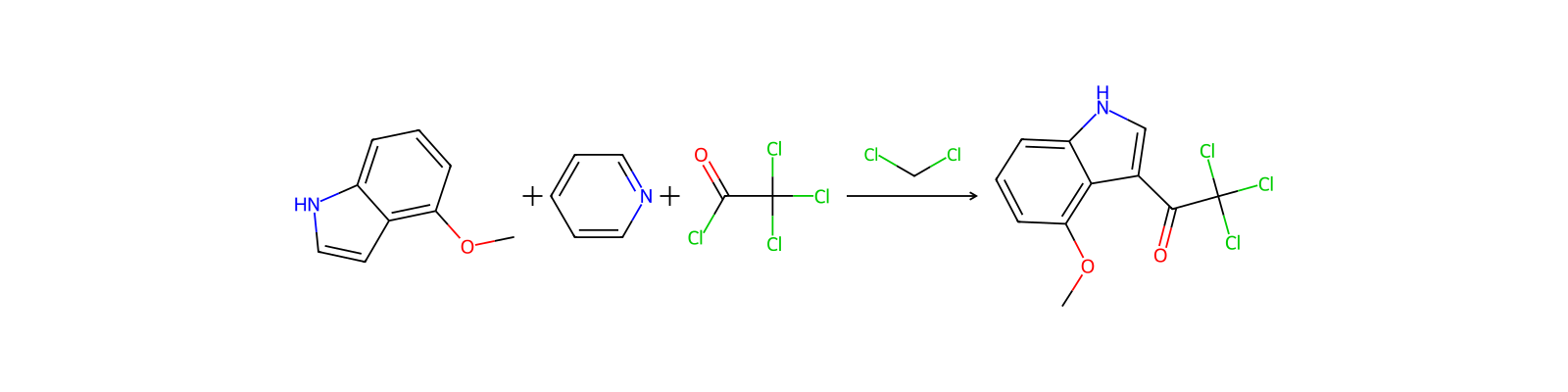
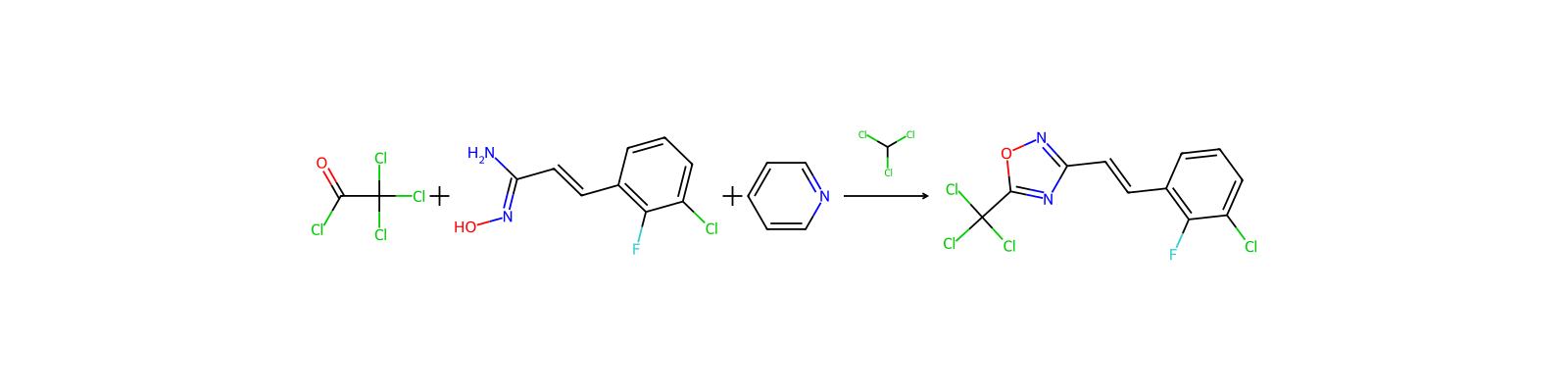
용도Trichloroacetyl chloride can be used for the manufacture of the esters and the anhydrides of trichloroacetic acid.It was used in the preparation of dihydro-1H-benzindoles. It was also used in the synthesis of 3-alkylbenzoxazolones.
일반 설명A colorless volatile liquid with a strong odor. Denser than water. Contact severely irritates skin, eyes and mucous membranes. May be very toxic by ingestion and inhalation. May be combustible.
제조 방법
The acetyl chloride is prepared from trichloroacetic acid and various inorganic acid chlorides (e.g., SOCl2, PCl3) or with P2O5 and HCl. More useful methods are the oxidation of tetrachloroethylene with fuming sulfuric acid, oxygen, or fuming nitric acid and sulfuric acid at 18-20°C, or from the reaction of pentachloroethane and dry oxygen under UV light. It has been obtained in 37 % yield from carbon tetrachloride and carbon monoxide in the presence of aluminum chloride at 200°C and high pressure.The most common production method is the gas-phase, photochemical oxidation of tetrachloroethylene with oxygen. The reaction is initiated with UV light, with radioactive irradiation, or it is sensitized with chlorine or iodine.
상·하류 제품 정보
상류 원료
하류 제품
관련 반응
519건




연결된 노트
불러오는 중…