홈MCP워크벤치Skills
홈워크벤치알림마이페이지
llms.txt · MCP 가이드개인정보처리방침 · 이용약관 · 지원v1.8.0
  1. 홈
  2. /화합물

(2E)-1,4-디클로로-2-부텐

1,4-Dichloro-2-butene, (2E)-

HCID 642197
새 노트새 반응견적 요청하기
인쇄 미리보기

데이터를 보충하는 중입니다. 잠시 후 페이지를 새로 고치면 최신 내용을 볼 수 있습니다

기본 정보개요이름 및 식별자물성안전 및 규제화학 및 산업관련 반응화합물 노트
부분 구조 검색유사 구조 찾기

기본 정보

CAS
110-57-6
표준 SMILES
ClC/C=C/CCl
InChIKey
FQDIANVAWVHZIR-OWOJBTEDSA-N
분자식
C4H6Cl2
평균 분자량
124.99 g/mol
단동위원소 질량
123.98465555

개요

1,4-Dichloro-2-butene can cause cancer according to The Environmental Protection Agency (EPA).

이름 및 식별자

우선 이름
1,4-Dichloro-2-butene, (2E)-
IUPAC
(E)-1,4-dichlorobut-2-ene
현지명
(2E)-1,4-디클로로-2-부텐
영어명
trans-1,4-Dichloro-2-butene
분자식
C4H6Cl2
분자량
125

이름 및 동의어

2-Butene, 1,4-dichloro-, (2E)-1,4-DICHLORO-2-BUTENE, TRANS-1,4-DICHLORO-2-BUTENE, (2E)-RefChem:6713203-779-7trans-1,4-Dichloro-2-butene110-57-6(2E)-1,4-dichlorobut-2-ene(E)-1,4-dichlorobut-2-ene1,4-DICHLORO-trans-2-BUTENE(E)-1,4-Dichloro-2-butenetrans-1,4-Dichlorobutene
이름 더 보기
트랜스-1,4-디클로로부텐(2E)-1,4-디클로로-2-부텐(2E)-1,4-다이클로로2-뷰텐(E)-1,4-다이클로로-2-뷰텐1,4-다이클로로-트랜스-2-뷰텐2-뷰텐, 1,4-다이클로로-, 트랜스-트랜스-1,4-다이클로로-2-뷰텐트랜스-1,4-다이클로로뷰텐-2-엔1,4-디클로로-트랜스-2-부텐tri-1,4-Dichloro-2-b1,4-Dichlorobutene-21,4-DICHLORO-2-BUTENE2-BUTYLENE DICHLORIDE4-dichloro-(e)-2-buten1,4-DICHLORO-2-BUTYLENE4-dichloro-trans-2-butentrans-1,4-Dichlor-2-buten
2-Butene, 1,4-dichloro-, (E)-RCRA waste number U074trans-1,4-Dichlorobutene-22-Butene, 1,4-dichloro-, trans-MFCD00000988trans-1,4-Dichlorobut-2-eneDTXSID60204341476-11-5

데이터베이스 식별자

CAS
110-57-6、1476-11-5、764-41-0
PubChem CID
642197
DTXSID
DTXSID6020434
ChEMBL
CHEMBL468582
ChEBI
CHEBI:82446
UNII
92HZ946H7Y
Nikkaji
J3.024D、J55.490A

물성

구조 계산 물성보충 중

XLogP
1.7
극성 표면적
0 Ų
수소 결합 공여자 수
0
수소 결합 수용자 수
0
회전 가능 결합 수
2
무거운 원자 수
6
형식 전하
0
복잡도
34.8

실험 및 물리화학적 성질

Chemical Classes · 3건

Other Classes -> Halogenated Aliphatics, Unsaturated

Corrosives

Volatile Organic Compound (VOC)

SpringerMaterials PropertiesBoiling point
OdorDISTINCT ODOR
Density · 3건

1.183 at 77 °F (EPA, 1998) - Denser than water; will sink

1.183 @ 25 °C/4 °C

1.183 @25 °C

Viscosity1.293X10-3 Pa-sec @ melting point
Color/FormCOLORLESS LIQUID
Solubility · 3건

Sol in alcohol, ether, acetone, benzene

SOL IN CHLOROFORM, ORGANIC SOLVENTS

In water, 850 mg/l @ 25 °C

CorrosivityCorrosive
Flash Point · 2건

53 °C

53 °C (139 °F)

Boiling Point · 3건

312 °F at 758 mmHg (EPA, 1998)

155.4 °C

156 °C @760 [mm Hg]

안전 및 규제

안전 정보는 참고용이며, 공급업체의 물질안전보건자료(SDS), 관련 법규 및 전문가 평가를 대체하지 않습니다.

유해성 정보

Regulatory InformationThe New Jersey Worker and Community Right to Know Act requires public and private employers to provide information about hazardous substances at their workplaces. (N.J.S.A. 34:5A-1 et. seq.)
DOT LabelPoison Corrosive
Fire HazardsThe material will burn, though it may require some effort to ignite. Fire produces irritating and poisonous gases. When heated to decomposition, it emits toxic fumes of chlorine-containing compounds. (EPA, 1998)
Fire PotentialFlammable /Dichlorobutene/
Health Hazards(Non-Specific -- Dichlorobutene) Liquid and vapors from the material are highly corrosive and may damage skin, eyes, lungs, and internal organs. (EPA, 1998)
Hazards Summary · 1건

A skin, eye, and respiratory tract irritant; A lachrymator; [HSDB] A corrosive substance that can cause injury to the skin, eyes, and respiratory tract; Inhalation may cause chemical pneumonitis and pulmonary edema; A lachrymator; [MSDSonline]

Reactive GroupHalogenated Organic Compounds
Special Reports · 1건

A REVIEW WITH 17 REFERENCES ON ACUTE TOXICITY OF CHLOROPRENE, 1,3-DICHLORO-2-BUTENE, & 1,4-DICHLORO-2-BUTENE. DATA INCL MUTAGENIC, SKIN, EYE & INHALATION TESTING, LETHAL, & TERATOGENIC DOSE VALUES.[CLARY JJ; ENVIRON HEALTH PERSPECT 21: 269-74 (1977)]

Reactivity ProfileTRANS-1,4-DICHLOROBUTENE will burn, though it may require some effort to ignite. Fire produces irritating and poisonous gases. When heated to decomposition, it emits toxic fumes of chlorine-containing compounds. [EPA, 1998].
Flammable Limits1.5-4% /Dichlorobutene/

화학 및 산업

약리 정보

Metabolism/MetabolitesTHE OXIDATION OF THE DOUBLE BOND IN CERTAIN HALO-OLEFINS, WHICH IS DEPENDENT ON MICROSOMAL MONO-OXYGENASES PROBABLY IS A COMMON PATHWAY IN THE FORMATION OF BIOLOGICALLY REACTIVE INTERMEDIATES.

용도 및 제조

Uses · 5건

Used to produce pesticides and other chemicals; Also used as a nematocide; [HSDB]

CHEMICAL INTERMEDIATE FOR HEXAMETHYLENEDIAMINE & CHLOROPRENE

TRANS-1,4-DICHLOROBUTENE IS ... CONSUMED CAPTIVELY IN ... /JAPAN/ TO PRODUCE 1,4-BUTANEDIOL BY HYDROLYSIS FOLLOWED BY HYDROGENATION.

Dichloroprenes are used as nematocides and as intermediates in the manufacture of pesticides. /Dichloroprenes/

Occurs as an intermediate in the production of chloroprene...is a starting material in the production of adiponitrile, butane-1,4-diol, and tetrahydrofuran

ImpuritiesTechnical material with an 85% composition of the trans-isomer, the remainder is predominantly the cis-isomer
Consumption PatternsAPPROX 100% AS A CHEMICAL INTERMEDIATE FOR HEXAMETHYLENEDIAMINE AND CHLOROPRENE (1975)
Methods of Manufacturing · 2건

Obtained in a yield of 93% by chlorination of butadiene in the vapor phase at 300-350 °C...dichlorobutene isomers are also formed in the oxychlorination of C4 cracking fractions containing butadiene and isobutene /cis and trans-isomers/

The preparation of trans-1,4-dichlorobutene by chlorination of butadiene was first reported in 1930 (Muskat IE, Northrup HE; Studies of conjugated systems, V The preparation and chlorination of butadiene; J Amer Chem Soc 52: 4043-55 (1930)), & this method is used for its commercial production.

Formulations/Preparations · 2건

Technical: 85%

1,4-DICHLOROBUTENE AVAILABLE IN USA CONTAINS 95-98% TRANS ... & 2-5% CIS ISOMER.

General Manufacturing Information

관련 반응

48건
반응 기록 만들기
HRID 4668 반응식
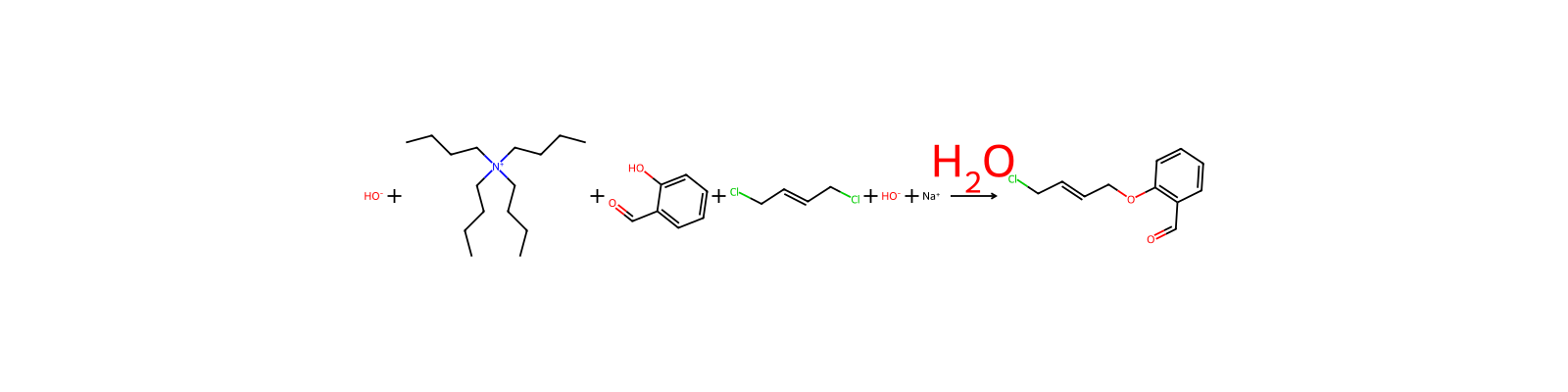
HRID 4668반응물로uspto-grants-1988_02
HRID 366428 반응식
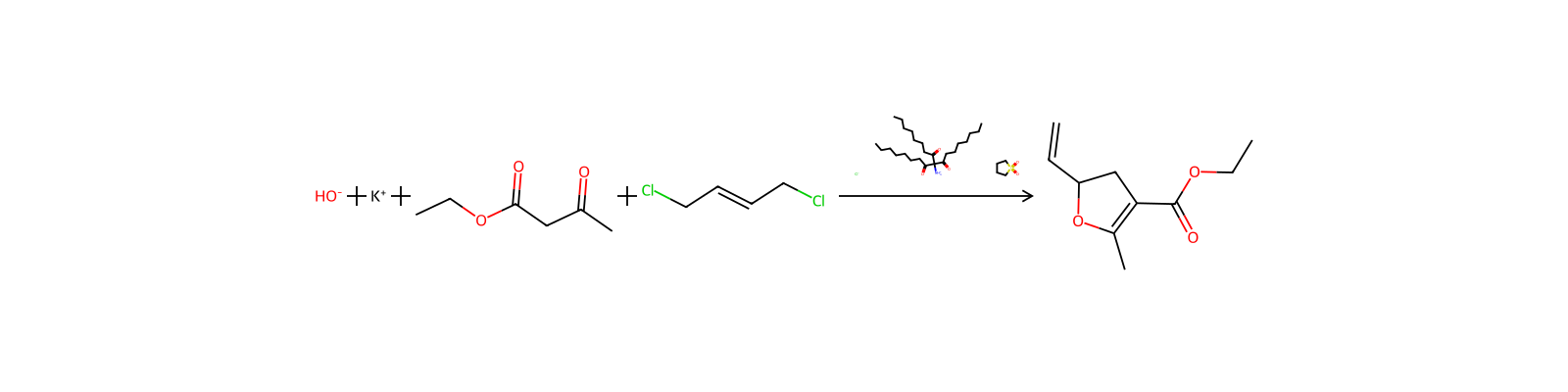
HRID 366428반응물로uspto-grants-2000_10
HRID 395592 반응식
HRID 395592반응물로uspto-grants-2003_08
HRID 443749 반응식
HRID 443749반응물로uspto-grants-1981_04
HRID 443751 반응식
HRID 443751반응물로uspto-grants-1981_04
HRID 637245 반응식
HRID 637245반응물로uspto-grants-1985_12
HRID 980366 반응식
HRID 980366반응물로uspto-grants-1987_01
HRID 986489 반응식
HRID 986489반응물로uspto-grants-1987_12
1 / 6 페이지

화합물 노트

불러오는 중…

이 페이지에서기본 정보개요이름 및 식별자물성안전 및 규제화학 및 산업관련 반응화합물 노트
더보기
새 노트새 반응견적 요청하기
DecompositionWhen heated to decomposition it emits toxic fumes of /hydrogen chloride/.
Melting Point · 5건

34 to 37 °F (EPA, 1998)

2 °C

Heat of Vaporization: 5.849X10+7 J/kmol @ melting point

Surface Tension: 3.8163X10⁻² Newtons/m @ melting point

35797 °C

물리화학적 성질

녹는점
1 · 1-3 °C(lit.)
끓는 점
74 · 74-76 °C40 mm Hg(lit.)
밀도
1.183 g/mL · 1.183 g/mL at 25 °C(lit.)
증기압
10 mm · 10 mm Hg ( 20 °C)
굴절률
20 · n20/D 1.488(lit.)
인화점
129 °F · 129 °F
저장 조건
2 · 2-8°C
용해도
클로로포름, 에틸아세테이트에 용해됨
물리적 상태
기름
색상
투명 무색~연황색
BRN
1719693 · 1719693
Henry's Law Constant
3.5 · 3.5×10-2 mol/(m3Pa) at 25℃, Hiatt (2013)
InChIKey
FQDIANVAWVHZIR-OWOJBTEDSA-N
NIST
2 · 2-Butene, 1,4-dichloro-, (E)-(110-57-6)
EPA
-1 · trans-1,4-Dichloro-2-butene (110-57-6)

화학적 성질

clear colorless to light yellow liquid

Air and Water ReactionsInsoluble in water.
Toxic Combustion ProductsWhen heated to decomposition it emits toxic fumes of /chloride/.

안전 및 보호

Fire Fighting · 1건

Wear positive pressure breathing apparatus and full protective clothing. Move containers from fire area if you can do so without risk. Spray containers with cooling water until well after fire is out. Isolate for one-half mile in all directions if tank car or truck is involved in a fire. For small fires, use dry chemical, carbon dioxide, spray or foam. For large fires, use water spray, fog, or foam. (EPA, 1998)

First AidWarning: Trans-1,4-dichlorobutene liquid and vapor are highly corrosive and may damage skin, eyes, lungs, and internal organs.
Firefighting HazardsFlashback along vapor trail may occur. /Dichlorobutene/
Fire Fighting Procedures · 1건

If material on fire or involved in fire: Use water in flooding quantities as fog. Cool all affected containers with flooding quantities of water. Apply water from as far a distance as possible. Solid streams of water may be ineffective. Use foam, dry chemical, or carbon dioxide. Use water spray to knock-down vapors. /Dichlorobutene/

Storage ConditionsStorage temperature: Ambient with open venting and equipped with a flame arrester. /Dichlorobutene/
Nonfire Spill Response · 1건

Keep unnecessary people away; isolate hazard area. Stay upwind; keep out of low areas. Shut off ignition sources. Do not touch spilled material. Use water spray to reduce vapors, but do not get water inside containers. For small spills, absorb with sand or other non-combustible absorbent material. For large spills, dike far ahead of spill for later disposal. (EPA, 1998)

Disposal Methods · 2건

At the time of review, criteria for land treatment or burial (sanitary landfill) disposal practices are subject to significant revision. Prior to implementing land disposal of waste residue (including waste sludge), consult with environmental regulatory agencies for guidance on acceptable disposal practices.

/1,4-Dichloro-2-butene/ may be disposed of by the use of the following incineration methods: Rotary kiln with a temperature of 820-1600 °C and a residence time of seconds for liquids and gases, and hours for solids. Liquid injection with a temperature of 650-1600 °C with a residence time of 0.1-2 seconds. Fluidized bed with a temperature of 450-980 °C with a residence time of seconds for liquids and gases, longer for solids. /1,4-Dichloro-2-butene/

Preventive Measures · 4건

If material not on fire and not involved in fire: Keep sparks, flames, and other sources of ignition away. Keep material out of water sources and sewers. Build dikes to contain flow as necessary. Use water spray to knock-down vapors. /Dichlorobutene/

Personnel protection: Avoid breathing vapors. Keep upwind. Avoid bodily contact with the material. ... Do not handle broken packages unless wearing appropriate personal protective equipment. Wash away any material which may have contacted the body with copious amounts of water or soap and water. Wear positive pressure self-contained breathing apparatus when fighting fires involving this material. If contact with the material anticipated, wear appropriate chemical protective clothing. /Dichlorobutene/

SRP: The scientific literature for the use of contact lenses in industry is conflicting. The benefit or detrimental effects of wearing contact lenses depend not only upon the substance, but also on factors including the form of the substance, characteristics and duration of the exposure, the uses of other eye protection equipment, and the hygiene of the lenses. However, there may be individual substances whose irritating or corrosive properties are such that the wearing of contact lenses would be harmful to the eye. In those specific cases, contact lenses should not be worn. In any event, the usual eye protection equipment should be worn even when contact lenses are in place.

SRP: Contaminated protective clothing should be segregated in such a manner so that there is no direct personal contact by personnel who handle, dispose, or clean the clothing. Quality assurance to ascertain the completeness of the cleaning procedures should be implemented before the decontaminated protective clothing is returned for reuse by the workers. Contaminated clothing should not be taken home at end of shift, but should remain at employee's place of work for cleaning.

Isolation and EvacuationExcerpt from ERG Guide 154 [Substances - Toxic and/or Corrosive (Non-Combustible)]:
Threshold Limit Values (TLV) · 3건

8 hr Time Weighted Avg (TWA) 0.005 ppm, skin. /1,4-Dichloro-2-butene/

Excursion Limit Recommendation: Excursions in worker exposure levels may exceed 3 times the TLV-TWA for no more than a total of 30 minutes during a work day, and under no circumstances should they exceed 5 times the TLV-TWA, provided that the TLV-TWA is not exceeded. /1,4-Dichloro-2-butene/

A2: Suspected human carcinogen. /1,4-Dichloro-2-butene/

Protective Action Criteria (PAC) · 3건

0.015 [ppm]

0.86 [ppm]

3.8 [ppm]

Personal Protective Equipment (PPE) · 4건

For emergency situations, wear a positive pressure, pressure-demand, full facepiece self-contained breathing apparatus (SCBA) or pressure- demand supplied air respirator with escape SCBA and a fully-encapsulating, chemical resistant suit. (EPA, 1998)

Rubber gloves; chemical splash goggles; Rubber boots & apron; Barrier cream; Organic canister mask. /Dichlorobutene/

Chemical protective clothing composed of polyvinyl alcohol (PVA), Viton (a proprietary fluoroelastomer), or Saranex (a multilayer laminate greater than 0.15 cm in thickness of polyethylene and Saran) is highly recommended, having break through times greater than one hour. Butyl rubber or polyethylene may be used but data suggest break through times of approximately an hour or more. Protective clothing composed of natural rubber, nitrile, chlorinated polyethylene, or polyvinyl chloride (material less than 0.015 cm thick) is not recommended since break through times were found to be significantly less than one hour. /1,4-Dichloro-2-butene/

Personnel protection: ... Wear appropriate chemical protective gloves, boots and goggles. /Dichlorobutene/

독성 정보

Ecotoxicity ValuesLC50 Poecilia reticulata (guppy) << 40 mg/kg/7 days
Environmental Fate · 3건

TERRESTRIAL FATE: Based on a classification scheme(1), a Koc value of 215(2) indicates that 1,4-dichloro-trans-2-butene is expected to have moderate mobility in soil(SRC). Volatilization of 1,4-dichloro-trans-2-butene from moist soil surfaces is expected to be an important fate process(SRC) given an estimated Henry's Law constant of 6.6X10⁻⁴ atm-cu m/mole(SRC), based upon its vapor pressure, 3.43 mm Hg(3), and water solubility, 850 mg/l(4). The potential for volatilization of 1,4-dichloro-trans-2-butene from dry soil surfaces may exist(SRC) based upon its vapor pressure(3). In a soil degradation study, approximately 5-15% of initially added 1,4-dichloro-2-butene (cis isomer) was recovered in gas-traps after a 7-day period, indicating soil volatilization had occurred(2). Soil degradation studies conducted over a week incubation period in a sandy loam and silt loam soils found degradation half-lives of 1.8 to 2.5 days in both sterile and non-sterile soils(2); degradation rates in non-sterile soils were not significantly faster than in sterile soils indicating that abiotic or evaporative processes were more important than biological processes for 1,4-dichloro-2-butene (cis-isomer)(2,5); similar results for the trans-isomer are expected because of the similar structure(SRC). The hydrolysis half-life of 1,4-dichloro-trans-2-butene was measured as 3.2 days under neutral conditions(6), suggesting hydrolysis may be an important fate process in moist soils.

AQUATIC FATE: Based on a classification scheme(1), a Koc value of 215(SRC), indicates that 1,4-dichloro-trans-2-butene is not expected to adsorb to suspended solids and sediment(SRC). Volatilization from water surfaces is expected(3) based upon an estimated Henry's Law constant of 6.6X10⁻⁴ atm-cu m/mole(SRC), derived from its vapor pressure, 3.43 mm Hg(4), and water solubility, 850 mg/l(5). Using this Henry's Law constant and an estimation method(3), volatilization half-lives for a model river and model lake are 2 hours and 5 days, respectively(SRC). According to a classification scheme(6), an estimated BCF of 14(SRC), from its water solubility(5) and a regression-derived equation(3), suggests the potential for bioconcentration in aquatic organisms is low. The hydrolysis half-life of 1,4-dichloro-trans-2-butene was measured as 3.2 days under neutral conditions(7). Limited data suggest that biodegradation will not be an important fate process in water since volatilization and hydrolysis are expected to occur rapidly(2,8).

ATMOSPHERIC FATE: According to a model of gas/particle partitioning of semivolatile organic compounds in the atmosphere(1), 1,4-dichloro-trans-2-butene, which has a vapor pressure of 3.43 mm Hg at 25 °C(1) is expected to exist solely as a vapor in the ambient atmosphere. Vapor-phase 1,4-dichloro-trans-2-butene is degraded in the atmosphere by reaction with photochemically-produced hydroxyl radicals and ozone molecules(SRC). The half-life for the reaction in air with hydroxyl radicals is estimated to be 10 hours(SRC), calculated from its rate constants of 3.7X10⁻¹¹ cu cm/molecule-sec at 25 °C(SRC) using a structure estimation method(3). The half-life for the reaction in air with ozone is estimated to be 8 days(SRC), calculated from its rate constants of 1.4X10⁻¹⁸ cu cm/molecule-sec at 25 °C(SRC) that was derived using a structure estimation method(3).

Adverse EffectsDermatotoxin - Skin burns.
Soil Adsorption/Mobility · 1건

Using sandy loam and silt loam soils, the Koc of 1,4-dichloro-2-butene (cis-isomer) was experimental determined to be 215(1). According to a suggested classification scheme(2), this Koc value suggests that 1,4-dichloro-trans-2-butene will have moderate mobility in soil because of the similar structure(SRC).

Human Toxicity Excerpts · 4건

AVAILABLE DATA DO NOT ALLOW AN EVALUATION OF CARCINOGENICITY ...

Inhalation of vapor irritates nose and throat. Contact with eyes causes intense irritation and tears. Contact of liquid with skin causes severe blistering and dermatitis. Ingestion causes severe irritation of the mouth and stomach. /Dichlorobutene/

... BOTH LIQUID AND VAPOR ARE HIGHLY DANGEROUS TO THE SKIN, EYES, LUNG, & INTERNAL ORGANS. /DICHLOROBUTENES/

Symptomatology: 1A) Inhalation, high vapor concn: gasping, refusal to breathe, coughing, substernal pain, & extreme respiratory distress at vapor concn over 1500 ppm. Irritation of eyes & upper respiratory mucosa appears promptly after exposure to concentrated vapors. Lacrimation & headache are prominent. Coma may occur rapidly. B) Inhalation, low vapor concn: central nervous depression & moderate irritation of respiratory system. Headache is frequent. 2) Dermal: severe skin irritation with marked inflammatory response of epidermis & underlying tissues. 3) Oral: acute gastrointestinal distress with pulmonary congestion & edema. Central nervous depression, perhaps even in the absence of impaired oxygen uptake. 4) By any route, possible late injuries to liver, kidneys & heart. 5) After inhalation exposures, malaise, headache, chest & abdominal discomfort & irritability have been reported to persist for several weeks & perhaps for several years.

Artificial Pollution Sources · 1건

1,4-Dichloro-trans-2-butene's production and use as a starting material in the manufacture of adiponitrile, butane-1,4-diol and tetrahydrofuran(1) may result in its release to the environment through various waste streams (SRC). It also occurs as an intermediate in the production of chloroprene(1).

Environmental Biodegradation · 1건

Soil degradation studies conducted with 1,4-dichloro-2-butene (cis-isomer) over a one week incubation period in a sandy loam and silt loam soils found degradation half-lives of 1.8 to 2.5 days in both sterile and non-sterile soils(1); degradation rates in non-sterile soils were not significantly faster than in sterile soils indicating that abiotic or evaporative processes were more important than biological processes for 1,4-dichloro-2-butene(1,2); similar results for the trans-isomer are expected because of the similar structure(SRC).

Carcinogen Classification · 5건

trans-1,4-Dichlorobutene

Group 3: Not classifiable as to its carcinogenicity to humans

Volume 15: (1977) Some Fumigants, the Herbicides 2,4-D and 2,4,5-T, Chlorinated Dibenzodioxins and Miscellaneous Industrial Chemicals

1999

1998

Environmental Bioconcentration · 1건

An estimated BCF of 14 was calculated for 1,4-dichloro-trans-2-butene(SRC), using a water solubility of 850 mg/l(1) and a regression-derived equation(2). According to a classification scheme(3), this BCF suggests the potential for bioconcentration in aquatic organisms is low(SRC).

Volatilization from Water/Soil · 1건

The Henry's Law constant for 1,4-dichloro-trans-2-butene is estimated as 6.6X10⁻⁴ atm-cu m/mole(SRC) based upon its vapor pressure, 3.43 mm Hg(1), and water solubility, 850 mg/l(2). This Henry's Law constant indicates that 1,4-dichloro-trans-2-butene is expected to volatilize from water surfaces(3). Based on this Henry's Law constant, the volatilization half-life from a model river (1 m deep, flowing 1 m/sec, wind velocity of 3 m/sec)(3) is estimated as 2 hours(SRC). The volatilization half-life from a model lake (1 m deep, flowing 0.05 m/sec, wind velocity of 0.5 m/sec)(3) is estimated as 5 days(SRC). 1,4-Dichloro-trans-2-butene's estimated Henry's Law constant(1) indicates that volatilization from moist soil surfaces may occur(SRC). The potential for volatilization of 1,4-dichloro-trans-2-butene from dry soil surfaces may exist(SRC) based upon the vapor pressure of this compound(1). In a soil degradation study, approximately 5-15% of initially added 1,4-dichloro-2-butene (cis isomer) was recovered in gas-traps after a 7-day period suggesting volatilization will be important for the trans-isomer(3).

Non-Human Toxicity Excerpts · 5건

... 62 PPM (0.34 MG/L) GIVEN TO RATS BY INHALATION FOR 4 HR CAUSED MORTALITY IN 2/6 ANIMALS IN 14 DAYS.

... 30 FEMALE ICR/HA SWISS MICE WERE GIVEN SKIN APPLICATIONS OF 1 MG TRANS-1,4-DICHLOROBUTENE DISSOLVED IN 0.1 ML ACETONE THRICE WEEKLY FOR 77 WK. NO SKIN TUMORS WERE OBSERVED.

... /1,4-Dichloro-trans-2-butene/ was tested in a two-stage carcinogenesis experiment with phorbol myristyl acetate as a promoting agent in female ICR/Ha Swiss mice. Of 30 mice treated with 1 mg trans-1,4-dichlorobutene in 0.1 ml acetone plus 2.5 ug phorbol myristyl acetate in 0.1 ml acetone, 1 developed a skin papilloma, compared with 28 positive controls ... /which had/ 209 papillomas & 17 squamous-cell carcinomas of the skin after treatment with 7,12-dimethylbenz(a)anthracene & phorbol myristyl acetate. Of 30 mice treated with phorbol myristyl acetate alone, 3 had skin papillomas & 1 a skin carcinoma.

A group of 30 female ICR/Ha Swiss mice were given skin applications of 1 mg trans-1,4-dichlorobutene dissolved in 0.1 ml acetone thrice weekly for 77 weeks. No skin tumors were observed.

For more Non-Human Toxicity Excerpts (Complete) data for 1,4-DICHLORO-TRANS-2-BUTENE (7 total), please visit the HSDB record page.

Evidence for Carcinogenicity · 2건

A2: Suspected human carcinogen. /1,4-Dichloro-2-butene/

No epidemiological data relevant to the carcinogenicity of trans-1,4-dichlorobutene were available. There is inadequate evidence in experimental animals for the carcinogenicity of trans-1,4-dichlorobutene. Overall evaluation: trans-1,4-Dichlorobutene is not classifiable as to its carcinogenicity to humans (Group 3).

규제 정보

CERCLA Reportable Quantities · 1건

Releases of CERCLA hazardous substances are subject to the release reporting requirement of CERCLA section 103, codified at 40 CFR part 302, in addition to the requirements of 40 CFR part 355. 1,4-Dichloro-trans-2-butene is an extremely hazardous substance (EHS) subject to reporting requirements when stored in amounts in excess of its threshold planning quantity (TPQ) of 500 lbs.

안전 데이터

wgk
3
tsca
TSCA listed
rtecs
EM4903000
ridadr
UN 3390 6.1/PG 1
HS 번호
29032990
risk_code
10-21-25-26-34-39/23/24/25-23/24/25-11-50/53-45-24/25
hazard_code
T+,T,F,N
safety_code
53-23-26-36/37/39-45-36/37-99-61-60-16
포장분류
II
위험 등급
6.1(a)
기존화학 물질
2012-1-639
F 고인화성물질
8-21
유해 물질 데이터
110-57-6(Hazardous Substances Data)
함량 및 규제정보
물질구분: 유독물질; 혼합물(제품)함량정보: (2E)-1,4-디클로로-2-부텐 및 이를 0.1% 이상 함유한 혼합물
유해화학물질 필터링
2012-1-639
중점관리물질 필터링
별표1-61
암, 돌연변이성물질 필터링
11
· 2건

2-Butene, 1,4-dichloro-, (2E)-: ACTIVE

From 1951 to 1983 DuPont operated a butadiene chlorination process...the intermediate 1,4-dichloro-2-butene was converted to 3-hexenedinitrile...and then hydrogenated to adiponitrile

응용 분야

용도1,4-Dichloro-2-butene is used in the synthesis of anthraquinones used in the asymmetric dihydroxylation of olefins. Also used to prepare arylcarboxamides used as novel dopamine receptor antagonists.

일반 설명Colorless liquid with a distinct odor. An intermediate for hexamethylenediamine and chloroprene.

상·하류 제품 정보

상류 원료

N-브로모숙신산이미드1-하이드록시벤조트리아졸 일수화물염화제이철무수물염화구리(Ⅰ)피리딘염화 티오닐부텐(2-)-1,4-디올2-Butene, 1-bromo-4-chloro-, (E)- (9CI)디클로로(1,4-)-2-부텐1,3-부타디엔

하류 제품

N,N,N',N'-Tetramethyl-2-butene-1,4-diamine시스-1,4-디클로로-2-부텐(E)-N,N,N',N'-테트라에틸-2-부텐-1,4-디아민