HRID 1064반응물로
Aluminum(III) Chloride

7446-70-0[Al+3].[Cl-].[Cl-].[Cl-]VSCWAEJMTAWNJL-UHFFFAOYSA-KAluminum chloride is a chemical compound with the chemical formula AlCl3. When contaminated with iron chloride, it often displays a yellow color compared to the white pure compound. It is used in various chemical applications as a Lewis base, with anhydrous aluminium trichloride being the most commonly used Lewis acid. It may also be found in over-the-counter as an antiperspirant or prescription products as an antihemorrhagic agent. In antiperspirant products, FDA approves the use of aluminum chloride as an active ingredient up to 15%, calculated on the hexahydrate form, in an aqueous solution nonaerosol dosage form.
안전 정보는 참고용이며, 공급업체의 물질안전보건자료(SDS), 관련 법규 및 전문가 평가를 대체하지 않습니다.
CSL00011
NITROBENZENE + ALUMINUM CHLORIDE
Explosive decomposition > 120°C observed on kg scale
Not Available
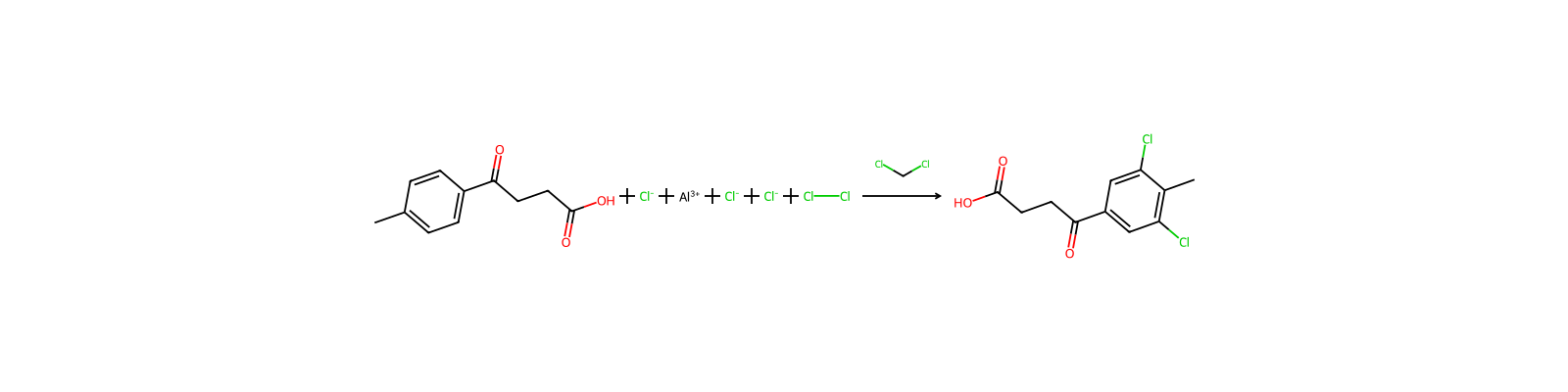
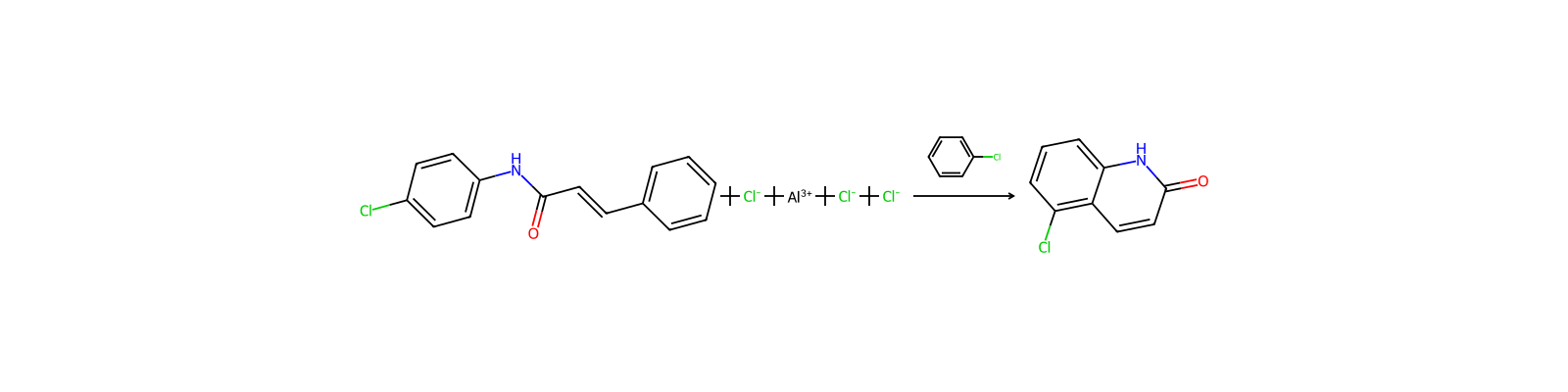
Friedel Crafts
User-Reported
Aluminum chloride is commonly used topical antiperspirant. It is proposed that aluminum chloride works by causing an obstruction of the distal sweat gland ducts, where the metal ions precipitate with mucopolysaccharides, damaging epithelial cells along the lumen of the duct and forming a plug that blocks sweat output. Aluminum chloride is also an astringent that promotes hemostasis; it precipitates proteins on the superficial layer of mucosa and make it mechanically stronger. It creates superficial and local coagulation in minor hemorrhages.
In the small intestine, aluminum chloride is rapidly converted to insoluble poorly absorbed basic aluminum salts, consisting of a mixture of hydrated aluminum oxide, oxyaluminum hydroxide, various basic aluminum carbonates, and aluminum soaps.
It is reported that about 17-30 % of aluminum chloride formed from the reaction between orally ingested aluminum hydroxide and hydrochloric acid of the stomach is absorbed. In rabbits, administration of a single maximum safe oral dose aluminum chloride (333 mg Al/kg) resulted in aluminum absorption of 0.57 %. Aluminum chloride may be absorbed via dermal route, with the uptake increasing in the microgram range but with an upper limit.
Absorbed aluminum chloride is rapidly excreted by the kidneys in individuals with normal renal function. Aluminum chloride may be absorbed dermally.
Following oral administration of 8.1 mg/kg of aluminum chloride, the steady‐state volume of distribution of aluminum was 38.4 ± 6.4 mL/kg.
7446-70-0Aluminum chloride is a noncombustible but highly reactive whitish-gray, yellow, or green powder or liquid. Strong, acidic, irritating odor like hydrochloric acid.The vapor consists of double molecules Al2Cl6 . Soluble in water.
Following oral administration of 8.1 mg/kg of aluminum chloride, the clearance of aluminum was 8.87 ± 1.76 mL/(h*kg).
용도염화 알루미늄은 많은 산업 분야에 사용됩니다. 그것은 많은 석유 화학 제품, 페인트 및 합성 고무를 만드는데 사용됩니다. 그것은 또한 물을 치료하는 데 사용됩니다. 염화 알루미늄의 가장 주목할만한 용도 중 하나는 방취제에 사용하는 것입니다. 염화 알루미늄은 일시적으로 땀샘을 막아 모공을 막는 젤을 형성합니다. 이 땀샘이 막히면 땀샘이 방지됩니다.
용도A yellowish-white crystalline or granular powder made by passing chlorine gas over alumina in a heated state and collecting the product by sublimation. Aluminum chloride was occasionally used in gold and platinum toning baths.
일반 설명Aluminum chloride may be manufactured by chlorination of liquid aluminum in ceramic lined reaction vessels at 600-700oC.
정의aluminium chloride: A whitishsolid, AlCl3, which fumes in moist airand reacts violently with water (togive hydrogen chloride). It is knownas the anhydrous salt (hexagonal; r.d.2.44 (fused solid); m.p. 190°C (2.5atm.); sublimes at 178°C) or the hexahydrateAlCl3.6H2O (rhombic; r.d.2.398; loses water at 100°C), both ofwhich are deliquescent. Aluminiumchloride may be prepared by passinghydrogen chloride or chlorine overhot aluminium or (industrially) bypassing chlorine over heated aluminiumoxide and carbon. The chlorideion is polarized by the smallpositive aluminium ion and thebonding in the solid is intermediatebetween covalent and ionic. In theliquid and vapour phases dimer moleculesexist, Al2Cl6, in which thereare chlorine bridges making coordinatebonds to aluminium atoms (seeformula). The AlCl3 molecule can alsoform compounds with other moleculesthat donate pairs of electrons(e.g. amines or hydrogen sulphide);i.e. it acts as a Lewis acid. At hightemperatures the Al2Cl6 molecules inthe vapour dissociate to (planar)AlCl3 molecules. Aluminium chlorideis used commercially as a catalyst inthe cracking of oils. It is also a catalystin certain other organic reactions,especially the Friedel–Craftsreaction.