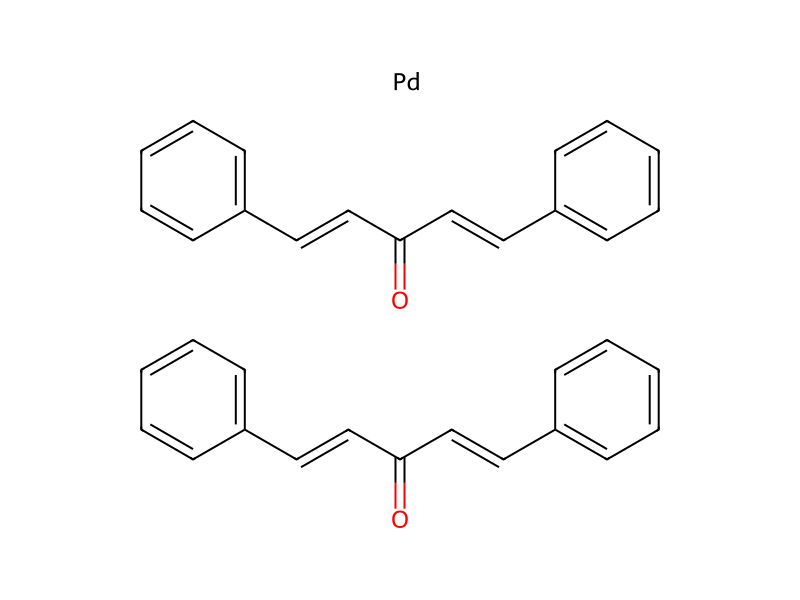
(1E,4E)-1,5-diphenylpenta-1,4-dien-3-one; palladium
데이터를 보충하는 중입니다. 잠시 후 페이지를 새로 고치면 최신 내용을 볼 수 있습니다
기본 정보
- CAS
52409-22-0- 표준 SMILES
O=C(/C=C/c1ccccc1)/C=C/c1ccccc1.O=C(/C=C/c1ccccc1)/C=C/c1ccccc1.[Pd]- InChIKey
UKSZBOKPHAQOMP-SVLSSHOZSA-N- 분자식
- C34H28O2Pd
- 평균 분자량
- 575 g/mol
- 단동위원소 질량
- 574.11241
이름 및 식별자
- 우선 이름
- (1E,4E)-1,5-diphenylpenta-1,4-dien-3-one; palladium
- IUPAC
- bis((1E,4E)-1,5-diphenylpenta-1,4-dien-3-one);palladium
- 영어명
- Tris(dibenzylideneacetone)dipalladium
- 분자식
- C51H42O3Pd2
- 분자량
- 915.71738
이름 및 동의어
52409-22-0(1E,4E)-1,5-diphenylpenta-1,4-dien-3-one; PalladiumRefChem:392699620-687-632005-36-0Bis(dibenzylideneacetone)palladium(0)PD(DBA)2MFCD00051942(1E,4E)-Bis(dibenzylideneacetone)palladiumC34H28O2Pd190385-99-0Bis(dibenzylideneacetone)palladium (Technical Grade)
이름 더 보기
Pd(dba)3PALLADIUM(0) BIS(DIBENZYLIDENEACETONE)Bis(dibenzylideneacetone)dipalladiumTris(dibenzylideneacetone)diplalladium(I)tris(dibenzylideneacetone)dipalladium(o)(pd2(dba)3)Tris(dibenzylideneacetoneTris(dibenzylideneacetone)dipalladiumBIS(DIBENZYLIDENEACETONE) PALLADIUM(0)Tris(dibenzilideneacetone)dipalladium(0)
60748-47-2TRIS(DIBENZYLIDENEACETONE)DIPALLADIUM(O)SCHEMBL2438441bis(dibenzylideneactone)palladiumbis (dibenzylideneacetone)palladiumbis(dibenzylidene acetone)palladiumbis(dibenzylidene-acetone)palladiumbis(dibenzylideneacetone)-palladium
데이터베이스 식별자
- CAS
52409-22-0- PubChem CID
- 6505921
- EC Number
- 620-687-6
물성
구조 계산 물성보충 중
- 극성 표면적
- 34.1 Ų
- 수소 결합 공여자 수
- 0
- 수소 결합 수용자 수
- 2
- 회전 가능 결합 수
- 8
- 무거운 원자 수
- 37
- 형식 전하
- 0
- 복잡도
- 272
물리화학적 성질
- 녹는점
- 152 · 152-155 °C(lit.)
- 저장 조건
- 2 · Keep in dark place,Inert atmosphere,2-8°C
- InChI
- InChI=1S/2C17H14O.Pd/c2*18-17(13-11-15-7-3-1-4-8-15)14-12-16-9-5-2-6-10-16;/h2*1-14H;/b2*13-11+,14-12+;
- InChIKey
- UKSZBOKPHAQOMP-SVLSSHOZSA-N
- SMILES
- [Pd].C(=C/C1=CC=CC=C1)\C(/C=C/C1=CC=CC=C1)=O.C(=C/C1=CC=CC=C1)\C(/C=C/C1=CC=CC=C1)=O
안전 및 규제
안전 정보는 참고용이며, 공급업체의 물질안전보건자료(SDS), 관련 법규 및 전문가 평가를 대체하지 않습니다.
GHS 분류
GHS Classification
Danger
H228 (50%): Flammable solid [Danger Flammable solids];H302 (75%): Harmful if swallowed [Warning Acute toxicity, oral];H312 (25%): Harmful in contact with skin [Warning Acute toxicity, dermal];H315 (25%): Causes skin irritation [Warning Skin corrosion/irritation];H319 (25%): Causes serious eye irritation [Warning Serious eye damage/eye irritation];H332 (75%): Harmful if inhaled [Warning Acute toxicity, inhalation]
P210, P240, P241, P261, P264, P264+P265, P270, P271, P280, P301+P317, P302+P352, P304+P340, P305+P351+P338, P317, P321, P330, P332+P317, P337+P317, P362+P364, P370+P378, and P501 (click each P-code to see the statement)
Aggregated GHS information provided per 4 reports by companies from 3 notifications to the ECHA C&L Inventory. Each notification may be associated with multiple companies.;Information may vary between notifications depending on impurities, additives, and other factors. The percentage value in parenthesis indicates the notified classification ratio from companies that provide hazard codes. Only hazard codes with percentage values above 10% are shown. For more detailed information, please visit ECHA C&L website.
유해성 정보
Hazard Classes and CategoriesFlam. Sol. 1 (50%);Acute Tox. 4 (75%);Acute Tox. 4 (25%);Skin Irrit. 2 (25%);Eye Irrit. 2 (25%);Acute Tox. 4 (75%)
독성 정보
Health EffectsContact with palladium may cause palladium sensitivity and allergy. Animal studies have shown that palladium may damage the liver and kidney. (L798)
Toxicity Summary
Due to their ability to form strong complexes with both inorganic and organic ligands, palladium ions can disturb cellular equilibria, replace other essential ions, and interact with functional groups of macromolecules, such as proteins or DNA. Palladium complexes binding to DNA and RNA leads to strand breakage. Palladium ions are able to inhibit most major cellular functions, including DNA and RNA synthesis. Palladium compounds have been shown to bind to and inhibit various enzymes, including creatine kinase and prolyl hydroxylase. (L798)
화학 및 산업
약리 정보
Metabolism/Metabolites
Palladium may be absorbed through oral, dermal, and inhalation exposure. Once in the body it distributes to the kidney, liver, spleen, lymph nodes, adrenal gland, lung and bone. Palladium's ability to form complexes allows it the bind to amino acids, proteins, DNA, and other macromolecules. Palladium and its metabolites are excreted in the urine and faeces. (A21)
응용 분야
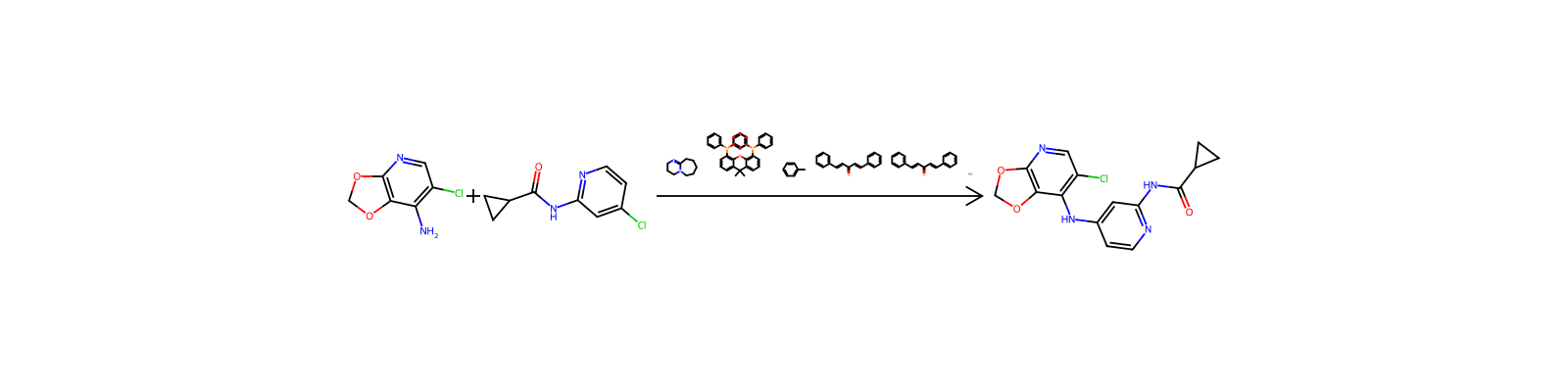
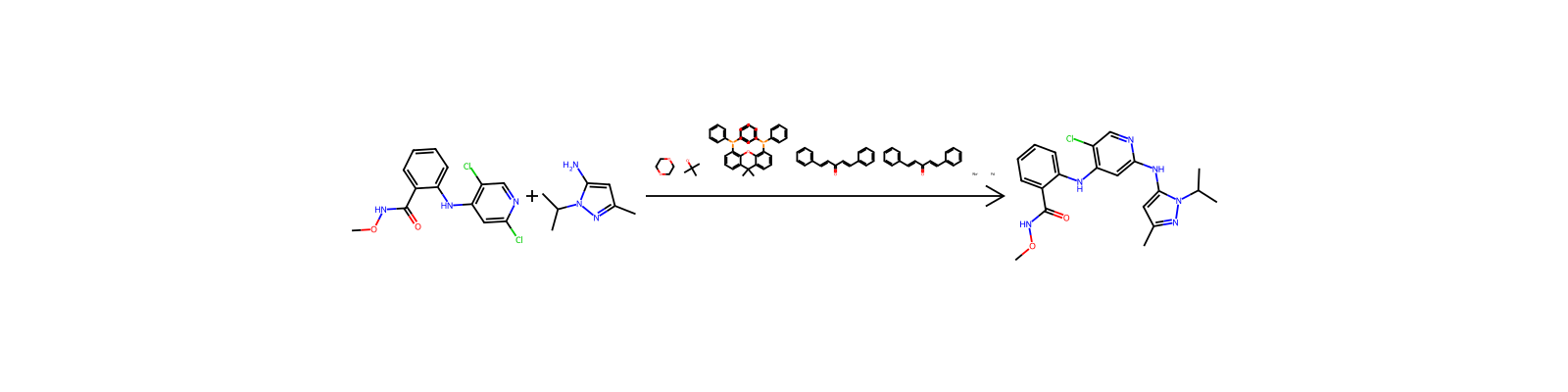
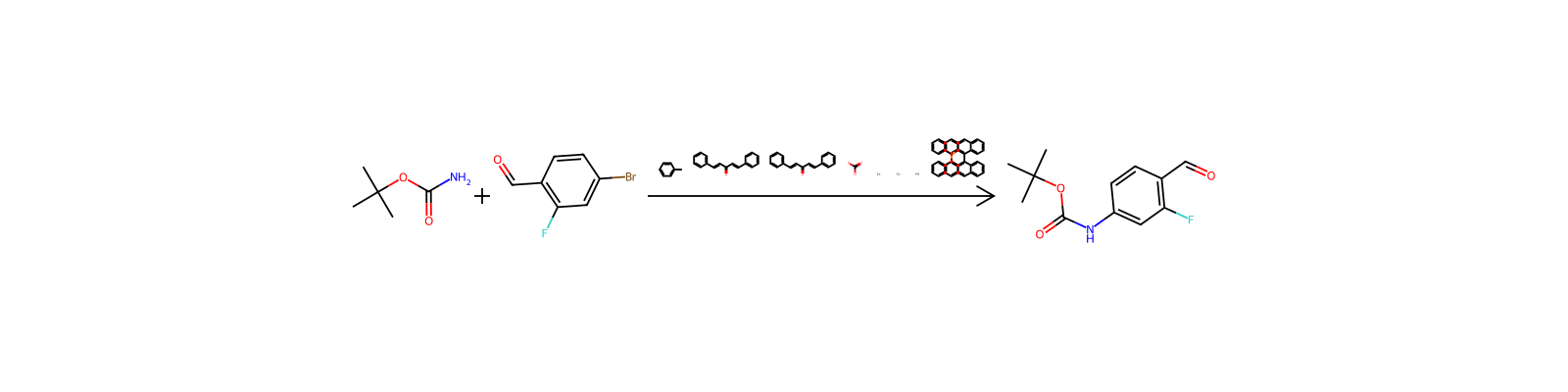
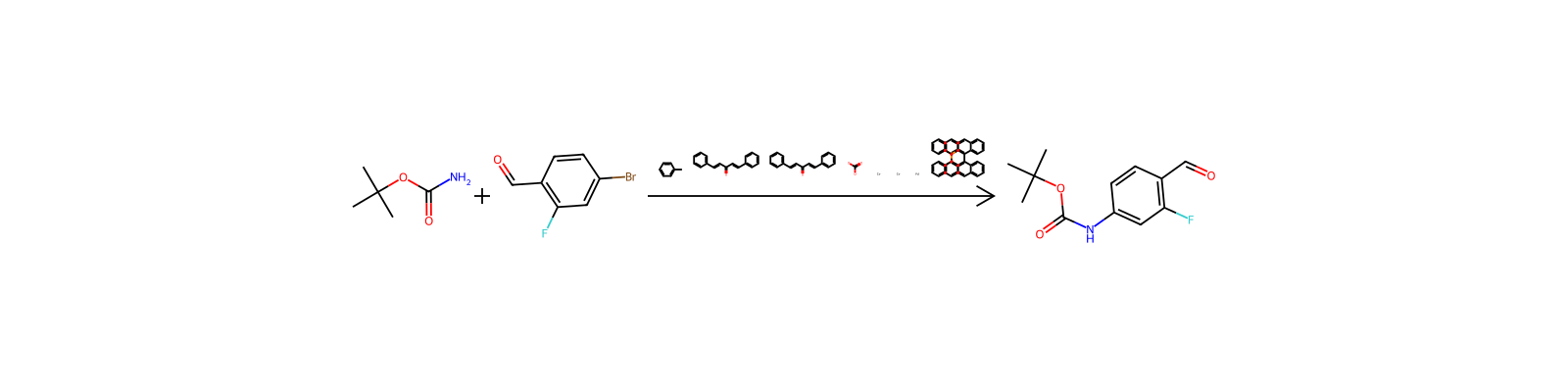
용도Tris(dibenzylideneacetone)dipalladium is used as a source of soluble Pd(0), in particular as a catalyst for various coupling reactions. Examples of reactions using this reagent are the Negishi coupling, Suzuki coupling, Carroll rearrangement, and Trost asymmetric allylic alkylation, as well as Buchwald–Hartwig amination
관련 반응
835건




화합물 노트
불러오는 중…